
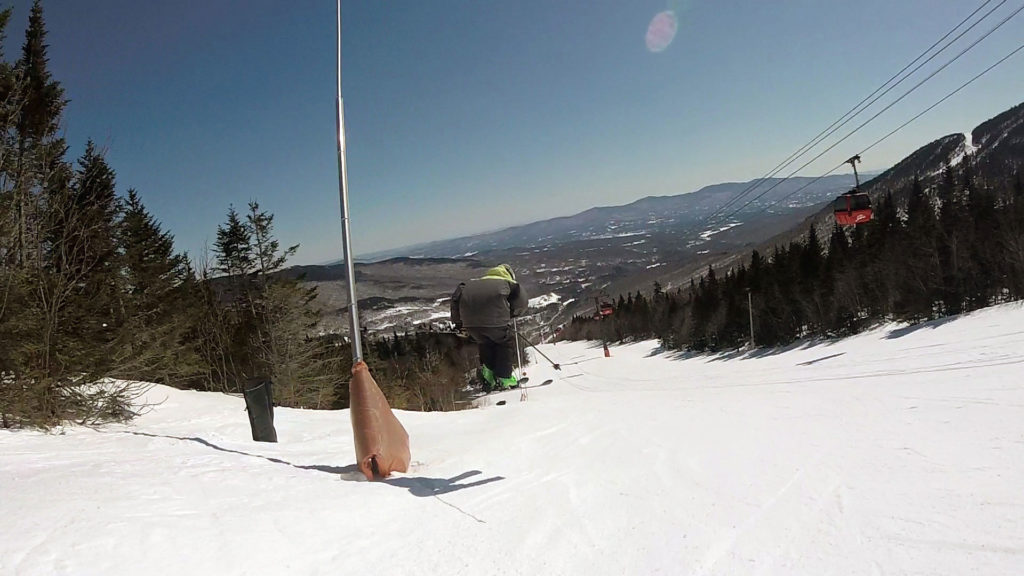
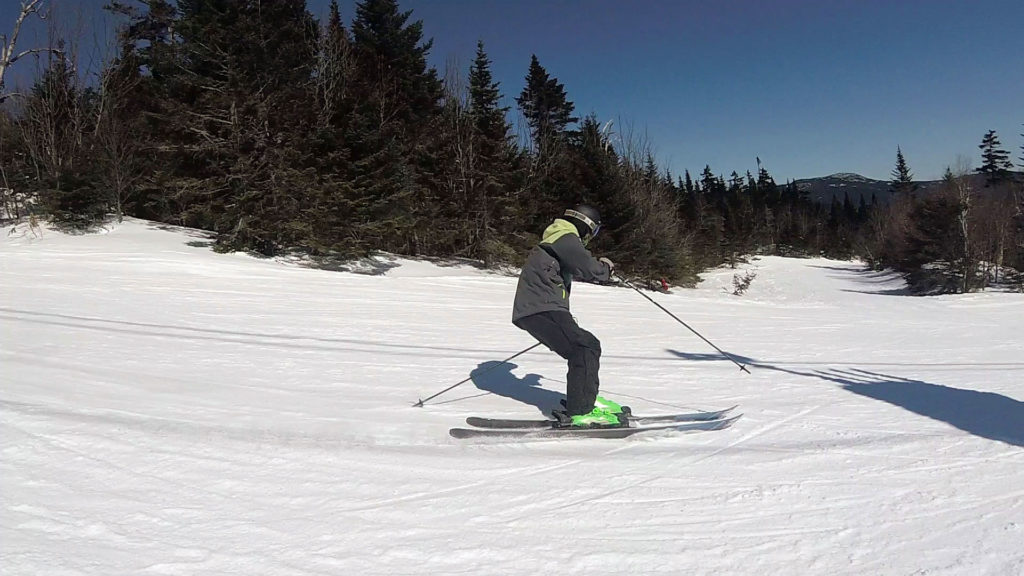
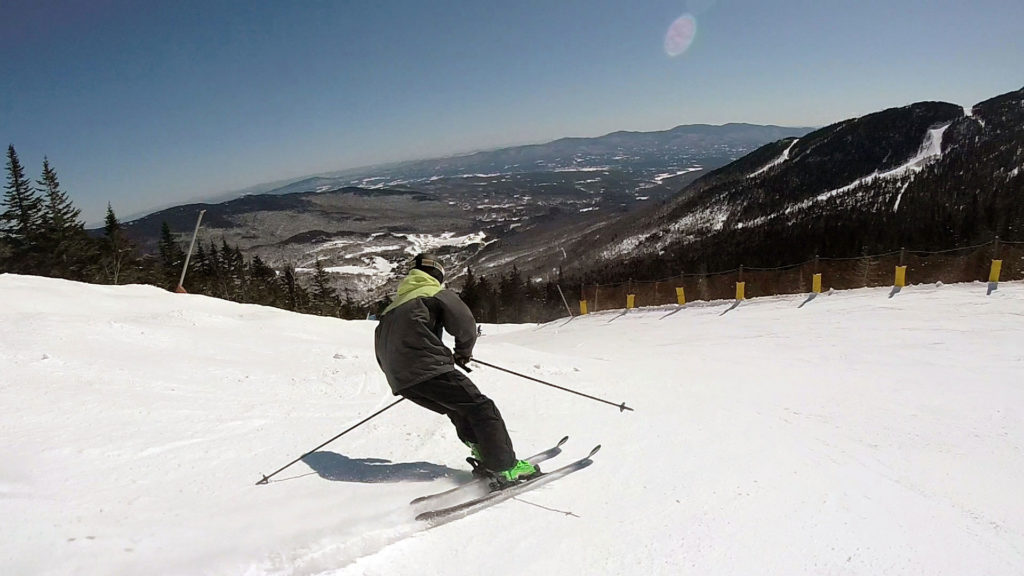
The Armada Tracer 98, along with the entire Tracer collection, has been updated for the 2020 ski season. They’re designed with a blend of stability, nimbleness, and maneuverability, all in a relatively lightweight package that’s perfectly acceptable for touring use as well as in-bounds at the resort. Armada uses a full Karuba wood core, which is supported by their Adaptive Mesh technology, a variable angle weave that optimizes vibration damping along the longitudinal axis. The Tracer 98 has rocker that’s paired with early taper, more pronounced in the tip, but also present in the tail shape. The recipe is for a highly versatile ski that’s maneuverable, not as fatiguing as a heavier ski, and undoubtedly ready for adventure.
Jeff Neagle skied the 180 cm length and described the Tracer 98 as “a very versatile all mountain ski, especially for someone who values quickness and off-piste performance over groomer prowess.” That feedback makes a lot of sense, as Armada’s Invictus line leans the other direction: all-mountain skis focusing more on stability at speed, edge grip, and power. Jeff’s only scores lower than 4 out of 5 were for stability and edge grip, both coming in at 3 out of 5, which is understandable. “Super easy to turn, maneuvers through trees with ease. A heavy or really aggressive skier will likely want more torsional stiffness and/or stability, but realistically that’s the only downside.”
Evan Caha found more stability in the Tracer 98 than Jeff did after also testing the 180 cm. His stability score jumped up to 4 out of 5, which matched his scores for quickness and versatility. Based off that, skiers may have differing opinions on the amount of stability and vibration damping this construction achieves based on their skiing style and expectations. Evan thought it “turned well” and actually found that it had “no chatter” and that he couldn’t find a top speed. That’s saying a lot, especially considering the 180 cm length he tested is only 1575 g.
Phil McGrory skied the 188 cm length and was most impressed by the ski’s lightweight feel, ease of use, and maneuverability. His highest scores were for flotation, quickness/maneuverability, and playfulness; quite similar to how Jeff scored the Tracer 98. He described it as feeling “lightweight: and that it was “easy to turn.” That performance characteristic is important for a ski that’s intended to be skied in the backcountry, sidecountry, and tight in-bounds terrain. You need to be able to make quick movements in challenging terrain and need to be able to trust your equipment. It certainly seems the Tracer 98 earned a trust-worthy status with Phil.
Dave Carter had a similar response to the Tracer 98 as Jeff and Phil, finding the ski’s quickness and maneuverability to be its highlighting performance factor. Dave tested the 180 cm length, and described the ski as “a good performer in a variety of conditions.” If there was a goal of the Tracer 98, it would be versatility, and with all the feedback from our testers, it’s certainly proving to achieve that goal. Dave did think it was “lacking a bit at high speed,” but that’s not surprising, nor disappointing. We mentioned the Invictus line, and that’s going to be a perfect avenue for someone who wants a relatively similar shape, but boosted stability and power compared to the Tracer series. Remember, however, they’ll also be heavier, so it’s all about picking which line works best for your skiing.
Whether you’re planning on mounting it with an alpine touring binding, or just an alpine binding, the Tracer 98 is a whole lot of fun. Those that want a lightweight, maneuverable ski will fall in love with the Tracer series, and the 98 is exceptionally versatile. You might not be able to lay down race-inspired turns with it on boiler-plate snow, but it does just about everything else quite well.