


There are a lot of different ranges in the Nordic world, and the Salomon S/Max Carbon skate skis occupy what I’d call the middle of the upper end. Not quite the true race ski that the main athletes use, but also quite a bit lighter and stronger than a mere recreational skate ski, the S/Max Carbon has a ton of upside and very little downside. With a similar shape to the S/Lab race skis, the Max is just a touch heavier and a tad slower and a smidge less responsive. That’s about it, and those amounts that the Lab has over the Max are quite small indeed. The 44/43/44 sidecut dimensions allow you to get more purchase in the stride, making it easier and more efficient to get the speed you need from your skis, delivering all your available power to the edge, and therefore the snow. Salomon uses their D-Core with carbon in these skis, with the foam basically infused with carbon to gain stiffness and precision with each and every stride. With a bit of a softer flex versus the race model, our testers noted and noticed the differences, and each time are able to point out that these skis have a good target market in the advancing skate skier category.
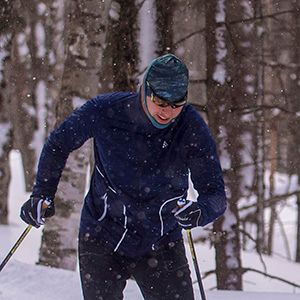
Carol Van Dyke skied the 182, and she was on the softer-flexing version of the ski, which she found to be on the soft side for her weight. Regardless, a 5 out of 5 for stability was earned, as were 4’s for speed, maneuverability, glide, versatility, and overall impression. A lowly 3 for weight stood alone as the bottom score, and we’ll take that with a grain of salt, seeing as these are still quite light in the overall scheme of skate skis. “Great performance for a lot less money than the top-of-the-line ski. Fitness skiers and high school racers will want this ski. Felt stable and smooth like the S/Lab, but the tail was heavier in the turnover. At a good price, we’ll probably see a lot of these out there in the Nordic center this year.” For skiers looking for that top-end of performance but with a lower price range, the S/Max Carbon skate is an ideal choice.
CONSTRUCTION
PREFERRED TERRAIN
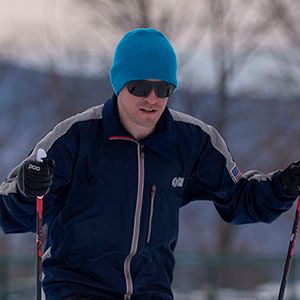
For the boys, Jeff Neagle skied the 187 and found it to be the appropriate length for him. His scores hovered all in the 4 range, with a 4.5 given for glide and a 3.5 for versatility. As a more singular skate ski, that lack of versatility is not surprising. Jeff notes that the S/Max Carbon is a “nice step up from the RS8. Similar smooth feel, but a little faster and a little more energy and responsiveness.” It’s actually refreshing to see that Jeff is comparing these skis to the lower-end versus the upper-end offering something for skiers to aspire to rather than look down upon. “It didn’t, however, feel particularly unforgiving. Anyone could ski these, unlike some of the stiffer World Cup-level skis. This is another ski that would be ideal for a relatively serious high school racer, maybe even a collegiate-level skier who wants to save a little money.” On the 192, Marcus Shakun notes that the S/Max Carbon Skate is “meant for an athletic and recreational skate skier to a lighter advanced skier. Softer flex than most of its category, but still has lots of energy and is very smooth.” In terms of where the ski falls on the performance and weight spectrum, Marcus states that the S/Max is “neither light nor heavy, but rather falls kind of in the middle.” For a ski of this price and level, that’s a good thing.
Even for a higher-end product, the poor S/Max Carbon Skate still gets knocked for being too heavy, or sluggish, or soft, but that’s really only when compared to the race-room version. For most skiers who are looking for a strong, capable ski for any and all skate situations, these skis will do the trick and then some.