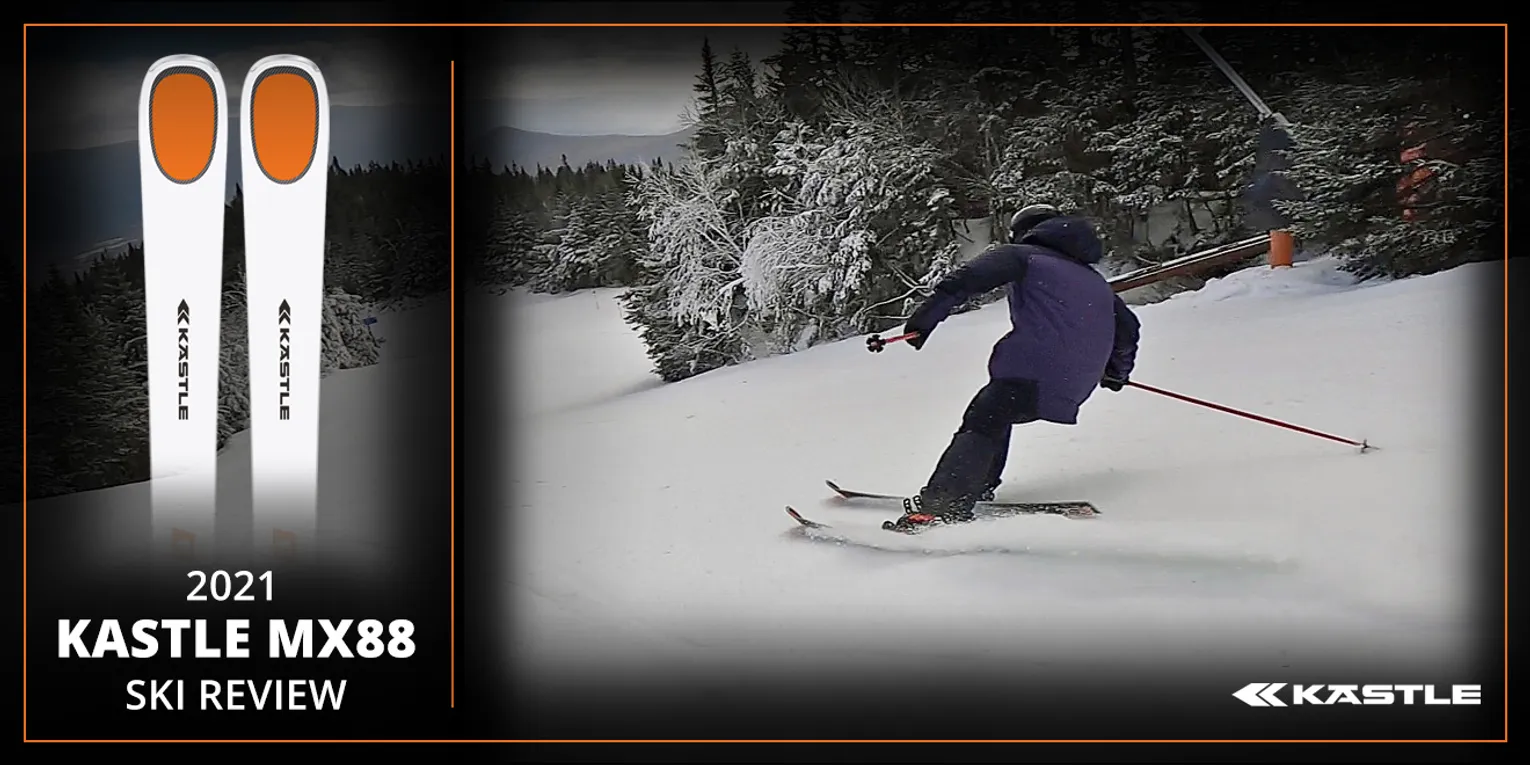
2021 KASTLE MX88 SKI REVIEW
After a few turns on the 2021 Kastle MX88, it’s fairly evident that this company knows how to build a ski. Quality, precision, and performance seemingly ooze out of this ski, making it one of the most responsive and well-built skis on the market today. With a few changes from the previous season’s MX89 versions, the 88 has a few tweaks that makes it a bit more versatile and all-mountain-oriented rather than an on-trail racecar of a ski. That fully-cambered beast had an extra millimeter of width in the waist and zero rocker, making it a lot more rugged—there aren’t many ~90 mm skis out there with two sheets of metal and no camber, and it’s kind of easy to see why. The addition of tip rocker to the MX88 makes for a friendlier experience, and one that has more versatility and all-mountain application than its predecessor. Over the course of two fairly rigorous test days, we found a lot of merits to this new ski from Kastle, with its high-end, all-mountain capabilities being pretty much second to none in the category.
The precision of the ski all starts with the construction. Kastle uses an interesting blend of wood stringers in its core, and it becomes very apparent that the way in which they put these stringers together is done with purpose and intent. The outer, I’d say thirds, of the core is comprised of poplar wood, which is known for its blend of light weight and strong performance. The inner third of the core, acting as the spine of the ski, is made from a blend of beech and poplar. The denser beech wood boosts the stiffness and damping properties of the ski, and the fact that it does so in the middle portion of the ski makes a lot of sense. It just takes a hair of stiffness away from the edges and sidewalls, allowing for a more supple feel when engaging and releasing from turns. But in the middle part, where the beech is located, the stiffness and stability of the ski is all there, acting as the central nervous system of the ski. Two sheets of titanal, top and bottom, and two sheets of fiberglass, top and bottom, round out the construction of this ski, all pressed together in a classic sandwich sidewall build.
AT A GLANCE
|
|
2021 Kastle MX 88 Skis |
|

AVAILABLE SIZES |
TURN RADIUS |
SIDECUT |
CORE |
STRENGTHS |
|---|---|---|---|---|
159, 166, 173, 180, 187 cm |
18.8 m at 180 cm |
130 / 88 / 114 mm |
Poplar/Beech with Titanal Laminates |
Stability, Edge Grip, Power |
I’d include Kastle’s Hollowtech 3.0 in the construction section, but since it also has some performance characteristics to go over, it kind of deserves its own space. This has been a Kastle staple for years, and does a few things. First, by removing material from the core in the tip of the ski, it makes it lighter. With less mass to get jostled around in the turn, Hollowtech reduces vibrations by 30% (Kastle’s figure). Additionally, the lighter shovel makes for quicker turn initiation which also makes for a more precise feel. The less effort you have to put in to the turn, while having the same effect as strongly driving the tips of the ski, the more precise the ski becomes. Less work, better performance. Not only does this create a lower swing weight, but also a lower overall weight, and for a ski that isn’t billed as a feather, this does make a fair difference. New for 2021 is the carbon inlay of the outer ring of Hollowtech. In addition to looking really cool, it adds an extra bit of stiffness to the shovel, and does have a positive impact on the performance of the ski.
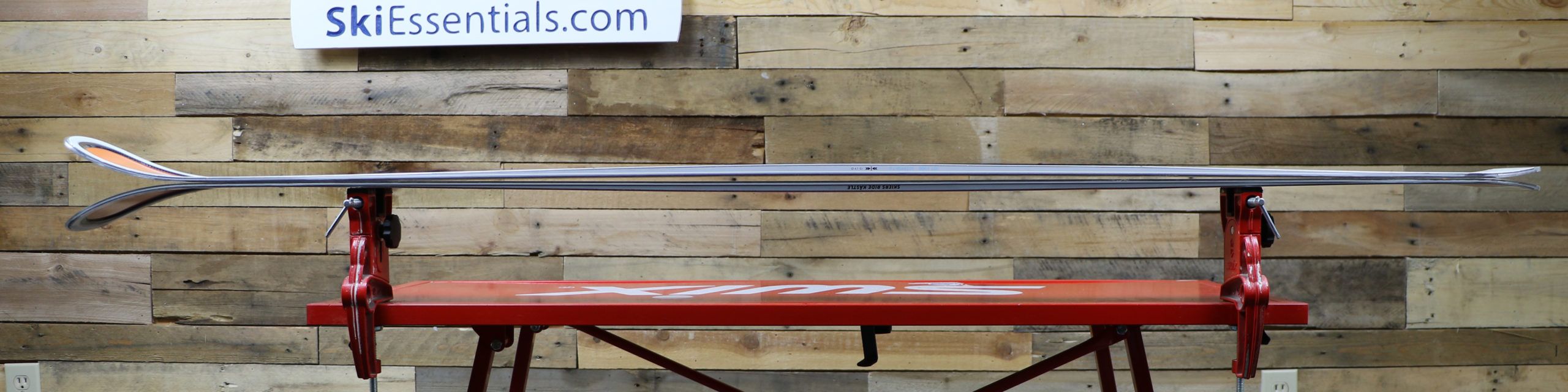
For an all-mountain ski, the shape and profile are more billed towards the on-piste and performance carving side of the spectrum. There’s a lot of 88-90 mm skis out there, it’s a huge category, and it’s interesting to see which ones lean which way. The 2021 Kastle MX88 now has a slight tip rocker in the profile, while positive camber underfoot and a mostly flat tail complete the side view. There is a small amount of tail splay, and this does help make the ski more approachable and gives it some softer-snow and slower-speed compliance. The addition of that tip rocker does give the MX88 less of a race-ski feel versus the outgoing MX89, but it’s not really noticeable unless you’re in softer snow. In that case, the ski does like to glide up and over the snow as opposed to digging in and trying to carve. In the all-mountain world of 88-90 mm underfoot skis, this amount of tip rocker is almost a given these days.
While the profile changed slightly, and leans more to the all-mountain format, the shape has stayed pretty true to the on-piste, front-side charger that the MX89 was. Minimal taper is to be found anywhere on this ski. It has about as long of an effective edge as you’re going to find, leading to some of the most precise and smooth on-trail carving performance that you’ll find in any ski, not just one of this width. The combination of construction and shape, with that bit of tip rocker, makes this ski absolutely rocket in and out of turns. The tail, minus that bit of splay at the very end, holds on tight and impressively transitions from one carve to the next. If you’re a fan of linking carved turns on a wider-bodied ski, this one is going to be hard to overlook.
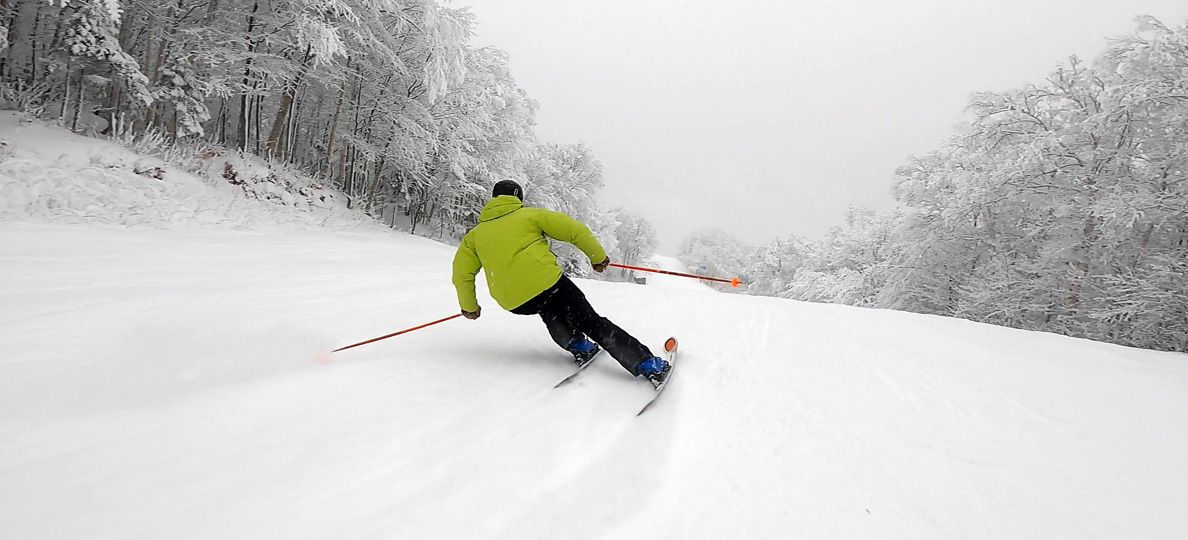
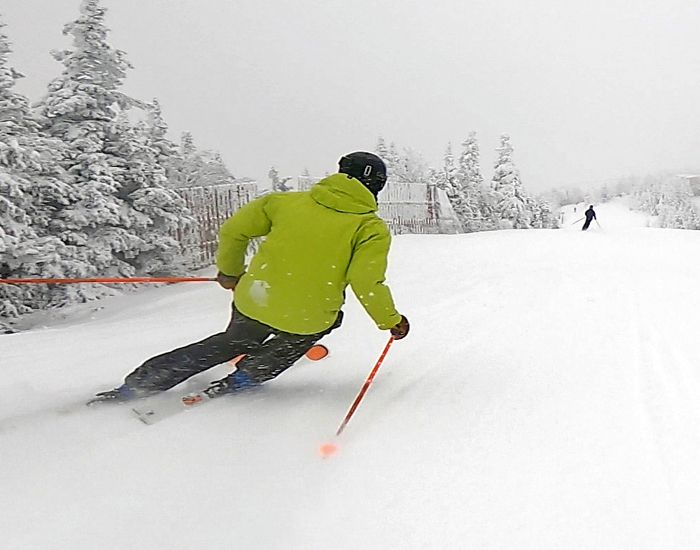
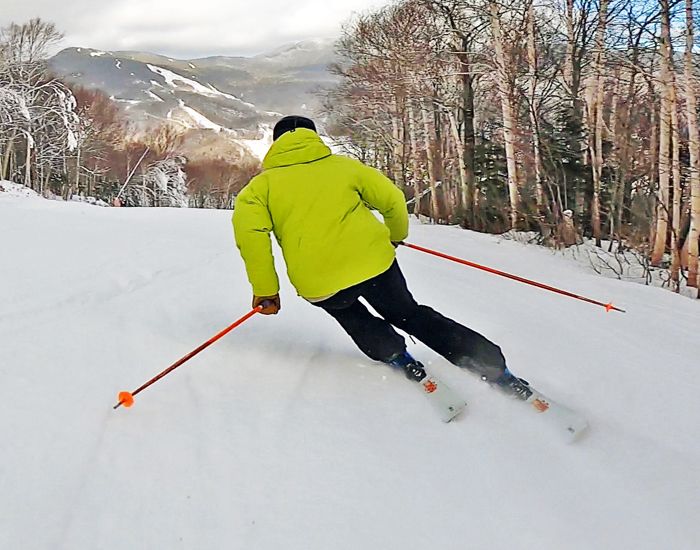
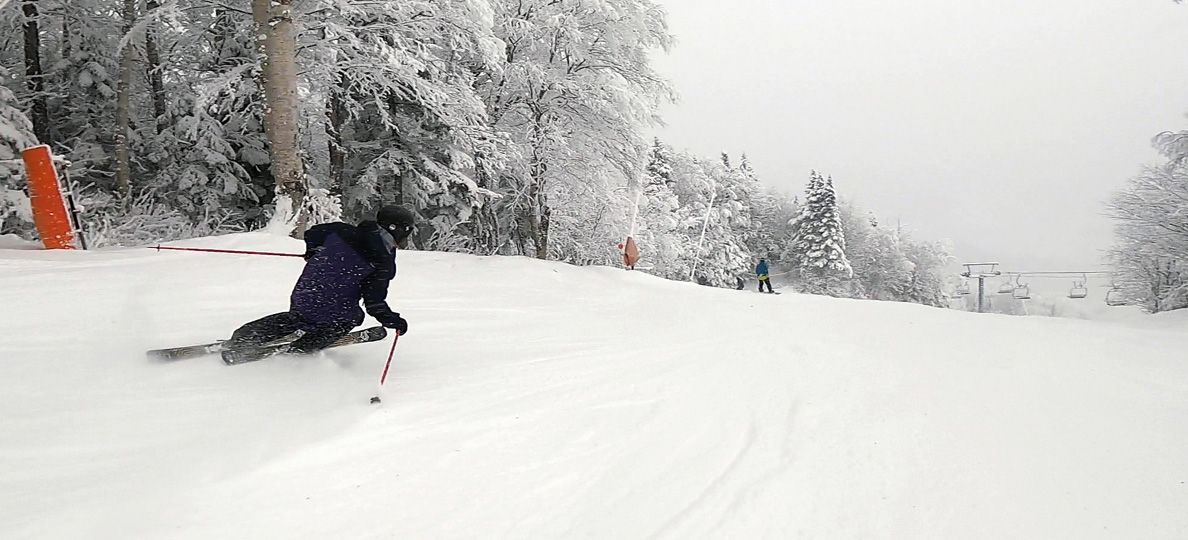
Due to a slow start to the natural snowfall this year, we tested the ski mainly on man-made snow, which definitely was affected both by skier traffic as well as fluctuating temperatures. It’s both fair and safe to say that the conditions we tested the MX88 in were not easy. We ended up with glare ice, sugary moguls, death cookies, and uneven snow surfaces due to early season grooming (not the groomer’s fault). I can’t really think of any ski I’d rather have on my feet during those conditions, and the best part is, this is real-world skiing. It’s not post-card skiing, this was real-deal east-cost stuff, and the Kastle MX88 handled it all like a champ. I’m hoping to get another shot on this ski, with more natural snow, smoother trails, and open woods. The weight will be an issue when it comes to quick turns in the bumps and trees, especially given the stiffness and flatness of the tail, but that’s really the only limitation I can think of for a non-powder ski.
We’re pretty stoked on the new changes for the MX88, and even in some of the harshest ski conditions imaginable, we were continually impressed with the poise and precision of these high-performance skis. The build quality and engineering are second to none, and the way they put it all together makes a lot of sense. Price can certainly be an issue when choosing your next ski, but if that’s not something that concerns your budget, the premium quality of the Kastle skis, and specifically the all-mountain MX88, should be at the top of your list.