

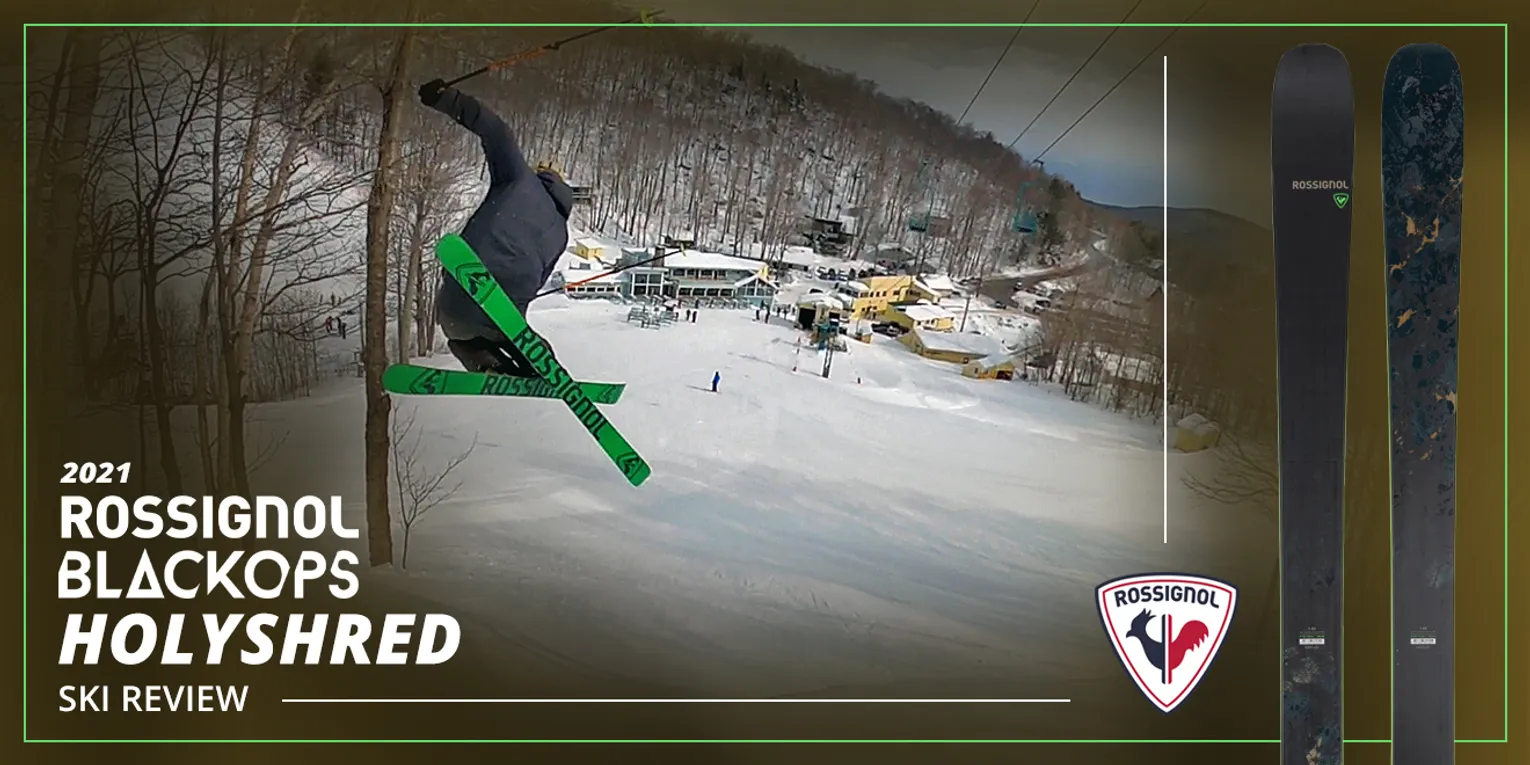
2021 ROSSIGNOL BLACKOPS HOLYSHRED SKI REVIEW
We’re about halfway through the month of April, which means you’ve got about 2 weeks to enter your photos in our Rossignol #StayHomeHappy Contest! As a reminder, the winning photo will take home a pair of the BLACKOPS Sender skis we reviewed last week. Today, we’re going to look at another ski in the BLACKOPS line, the Holyshred.
The Holyshred is actually not entirely new for 2021. In fact, we’ve actually reviewed it before, technically. Holyshred is the new name for what was previously the BLACKOPS 98. It’s one of the skis that helped inspire the expanded collection we’re getting from Rossignol next season. While it helped kick off what is now a pretty expansive line of skis, it’s still just one of two twin tips, the other being the super-wide Gamer coming in at 118 mm underfoot.
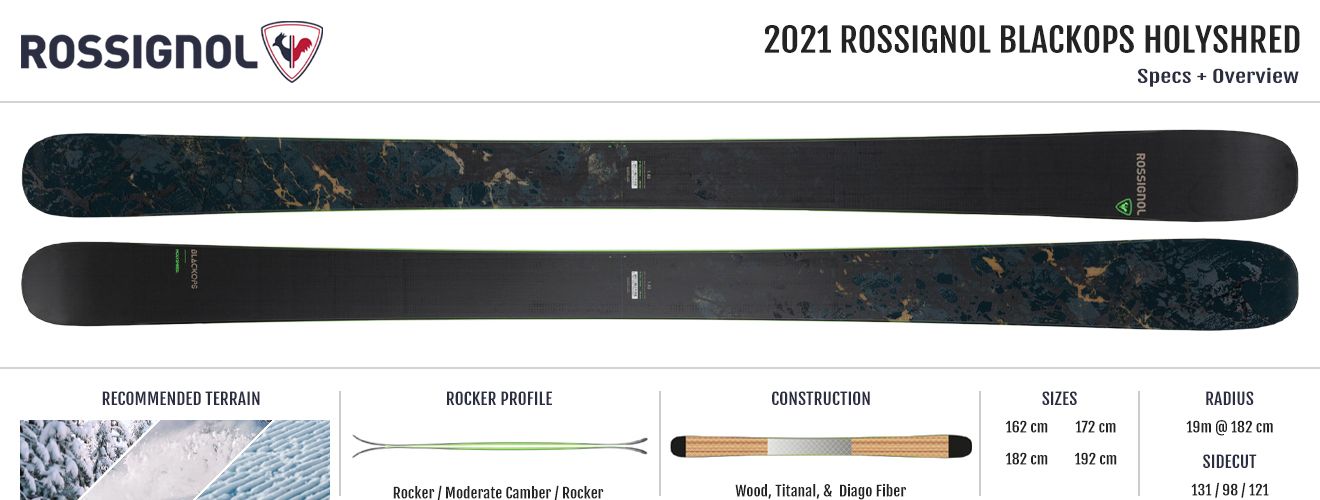
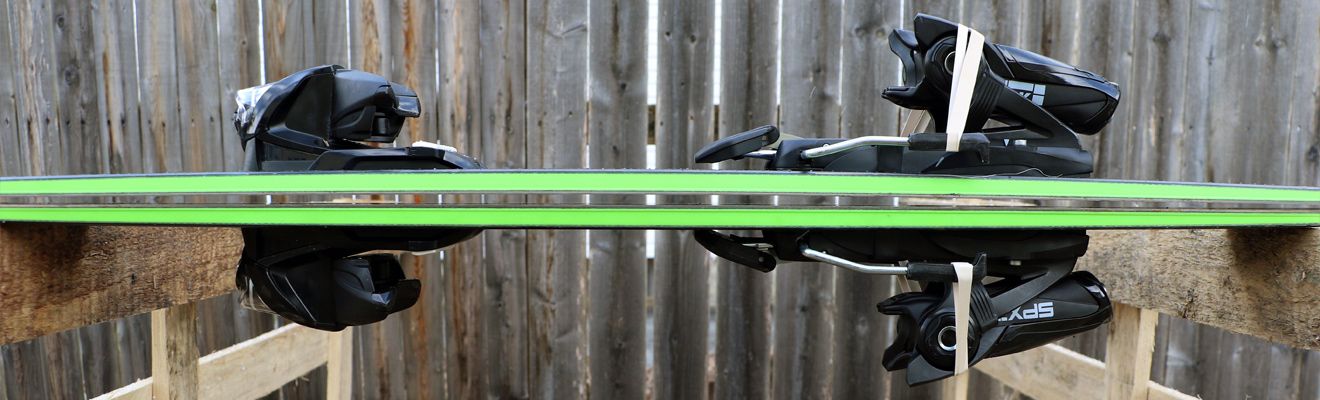
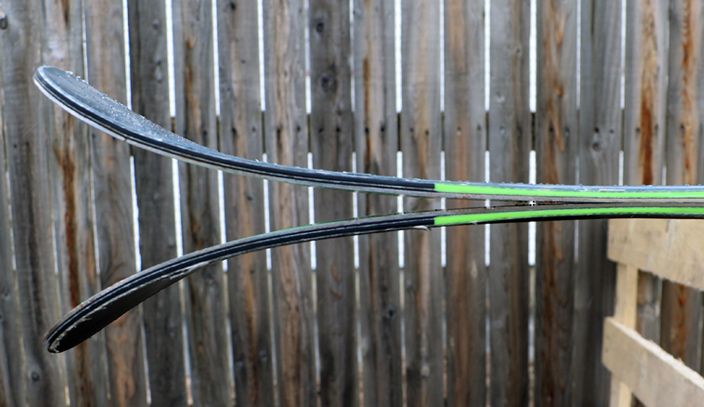
Let’s take a closer look at the Holyshred. Previously, the BLACKOPS series was home to what were kind of “secret” skis. They didn’t release many details about their sidecut dimensions, construction, or really any details about their design. Now, however, we get all the deets. It starts with a poplar wood core. Rossignol then uses a sheet of metal underfoot (much like they do in the Sender) and Damp Tech (rubber) in the tips and tails. They also use what they refer to as Diago Fiber, a cross hatching additive similar to Carbon Alloy Matrix. The Holyshred utilizes a rocker/camber/rocker profile. There isn’t a huge amount of rocker. It’s a little longer in the tip, but still fairly subtle. The camber is actually relatively high too, which gives the ski a lot of pop and energy, which we’ll get to. As we mentioned, it’s a twin tip shape, so it uses a different mount point than we see in the directional BLACKOPS skis. For comparison, the mount point on the Sender is about 7 cm back from true center. On the Holyshred, it’s about 4.5 cm back.
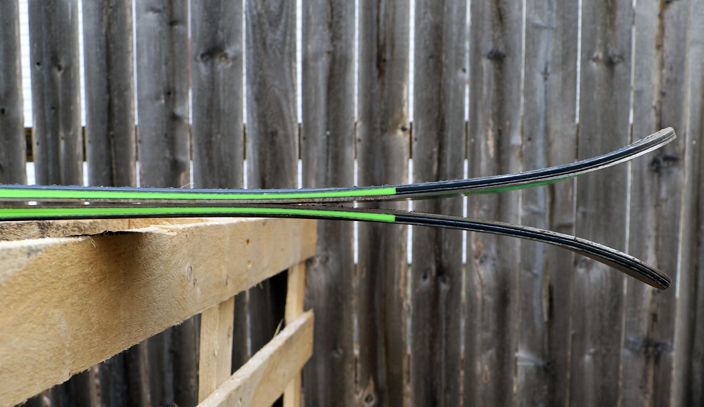
So, how do they perform? Rossignol describes it as “the perfect platform. A progressive all-mountain gunner. Arc and carve. Boost and blast. Smear and slash. Grease your ‘stache.” I’m not sure about that last past, as I’ve never had a mustache in my life, but the rest sounds pretty accurate to me. I suppose “the perfect platform” is arguably a bit much, as of course it’s not the perfect ski for everyone, but a lot of people do and will like its performance. For me personally, it’s right up my alley. With a freestyle background and also the desire to ski a wide range of different terrain, it checks a lot of boxes. Let's start with simply groomer performance.
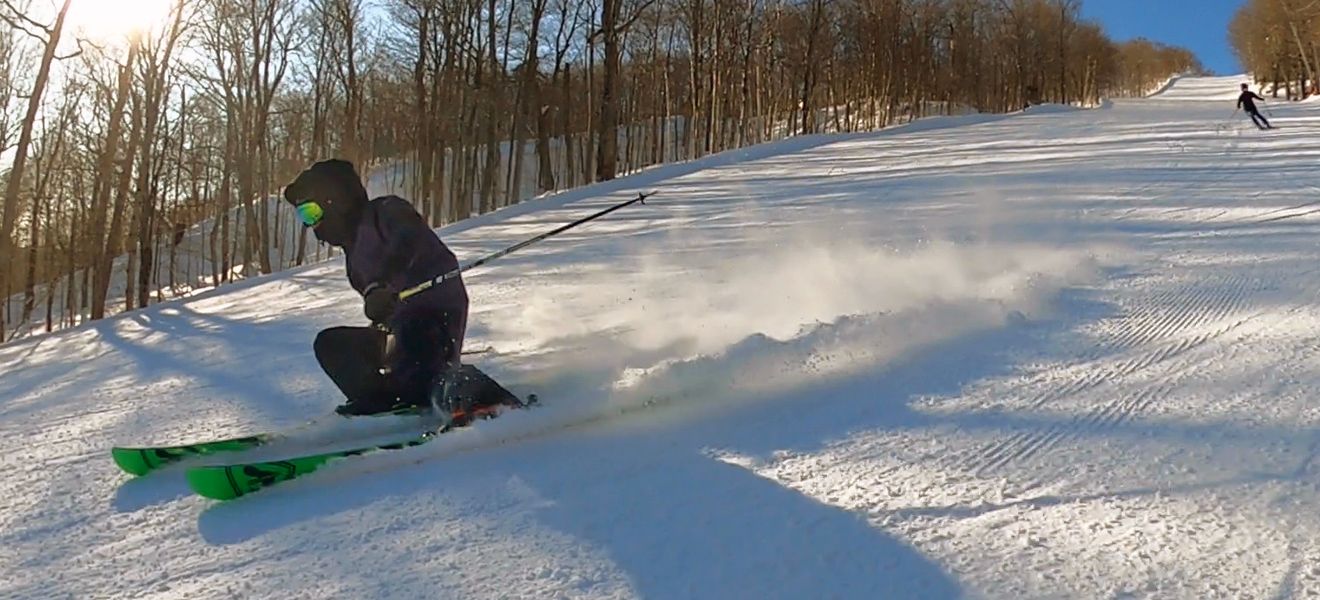
On firm snow, the Holyshred is going to surprise you if you’ve never skied it before. Twin tips aren’t necessarily known for their firm snow prowess, but the Holyshred can rip some turns. The metal laminate underfoot and those rubber inserts in the tip and tail make the Holyshred one of the smoothest, dampest, and quietest twin tips out there. It holds an edge impressively well and just eats up variations in the snow surface. The Sender and Sender Ti, which we’ve talked about recently, have similar characteristics, and it’s basically all thanks to the success of this ski. It doesn’t, however, just stay glued to the snow. If you want to load up the tail and pop off a little natural hit, it does that really well. It also feels energetic, responsive, and pretty snappy out of a turn. It’s not the stiffest ski in the world, and with the relatively high camber height, you can flex it and load up a lot of kinetic energy in a carve. It almost gives it too characteristics. You can cruise and just make these smooth, big, open turns, or you can give it more skier input, get it to flex more, and it responds accordingly.
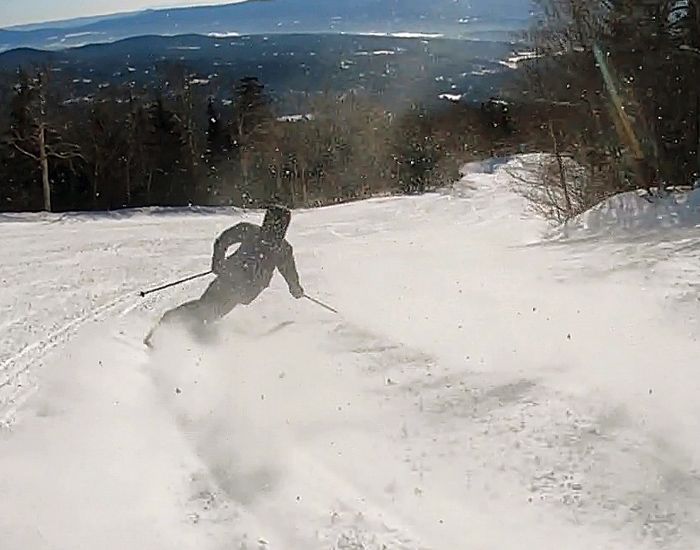
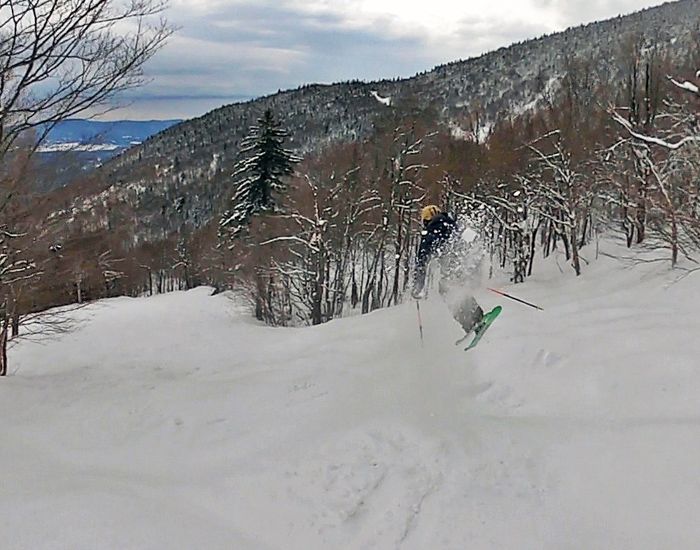
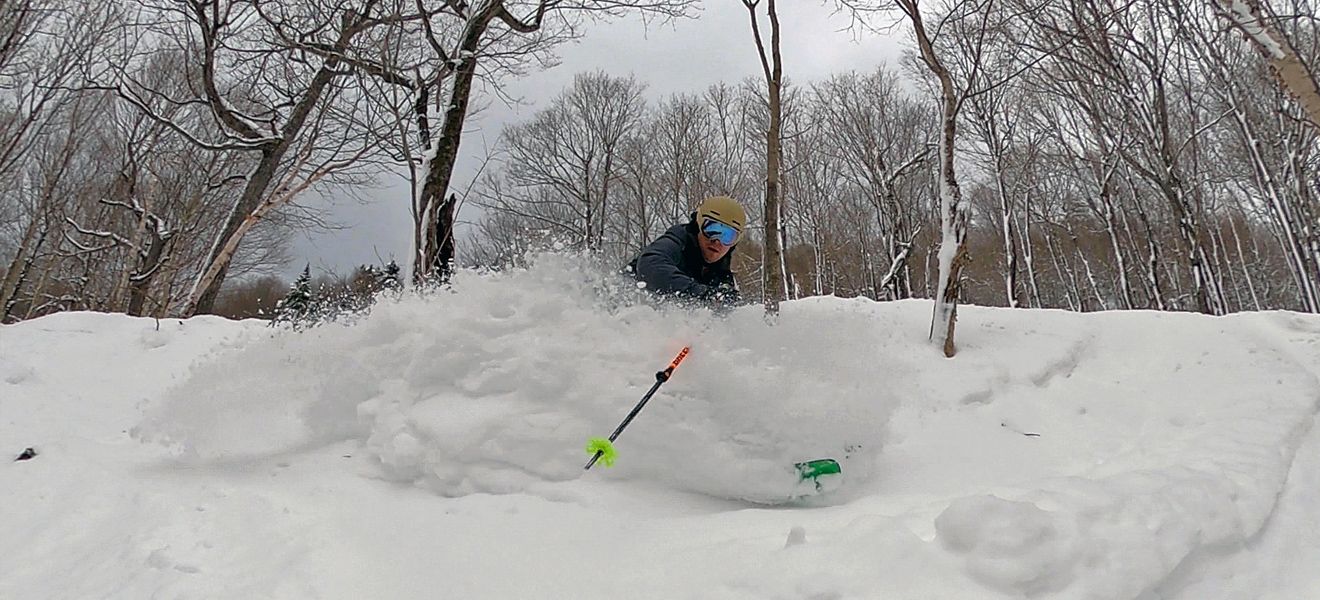
At 98 mm underfoot, we expect some soft snow performance too. The tip shape of the Holyshred does a fantastic job giving the ski more float than you might expect out of a 98 mm ski. There isn’t a ton of early taper, which means there’s a lot of surface area up there. That helps keep your tip above the snow and helps the rest of the ski plane at a lower speed than you might expect. This phenomenon, combined with the smooth flex pattern and tail rocker, makes it a blast in soft snow conditions. You can release the tail and get the ski to pivot, slash, and smear more easily than the directional BLACKOPS skis. It’s likely going to be the go-to choice among the BLACKOPS range for skiers who prefer skiing with this “modern” style. Down the fall line, slash a turn, and right back to down the fall line; the Holyshred loves that kind of stuff.
And then, of course, there’s the terrain park application. Chris Logan and Parker White are the two skiers who helped develop this ski, and those skiers both have strong freestyle and park backgrounds. The Holyshred is a little heavier than most “dedicated” park skis, but it works incredibly well for skiers like myself who might be aging out of the “dedicated” park skier description. I don’t compete anymore (at least not much) and I don’t feel like I need something narrower, quicker, and lighter. I’m not too worried about how many switch ups I can get on a down rail or whether I can get a switch 1080 around on a tight slopestyle course. These days, I care more about how smooth a switch 540 feels and greasing rails at high speeds with minimal tricks. For that application, the Holyshred is sweet. I personally would probably mount it even a little further forward than the -4.5 from center spot to give it a little more balance in the park, but you certainly don’t have to, it’s still a really fun ski in the park.
I’ve been asking for skis like this for the better part of a decade. A twin tip that’s more capable as an all-mountain ski and more powerful than your traditional twin tips, that’s pretty much exactly what I want as a skier. As my generation of park skiers grows up, and another generation fills out place, it just means there are more of us out there in general, and that’s clearly driving innovation and developments in the twin tip works. This skier couldn’t be happier to see it.
