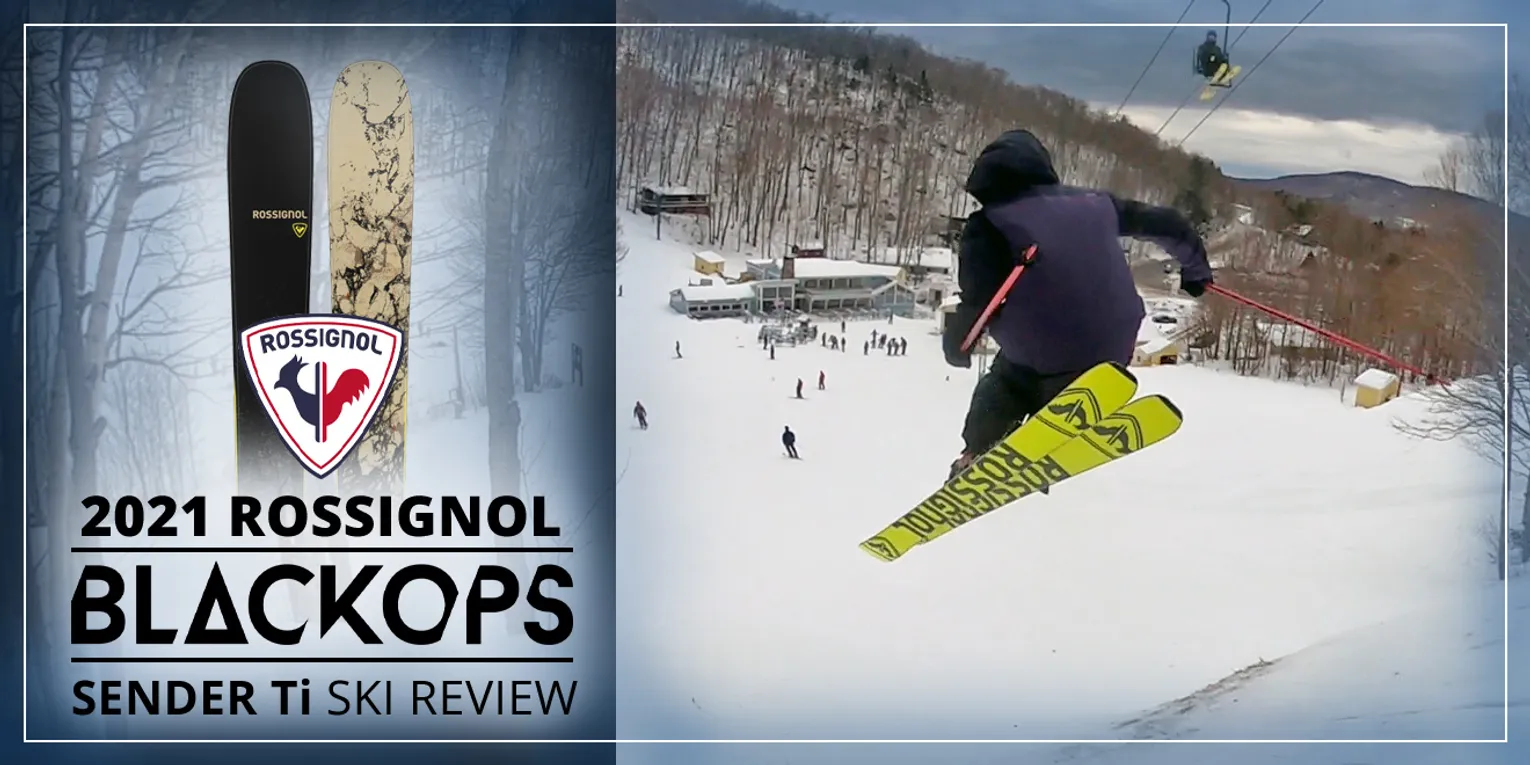
2021 ROSSIGNOL BLACKOPS SENDER TI SKI REVIEW
Ski development and the progression of shapes and designs is fun to watch. We’re in a really good place in the ski industry right now. Just about every manufacturer is listening closely to customer and athlete feedback and developing new skis with technology we’ve never seen before. This review follows that trend exactly. Rossignol has a brand new line of freeride skis for 2021, replacing iconic skis such as the Soul 7 and Sky 7. The Soul 7 is replaced by the new Rossignol Sender. The ski we're going to look at today is a beefed up version of that ski, the Sender Ti.
I like to think of this ski as Rossignol taking what they learned from the 7 Series (Soul, Sky, etc) and the previously somewhat-secret BLACKOPS collection and blending their performance into a new model. Before we get into it, those BLACKOPS skis that helped inspire the Sender Ti and the new 2021 skis still exist. The BLACKOPS 98 is now the BLACKOPS Holyshred and the wider 118 is now the Gamer. So, fans of those skis need not fret, they’re still in the line. This new Sender Ti, however, is not a twin tip, it’s a directional ski like the 7 Series.
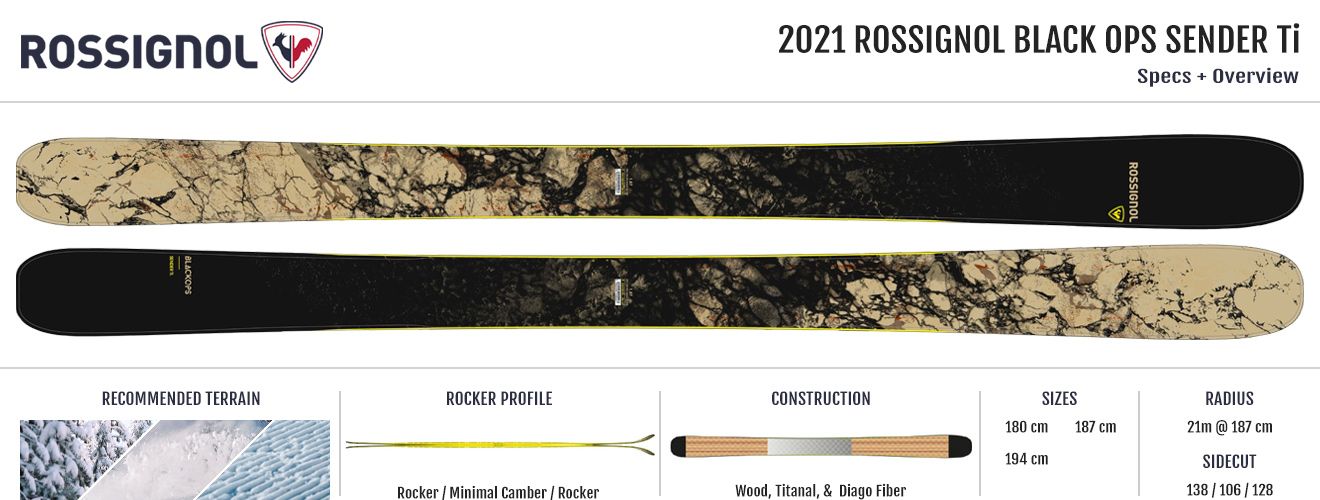
Let’s break down construction as there’s a lot going on in this ski. It’s built in a traditional sandwich construction style, but has a whole heck of a lot of different supporting materials. It all starts with a poplar wood core, but that poplar wood core has dual ABS Line Control Technology. We saw that first in their Experience and Hero collections. Instead of a vertical strip of metal running through the core, which we see in the race skis and the Experience 88 and 94, this uses ABS material. But wait, the name says TI, so there must be metal? Yes, in fact, there’s a full sheet of metal along the base of the ski. There’s also a partial metal laminate just under the topsheet of the ski, located under your bindings. This metal laminate actually extends out over the ABS sidewall of the ski and is designed for much more than just binding retention. It increases torsional stiffness, gives you more of a platform to push against during a high speed, demanding turn, and it also allows Rossignol to tweak the flex pattern of each length by adjusting the size of that sheet of metal. The 180 cm ski in particular is very interesting to look at as the thickness of the core tapers quickly behind that metal sheet into a very, very thin profile. The idea is to create a ski that’s balanced across all lengths. Manufacturers often focus on one length during development, which leaves the other lengths feeling a little different. In addition to all this, we also get Damp Tech (rubber inserts in the tip), a wood core that’s extended further into the tip than previous skis, and a mini Air Tip (call it Air Tip 3.0 if you want) that’s basically just the very last 2 inches of the tip.
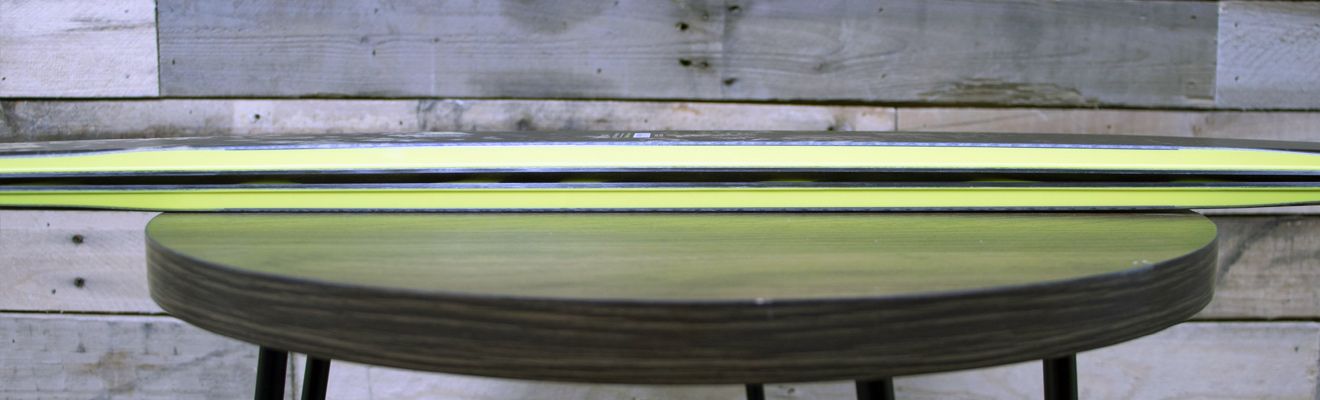
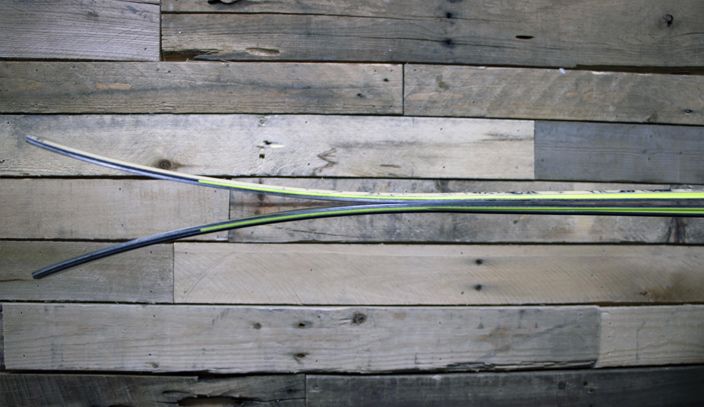
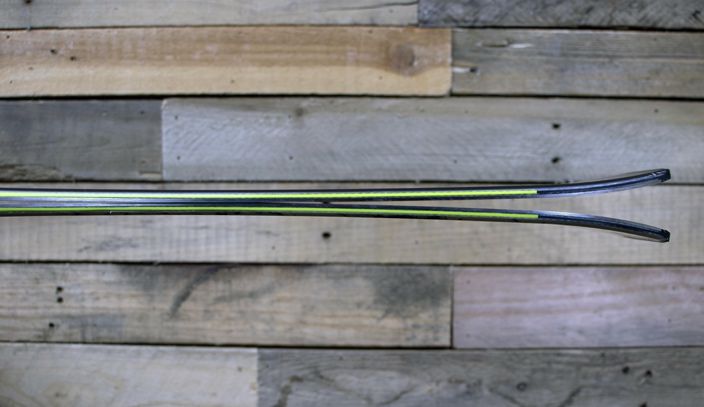
Shape is more straight-forward than construction, but it’s still important to talk about because it differs so much from the Soul 7. There is still rocker in the Sender Ti and there’s still early taper, but it’s much more moderate now, not the banana rocker and 5-point sidecut we saw in the Soul 7. This shape has become what I personally consider the “modern” freeride shape, which we’ll get to later in performance. There’s a nice amount of camber underfoot, too. The 180 cm length that I personally skied the most has an 18 m turn radius. The 187 goes to 21 and the 194 (holy crap that’s a big ski) is 24 m.
That’s the recipe, but how does it taste? Well, like a nice Ribeye steak, it’s much meatier than the Soul 7. That ski was known for its quickness, lightweight feel, forgiveness, and prowess in tight off-piste terrain. The Sender Ti is definitely a heavier, stiffer ski. It doesn’t have the same ultra-maneuverable feel, but I’m perfectly okay with that given its improvements elsewhere. We’ve tested the Sender Ti at a lot of different resorts thus far, but what sticks out most in my experience is a day at Mad River Glen. Mad River is known for it’s technical, demanding skiing, and it was a perfect place to test the Sender Ti in my opinion. Does the Sender Ti require more skier input in tight Vermont trees than the Soul 7? Yes, but it’s not too demanding. This shape has been proven to provide a really cool mix of performance. If you’re riding a relatively flat ski and making pivoting turns, you still benefit from the rocker profile of the ski and it releases its edge pretty easily. Not as easily as a Soul 7, but you don’t feel locked into a turn. I had tired legs from skiing 6 or 7 days in a row before our day at Mad River and I was pleasantly surprised how easily I could maneuver them. They also have a noticeably more stout and stable feel than the Soul 7, so anytime I had an opportunity to hit a little cliff or catch some air mid-run, I was much more confident doing so than I would’ve been on a Soul 7.
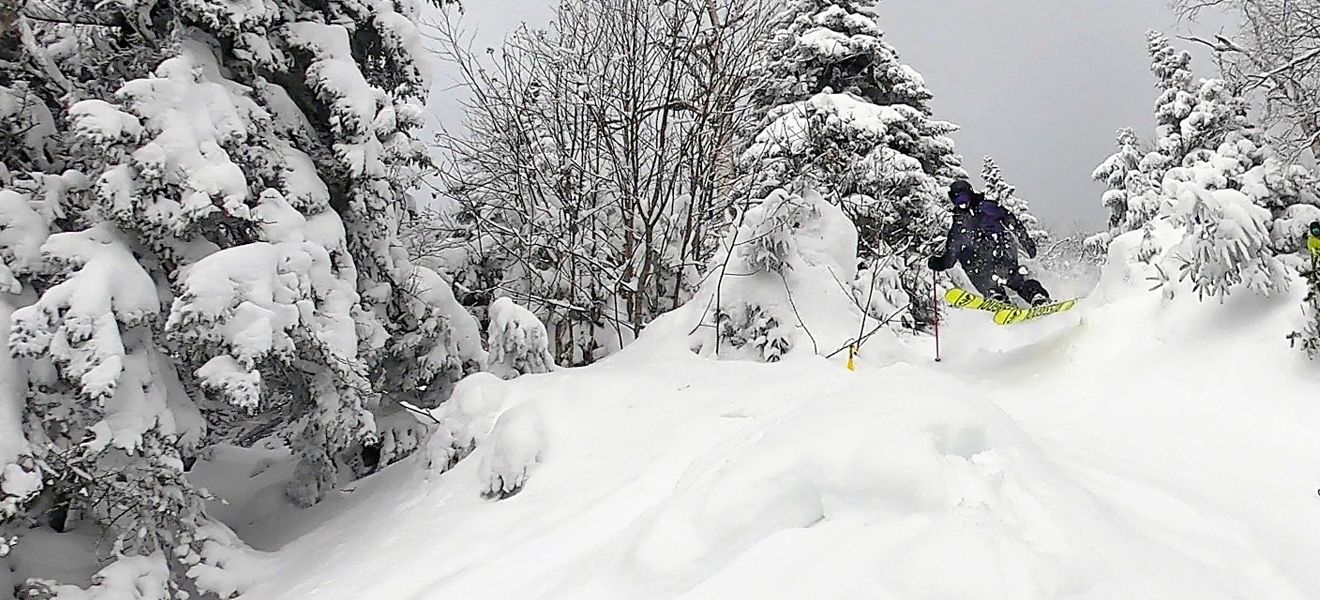
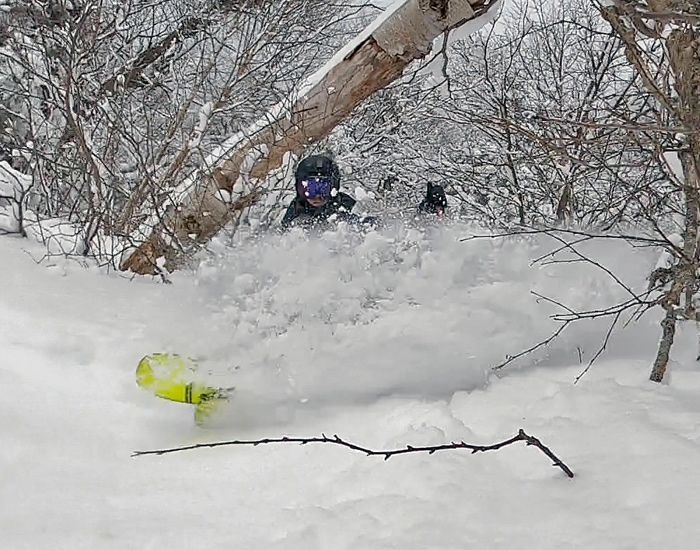
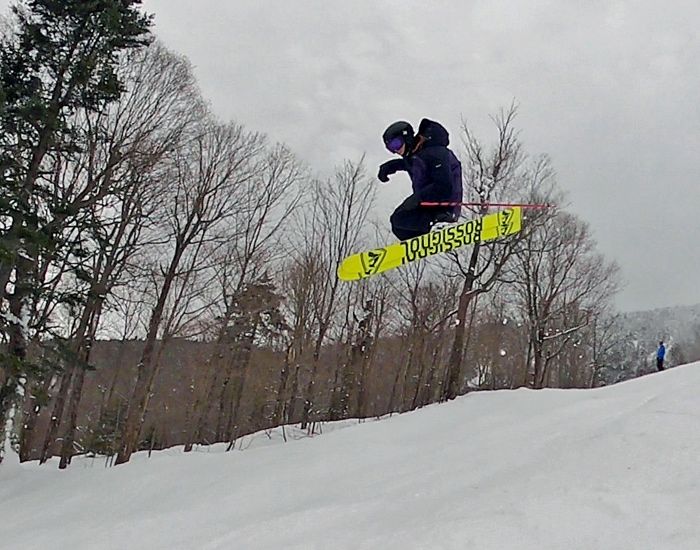
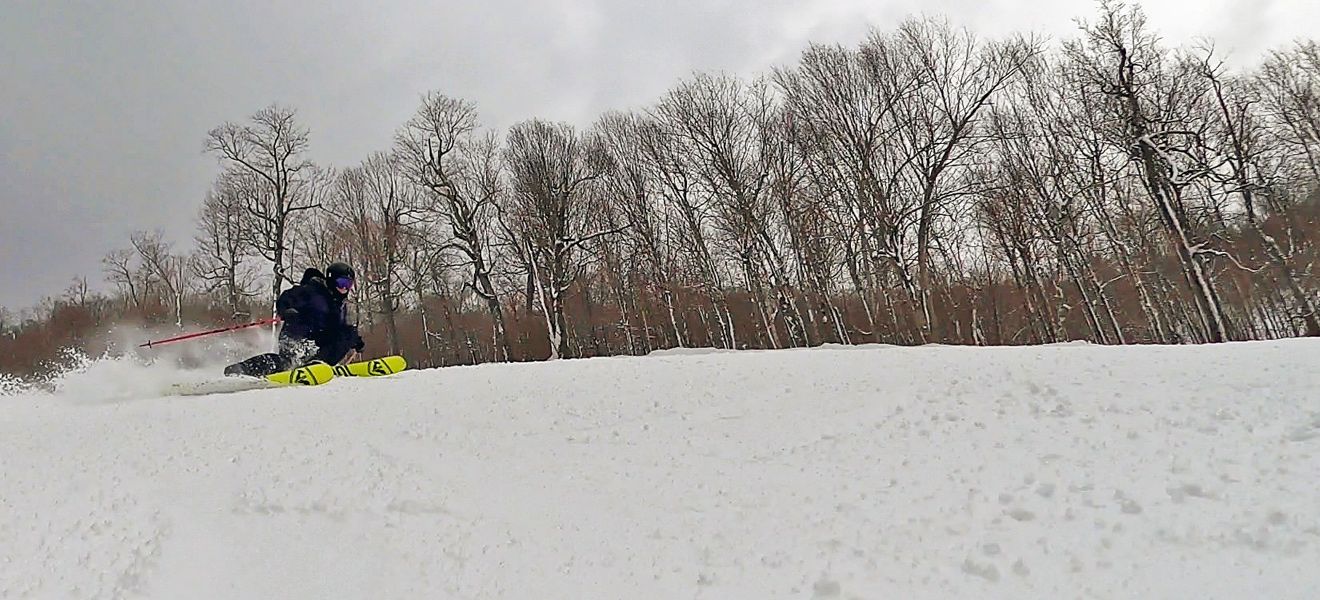
Which brings me to why I like this ski so much. We haven’t had a directional ski in this width range with this amount of stability from Rossignol in a long time. The Soul 7 was not a ski I would’ve picked to go straight-lining through un-groomed, choppy snow, but the Sender Ti does it quite well. One of my favorite things about MRG is all the natural hits on the mountain, but often the landing of those hits is basically a mogul field. You need a ski that will stay stable and composed upon landing. The last thing I want to worry about is my ski getting deflected when I’m landing in un-groomed snow and planning on straight-lining out of it at high speeds. The Sender Ti rips in this application.
The Soul 7 was never much of a contender on groomers. What made it such a fun ski in the trees and powder took away from its edge grip and stability on groomers. No need to worry about that on the Sender Ti. The blend of materials in this ski give it excellent edge grip. Edge grip and general stability were often the performance that expert skiers pointed out the Soul 7 lacked, and now it’s all there. I had a blast linking carving turns on this ski. Where the Soul 7 would’ve bounced a little more and lost its grip, the Sender Ti eats it up and asks for more. You can brush your hip along the snow on this thing, which I was never able to achieve on a Soul 7.
When I first heard of this new BLACKOPS line, I was worried they were changing the skis I already like so much, the BLACKOPS 98 and 118. I was extremely relieved to find those skis still exist, and I love the way Rossignol borrowed some of their performance for these new skis. They are definitely different, but the rubber insert in the tip and the overall construction technique give them a relatively similar, damp, stable feel. I do think the Sender Ti has more energy out of a turn than what’s now the Holyshred, although that ski pivots and smears a little more easily. The BLACKOPS collection consists of a lot of different skis now and I think it allows skiers to easily pick what’s right for them. There’s a non-Ti version of the Sender too, which is going to be a better choice for skiers who valued the lightweight feel and quickness of the Sky and Soul, but now skiers looking for more stability have an option within Rossignol’s directional skis, which didn’t previously exist in their freeride line.