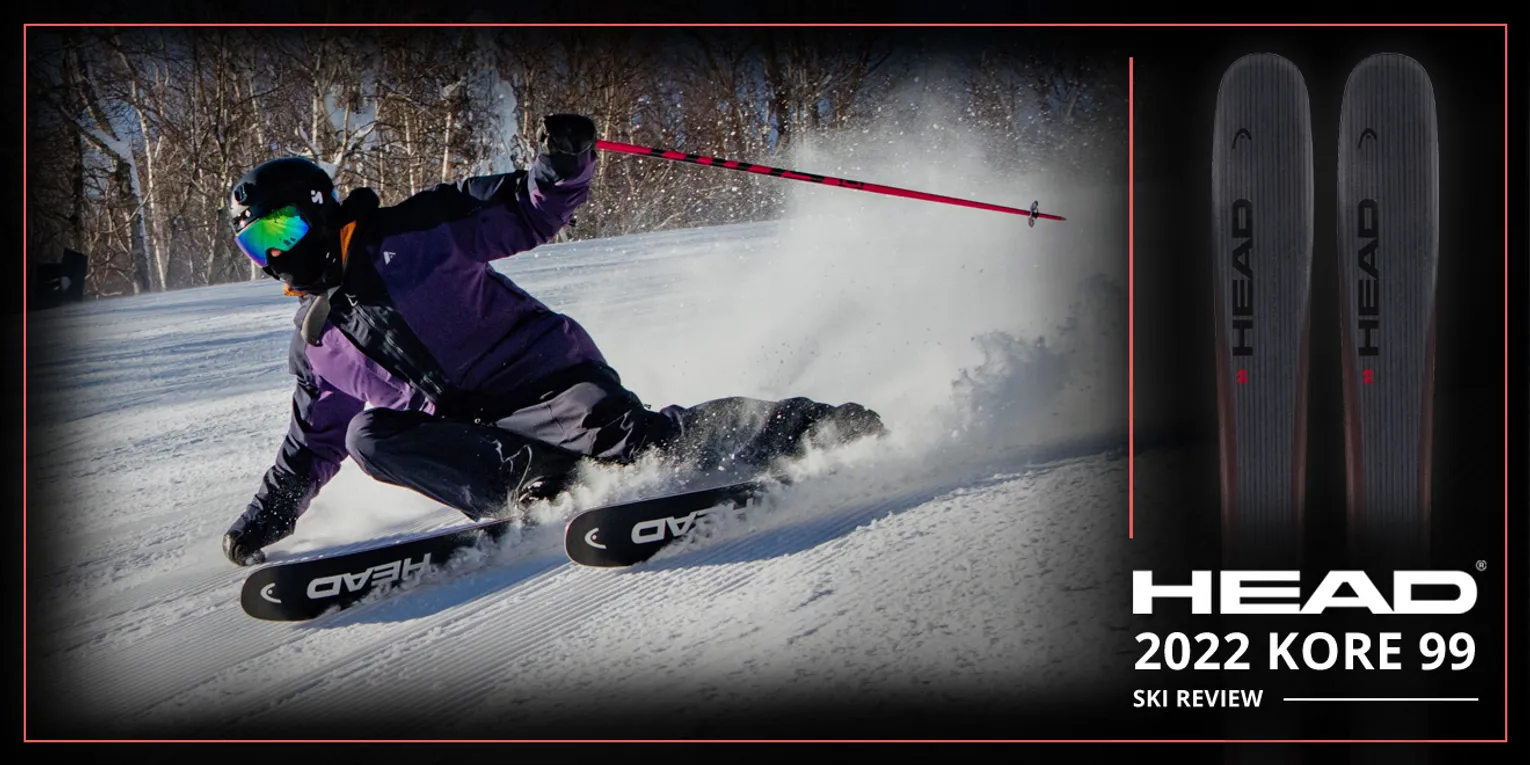
2022 HEAD KORE 99 SKI REVIEW
The Head Kore collection has carved a little niche for itself in the ski industry. The line in general, and especially the Kore 99, has made a name for itself for being lightweight, stiff, powerful, and agile. It’s one of those skis that feels like an oxymoron. How can something this light be this stiff? For 2022, Head has revamped their Kore collection, but has retained the same theme. They’re light, they’re stiff, and they have this unique blend of power and agility that feels different than anything else out there right now.
Let’s summarize the changes to the entire collection before we dive into the 99 specifically. On the men’s side, we get an additional width in the Kore 111, and we also get a lot more lengths. Previously, in the Kore 99, we had a 162, 171, 180, and 189 cm length. Those 9 cm jumps are pretty big--bigger than most brands, at least, and it made it difficult for some skiers to choose their length. Fast forward to 2022 and now we have 6 lengths and perhaps most notably, those 6 lengths are just 7 cm apart from each other. 156, 163, 170, 177, 184, and 191 cm options are going to make it much easier for most skiers to home in on the correct length for them. We told a similar story with the new Nordica Enforcer 100, and we actually get noticeably fewer questions about length choices on that ski, so it definitely seems to work.
AT A GLANCE
|
|
2022 Head Kore 99 Skis |
|

AVAILABLE SIZES |
TURN RADIUS |
SIDECUT |
CORE |
STRENGTHS |
|---|---|---|---|---|
156, 163, 170, 177, 184, 191 cm |
17 m at 177 cm |
134 / 99 / 120 mm |
Poplar/Karuba, Carbon, Graphene |
Strength, Agility, Lightweight |
A quick note on the women’s side of things. The women’s line drops the two widest skis and also features slightly different width options than the men’s side. This is actually consistent with how the Kore skis have always been. The shorter skis have been progressively narrower, so the women’s models weren’t actually as wide as their title indicated. For 2022, we get a Kore 103 W, Kore 97 W, Kore 91 W, and Kore 85 W.
So, those are the differences you’re going to see on paper. More lengths, tweaked widths on the women’s side, and an additional ski on the men’s side, the Kore 111. In addition to these changes, we also get new construction. Maybe new isn’t the right word, rather the construction has been tweaked or refined. Let’s circle back and focus on the 99 as that’s what we’re reviewing in this article. While they all share basically the same construction, there are some slight differences between the narrower (87, 93, 99) and wider (105, 111, 117) models.
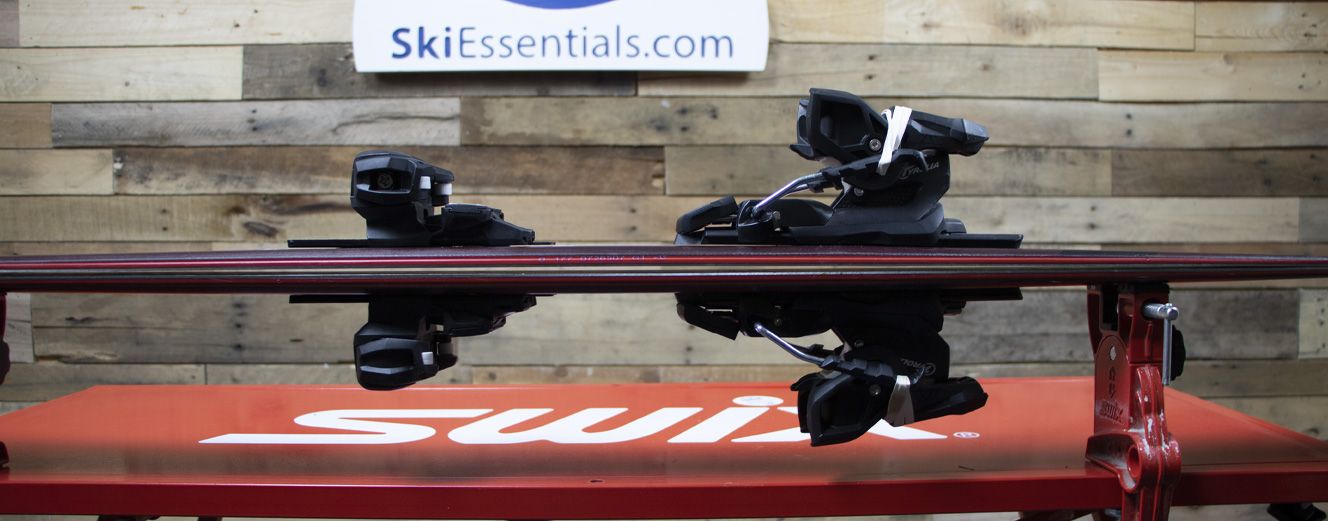
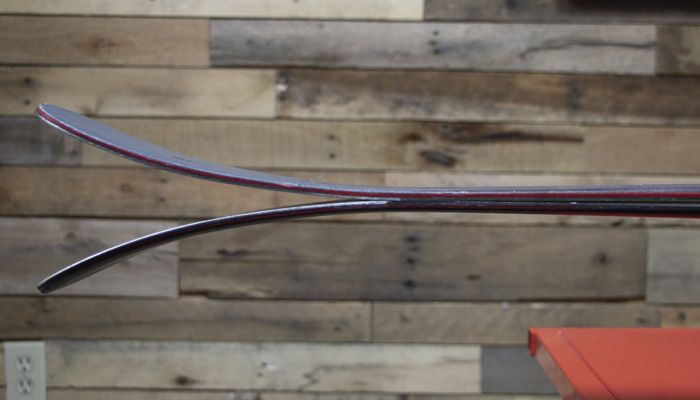
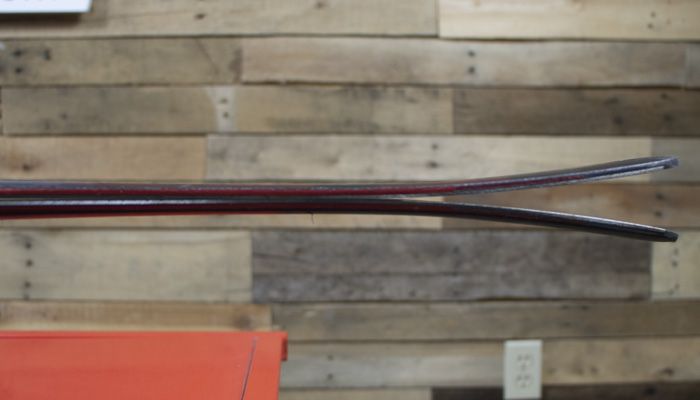
If you recall, these skis feature some unique materials as well as a different topsheet style than any other brand. Most all of that carries over to 2022. These new skis start with a Karuba/Poplar wood core, which provides some nice pop and energy. We get carbon fiber layers both on the top and bottom of that core, which adds in a lot of precision and responsiveness. Then we get Graphene in the tips and tails of the Kore 99, shedding weight and further increasing responsiveness. Add in a vibration damping layer, some fiberglass, and Head’s Polyester Fleece topsheet (or lack of topsheet…) and that’s the construction. No more Koroyd in the 2022 ski. The way it’s pressed together also results in a different look than previous versions. There’s more of a chamfered (I don’t get to use that word nearly as much as I’d like) edge on the top of the ski now, almost like a partial cap construction. Head cites a few different reasons for this. One reason, that I think people will be psyched about, is increased durability. With this kind of finish on a ski, you’re less likely to get chipping along the sides of the ski, which a fair amount of people noted as an issue on the previous skis. Nothing structurally, but it can be annoying to see topsheet chips on a new ski. The other benefit is a slightly more compliant, playful feel, which I think is a great thing to add to the Kore 99.
On the shape side of things, there are less changes. In fact, the 2022 Kore 99 in a 177 cm length has the exact same dimensions as a 2021 Kore 99 in a 180 cm length. The rocker/camber profile is basically the same too, and I can’t really find any significant differences in the taper either. So, new construction, but basically the same shape. Cool, I like it. I had no issues with the shape of the Kores in previous years. I largely didn’t have issue with construction, either, but I can confidently say these new skis are better, at least for the vast majority of skiers.
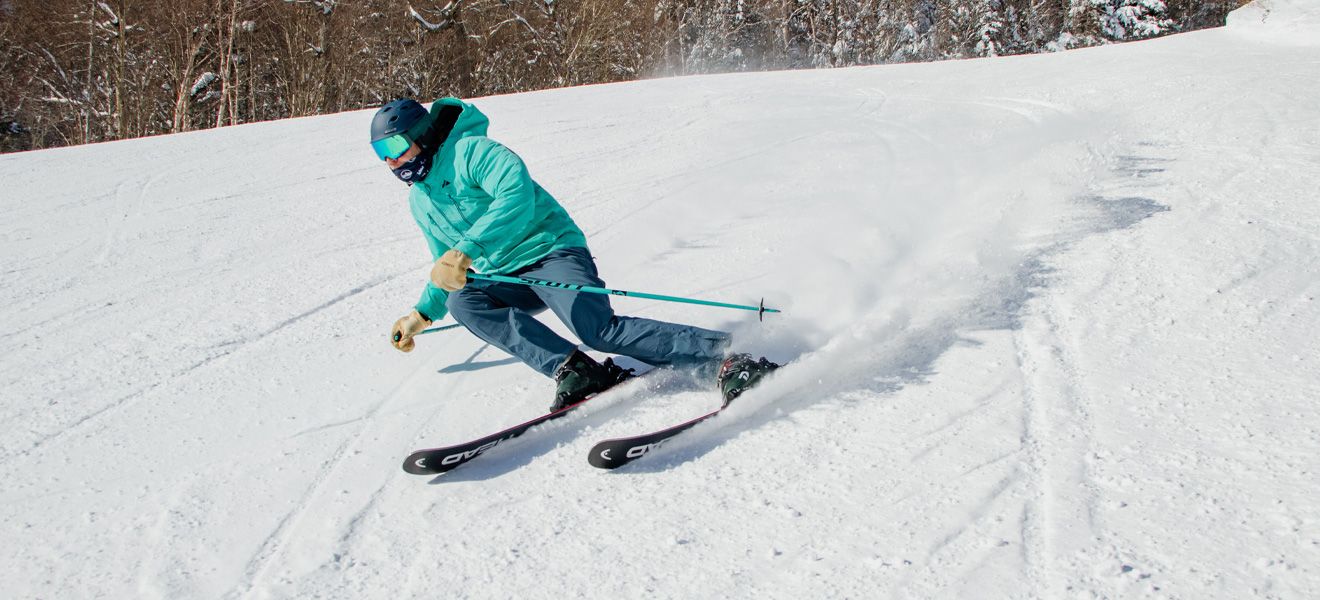
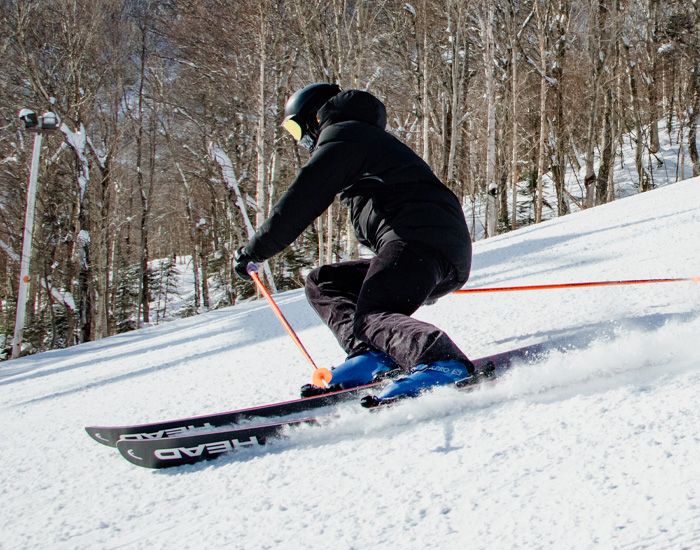
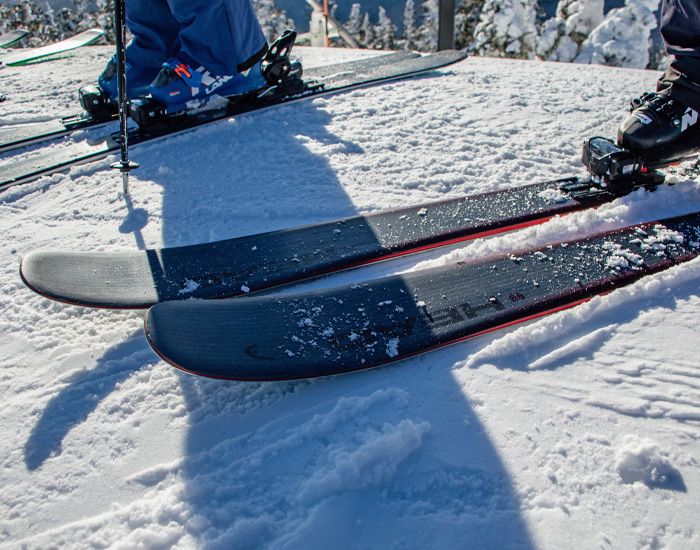
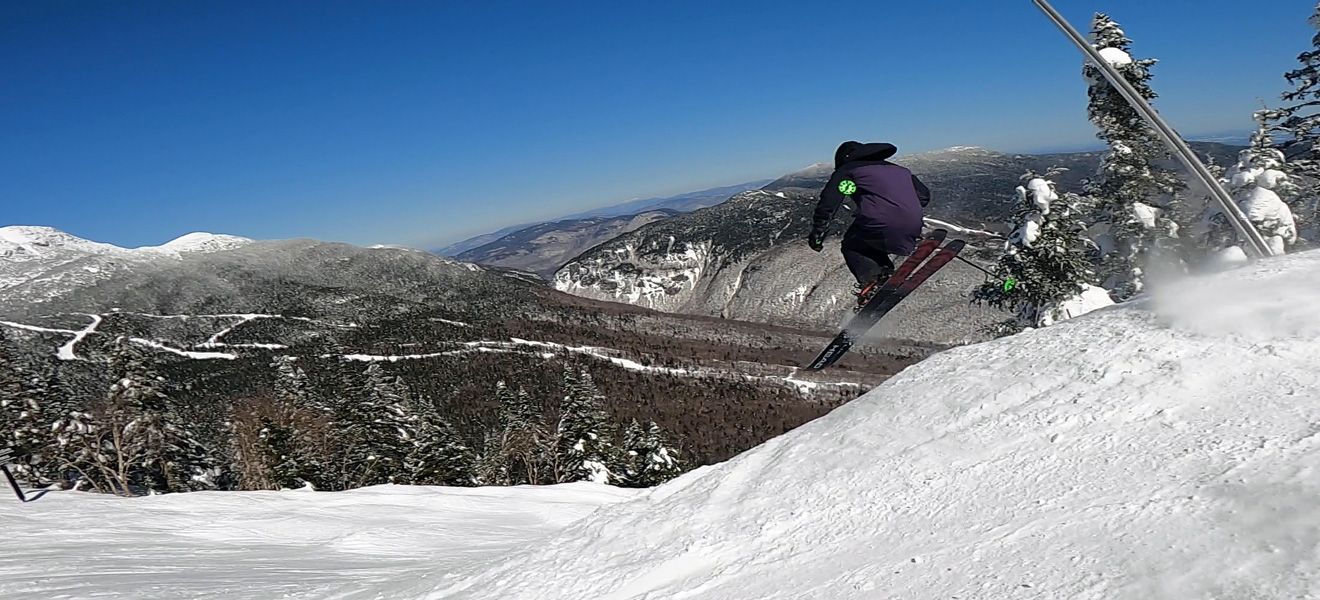
The Kore 99, as we mentioned in the beginning of this article, is one of the top skis on the market in terms of combining a lightweight feel with a stiff flex pattern. The new Kore 99, with the new construction, is even lighter. The new ski is listed at 1800 g per ski, which is a little over 100 g lighter per ski. Sweet! That’s putting it among some of the lightest skis in this width range, at least in terms of skis that are intended for resort use, not just touring. The Kore 99 is still a stiff ski, although it’s not quite as stiff as its predecessor, which I think is a good thing. Let’s start out analysis with groomers.
When you click into a ski that’s this lightweight, you don’t expect it to be this powerful on a groomer. The Kore 99 can absolutely rip. Although it is a touch softer than the previous ski, it still requires a lot of skier input when carving. You can push as much as you want, and the ski won’t wash out. It’s a weird feeling. Not weird in performance, just weird in the sense that it doesn’t really make sense that a ski this light can do that. It reminds me of the Elan Ripstick 96 in that sense, but the Kore is stiffer. Those skis are definitely in the same conversation but have a different feel. Skiers who like a precise, stiff ski with a lot of feedback and responsiveness may prefer the Kore. It’s really interesting, actually, and that comparison is something I could spend a lot of time talking about. In theory, they basically do the same thing, but with a different attitude. The 177 cm length I tested in the Kore 99 has a 17-meter turn radius, but it actually takes some effort to get it to come across the fall line. I attribute some of that to my weight, at around 150 lbs, but it’s a ski that demands a lot of input if you’re trying to get it to flex into a shorter radius carve. On the other hand, it makes big, arcing, high speed turns 100% better than you’d expect if you just looked at its weight and shape. It’s strong, stays composed, and doesn’t really lack any edge grip.
Now, the previous ski basically had all of these characteristics as well, but the new version feels smoother. We experienced a lot less chatter in the 2022 version of the 99, as well as the other widths, even on firmer snow. This is a huge upgrade for this 99, and an improvement that a lot of skiers will appreciate. I’m not sure whether to give credit to removing Koroyd, or the chamfered shape, or the other tweaks to construction, but this new ski does feel more supple, more compliant, and has more vibration damping. At least, that’s what I found. You have to take all of that with a grain of salt, so to speak, as it’s still a highly responsive ski, but I think far less skiers will find it too responsive, whereas that seemed to happen more often with the current ski. Advanced, expert, powerful skiers had no problem with it, but some found it a little too much.
Now, when you take this ski off trail, it really starts to shine. In fact, I don’t think I would be doing it any injustice by saying there are better carving skis in this width range. If I’m insulting any ski engineers at Head, my apologies, but my point is the place where the Kore 99 is a superior ski to most is tight, technical terrain. It’s insanely agile. It’s maneuverable, it’s quick, and it does it all with a more precise, responsive feel than most. Skiers who value technical terrain and have good technique will absolutely love the Kore 99. It’s such a good ski for flicking around through trees, bumps, etc. Now, even though it’s a little softer than the previous ski, I do still think it’s best for a relatively advanced skier. The tail in particular is softer than the 2021 and prior version, but it’s still stiff enough that it can kind of accentuate a mistake. Advanced and expert skiers won’t have any issue with this. When you make a mistake, the ski lets you know, which is a nice feature. An intermediate, on the other hand, may find it a bit overwhelming and would likely be better off on a softer-flexing, more smeary, slarvy ski, rather than one that’s so quick and responsive.
All these tweaks to construction and the resulting changes in performance are great. I like the new Kore 99 more than I liked the older Kore 99. I don’t think there will be many skiers who don’t… In fact, I can’t really think of anyone who wouldn’t value the changes to this ski. It feels right at home at Stowe too. You can rip around on steep groomers like Hayride, Nosedive, and Lift Line, then go ski some technical double fall line bumps on National, Lookout, and Starr. Then you can go venture into the Notch and ski some technical tree lines. It does a lot and is a valuable ski for a high-level skier. As a bonus, 1800 grams per ski is undoubtedly light enough to use as a touring ski. So you could slap something like a Duke PT or a Shift on the Kore 99 and use it in the resort, in the backcountry, and basically anywhere you can think of.