2023 FISCHER RANGER 102 SKI REVIEW
Just over a month ago, Fischer launched their new 2023 Ranger collection. On that same day, we released our Overview article and video summarizing the changes and explaining our involvement in the development process. Before we get into the nitty gritty here, thanks again to Fischer for including us. We thoroughly enjoyed the prototyping and testing process and are quite pleased with the new skis. Since that release, there has been huge demand for a more in-depth review of these skis, and most notably the 102. And here we are! After logging another 10-15 days on the Ranger 102 between Jeff, Bob, and the rest of our staff, we’re excited to talk more about what this ski can do, how it’s different than the Ranger 102 FR, how it compares to other skis in the industry, and more.
Let’s start by summarizing the differences between these skis and the outgoing Ranger FR models. Construction is where we find the biggest changes here. The new skis have a full wood core with a blend of beech and poplar that runs from tip to tall. Aeroshape and the Carbon Nose are both gone for 2023, giving the ski a more consistent look through its extremities. We think it’s fair to say it looks (and feels) like more traditional construction. Vertical sidewalls, sandwich construction; lot of skis are built like this, where the previous Ranger 102 FR had a much more unique look to it. A really important element in these new skis is Fischer’s new Shaped Ti technology. Every Ranger has it, with narrower skis featuring longer metal and wider skis shorter metal. As the middle ski in the collection, the Ranger 102 has much more metal than the previous ski, which only utilized it for binding retention, but less metal than something like the Ranger 99 Ti. It’s basically shaped like an H, although there’s something about it that looks kind of like elongated butterfly wings to me, and I keep finding myself describing it as wings even though that might not be the best way to describe it. Right underfoot there are little triangular cuts in the Shaped Ti, which Fischer is calling Flexcut. This is allowing the ski to bend more right under your foot, giving you access to deeper carves and a more natural flex pattern throughout.
AT A GLANCE
|
|
2023 Fischer Ranger 102 Skis |
|


AVAILABLE SIZES |
TURN RADIUS |
SIDECUT |
WEIGHT |
|---|---|---|---|
155, 162, 169, 176, 183, 190 cm |
19 m @ 183 cm |
137 / 102 / 127 mm |
2050g @ 183 cm |
Shape, on the other hand, is more similar than different between the previous Ranger 102 FR and 2023 Ranger 102. In fact, sidecut dimensions and turn radius are the same, which jumped out to us as we compared the new 183 cm length to the outgoing 184 cm length. Tip and tail rocker is just about identical too. The only real differences we’re seeing in shape is the tips and tails have more of a blunted, modern look to them opposed to the rounded finish of the 102 FR. We also get lower camber height in the new ski. It’s a marginal difference, but certainly something that we couldn’t ignore.
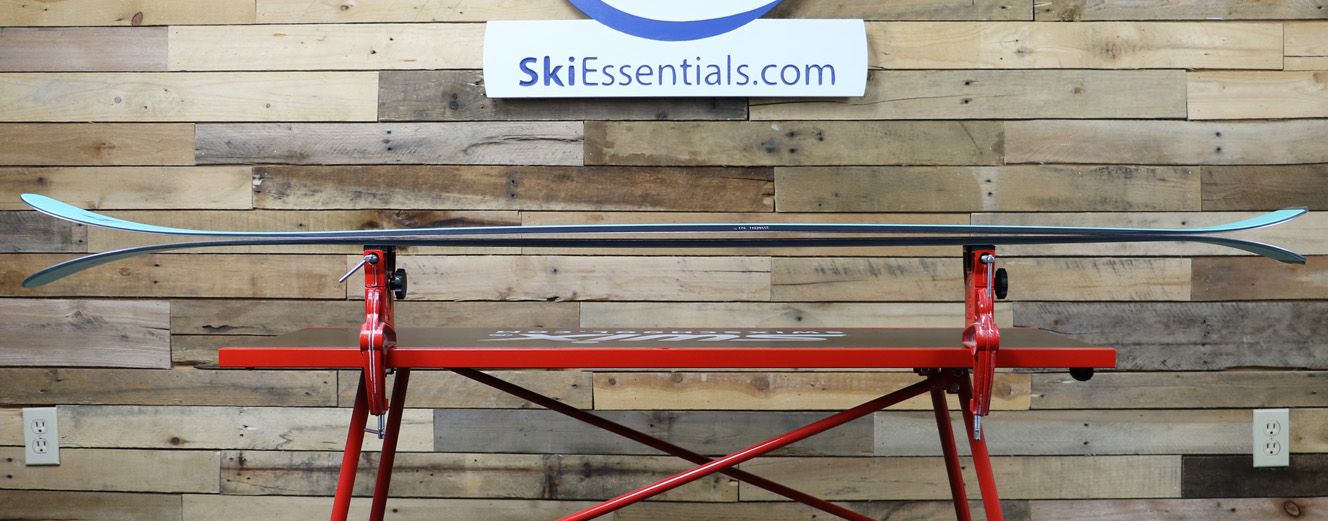
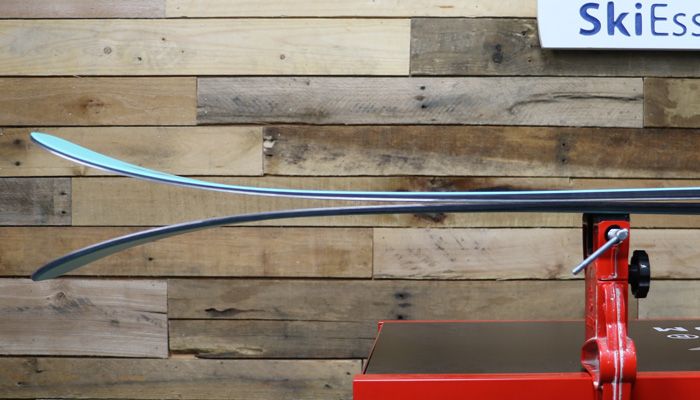
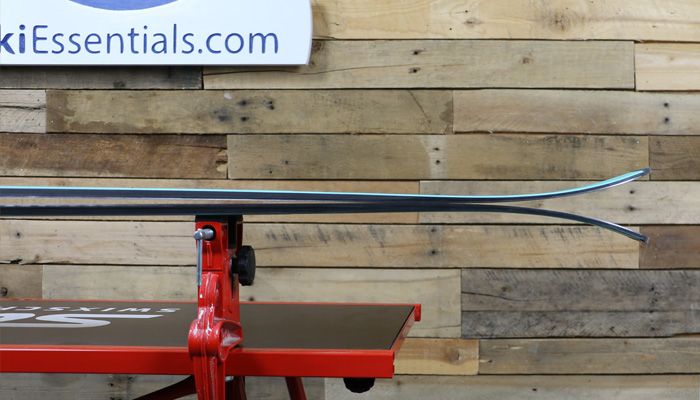
Now to the exciting part, performance! Before we begin, I do want to mention that the new ski feels slightly softer flexing--more noticeable in the tips and tails than underfoot. I also think it’s important to point out the new ski is a little heavier too. We measured about a 150 g difference between the Ranger 102 FR and Ranger 102, which is interesting. Interesting because it doesn’t really feel heavier to me when you ski it, but simply holding them in your hand, you can tell there’s a difference. One of our favorite things about the Ranger 102 FR was its versatility. You could put it on the feet of a huge range of skiers and everyone would find something they really liked about it and their own unique application for it. In that light, let’s run through different terrain and snow conditions and talk about how the Ranger 102 performs, specifically in comparison to the previous pink ski.
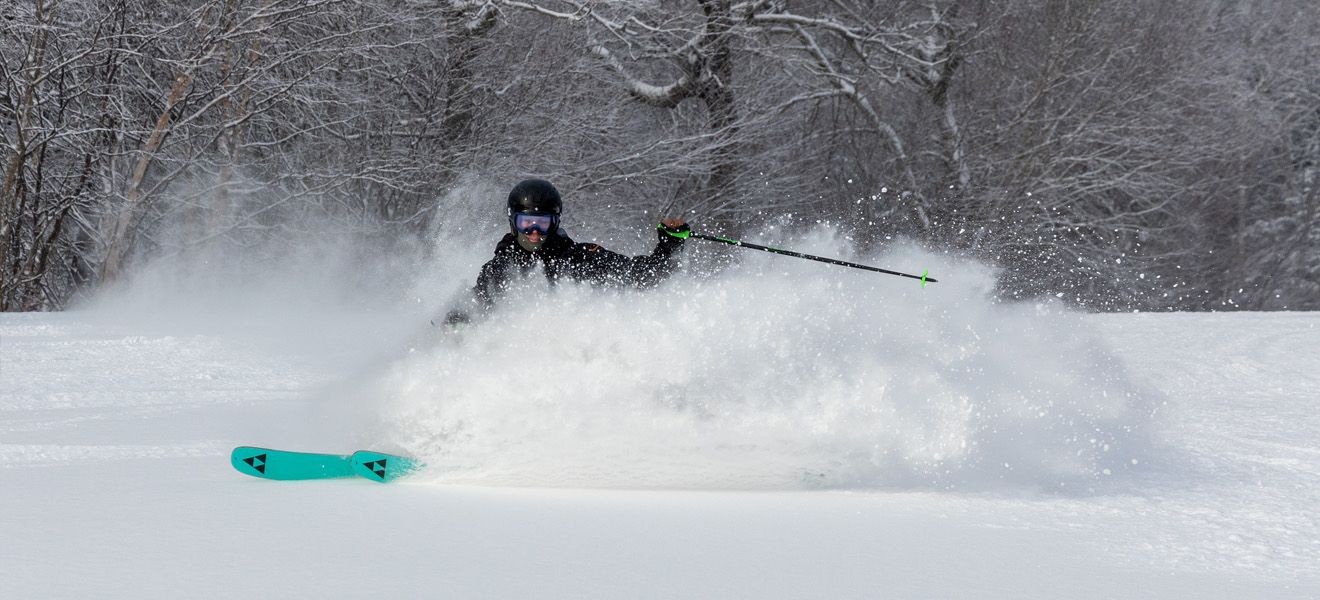
Soft snow, trees, bumps, and anything un-groomed, the Ranger 102 FR excelled with its quickness and energy. The new Ranger 102 still excels in terrain like this, but it comes more from its supple, smooth feel and easy edge release. In fact, the term smooth is something we’re going to come back to on this ski throughout this review. That is quite possibly the best way to describe it. With a similar rocker profile, slightly softer tips and tails, and more vibration damping in its construction, it slips and smears through technical terrain with composure and ease. While it has heavier swing weight, I find that’s negated by the changes in flex pattern. It’s an interesting phenomenon, as I actually felt like I skied significantly better and quicker on the new ski despite it being heavier. The way I could flick it around through trees and bumps was extremely rewarding. Will all skiers experience the same thing compared to the previous ski? I think so, at least the vast majority will. Will some find the Ranger 102 FR quicker than the new ski? I think that’s probably true too, but I certainly don’t think it’s the majority. Perhaps the biggest improvement in the new ski is how it absorbs variations in the snow surface. We’ve had a lot of thaw/freeze cycles this season, leaving some pretty gnarly conditions in the trees: frozen chunks of snow all over the place, often just barely hidden by fresh snow, so you don’t even know it’s there. If I had to point to one weakness of the previous ski, it’s deflection. Having a tip so light and with the torsional stiffness they achieved in the Carbon Nose, it did have a tendency to be deflected by conditions like that. The new ski, however, with more vibration damping and a slightly softer flex pattern in the tip, stays much calmer and more composed.
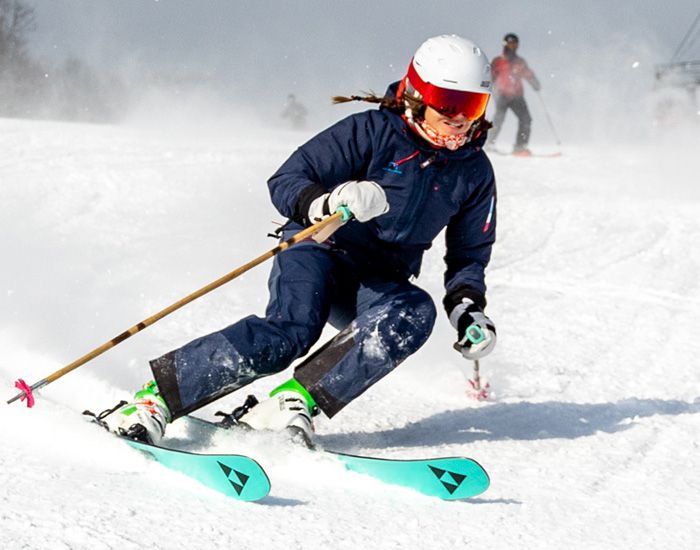
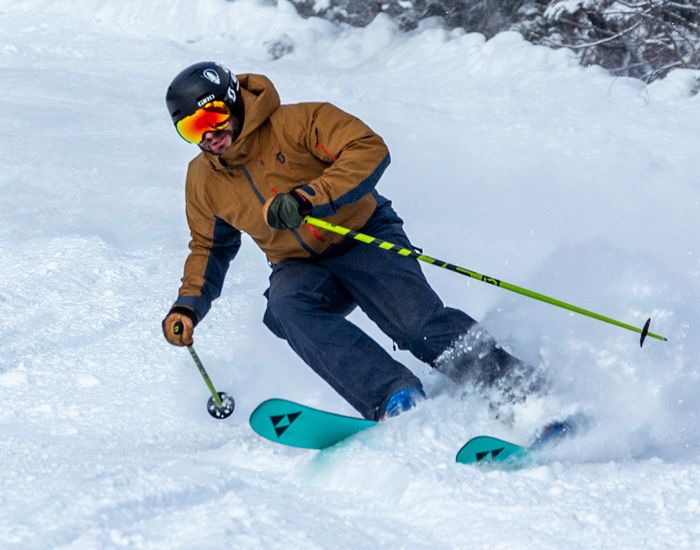
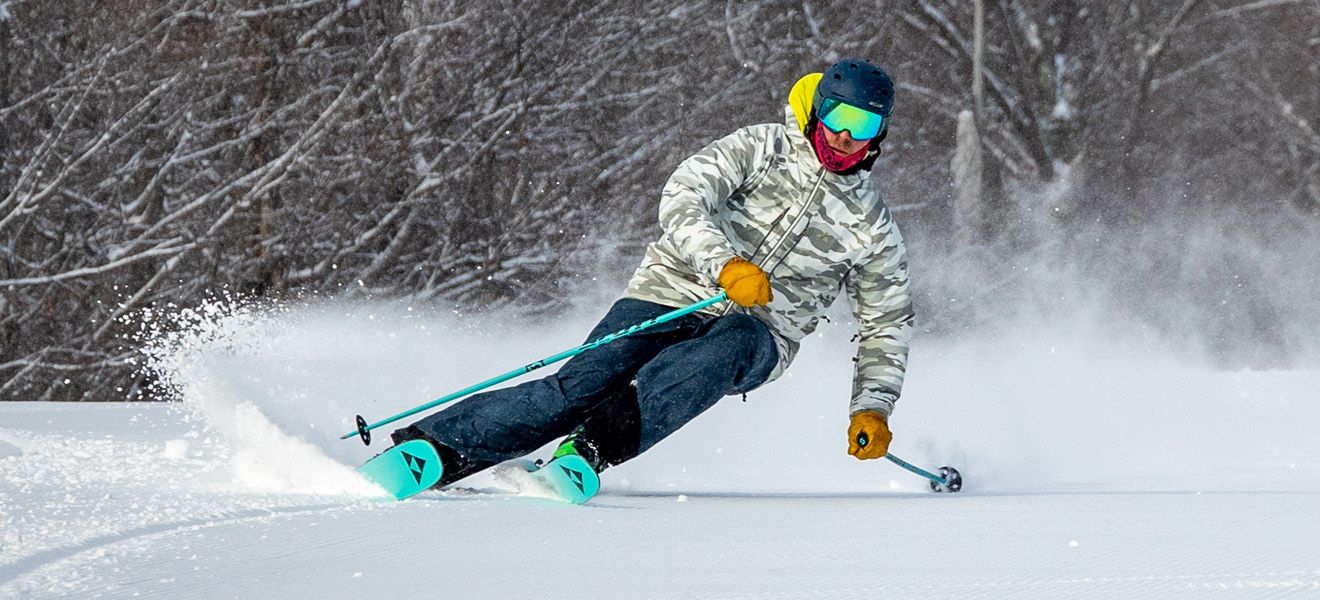
If I had my choice, all I would ski on the Ranger 102 would be soft snow and trees. Unfortunately, I don't control the weather, and speaking realistically, a lot of skiers are going to end up on groomers on the Ranger 102. We also think it’s perfectly reasonable to demand a certain level of groomer performance out of a ski in this width range. No, they’re not the best, but they should be able to do it. The Ranger 102 FR proved that over the years. I always think back to our colleague Ryan Daniel ripping race-style turns on it. If you want a refresher, go back and watch our last Ranger 102 FR review and you’ll see what I mean. So, how does this new ski compare? Similarly to off-piste terrain, it just feels smoother to me. There is a difference in turn initiation, however. The previous ski has more torsional stiffness in the tip, so it entered a turn with more eagerness. That was, however, or rather could be, slightly unforgiving. At times, it felt like the ski did what it wanted to do, rather than what you wanted it to do. Not often, but I’ve felt that before. This new ski enters a turn with a smoother, more natural feel. As you tip it on edge, it brings you into a turn more gradually. Once in a turn, it actually feels stronger to me. The full-length wood core and metal underfoot gives it a more robust feel. It also links turns more easily. The same smooth turn entry is found in turn exit. It’s not going to kick you onto your side unexpectedly, rather allows you to roll your ankles into the next turn with incredible ease. Now, some skiers may prefer the more energetic, snappier feel out of a turn that the Ranger 102 FR had, but similar to how we described the difference in off-piste terrain, I think that’s going to be a pretty gosh darn small percentage of skiers. I certainly prefer the feel of the new ski and the vast majority of everyone I’ve talked to who has skied both agrees with me.
Soft snow, trees, bumps, and groomers are where most skiers are going to be taking this thing, but we had what I would consider some fringe applications for the Ranger 102 FR. While not everyone utilized this side of them, it was there, and a big reason why it gained such a strong following and became a relatively iconic ski. To me, the two biggest fringe applications were park and touring. If you did go back and watch the Ranger 102 FR review to see Ryan making race turns, you probably saw our good friend Noah skiing it in the park. He’s not the only person that did either. Plenty of people went with a more forward mount point and messed around on the 102 FR in the park. Now, there was always a limit to how far forward you could go because tip rocker is so much longer than tail rocker, so this isn’t really a major issue, but with the new Shaped Ti construction and especially the Flexcut spot, I don’t think it makes sense to go any further forward on this ski than +1. Will that disappoint some people? Sure, it might, but I don’t think it’s worth getting hung up on. I’ve skied the 102 FR in the park and now I’ve skied this new Ranger 102 in the park quite a bit too. It performs extremely similarly, at least in my opinion. Neither are the best park skis in the world, but they both accomplish the job, and for someone who splits their time between soft snow, groomers, and some park, it’s still a fantastic tool.
On the touring side, it’s a similar conversation. The previous ski was a little lighter, so I suppose it’s fair to say the new ski is 150 g worse at touring. While that feels fair, it doesn’t feel like it tells the whole story. As a reminder, I feel strongly that this is a better ski overall, particularly as a directional freeride ski. Half of touring (the fun half) is directional freeride skiing. Let’s not sit here and kid ourselves that the previous Ranger 102 FR was the most efficient touring ski in the world. It was still close to 2000 g, which isn’t light, so realistically you’re not losing much uphill efficiency and rather you’re gaining a nice amount of downhill performance. Plenty of people have already slapped some touring bindings on the new Ranger 102 and I haven’t heard any complaints from anyone. “My legs are so tired because my equipment is now 300 g heavier,” is not something that’s reached my ears. Maybe someone is saying it, but I apparently don’t know that person.
No, it’s not pink. Yes, celeste looks awesome in person. No, it’s not the same ski you’ve been clamoring over for the past few years. Yes, I think it’s better. I know that’s a lot to say. I also know that not everyone will agree with me, but I feel very confident that most will. I’ve been doing this for a long time now, and I like to think I know a good ski when I see one, or rather when I ski one. I’ll put the Jeff Neagle stamp of approval on this thing all day long.