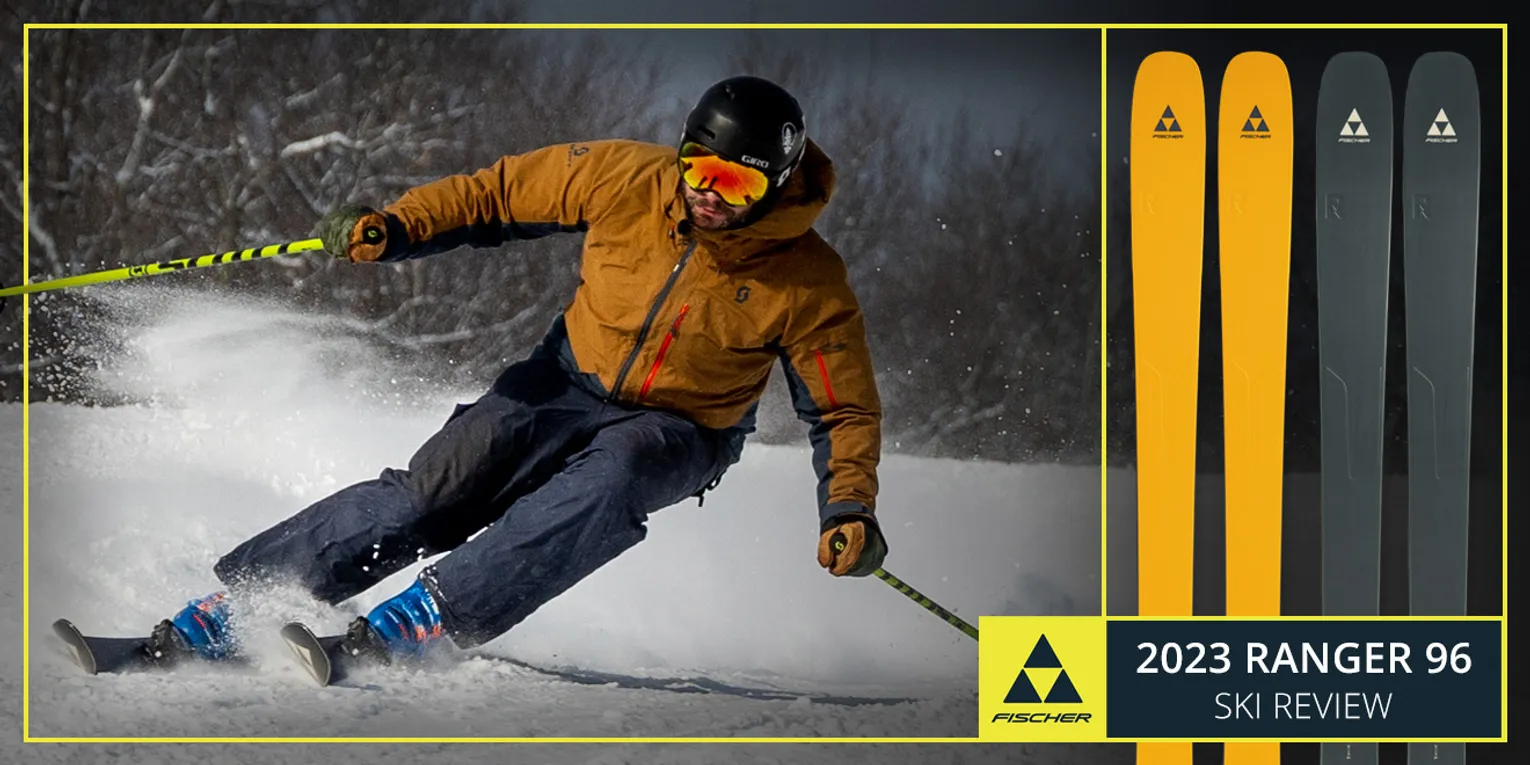
2023 FISCHER RANGER 96 SKI REVIEW
Back on February 1st, Fischer announced their new Ranger collection for 2023. On that same day, we put out our preview article and video highlighting all 5 new models and our involvement in the development of these new skis. Since then, we’ve released a full Ranger 102 review, in which we addressed a ton of audience-submitted questions. Today, we’re going to take a closer look and chat about the performance of the Ranger 96. It probably goes without saying that the 102 and 96 are bound to become the most popular skis in this new collection. You could argue that the 102 is the flagship model, and I wouldn’t necessarily fight you on that. I do, however, think that there’s something to be said about 96 being a more appropriate width for a lot of skiers. Now, we’re kind of getting ahead of ourselves here, as obviously that’s dependent on skiing style, the terrain where you ski, and how much snow you get. All I’m trying to say before we get into the nitty gritty details is the Ranger 96 is certainly an important new ski for Fischer.
The conversation about this Ranger 96 is different than the conversation we had about the new Ranger 102. That 102 shares the same basic shape (sidecut dimensions, rocker profile, etc) with the outgoing 102 (the pink ski). Because of that, the conversation revolved more around the changes to construction and what that did to overall performance more than anything else. This new Ranger 96, however, marks the introduction of a completely new shape for Fischer and if anything is more of a blend of two outgoing models than the replacement of a single ski. There are elements from both the Ranger 94 FR and the Ranger 99 Ti in this new ski. In my opinion, the Ranger 94 FR and 99 Ti represented two different sides of the performance spectrum. They’re not at opposite ends of the spectrum, but they were/are at least on different sides. The 94 FR leaned more toward the playful, energetic side of the spectrum. It’s such a quick, agile, and responsive ski. The 99 Ti, on the other hand, was in the same conversation as some of the most powerful skis in its width range. Bonafide, Mantra, MX98, Enforcer 100, the Ranger 99 Ti was right there with those heavy-hitter skis.
Fischer decided to replace both those models with a single ski, this new Ranger 96. While the 94 and 99 had their own unique personalities and applications, the 96 feels more well-rounded. It doesn’t lean towards one side of the performance spectrum or the other, at least in my opinion. It’s right smack dab in the middle, which is a valuable characteristic for an all-mountain ski and something that we’ll speak more about when we get to on-snow feel and performance.
AT A GLANCE
|
|
2023 Fischer Ranger 96 Skis |
|


AVAILABLE SIZES |
TURN RADIUS |
SIDECUT |
WEIGHT |
|---|---|---|---|
159, 166, 173, 180, 187 cm |
18 m @ 180 cm |
128 / 96 / 119 mm |
1950g @ 180 cm |
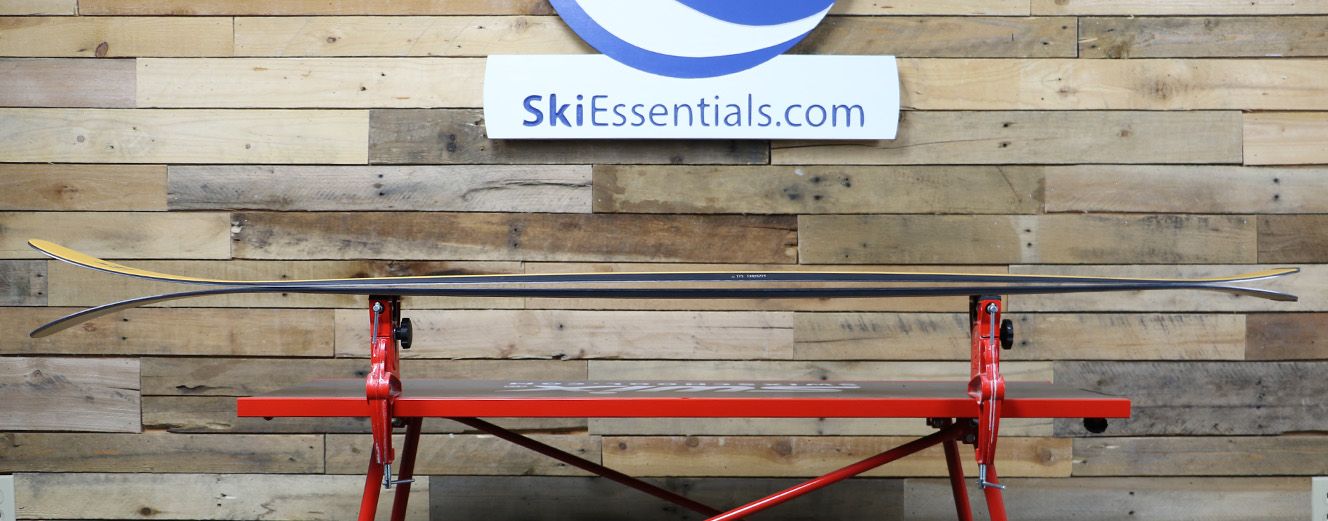
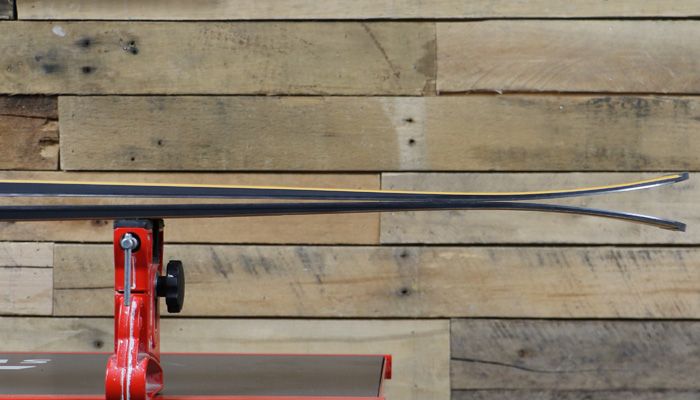
Let’s take a moment and recap shape and construction. If you read our overview article or watched the accompanying video, this will be a refresher for you. To start with construction, Fischer has completely revamped the way they build their Ranger skis. Aeroshape is gone, Carbon Nose is gone. Instead, we get what feels like more traditional sandwich contruction along with vertical sidewalls and just a couple aspects that make it unique. The beech and poplar wood core isn’t particularly unique, more the application of metal. Fischer’s using what they call Shaped Ti, which is a partial metal laminate essentially shaped like an elongated H. The closest thing we’ve seen from other manufacturers would be skis like the Justis, Serpo, and Orb from Black Crows. The similarities between the Ranger and the Serpo, in fact, extend beyond the shape of the metal, and we’ll get to that a little later. There’s also a little notch cut in the metal right underfoot, what Fischer refers to as Flexcut. The idea, yeah, you guessed it, is to give the ski a more natural flex pattern right under your foot, which is arguably where that matters the most. The wider the Ranger ski, the shorter that metal laminate is in regards to how much it extends into the tip and tail of the ski. In the 173 cm length of the Ranger 96, the length of the metal laminate is just over 50% of the length of the ski and it extends proportionally further into the tail, leaving more of the shovel of the ski metal-free than the tail.
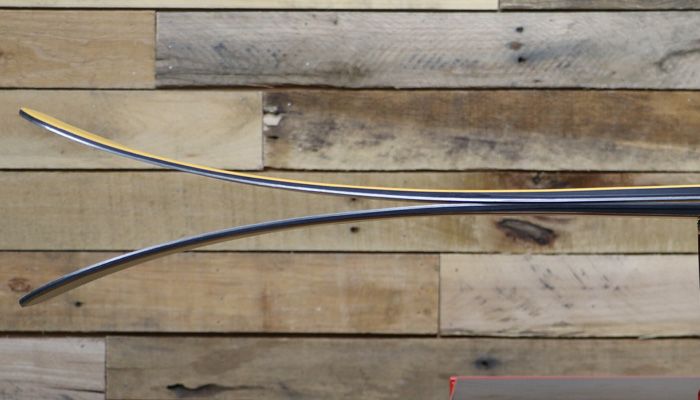
Shape is really where the combination of the Ranger 94 FR and Ranger 99 Ti becomes obvious. Obviously the width is basically a split between the two, but the rocker profile feels derived from both previous skis as well. I think it’s fair to say the profile is closer to the Ranger 99 Ti than the 94 FR, but there’s a little bit more splay in the tail of the new Ranger 96 than the 99 Ti, which feels like a nod to the 94. It’s certainly more of a directional ski than the 94 FR, however, with the Ranger 96 having notably longer tip rocker than tail rocker. That was true in the 94 as well, there was more tip rocker, but the 94 felt more like a twin tip when you looked at it and when you skied it. Final note in regards to shape is turn radius, coming in at 18 m in the 180 cm length. That’s right in line with both previous Rangers as the 99 has an 18 m radius in the 181 cm length and the 94 had a 17 m radius at 177 cm.
Now to the fun part, performance. Simply put, and you could probably just end the review right here and have a good sense of its performance, Fischer has made an extremely well-rounded all-mountain ski. What does that mean? I think the best way to describe this new ski is both in comparison to the outgoing Rangers as well as other skis on the market. In my opinion, the Ranger 94 FR and the 99 Ti excelled at certain things, but struggled in other applications. The 94 FR was a bouncy, playful tool that loved to wiggle through bumps, trees, and could even play around in the park. It could carve, but it lacked some strength and smoothness on firm snow. The 99 Ti, on the other hand, lacked no power or groomer performance whatsoever, but became somewhat of a handful when you took it off trail. Now, these things were somewhat dependent on the skier. A balanced, lightweight skier wouldn’t find the same limitations as some when carving on the 94 FR. Similarly, a large, powerful skier with a strong skillset wouldn’t find the same limitations or fatiguing feel in tight terrain on the 99 Ti. I do think it’s fair to say, however, that those limitations existing, at least speaking in generalities.
The Ranger 96, on the other hand, slides nicely into the middle of that conversation. It is, hands-down, a better carving ski than the 94 FR. The noticeable difference for me, or at least the highlighting difference, is vibration damping. The Carbon Nose was cool, but it didn’t feel supple or smooth, more reactive than anything else. The new construction allows for a much calmer ride that smooths out imperfections in the snow surface better than both outgoing Rangers. It might not be quite as stiff or as powerful as the 99 Ti, but it’s important to remember and consider that not a lot of skiers were actually reaching the potential of that ski. I can hear the incoming comments now. “I ripped on the 99 Ti!” I believe you, and I would say you’re one of those skiers. Truthfully, the 99 Ti was too much for most skiers, while the 96 is more approachable and more user-friendly. From a carving perspective, it’s no longer in the conversation with those heavy-hitter skis like the Bonafide, Mantra, Enforcer 100, etc. I place it in league with the Serpo, Maverick 95 Ti, Ripstick 96, and there are even some similarities with the Rustler 9, but the tail is different, so that’s maybe not the best comparison.
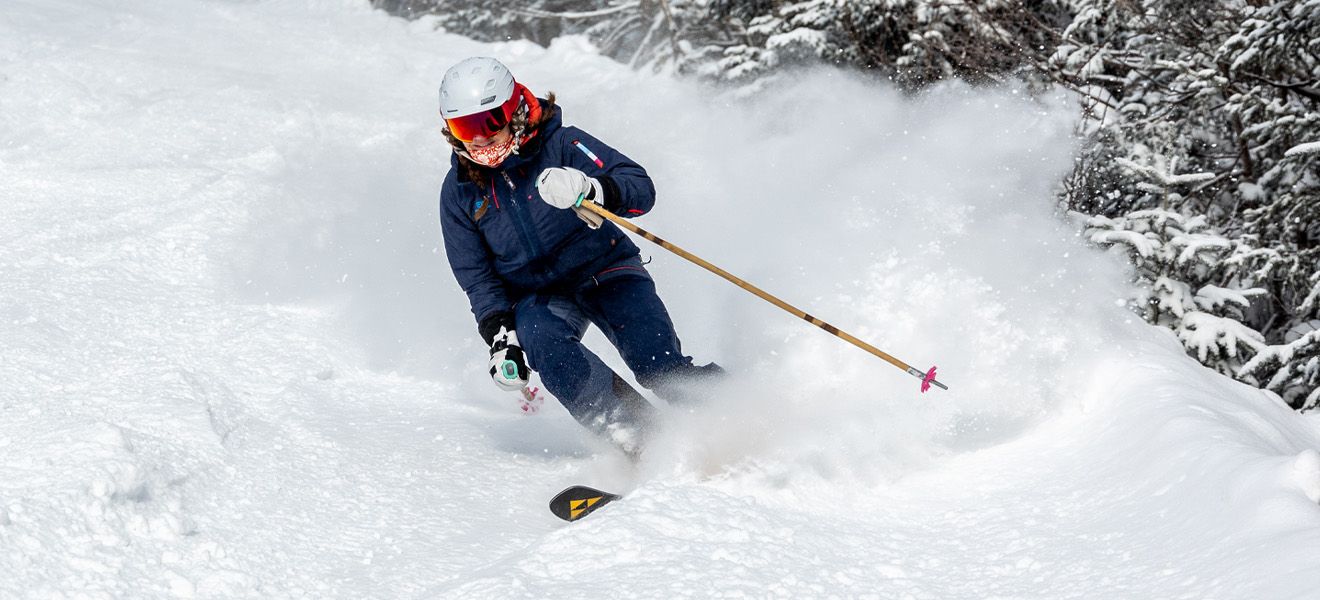
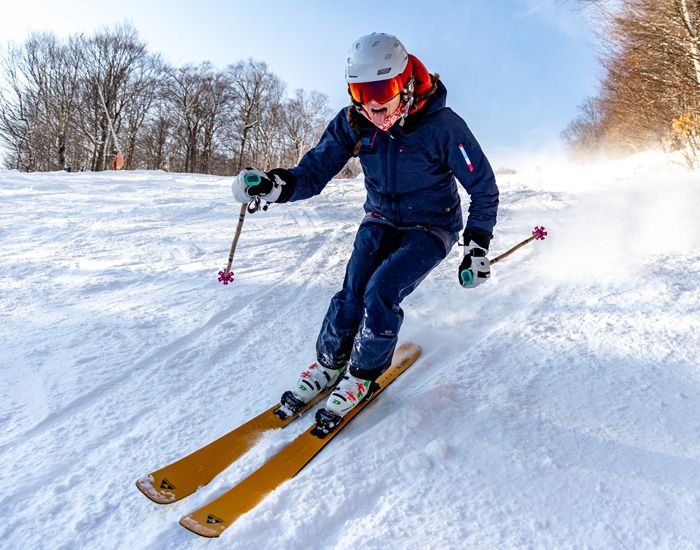
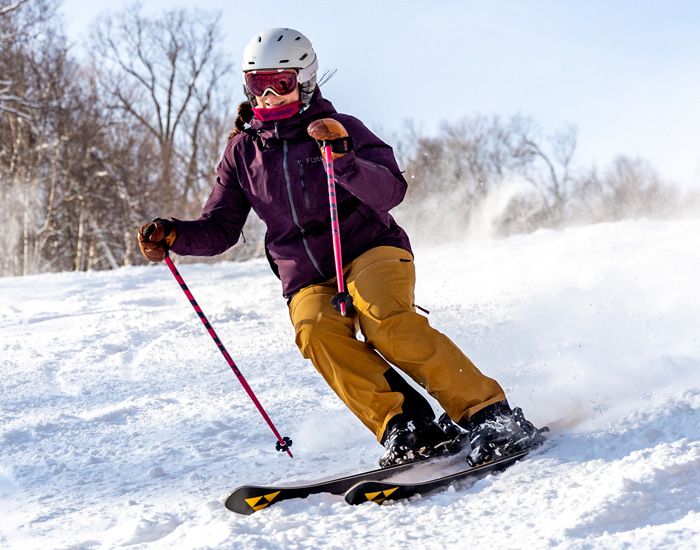
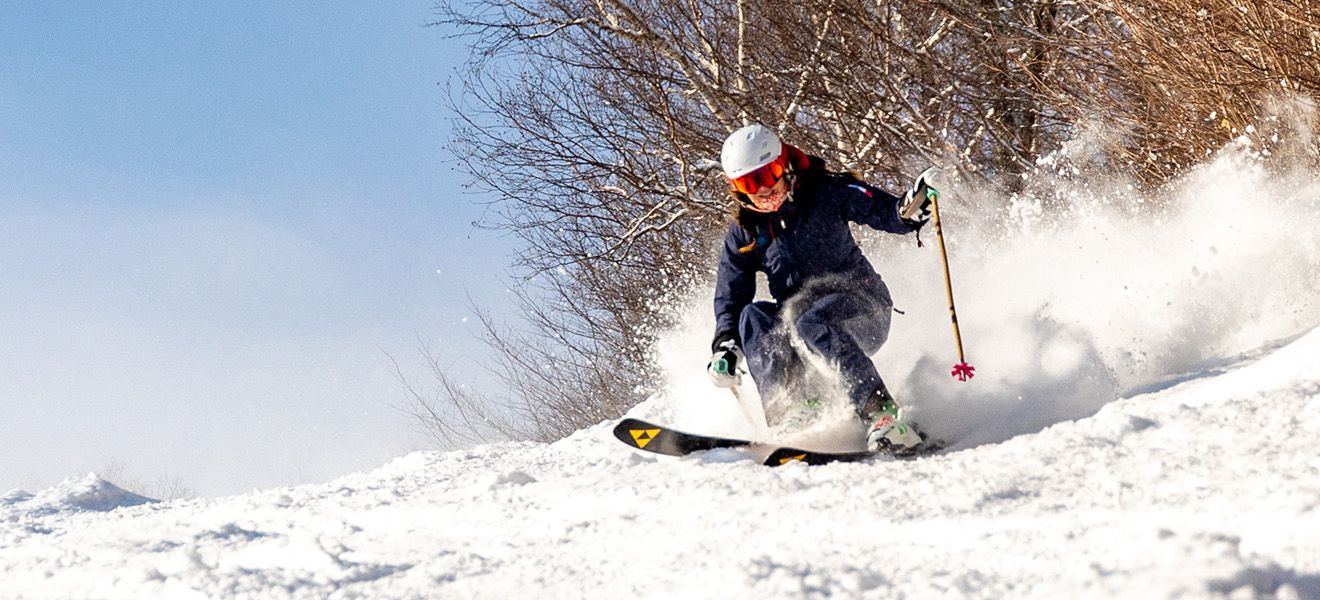
Now, I think most people would agree that the benefit to the second list of skis is that they carve respectably well, but are far easier in off-piste scenarios than the first list of skis. The Ranger 96 follows that trend perfectly. This ski is far easier to ski in off-piste scenarios than the 99 Ti. In that application, I think it actually feels more like the 94 than the 99. It’s agile and maneuverable, although it does it with a different feel. The 94 was so energetic and springy, while the Ranger 96 feels like it wants to stay on the snow surface more often. Somewhat contrary to my expectations, however, edge release actually feels easier to me on the 96. There’s something about its supple feel that both creates really good vibration damping as well as smooth turn entry and release. It’s never jarring, it never feels too stiff and reactive, but it also doesn’t feel flimsy or unstable. It effortlessly dances through technical terrain with composure and a balanced, refreshing feel.
Now, there are certainly some things the Ranger 96 can’t do that the outgoing Rangers could. Well, maybe can’t isn’t the right word, but there are things those skis did better. The Ranger 94 FR, for example, was perfectly appropriate for some park skiing. Would I choose to do that on the 96? No, I wouldn’t. Is that a disappointment? Sure, yeah, but I also understand that you’re never going to have everything in a single ski. I also feel strongly that more skiers will benefit from and enjoy the performance and capabilities of the 96. Some will be bummed about park application, but that’s a small percentage compared to those who will benefit from the new ski. On the other hand, the 99 could absolutely charge through choppy snow conditions. Will the 96 get bounced around a little more? Yeah, again, sure. That’s perfectly fair to say, but similarly to park and the 94, I think it’s a much smaller percentage of skiers who demand that performance compared to the number of skiers who will enjoy the 96.
I also want to address some questions we’ve had about the new ski. There’s a particular review on the Ranger 96 product page on our website that quotes me as saying that nearly everyone will prefer the new Ranger over the previous version. As I recall, I made that statement about the 102, and I’ll stand by it in regards to the 102 all day long. It’s not as simple of a conversation with the Ranger 96. It’s too different from the outgoing models to really be able to put a blanket statement like that. Will some people miss the 94 and 99? Yes. Do I think this is a better ski overall? Also yes, but I acknowledge that not everyone will like it as much. The other questions we received through Instagram I’ll address at the end of the video review. To end, I think it’s appropriate to hear from Bob, as he’s an example of someone who doesn’t love the Ranger 96, and that’s okay. Not everyone is going to like everything, and perhaps Bob’s an example of someone who’d prefer the 99 Ti with his 225 lbs frame.
“I don't think the stars every really aligned properly for me on this ski. For one, I still haven't skied the 187, only having a few shots at the 180. While I've skied and enjoyed plenty of other 180cm partial metal skis in the past, it's hard to give a full-evaluation on the Ranger 96 without getting on the longer length. Another issue I ran into was timing and snow conditions. While 'm never going to blame the snow for making me look or feel bad on skis, I definitely felt that most of my time was spent on death cookies and ball-bearings, so that kind of precluded me from making as objective or comprehensive of an assessment as I normally like to do. When we tested the Rangers on nicer snow days, I found myself more on the 102's and 108 of the lineup for whatever reason--likely biding my time until the 187 materialized (which it never did). I did, however, find my self feeling some form of jealousy watching my peers enjoy the Ranger 96 rather thoroughly. From following Brad, Kristi, Ryan, and Jeff down the hill, it was clear to my eyes that they could make the ski turn quite well, and it was obvious that they had some kind of connection to the ski that I, myself, could not muster. So I see the merit. I have seen these skis perform at a very high level in a variety of conditions and terrain. I get the appeal and potential of the Ranger 96, and I think a whole lot of skiers are going to feel the same things that I saw with my own eyes, but have yet to experience with my own feet in an empirical sense on snow. Maybe next year."