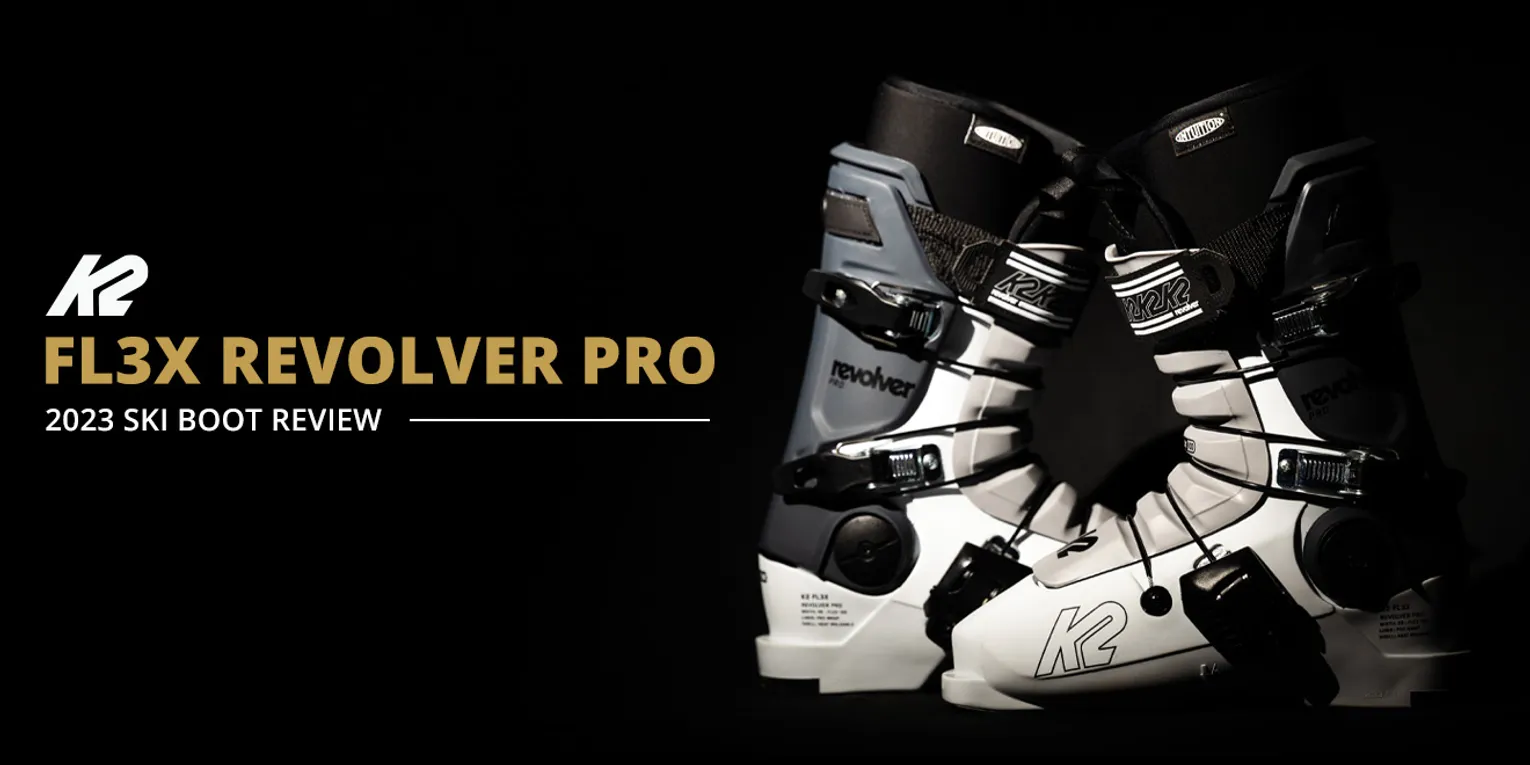
2023 K2 FL3X REVOLVER PRO SKI BOOT REVIEW
The ski industry can be a very trendy place, and that’s likely truer in the park community than anywhere else. Certain products just become the norm. Hop on newschoolers.com, ask a question, and it’s not uncommon that you’ll get a whole slew of replies telling you the same thing. The most famous of those being the classic “Get Full Tilts” Response. Full Tilt had become bigger and more important in the park world than probably they even thought possible. The trust and following in the community was profound. Your favorite pro skiers were using them. They look cool and they are and were relatively affordable. So, when we look back over the past six months or so, it’s not terribly surprising that everyone kind of freaked out when K2 announced that they were eliminating the Full Tilt brand and bringing it under the K2 branding umbrella with the product name of K2 FL3X.
I got my hands on a pair of K2 FL3X Revolver Pro boots last season, the direct replacement for the FT Classic Pro. After a handful of days in them and, say, 3 seasons of listening to and reading all sorts of different reactions to the change, I thought it was a good opportunity to chat about the branding, the boots, and on snow, what they do really well.
I’ve been thinking about this a lot. Why are people so mad that K2 changed the name? Why does it matter so much? The boots are the same, the performance is going to be the same… what’s all the fuss about? The more I think about it, I feel like I can both better relate to those disappointed Full Tilt enthusiast and understand why this was, in the long run, probably the right thing to do. One of the first things that occurred to me is the generational perception. I’m 36 now, so I was 20 years old in 2006 when Jason Levinthal rebirthed the Raichle mold under the new name, Full Tilt. I can vividly remember a ski world without Full Tilt. I know skiing, freeskiing, and park skiing can exist without Full Tilt. I saw it, I lived it, it happened. When I saw those Full Tilt boots in 2006 I remember thinking, “hey look, Raichle!” That is, of course, the original branding for this boot design, and aside from some minor tweaks, it hasn’t changed since 1980.
Now, all that said, put yourself in the mid of someone 10 years younger than me. They are 26 now, they were 10 years old when Full Tilt was announced, and they probably don’t remember much about skiing or park skiing trends before 2006. It’s hard for me to put myself in that mindset, but it makes so much sense when I do. For those skiers, Full Tilt is park skiing. It always has been. It’s been the most popular boot in the community and the one you recommend to all your friends. Without being able to think back to a time before Full Tilt existed, it’s much easier to understand why someone would be so upset that the brand is gone. So, I get it. Also, I empathize with anyone who feels that way. I get it. It’s like someone took away part of your identity. You’re a Full Tilt skier. You’ve always been a Full Tilt skier. Now you can’t be.
Now, with that out of the way, let’s talk about some reasons why this change does make a lot of sense, specifically from a business perspective. This conversation and concept has been discussed on other platforms, and with great clarity, but I think it’s worth covering here again. Full Tilt was so successful in penetrating that park skiing market, they basically pigeon-holed their boots for only that. When’s the last time you saw someone on the mountain using Full Tilt boots that wasn’t dressed like a park skier? It doesn’t happen often. Full Tilt got so big in that community, skiers not in the park world just assumed they weren’t for them. While there’s some amount of truth to that, I think, it’s not so black and white. Raichle, Full Tilt, and K2 FL3X can be beneficial for a bunch of different skiers, not just park rats. Bringing the boots under the K2 branding will, in theory, open them up to a bunch of new skiers who had previously written off Full Tilt as an option. Even some shops will carry them now when they didn’t carry Full Tilt. From a business perspective, it just makes sense. Now, K2 FL3X isn’t for everyone, which we’ll get to in more detail later in this article, but I would venture a guess and say it’s very likely that between FL3X, Recon, and Mindbender, K2 has a boot that could work for just about any type of skier out there. It adds some simplicity to their boot collection, and it’s important to remember that even with the change in branding, it’s not a change in ownership.
Now, one final thought before we get into the actual review. The ski industry can be hard to understand sometimes. I’ve seen some comments and reactions to the change in branding from angry skiers that, well, kind of don’t make any sense. I’ve seen the “Get Full Tilts” phrase on Newschoolers morphed into “Get Dalbellos,” seemingly from those angry about K2 FL3X and in an attempt to say something like “screw you, you’re not getting my business.” That is, quite ironic, considering that Dalbello and K2 both exist under the Elevate Outdoor Collective brand. So, if you’re going out and buying Dalbellos instead of K2 FL3X out of spite, you’re not “sticking it to the man.” Hate to be the bearer of bad (?) news, but it just doesn’t work like that.
AT A GLANCE
|
|
2023 K2 FL3X Revolver Pro Ski Boots |
|
FLEX INDEX |
LAST WIDTH |
SOLE TYPE |
LINER |
|---|---|---|---|
100 Flex Tongue |
99 mm |
Alpine Soles- |
Intuition Pro Wrap |
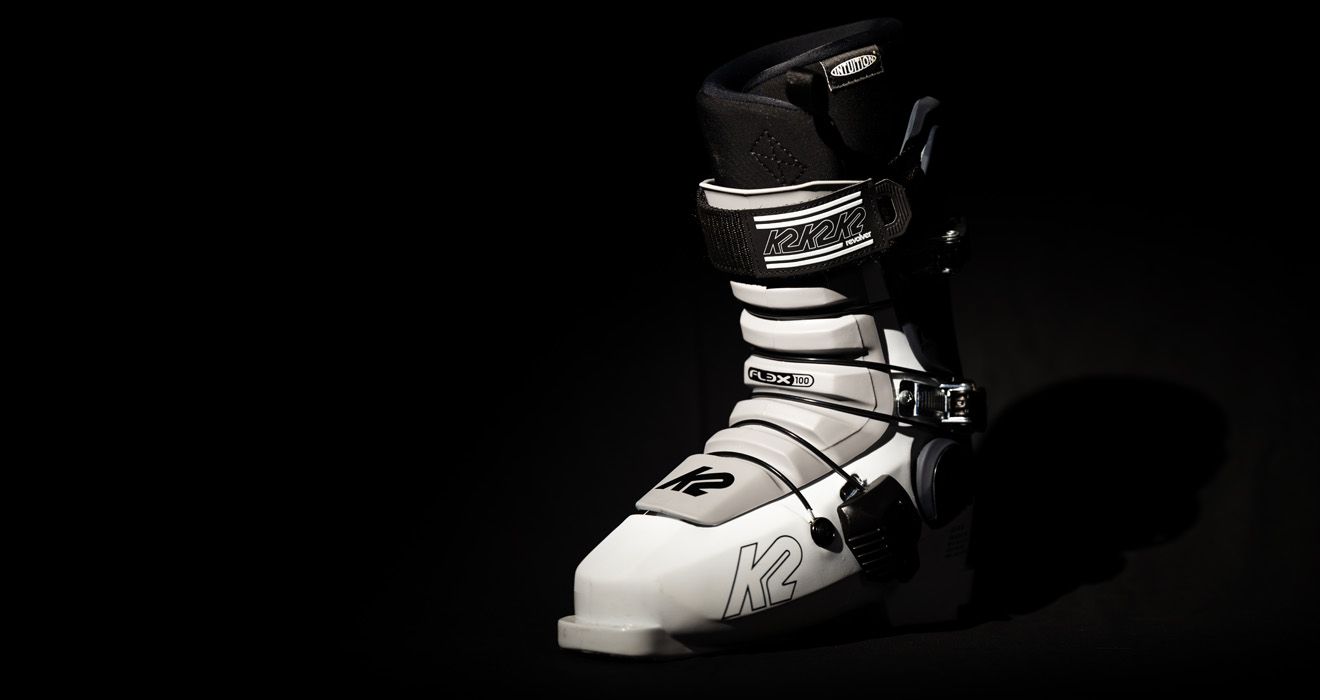
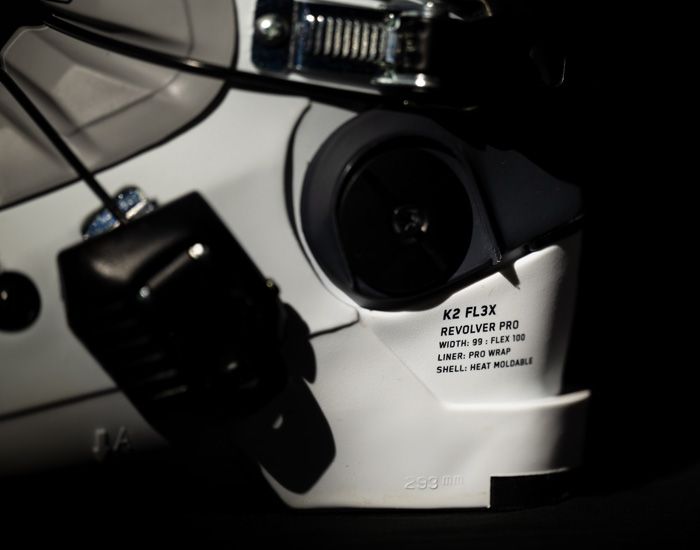
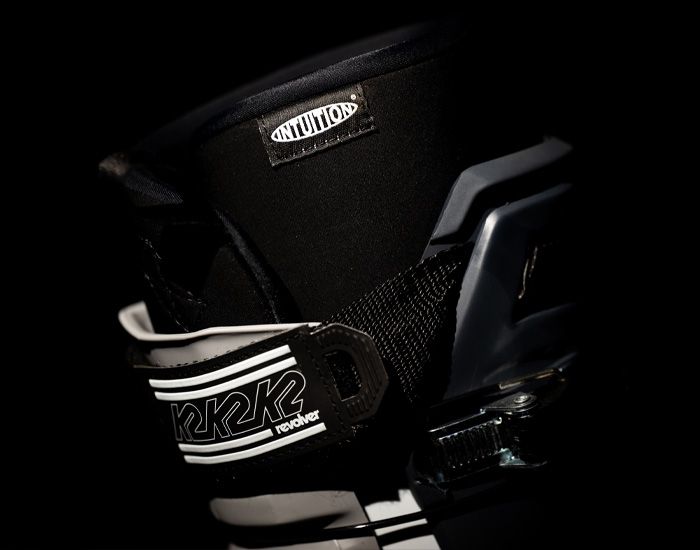
Ok, let’s just talk about the boots now. Towards the end of last season, I picked up a pair of the K2 FL3X Revolver Pro boots. The Revolver Pro is the direct replacement for the Full Tilt Classic Pro, or the original Raichle Flexon mold. It features the distinct 3-piece design, an Intuition Power Wrap liner, a 99 mm last, and a 100 flex rating. As someone who has been skiing in 120/130 flex 2 piece, 4 buckle boots for the past 5-6 seasons, there was admittedly somewhat of an adjustment period getting used to these boots, but the benefit and the performance in undeniable. The lightweight feel is what I noticed first. They feel so light on your feet, which makes skiing in general less fatiguing and the ability to flick your skis around and make quick movements that much easier. I loved popping off natural hits and doing little 180s here and there, which brings up another strength of these boots.
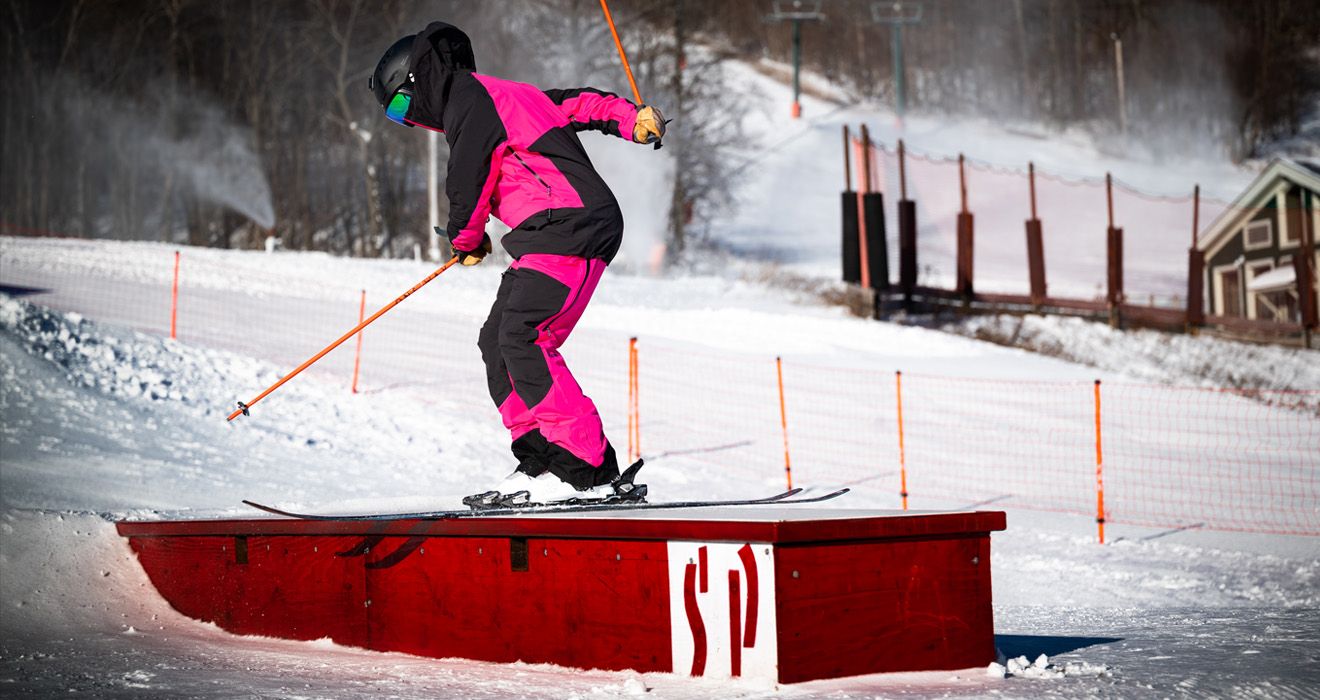
They feel awesome in the park and when skiing switch. They are so much easier on landings than those stiffer 4 buckle boots and my 36-year-old shins that have been overly abused on park landings were very thankful to spend some time in a K2 FL3X. You also get a super low stand height with the non-replaceable alpine soles. Obviously, there are some drawbacks to that as you can’t replace your worn out soles, but having the lowest possible center of gravity and a great connection to your skis is a huge benefit in the park. Spinning on to boxes and rails was easier than I could’ve imagined thanks to the relatively upright stance, that low stand height, and the lightweight feel. Upon landings, most notably switch landings, the progressive flex eases you back to earth. It’s not a jarring impact like it is on my stiffer boots. If you make a mistake and your weight’s too far forward on a switch landing, the boot accommodates and allows for some imperfection in your skiing. My Nordica Pro Machine 130s don’t really allow for many imperfections, or at least they let you know when you did something poorly.
The other application I loved for these boots, aside from the park, is skiing around with a more upright stance, like you would when you’re skiing bumps, trees, powder, and other off-piste terrain. The boots feel kind of bouncy and springy to me. They respond well to skier input in a fore/aft manner. Making quick turns on the side of the trail in softer snow felt so easy and was so much fun. For a skier who spends most of their time seeking off-piste terrain, moguls, and trees, I think these boots would be an excellent choice.
Now, there are certainly some limitations to these boots, and I would say the biggest I felt is lateral support. With modern ski technology, a lot of turn initiation, particularly carving turn initiation, is lateral. That got the best of me a few times as I just intuitively expected them to support me like a 4 buckle, 2-piece boot would. It resulted in a few nervous moments, one fun crash, and one not-so-fun crash. I also folded it a bit on that not-so-fun crash, which is more a limitation of the 100-flex tongue than the actual boot, I’d say, and something you could remedy by replacing or moving to the 120 flex tongue. That said, if you’re heading out to rail turns on groomers, probably don’t take your K2 FL3X boots. Take a K2 Recon, take a K2 Mindbender. You can take boots from K2, just don’t expect the FL3X boots to feel like race bots, or anything close to that. In my opinion, that creates a really nice visual picture of who should consider these boots. If you generate really high edge angles and prefer carving, you’ll probably be better off in something else, like a Recon 130. If you ski with a more upright stance and a flatter edge angle (think park, bumps, trees, etc), these are great, and are arguably better than a classic overlap boot.
I’ll leave you with a few other benefits of the K2 FL3X boots (or really any 3 piece, cabrio boot). They’re very easy to put on. It’s like putting on a rear-entry boot. Just open it up and slip your foot in. There’s no struggle whatsoever trying to get these things on your feet. They’re also very comfortable (at least they are for me compared to what I’m used to) and very warm. We’ve talked a lot about park, moguls, and trees, but these benefits suggest another potential application: skiers looking for the most user-friendly products. Maybe you’re a little older now and don’t enjoy bending down to struggle to get your boots on. Maybe you suffer from cold feet and you’re excited about trying an Intuition liner. There’s certainly an ease-of-use story in addition to the performance-benefits story.
To conclude, I really hope anyone who’s disappointed about the name change can get behind the K2 branding. These boots are great, they provide an undeniable benefit to a lot of skiers, and they shouldn’t just be shunned out of skiing pop culture because of a name change, at least I don’t think they should.