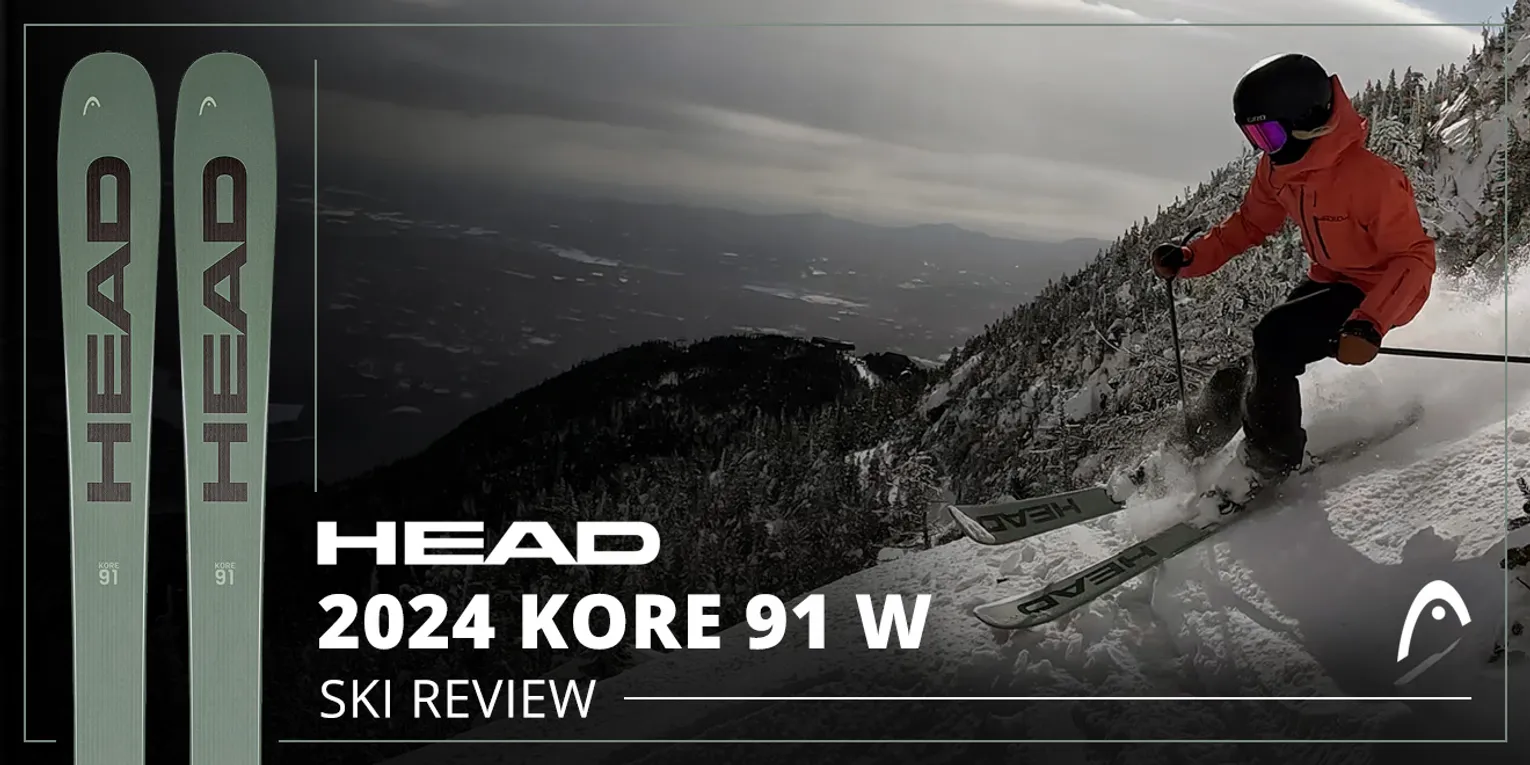
2024 HEAD KORE 91 W SKI REVIEW
Ever since the release of the Head Kore line, I have been eager to get on a pair. Intrigued by its well-balanced build and high-performance nature, the versatile, all-mountain skis in the Kore series represent a unique strength to weight ratio, with an impressively lightweight construction and stiff flex. Without sacrificing performance in the slightest, Head delivered a highly maneuverable and reactive all-mountain ski with a freeride focus. With the initial release of the Kore series, we saw a ski containing two sheets of fiberglass, two carbon laminates, graphene, and a blend of karuba and poplar wood. As a lightweight, smaller skier, I found this construction and the overall feel of the ski to be light enough to control but strong enough for power and performance. As for the 2024 version, the concept of the Kore remains the same, with the addition of a true topsheet, as well as new graphics. With four different options in the women’s Kore lineup, skiers can choose between the Kore 85 W, Kore 91 W, Kore 97 W, and Kore 103 W. For today’s review, we will look specifically at the Kore 91 W.
AT A GLANCE
|
|
2024 Head Kore 91 W Skis |
|

AVAILABLE SIZES |
TURN RADIUS |
SIDECUT |
WEIGHT |
|---|---|---|---|
149, 156, 163, 170 cm |
14.7 m @ 170 cm |
130 / 91 / 113 mm |
1,585g @ 170 cm |
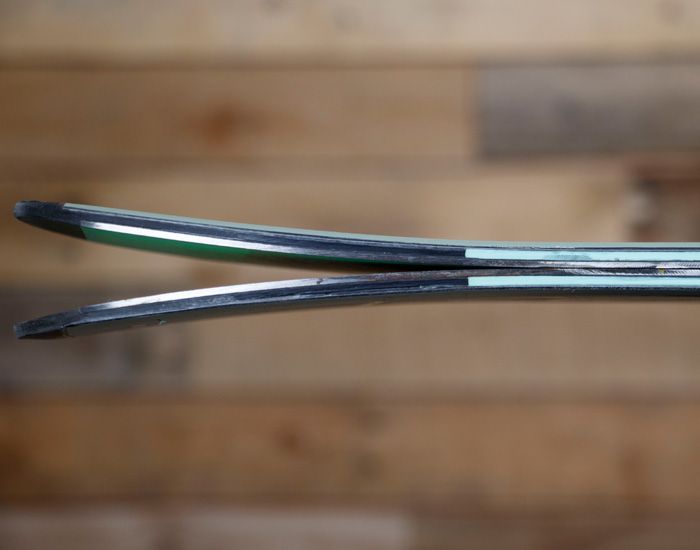
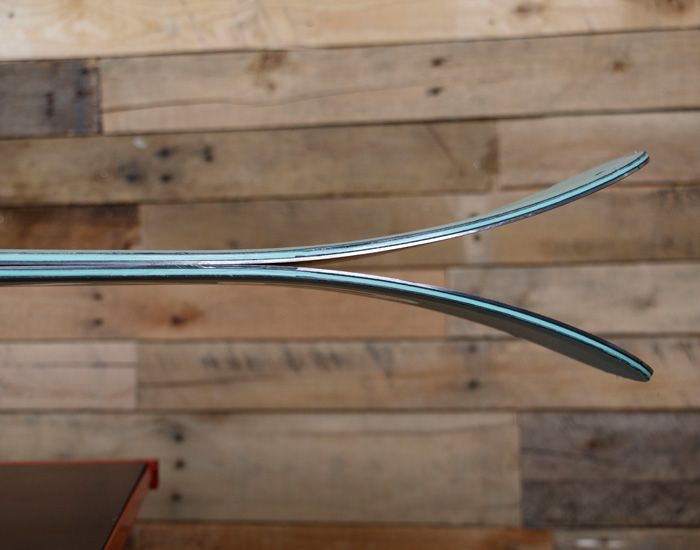
Carrying the same great build into this year’s iteration of the Kore, we see the successful use of dual-carbon laminates, a graphene strip through the center, and a lightweight wood core blend. Delivering the ideal level of stiffness without the added weight, the 3-dimensional application of carbon not only curves to match the chamfered edge of the ski, but also boosts the stiffness and the responsiveness as a result. As we know, the use of carbon does a fantastic job of enhancing the flex while keeping the weight to a minimum. When used in this format, the curved upper layer and flat lower layer work together to maximize grip and energy, creating a stable yet energetic ski-to-snow contact. On that note, the sidewalls boast thickness and feature damping layers underneath, which take the smoothness of the ski to the next level. What we see change is a graphics refresh and a replacement of the polyester top sheet with a more traditional laminate. As far as how this affects performance, what used to feel chattery or unstable gets replaced with a damper, smoother feel. Plus, the overall durability of the ski is enhanced, reducing the chance of chipping or peeling. All in all, the specific use of materials and approach to construction leaves skiers with an impressively lightweight ski with a high-performance ceiling.
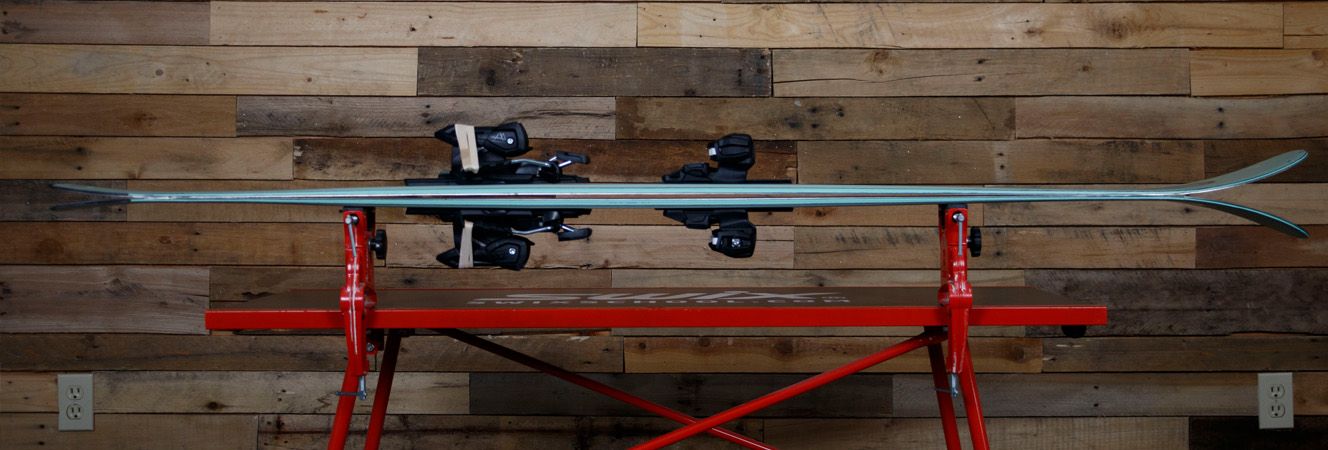
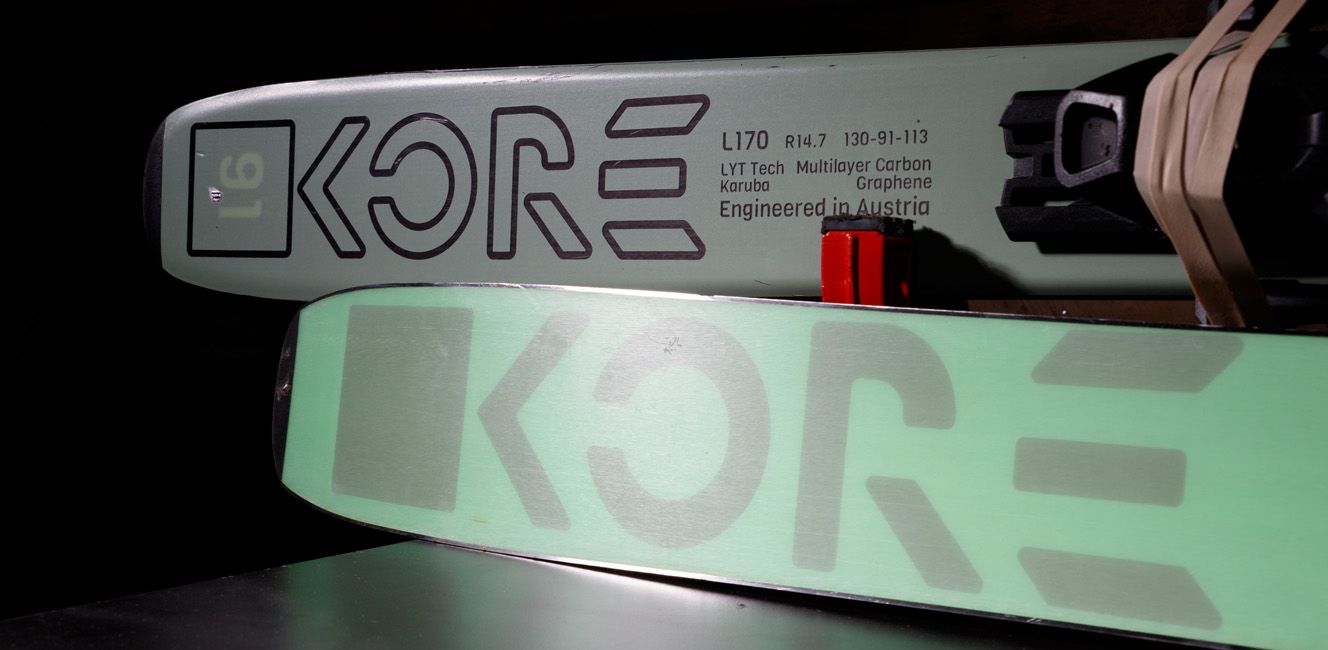
Something to note about the build of this ski, as far as men’s versus women’s, they are physically the same. I have to say, I love it when brands do this. I have skied plenty of “men’s” skis and wondered what makes them different from the women’s version. In some cases, the difference lies in the construction, delivering a lighter weight, more maneuverable ski. In this case, we see the exact same ski but with smaller lengths available and different graphics. Props to Head for that! For lengths, we get a range between 149 and 170, with the width and turn radius changing slightly depending on length. In the 170 cm length that I skied, the width is 91 mm underfoot with a 14.7-meter turn radius. Dropping down a size to the 163 cm length, we get an 89 mm waist width and a 13.4-meter turn radius. Regardless of which size you are on, this ski feels easy to turn and flick around, with great energy and responsiveness despite the stiffness.
As for the shape, the Kore 91 W features a moderate amount of rocker in the tips, with a 130 mm shovel compared to the 113 mm tail. Add in some early taper and you get a soft-snow focused forebody that confidently plows through crud and floats effortlessly through fresh snow. The shape of the tip also plays into the performance, with a rounder, smoother shape which makes for easy turn initiation and seamless transitions in and out of different shaped turns. With some rocker in the tail, you do get a livelier release than a flatter, more directional shape but given the level of stiffness in the ski, it does make it feel more serious than you would expect. The last thing to point out in terms of the shape is the modest amount of camber, which you may not notice upon appearance. In skiing it, however, I noticed the lack of camber in combination with the moderate amount of rocker and generally stiff flex. While I’m used to a ski with more camber than what the Kore 91 W has, it works given the construction and high level of performance.
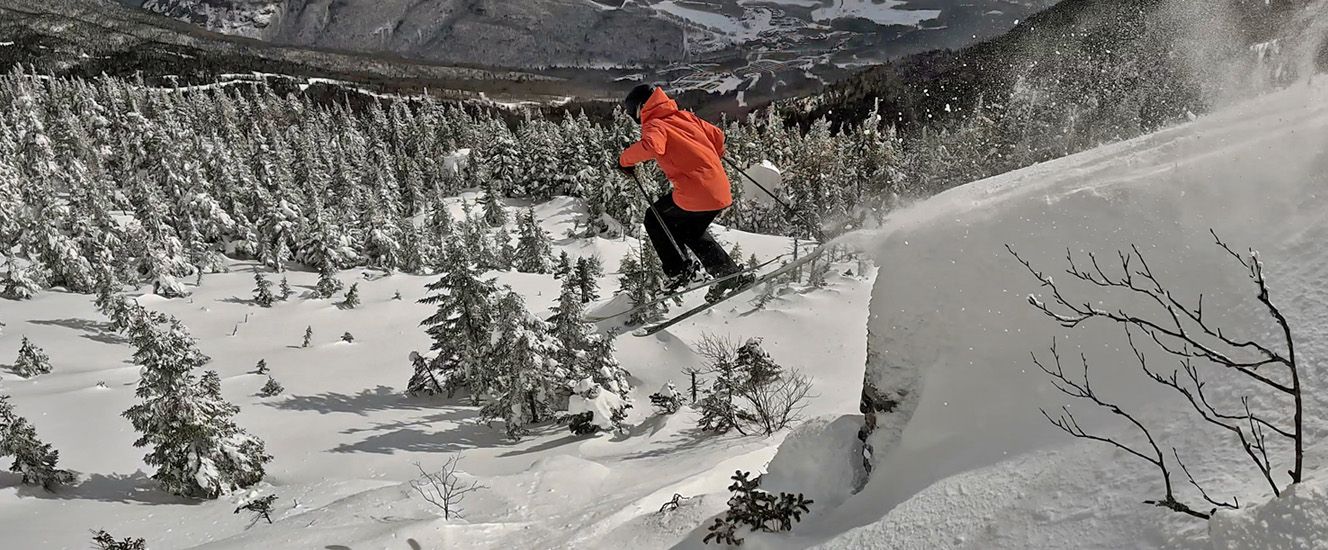
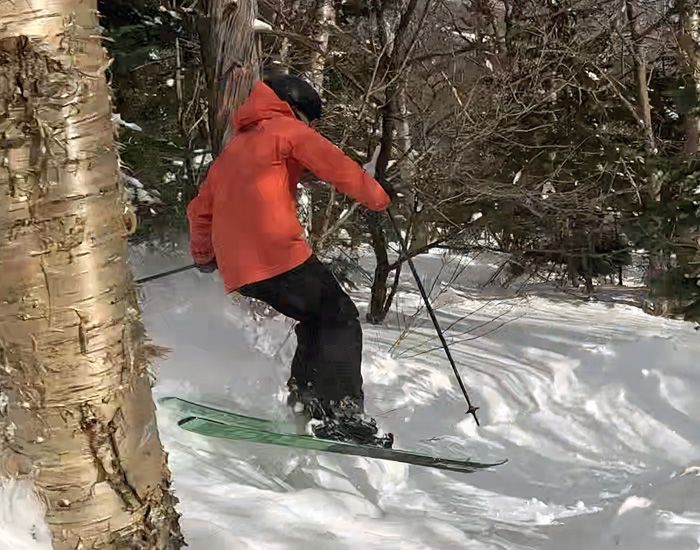
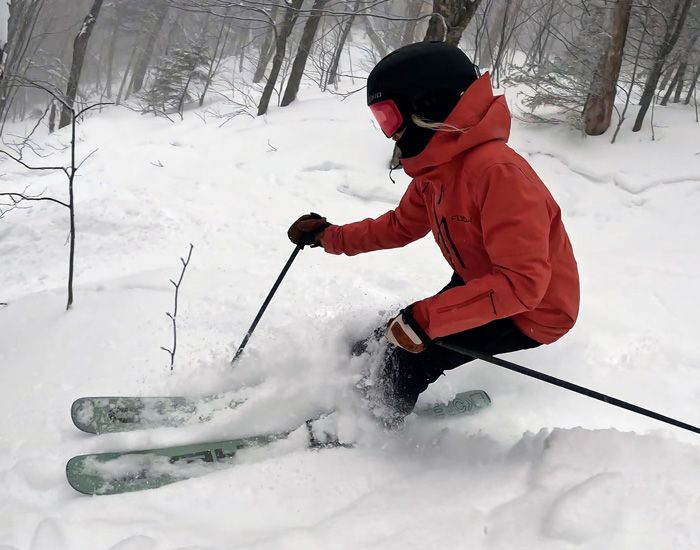
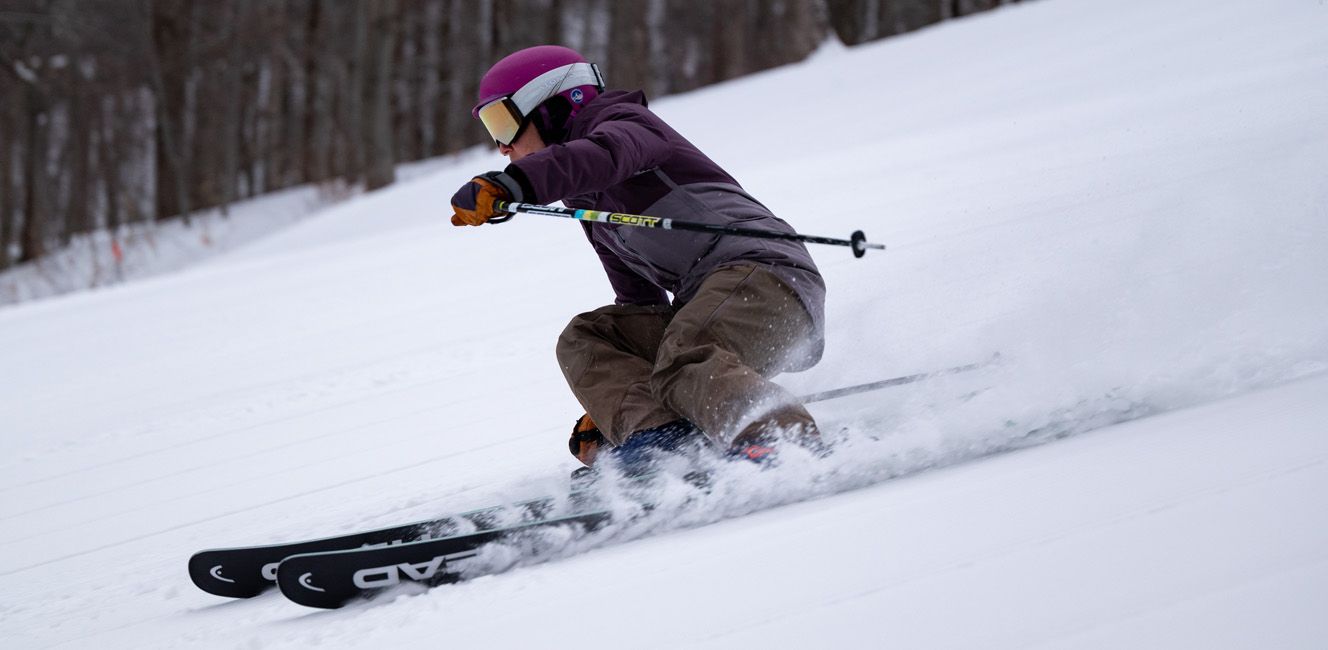
This brings us to actual time on snow. As I stated at the start, I had been anticipating skiing the Head Kores for a while. Between their reputation and presence on my Freeride team, I had a feeling they would be a ski that I would like. As far as what I look for in an all-mountain ski, I strive to find a lighter weight ski that is nimble and maneuverable yet has the strength and power to support my ability and preference for fast, aggressive performance. Striking that balance is tricky and can’t always be achieved. Sometimes you must settle for a heavier, more demanding ski to reap the benefits of the power derived from it. To get that lively, poppy feel that allows for maximum responsiveness and maneuverability, you sacrifice stiffness. All of this to say, I think Head nailed it with the Kores. When I took them out at Stowe, I skied a mix of groomers, sidecountry, and bumps, all with a few inches of fresh snow. My initial reaction was that I was thoroughly impressed with the feedback I got from them. Transitioning from edge to edge in tight terrain and bumps felt intuitive and energetic, which honestly surprised me given the stiff flex. While I love skiing that type of terrain, I want to be able to get the ski on edge and drive them with power at the same time. Upon pointing them down the fall line on some of the steeper groomed terrain, I couldn’t believe how they stood up to the challenge. The second you initiate a turn, they go. When you get them on edge and rail a turn, you can rely on them with confidence.
Given how agile they are, I half expected them to be chattery and unpredictable at speed but once again, was pleasantly surprised by how smooth and precise they felt. Are there skis out there with better edge grip and torsional stiffness for carving performance? Yes. Are there lighter, more maneuverable skis with better energy for bumps? Sure. But to find that sweet spot in a ski that can handle both with exceptional performance and control is phenomenal. And, as I already mentioned, I definitely fall into the category of lighter weight skiers. Given the nature of this ski, it will appeal to lighter and heavier skiers of all ability levels. For me, a ski that I can flick around and maneuver my way through bumps, trees and tight spaces while also being able to drive them with all I’ve got is a major win in my book. For the heavier skiers out there, you will be surprised by both the lack of metal and level of stiffness versus responsiveness. Some of us don’t always want to power a ski with metal to receive the benefits and in this case, you get the best of both worlds in my opinion.
To wrap things up, I owe a salute to Head for the Kore series. To make a ski that achieves the ideal strength to weight ratio like the Kore 91 W stands out for me. Given my size and weight, combined with my ability level and preference for terrain and performance, the range of capabilities that are possible with this one ski is hard to ignore. While I certainly love a burly ski with two sheets of metal, I don’t always want to give every run my all and fight the demands of a super strong ski. I also have to say, I have really fallen in love with the use of carbon in a lot of skis today and this one supports that sentiment even more. Easy to maneuver and receive instant feedback at slower, more calculated speeds and in the bumps and trees with the option to crank it up and really go. An all-around fantastic ski that would be a solid one-ski quiver, the Head Kore 91 W packs a lot of punch in such a lightweight package and I’m here for it.