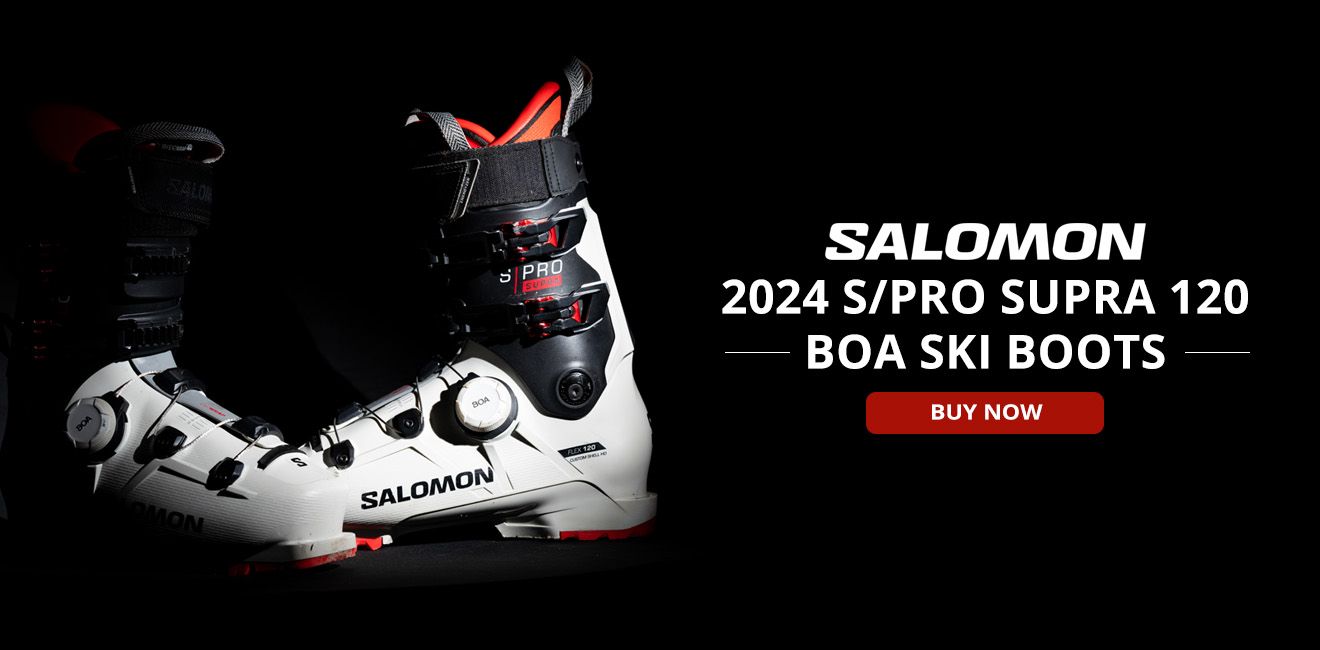
2024 SALOMON S/PRO SUPRA 120 BOA SKI BOOT REVIEW
Everybody’s freaking out about BOA these days! I’m kind of conflicted by the freak outs, because I can see both sides. After logging about 15 ski days on a pair of 2024 Salomon S/Pro Supra BOA 120’s, my initial belief that BOA will be good for the ski boot world has been confirmed. Many skiers have fallen on the side of “why re-invent the wheel?” And I totally get that. Boot buckles work great. You can adjust them, keep them closed, open them if you wish, and it’s a pretty solid system. What else can be done to improve upon it? Why even bother? Well, progress, for one. If we never try out anything new, how are we to know that we’re moving forward? The traditional 4-buckle overlap system has been around for decades, and aside from advances in plastics and liner technology, not much else has changed. Perhaps this is the first step in a series of steps that truly takes us to the next evolution in ski boots. What we have for 2024 in terms of BOA, is not the end of that progression, but I firmly believe it’s a step in that direction. I’ve now skied in three different BOA boots, and I can confidently say that these are not re-inventing the wheel, even though a wheel has been installed where there wasn’t one previously.
Backtracking a bit, I’ve had the most success fitting into Salomon’s 100 mm last and 120 or 130-flex boots for quite some time, especially versus other boot brands, so this Supra 120 is not a huge stretch for me. I knew it was going to fit, and there weren’t many surprises here in that department. I see this as a huge plus as it allowed me to focus more on the performance as well as the BOA system for the purposes of this review. For all intents and purposes, this boot is the next step for the S/Pro line, and skiers who have fit in that boot in the past will slide right into the BOA version as well—there's not a huge change here in terms of overall fit and character.
AT A GLANCE
|
|
2024 Salomon S/Pro Supra 120 Boa Ski Boots |
|
FLEX INDEX |
LAST WIDTH |
SOLE TYPE |
CLOSURE |
PRICE |
|---|---|---|---|---|
120 |
100 mm |
GripWalk Soles |
Top - Buckles |
$749.95 |
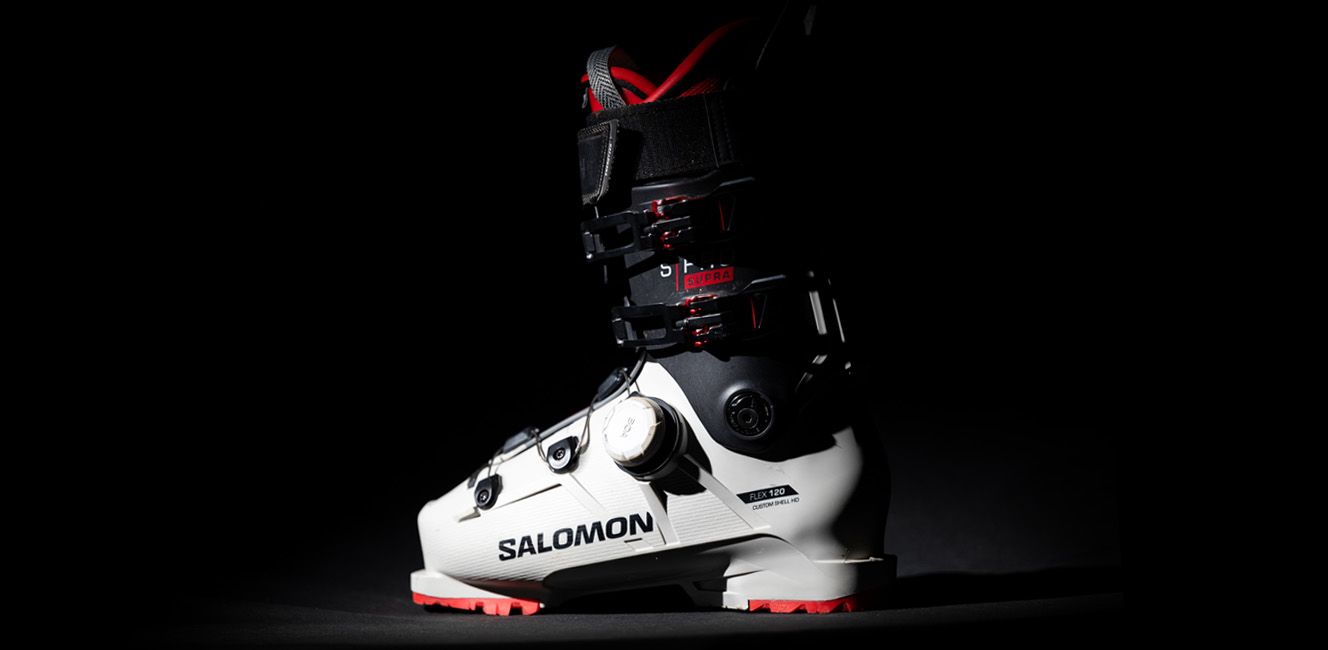
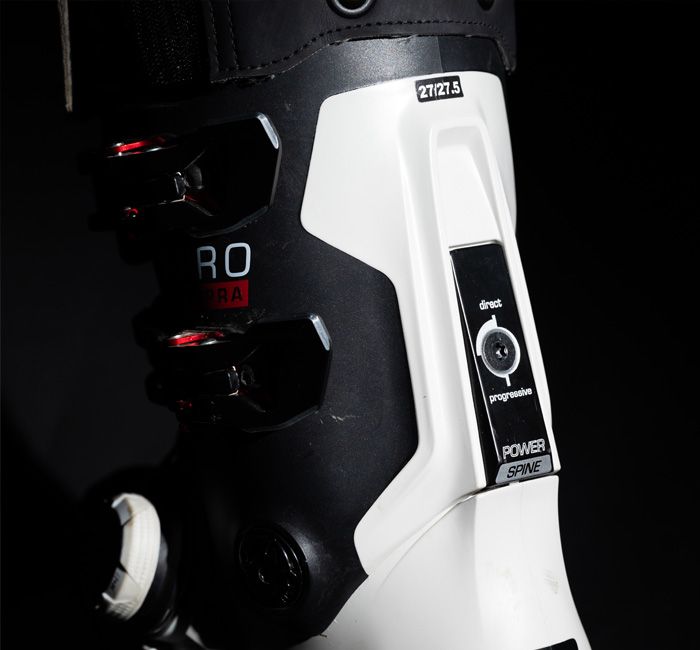
Supra 120 is founded on a Polyurethane shell that consists of Salomon’s Custom Shell HD system that allows the plastic to be easily heated and stretched. The cuff is very much the same, consisting of PU plastic and a Power Spine. We are losing Salomon’s Oversize Pivot design in favor of an upper-cuff adjustment pivot point, and that’s good news for boot fitters who had to heat the shell in order to align the upper cuff to the lower leg. The liner is a nice ExoWrap 4D Performance one with a Custom Tongue and an Elastic Belt. They sell these elastic belts aftermarket, so it’s a nice upgrade to have stock on this boot. Dual pull tabs are found on top of the liner, and there’s a very smooth-pulling 45 mm power strap to cinch things closed up high. The upper buckles have both macro and micro adjustments, and I get the sense that this boot would work well for those with more “athletic” calves. GripWalk soles come standard.
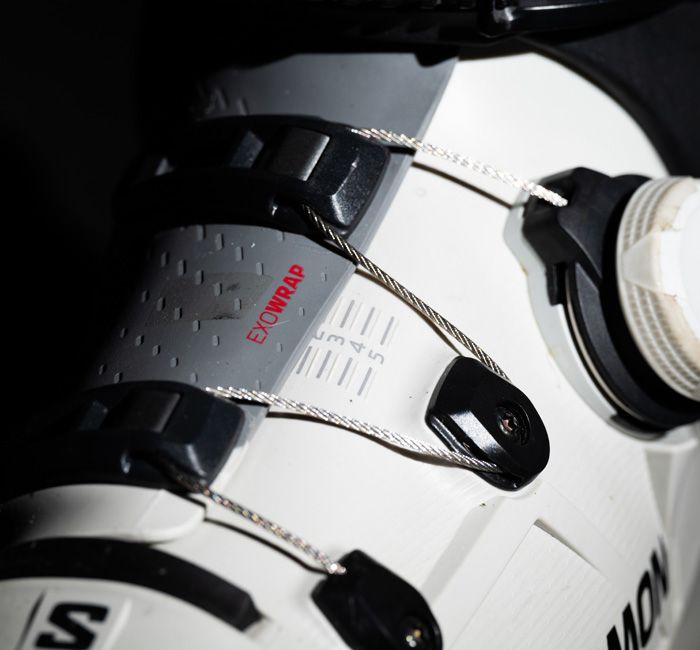
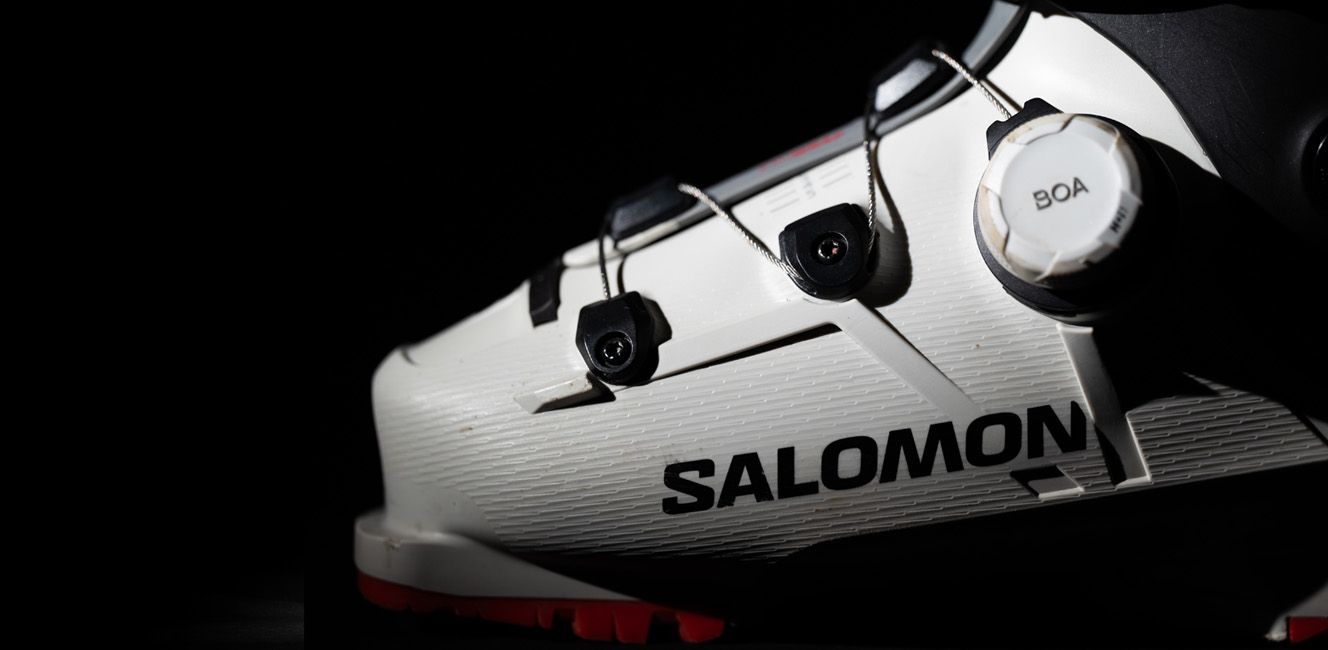
Now to the BOA closure system. This is not your ordinary shoe-style BOA system—it's far more rugged and sturdy than many people think. The cable is incredibly strong, and the dial is burly and tough. The whole idea here, other than making it easier to loosen and tighten, is to cinch the lower shell in more of a wrapping motion than a clamping one. The lower two buckles on boots have always been associated with cutting off circulation to the foot. If you have ever buckled the instep buckle too tight, that’s exactly what happens. This is a sign that either your boot is too big and you’re compensating for the excess room by physically manipulating the plastic in a downward motion on top of the foot where all your blood runs from legs to toes, or that the boot just fits too low over the instep. With Salomon’s S/Pro Supra, you do have some room over the instep from a fit perspective, but the BOA system, when cranked, evenly wraps the foot rather than just pressing down. This is a huge advantage for skiers who have had issues with instep fit in the past (me included), but the benefits don’t stop there. In the upper portion of the lower cuff, the wrapping process continues to have an effect. The more you twist the dial, the tighter that portion gets, leading to excellent heel hold as well as allowing you to buckle the top two buckles tighter with greater ease. I’m not sure if this is an unintended consequence of the system, or part of a really smart engineering meeting, but at any rate, it’s one of the unheralded benefits of the BOA closure.
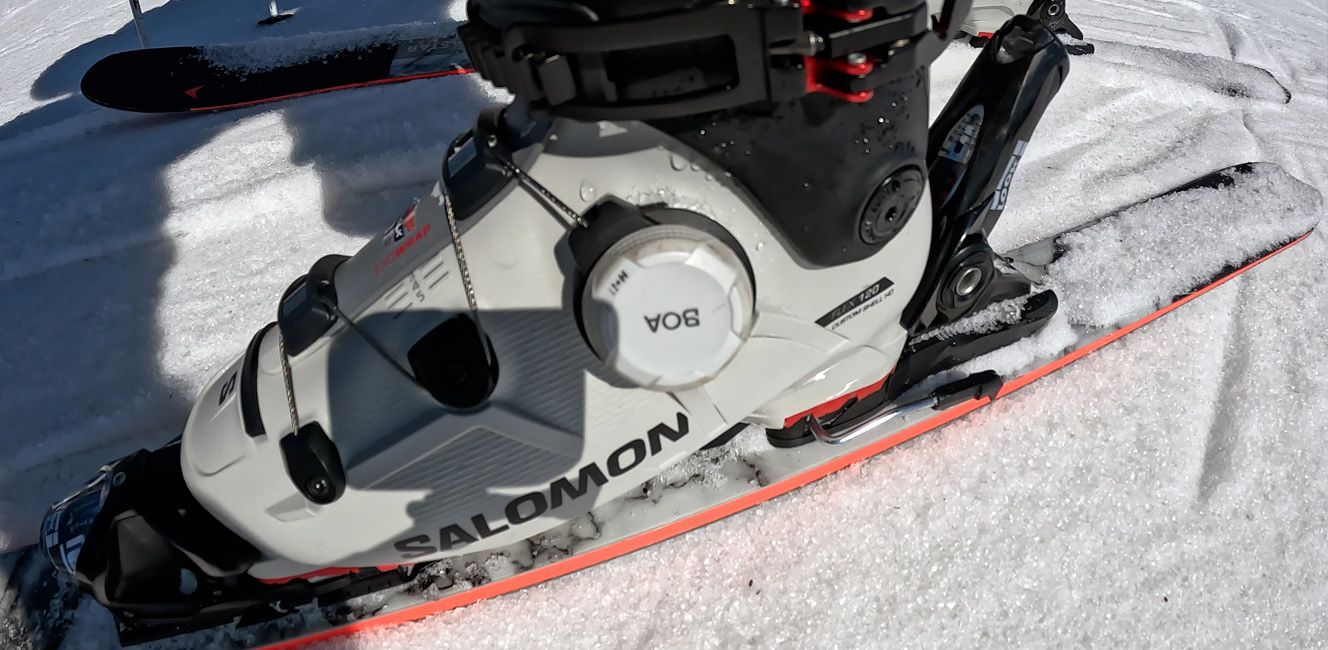
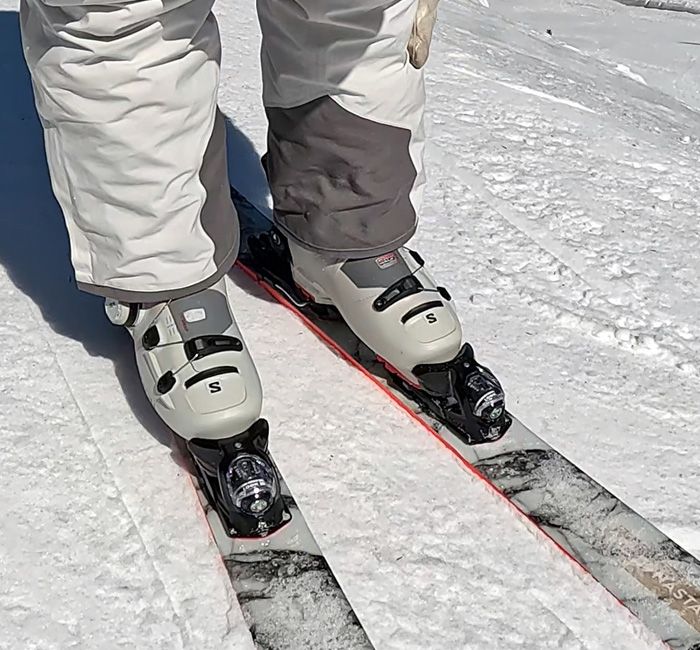

All of this design goes into describing how the boot fits. With a 100 mm last, and the capabilities of heating the shell up to a 106 mm forefoot width, this boot can certainly be on the wide side of the spectrum, but still lands in the mid-volume category. One of the talking points of the BOA system in general is that it can take a mid-volume boot and turn it into a low-volume fit. I feel like that can certainly be true, but mostly if you have an average foot and are sized properly in the boot. It’s not like you can upsize in this boot and then think you can just crank it down until it fits—that is not part of the plan. That said, it’s a very average fit for very average feet. While I’ve dabbled in the 26.5 shell market for a few years, I’m certainly more comfortable in a 27.5, and that’s what I spent most of my time in. I did ski the Supra 130 in a 26.5 and it was fine for the day, but my feet have gotten pretty damaged in the past and I’d like to avoid that in the future. Personally, I’m willing to give up whatever performance percentage that I’ll lose by going with the bigger boot in order to gain comfort, but that’s a me problem, and there are a lot of other skiers who will see it totally differently. I did not make any modifications to this boot other than inserting my custom footbed. In some other boots, I like to experiment with shims, heel lifts, and rear spoilers, but I left this one stock, mainly to get a sense of what it feels like out of the box. We got a pretty warm and early spring here in Vermont, so the last week of the season was in the 60’s and 70’s--not an ideal temperature range to accurately test the stiffness and fit of the boot, but my overall impression was that they retained their flex quite well. I did feel some excess movement when it got really warm and the snow transitioned to slush, but that could be easily compensated for by a few fit aids in strategic locations. Overall, I was thoroughly impressed with the accuracy of this boot when it comes to total foot contact. There were no pressure points, nor were there any severe gaps that needed to be filled. For a non-customized boot, that’s really impressive. My only gripes are that the liner is a little thin and/or soft. In no way did it hinder the performance or fit, but I just can’t help but wonder if the boot would be more precise if the liner was slightly stiffer. Additionally, since the BOA cable doesn’t completely open like the buckles do, there’s a touch more resistance from an entry perspective. For skiers that have had a difficult time getting boots on in the past, this is something to consider. I didn’t find it to be a deal-breaker in the least, but it is noticeable.
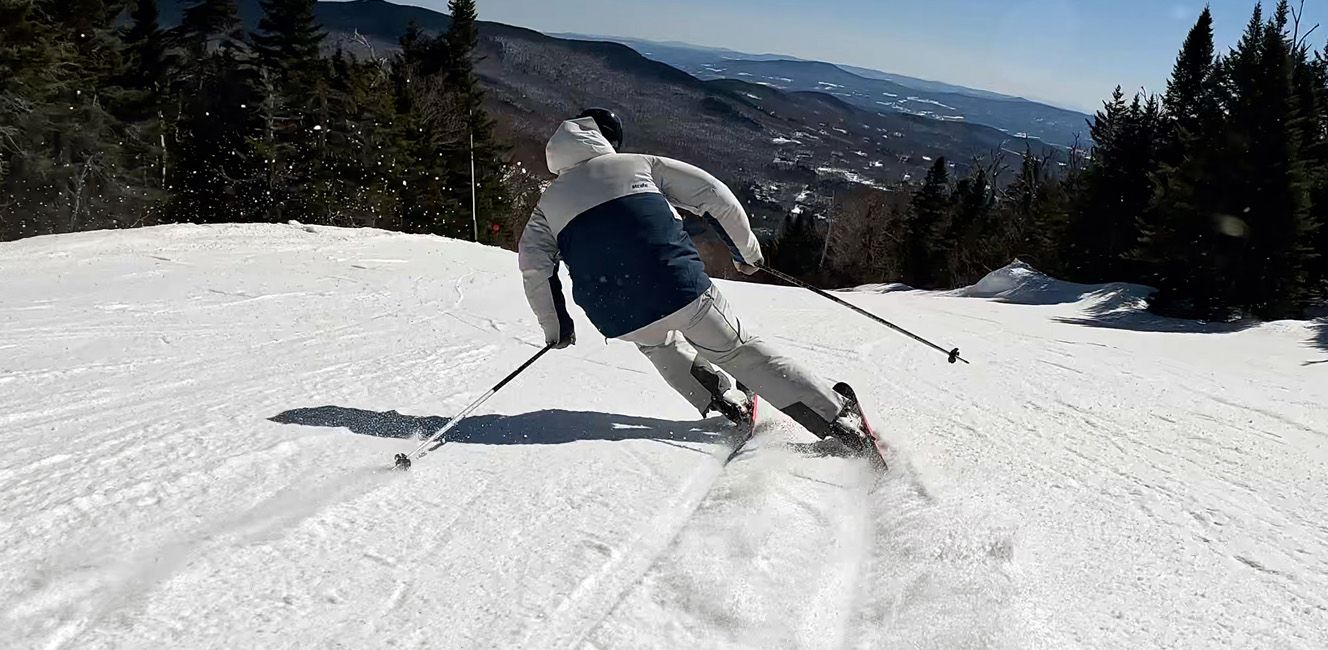
Performance-wise, this is a real alpine boot with a high-performance feel. On groomers, it does a great job holding up to higher speeds and constant edge grip. While narrower and stiffer boots will definitely feel more race-oriented than this one, the majority of skiers will find a whole lot to like about how this Supra 120 transfers energy from the foot to the ski. I do think that the BOA people messed up by not calling it a “Speed Dial,” because you can give it a few extra twists to level up in terms of power. This comes in handy in the bumps and trees as well. The closer the shell fits to the foot, the more direct the transfer of energy. The best part is that you can keep twisting the dial and never feel like you’re cutting off the circulation. It’s that blend of fit and performance that makes this boot stand out so much. At 6’2” and 225 pounds, I can definitely ski a 130-flex boot with no issues, but I found this 120 to be more than capable of responding to aggressive skiing and higher speeds. A lot of boot flex has to do with ankle flex, so keep that in mind when going about your boot shopping process. Skiers with flexible ankles can/should be in stiffer boots otherwise they’ll just be leveraging their heel out of the pocket. On the other hand, if you have stiffer ankles like me, you can ski in a more flexible boot in order to actually get in the front of the tongue to make the ski turn. Personally, I’m usually equally as happy in either 120 or 130, but boot fit and flex is insanely individualistic.
When BOA was first announced in a handful of brands and models this year, it was unsurprisingly met with great skepticism. Most of it revolved around either the durability of the system, or the need for it in general. From a resilience standpoint, I can’t quite picture how this thing is going to break in the normal course of a ski day. Maybe if you fall and smash it against a tree, the dial might fall off, but it can be simply popped back on. Do we really think we’re capable of snapping this cable? It definitely feels like it can hold up a lot of weight, so I’m not concerned about that at all. Even so, I’ve broken buckles on my boots, as have most skiers that have been at it long enough, so it’s not like a regular buckle is indestructible. Boot shops will have these entire BOA systems in stock for replacement, so even if catastrophe occurs, it should be able to get replaced quite easily. For the second part, you can certainly make the argument that there’s nothing wrong with buckles, so why try to fix a problem that didn’t exist in the first place? My best answer is progress. This is a new idea for alpine boots, and whether it works or not in the long run isn’t quite as significant as the fact that this is a pretty big change for the ski boot industry. Major alterations to ski boot technology do not come around all that often, so whether or not you agree with the process is somewhat immaterial—this is a big deal for boot companies. Perhaps the move is to total BOA? Maybe BOA is just a stepping-stone for other cable-closure systems? Either way, it’s a positive sign of change, and the fact that it works really well, even in the first year, is cause for great optimism.
The 2024 Salomon S/Pro Supra BOA 120 is a sign of things to come. The fact that it blends the line between performance and comfort due to the closure system is a huge deal. We’ve typically looked at ski boots as being an either/or when it comes to the fit/flex dichotomy, but the BOA system moves those pieces a lot closer together. When skiers go into boot shops next year to try on boots, it’ll be very interesting to see who gravitates to this new tech and who remains faithful to the four-buckle system. My conclusion is that for a vast majority of skiers, boots with BOA tech that are sized properly have a huge advantage due to the blurring of the fit to performance ratio. The better a boot fits, the better you will perform on the hill, and that’s where this Supra 120 is really going to shine.