

2025 Atomic Maverick 105 CTI Ski Review
It’s always exciting getting on a new ski, and Atomic does a great job of pushing the envelope when it comes to shapes, designs, and construction techniques. Between the Bent and Maverick lines, they really have their bases covered when it comes to all-mountain and freeride skiing. If you add Backland into the mix, this is a very comprehensive company, and we haven’t even touched frontside or racing yet. But this one focuses on the new 2025 Atomic Maverick 105 CTI. By borrowing from both Bent and Maverick (and race if we’re talking wood materials), the 105 CTI forges ahead with a full head of steam when it comes to blending soft snow performance and firm hard pack stability.
This ski basically replaces the Maverick 100 Ti, as the 95 and 88 return unchanged. We also get a new Maverick 115 which fills the slot between the playful Bents 110 and 120. The 105 differentiates itself from the 100 with a new construction, shape, and profile. The 100 felt a bit lost between the 95 and the wider Bent skis, and that mid-100's directional freeride ski has eluded Atomic in the recent past. If you follow along, we also joke about how Atomic has a ton of skis that are all 100 mm underfoot: Bent, Backland, and Maverick. Now, the 105 bucks that trend and puts the ski where it belongs as a more different choice for aggressive freeride skiers. We’re getting a whole new ski with this 105 CTI, and for those that have heard this CTI moniker in the past, this is a bit different.
At a Glance:
2025 Atomic Maverick 105 CTI Skis

| AVAILABLE SIZES | TURN RADIUS | SIDECUT | WEIGHT | PRICE |
|---|---|---|---|---|
| 170, 178, 185, 191 cm | 19 m @ 185 cm | 134.5 / 104.5 / 123.5 mm | 2,050 g @ 185 cm | $799.95 |
From a construction perspective, the Atomic Maverick 105 CTI utilizes a power wood core consisting of ash and poplar wood stringers. The implementation of ash is the big story here, and the wood does more of the heavy lifting than the metal, as a result. If you think about where we came from with the Maverick 100, using only poplar wood and two thin sheets of metal, the move to the ash gives the ski a more robust and sturdier feel—more like a race ski, especially more so than the Bent. They then add their CTI material to the mix, blending a layer of titanal with a carbon inlay in the fiberglass laminate. They used to use a mesh of carbon in their CTI skis, but this was pretty darn stiff. This new build is more like the carbon backbone found in the Bent 120 or the Backland series of skis, and it seems to make more sense in this application, especially since the wood is denser. Same goes for the metal—we don’t need two layers of metal in this ski to produce the dampness while the ash does most of the heavy lifting here. It makes for a more balanced and energetic ski, and that can be seen and felt in the way it tracks through the snow. Interestingly, the HRZN tech can be considered both a shaping and construction asset, but with the way they do it now, it certainly falls under the build jurisdiction. In Maverick 105 CTI, the HRZN section is reinforced with additional wood for stability and smoothness under aggressive skiing. Basically, the wood extends all the way to the tip, making the ski feel more consistent from end to end while flotation is adjusted accordingly. All of this adds up to a stated weight of 2050 grams per ski in the 185. For something that’s supposed to blend power and playfulness, this is a more than manageable weight for a ski like this.
With a new platform to stand on, the shape of this ski really makes it come alive. While we don’t see the 105 come to be until the 191 cm length, the 185’s 104.5 mm waist is close enough for us. Combine that with a 134.5 mm tip and a 123.5 mm tail in that 185, and you’re generating a 19-meter turn radius. This is where things get interesting, and we can dive into it more when it comes to performance, but it doesn’t feel like a 19-meter arc. It either feels longer or shorter depending on conditions, and that’s what makes the feel of this ski a lot more unique than either its predecessors or most of its competitors. I can think of something like the Fischer Ranger 102 that boasts a relatively short radius but feels nothing like it. Either way, it’s something to consider when looking at mid-100's directional freeride skis. At the same time, we’re dealing with a dramatic taper shape here, as that’s a culprit for the shorter arc. The wide part is brought down into the forebody of the ski to enhance flotation and mobility, but since the ski is still stout and ready for aggressive skiing, it makes for an interesting balance. The bottom line here is that the shovel shape, combining taper and HRZN 3D Tech, makes this ski float very well. Tail taper is gradual, but not dramatic, leading to more of what you’d expect in a ski like this whereas the shovel is slightly out of the ordinary, not that there’s anything wrong with that. Atomic states an all-mountain rocker profile of 20/65/15, which is the same as noted on the Bent 100. Now, the Bent has more tail splay, but the length of rocker being the same means something here—they're not just tossing a big burly directional ski out there to the world, this thing is more playful than it lets on from a profile perspective. With slightly more tail rocker and a bit lower camber underfoot than the Maverick 95 Ti, the 105 CTI gains a new level of creativity with this look. We’ve found that the shovel is the main difference in this ski’s shaping properties, as it feeds into everything else, from turn shape and style to the floaty and drifty nature of the ski in deeper snow.
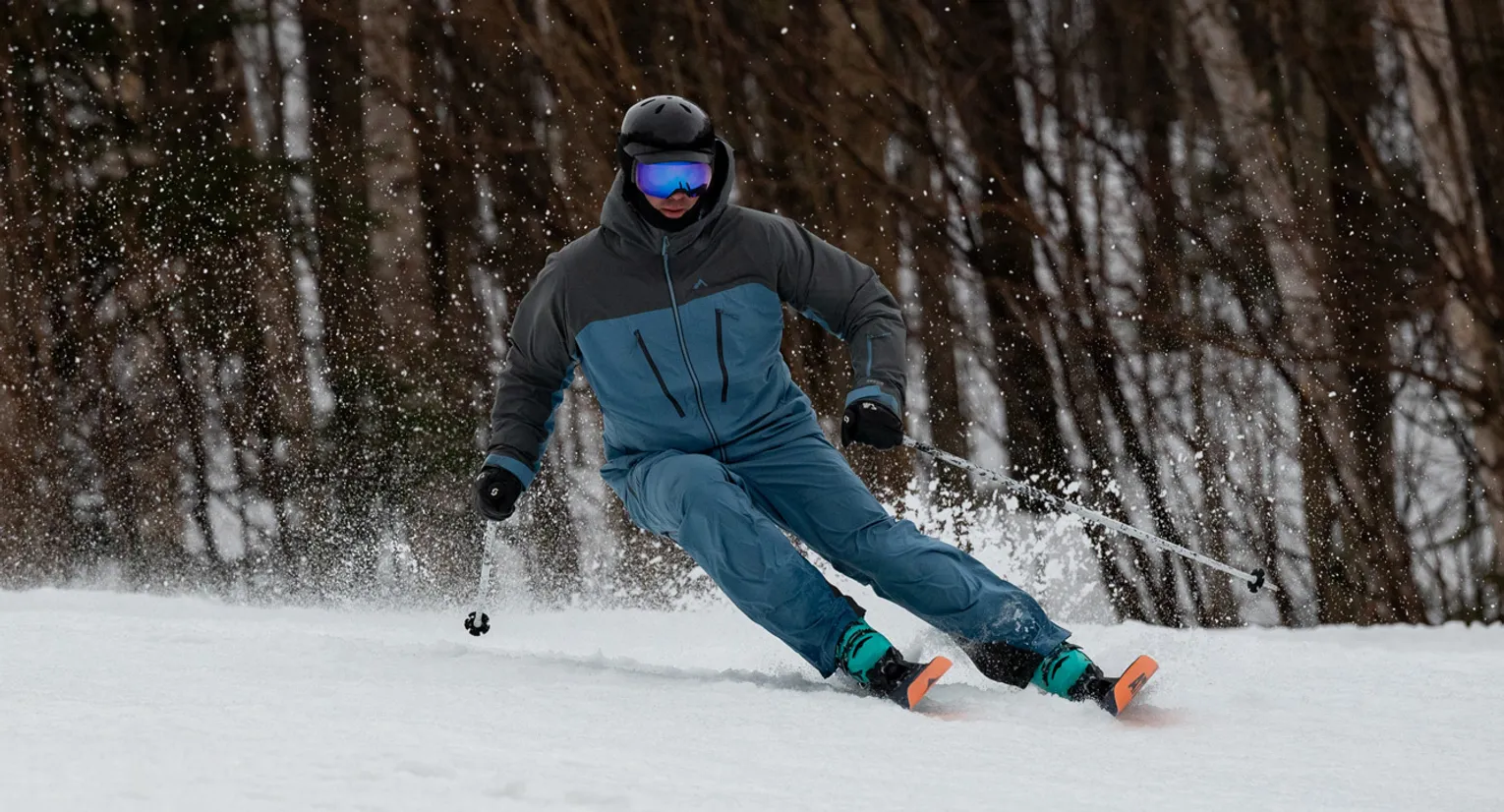
Starting with on-piste performance, while this ski certainly takes notes and hints from the outgoing 100 Ti, the 105 still stands up to firmer snow and in a carved turn. We do think that even though it’s slightly wider, it’s more comprehensive as a carver, and the ash in the core has a lot to do with it. The dual metal in the 100 was very precise, and since the ski was light, you had to be ON IT in order to get the most out of it. With this new 105 CTI, it’s more pliable and smoother, offering a deeper carve and easier access to the roundness of it. What’s amazing is that it still holds up on hard pack, and since we get a lot of that here in Vermont, that’s a good thing. We put these skis to the test on some frozen days, and for the most part, they perform admirably. When it’s icy, the skis seem to want to make longer turns, making it tough to adhere to that 19-meter arc. Not that most skiers would want to, especially since they operate quite well at speed. The ash in the core makes quick work of any chatter, smoothing out the ride even at top velocities. After an early April snowstorm, however,we got these on some softer packed powder and they were almost too powerful, or at least a bit too turny to really light it up. That said, they were a lot easier to drift and smear on said packed powder—certainly more rewarding than the 100 Ti in this regard. It’sa lot of the same when it comes to deeper snow, as these skis punch way above their level when it comes to flotation. Even in heavier, mankier snow, the Maverick 105 CTI holds its own and plows right through crud and chop. The taper has a lot to do with the success here, as the tips simply stay right on top of the snow. This shape melds well with the rocker profile, combining the sturdy build of the ski with the progressive and modern shaping. It’s this mix of traditional and futuristic that makes this ski so incredibly fun in the softer snow.
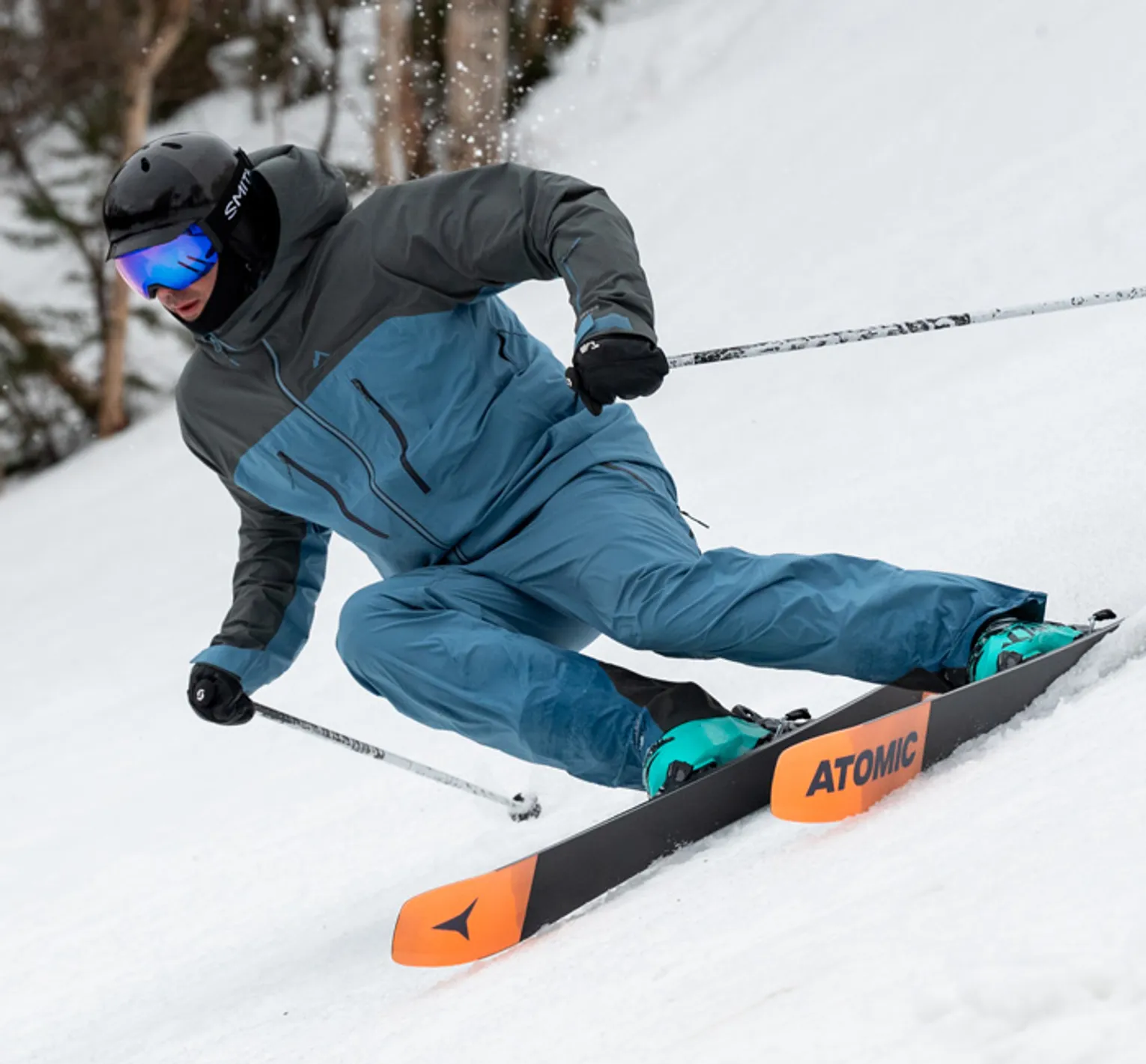
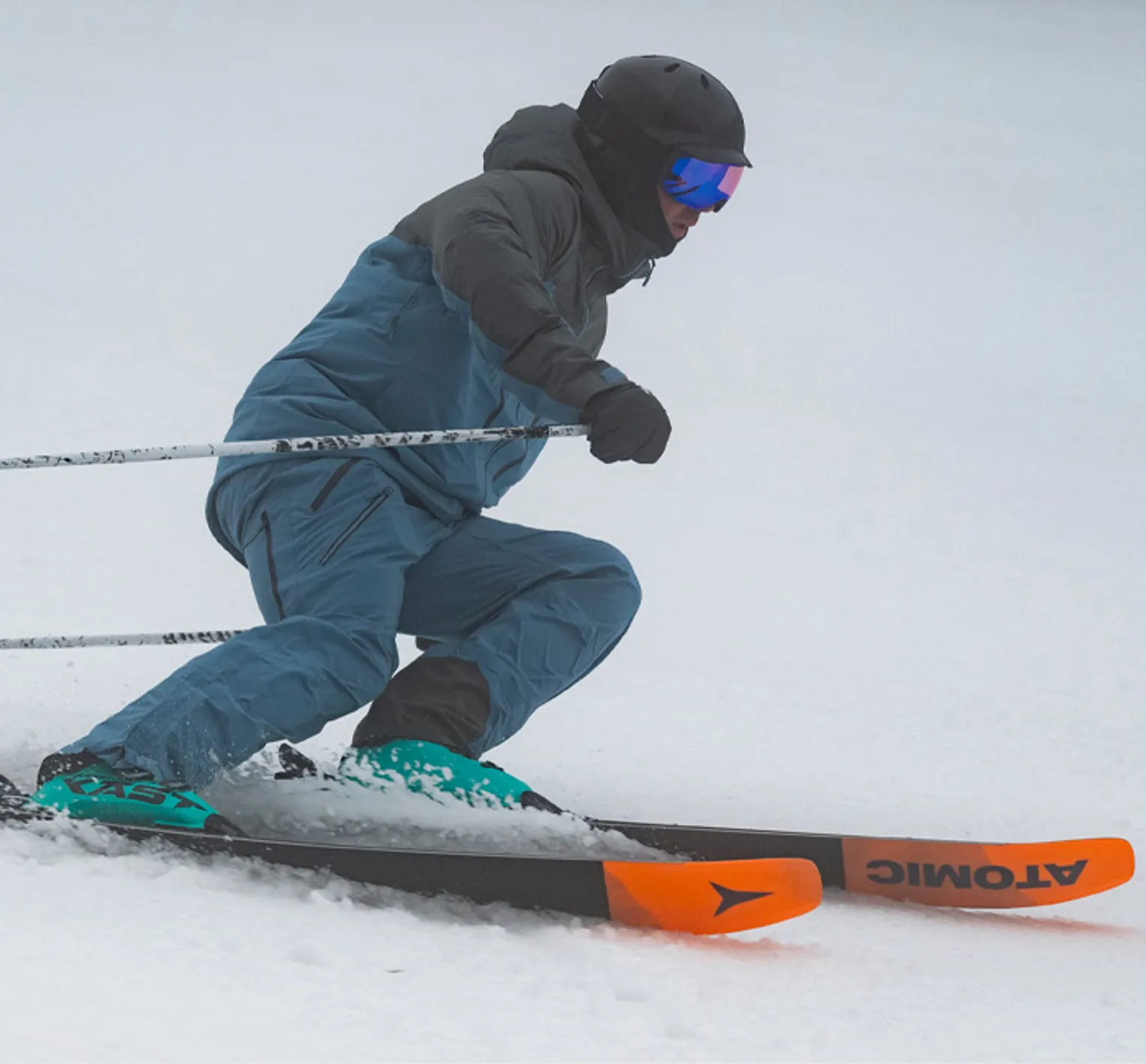
Off-piste, or in soft and broken snow, the Maverick 105 CTI really comes to life. This is where the slightly shorter arc makes its mark. On that firmer snow, there’s not an instantaneous hook up or a long effective edge to fall back on, but in softer snow, the full breadth of the ski that comes in contact with the snow surface allows for a smooth, predictable, and sturdy overall feel. We’ve had these skis in some very deep snow of all types, from dry fresh powder to wet and heavy cement. The 105 CTI operates better than most in the category as it delivers that powerful feel at a relatively light weight and rate of mobility. In that drier snow, the ski’s shovel loves to pop up and stay on top while the tail’s rocker is appropriately playful and manageable. When the density increases, the strength of the ash shines through, making the ride supple, smooth, and predictable. It’s not the slashiest or smeariest of skis in this width range, but it does have a nice mix of power and pliability. Overall, it’s a fantastic powder ski for a 105, and can even hold its own against some wider skis in this division due to the build. Bumps are not a strong suit, as you’re not going to find too many 105’s that are quick enough edge to edge to make them fun, but there’s also nothing particularly offensive about them in the moguls either. For the trees, the mobility shines here, especially in the front of the ski. While the tail doesn’t necessarily lock you in like the 100 used to, it’s still not nearly as fun or exciting as the Bent 100. Open snow zones are more beneficial to these skis than tighter and more technical terrain.Jeff had a unique experience on the Maverick 105 CTI in Utah, and also skied it extensively here in Stowe:
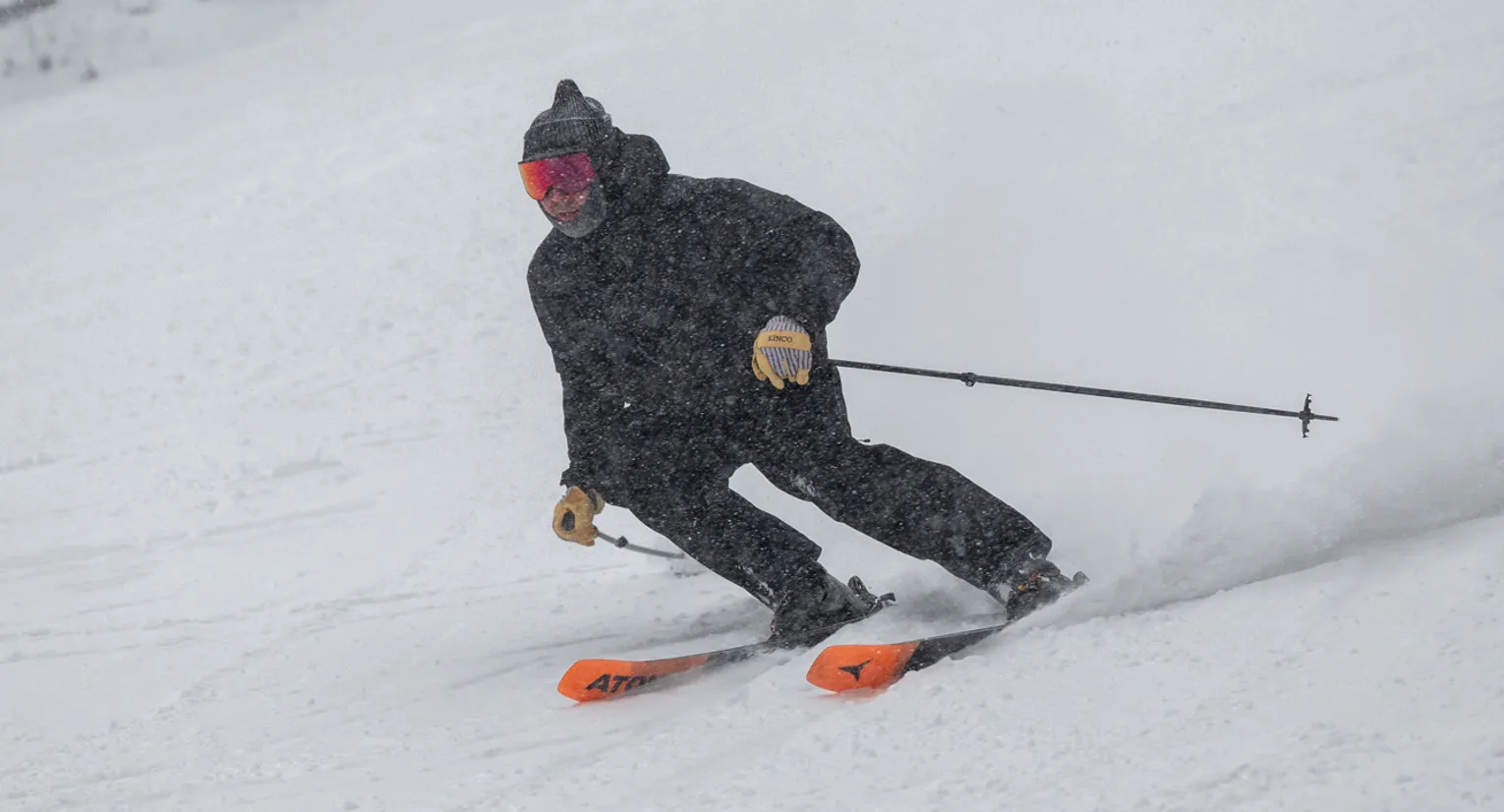
Jeff’s Thoughts:
While it wasn’t my first interaction with the Maverick 105 CTI, my trip with Atomic to Monument Ranch and Powder Mountain is certainly my most memorable experience with this new ski. Skiing alongside Daron Rahlves gave me a unique perspective into why, how, and who the ski was designed for. In general, it brings the entire Maverick name into more of a big mountain, freeride discussion, which is where I think it belongs. Daron rips, which goes without saying, but he has some quickness and creativity to his skiing as well. That’s a really good way to think about this new ski. It’s strong and its sturdy, but it can also be manipulated into different turn shapes, styles, slashes, smears, etc. It’s not so one-dimensional in its big mountain capabilities that you wouldn’t want to ski it in more challenging or more diverse terrain.
I’m continuously blown away by its float in deep snow. Atomic deserves a lot of credit and respect in how they’re designing and manufacturing wider, soft-snow-focused skis. Between the Bents, Backlands, and Mavericks, they all float exceptionally well. Surely the HRZN Tech helps, but I think just the way they put smooth, progressive rocker and a spoony tip shape into a lot of their skis helps too. The way the Maverick 105 CTI keeps coming back to the surface is quite impressive for a ski that’s just 105 mm underfoot. Sure, that’s not narrow, but it’s also quite far away from the ultra-wide, pure-powder Bent Chetler 120.
When you’re not in soft snow and off-piste terrain, I think it’s fair to say the Maverick 105 CTI isn’t quite as dynamic. What it does do, however, is lay over long, smooth, trenchy carves. It does that quite well, actually, and that performance and feel carries over through a huge range of snow conditions. Frozen, soft, wind-scoured, chopped up powder, late day crud, regardless of the snow conditions, the Maverick 105 CTI stays composed and confident, which gives the skier a lot of confidence as well. It’s not the stiffest ski in the world, nor is it the stiffest in its category, but I think the softer flexing shovel combined with a relatively strong feel underfoot provides all the stability you need to ski it fast and aggressively.
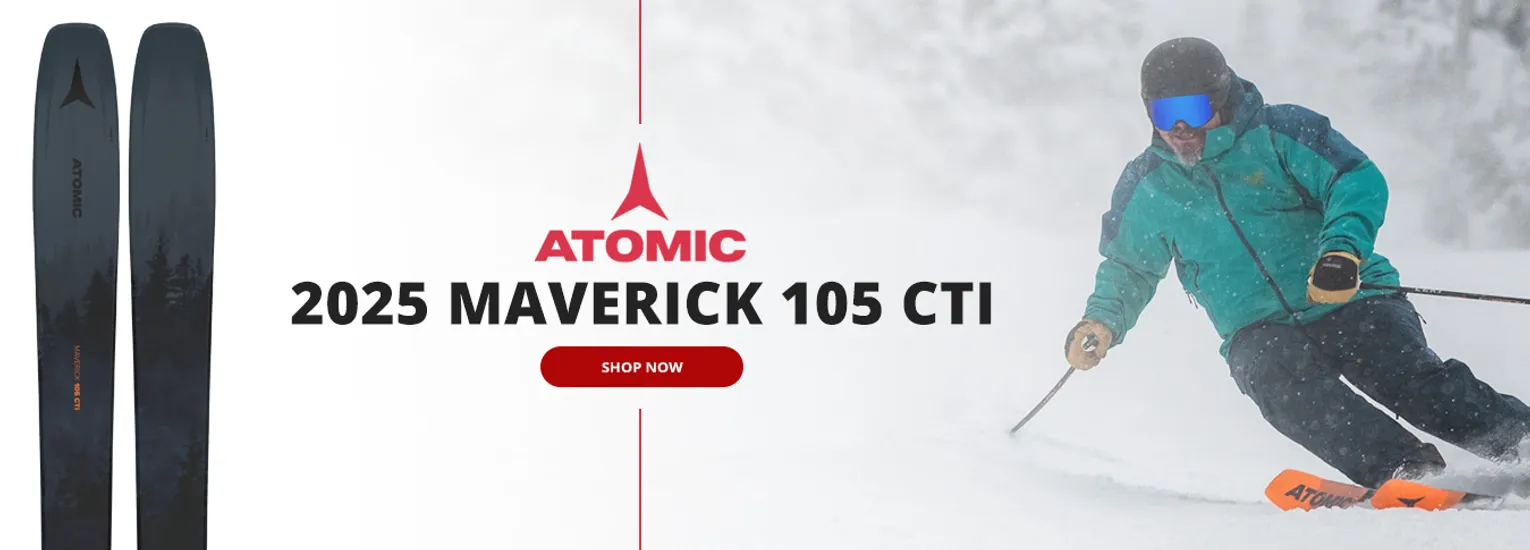
Ideally suited for advanced and expert skiers who are looking for a mid-fat with some oomph and chutzpah in mixed terrain and conditions, the 2025 Atomic Maverick 105 CTI blends power, stability, and flotation very effectively. There’s not a whole lot of intermediates who will find a lot of success here as the skis are on the wide and sturdy side and could be considered pretty demanding for the less skilled or aggressive skiers of the world. But for those that can put a ski on edge and power it through a turn, the Maverick 105 CTI is a workhorse with endless versatility and capabilities.