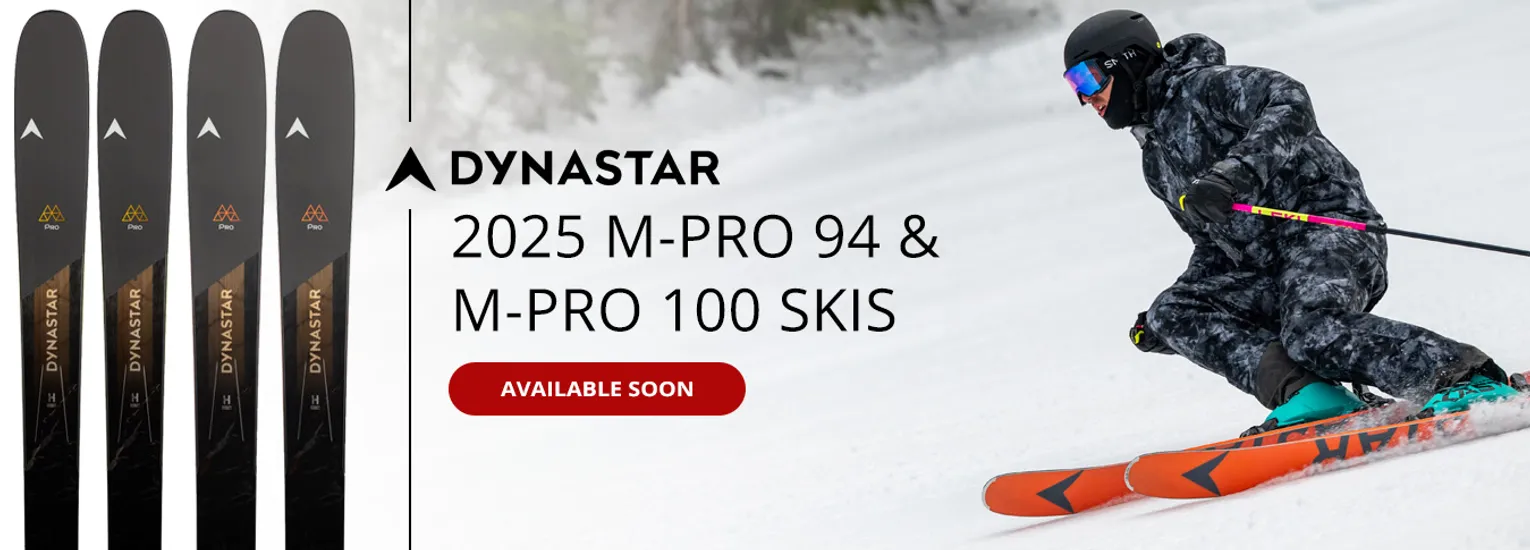
2025 Dynastar M-Pro 94 & M-Pro 100 Ski Review
For 2025, Dynastar's all-mountain lineup gets an update. The M-Pro 99 and 90 are now the 100 and the 94, putting more emphasis on off-trail skiing and versatility than ever before. The outgoing models were always some of the best, and most traditional, skis in their class when it came to making clean carves with responsive energy out of the tail. For some skiers, that was a total blessing. For others, it left some modern performance styles on the table. Most of the attributes that made the M-Pro 90 and 99 successful carry forward into the new 2025 models while some of the more antiquated aspects are left behind. When we saw the new core construction emerge last year in the M-Cross 88 with the Hybrid Core 2.0, we certainly wondered when we’d see it in more models. The answer is now, with the M-Pro 94 and 100.
By utilizing Dynastar’s latest core construction and varying the metal laminate, the M-Pro series gets a much needed update. Hybrid cores have been a part of Dynastar’s story for a while now, utilizing Polyurethane to bolster the wood core to create a smooth, silent, and energetic overall feel. That concept gets a boost with Hybrid Core 2.0, mainly with the new use of wood. While we’ve always seen poplar wood in the M-Pro series, it now gets multi-laminate technology that is both high-performance and eco-friendly. They use a full horizontal layer of wood along the bottom of the core to set the tone, then the upper portions are two additional layers that are milled strategically to fit together by joinery rather than epoxy. By reducing epoxy, Dynastar is lowering their carbon footprint. By bonding the core together using friction, they’re creating a poppier and zestier feel in the ski. This functions as a set of vertical stringers that create better resistance to compression. The fore/aft flex is increased for increased dynamic action while the torsional aspect of the ski is boosted for edge grip and reaction. These three directions all benefit from this new style of wood core construction. And with less environmental impact. The PU layers that run along the sides are light weight, high energy, and totally quiet. These skis feel like a much higher-end product because of this PU material. Plastic in skis gets a bad reputation, but when you get on any Dynastar that uses this hybrid style of core, it instantly registers as quality to your feet. On top of this ultra-sophisticated wood core we get Dynsastar’s new metal laminate. It’s a combination of the H-Shaped titanal that we see on the M-Cross and the Rocket Frame that the older M-Pro skis use. In the front of the binding, we get the long and centralized titanal sheet. Underfoot it’s full width, and towards the tail it stops short of where it was before, resulting in that H-Shape. This allows more energy and pop out of the tail without it being too stiff. The older M-Pro series could be considered somewhat sharp and unwieldly in the rear while these new skis are more amenable to turn shape and style changes. There’s not a whole lot of change in weight. The older 99 was 1846 g/ski in the 178 while the new 100 is 1886 g/ski in the same length. The 94, albeit a different width, dropped 8 grams from 1788 to 1780. Both new models are on the stiffer side of the spectrum as we’d expect from a ski with this innovative construction and resulting energy.
At a Glance:
2025 Dynastar M-Pro 94 Skis

| AVAILABLE SIZES | TURN RADIUS | SIDECUT | WEIGHT | PRICE |
|---|---|---|---|---|
| 154, 162, 170, 178, 186 cm | 17 m @ 178 cm | 128 / 98 / 118 mm | 1,780 g @ 179 cm | $699.95 |
One of the bigger changes comes with the shape. While the move from 99 to 100 isn’t too shocking, the new 94’s departure from the 90 is more interesting. The M-Cross 88 (as well as the M-Free 90) occupied much of that range alongside the M-Pro 90. Moving the 90 to the 94 makes sense to differentiate the more on-trail oriented M-Cross as well as the tweener/freerider M-Free 90. The new 94 makes sense as a versatile all-mountain ski that mixes different attributes for pure well-roundedness. That increase in width and rocker accounts for a greater difference between the new model and the outgoing 90. We think this is a good move for Dynastar, as there’s no real reason to compete with yourself in the 88-90 range, especially given the overall number of skis in this range. With measurements of 128/94/118, the 178 produces a 17-meter turn radius. This is down from 18.4-meters in the previous ski. Part of what made the older skis so interesting was their longer radii. While some skiers appreciated this traditional feel, it didn’t quite fit into the modern sense. At 17-meters, the new 94 is happy and ready to cut across the fall line with generous arcs and deep trenches. While the short swing turn and skidded style takes a hit, pure carves and railroad turns are quite a bit easier now. We find a similar approach with the 100. With a sidecut of 134/100/124, the ski also hits 17-meters in the 178’s radius. This is a drop of almost 2 meters as the older ski was a 20-meter arc. Both new skis share rocker profiles, as did the older models. We see a ton of tip rocker in the front of the ski and a somewhat directional tail. The roundness of the tail taper is what sets the new skis apart from the old. This gives the ski a smoother and more amenable character when it comes to softer snow and off-trail situations. The M-Pro 99 was a great ski in an on-trail format with stiff and responsive behavior, but it was kind of a handful in tighter and more technical zones, especially if you weren’t ready for it. The new skis are smearier and driftier, even with the shorter radius. We always talked about the long tip rocker making the skis floatier, and that carries through with the addition of the wider and more playful tail. Overall, these skis are wider from tip to tail, but especially in the tips and tails.
At a Glance:
2025 Dynastar M-Pro 100 Skis

| AVAILABLE SIZES | TURN RADIUS | SIDECUT | WEIGHT | PRICE |
|---|---|---|---|---|
| 162, 170, 178, 186 cm | 17 m @ 178 cm | 134 / 100 / 124 mm | 1,886 g @ 179 cm | $799.95 |
On snow, the M-Pro 94 finds a new home and balance in the all-mountain realm. Now as a mid-90's ski with a shorter radius, the 94 lights it up both on and off-trail. There’s more adventure here, and there’s more accessible carving. On-trail, when you tip the ski on edge, it hooks in a lot sooner. The rocker profile keeps it smooth, but the wider shovel makes it a lot crisper in the initiation phase. With the PU, wood core, and metal laminate all working in unison, the 94 holds a strong edge and gives great kick out of the tail. While skis like the Nordica Enforcer 94 or the Blizzard Anomaly 94 are stronger skis in this range, for the weight and versatility, the M-Pro 94 holds its own quite well. There’s more snappy energy than there is raw power, but only the top end of the top end will notice this small lack of strength. It does seem to fall more to the utilitarian and average side of the spectrum rather than shooting for an accolade or a “best of” a certain attribute. This will hit more skiers and hopefully for Dynastar, sell more skis. Off-trail, the 94 is a total blast. We loved this ski in the bumps and trees. It’s more mobile and agile than before, mainly due to the rounder, wider, and more rockered tail shape. The front of the ski is fun as it’s always been, taking some hints from the more twin-tipped M-Free 99 when it comes to maneuverability. In the rear, you get proper, not overwhelming support. While narrower skis will fare better in the tighter bumps, there aren’t many out there that can blend the carving and the tree performance as well as the new 94.
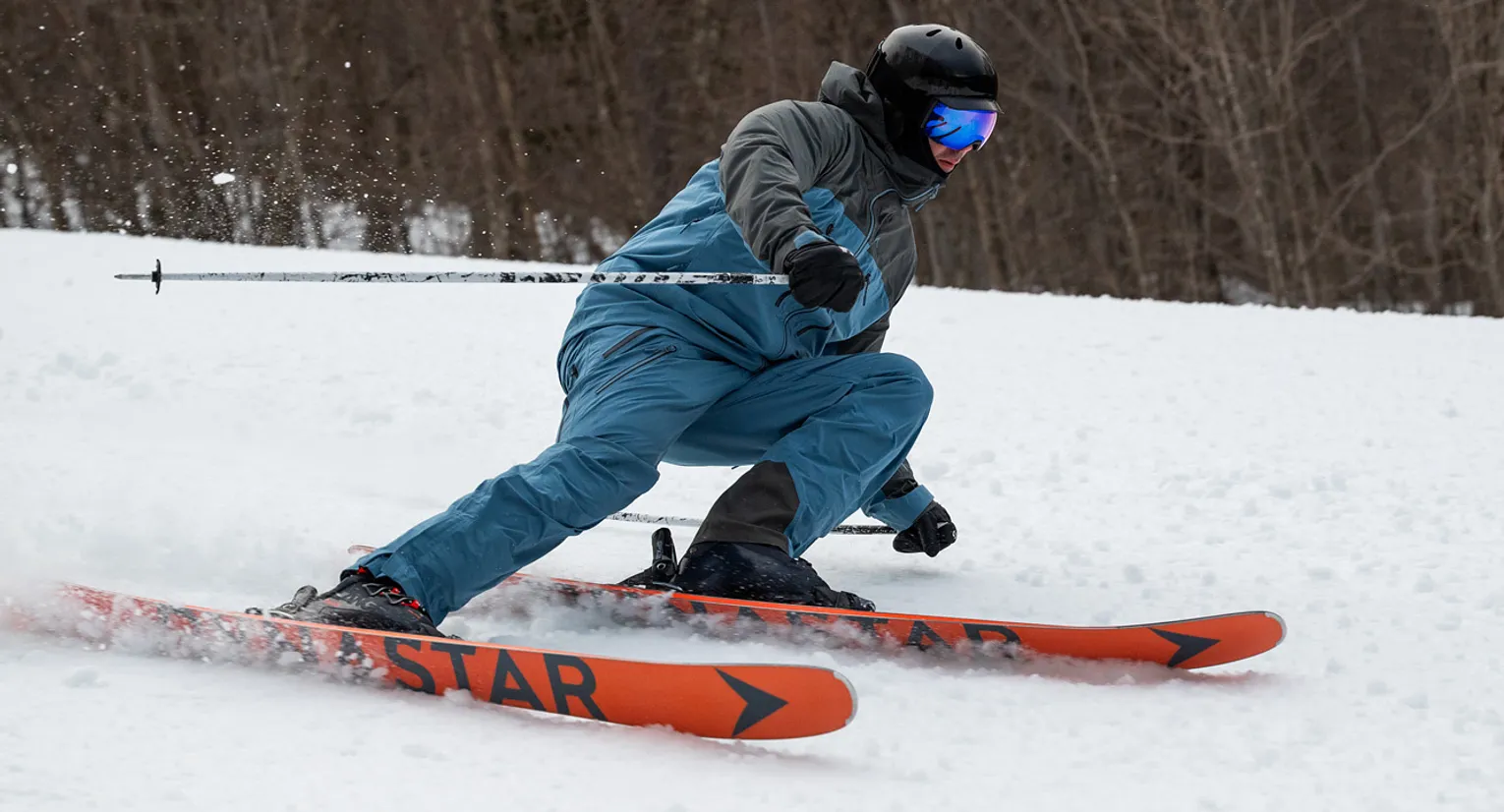
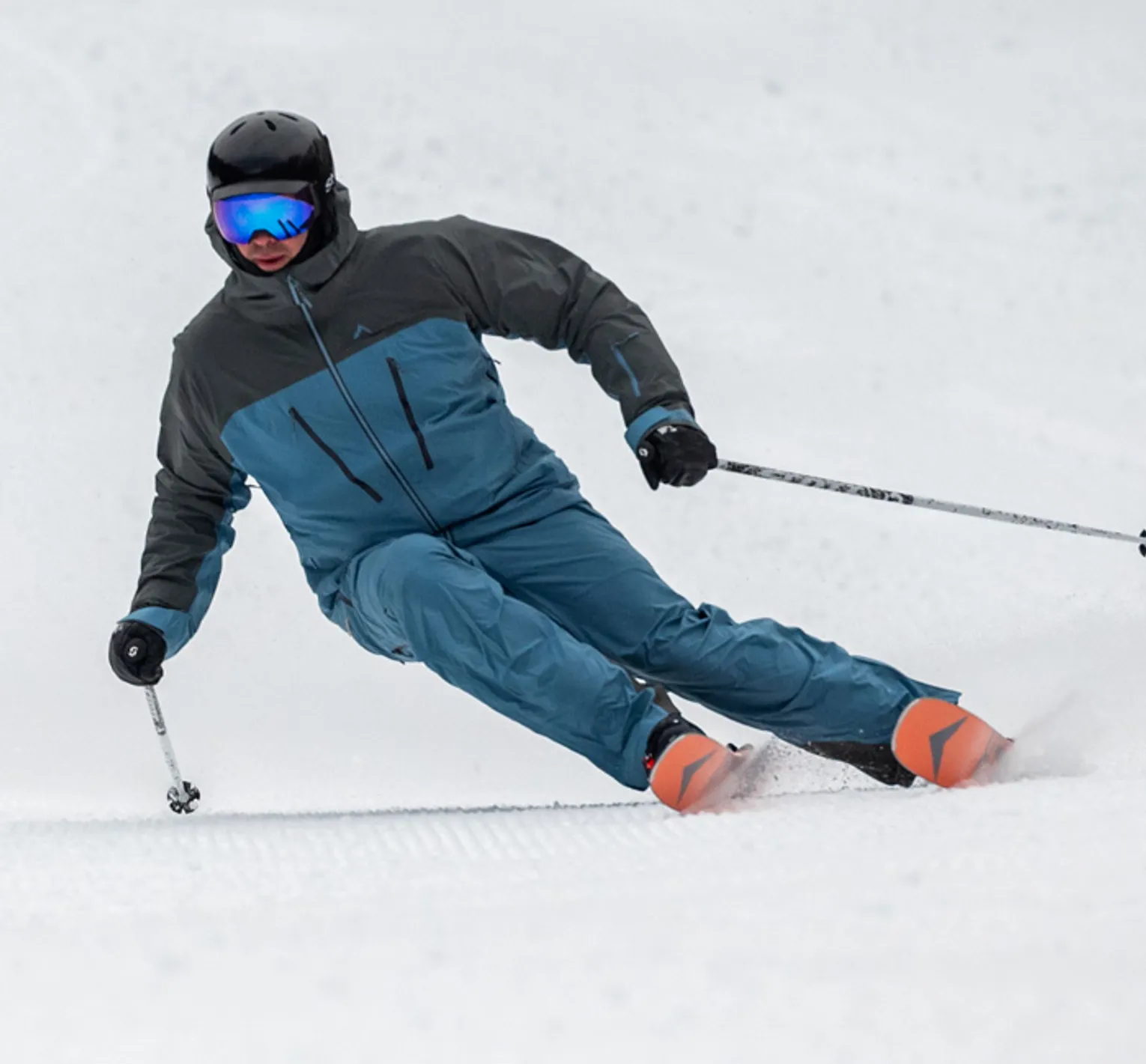
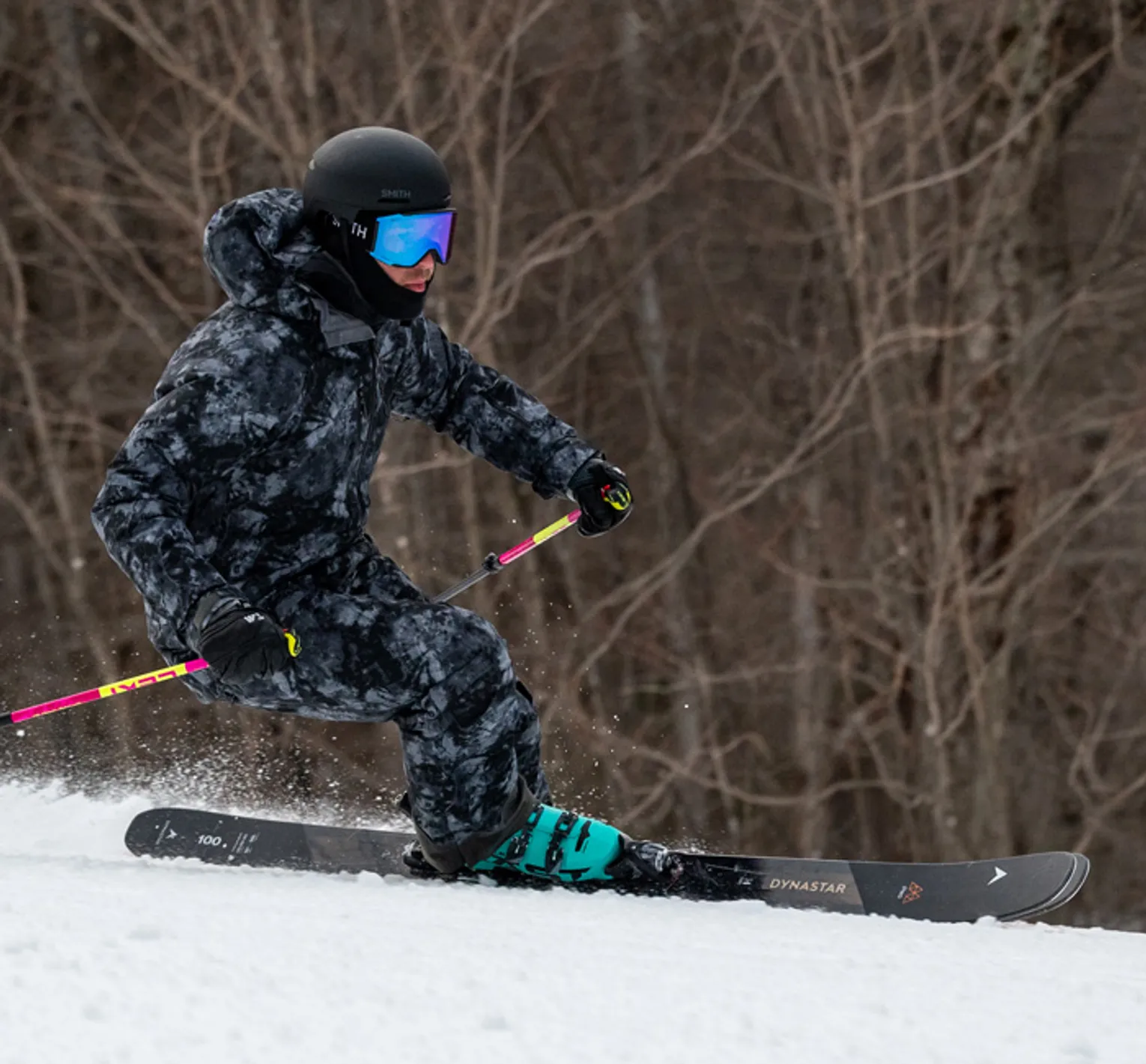
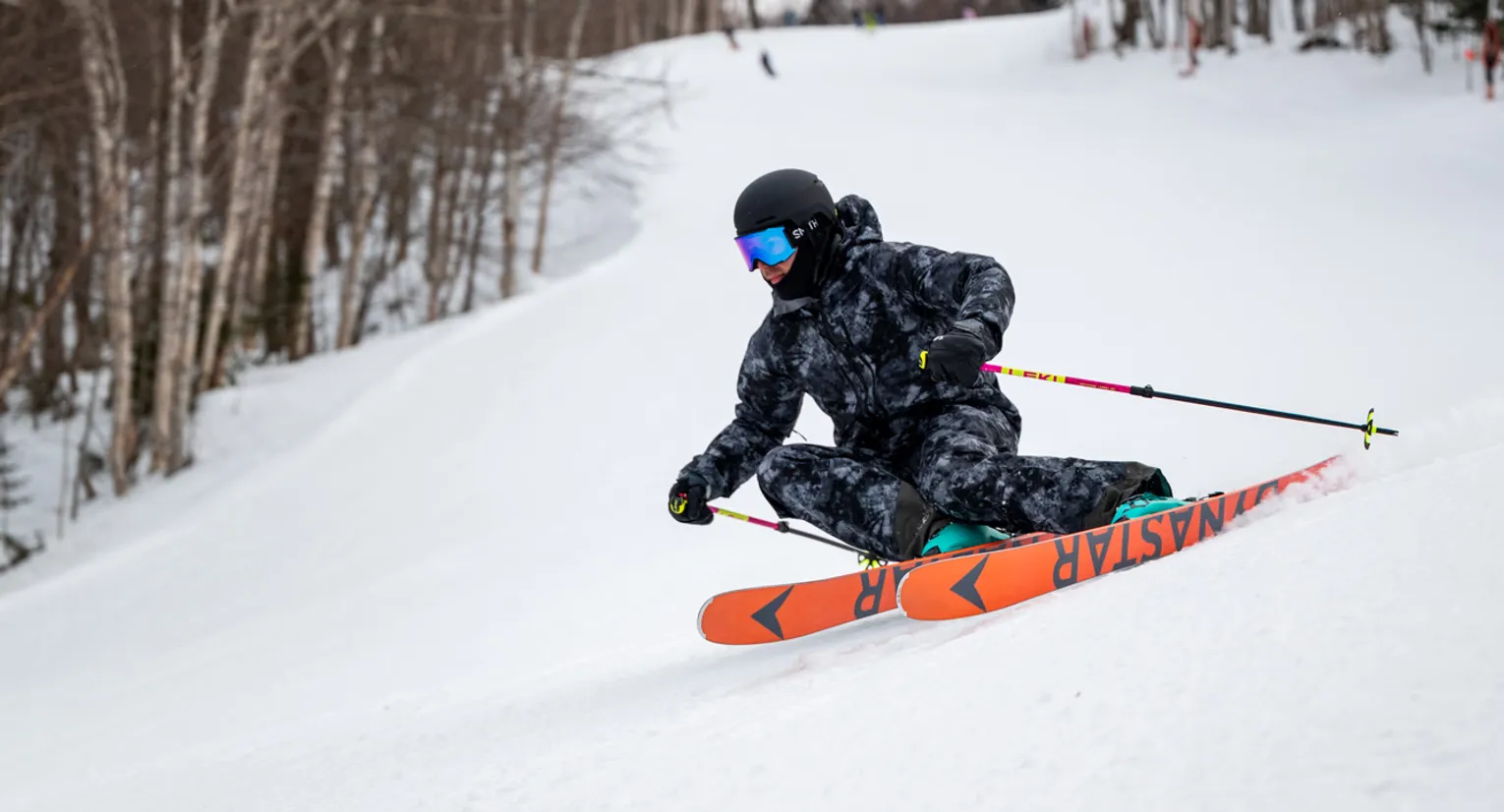
Well, maybe the M-Pro 100 can mix those qualities. It depends on the snow. Anytime there’s fresh snow or deeper pockets, the 100 will be more fun. It’s not as crisp or agile as the 94, but it does just fine. That extra boost of flotation and stability makes the 100 a better option for many skiers. If you’re more playful and creative when it comes to off-piste situations, the 100 will hold up its end of the bargain. You can be driftier and slashier on the 100 as it’s not as likely to catch or hook an edge when in more of a sideways situation. On-trail, the 100 is a sturdy companion, delivering smooth and predictable power to the edges of the ski. With the PU keeping things light and quiet, this ski has a nimbleness to it that many of its competitors simply do not have. Fortunately, that is one of the attributes that carries forward from the old 99 to the new 100. Off-trail, the 100 is kind of a tank. But a friendly tank. It plows through snow piles, crud, chop, and wind-affected snow with ease. It feels natural on the feet and is ready to answer the call when it comes to performance and power. With such a light weight, it’s impressive how powerful the new 100 feels. With wider tips and tails, there’s just more surface area to handle adverse conditions and terrain, making skiers feel confident and comfortable in a variety of conditions and terrain. That seems to be the key here—making a 100 mm underfoot ski with metal feel agile and mobile for a variety of skiers. In pure powder, the M-Free 108 is a better choice, but for blending multiple things within the same day or run, the M-Pro 100 is a fantastic choice.
While we personally will miss the traditional feel and snappy energy of the M-Pro 90 and 99, the new 94 and 100 will certainly appeal to a broader audience. The versatile nature of the ski shines in any condition or terrain, and the ease of use and overall satisfaction are greatly increased. With a new wood core and metal laminate, the M-Pro series not only gets more sophisticated, but it also becomes more eco-friendly. If a company can make a ski that performs at an extraordinarily high level while being greener in the process, then we’re all about it. For pure resort skiing and true all-mountain performance, we’re 100% stoked on the all-new Dynastar M-Pro 94 and 100.