

2025 Faction Prodigy 1 Ski Review
We receive a lot of requests to test and review different brands here at SkiEssentials, and over the years, Faction has been one of the most requested. While we’ve had the brand in our Ski Test for three years now, and we’ve included many skis in our Comparison Series, we’ve never actually done a full-length, deep-dive review of any Faction skis. As we’ve mentioned before in various Quiver videos and other content, that’s going to change this year, and it’s all starting right now!
Unlike most of our reviews, these will be a little bit more personal and subjective, as both Bob and I have our own Faction skis to test this season. I went for a Prodigy 1, which we’re going to focus on today, as well as a Studio 2. Bob, on the other hand, is testing a Dancer 2. In our initial reviews, we’ll focus on our own individual perceptions, but that also leaves the opportunity for future on-snow testing where we swap skis around for more perspectives.
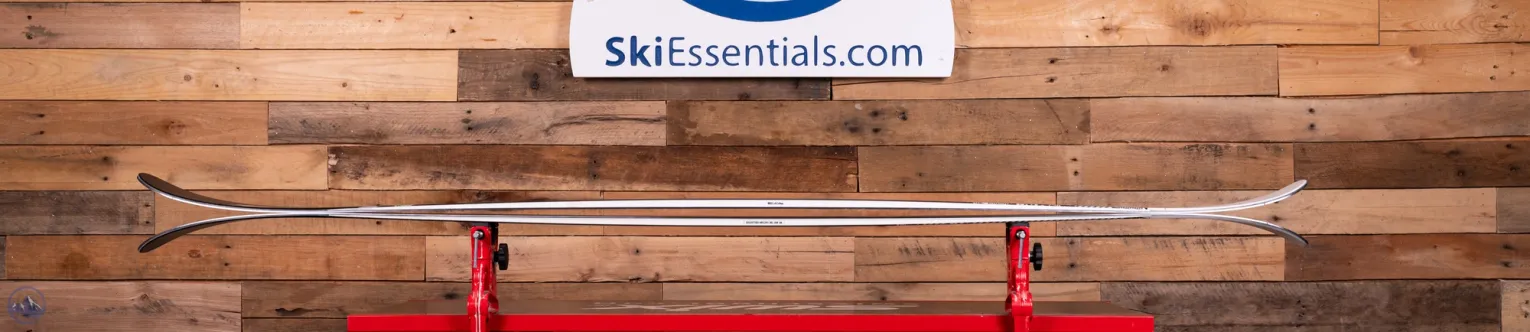
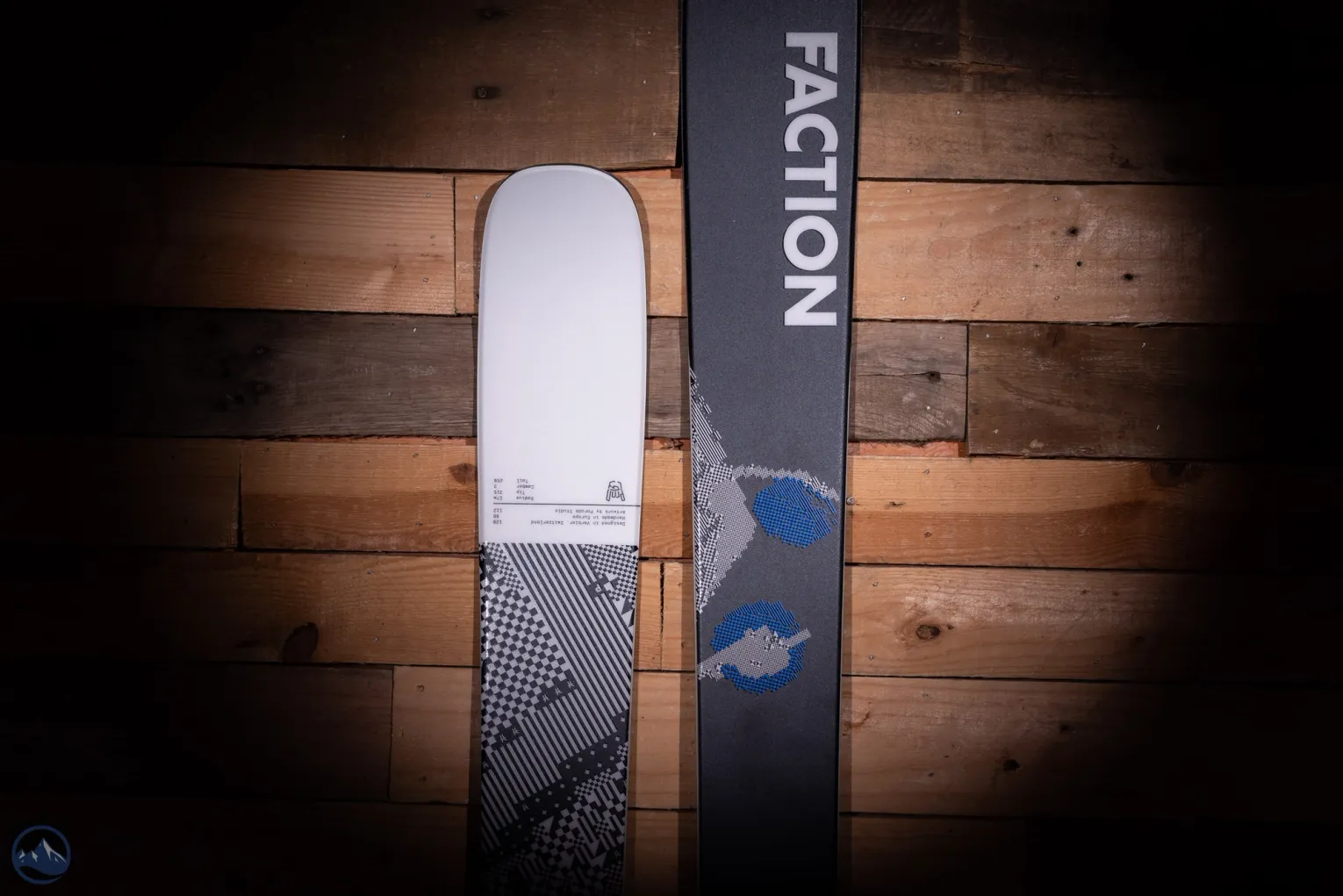
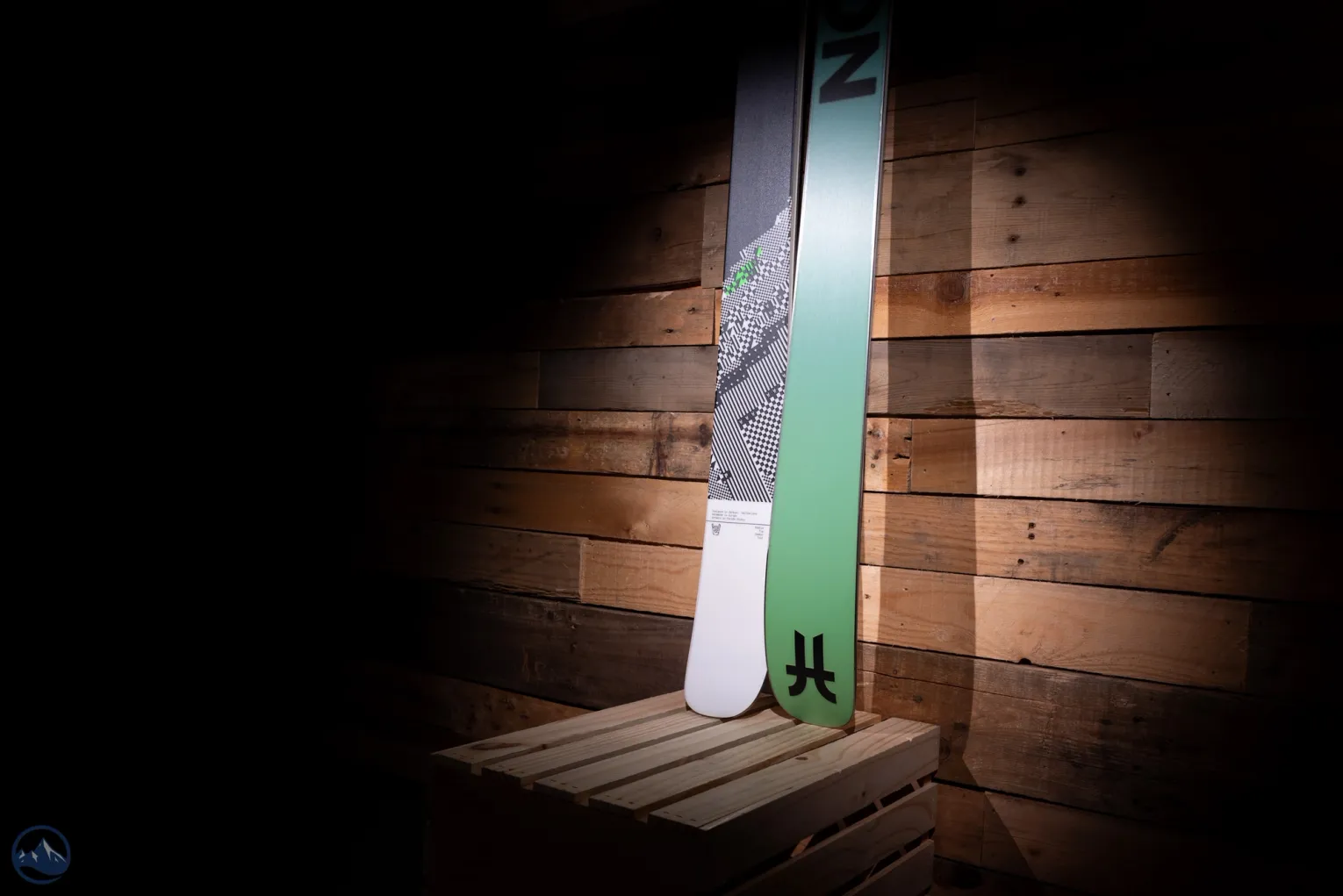
The Prodigy 1 seemed like such a perfect ski to start with for several reasons. One, it’s relatively narrow at 88 mm underfoot, which feels appropriate for our early-season Vermont conditions. Second, it’s a directional twin tip that’s intended to perform well both as a park ski and also as an all-mountain ski, which is exactly how I like to start my season. There are a series of mount points on the Prodigy 1. The furthest forward “Newschool” mark, where I chose to mount a pair of Look Pivot bindings, is 3.5 cm back from true center. Then there are 1.5 cm increments going back from there. The “Progressive” mark is -5 cm, and then “Classic” is -6.5 cm. Some park skiers might be tempted to try a true center mount point, but I would advise against it. There’s 30 mm of tip rocker and 24 mm of camber (my own measurements), or a 6 mm difference. Split that in half and, in theory, the “Newschool” mount point is about .5 cm behind the center of camber. It wouldn’t be smart to go further forward than that, as has come up before, being forward of the center of camber just feels awful. On the tail of the ski, Faction lists “315” for tip and “250” for tail, which I assume are their rocker measurements in mm. While they’re slightly different than mine, the math still checks out. I’ll talk more about varying mount points later in the review.
At a Glance:
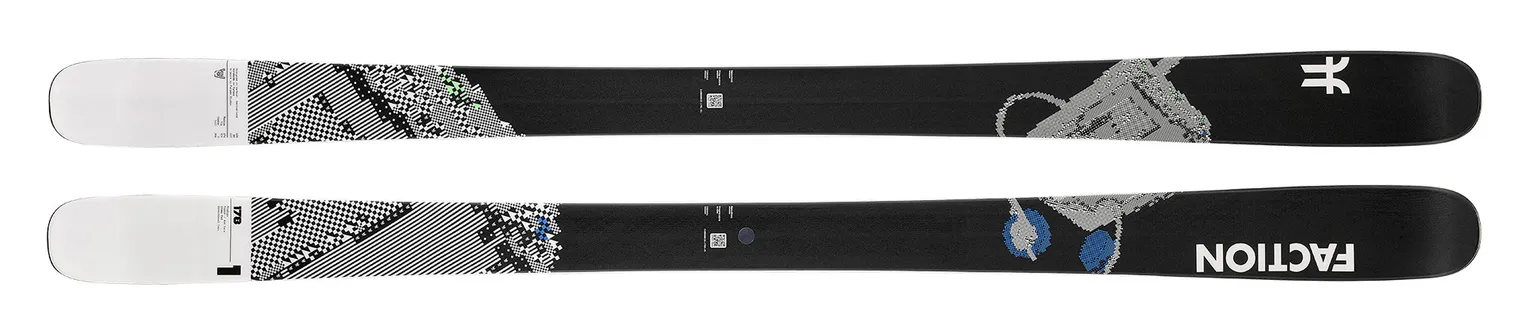
2025 Faction Prodigy 1 Skis
| AVAILABLE SIZES | TURN RADIUS | SIDECUT | WEIGHT | PRICE |
|---|---|---|---|---|
| 164, 171, and 178 cm | 17 m @ 178 cm | 120 / 88 / 112 mm | 1,750 g @ 178 cm | $549.00 |
As I mentioned, the ski is 88 mm underfoot with dimensions of 120/88/112 mm creating a 17 m turns radius. We just talked about tip and tail rocker, but that’s only part of the equation here. Our friends at Sooth Ski claim 9 mm of camber height, almost a full cm. Historically, that’s not a crazy figure, but it does feel like a lot for 2025, especially for a twin tip. In my opinion, that amount of camber is a defining characteristic of the ski.
Looking quickly at construction, what stands out to me is the overall value. At $549, the Prodigy 1 boasts some high quality materials. It has a poplar and ash wood core, and ash is a relatively dense wood often found in frontside carving skis and even some race skis. It creates a nice flex pattern for this ski. It’s not stiff, but it’s certainly not soft either. It has a nice predictable bend to it that also snaps back with a good amount of energy, something that translates to on snow feel too. Faction has added a Carbon and Rubber Stomp Pad too, 60 cm long underfoot and inlayed into the core to reduce vibrations and add durability and stability for the abuse a twin tip park ski endures. Faction rounds things out with some impressive subtle elements as well. There are vertical sidewalls, but they’re paired with an “Anti-Chip Micro-Cap” which so far is working quite well. Then there’s the slight elliptical sidecut, with shorter radii in the tips and tails and longer underfoot. All in all, for $549, it’s a very well-built and well-designed ski.
So, how does it perform on snow? For the most part, really well, but there are some things it doesn’t do particularly well. Thankfully, those things aren’t exactly what you’d expect an 88 mm twin tip to do well, so it’s far from an issue. I suppose, however, there were a couple things that surprised me.
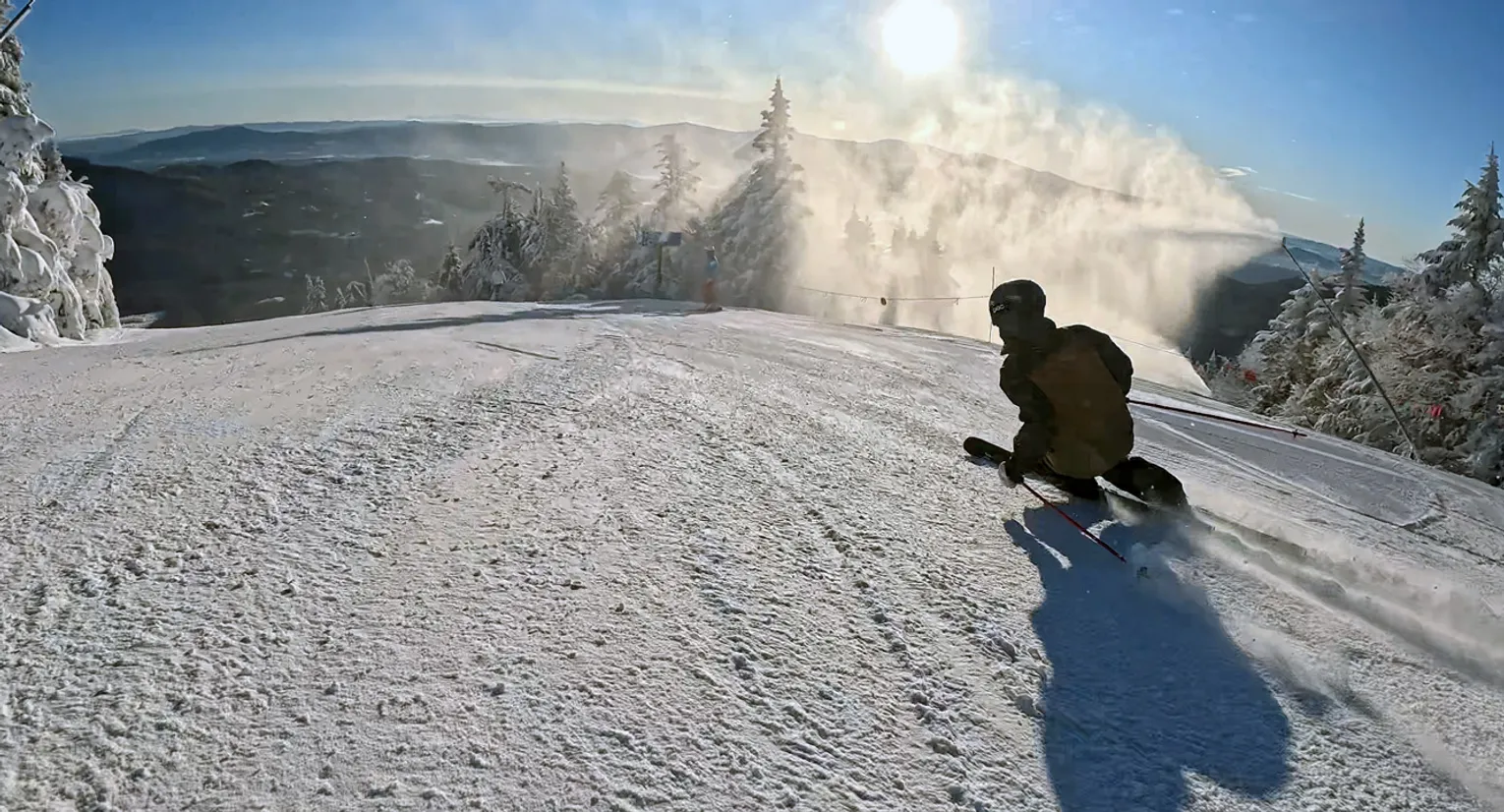
Faction highlights All-Mountain and Park & Pipe as recommended terrain for the Prodigy 1. In comparison, the Prodigy 3 at 106 mm underfoot also includes Freeride and Powder as recommended terrain, but not Park. Not surprising, really, but worth noting the intentions of the manufacturer. Starting with All-Mountain, overall, it’s great. On groomers, the Prodigy 1 is both stable and playful. It strikes a nice balance between being easy to manipulate, but also strong enough to trust at speed. It certainly surpassed my expectation on a groomer. It’s easy to bend the shovel into a turn, and there’s an impressive amount of edge grip for a twin tip. Off the top of my head, I can’t really think of a twin tip in this width range that carves better. Maybe Mirus Cor, but they’re so different, it’s not a fair comparison. The amount of energy you can build up in the ski and the resulting rebound had be literally bouncing from one carve to the next. You can see it in the footage. The number of carving transitions where the ski was actually airborne for a split second is wild to me. While you can make just about any ski do that, there are few skis that promote it like the Prodigy.
Interesting, when making more skidded turns on a groomer, it’s somewhat conditions dependent. Because of the camber height and the snappy flex pattern, if you’re skidding turns on variable conditions, the ski can feel a bit nervous. It’s certainly not as twitchy as some, but it’s there. It’s probably something that would slowly go away as it’s skied more and more and loses some of its pep, but it’s certainly there from the start. When the snow is good, it feels great, and intuitively makes quick, controlled turns on the sides of the trail. In tricky, variable snow, it’s just not as smooth. Skiing it back to back with the Studio 2 was interesting. That ski is stiffer, wider, and with longer rocker, so throwing it sideways in variable conditions felt safer than on the Prodigy.
The same can be said about off-piste applications, although it’s slightly different. In some relatively firm early season moguls, it performed admirably. The quickness from the 88 mm width and the energy in the camber and flex pattern makes it ultra quick. Also, the slight amount of early taper in the tips and tails combined with that rocker really helps it absorb and maneuver through bumps. I am far from a self-proclaimed expert mogul skier, and for someone like me, I found it really helpful. The same would be true in trees, as long as the snow isn’t too deep or too catchy.
The off-piste situation where I struggled the most was on a long run down Liftline at Stowe with probably 6-8 inches of choppy day old snow. While not surprising, that was a bit much for the 88 mm width and the more forward mount point. It can handle it, but my early season legs were not happy. It just required a lot of work getting the tail to come around behind me and I found myself constantly trying to get the tail off the snow to move it around, which is a tiring way to ski. The day before, on the same terrain, I was skiing the Studio 2, and once again found it far more compliant and more of a performance boost rather than a challenge. Again, it’s not a bad thing, as there really aren’t many or maybe any 88 mm skis that feel good in terrain and conditions like that, but it’s worth noting.
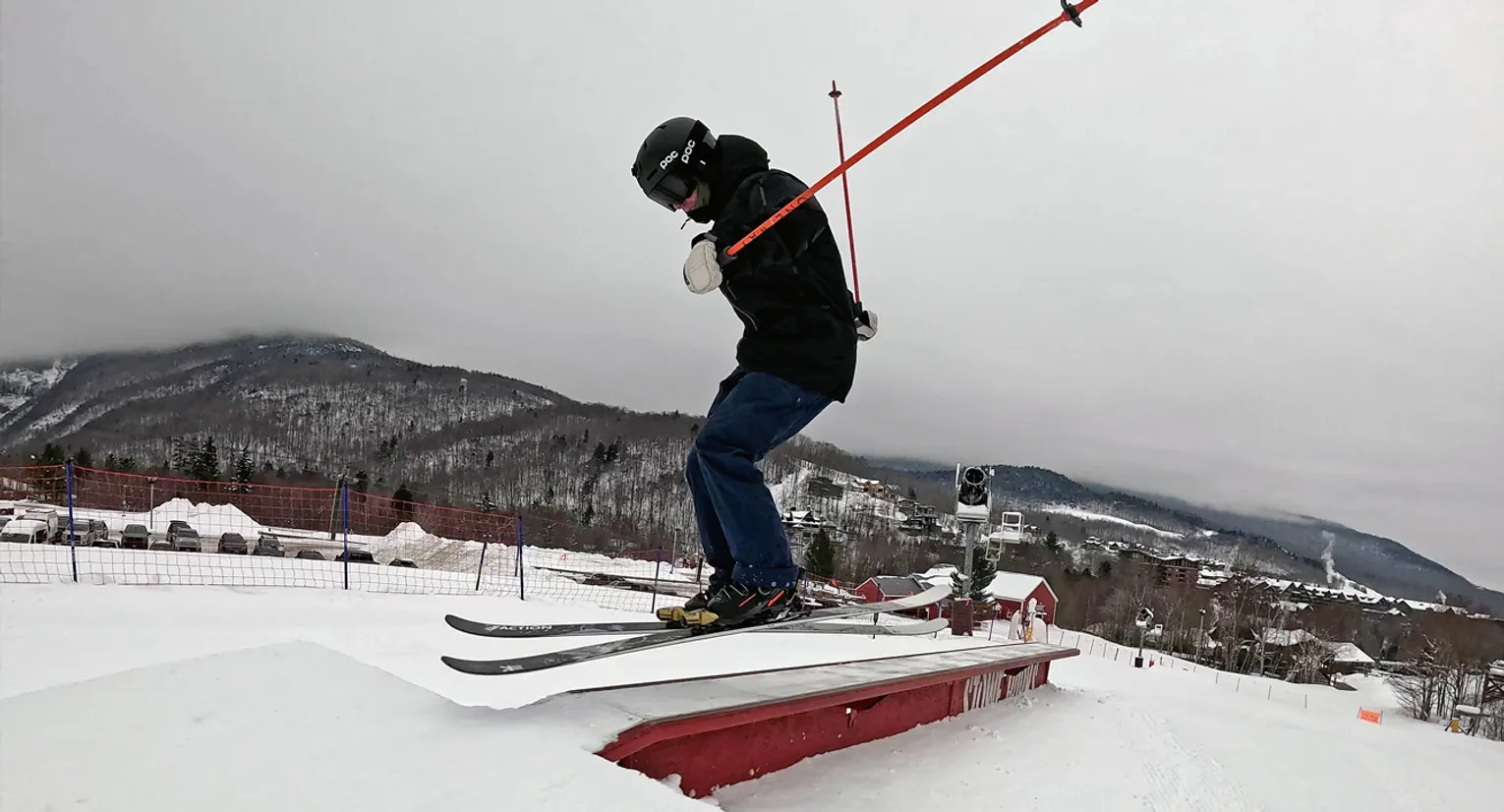
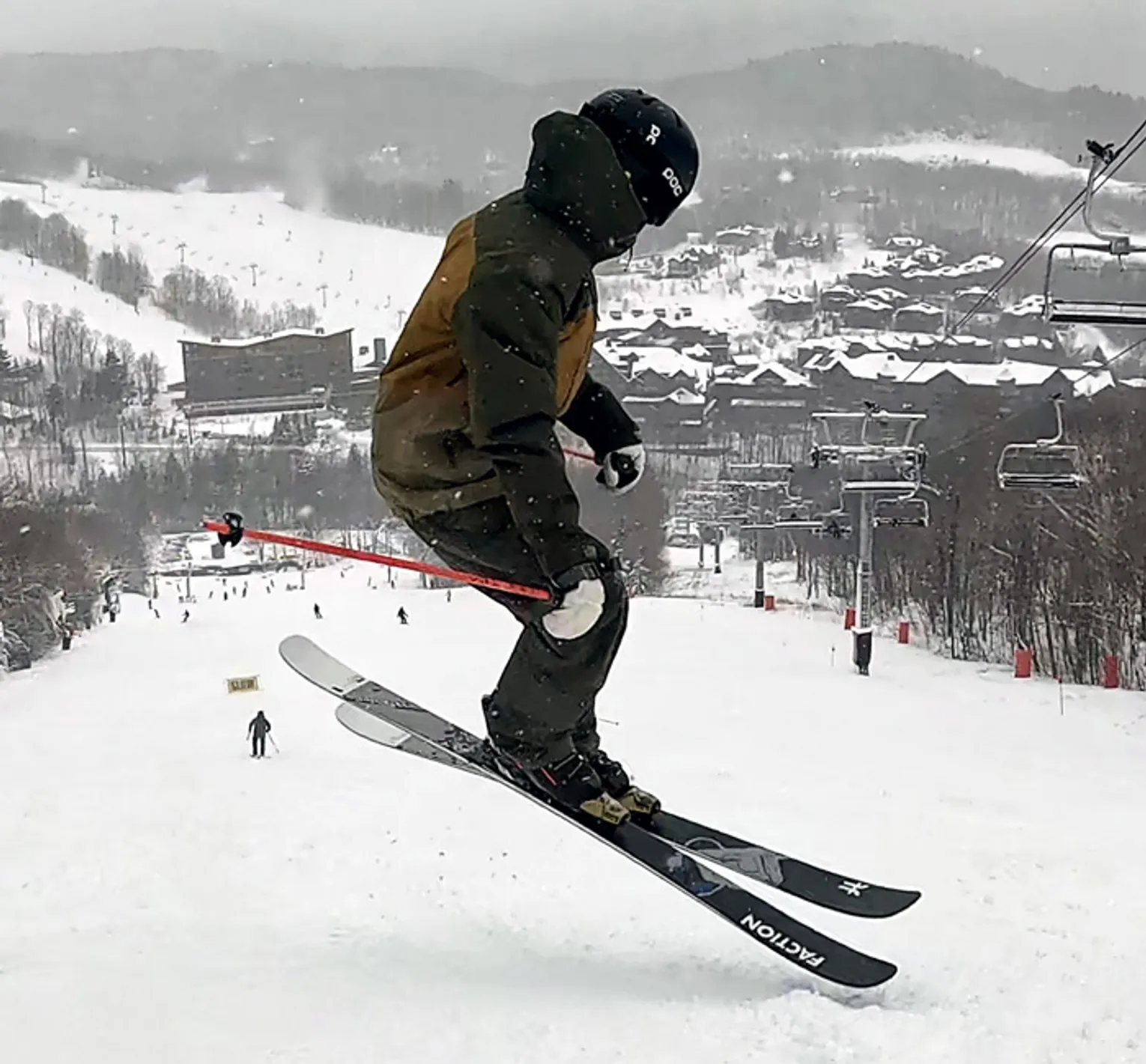
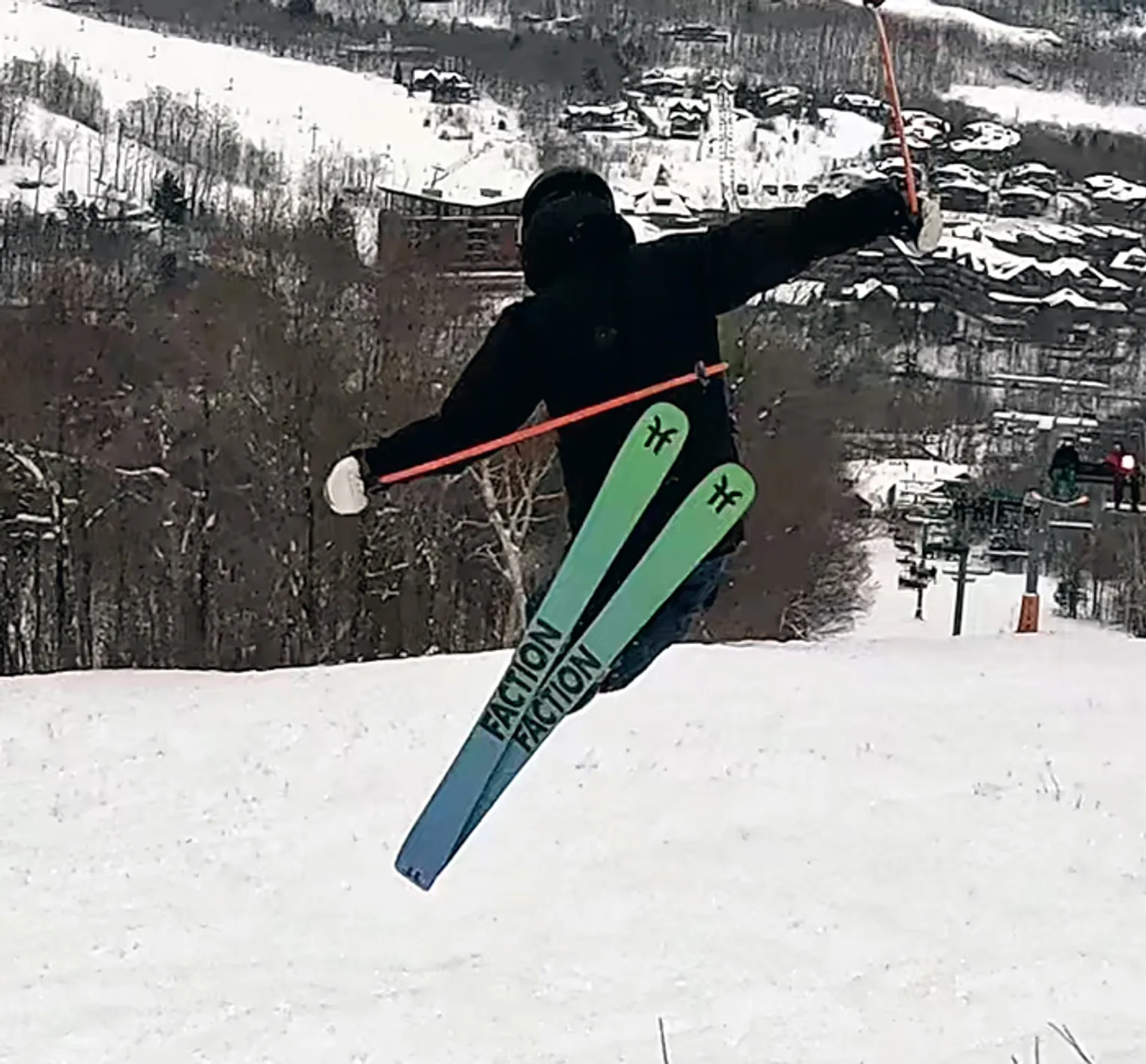
We don’t yet have a full park at Stowe, but I can already tell this ski is going to be a blast in the park. We have a small rail setup right now, and I’ve been going through it with the Prodigy whenever possible. The flex pattern is really, really good for a park ski. Again, it’s soft enough to manipulate and also absorbs landings really well, but it’s stiff enough to trust it and it helps support you on landings. It’s definitely not the type of ski to wheelie out if your weight isn’t perfectly balanced, it’s more supportive. We’ll definitely take it out again later in the season and we’ll put together some park-specific content, but for the meantime, I’m loving its performance on rails and for a ski that’s actually mounted -3.5 cm, it skis switch very well too. Very intuitive, feels balanced, and that poppy flex pattern makes it easy to do little ollie-180s into switch turns.
Overall, I’ve been very happy with the Prodigy 1 so far and look forward to spending more time on it. It’s a very well-rounded twin tip all-mountain ski. I do think most people choosing it are going to be more park-focused than not, but I don’t want to deter non-park skiers from buying it. As the Progressive or Classic line, some of the twitchy feeling I felt in variable and/or deeper snow would be reduced. Its mogul prowess would be enhanced. It would feel even stronger on a groomer. So, there’s some amount of customization for the Prodigy 1 for sure. Bob’s skied it, but hasn’t spent as much time on it as I have. My next goals for the Prodigy 1 include a lot of park skiing and also getting Bob on a 184 cm length and making him ski moguls all day.
Keep Exploring the 2025 Faction Prodigy 1: