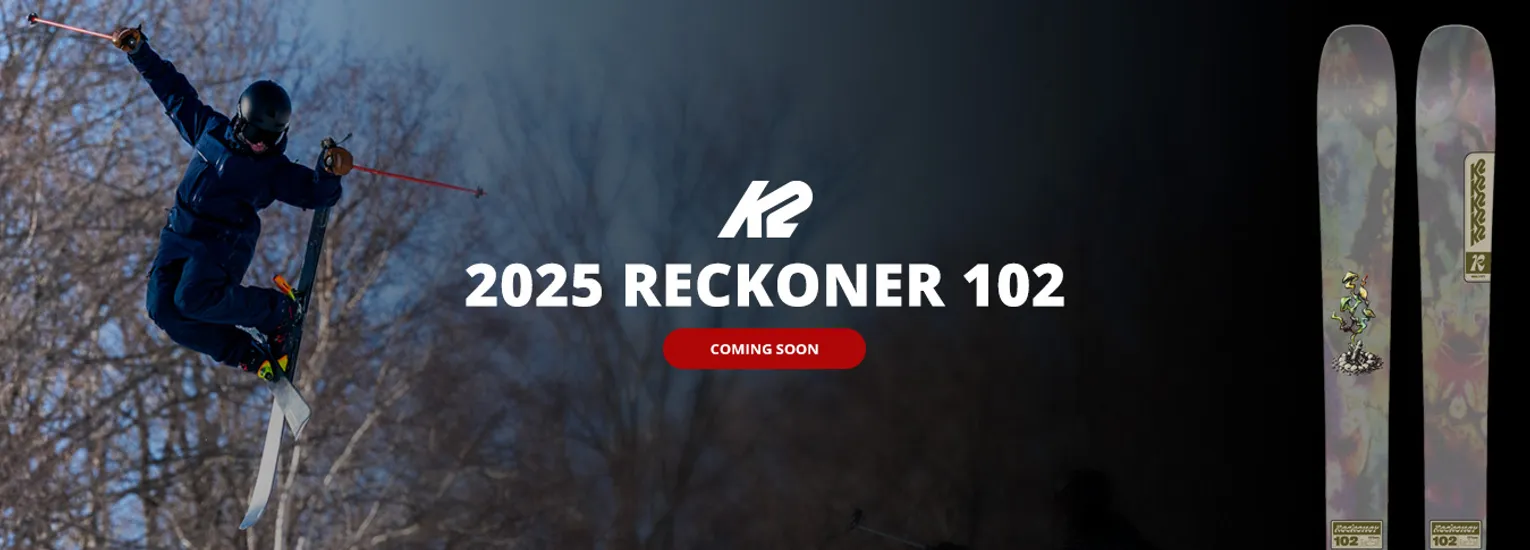
2025 K2 Reckoner 102 Ski Review
My first introduction to the K2 Reckoner 102 was wayyy back in July of 2019 on a trip to Mt Hood with K2. I was immediately impressed by the combination of a soft longitudinal flex with surprising torsional stiffness, allowing for trenched carving turns, butters, smears, slashes, and just a ton of control for the skier. Since then, I know a lot of people who have also developed fondness for the Reckoner 102. Coaches, park staff, athletes, tree-skiing-enthusiasts… the list goes on and on. What has emerged as a relatively common complaint among those skiers, however, is durability. I would be lying if I said I haven’t seen a good amount of broken Reckoner 102s over the past few years. While I haven’t broken a pair myself, and know plenty of skiers who also haven’t, it certainly seems that skiers who are particularly hard on their gear found a limitation to the amount of abuse the Reckoner 102 can endure. Because of that, I’ve been eagerly anticipating the next generation of these skis, and am very excited to share my experience on them thus far.
Before we dive into the details, a quick note on the Reckoner collection in general. As far as model breakdown goes, things change ever-so-slightly for the 24/25 ski season. What was originally Reckoner 92, 102, 112, and 122 has become Reckoner 92, 102, 110, KF, and 124. Just a minor adjustment to waist widths in the wider skis, plus KF, which is, of course, not a measurement of waist width. The KF is Karl Fostvedt’s new signature ski, which comes in at 114 underfoot with a Carbon Braided Core rather than a Triaxial Braided Core. Similar in width, but the Reckoner KF comes in at $849.95, a full $100 more than the Reckoner 110. And you know what, while we’re on the topic of price, the Reckoner 102 has actually done down in price in this new version from $649.95 to now just $599.95. Pretty darn rare in this industry for a product to get cheaper year over year, and kudos are due to K2 for the accomplishment.
At a Glance:
2025 K2 Reckoner 102 Skis

| AVAILABLE SIZES | TURN RADIUS | SIDECUT | WEIGHT | PRICE |
|---|---|---|---|---|
| 163, 170, 177, 184, 191 cm | 17.7 m @ 170 cm | 134 / 102 / 127 mm | 1,900 g @ 177 cm | $599.95 |
Ok, so what’s new in these new Reckoners? On paper, not a lot. In person, they look and feel substantially different. On paper, the main difference is an Aspen Micro Block wood core, rather than the Fir and Aspen Double Barrel Core in the previous generation. The rest, again, on paper, is basically the same. Carbon Spectral Braid remains the same with its looser weave in the tips and tails and tighter weave underfoot, creating easier butters and smears in the extremities, but retaining good torsional stiffness underfoot. We get Carbon Boost again, which is woven into the Triaxial Braided Core, plus TwinTech sidewalls and Bio Resin. Not found on paper, however, is how it’s all put together. The manufacturing process feels different in these new skis. I don’t know why or how, but it’s definitely different. The topsheet material is much more durable than previous versions with a distinctly textured finish. The sidewalls also look different now too, with a slightly step down from topsheet into sidewall. It’s definitely not cap, but it’s enough that I do think it’s going to help significantly in reducing damage, whether cosmetic or not. I’ve skied these a lot already, and they still look quite good, which is impressive to me. That finish technique carries over to new K2 Omen skis, which replace skis like Poacher, Sight, Midnight, etc. Poacher has always been one of the strongest skis out there from a durability perspective, which sort of contrasted the problems Reckoner had for certain skiers. Just knowing that K2 is using similar construction across Reckoner 102 and Omen Team (the direct Poacher replacement), tells me they are very, very confident about the new construction and durability.
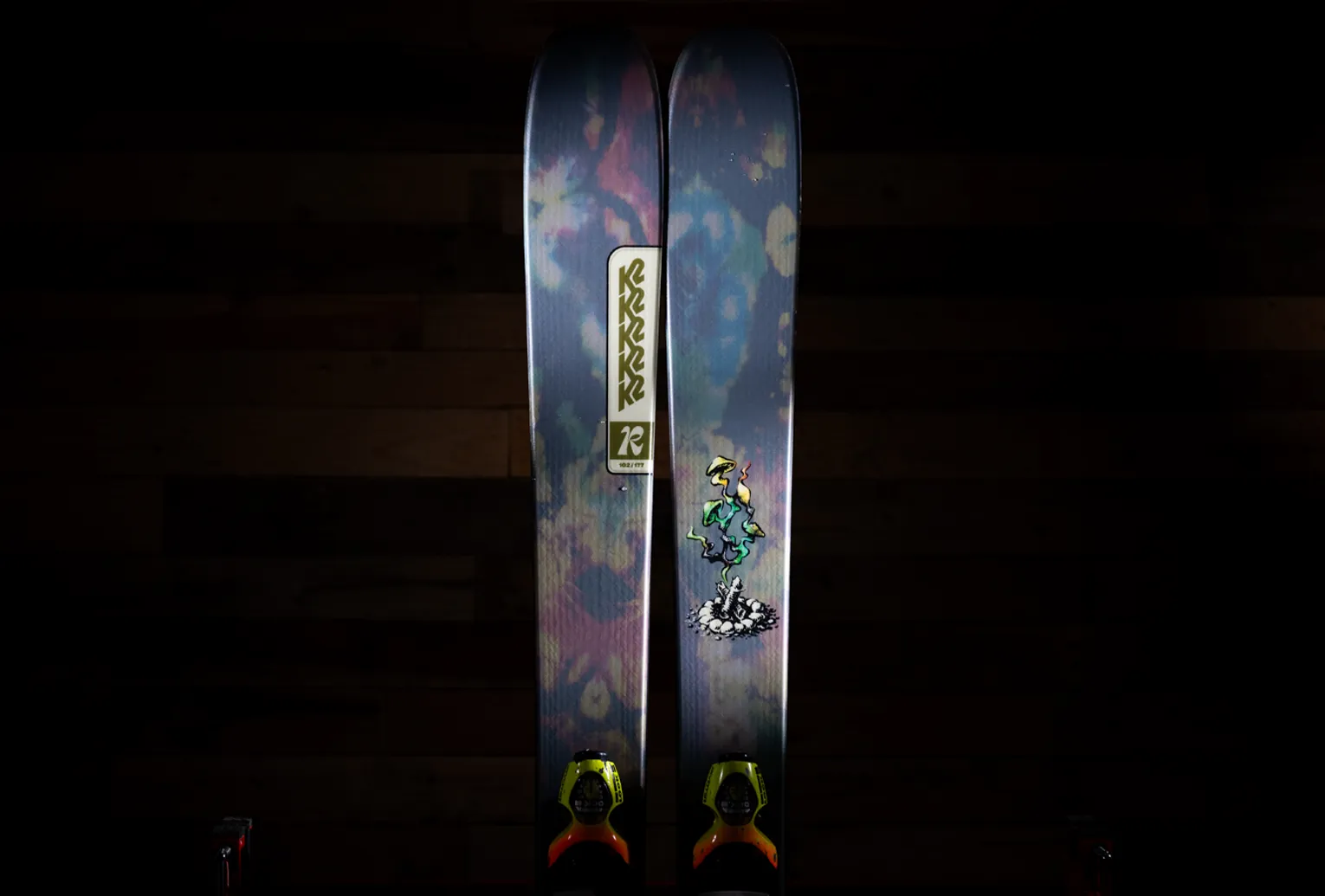
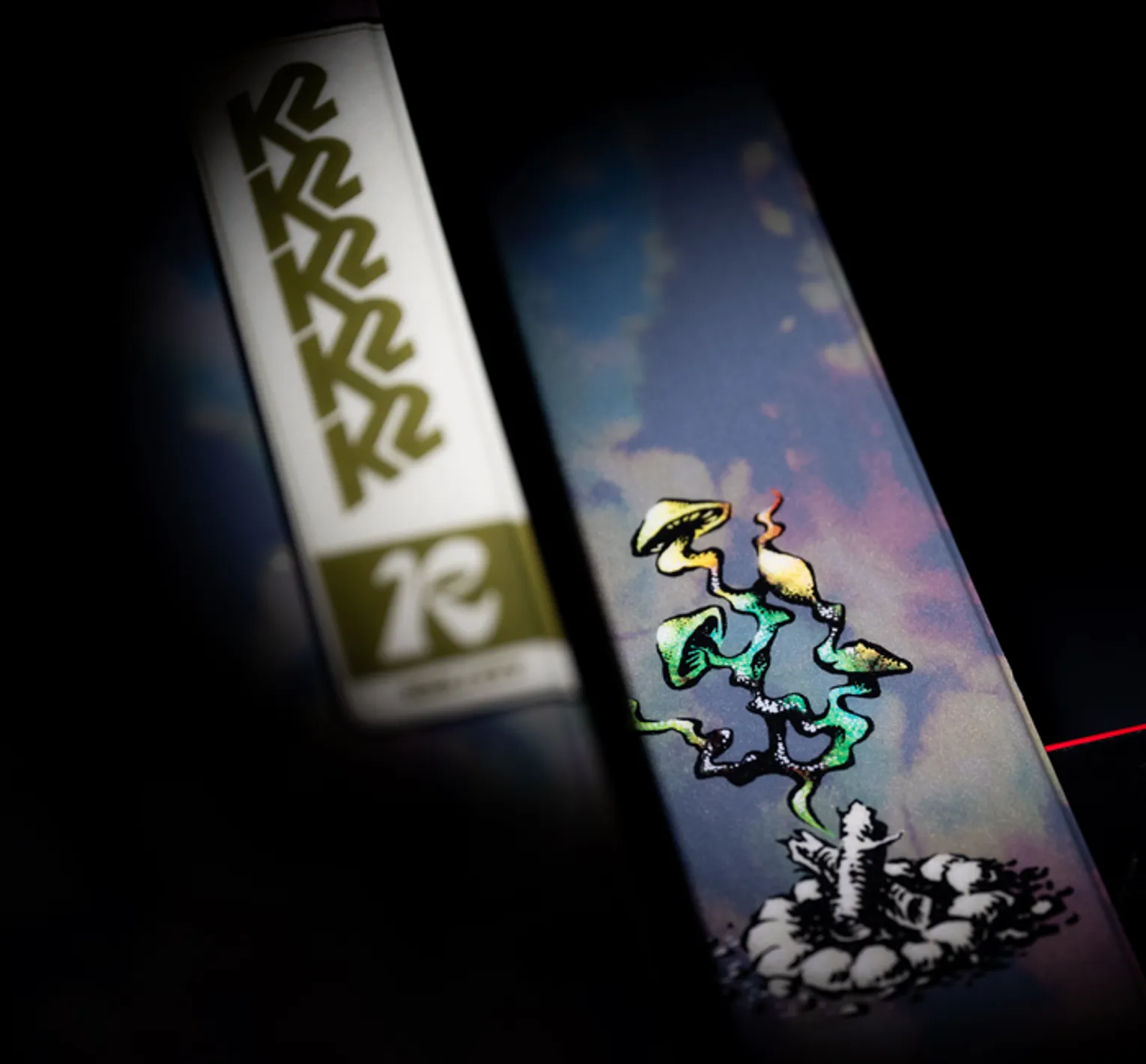
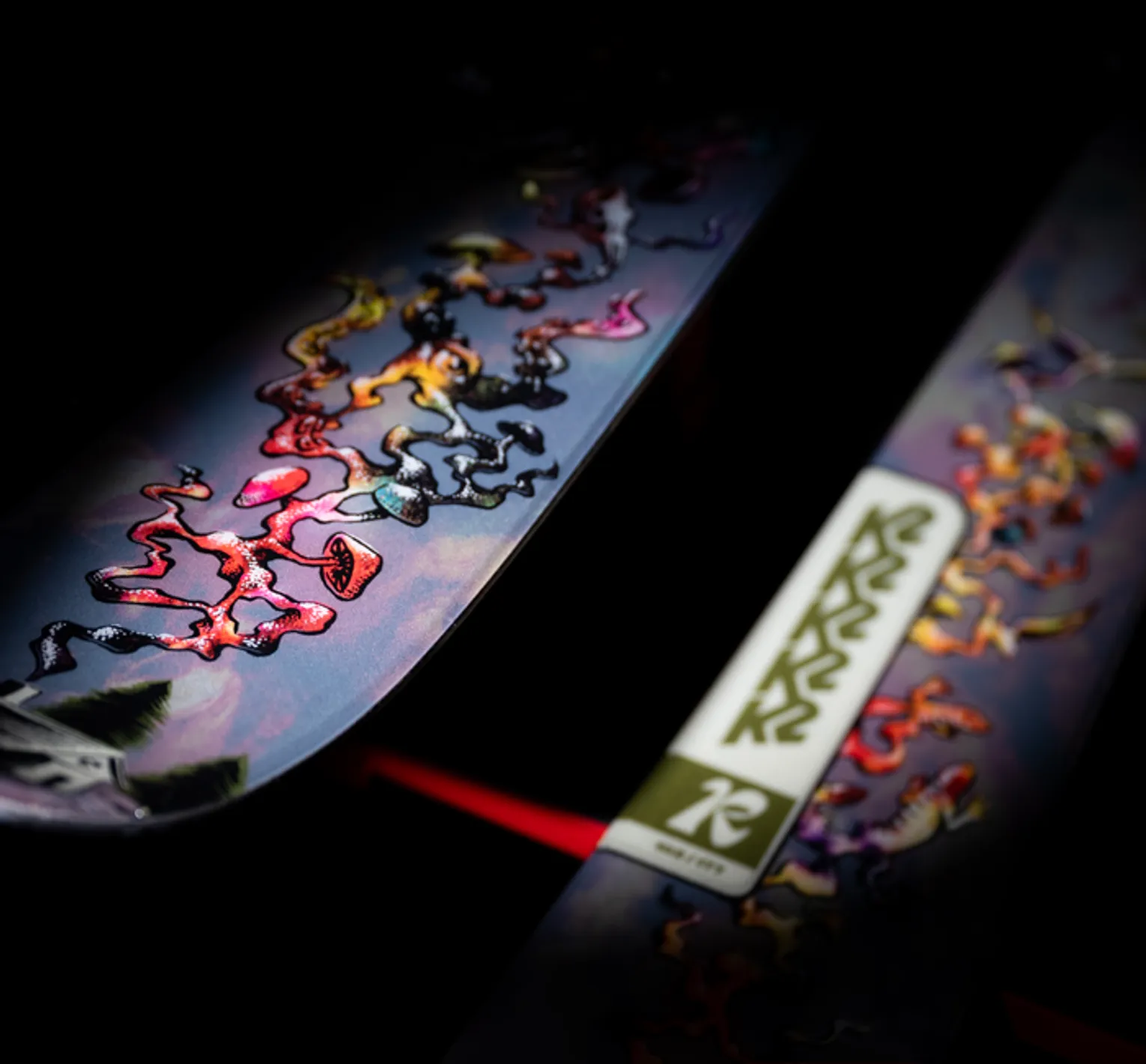
Moving on to shape, it’s a much easier conversation. It is essentially the same. We get the same sidecut dimensions and the same turn radii. The only difference I can find is the tail has slightly more splay than the previous version, giving it even more of a distinct twin tip look. We also get a 191 cm length option. Bob’s sitting right next to me right now as we discuss these skis, and his initial reaction was “who’s that for?” in reference to the 191 length. It might seem pointless to some, and I would venture a guess they won’t sell many, but with the soft flex pattern in the Reckoner 102, it’s nice to have for bigger skiers who want to experience the fun-loving attitude us lightweight guys have been enjoying.
In regards to that flex pattern, the new ski actually seems a little bit softer in the tips and tails than the previous Reckoner, which is saying a lot, as it was already quite soft. We’re now moving into a flex pattern that feels a touch closer to Line Blend. Just about as soft as you can possibly imagine in a longitudinal format. K2 hasn’t released an official weight for the new Reckoner, and unfortunately I slapped a Pivot 18 on it before we could weigh the flat ski, but it does seem a touch heavier by our calculations. I’d say as much as 200 g heavier, which doesn’t bother me at all. That’s still putting it in a 1900 g range, which is still on the lighter side. With its flex pattern, I don’t think it needs to be the lightest ski in its class. It’s kind of nice to have a bit more mass in such a soft ski.
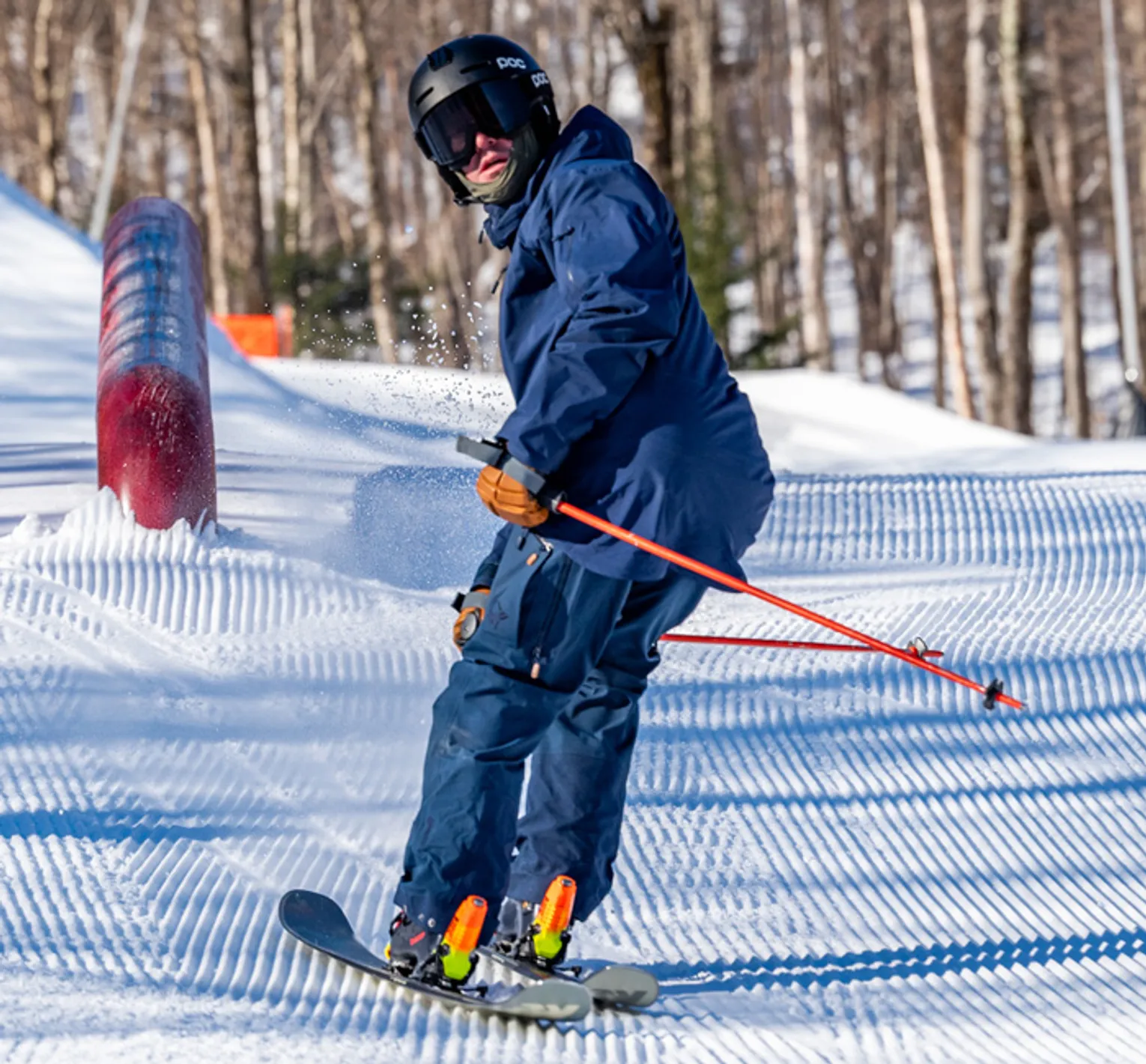
Which brings us to performance! I’ve been skiing the 177 cm length exclusively for this testing, which feels great for me at 5’10” and 155 lbs. This is one of those skis where it feels silly to start with on-piste performance, but I still think it paints a nice picture of the ski as a whole. On a groomer, it’s an interesting, yet highly rewarding experience. The soft flex pattern combined with Carbon Spectral Braid allows for deep, trenched carving turns, as long as you’re centrally weighted and not asking too much out of the forebody or shovel of the ski in regards to initiation. If you can ski in that style, it’s super fun on a groomer and the way it bends into turns is effortless and very rewarding. If, on the other hand, you’re trying to drive a turn through the shovel, you’ll be disappointed and the ski can fold a bit. Same is true on really firm snow and/or super steep terrain. If you’re expecting edge hold in those situations, you’ll probably be a bit disappointed, but I don’t think anyone is claiming that’s something this ski is designed for. The way it carves is rhythmic and smooth, like some kind of dance, rather than powerful and abrupt. If you’re not carving, it can do a whole bunch of other things too. Edge release is off the charts, so short skidded turns are super easy, but once again, you need to be centrally weighted. No porpoise turns on this ski, it’s all about slipping, smearing, slashing, etc. Its personality comes through on a groomer. It just wants to play and have a good time. If things get to serious, it lets you know that’s not really its jam, and I’m perfectly okay with that. There are plenty of other skis for charging groomers, including plenty of K2 skis. Reckoner 102 just isn’t one of them, but it is a dream when making those round, trenchy carves.
Off-piste and in soft snow, it carries a similar personality. It’s playful, flickable, and super fun, but you don’t get longitudinal stability for skiing fast down the fall line. In that light, it once again prefers to be skied playfully, and at more moderate speeds. I had a lovely powder day on the Reckoner 102 while coaching and was pleasantly surprised by its capabilities, but thinking back, I never was skiing fast. I was bouncing around through trees in fresh snow, while looking for things to jump off. I wasn’t opening it up in steep, exposed terrain and expecting the ski to support me. It has some interesting characteristics when it comes to float. The soft flex and rockered tip really helps keep the forebody of the ski above the snow surface, but I’d say it also has its limitations. If the tip dives, it doesn’t bounce back up as some skis do, which is just another reminder to ski it with purpose and more of a playful attitude. If you want endless float, go Reckoner 110, or better yet go Reckoner 124, or move over to the Mindbender 116. I’ve also had it in a lot of tight trees and moguls, and for a twin tip that’s 102 underfoot with a lot of tail behind you, it’s impressively agile. The soft flex basically negates the fact there’s all that ski back there, so wiggling through bumps is forgiving, rather than punishing on some skis with this much tail. In fact, it’s one of the best skis in this category I can think of for quickness in bumps and trees, right up there with Playmaker 101.
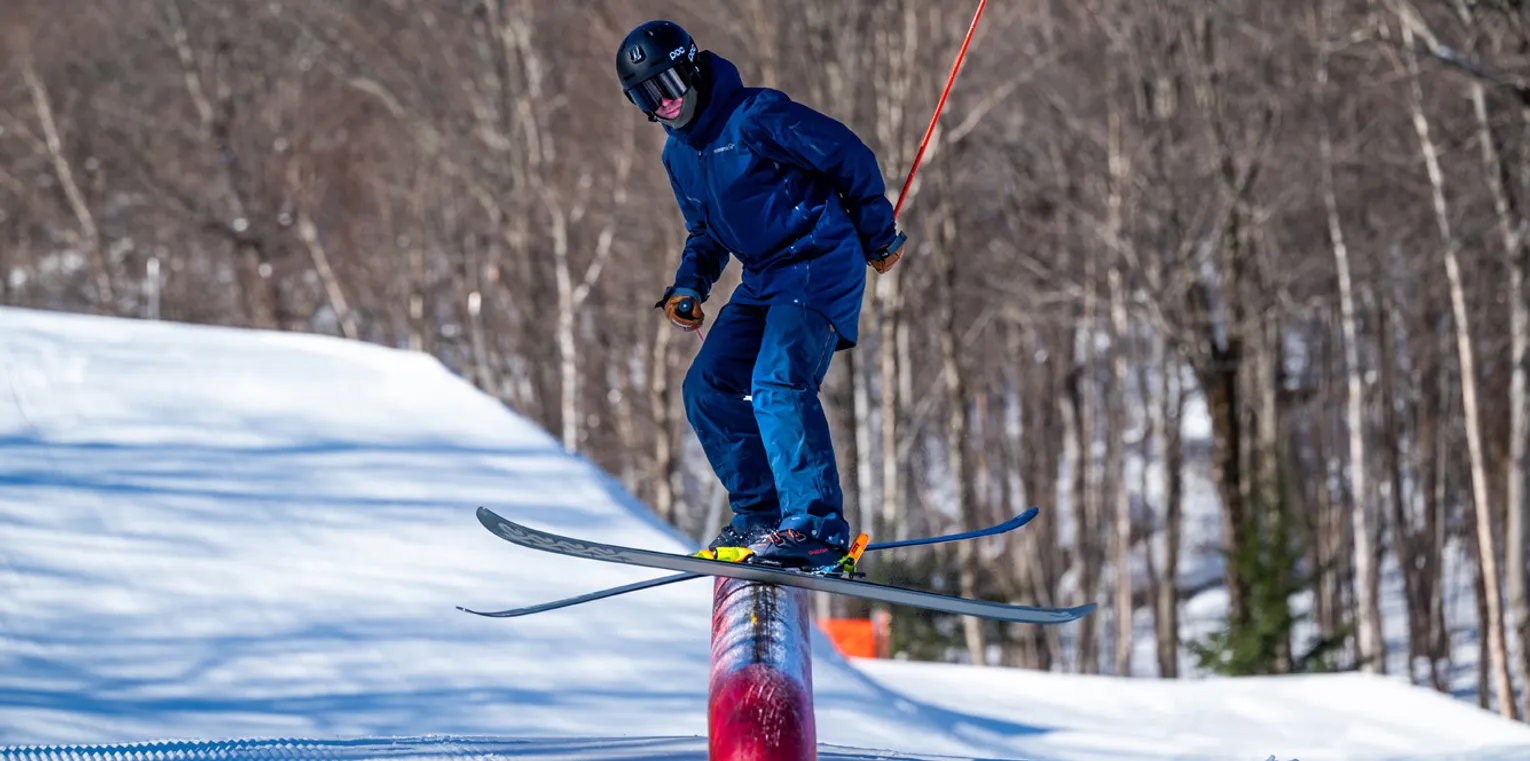
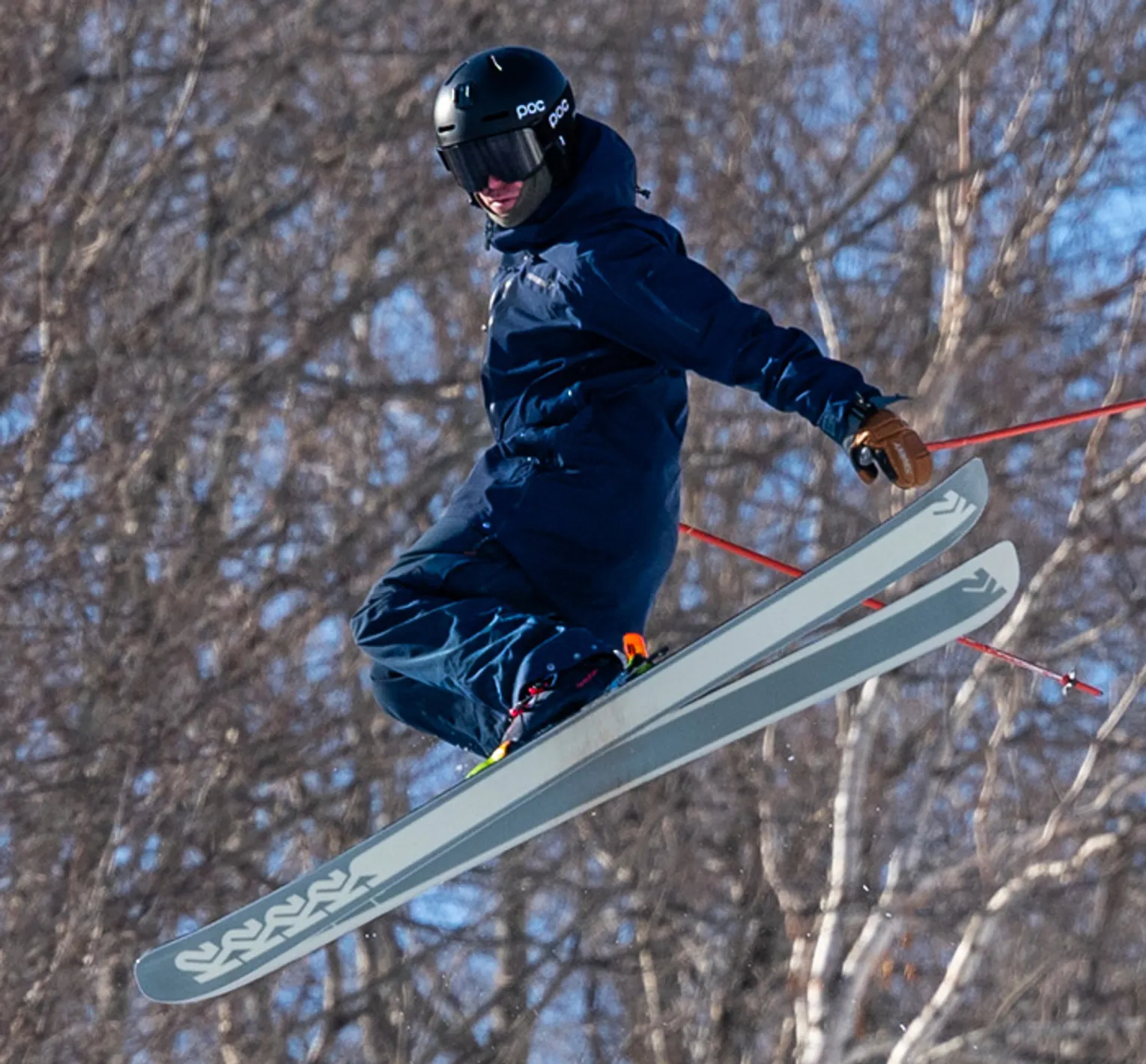
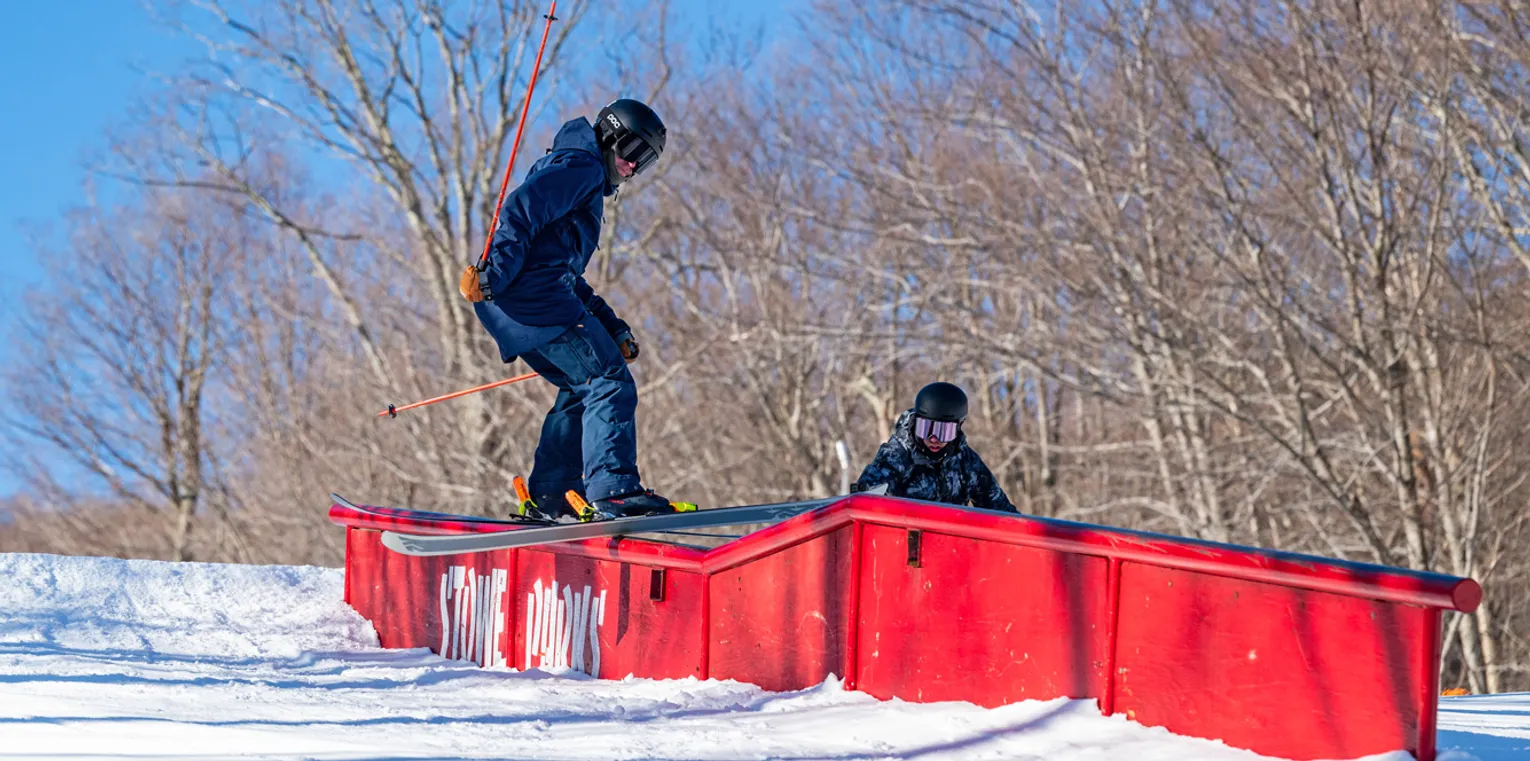
In the park, gosh, it’s so fun. Certainly not a competition-style park ski with the soft flex pattern, but for this elderly park skier (I’m 38 now!) it’s so nice. The flex pattern adds in a touch of forgiveness that’s incredibly useful for me. What I think is particularly interesting is what I find to be forgiving, another ski would use to their advantage in more of a progressive, modern, newschool manner. If you like butters, smears, presses, nollies, ollies, nose blocks, and stuff like that, the Reckoner should be on your list for sure. For me, the softer flex pattern basically just meant that landings were less harsh, especially landings where I messed up a bit. My legs are fairly sensitive these days, particularly my right knee. I had some landings on the Reckoner 102 during which, on a stiffer ski, it would’ve hurt quite a bit. The Reckoner just eases you into the landing, which is sweet. On the other hand, someone competing would likely want more support, more ability to ride away when things don’t go perfectly. I personally don’t really care and would rather wash out to my hip then fight a backseat landing or something like that. It has also surpassed my expectations on rails. The 177 cm length is nice for me as that’s short enough to achieve a significant amount of quickness, but there’s incredibly light swing weight in this ski as well.
Bringing the conversation back to durability, I’ve skied these A LOT so far. I’m easily in the high hundreds or probably getting close to the thousands for number of rail slides. While no ski in the world would come out of that with no damage at all, I’m impressed by the Reckoner. We’ve had this conversation with other skis too recently, but I’m so happy that manufacturers are listening to park skiers and putting in actual effort to make their skis more durable. I do think that on the previous Reckoner, I would see more damage at this point. So, kudos to K2. I think they’ve done a great job at retaining the nature and personality of this ski while also making it considerably more resistant to park skiing abuse.
Is the Reckoner 102 for everyone? No, certainly not. There are A LOT of skiers who wouldn’t like it at all and would scoff at the soft flex pattern. That said, if you know how to use it, and if you like a soft ski, it’s an absolute hoot to ski on. I thought they were on to something with Carbon Spectral Braid when I first skied the Reckoner and I’m still impressed by it. Giving a ski soft, loose tips and tails and a stronger feel underfoot, I think, is a really cool way to make a ski, especially a 102 underfoot twin tip.