

2026 Armada AR One 110 MV & 130 MV Dual Ski Boot Review
It’s been interesting getting to see the development and implementation of an entirely new ski boot. The fact that it’s from Armada is even more exciting, as the brand’s following feels like it calls for a full hardgood line. Now with skis, boots, bindings, and poles, the Armada brand is quite complete, with all products following the same relative attitude of progression, fun, and freeride spirit. The new AR One ski boot, which we’ve skied in the 110 and 130 flex, is designed to take creativity and performance to the next level. By bringing together a cadre of boot designers, athletes, and industry professionals to come up with every and any idea under the sun, the AR One boots were born. Especially in the 130, with the addition of tech fittings in the toe, there’s not a whole lot of “boot” things that we can think of that aren’t included in these boots. For some, that’ll be a huge selling point—the AR One 130 literally has it all. For others, this could feel like it’s over-produced with too many features and too much technology. For anyone who’s considering this boot, or any boot for that matter, we always recommend seeing a professional boot fitter to get the best possible results.
At a Glance:
2026 Armada AR One 110 MV Ski Boots
| FLEX INDEX | LAST WIDTH | BUCKLES | SHELL STYLE | PRICE |
|---|---|---|---|---|
| 110 | 100 mm | 2 Regular, 1 Slingshot | Hybrid Cabrio | $549.95 |
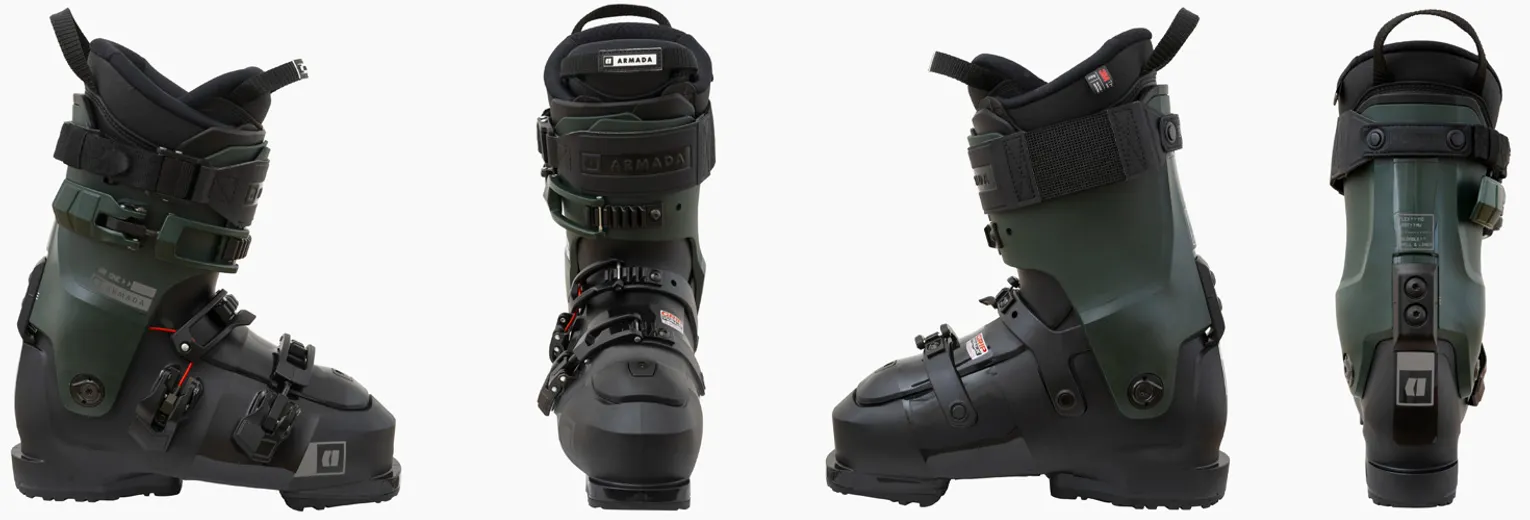
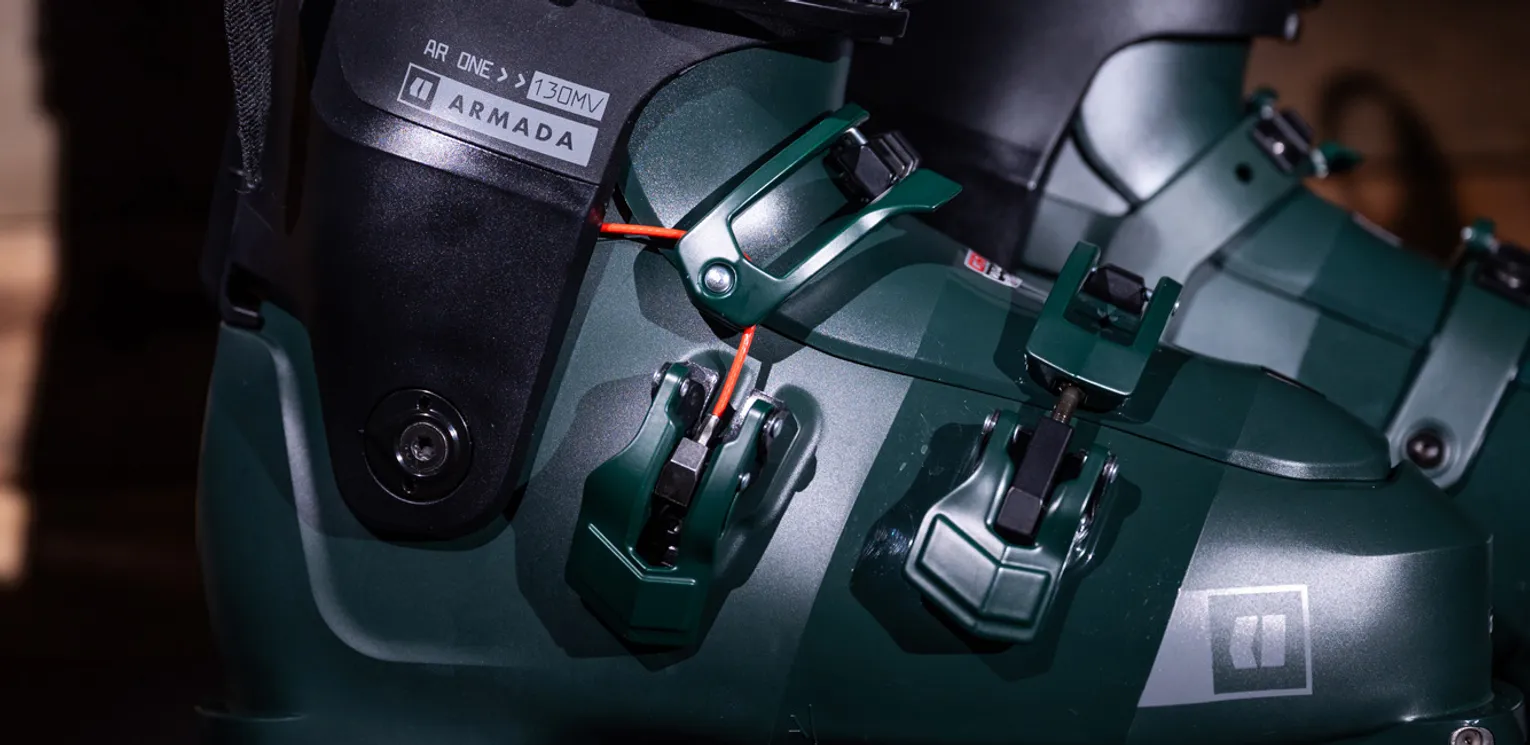
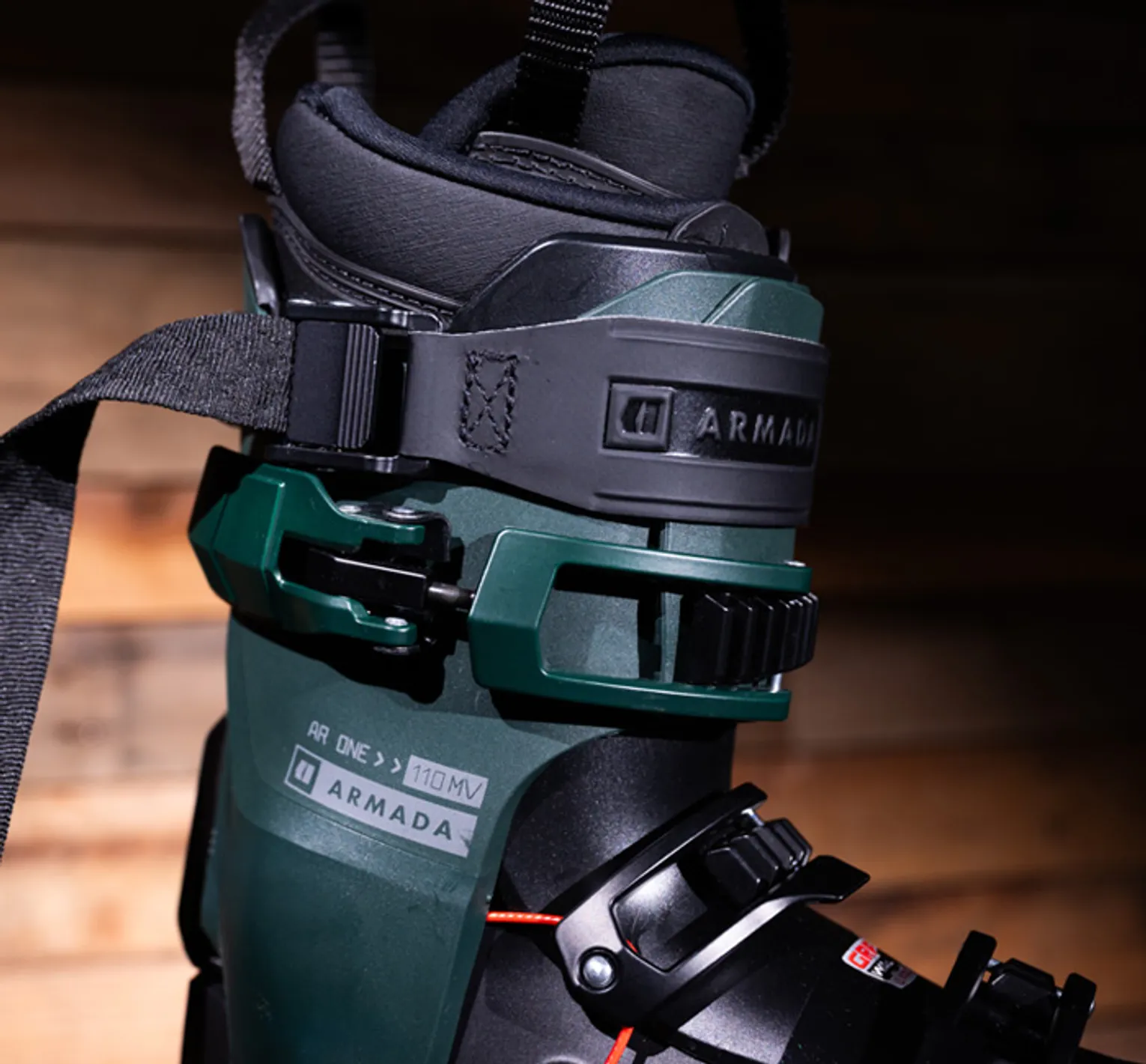
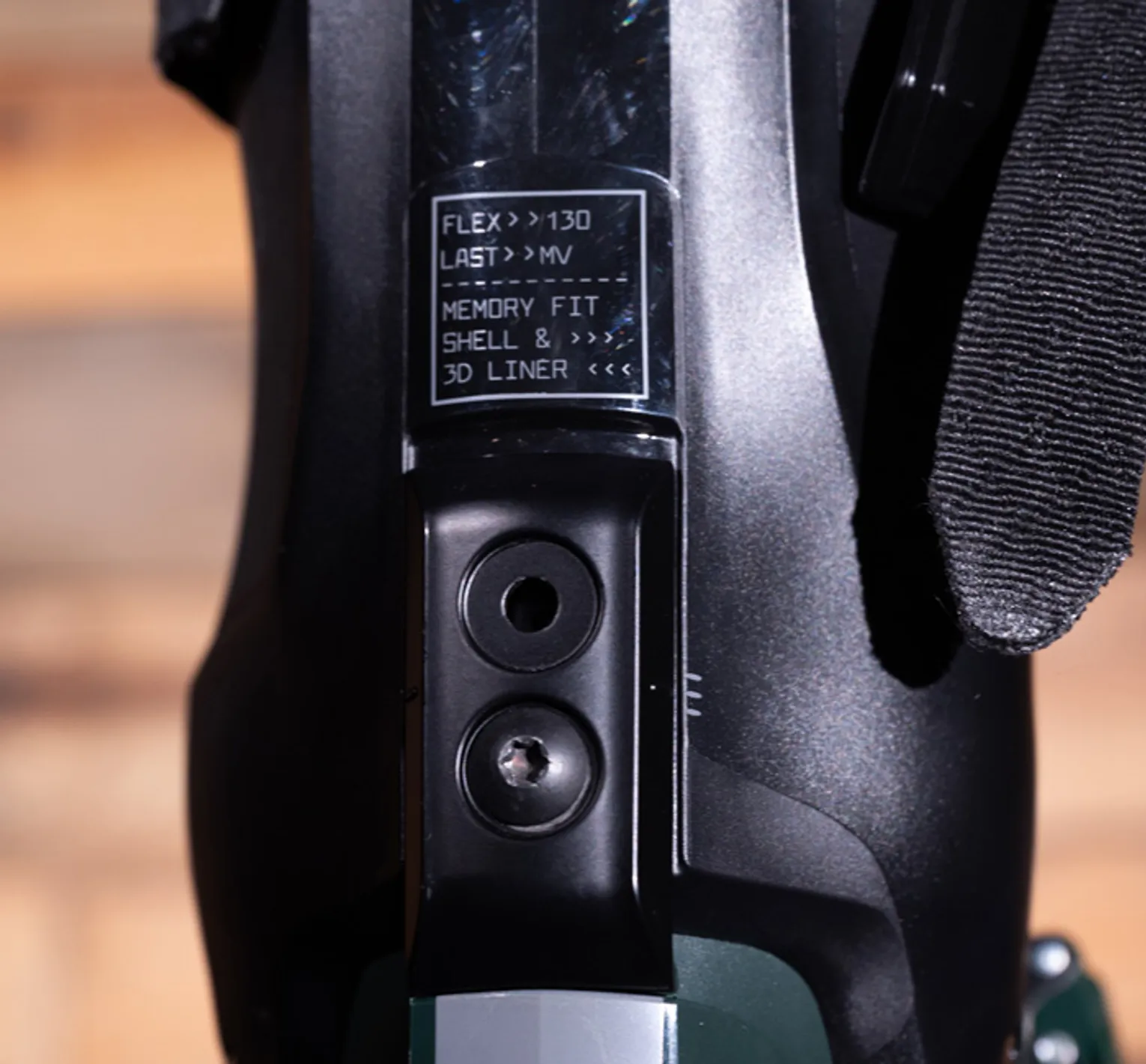
From a construction standpoint, this boot is truly a kitchen sink catch-all. It’s a cabrio style boot, with a lower shell, an upper cuff, and a detachable tongue. This is true three-piece technology. There are three buckles in this boot. The main performance part that Armada is striving for here is the implementation and connection of a cable that affixes the middle buckle to a fixed point under the upper cuff. This cable that connects the fixed point and runs through the buckle acts as a fourth point of contact, so you’ll hear more about how this boot skis like a traditional four buckle boot as a result. This “Slingshot” buckle is unique in the ski boot world as there aren’t many offerings out there with this type of three-point contact. The other part that brings the AR One into traditional two-piece performance is their “Natty Flex” backbone. Most two-piece boots have some sort of rivet system in the rear spine and these AR One's are somewhat similar. They use one rivet in the rear, and it is able to be moved to adjust the forward lean. By placing shims on the inside of the boot’s shell you can adjust the lean between 13, 15, and 17-degrees. The 17 is pretty far forward and likely reserved for more park and creative skiers. Armada loves using little nicknames for all of their technologies, so we get things like the Kush Damping Bootboard, the Team Elastic Cam 50 mm Powerstrap, 2 Komponent Kuff, Anchor Fit Heel Pocket, PU Y-Band, AR One Team Liner, and much more. Basically, if you can fit it on a ski boot, they put it in here. The Team Liner is quite nice, though, with the Y-Band complementing the Slingshot Buckle and a fully customizable fit. In the 130, the boot gets tech fittings in the toe, but no walk mode or any other indications that this is a touring boot. Amazingly, there’s even more to talk about in terms of construction, but we prefer to get more into the fit, feel, and performance. We’ll have Bob go first with his experience followed by Jeff.
At a Glance:
2026 Armada AR One 130 MV Ski Boots
| FLEX INDEX | LAST WIDTH | BUCKLES | SHELL STYLE | PRICE |
|---|---|---|---|---|
| 130 | 100 mm | 2 Regular, 1 Slingshot | Hybrid Cabrio | $749.95 |
Bob's Take:
From a usability standpoint, these boots are on the clunky side of the spectrum. I (Bob) have never been a huge fan of cabrio style boots. They generally don’t fit me as well as two-piece shells, and I’ve never found a performance upgrade to be had, although I know many skiers who are full-on, die-hard cabrio fans, and that’s great if they fit and perform as you wish. For me, I find the usability to be more complicated than a 4-buckle overlap boot. In fact, I found it harder to use than a double BOA boot, which certainly delivers its fair share of issues. There are straps and flaps that have to be tucked in and layered in a certain way. It just seems overly complicated. I’m fine with that, but the performance advantage and overall fit then need to be just that much more superior to justify the complexity. As with anything, there’s a learning curve, and those who are more adept to and used to a cabrio boot will have far fewer issues than I, or someone else who feels more at home in a four-buckle boot. When putting the boot on, those with larger insteps or wider lower legs may have issues with the top two buckles. The Slingshot buckle does not have micro-adjustment, nor does it have a longer macro-catch option, making it a challenge for some skiers to even get the thing buckled. I find this interesting, as cabrio boots have always been known to have more instep room, so this is a bit of a departure from the cabrio norm.
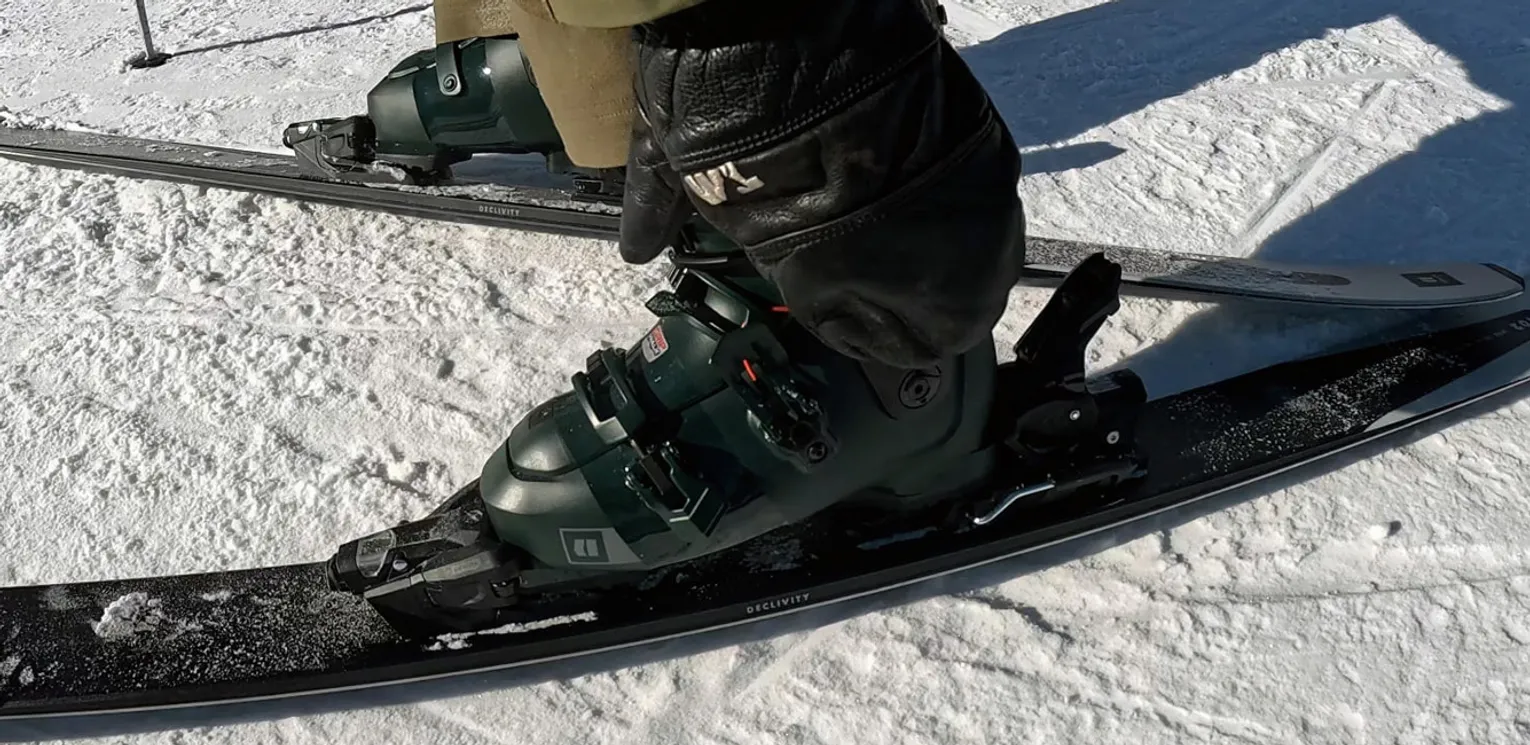
Once you’re in the boot, it’s tough to ignore the fit. There’s a decent amount of pressure on the top of the foot and in the forefoot—two more interesting aspects of an MV cabrio boot. The heel and ankle are snug, but by no means tight. This gives more traditional boots an advantage as they seem to do a better job at being more anatomically designed for better heel retention. As such, I felt that the fit was the opposite of what you’re looking for when it comes to high-performance alpine skiing. The opening on the top of the foot in the shell, which is typical of most cabrio boots, creates two plastic ridges that the liner doesn’t do a great job of covering. Whether it’s the liner or the shell edges, there’s something there that seems like it’s difficult to fix by simply moving the liner tongue around or molding the liner. It’ll be interesting to see if there are changes made in this zone moving forward, as this is, after all, a first go at an entirely new boot and there should be some bumps in the road. I would be way more surprised if Armada came out with this boot and just totally nailed it first try across the board.
I was actually most impressed with the performance of the AR One, as I’ve never really gotten much out of a cabrio, even in bumps. As I’m not much of a park skier, cabrio boots haven’t been on my radar for big tricks or riding switch. As a directional skier, I was interested in seeing what the 130 could do both on and off trail. Since the 130 has tech fittings, it should be able to handle big mountain faces and technical terrain at high speeds. On a groomer, I finally felt what the progressive flex is all about. There is no hinge point in these boots; you can push harder and harder and still not feel the end of the flex. For strong and aggressive skiers, this is a very good thing. If you’re not up to the task, though, and rely more on lateral action, you may be missing out on the best part of this boot. The energy and rebound due to the more rigid spine are noticeable, but not overpowering. At higher speeds, the boot performed better and more consistently, but if shortening up turns and making more skidded shapes as opposed to clean carves, there is a bit of a lack of rear support. This felt more apparent in technical areas and tighter spots. When you had to make a firm edge set or really push into the boot, there was less of an eagerness to support versus a traditional four-buckle boot. It’s not that it was bad, but it was less of a direct connection. Overall, it just felt slower than other boots in my quiver, but no less powerful or smooth at speed. At this point, it’s tough to justify that level of performance given how the fit and usability stack up. I’m sure, though, that there are skiers out there that will feel totally 100% at home in this boot, and I am all for that and wish that skier the best, regardless of my feedback and experience.
Jeff's Take:
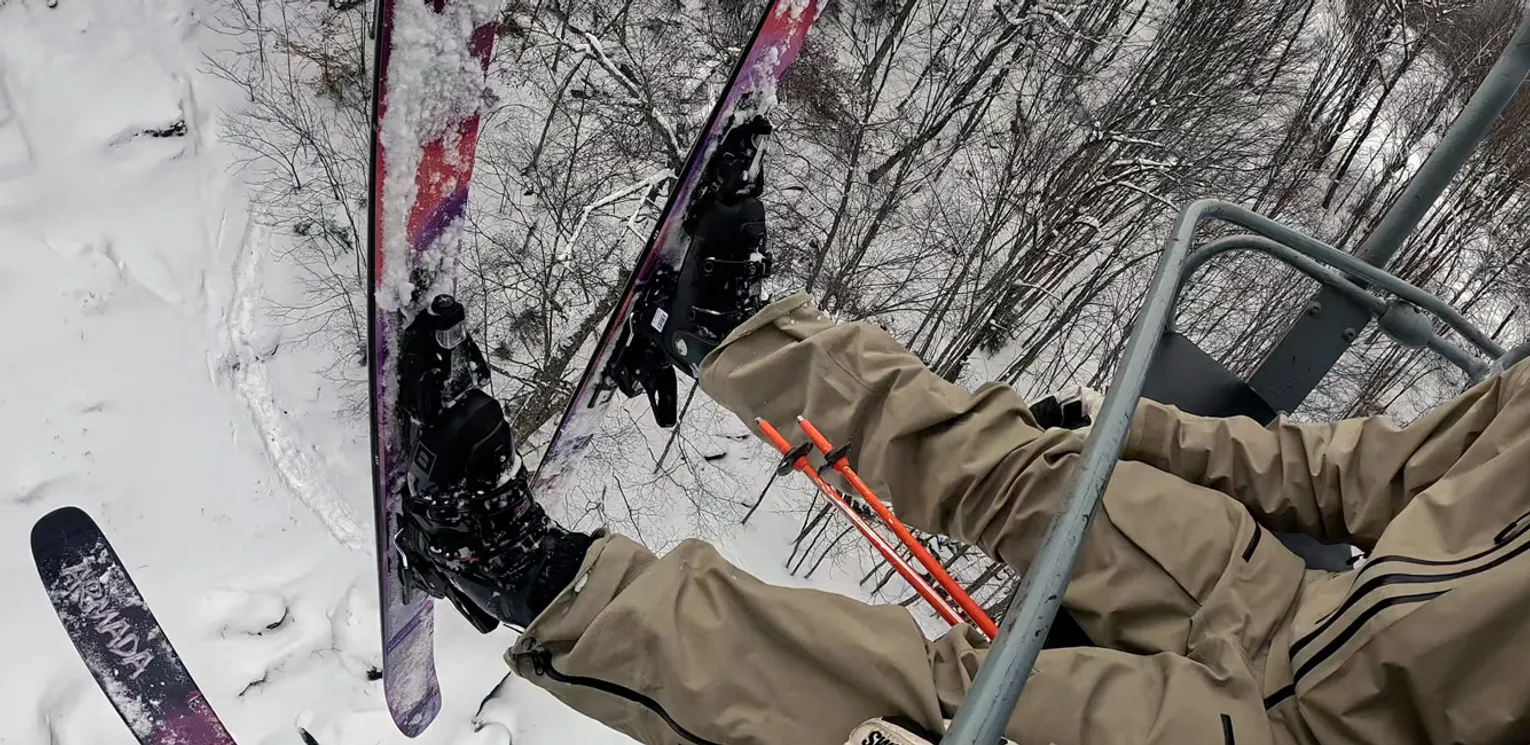
Overall, we had somewhat similar experiences in terms of fit. Jeff’s foot hurt in the same manner as Bob’s, with some sort of plasticky pressure on the instep. With molding and some trimming, that is likely going to vanish. Jeff is more of a traditional cabrio skier, with lots of experience in three-piece shells due to his more dedicated park background. As a result, the overall initial shock of getting into and out of and skiing in the AR One was a much easier transition for Jeff than Bob. Since Jeff was in the 110 flex, he had a different experience, mainly in a groomer and carving format as the softer flex doesn’t really allow for aggressive skiing. That said, he felt right at home in the park and in getting to and from the park. Like Bob, Jeff felt the benefits of the progressive flex, but in a slightly different way. When landing big jumps, especially switch, having the lack of hinge or folding point is a good thing. The AR One acts as a suspension system for park skiers like Jeff, taking a good amount of the impact into the shell as opposed to the shin. As far as an intended audience is concerned, Jeff is correct in stating that these boots will be great for younger skiers who are looking to either move out of a Cabrio but still want that freestyle style, or who are looking for a burlier version of a softer three-piece shell.
It’ll be very interesting to see where this boot goes, and where Armada goes in the boot world. We do think that they’ve already successfully captured the spirit and style of the Armada brand and that this boot is reflective of their progressive attitude and athletes. Cabrio skiers looking for a bump will fit well here, and others who are looking for something a bit unorthodox may find a winning fit.

--


Shop 2026 Armada AR One Ski Boots: