2026 Elan Ripstick 96 & 96 Black Edition Ski Review
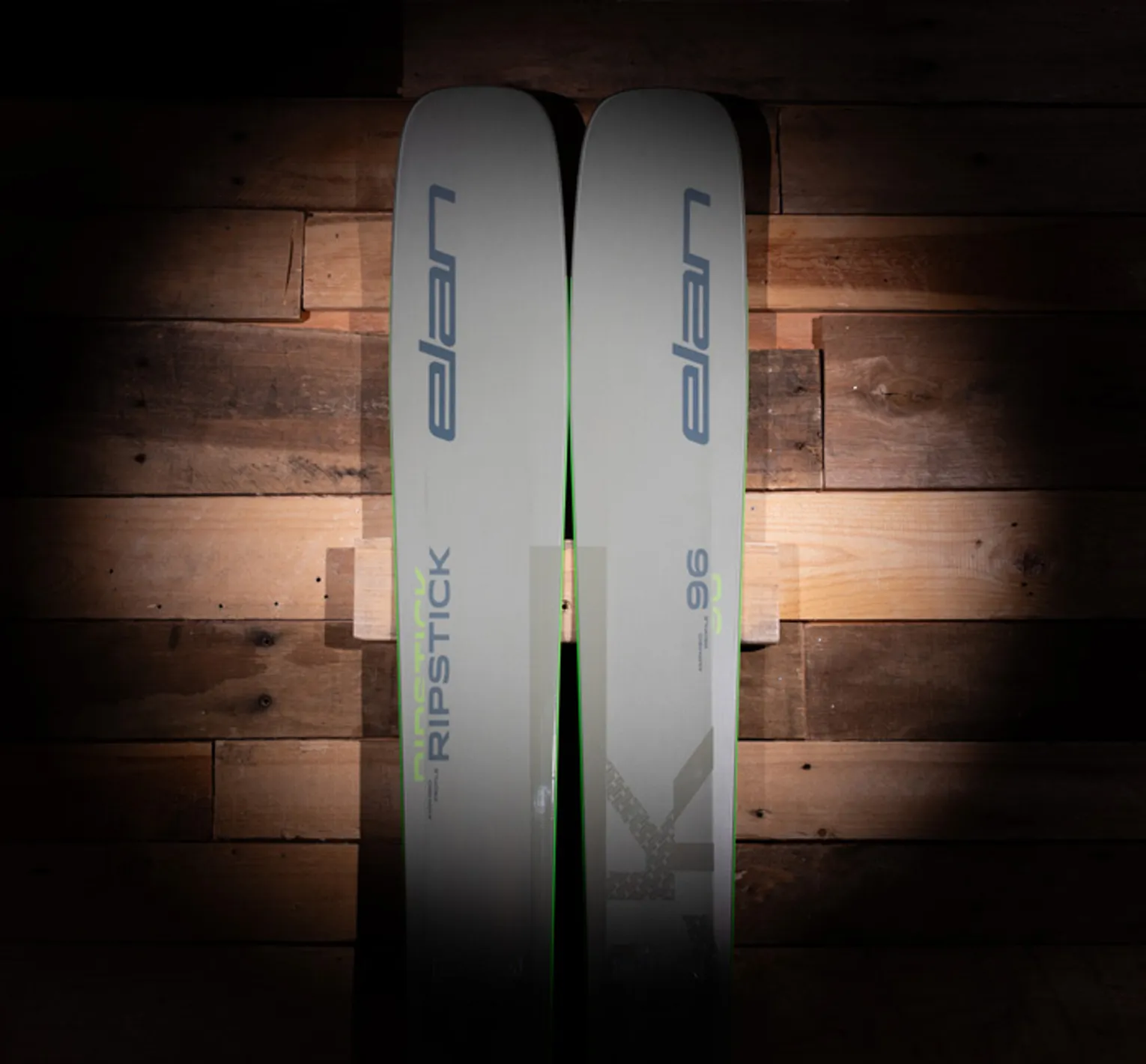
Fun and energy have coincided with the Elan Ripstick series of skis ever since inception, and it’s only gotten better since. This ever-expanding and evolving brand within a brand offers fantastically light, entertaining, and easy performance in a variety of widths. For this review, we’re focusing on the highly versatile 2026 Elan Ripstick 96 and the 96 Black Edition. These two skis share the same mold but feature different constructions. As a result, there always seems to be a debate as to which skier aligns better with which model. At the end of the day, they both work extremely well in variable snow conditions and changing terrain, providing skiers with confidence and entertainment from top to bottom. We often talk about the mid-90's as a fantastic place to be for supreme versatility, and that theory continues to be true with Elan’s Ripstick 96.
At a Glance:
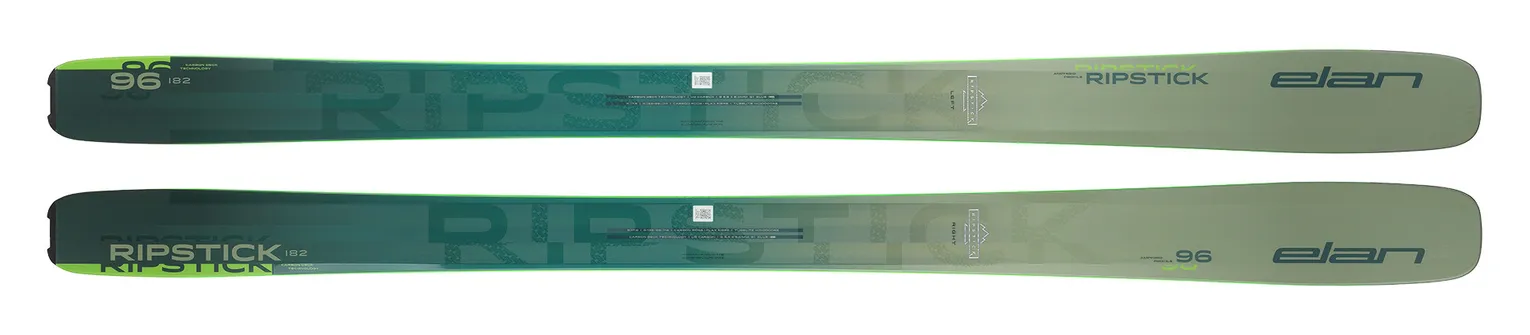
2026 Elan Ripstick 96 Skis
| AVAILABLE SIZES | TURN RADIUS | SIDECUT | LISTED WEIGHT | PRICE |
|---|---|---|---|---|
| 161, 168, 175, 182, 189 cm | 17.8 m @ 182 cm | 133 / 96 / 114 mm | 1,700 g @ 182 cm | $799.99 |
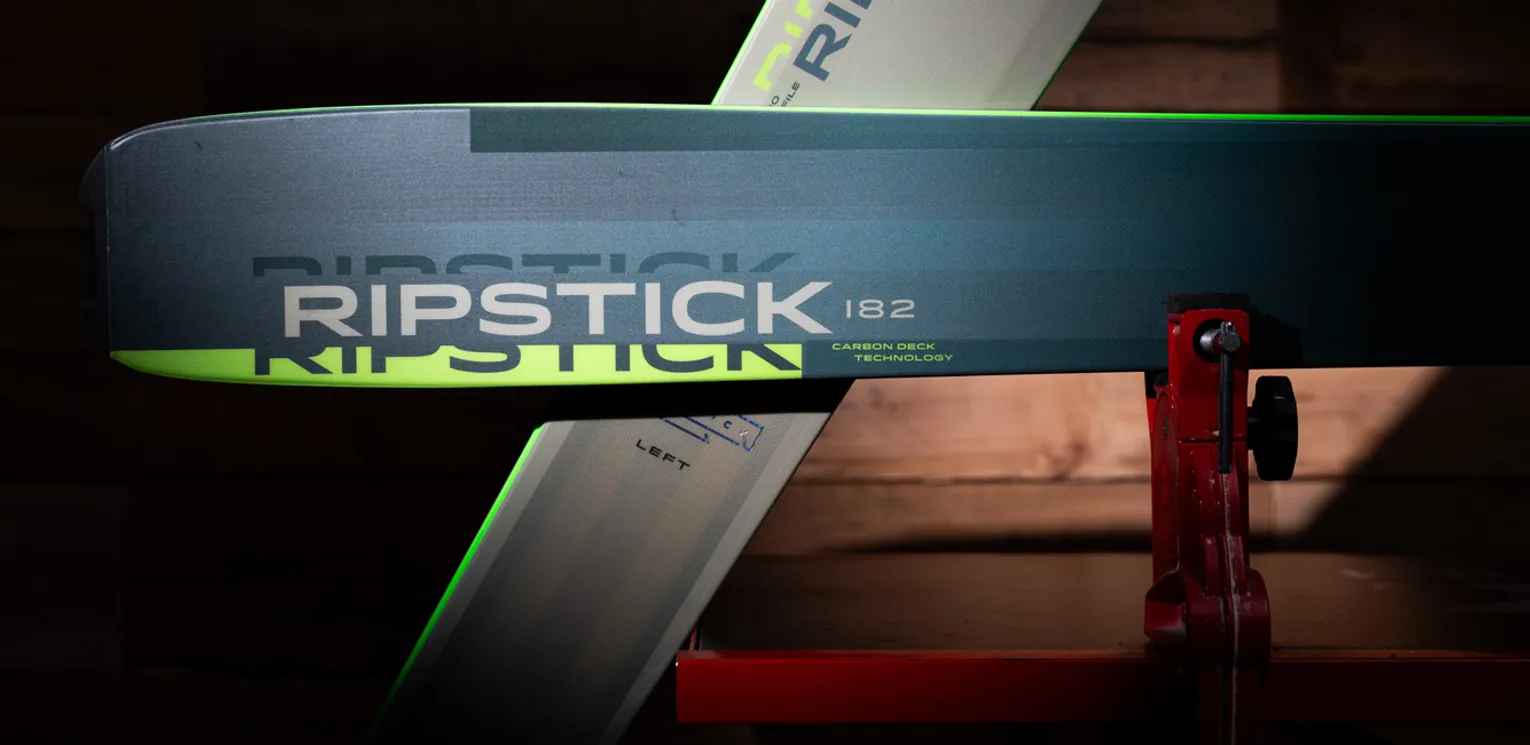
With the goal of light weight and high energy, these skis strike an interesting balance between performance and ease of use. The Black Edition uses everything that the Green does but adds some of its own spices to the mix. The Green build consists of what Elan refers to as Carbon Deck Technology. They start with a tubelite wood core made from poplar and paulownia and then add a few applications of carbon. The tubes are the big story here, as sections of the wood core along the sidewalls are milled out and replaced with hollow carbon rods. These act as the powerhouse for the ski. For one, they’re placed in the ski following the curve of the sidecut, placing kinetic energy into the ski. Second, the use of three dimensions in the form of a 360-degree tube adds a lot of energy to the mix since the carbon is able to flex in all sorts of different ways and deliver the according responsiveness. No matter which way the ski flexes, its return on energy investment is closer to 100% than it is in almost any other ski. Under the core, Elan places two uni-directional carbon strips. Since the skis are built asymmetrically, and there’s a right/left-specific ski, they take the additional liberty of making the strip on the inside edge of the downhill ski longer while the one on the outside edge of the uphill ski is shorter. This allows Elan to fine-tune the flex and create a smoother character. The placement of the carbon under the core reduces the pingy sound normally associated with carbon. Now in the second year of this build, it’s important to reiterate that Elan has done away with Vapor Tip technology in favor of a Flax laminate in the shovel. This material dampens vibrations and allows Elan to use a thinner core profile overall. While heavier skiers may find that this messes with the flex of the tips, most average-sized skiers will hardly notice. As for weight, this ski sits on our scale at right around 1700 grams in the 182 cm length—pretty light for a premium 96.
At a Glance:
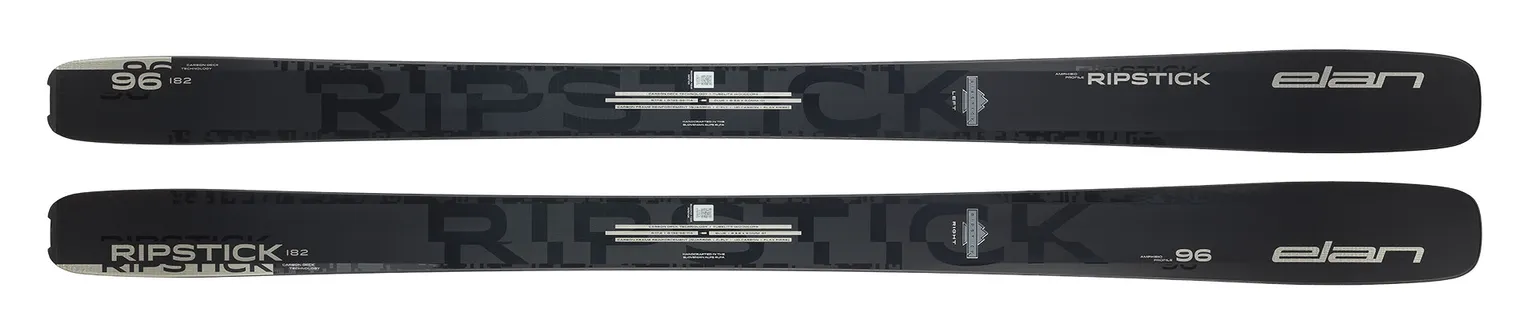
2026 Elan Ripstick 96 Black Edition Skis
| AVAILABLE SIZES | TURN RADIUS | SIDECUT | LISTED WEIGHT | PRICE |
|---|---|---|---|---|
| 161, 168, 175, 182, 189 cm | 17.8 m @ 182 cm | 133 / 96 / 114 mm | 1,720 g @ 182 cm | $949.99 |
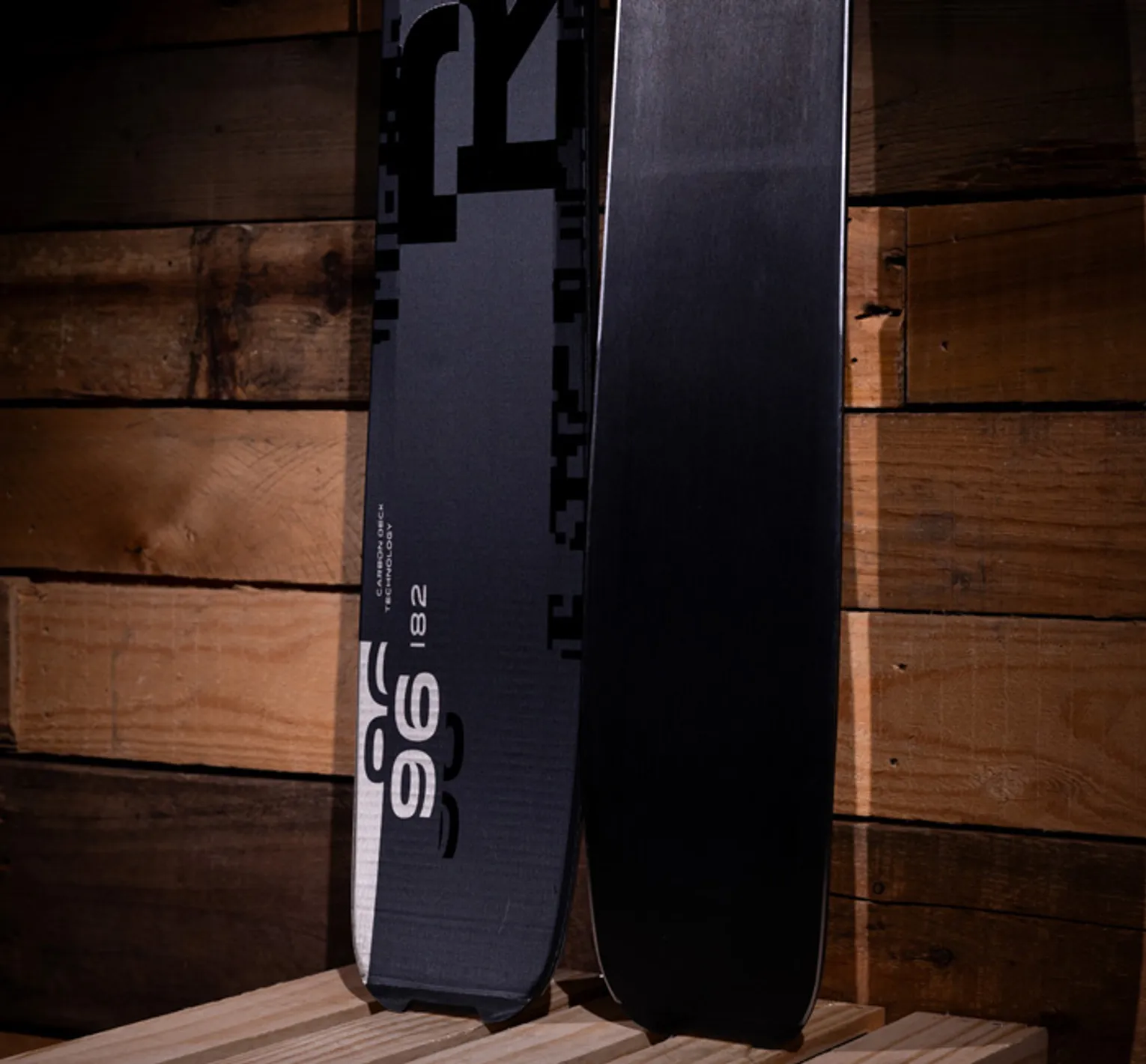
The Black Edition features the above construction template but adds a few carbon laminates to the mix. While both Green and Black Edition skis use two carbon tubes along the side, the Black Edition adds two more. The first is located in the center of the forebody of the ski in front of the binding, and the second is located in the same central spot behind the binding’s heel. These additional rods act as shock absorbers, filtering out unwanted vibrations. Normally, carbon is not seen as vibration reducing, but the tubes operate in a much different manner than flat carbon or vertical carbon stringers. Taking advantage, once again, of the asymmetry, Black Edition gets a Carbon Frame reinforcement on top of the core. This laminate is found, once again, favoring the inside edge of the downhill ski, leaving the other side of the ski unencumbered by carbon. This provides increased edge grip and reactivity versus the Green 96. While we’re adding carbon tubes to the ski, we’re also taking out equal parts wood, so the weight doesn’t change a whole lot here. The added Carbon Frame is the only real uptick in weight, but it’s barely noticeable, with the 96 Black Edition weighing in at about 1720 g/ski in the 182. There’s not much change in flex here, either, especially in the shovel which is largely the same as in the 96 Green. In the middle of the ski, there’s not a huge difference when hand-flexing, but you can feel a sturdier change when the ski is on edge.
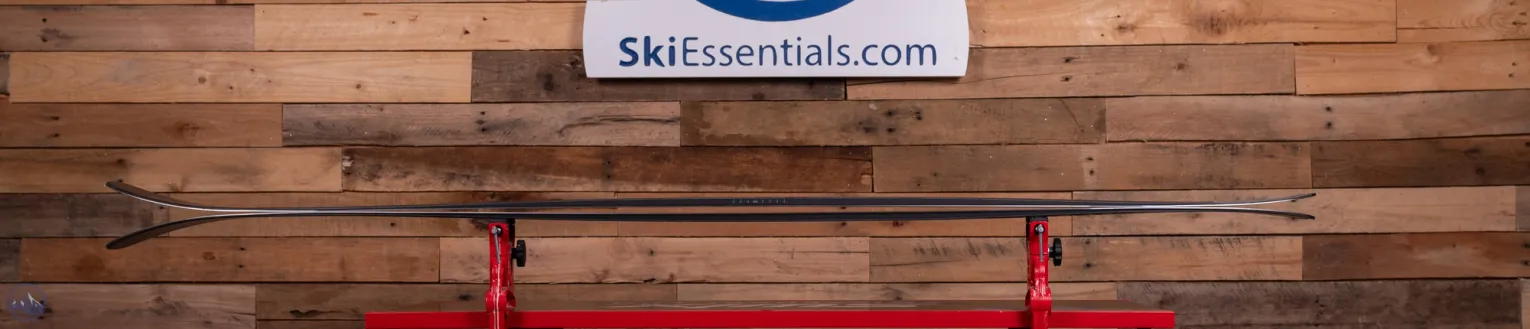
Since both skis are built in the same mold and profiled similarly, they are footprint twins. Each boasts a sidecut split of 133/96/114, generating a radius of 17.8-meters in the 182. It goes up and down from there depending on length, but overall, this is a fairly average sidecut radius for a 96 mm all-mountain ski. Let’s just say that given the flex of the shovel, it’s very easy to find the full radius, and easier still to go shorter. Interestingly, Elan uses a very thin core profile, which ends up digging into the shape discussion as the SST, or Slanted Sidewall Technology, bevels the core to an almost razor-thin point in the shovels specifically. This creates a highly mobile feel when starting turns and allows skiers to easily dictate the shape and style of the turn. We get a spoony taper shape in the shovels of both skis, putting flotation and agility at the top of the priority list. When it comes to rocker, Elan’s Amphibio profile takes center stage. Again, with the asymmetry, Ripstick 96 features more rocker on the outside edge of the uphill ski and more camber on the inside edge of the downhill ski. This rocker profile aligns well with the construction, allowing Elan to double-down on their asymmetry theory. For the most part, it does what it says it will do, which is to create a smooth and seamless transition between turns. The profile assists greatly in making parallel turns so darn simple. There are no unintentional wedges in these skis—they just track together so well, allowing for consistent and total edge grip for each ski. It makes it so the skis work together in unison, creating cohesion rather than two independent skis that the skier has to manage. The tails are flatter and more directional than the shovels, enhancing the 96’s all-mountain focus more than modern freeride. Playmaker has that side covered for Elan.
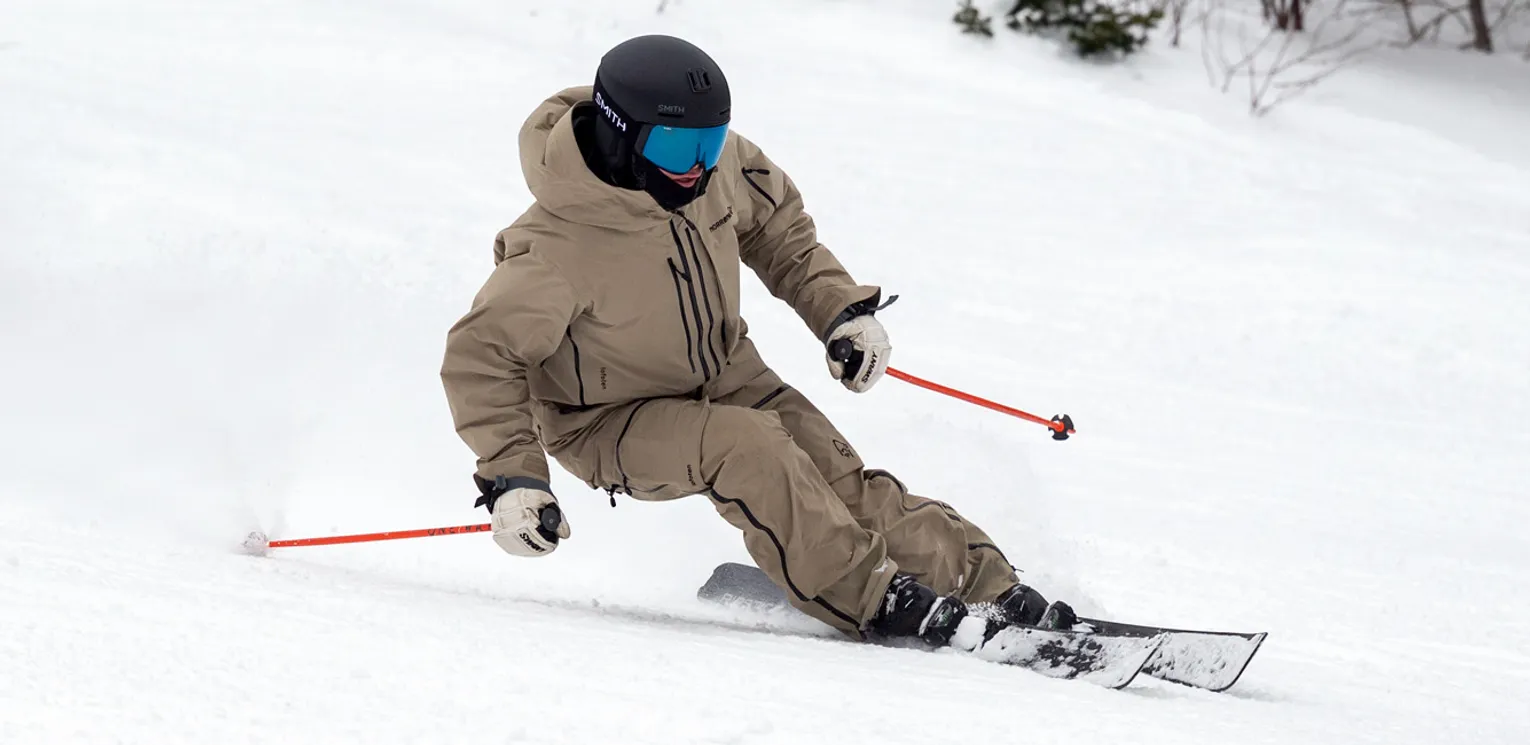
It’s tough to think of a ski that uses more sophistication and nuance in developing performance than the Ripstick 96. Volkl is right up there, but everything they do is a lot harsher and more directive. Ripstick 96 is far gentler in nature. For some skiers, that’s going to be a huge plus, while for others, it simply may not be enough to achieve the desired high-performance levels. On-trail, the ease of turning is the big highlight here, and especially in shorter turns. They both have very similar feels when it comes to the initiation phase as the carbon of the Black Edition doesn’t really factor in until the middle two-thirds of the ski. As such, both skis flex easily into the turn, and on firmer snow, almost to a fault. The engagement is easy, but not terribly supportive. Heavier skiers will push through the shovel with relative ease, and if you have more of a style that pressures the tips first, you’ll feel it the most. Once the ski is engaged, though, we start to feel the carbon kick in and come to life. Edge grip is surprisingly good for a carbon-powered 96 that’s under 1800 grams. As long as you stay away from the tips in the middle of the turn, you’ll be rewarded with easily accessible energy. The tail is more supportive than the tip, but it’s nowhere near abusive or demanding. In the Black Edition, the ski feels quieter and damper, almost like there’s a titanal plate in the mid-section while the Green 96 is a bit more jittery, especially when driven aggressively. Interestinlgy, softer snow and longer lengths do not really solve this issue for larger skiers. I (Bob) got on the 189 in all Ripsticks this past year and while there’s an improvement in higher speed smoothness and stability, there wasn’t really an overall increase in performance or satisfaction. In softer groomed snow, the ski simply flexes more and doesn’t hold up to strong and fast skiing. Jeff, who’s 60 pounds lighter than Bob, and with a more central ski style, doesn’t have as much of an issue. While quick, agile, and easy to turn, there is a notable lack of high-speed performance, support, and compliance on-piste.
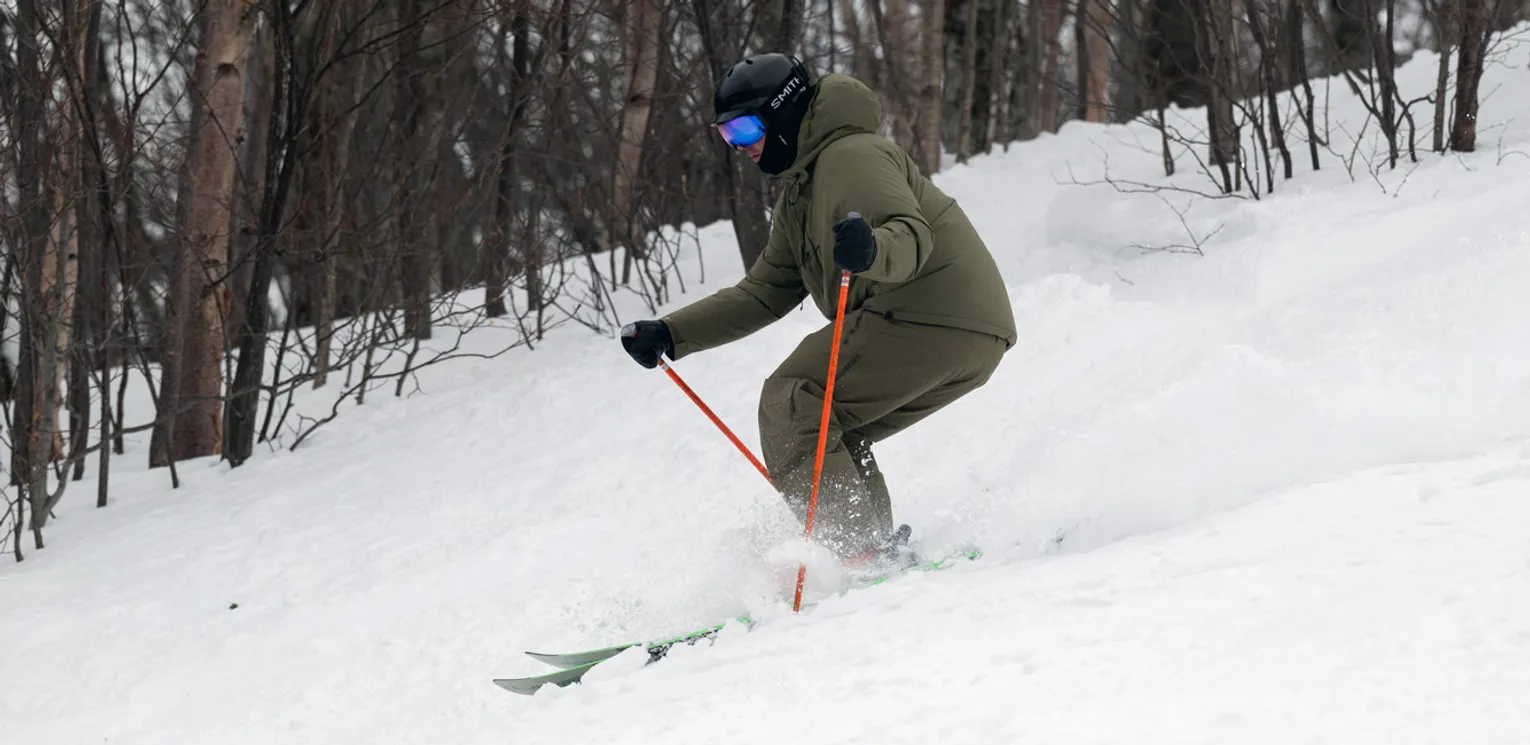
Off-piste, though, there’s a whole lot of fun to be had on the Ripstick 96. Further, in softer snow and more adventurous terrain, there feels even less of a difference between the Green and Black Edition. You have to be really moving fast through crud, chop, or broken snow in order to feel the carbon take hold in the Black Edition. In bumps, trees, or other technical spots where speed isn’t really an issue, the added carbon of the Black Edition is sort of unnoticeable. In pure powder, up to about 6-8 inches, these skis work great. The shovel stays afloat, and the Amphibio profile performs as advertised—it's pretty impressive, actually, how just a bit of a twist in the ski allows it to surf gently and easily through deeper snow. If the snow is heavier, the ski doesn’t like it quite as much. Denser snow requires a defter touch on the part of the skier—letting it run isn’t as much of an option here. The same is true of broken snow and chop—you must pay attention and use your feet to do the steering, as the ski will be deflected if you just point it and go. Skiers who like to be involved in the process will find a lot to like here, especially since the Ripstick 96 is so darn easy to maneuver. It’s the type of ski that is already halfway done with the next turn before you even think about the transition. The same is true for bumps and trees—if you need to make a turn, the ski is right there with you. There’s no lag here; the Ripstick 96 is totally on it when it comes to consistent subsequent turns. There are no issues with tight turns here, as the skis are incredibly willing and eager to make agility a priority.
If you’re looking for fun, excitement, and an easy-to-use ski, these Ripstick 96s are simply awesome. They require very little thought and effort to turn. While aggressive and heavier skiers may find a lack of support in the shovel, most skiers will be impressed with the manageability and maneuverability of these skis in all sorts of terrain and snow conditions. The use of carbon, shape, and asymmetry creates a totally unique ski experience—one that is not replicated in the ski world today, making it very difficult to make comparisons. The Black Edition skier is likely going to seek out the extra carbon for a damper feel while the Green 96 skier enjoys more peppy feedback and an even greater sense of agility.