

2026 Nordica Dobermann Multipista On Snow Ski Review
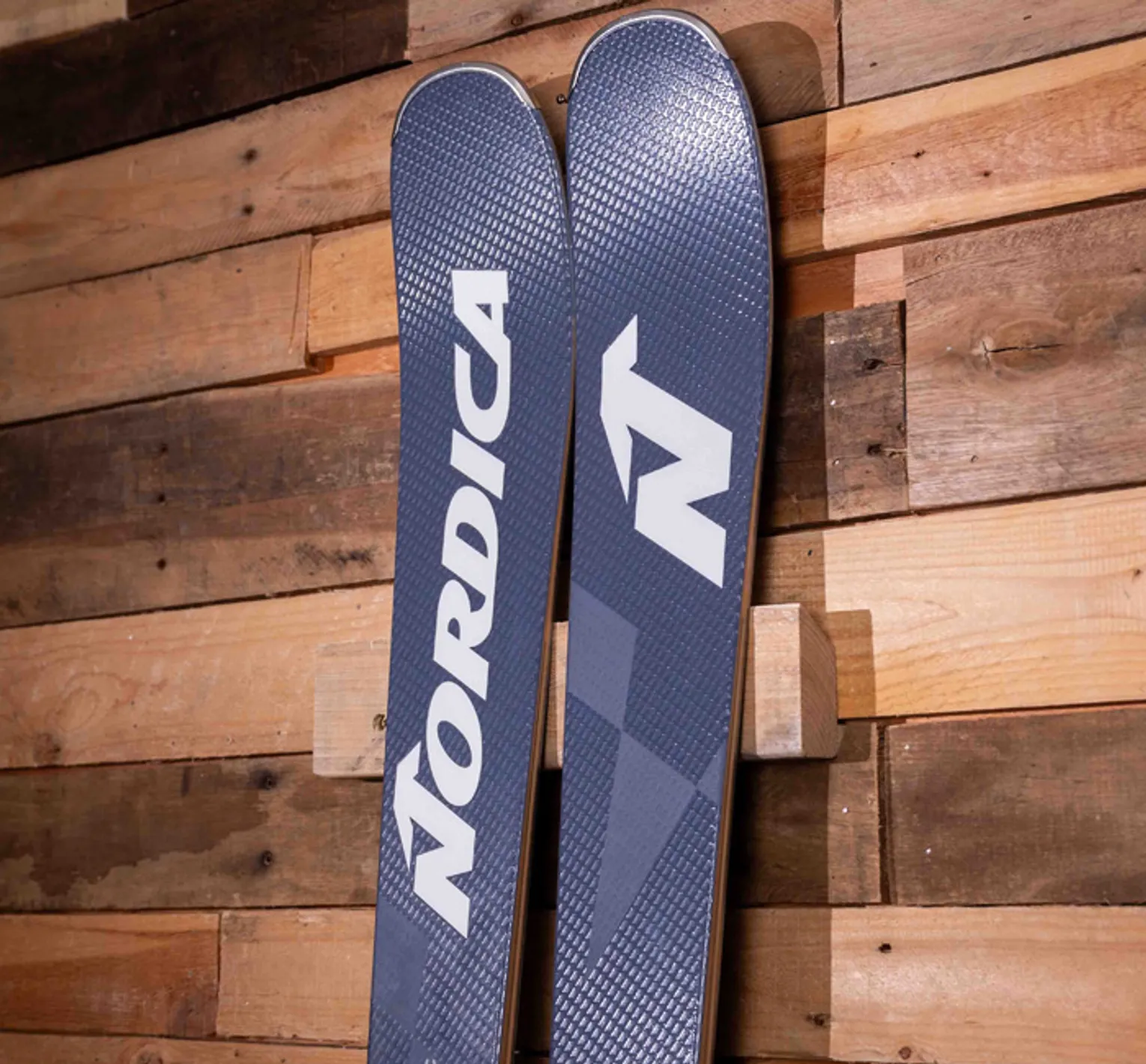
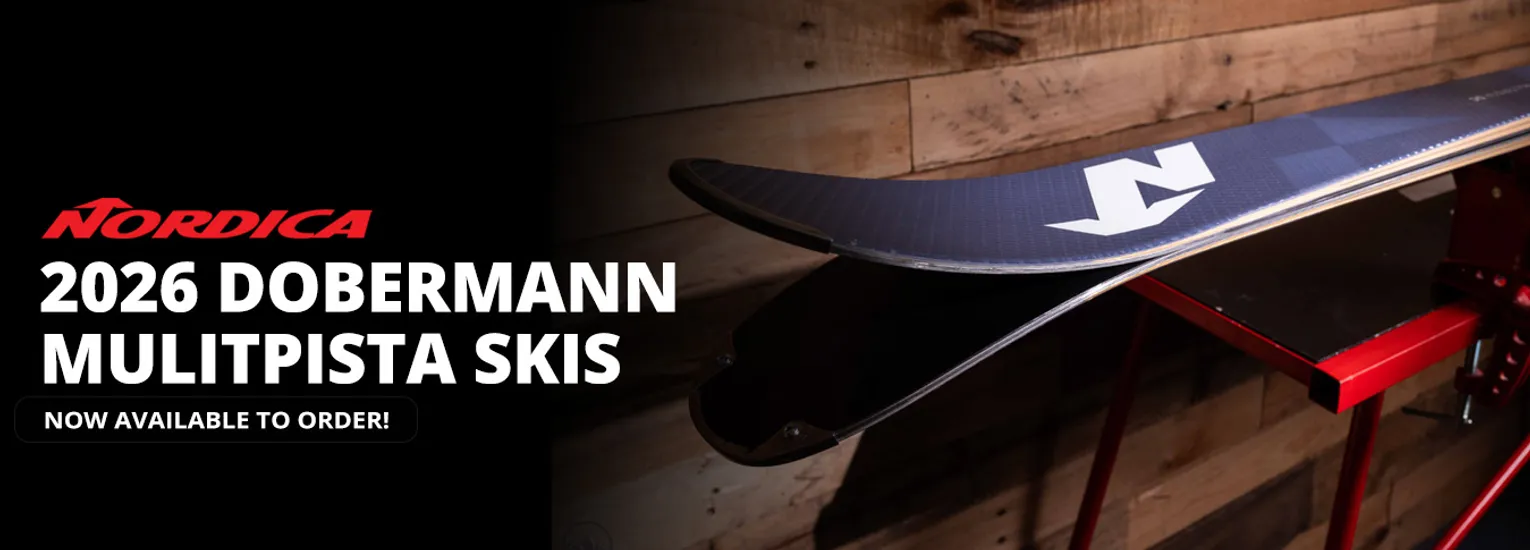
For 2026, we get a new addition to the Dobermann line, and it’s a good one! The Multipista joins the Multigara, GSR, and SLR in the Dobermann brand, and offers something rather unique and exceedingly fun. Basically, they took the Double Core, Dual Ti construction of the Multigara and placed it in a slightly wider, and slightly more rockered and tapered footprint. At 74 mm underfoot, and with a slighlty narrower tip and tail than Multigara, the Multipista is a bit more modern with a freeride influence, but also more traditional in that it has a “skier’s ski” type of mentality. While you can park and ride a carved turn with relative ease, it’s the fringes and the benefits of this ski that make it stand out from virtually all other mid-70 mm frontside skis out there in the world.
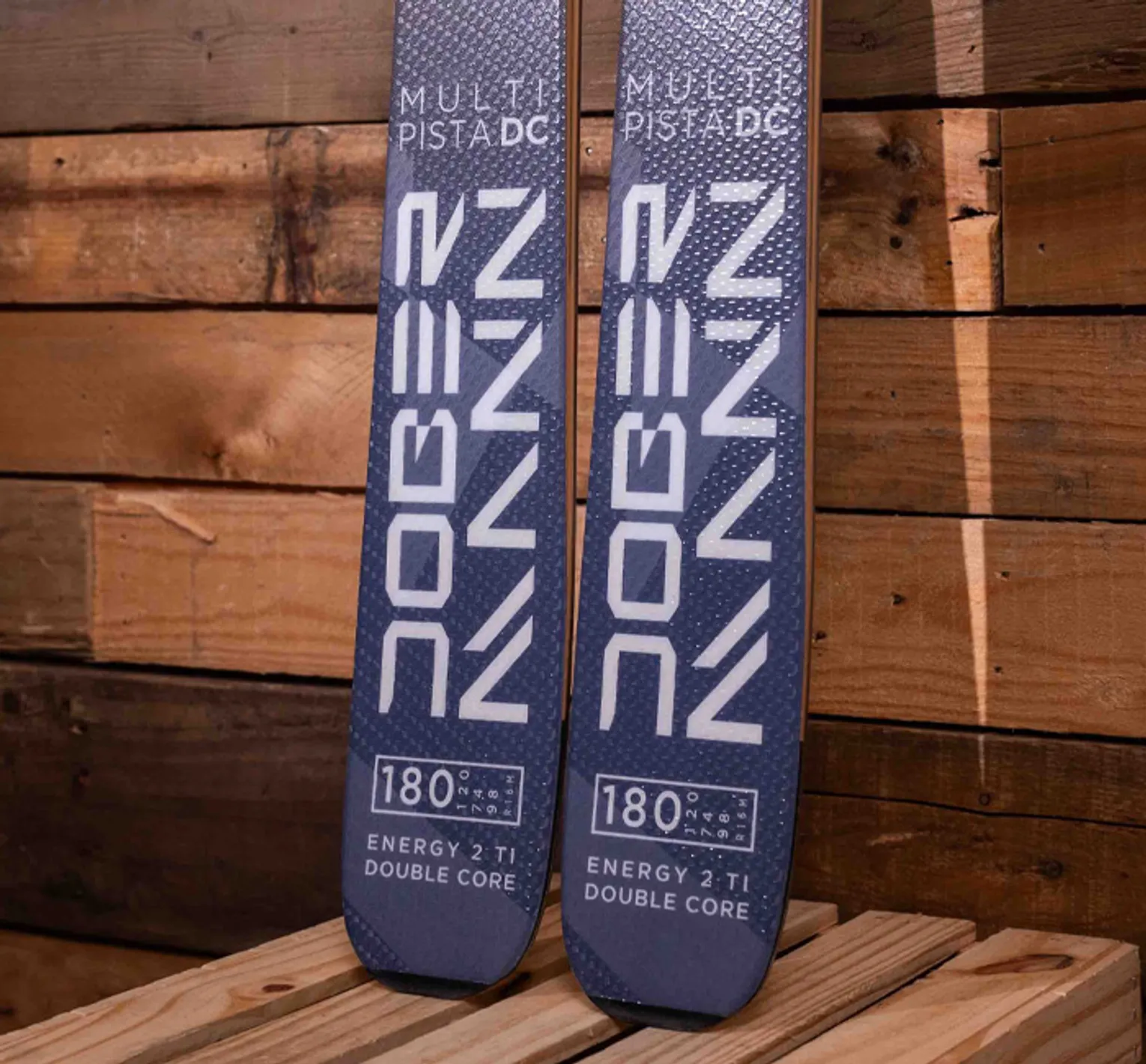
Built with blend of poplar and beech in the horizontally laminated wood cores, the skis also get two sheets of titanal and a pulse core laminate to boost smoothness. The two sheets of .4 mm titanal do a fantastic job of damping the ski’s vibrations and keeping the ski glued to the snow (when asked). It’s the “when not asked” portion of the ski that interests us the most, though, as there aren’t many skis of this build and width that can accomplish what Multipista can. The name does say it well—this ski can operate on multiple pistes, both on and off-trail, and at a variety of speeds, turn shapes, and styles. Underfoot, there’s an unmistakable race ski feel, but once you get to the front and rear quarters, the ski becomes something else, and totally unique in today’s ski market. We had a blast over three days of testing, and most recently, had very positive experiences in our early season snow conditions and more technical terrain.
At a Glance:
2026 Nordica Dobermann Multipista Skis

| AVAILABLE SIZES | TURN RADIUS | SIDECUT | WEIGHT | PRICE |
|---|---|---|---|---|
| 160, 165, 170, 175, 180, 185 cm | 16 m @ 180 cm | 120 / 74 / 98 mm | -- g @ 178 cm | $1,299.99 |
Bob's Experience:
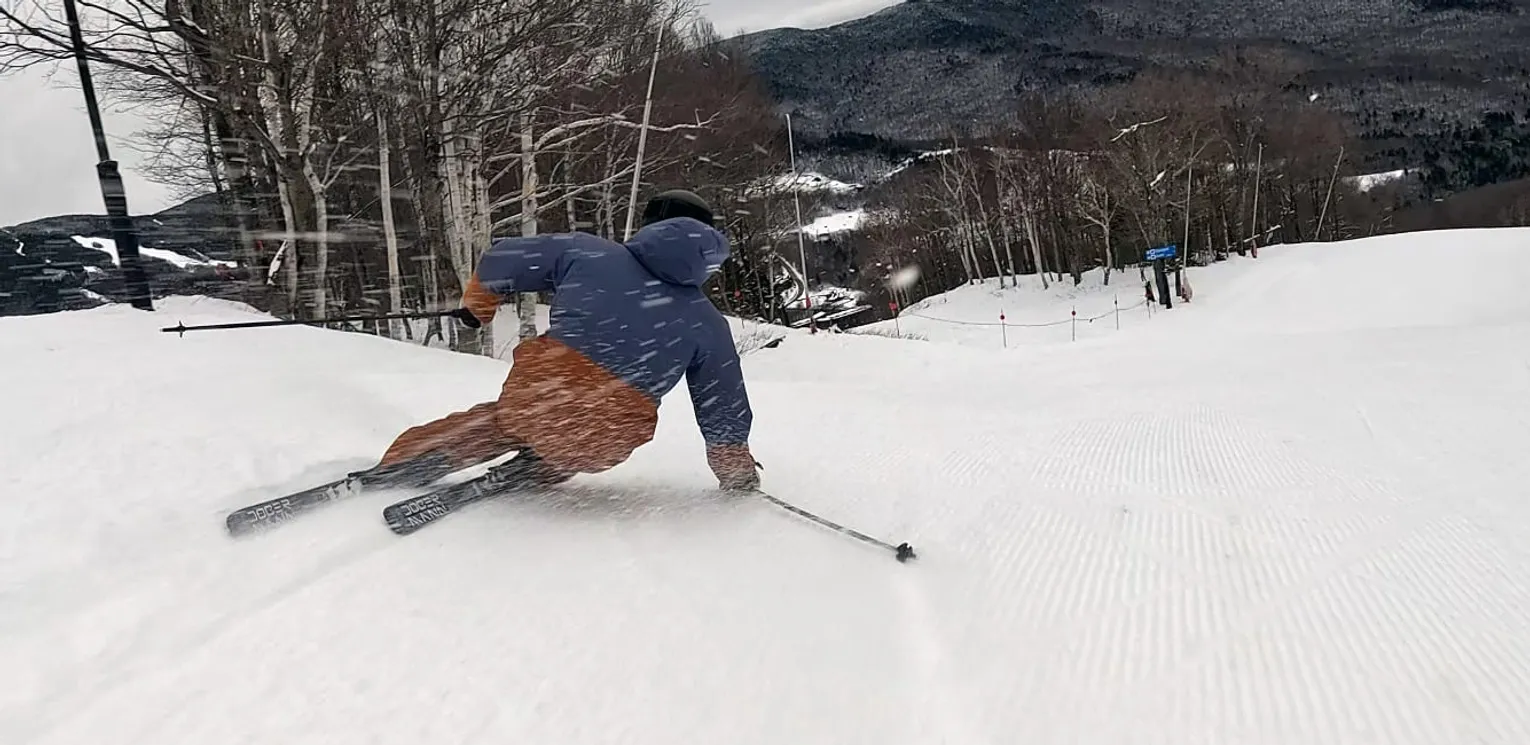
It’s skis like this that make me wish I had more of a racing background, because I’d really like to be able to harness the totality of the carving performance. At the same time, this ski makes a lot of sense for someone like me who needs a bit of forgiveness and gentleness of shape when it comes to pure on-piste skiing. I found that on groomers, the ability of the ski to stivot with ease made it so much more confidence inspiring. Since you’re not locked in to a carved turn like on the Multigara, you can release the edges and play around with different angles with far greater comfort. I loved the ski’s ability to make short swing turns on the side of the trail, and while I’m still waiting for firmer snow to fully find the edge grip potential, it seems to be all good at everything other than top top speeds.
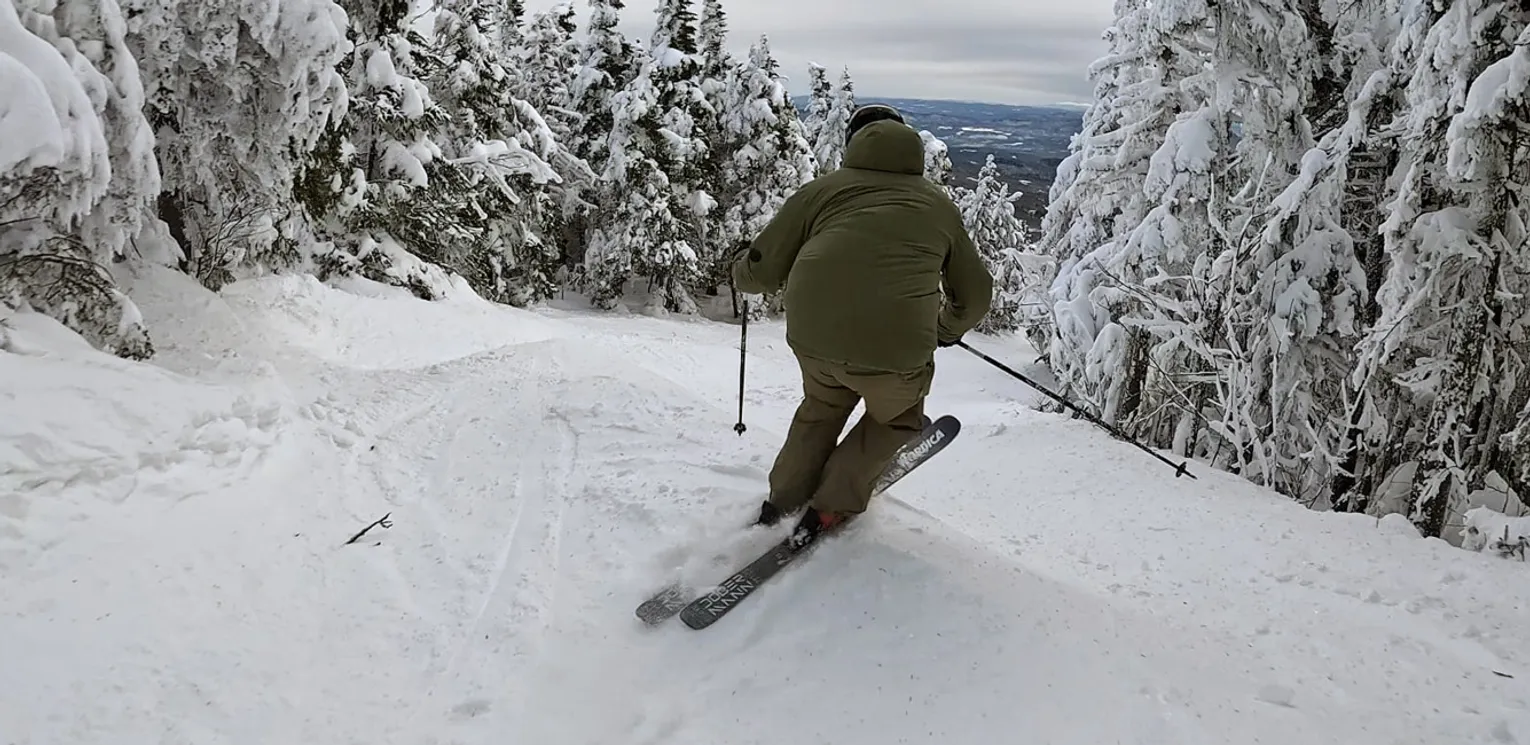
While the on-trail skiing performance was as good as expected, it was the off-trail performance that really impressed me. It’s a great mogul ski. The taper and rounded shape in the tips and tails allows for easy sliding while the narrow waist is super quick from edge to edge. We skied some technical stuff off the top of the mountain and it reminded me of an old-school straight ski in the best way possible. Even in crud and chop, the power of these skis brings a composed feel to the snow. While anything softer than what we were dealing with would make it more challenging, if you’re not sinking in or punching through, the Multipista is more than capable of handling anything and everything that’s ungroomed.
Jeff's Reaction:
I had a great time getting on the Dobermann Multipista during our Ski Test last spring, but the snow conditions were firm, frozen, and smooth, which left me with a somewhat limited view on what the ski can do. Over the past two days, I skied it far more variable conditions, which really helped me better understand this ski. It’s quite unique in its category with the amount of early taper in the tips and tails, and that results in a relatively unique skiing experience too. For being such a stiff, powerful, aggressive ski, there’s a side of it where you don’t really feel those things at all.
My opinion of this ski is largely snow condition dependent, or rather whether I like it or not is dependent on the snow condition. On a relatively firm packed powder groomer, I love it. It’s really easy to control, yet feels strong, dynamic, and trustworthy in the apex of a turn. You can really stand on it, as you’d expect out of a ski with a race-like build. For me, I had a tendency to make longer turns on it than the 16 m radius would indicate, which I think is a result of the tip shape. I also think on really firm snow, as long as there was some purchase, it would be easier to bend it into shorter arcs.
Interestingly, which is probably the opposite of Bob, in softer snow, I don’t really like it as much. You’d think the tapered shape would help it in soft snow, and for some skiing styles, it will, but I had a hard time getting precise turn initiation out of it in softer snow conditions. Again, I think it’s completely stylistic, and realistically, if the conditions are softer, I’m not reaching for a 74 mm underfoot ski, so it’s really not that big of a deal. My biggest takeaway from the Multipista is if you’re wary of narrower skis, but keep hearing people talk about them and are considering adding one to your quiver, this could be a really good one to start with. There is some forgiveness to it, there is some versatility to it, but in the right conditions and terrain, it will absolutely rip carving turns and let you experience the true benefit of being on a narrower carving ski.
Matt's Take:
What a great opportunity it was to revisit such an interesting ski. There’s not a lot out there like it, and my experience reflected that sentiment. Coupling a race-oriented build with a rounder, more forgiving and versatile, shape results in a ski that can not only rip carves on groomers, but wiggle through bumps and slice through variable snow. That’s something difficult to find in this width range and category. But here it is, all in one place, and the Multipista certainly delivers what Nordica has set out for it to accomplish.
The race-oriented Double-Core construction provides an incredible amount of snap and energy at the end of the turn. Load this thing up, and you get rewarded with plenty of feedback. So much so, that if you are not prepared for it, it will certainly get taken for a ride. Luckily, the more tapered tip and tail are there to help you out in those situations as it is easier to get yourself out of trouble than something like the closely related Multigara. I had the chance to get these out at the end of last season on very firm refrozen groomers, and they had excellent edge engagement and overall grip due to the build. But their shape really came into play today in more variable conditions. Granular snow that peeled away when you really drove the ski had me feeling a bit hesitant, but as soon as the trail started to become smoother and more substantial in consistency, that’s when you could really get them to hook up and get into a rhythm. Turn initiation is also altered by its shape as the turn needs to be started further down in the forebody of the ski instead of right at the tip. This might make some high precision skiers feel a bit disappointed, but for me it was just fine since I am used to more rockered skis. That slight drop in precision really opens up the opportunity for more creativity, so for me it’s an overwhelming advantage for the intention behind the Multipista.
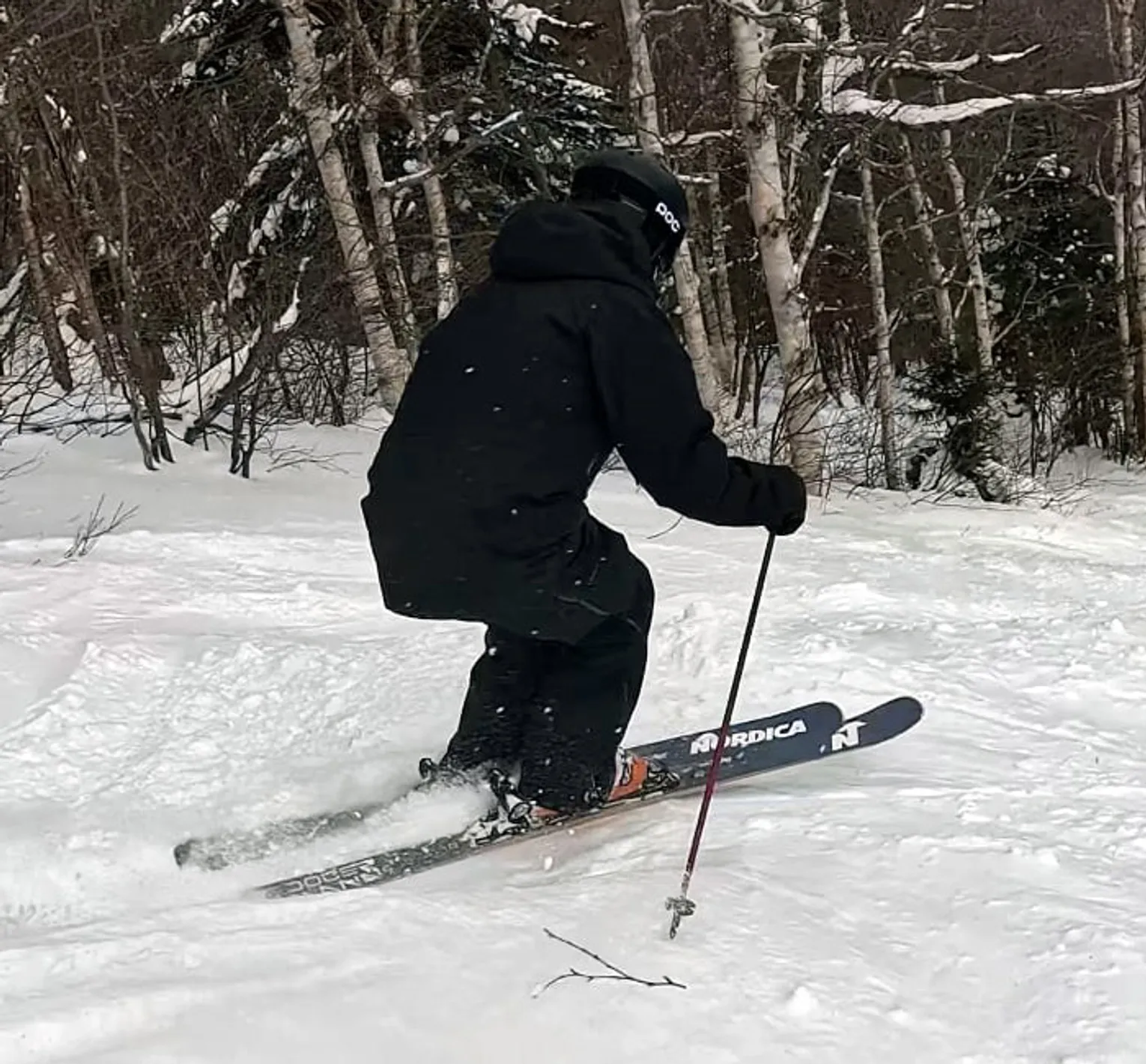
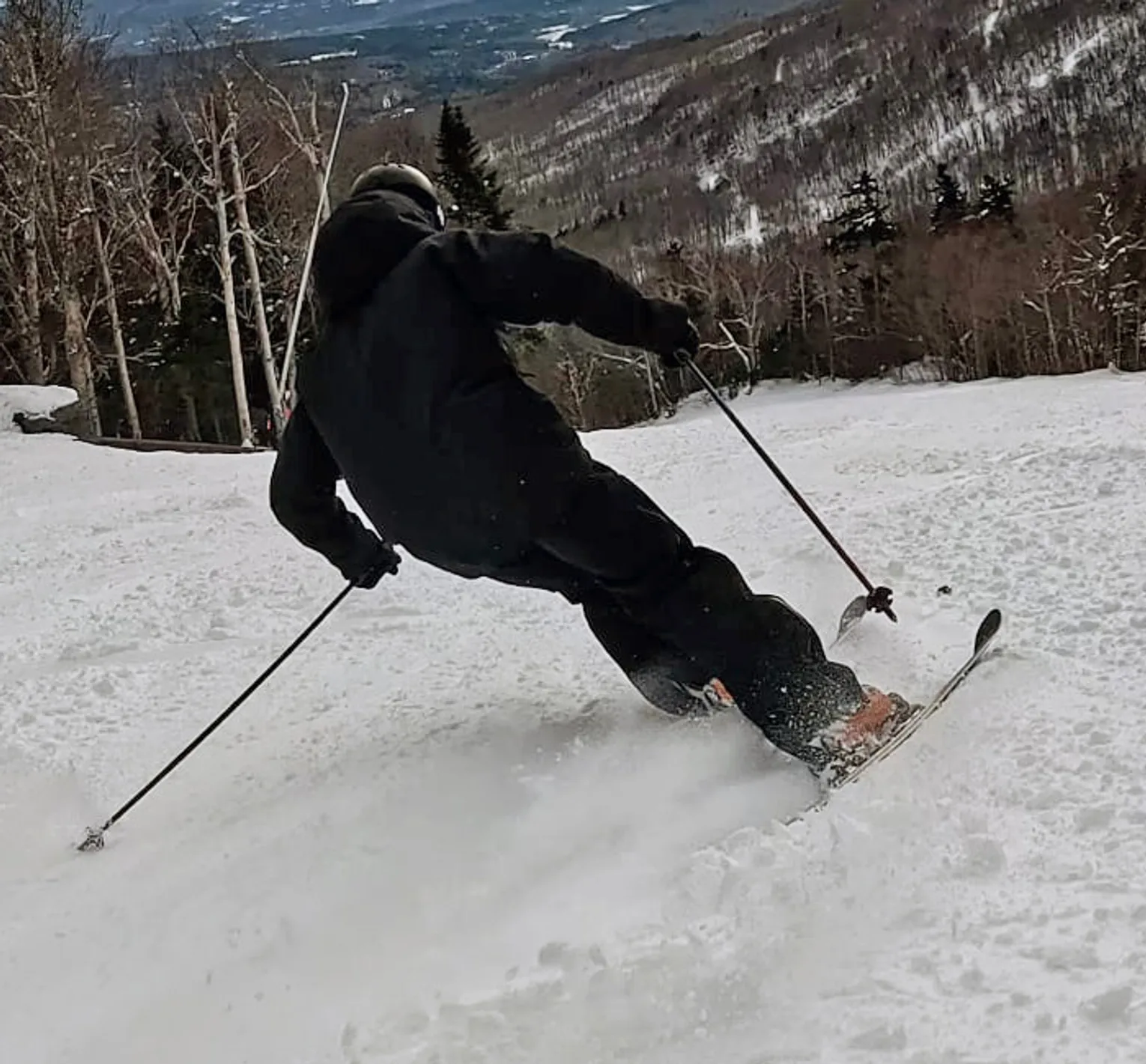
Ungroomed terrain was where I really got a sense of what this ski is all about. The taper in the tip and tail really allows for some, dare I say, smeariness? I guess you could say that. They are surfy for a 74 mm waisted frontside ski is a better way to put it. When in the bumps and skied flat, you can get your wiggle on and slash when needed. The tips don’t get deflected and take you off course like the Multigara would as it has more of an angular finish. But, that Double-Core does a great job to balance both slight forgiveness as well as unwavering support. Once you get into more punchy snow where you sink in a bit more, that’s when the 74 mm waist and race build starts to become difficult. But that is to be expected.
Overall, the Multipista is incredibly unique and most certainly provides a unique experience. My first thought was that this would be a great choice for mid-atlantic skiers who get firm man-made snow in the morning with more slushy conditions in the afternoon. It’s just a great ski to start on when diving into narrower frontside skis. Skiers seeking top-notch frontside performance, but with the freedom of exploration will find a lot of success with the Multipista.
Keep Exploring the 2026 Nordica Dobermann Mulitpista Skis: