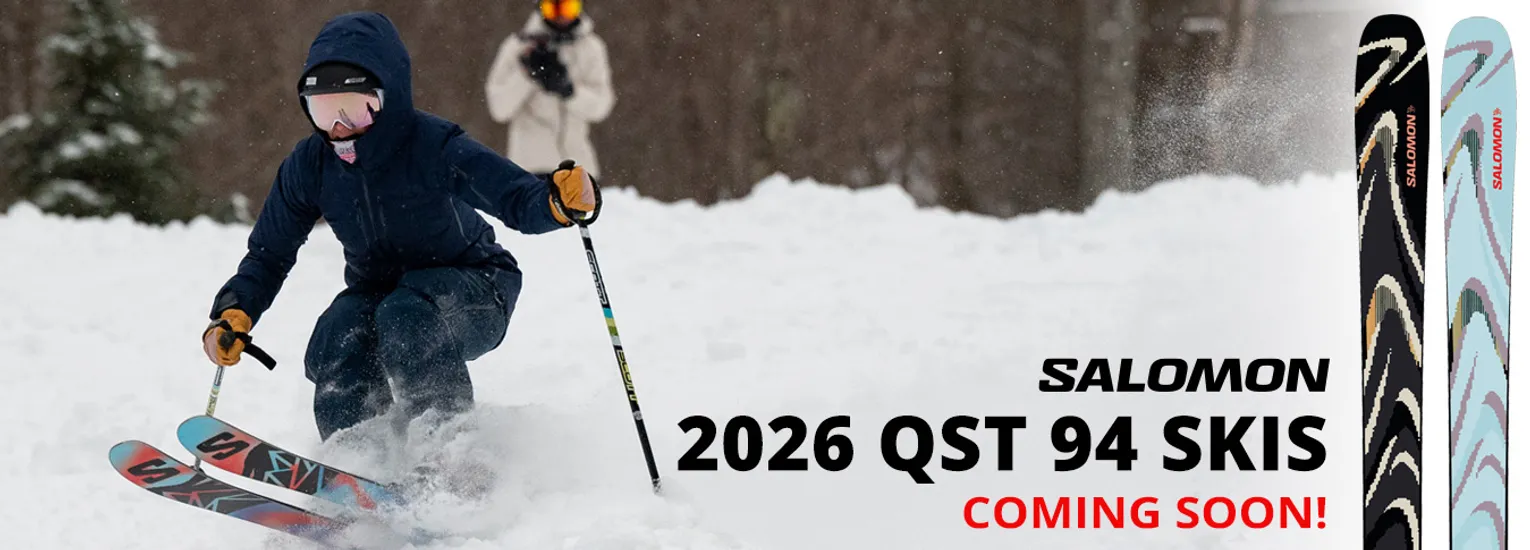
2026 Salomon QST 94 Ski Review
It’s pretty rare that a big splash is made in the highly competitive mid-90's ski realm. The 2026 Salomon QST 94 does just that. Skiers looking for an incredible blend of carving performance, smooth off-trail acumen, and insane versatility don’t need to look any further than this QST 94. While the QST 92 was an awesome ski in its own right, this new 94 ticks up the performance in every possible area. While the overall weight stayed about the same, the 94 feels denser and more stable without losing out on any notable quickness. This new 94 is one of the most agile and predictable skis in this class, allowing skiers looking for extreme mobility paired with smoothness to feel right at home on these new skis.
Salomon took a lot of what made the previous QST skis great and simply added on to them. We get a full poplar wood core, basalt and fiberglass layers, a titanal plate underfoot, and new Cork Damplifier laminates in both the tips and the tails. The way in which the basalt fibers are laminated are different from the older C/FX stringers in the QST 92, mainly due to basalt’s blend of light weight, damping, and reactivity. They run tip to tail as well, mixed with the fiberglass laminates, to provide otherworldly energy and smoothness—we'll keep coming back to this—the blend of energy and silence in these skis is off the charts. In addition, the new cork material is extended both down into the tips and up through the tails to take up more of the ski’s construction. It also runs edge to edge, and you can actually see it and feel it in the sidewalls of the skis at the ends. When it comes to performance, this is probably the biggest difference we felt in comparing this new ski to the outgoing model. Salomon also made a move to a full sidewall in these skis, ending the use of double sidewall technology and making a stiffer overall feel and flex. The stated weight of the new 94 is 1810 grams per ski in the 180, giving us a g/cm rate of 10.05 while the 176 in the outgoing 92 registers slightly higher at 10.3 g/cm. This similarity is interesting, as the new ski feels both slightly heftier and a bit more agile—one of the many paradoxes we feel with the new 94. For 2026, the QST 94 is billed as a unisex ski, available in two different colorways in all lengths, ranging from 156 through 188. Sizing breaks on the 8’s in these skis, creating all sorts of headaches and internal debates over what’s the proper length here, the 180 or the 188. More on that later.
At a Glance:
2026 Salomon QST 94 Skis


| AVAILABLE SIZES | TURN RADIUS | SIDECUT | WEIGHT | PRICE |
|---|---|---|---|---|
| 156, 164, 172, 180, 188 cm | 16.5 m @ 180 cm | 134 / 94 / 120 m | 1,810g @ 180cm | $649.95 |
In terms of shape and profile, pretty much every stat and measurable is increased. Rocker profile gets boosted from 18% in the tip and 12% in the tail to 20% in the tip and 16% in the tail. There’s also more splay here, with higher tip and tail heights. The tail shape is a bit deceiving, though, since it’s got a squared look to it rather than round. This appears as though it’d help keep the tail locked into the snow more, and it does, but you still have to bend the ski past the point of rocker to hook into the longer and more blocky and non-tapered tail. For most skiers, that’s not a huge problem, especially on anything even remotely soft. This helps activate the 16.5-meter turn radius in the 180—short for a ski like this, but still a bit longer than the 92’s arc. It’s a full meter shorter than the 17.5-meter radius of the wider QST 100 in the same length, putting an emphasis on crisper carves and front side performance. This tail shape is a big departure from that of the 92 and of the other QST’s, making this 94 a more polished ski with front side and carving intentions. That said, there’s still plenty of rocker here, and enough taper in the shovel to allow it to cut through crud, powder, and chop with ease. It’s a full-on freeride ski that just so happens to rip carved turns. Built with sidecut dimensions of 134/94/120, this is certainly a directional skier’s ski, and with a mount point of –8 cm from center, there’s no doubt as to the intended use case and application of this new 94.
When it comes to performance, it doesn’t get more silky, smooth, and predictable as this. For years, we’ve touted the Elan Ripstick series of skis as having a very cohesive feel—not hooky, and incredibly intuitive due to the Amphibio rocker profile. Salomon manages to achieve the same feeling without asymmetry. With the QST 94, the ski responds to your thoughts before it even takes hints from your physical input. It’s like the ski has Spidey sense and can predict what you’re going to do and where you’re going to turn. We’ve had it on some pretty firm snow this year and can basically push it as hard as stronger and sturdier skis with more metal in them like the Stance 96 from Salomon or even something like the Blizzard Anomaly 94. This QST holds its own among the heavier hitters of this group, and that’s saying something. Additionally, it’s simply a more fun carver as it has a shorter turn radius and excellent rebound and energy. You don’t have to grit your teeth and bear down on the ski to get it to perform as intended—the range of performance here is a lot wider and more accepting of various turn shapes, styles, and speeds. It’s got a slalom-like mentality in the body of a wider and floatier ski—a rare combination that borders on paradoxical. It’s both easy and fun to lay this thing over, giving a nearly race-like performance for a wide variety of skiers. When the snow gets cut up a bit, the width and rocker take over, allowing for clean and smooth carving performance regardless of the type of snow. The flex is robust enough to handle adversity while the cork in the tips and tails activates by toning down unwanted chatter and vibrations. We have noted on the QST 100, and it holds true here as well, that even if the video demonstrations show that the shovel of the ski is bouncing around, that’s by design. The ski acts as shock absorbers, and the ones that do it the most efficiently create the smoothest rides. While the heavier and stronger skis will ultimately out punch and overpower a QST 94, it’s the other stuff, and the blend of attributes, that will consistently fall to the side of the Salomon here. Overall and in general, this QST 94 is a very pleasing ski to be on when it comes to groomers and carving turns.
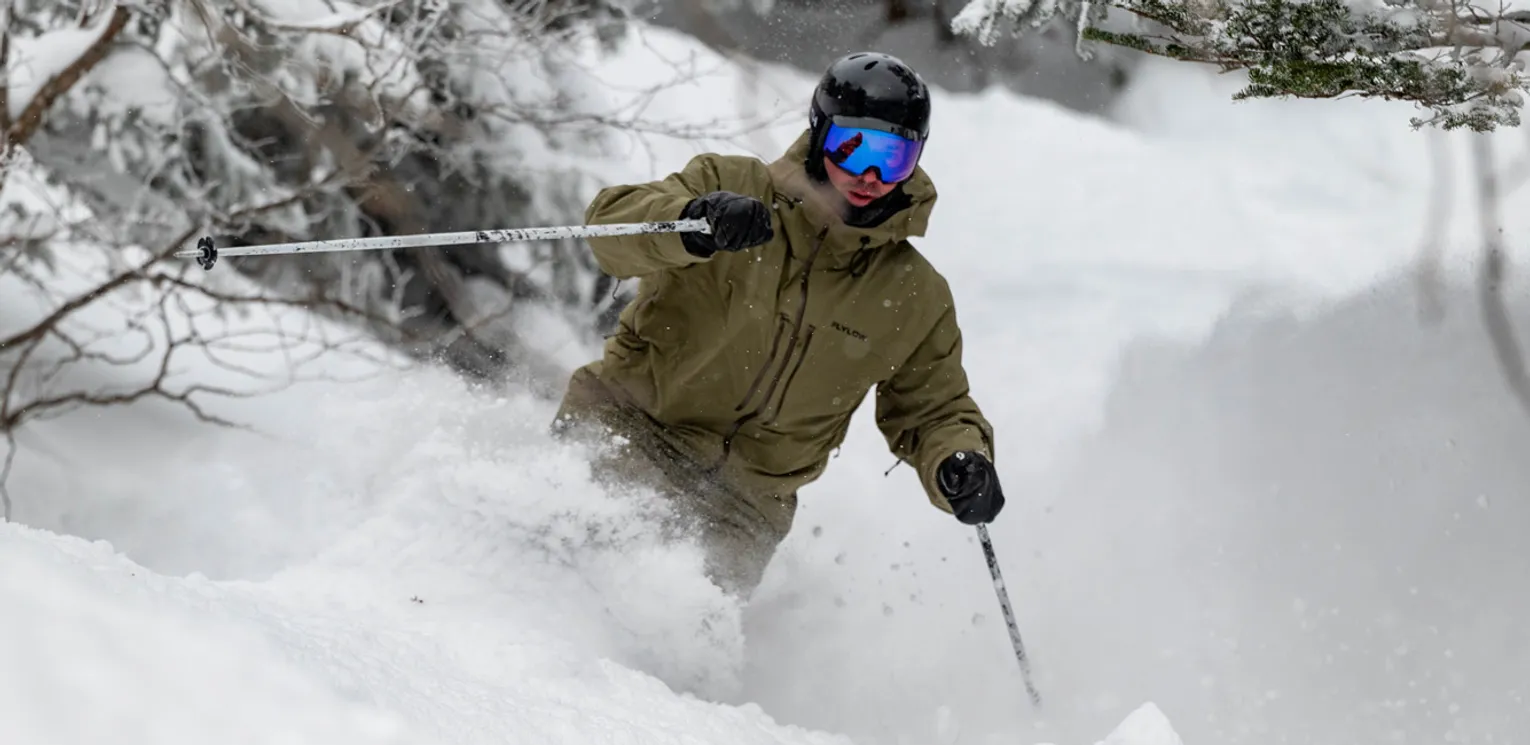
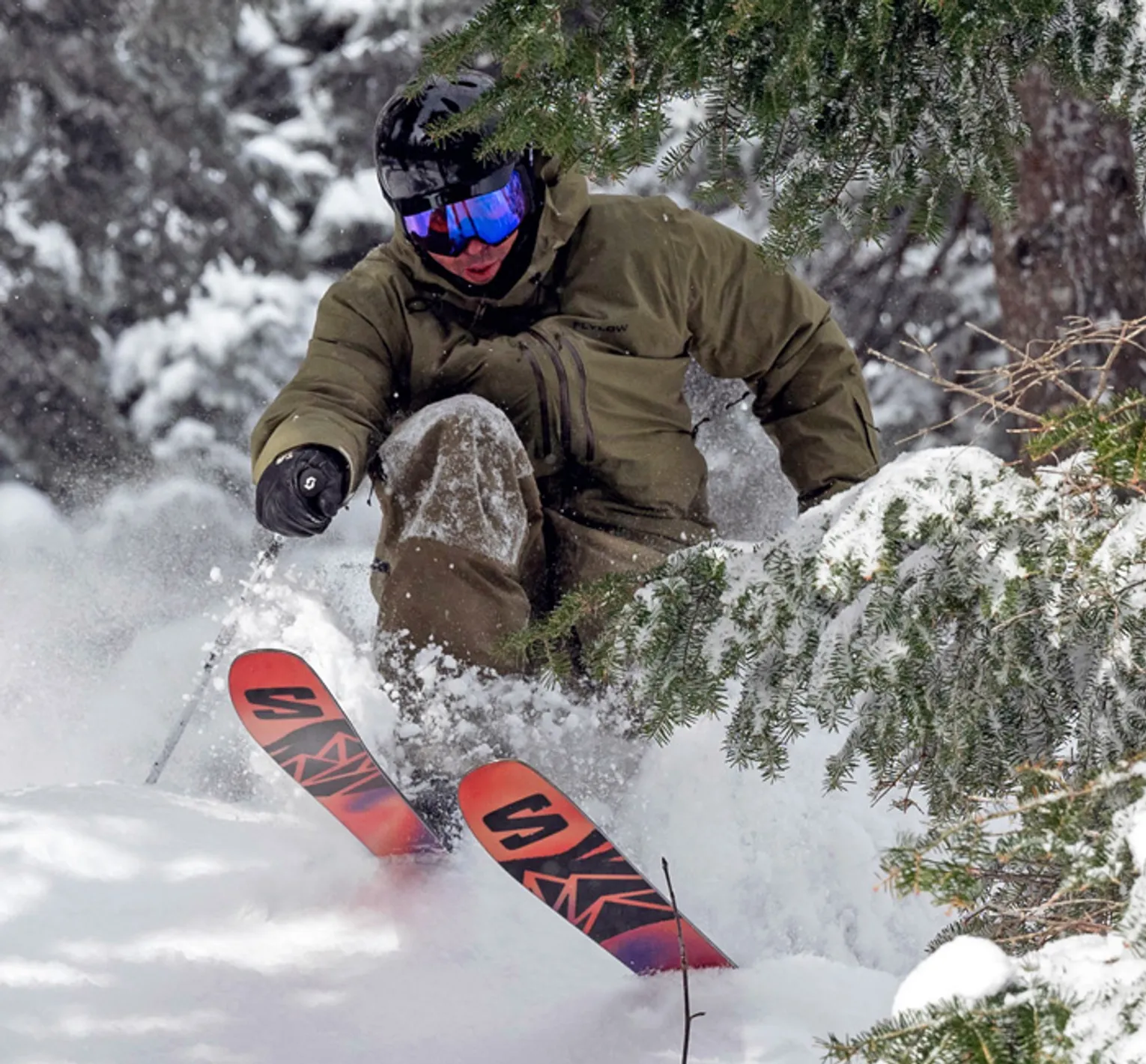
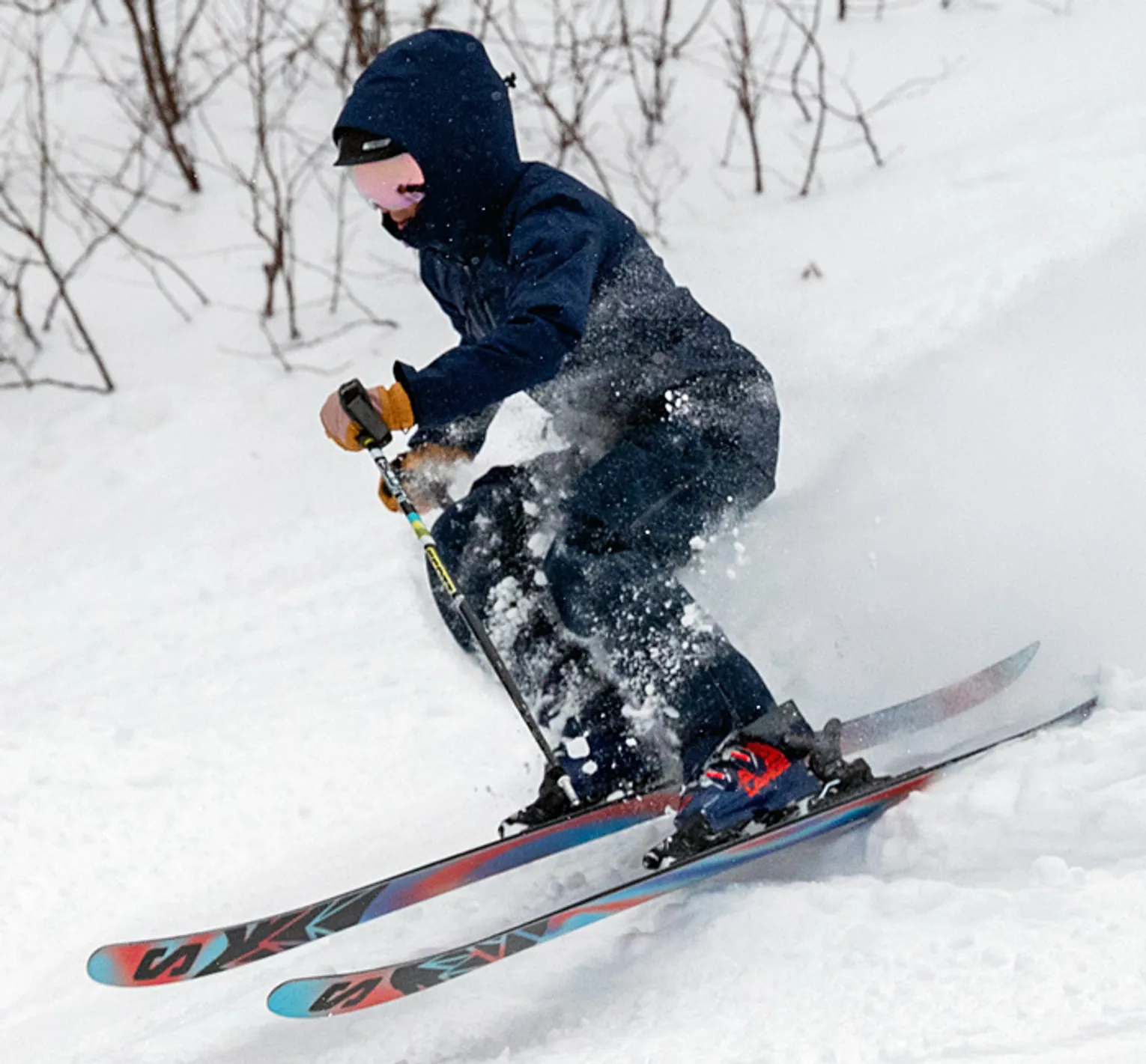
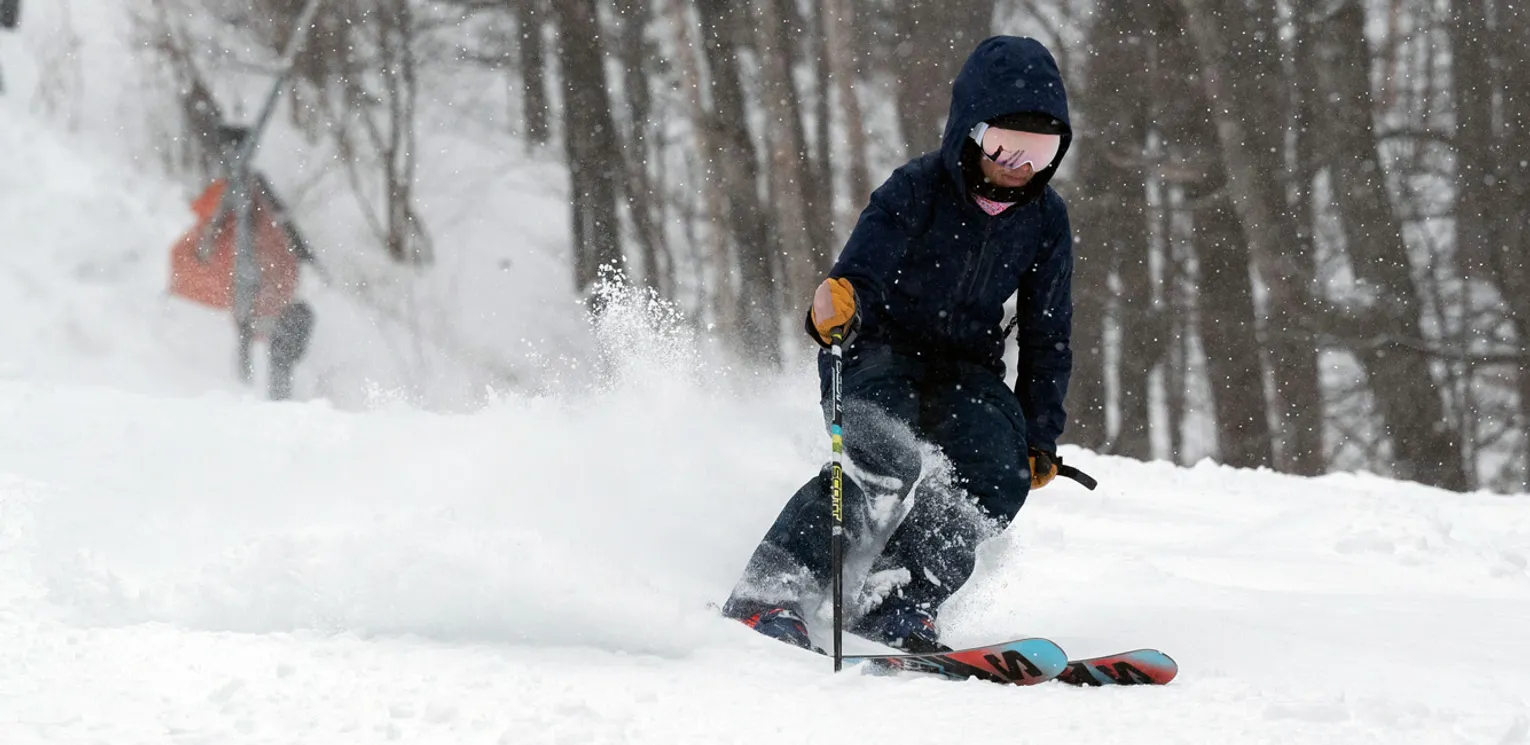
When it gets to the off-piste, the 94 really struts its stuff. Whether bumps, trees, tight spots, or powder, this ski has nearly unlimited versatility. Why just the other day we had a nice surprise dumping of snow and I was more than happy on the 94. Matt was on the Nordica Unleashed 120—a far cry from a QST 94, and in about a foot and a half of snow, we were basically equals, especially in the tighter trees here at Stowe, and double-especially since the sub-surface was firm due to typical spring re-freeze. The flotation of these skis punches way above its level/width--these are fantastic floaters. We’ve noted that a lot in regard to the QST 98, and that philosophy has certainly carried through to the 100 and 94 in new QST world. Surely, in open spaces and totally bottomless snow, we’re taking the 120, but there’s no real need to go searching for something wider if you’re using this as a normal daily ski—it holds up. Due to the tapered shape, increased rocker, and shorter turn radius, the QST 94 is an insanely good tree and mogul ski. It has the favorable flex, proper profile, and the appropriate agility for ripping through bumps and running through the woods. For a ski that carves and turns so well, this ski just steers so much better than anything else out there. The best part is that this applies to the trees and bumps as well as the groomers. There’s enough tail pressure and stiffness to provide feedback and rebound but not too much that it makes the ski demanding or difficult to drive. Each and every movement that you put into the ski is instantaneously connected to the snow—that's the big takeaway here—the QST 94 feels so darn connected to you and the snow—it's a seamless transition regardless of conditions, speed, or terrain. We never felt any potential of catching an edge or hooking a tip—not even close.
As far as length, to wrap up this little chat, it’s been tough vacillating between the 180 and the 188 because I really like them both. I’m 6’2 and 225 lbs. Matt is 6’2 and 200 lbs. We both struggle with this question. The 188 is smoother, better at speed, and floats better. The 180 is just so darn fun and engaging. It’s more exciting and electric due to the shorter turn radius and it just feels so natural. At speed and in deeper snow, there’s a limitation to be sure, but 90% of the time it’s super fun. The 8 cm gap is a big one, and the fact that a 188 is the long ski is kind of a drawback for a lot of skiers. For us, 184 would be money. As it stands, I’m going 188, though, final answer. These are fantastic new skis—super fun carvers, incredibly versatile, and so wonderfully natural feeling. The connection to the snow is better than most, and the well-rounded nature is second to none. The QST 100, in addition to this 94, will cause a lot of hard decisions this year, but rest assured, these are good problems to have.