2026 Volkl Revolt 101 Ski Review
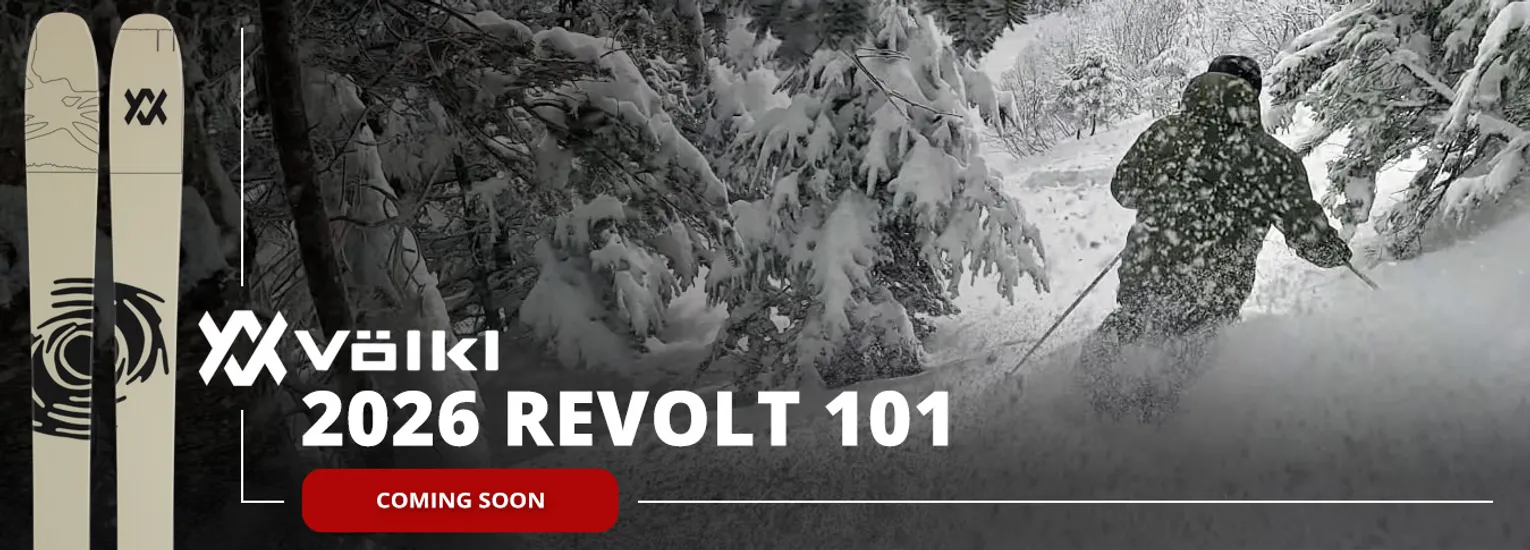
The 2026 Volkl Revolt 101 is an all-new ski for next year, building off the 114 platform but in a narrower profile. It’s funny to say it’s “building” when in reality it’s “shrinking” but the new 101 will certainly bring that same footprint and style to the next level in terms of overall skier satisfaction and performance. I first got a glimpse of this ski in mid-January at an industry demo and honestly had no idea what it was. The name “Revolt” in Volkl world mainly conjures images of twin tips and terrain park creativity, but over the past two seasons, the Revolt 114 has thrown a wrench in that impression. Revolt 114 stood alone in the Revolt line, showing that big mountain terrain and high-end freeride performance also had a place in the lineup, even if the ski is shaped wildly differently from the rest of the Revolt twins. The 114, and now the 101, are far more directional and chargey in nature and stand alone within the Revolt line. When we skied the 114 over the past two seasons, it was quite clear that the ski had plenty of heft, power, and stability for aggressive big mountain skiing in deeper snow, and not a whole lot else. But what happens when the mountains are smaller and the snow is shallower? Was there something to this 114 that warranted further exploration and development? The answer for me, and for most everyone who’s been on it so far, is a loud and resounding “yes.”
In terms of construction, we’re not seeing anything different from the Revolt 114 here, or the other Revolts for the most part either. The Revolt 101 uses a multilayer wood core consisting of poplar and beech. Like many other Volkl skis, the Revolt 101 puts more beech along the edges of the skis with more poplar in the center. This places more emphasis on carving performance and edge control while allowing the central spine of the ski to flex more torsionally. Volkl has long been associated with precision and edge grip, and that is not lost on the Revolt 101. There’s not much else going on here in the construction. It’s a thick core with a full sidewall. Volkl states a mini cap construction, but there’s just a lot of sidewall here. The flex is stiff because of the core thickness throughout, and it’s especially notable in the hindquarters of the ski behind the binding. This thickness delivers out of sight grip, stability, and performance. In addition, it makes the ski incredibly stable and damp, but that does come at the cost of weight. While we got too excited and mounted our skis up before weighing them, Volkl’s stats indicate a 2000 g/ski weight in the 182. We ended up measuring the mounted ski minus the weight of a Jester and came up with 2150 g/ski, so a bit heavier than Volkl’s catalog notes. Additionally, it’s notable that their company’s press release states that the ski is “lightweight” and “easy to handle” but we felt that wasn't really the case. This ski feels hefty and burly.
At a Glance:
2026 Volkl Revolt 101 Skis

| AVAILABLE SIZES | 3D TURN RADIUS | SIDECUT | MEASURED WEIGHT | PRICE |
|---|---|---|---|---|
| 168, 175, 182, 189 cm | 24.2 / 19 / 22.2 m @ 182 cm | 133 / 101 / 115 mm | 2,150 g @ 182 cm | $699.99 |
The shape and profile are where it gets a lot more interesting and unique. When I first saw this ski, I couldn’t help but wonder who exactly this ski is designed for due to the shape. There’s a flat, narrow tail and a wide, floaty shovel. The measurements of 133/101/115 mm create a 3D Radius split of 24.6/19/22.4 meters in the 182 cm length, which is on the longer side of the spectrum. The footprint of the ski makes it seem like it’d be one of those unique skis like a Black Crows Mirus Cor or a Line Blade, but the reality is much different. Those skis excel in shorter carves and have wilder styles to them, while the Revolt 101 actually feels more like a traditional all-mountain ski. The longer radii in the tips and tails allow for stability at speed while the short(ish) 19-meter underfoot zone provides lively acceleration out of the turn and supreme carving power. The tail taper creates a smooth and easy release to the turns, whether short or long, making this an insanely versatile carver that pulls you into the turn with ease and rockets you out with vigor and electricity. What’s most surprising here is the length of rocker, as the tail basically has a longer amount of rocker than the tip. This is very freeride-inspired as the big mountain skiers of the 114 needed some release in the tail to allow for more creative skiing without losing edge grip and carving power. The width of the shovel makes up for a lack of dramatic rocker, giving the ski a planted and predictable feel in variable snow conditions and terrain. That said, just because there’s rocker doesn’t make this the floatiest ski out there—the stiffness balances the profile and elicits more of an on-trail and all-mountain response rather than a playful and drifty soft snow option.
For the most part, when I get on a new ski, I generally know what to expect. With the Revolt 101, I had no idea. Going into situations like this completely blind is rare given the number of skis we get on, so it’s always really fun and exciting. I remember thinking after the first run that even though I didn’t know what on Earth this ski was supposed to be or do, I really, really liked it. There’s not a mold or comp that I could think of initially because it’s such a unique ski. After talking to some people at Volkl, the inside intel is that the Revolt 101 was designed for athletes who normally ski on the 114 but wanted a ski for low-snow times. This actually makes a lot of sense, especially if you’re a competitor. You don’t want to ski on totally different skis, like a Mantra 102, or something like that on your off days, you want to have a similar feel, shape, and profile to hone your skills and conceptualize the feel and character of your competition skis. Say you are a pro skier and are based out of Alta or Snowbird. When it snows, you’re on your 114 and loving it. If there’s a dry spell and you are skiing chalky, firm, or wind-blown snow, you don’t need that 114 to stay on top, you need a 101 of the same shape, profile, flex, and relative weight to keep you sharp and ready for competition days. This makes a lot of sense for a pro skier, but how is that going to filter into the general skiing population when it comes to performance and application?
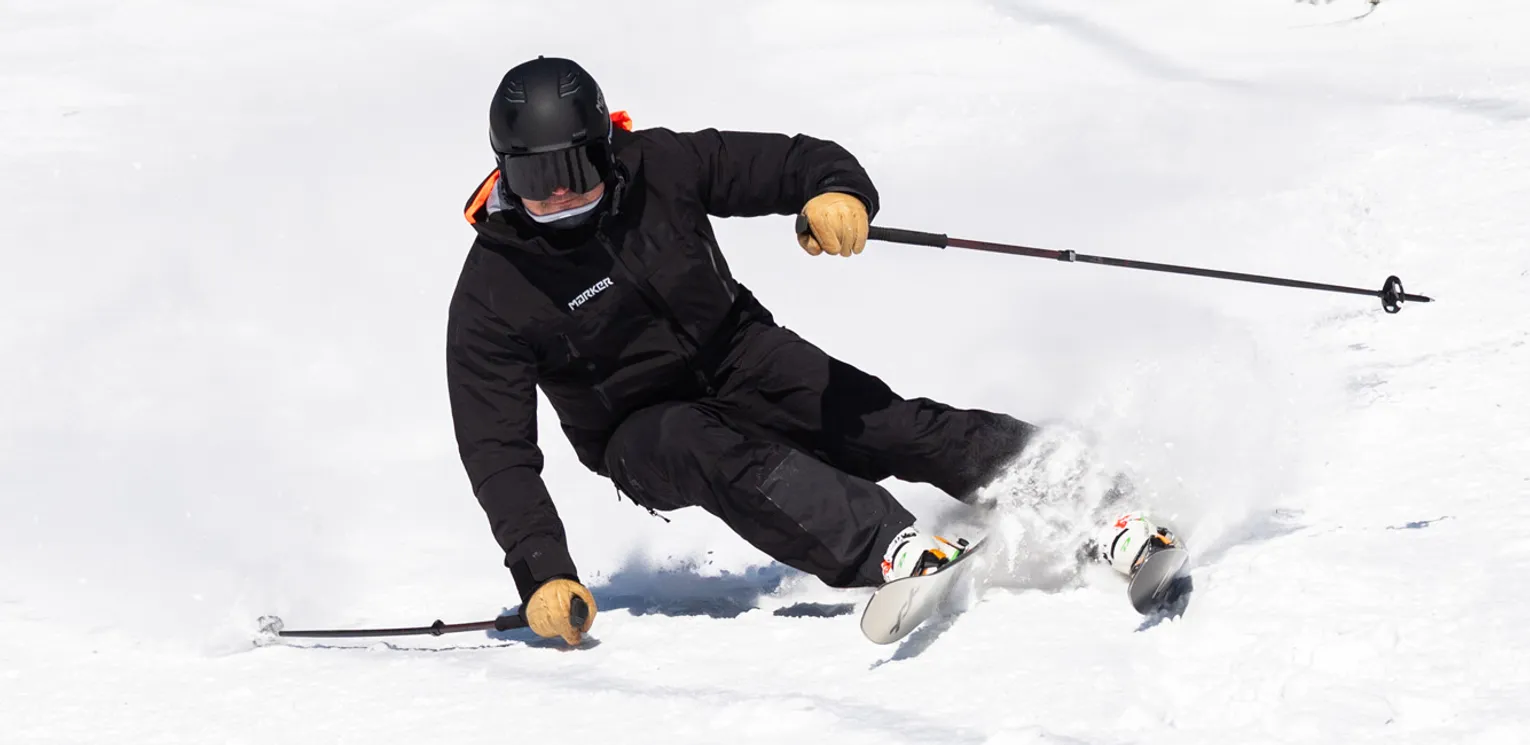
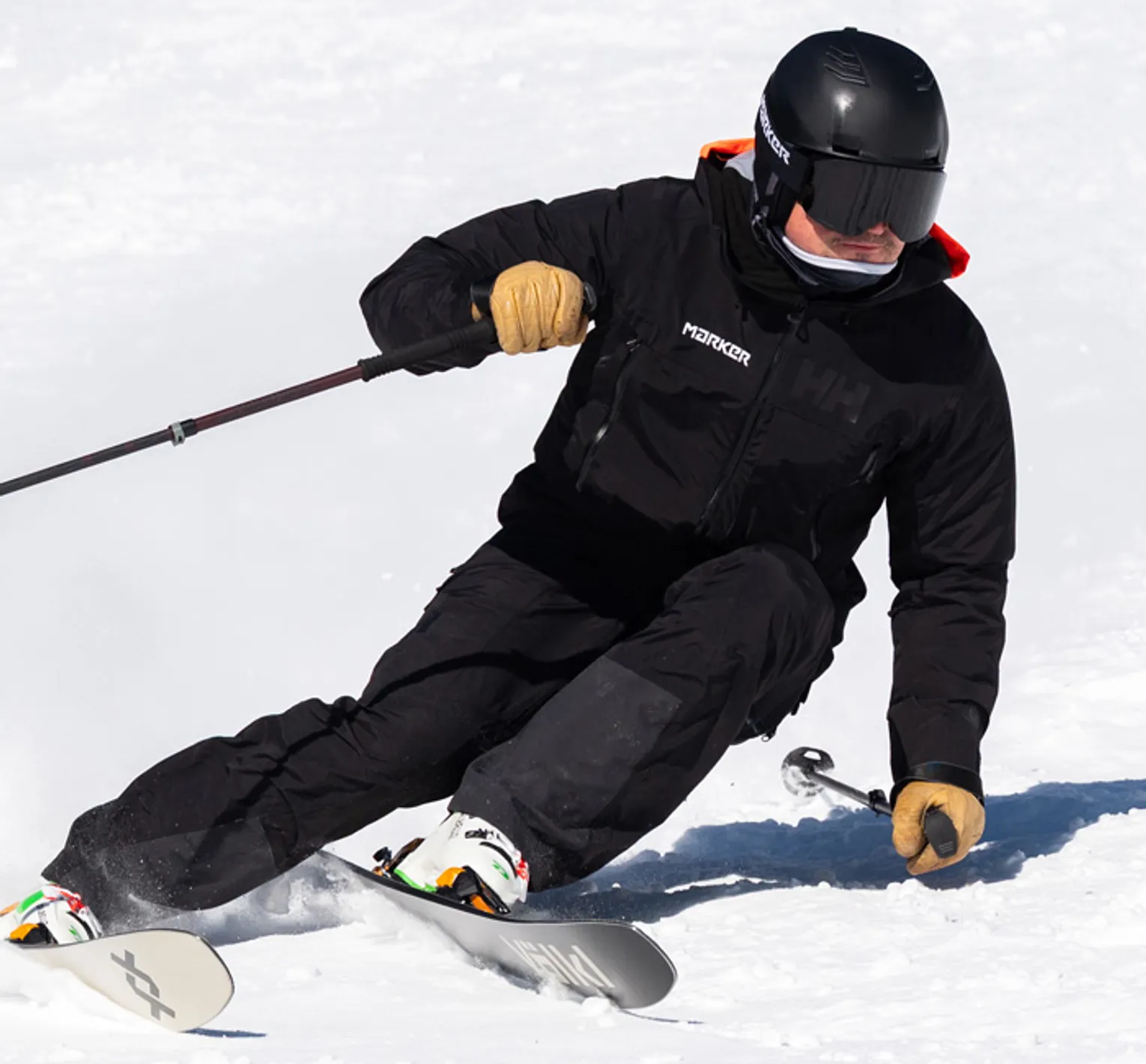
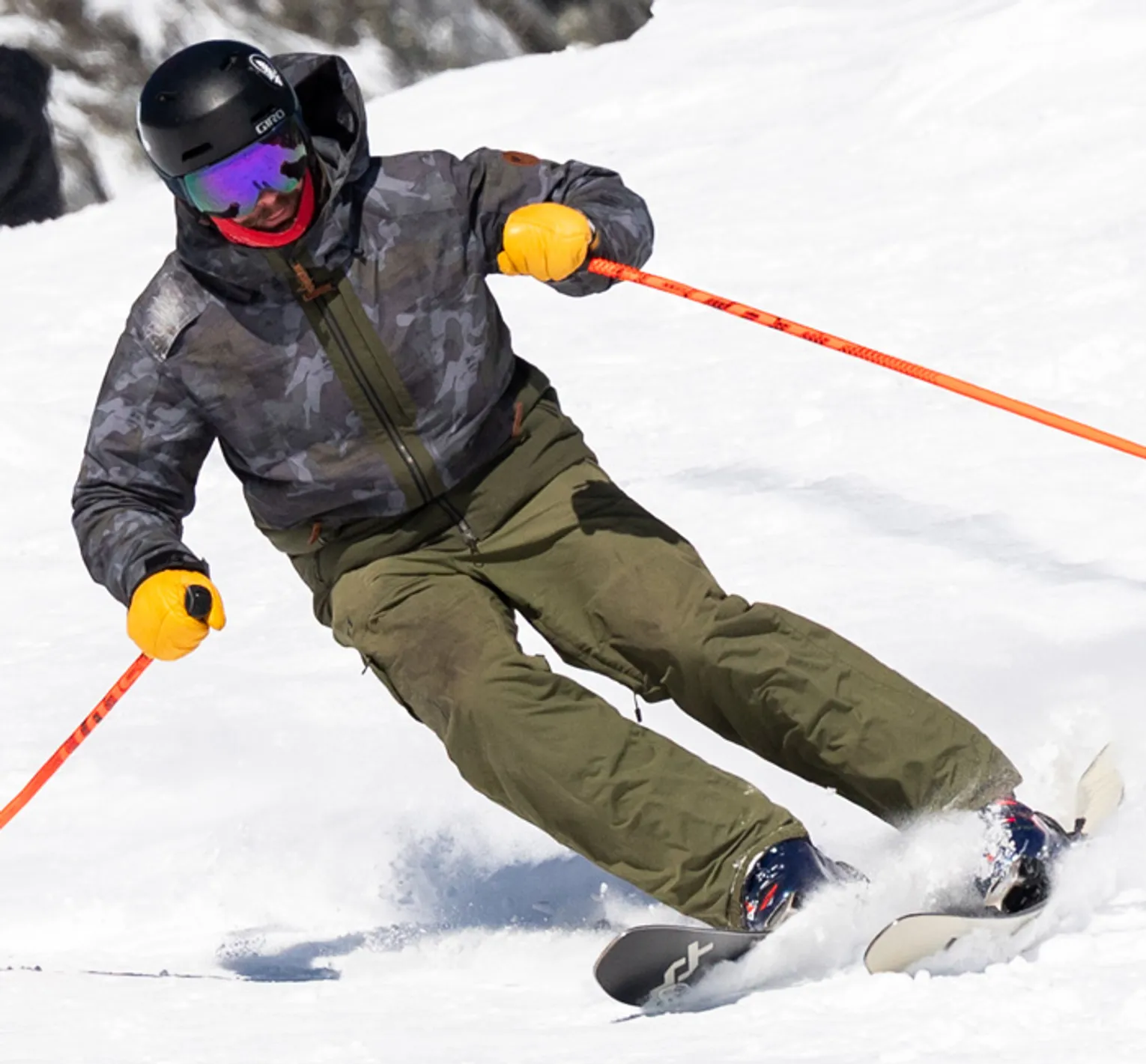
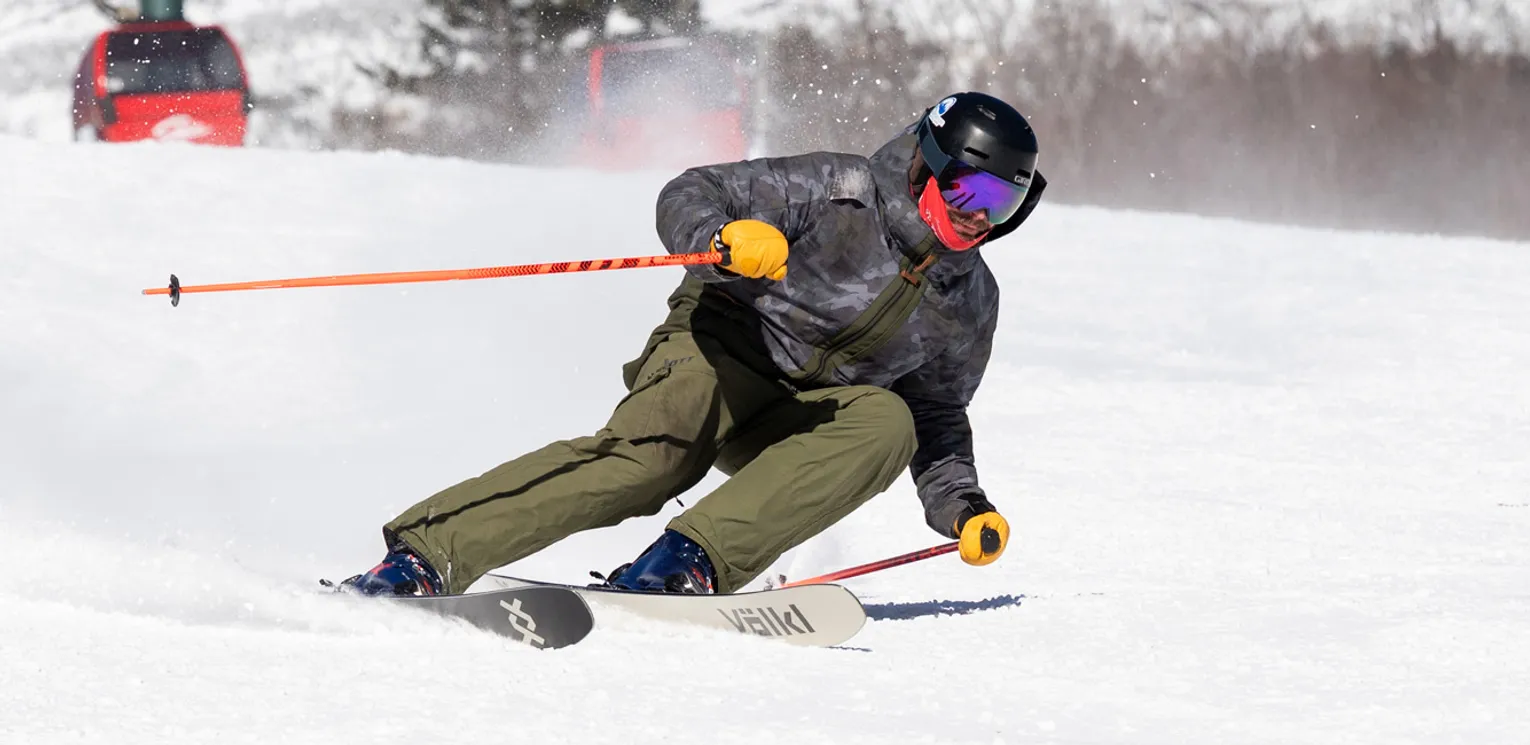
Turns out, it works just fine. On-trail, this ski holds an edge like a dream. It’s amazing that there’s no metal here, but that’s a testament to what a thick and stiff wood core can do. Additionally, the beech along the sides holds up its end of the bargain by providing seamless transitions and power to the edges. I’m not exactly sure what ski would beat this 101 when it comes to non-metal, 100mm+ skis in terms of carving, it’s simply got its own category here. In longer turns, you can stand on this ski with full confidence at any speed. It transforms intermediate groomed runs into fun and exciting trails. It makes steep and icy pitches feel mellow and totally approachable. It puts you 100% in the driver's seat with total and complete control. When you want to shorten the turns, the weight puts up a bit of a fight, but the rocker balances it out. I found it to be super-easy and engaging in short swing turns, both carved and skidded, especially in the 182. No need to go longer here to the 189 unless your competition ski is the Revolt 114 in the 191. At 6’2” and 225 lbs, I even had a great time on the 175. Basically, and briefly, this Revolt 101 rips carved turns on any smooth surface.
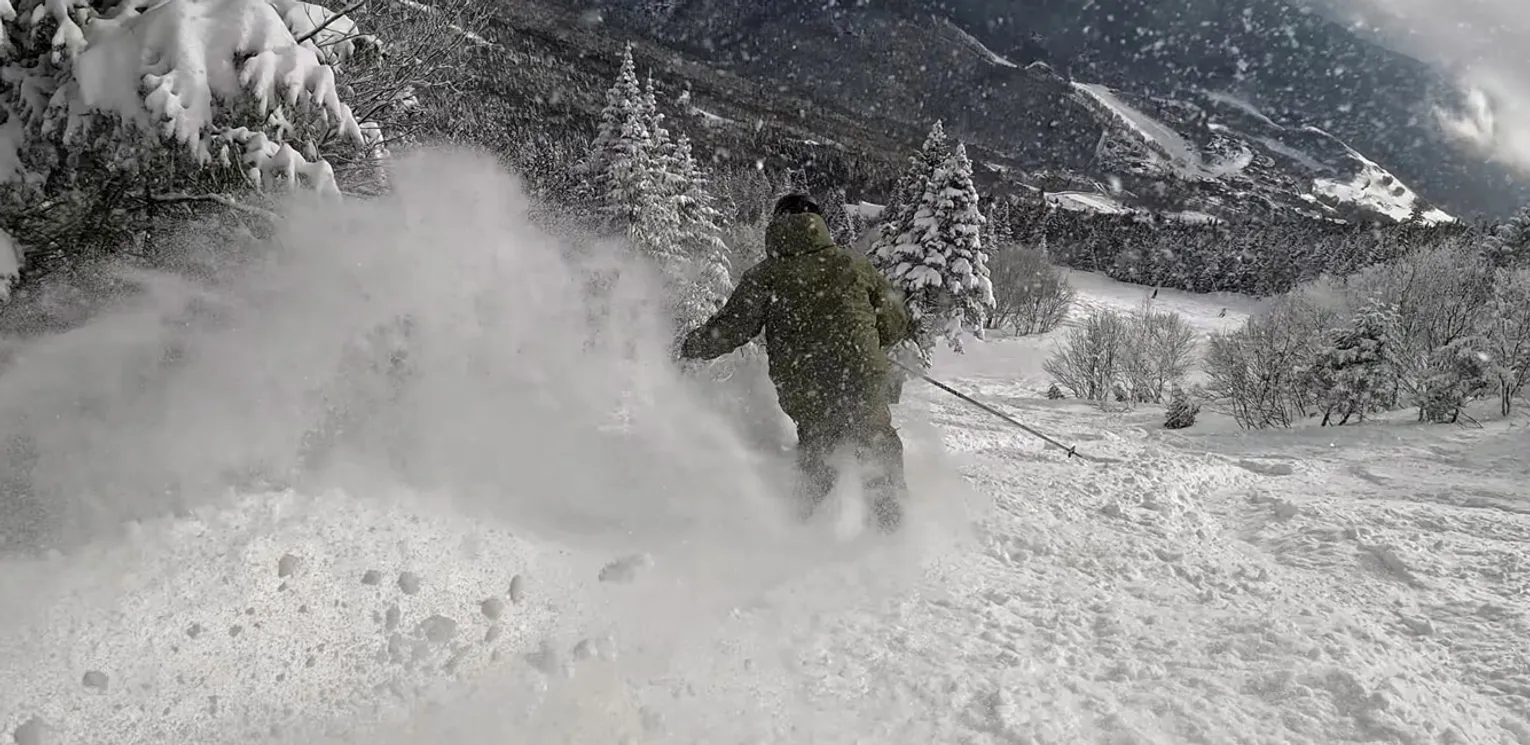
Off-trail, and in softer snow, the Revolt 101 has many of the same unflinching characteristics of the Mantra 102. The ski doesn’t really care what’s underneath it due to the thickness of the core. The wood acts as a buffer, or insulation, as to the sub-surface, allowing it to simply motor over and through anything in front of it. Where we found the biggest limitation was in its lack of playfulness in trees and deeper snow. The stiffness of the flex was the main factor here as it prohibited smearier and surfier characteristics from showing up easily. This is where a ski like the K2 Reckoner 102, Atomic Bent 100, or Armada ARV 100 separate themselves from the Revolt 101, but it’s mainly in the ease of use rather than a top end potential. If you’re driven and aggressive, there’s no reason you can’t get the Revolt 101 to surf, it just takes more work versus the other skis that are just so darn easy to throw sideways and then get them right back. There’s also not a whole lot of creativity here, as the Revolt 101 does not contain twin tip playfulness or willingness to be used in stunts and tricks. That’s what Revolts 96 and 104 are for. This 101 is totally different and much more amenable to ripping high-speed carves through, over, and around any type of snow.
I’m still not sure who’s going to buy this thing. If I never hopped on it, I’d have no idea just how darn good and special it is. It just doesn’t seem like it’s going to have a big following, and that’s a shame. It’s one of the most interesting, intriguing, and satisfying skis I’ve been on in years, but I still can’t quite put my finger on exactly why. The hope is that it doesn’t get lost in a crowded field of metal-clad 100 mm skis like Nordica Enforcer 99 or Blizzard Anomaly 102, or in more playful twins like Line Chronic 101 or Elan Playmaker 101. The reality is that the Revolt 101 is a one of one ski with little to no competition. This means that strong and power-seeking skiers are going to look a little harder to find it. When they do, it’s going to be an instant connection. For the most part, any skier we’ve talked to that has skied the Revolt 101 has had the same reaction—what is this and can I please never stop skiing it.