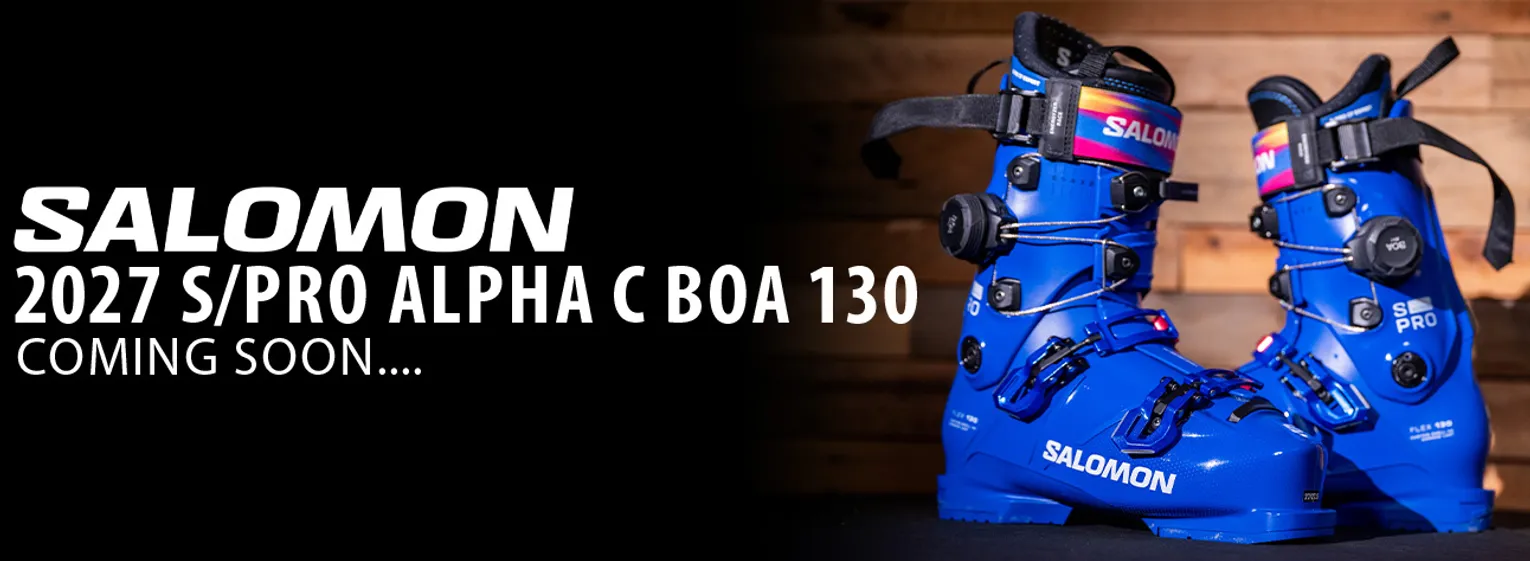
2027 Salomon S/Pro Alpha C Boa 130 Introduction & First Impressions
New for 2027, the Salomon S/Pro Alpha C BOA 130 is a unique boot that takes a variety of modern boot technologies and mashes them all together. It’s not often that we see a totally different way of building ski boots, and this S/Pro Alpha C BOA 130 is sure turning things around. Most notably, and more on this later, they’ve completely done away with the medial ankle hinge in favor of a lower connection point. We saw some of this when Lange introduced the Shadow a few years ago, insofar as the boot used multiple hinge points as part of a suspension system. The Salomon, though, leans into reinforcing the lower point of contact by adding more plastic and a metallic anchor to fully solidify the medial plane of the boot. This required some fancy footwork in terms of how the overlap interacts, as it’s far from a traditional looking boot. Add an upper BOA closure system (hence the C(cuff) BOA in the name) and slam it all in a low-volume fit, and it’ll be very interesting to see what type of traction this boot creates at the performance level.
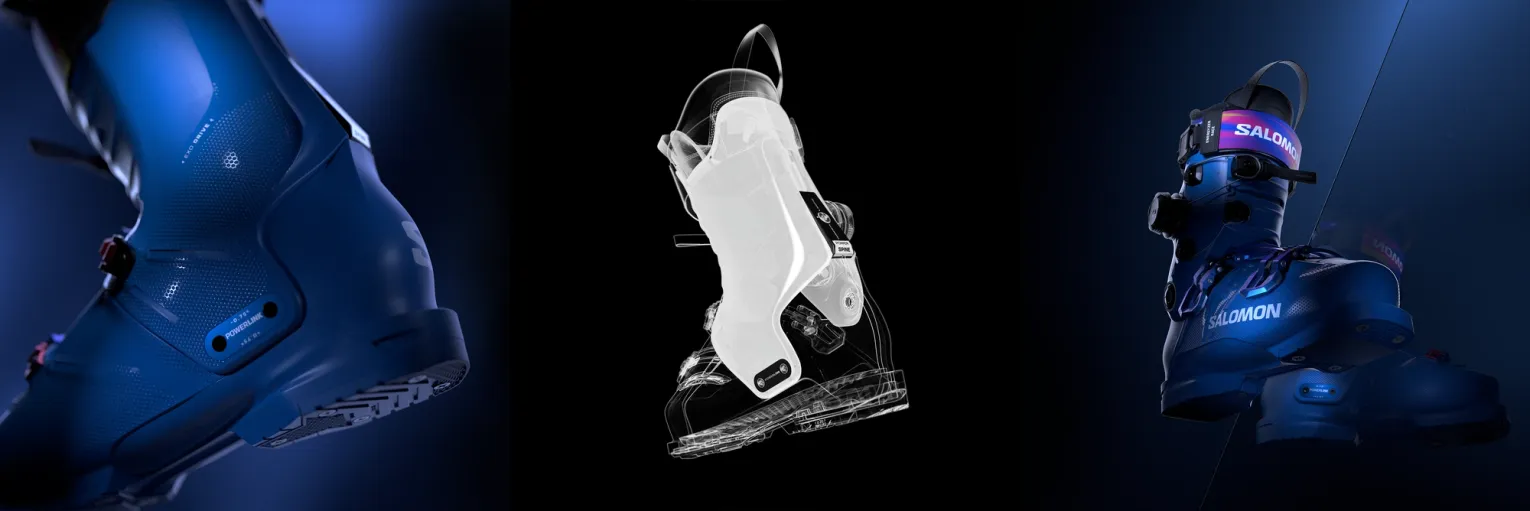
Starting with the shell, we get full polyurethane Custom Shell HD material to fully envelop the foot, ankle, and lower leg in an interesting blend of shell and cuff. Amazingly, this is still a two-piece boot, but when you open up the throat of the boot, it sure looks like there is more going on. At this point, it feels cohesive and harmonized, but it certainly appears that a great deal of engineering went into it, including a softer piece of plastic near the overlap that helps connect the Exodrive to the shell. And that Exodrive is the main driving force behind all of this technology. Salomon describes it as a “3rd cuff overlap” and it makes sense when you open it all up, but from the outside, it looks relatively normal outside the lack of ankle hinge. By eliminating that hinge, though, they increase the amount of power that can be transferred from your foot to the ski edge by taking out the part that deforms (the hinge). Now, the plastic itself has to deform in order for the boot to flex, and this takes a lot more pressure on the part of the skier. This results in a reduced friction of distance from your foot to the ski. The Exodrive is connected to the shell through a Powerlink piece which reinforces the system by linking the cuff and shell. This metallic piece can be flipped to adjust the cuff alignment, so even without an ankle hinge, you can still align the lower leg to the cuff of the boot. This makes sense from a symmetry standpoint, similar to how Elan builds their skis with asymmetry. Why not have the medial side provide more power than the lateral side?
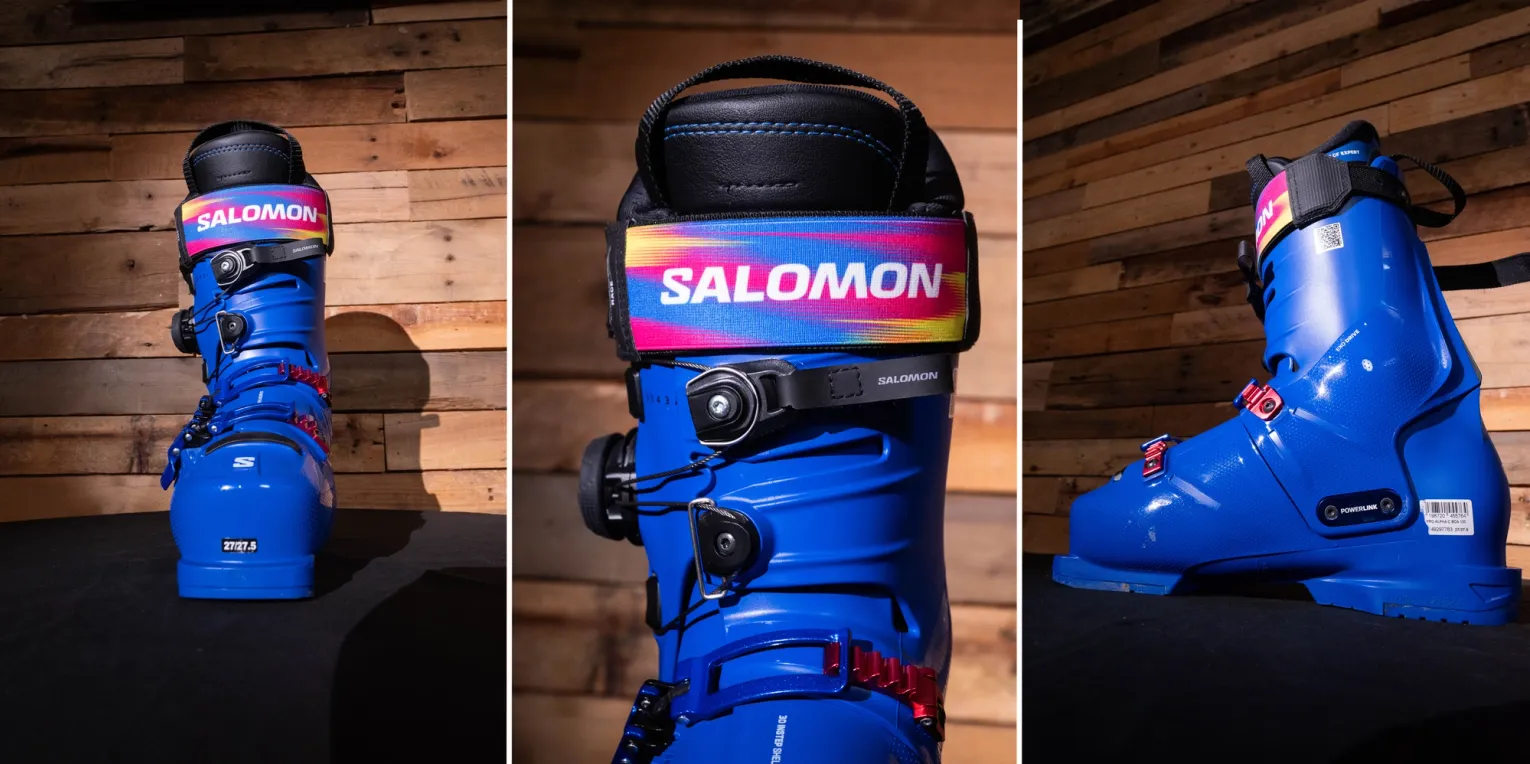
Rounding out the harder parts of the boot, we also get an upper cuff BOA closure system which is starting to solidify its use as a performance enhancer up top, while lower BOA has found itself more in the fit and comfort realm. Here, we get two lower buckles, with the instep buckle connecting the Exodrive aspect of the cuff to the clog of the boot. At the top of the shell, there’s a built-in 6 mm spoiler with an additional 4 mm piece in the box. Salomon uses their 50 mm race inspired power strap to lock the leg to the tongue of the boot. These boots fit snug to the foot, with a 98 mm last and a low volume fit. There’s a bit of room over the instep but not much, while the ankle and heel hold is quite tight and secure. It is slightly tighter than competitors low-volume offerings. The liner is a lot more traditional than the plastic, and it certainly keeps in line with Salomon’s other boots. We get a S/Pro CF Expert liner, which is fully moldable. The liner features Salomon’s Custom Tongue 2 for added customization and instep comfort. This tongue also features a rubber layer which keeps any type of shin pressure or pain at bay.
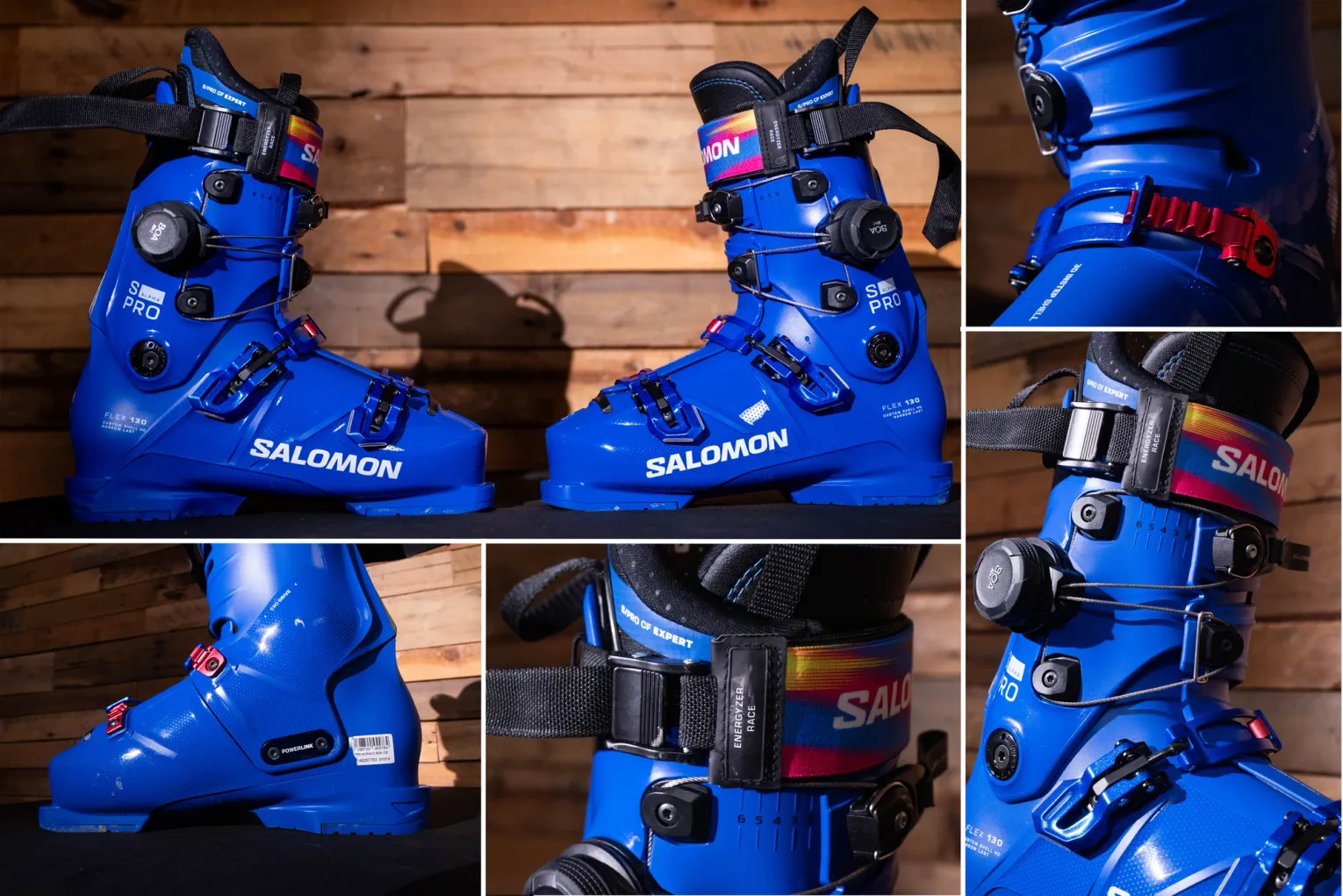
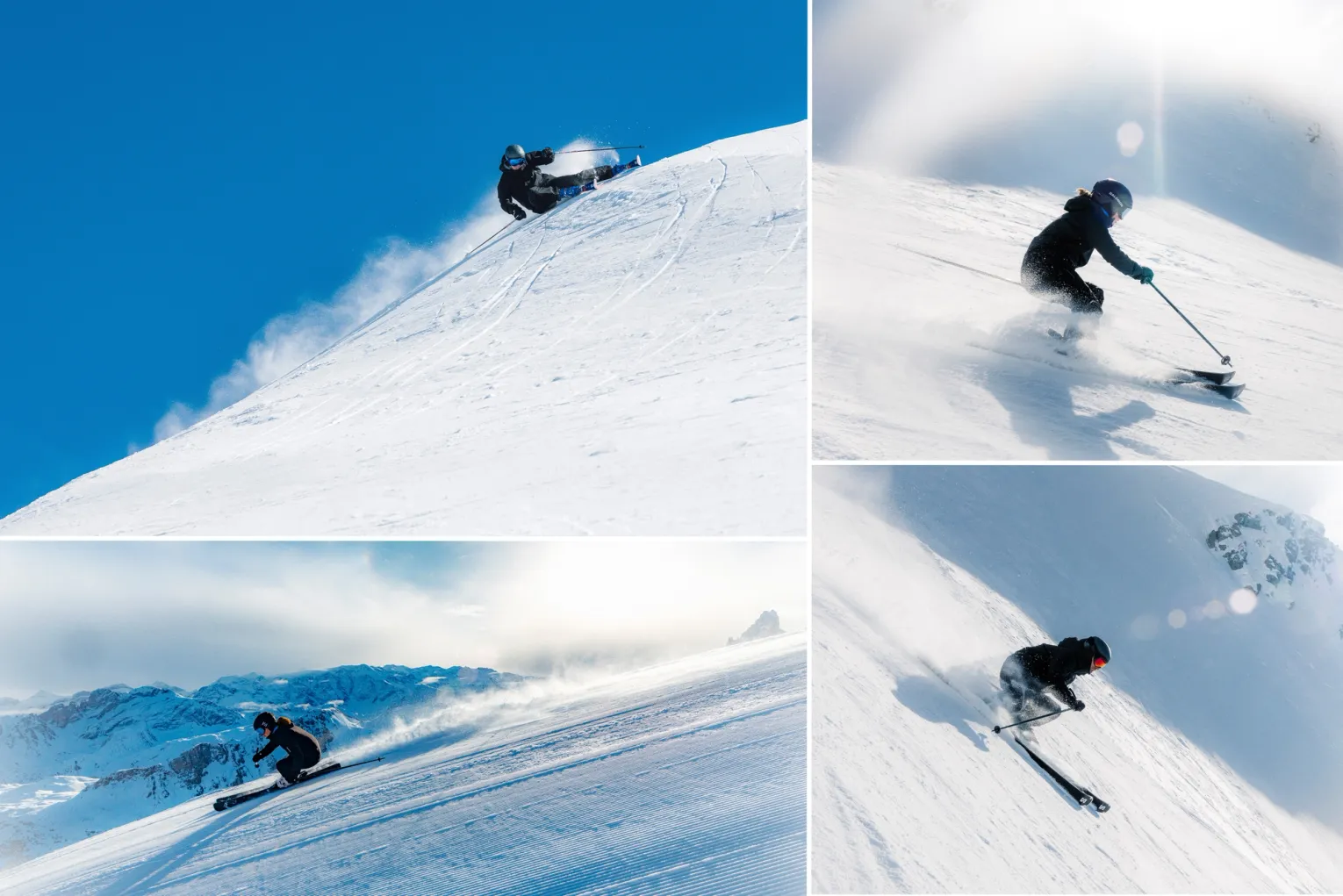
On snow, so far, two days in, and I have been very impressed. We talk a lot about Stockli skis and how they are deadly silent and smooth, and I feel kind of the same about these boots. With no hinge point, you’re truly compressing the plastic to generate power. This delivers a quiet and composed flex—different than almost anything else out there. Since the deformation of the plastic mainly happens on the inside of the boot, and therefore the inside edge of the ski, the connection is very direct. Since the medial spine of the boot seems to have more emphasis on it, the rear spine isn’t as noticeable. Further, it’s not a dual rivet connection, rather a one screw dial that can shift between progressive and reactive. Even in reactive mode, it’s not the most peppy or energetic boot, especially when compared to the Tecnica Mach 1 130 LV. You do get more of a sturdy and predictable feel out of the S/Pro Alpha rather than a light and zippy one. These are stiff boots! It’s a totally different fore/aft flex pattern and something that skiers will have to get used to a bit. Additionally, these are some of the snugger LV’s out there, but mostly in a good way. My ankle and heel are NOT moving, and that triple overlap is a big part of that equation. In bumps or trees, so far, there has been ZERO heel movement even when skiing aggressively and pressuring the front of the boot.
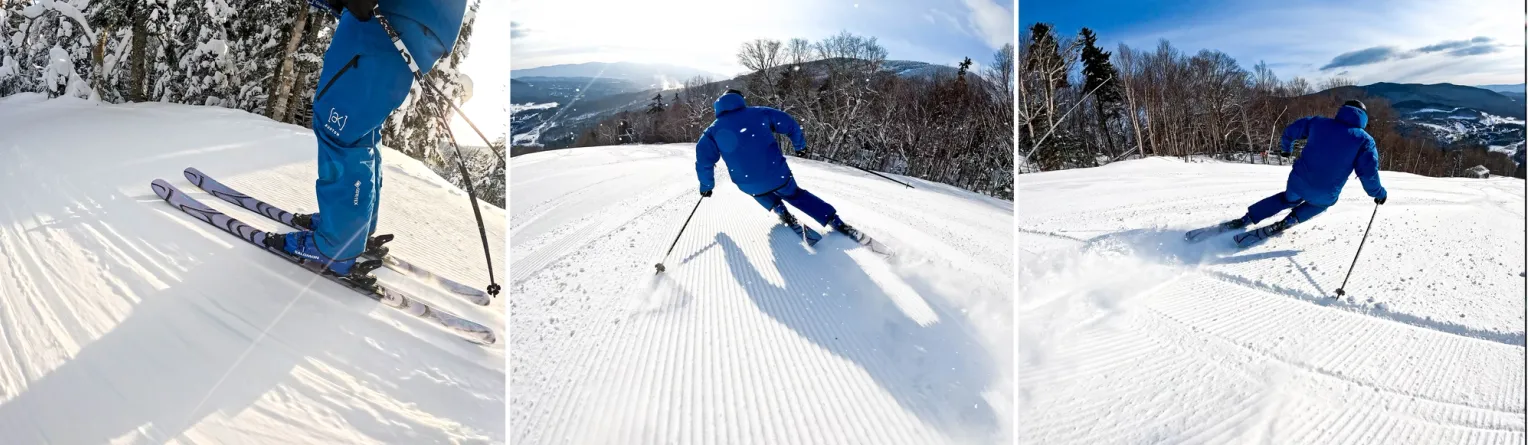

We’ll be interested to see how this boot plays out on the shelves at boot shops. There is some education to be disseminated. It’s not apparent, especially if the medial side of the boot is facing the wall, that there is a major performance and character difference in these boots. Fitters and retailers will have to do a bit of work to get the word out there. Again, as with any boot talk, fit is everything, and if this boot just doesn’t fit, then it’s a moot point. If it does fit, though, it’s certainly worth the discussion of how this new technology feels on snow and how it affects performance.