2027 Tecnica Zero G Decoy Pro Ski Boot Review
I first found out about this new Tecnica Zero G Decoy Pro in a conference room at Burke Mountain back in October. At the time, I was mostly distracted by the new Blizzard Canvas skis that were also a main focus of the meeting. Oh, and the new Mach BOA MV 130 Dual… that thing also had my attention. After all, I’ve never really been a Zero G skier. Technically, I have owned a pair of Zero G 95 skis, but realistically they didn’t get much use. I personally am much more of a downhill skier than an uphill skier. I don’t dislike ski touring, but I certainly prefer taking laps off a chairlift. Weeks and months went by and there was more talk surrounding this Zero G Decoy Pro. I still found I was having a hard time getting excited about it as a product. It was interesting, don’t get me wrong, but it didn’t really speak to me. That all changed when I flipped through a Tecnica catalog and saw their first description of the boot in big bold letters. “The Uphill Boot For Downhill Skiers.” Hey, that’s me! I’m a downhill skier! For the first time, it had my attention.
To get some of the basics out of the way, this new Zero G Decoy Pro is another hybrid alpine/touring boot. That has become a popular and important product category over recent years. Skiers want reasonably good downhill performance and they also want the ability to go uphill with the same boot. There are, of course, always going to be sacrifices when you’re seeking out this mix of performance in a single product, and we’ll touch on that again later in this article, but there’s been a lot of focus and development from different manufacturers in an attempt to minimize that sacrifice. Most of that development, at least from my perspective, has started with an alpine boot. Take a high performing alpine boot and figure out how to put an efficient walk mode on it. In my opinion, there are seemingly endless hybrid boots that follow this method. The Zero G Decoy Pro feels like it follows a slightly different model. Essentially, Tecnica started with the Zero G Tour Pro, a pure touring boot, and built it up to have better downhill performance. It’s hard for me to think of another brand that has used this approach to developing a hybrid boot off the top of my head.
Before we get into the details, I think the reason for its existence is important here. To start, looking at Tecnica’s existing options for touring boots, you had Cochise, Zero G Tour, and Zero G Peak. The Cochise is an excellent boot, but among these hybrid boots, it has always been one of the heaviest on the market. Zero G Tour and Peak are both good products, but they all use touring soles, which eliminates the potential for an alpine bindings and squarely takes them out of the “hybrid” category, if their weight didn’t already to that. In other words, Tecnica kind of didn’t even have a hybrid touring boot. Yes, they’ve had the Cochise, but I think most skiers would agree that its downhill performance has always significantly exceeded its uphill performance. With these existing options, it left some Blizzard/Tecnica athletes feeling like they didn’t have the ideal product for what they wanted to do. During the development of the new Canvas line, this became quite prevalent. Athletes wanted a true backcountry freeride boot. They wanted something that was efficient uphill, but could handle backcountry jumps and rowdy skiing. While you can hit a backcountry jump with a Cochise on your feet just fine, athletes wanted something lighter with better range of motion. Previously, a lot of these athletes had been customizing their Zero G Tour with different liners and other tweaks to achieve the performance they were looking for.
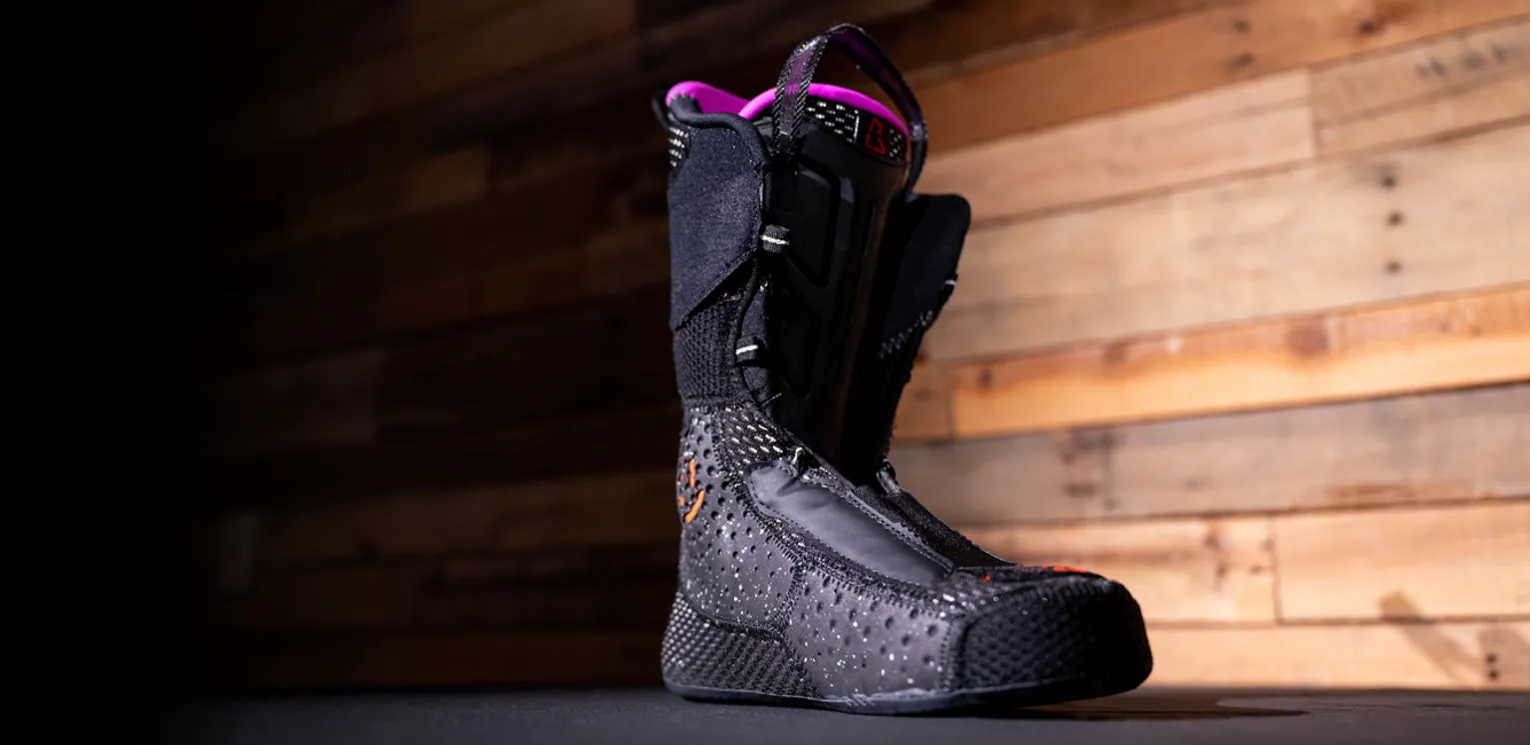
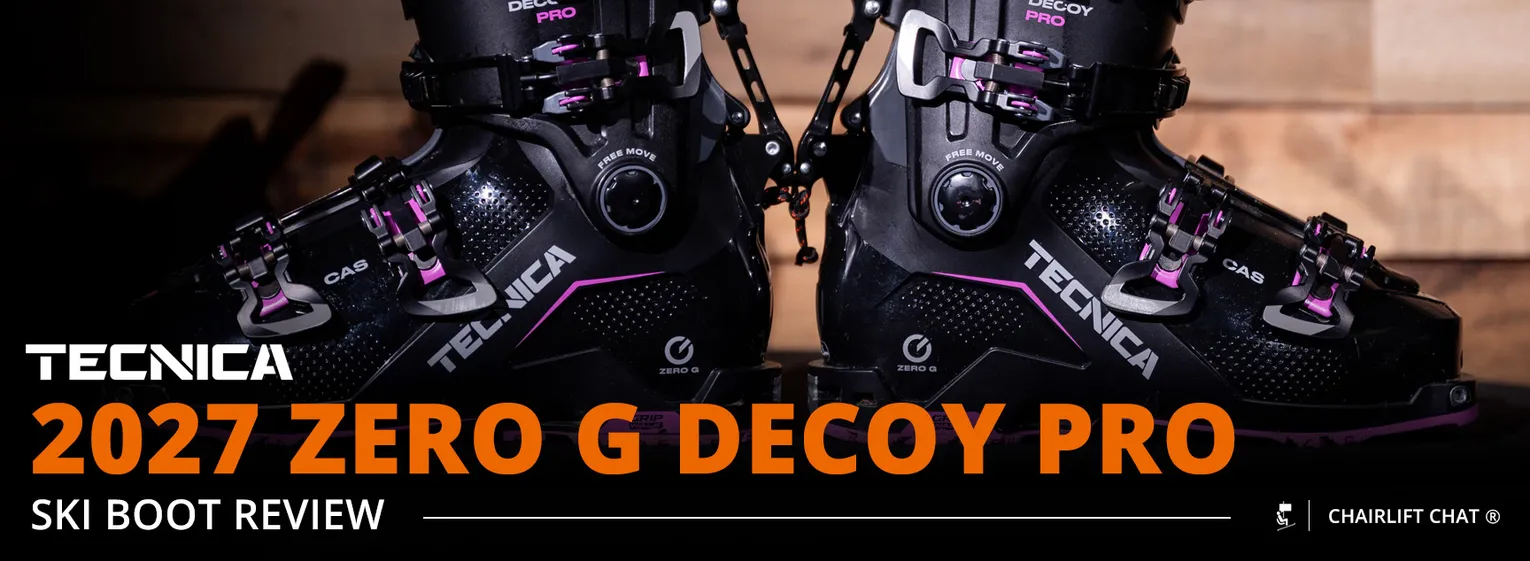
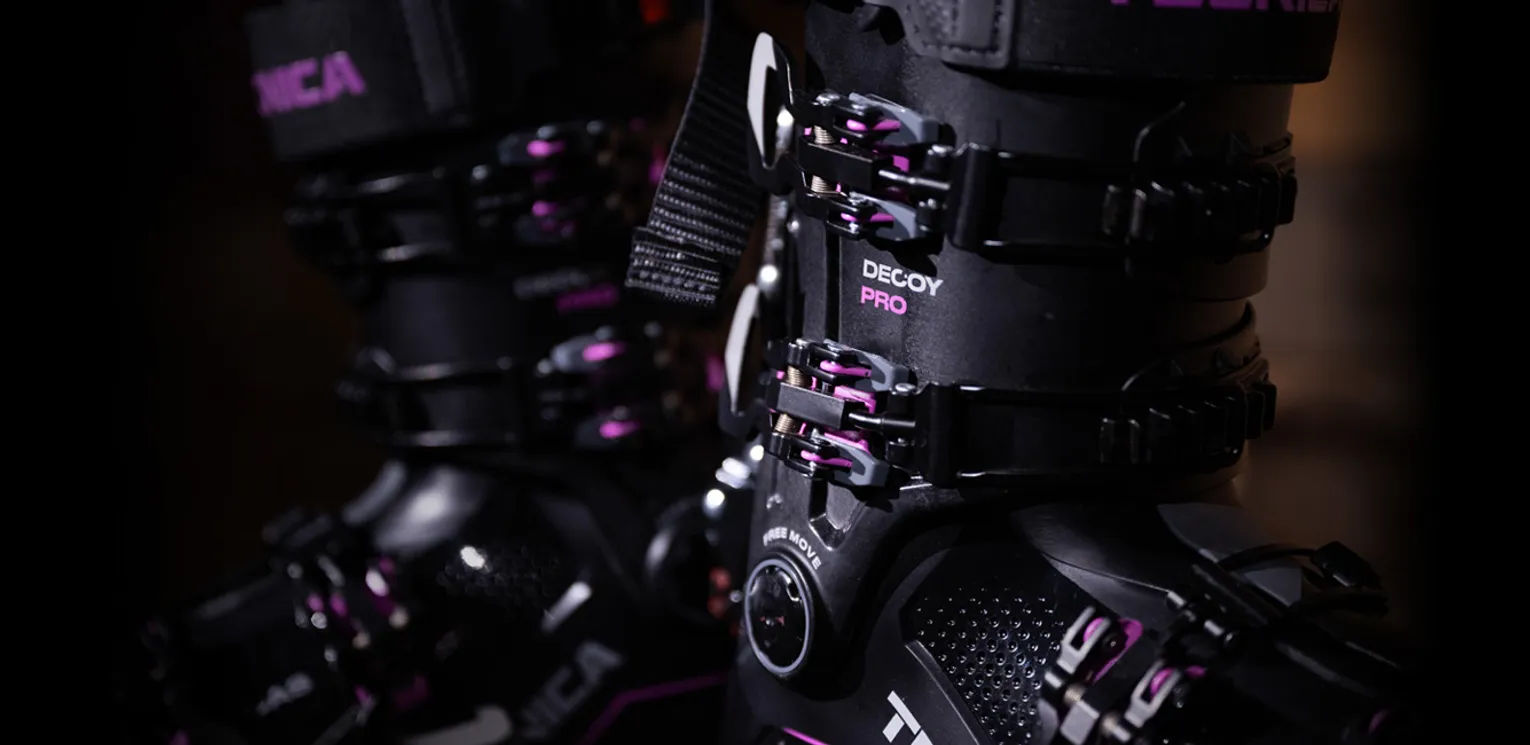
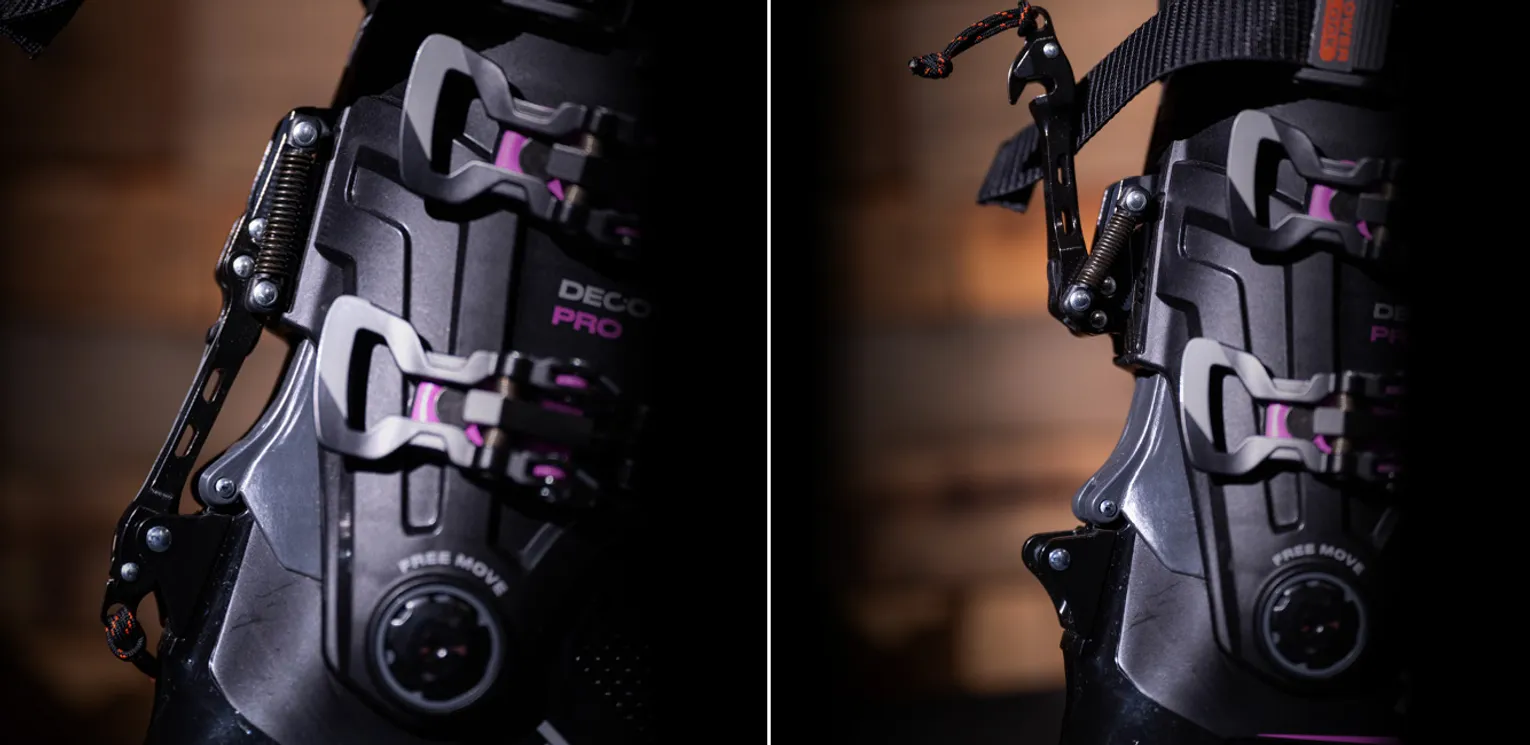
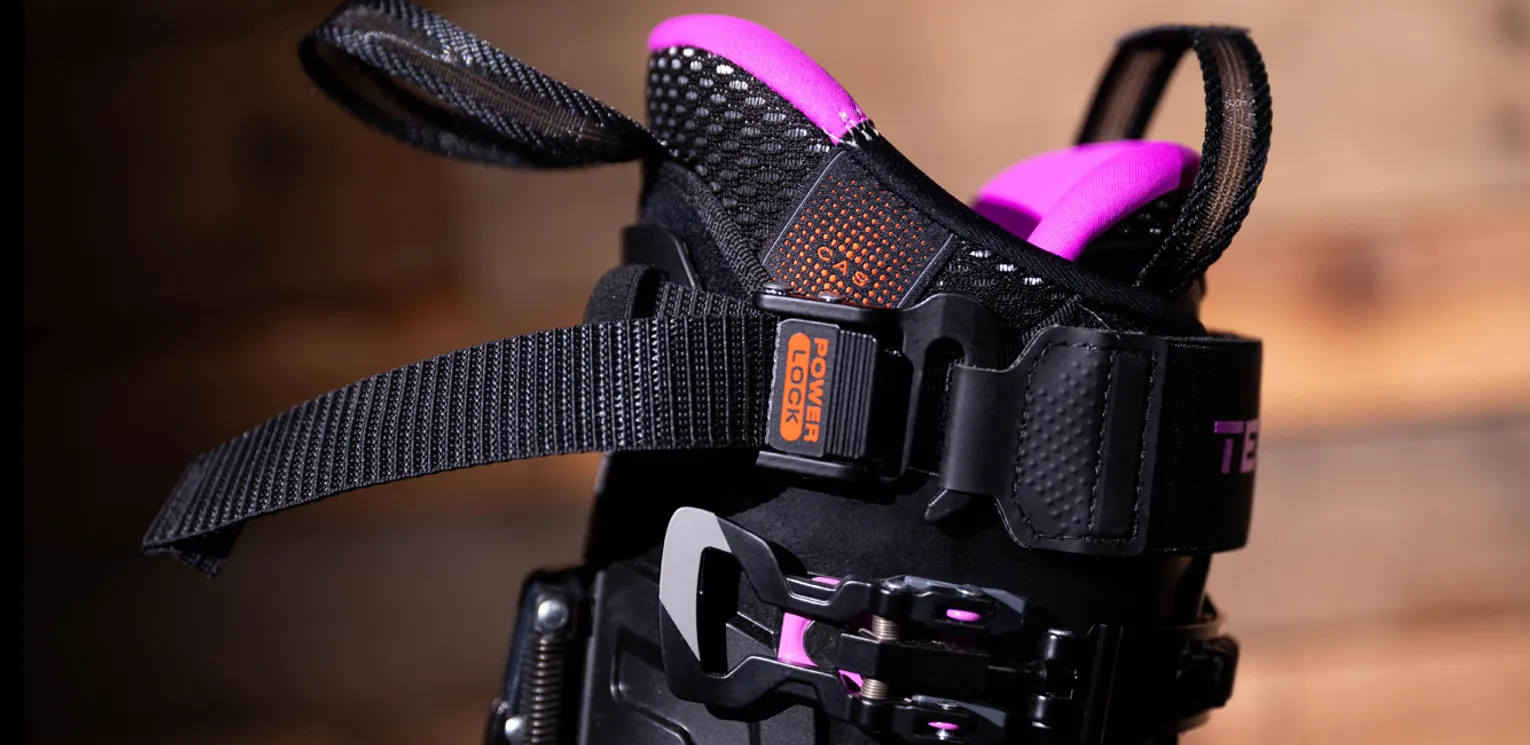
It’s fair to say that the Zero G Decoy Pro is an athlete-driven product that’s relatively specialized. I don’t think it’s a boot for everyone and realistically, the market is probably pretty small compared to the total ski boot market. That said, for those looking for the particular features and elements it provides, it’s a really cool product. Essentially, Tecnica took the Zero G Tour and figured out how to make the lower shell out of PU rather than Grilamid, gave it GripWalk soles, stronger buckles, more of an alpine-style liner, and slightly different upper cuff materials. It looks more like a touring boot than any other hybrid boot I can think of and that’s all because it’s actually based on a touring boot. There are some interesting stats to look at too. The total weight of the Zero G Decoy Pro (in a 26.5) is 1715 g. The shell weight is 1315 g. The total weight of a Zero G Tour Pro is 1285 g and the shell weight is 1045 g. While the Decoy Pro is significantly heavier, a lot of that difference is in the liner. Because it’s based off a touring boot, it has impressive range of motion when in walk mode, and I think this is where things start to get very interesting. The Zero G Decoy Pro boasts 65 degrees of motion.
At a Glance:
2027 Tecnica Zero G Decoy Pro Ski Boots
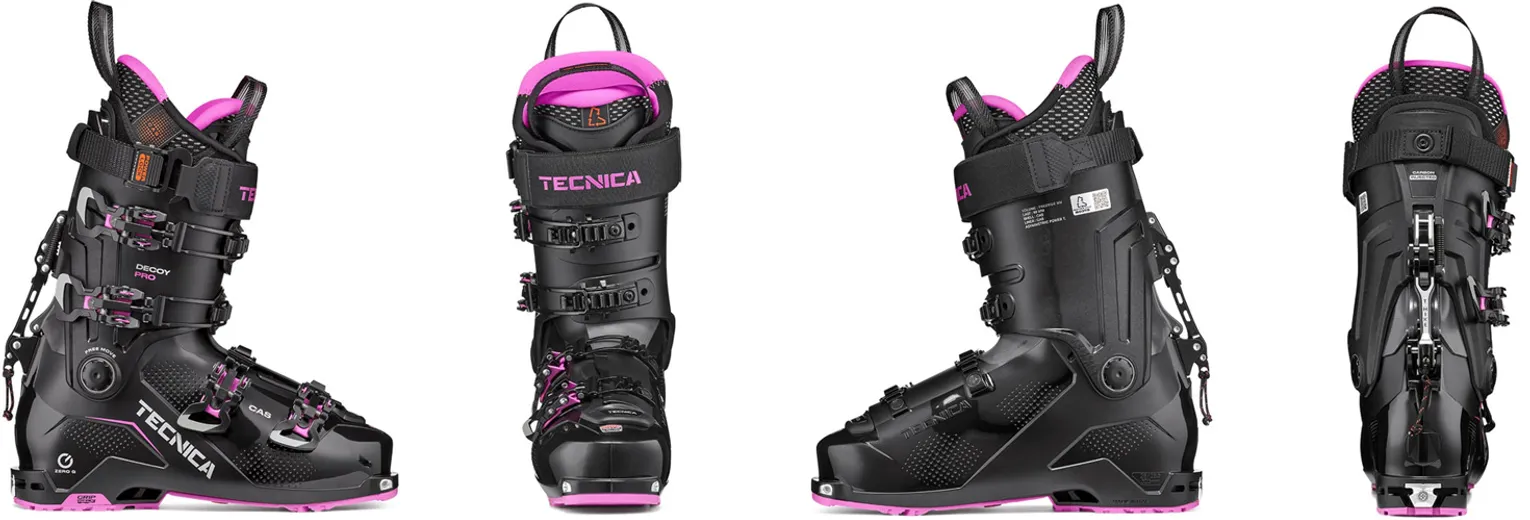
| FLEX INDEX | LAST WIDTH | RANGE OF MOTION | WEIGHT | PRICE |
|---|---|---|---|---|
| 130 | 99 MM | 65° | 1,715 g @ 26.5 | $999.99 |
This number is important when we start looking at this boot among the hybrid touring options in the market and why you might choose it over other products. You have to consider several variables to understand how it compares, and range of motion is certainly one of those variables. If you were to just focus on weight, there’s not much that’s different or special about the Zero G Decoy Pro. I’m going to use two boots that I’ve had personal success with as examples: the Atomic Hawx Ultra XTD 130 BOA and the Salomon Shift Alpha S BOA 130. The Atomic comes in at 1860 g, which is actually closer to the weight of a Cochise. The Shift, however, is closer to the Decoy Pro weight at 1785 g. If you were to just look at these weight figures, you might think these boots are all quite similar. That range of motion is where, in my opinion, the Tecnica starts to separate itself from other options. Remember the 65 degrees of range of motion? The Atomic has 54 degrees and the Salomon has 55 degrees, almost a direct match to the Cochise, which is also at 55 degrees.
Those figures, in my opinion, are an excellent indication of what this product is trying to be. Talking to Tecnica, I asked how they would state the percentages for use. If we’re to say a Cochise is a 70/30 alpine/touring ratio, would a Zero G Decoy Pro be 30/70? Tecnica’s answer was that they think of it more as a 50/50 boot, and that feels pretty accurate to me, but it would be easy to ignore what that really means. Do most people who own hybrid touring boots actually use them in a true 50/50 split? I would say no. Most skiers lean more towards alpine use than they do actual touring. As we’ve established, there are lots of great options for those skiers, including the Tecnica Cochise. This Zero G Decoy Pro truly feels like a 50/50 boot. That’s serious commitment as a skier and makes total sense why this product was born from athlete demands. That’s a lot of time in the backcountry, but I genuinely think it’s the best way to think about this boot.
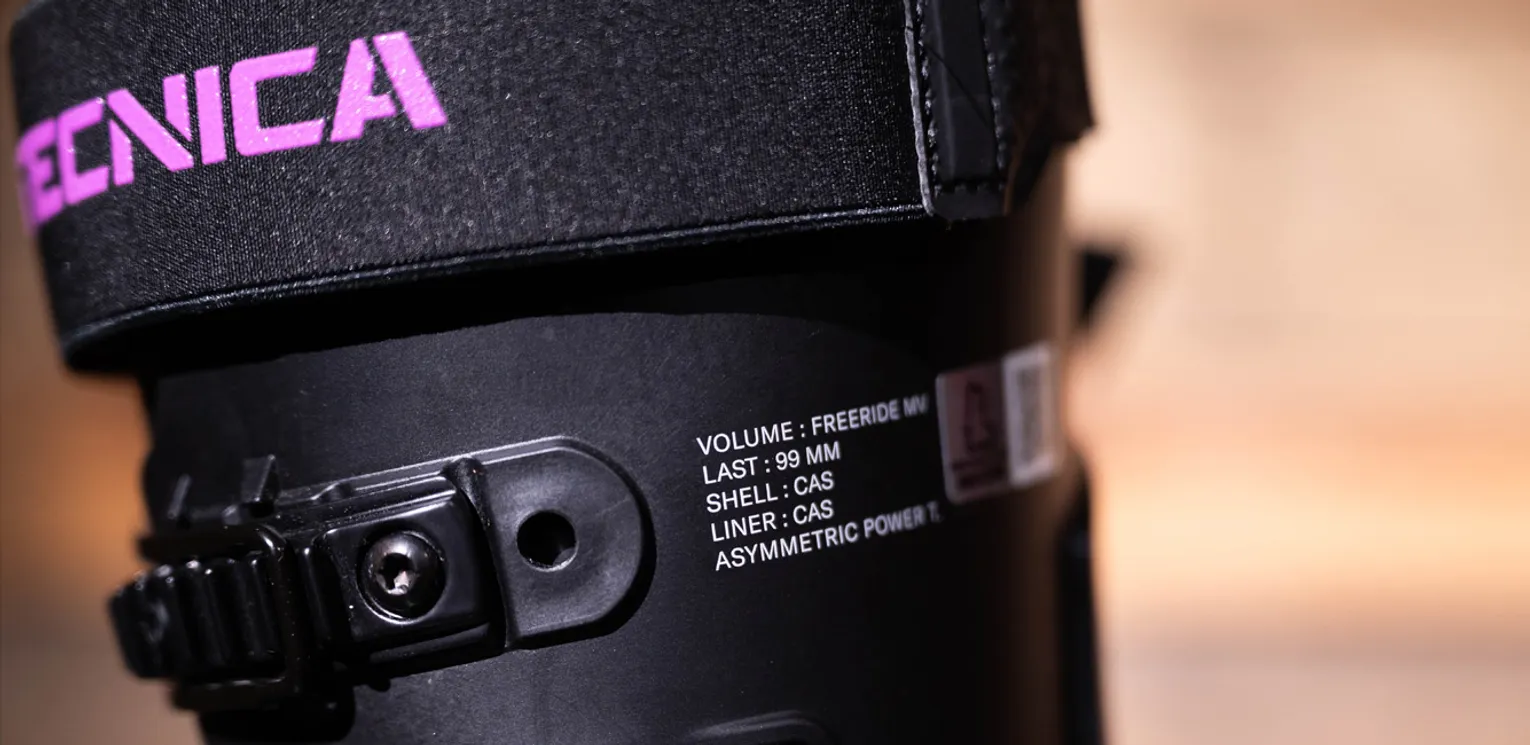
Concepts aside, what do they actually feel like? To start, I was pretty impressed with the fit right out of the box. It’s a 99 mm last and I generally land right around that metric for my personal boots. Tecnica uses their C.A.S. (Custom Adaptive Shape) technology in both the shell and liner. In other words, it’s heat moldable and also easier for a boot fitter to grind the shell. I do find this technology makes them feel tight in certain spots, until you mold them, particularly the liner. It’s relatively thick by design, which allows you to create ergonomic pockets where you need them, but until you do, there can be some uncomfortable spots. For me, that happened right in the forefoot, which required some molding of the liner. The wrap around your shin and lower leg is excellent, but I do find them surprisingly roomy through the ankle and over the instep. I think if you’re going to be spending a lot of time in this boot, you should plan on taking some time to dial in the fit. Some molding of the liner, maybe a shim if you’re like me and feel a bit roomy in the ankle, stuff like that will go a long way for a lot of skiers.
From my experience in it thus far, it absolutely excels on the ascents. Remember, I’m a downhill skier. 65 degrees of cuff motion is so much better than basically anything I’ve ever experienced because I’ve never wanted to actually own a true touring boot. Going uphill in the Zero G Decoy Pro, to me, feels effortless. It’s a great boot for exploring, hands down. On the descents, I don’t think it skis as well as a Cochise. I don’t think it skis as well as that Hawx Ultra XTD, and I also don’t think it skis quite as well as the Salomon I’ve used. I also don’t think that’s a bad thing because it offers such improved performance for the uphill. If you’re going to spend a lot of time in the resort and you’re looking to drive a lot of power to your skis, I do think there are better options. If you’re going to spend a lot of your time in the backcountry, however, I think this boot provides significant benefits and when you’re removing a significant portion of that resort skiing, things like power transfer become far less important.
If you’re skinning up to build and hit a backcountry jump, for example, this boot feels like a phenomenal choice. I would feel perfectly comfortable doing that. It feels like it would pair extremely well to a Canvas with a touring binding on it. Light, fun, energetic, and creative. It does all those things quite well. Do most skiers do those things? I think it’s fair to say no. Most skiers aren’t venturing into the backcountry to build jumps. I also think it’s fair to say this boot isn’t going to be the right choice for most skiers. On the other hand, regardless of whether you hit jumps or not, I do think the other side of the story here is someone like me. I say that in regards to my general attitude towards touring. I don’t do it a lot, it’s definitely not my favorite thing to do on skis, but I do enjoy it from time to time, especially if I’m accessing unique terrain and great snow conditions. Because I don’t do it very often, I don’t want to sacrifice alpine performance in my daily driver boots. I’m not going to use a hybrid boot. In that sense, why not just get a full on touring boot like the Zero G Tour Pro? Well, I don’t really want that either. If I’m going touring, the reason I’m doing it is still to ski downhill, but having the improved uphill functionality of the Decoy Pro is certainly attractive to me, so it kind of falls into this unexpected niche of being the perfect touring boot for someone like me.
To be honest, I have a harder time talking about this boot than I do any ski review we publish or most boot reviews we publish. Not because I think it’s a bad product, not by a long shot, but because it’s relatively unique. It doesn’t feel like there’s anything quite like it on the market, but that’s only true because of relatively nuances details and differences. Are you going to stat seeing a lot of them at your local resort in the lift line? I don’t think so. I hope not, actually, because that doesn’t feel like the right use case for it, in my opinion. Will you see it sometimes? Definitely, and whenever you see one, I think it’s fair to assume that person spends a lot of time in the backcountry and has very specific demands and intentions for the products they choose.