Candide Skis: Brand Introduction & First Impressions
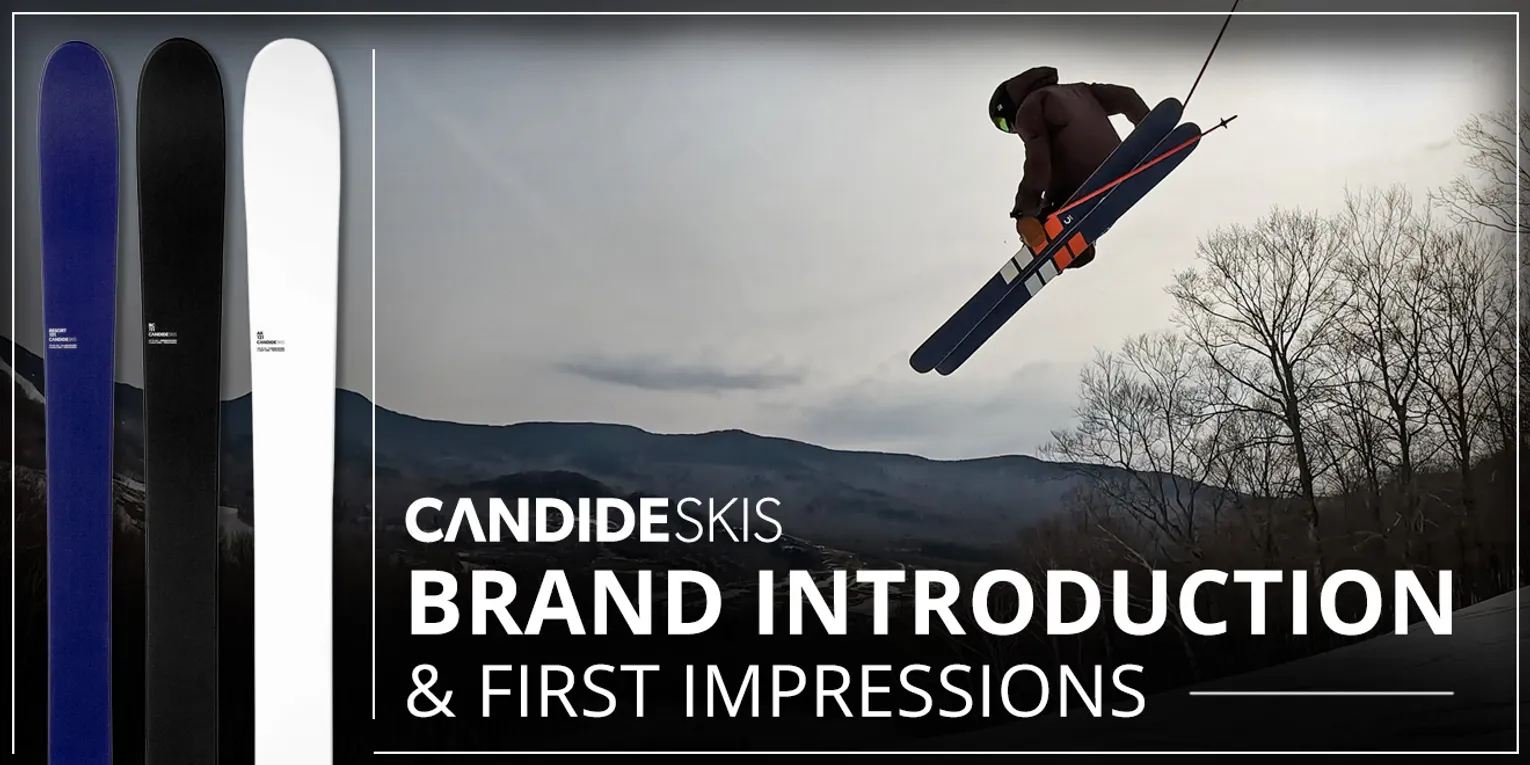
Ever since Candide Thovex ended his ski relationship with Faction, we’ve been waiting for this moment. At last, it has arrived, and we’re pleased to both introduce, as well as review, the three models offered by Candide Skis. While this article and accompanying video is primarily aimed as an overview, we will detail each ski individually and in depth as the season progresses. One of the nice things about this lineup is the simplicity. Many ski companies drown their customers and clientele in a myriad of options and choices, but Candide being Candide, this one’s for the skiers.
It's hard to imagine that moving from Candide to Mana from the Faction perspective was desirable, but they managed to keep a lot of the skier’s influence firmly rooted in the skis. That continues into 2024 for them, while Candide is able to make some tweaks and twists to create his own personal style and substance. Whereas other professional skiers have models within brands (Tom Wallisch for Line, Henrik Harlaut for Armada, for example), very few have had the clout to make their own ski company. We’re seeing some pop up here and there, with Bode Miller’s Peak Skis and Marcel Hirscher’s Van Deer brand, but Candide is different and since he’s had his name on skis for years, this is not really new to him.
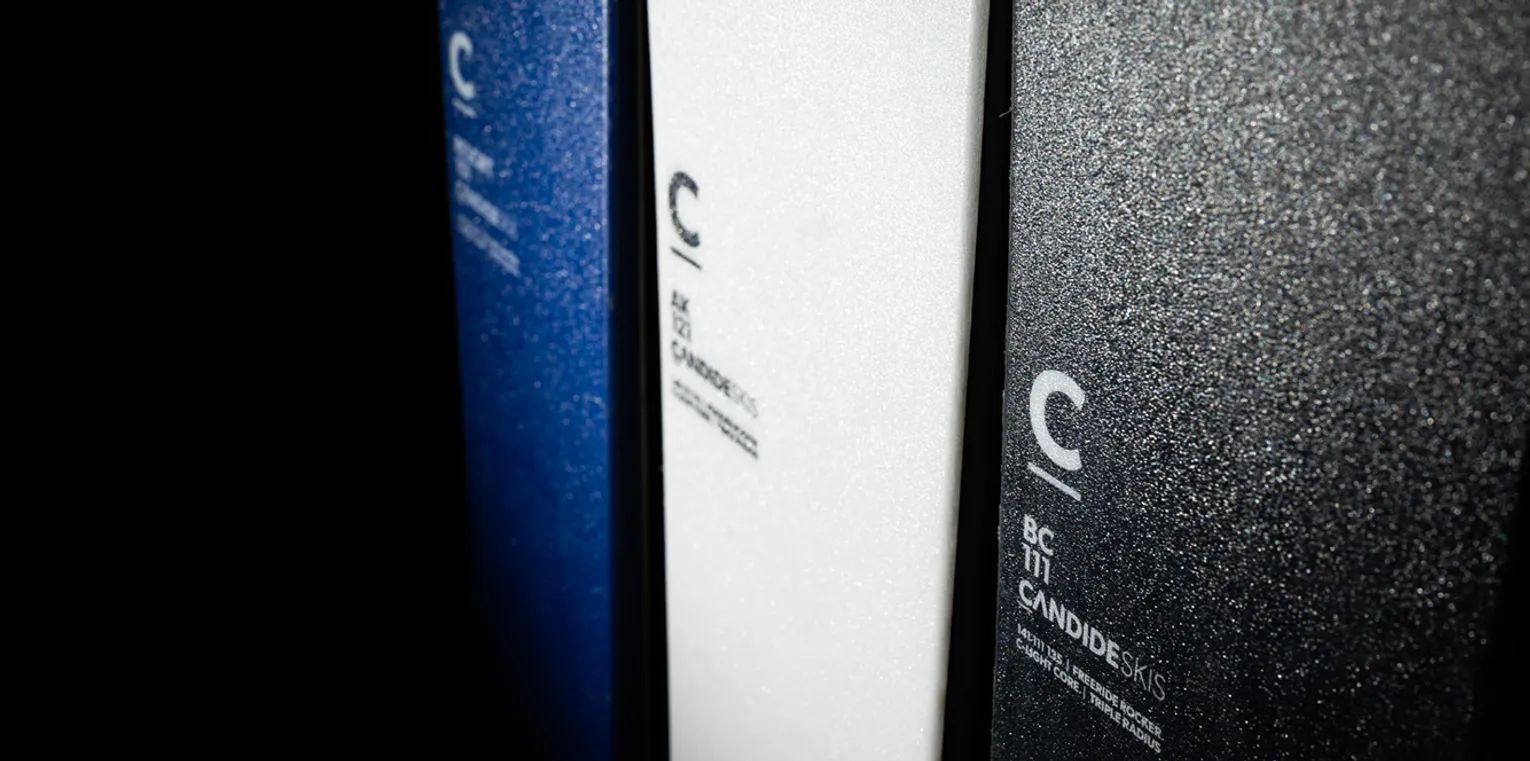
With three models in the lineup: Resort 101, BC 111, and AK 121, he covers most of his bases. And we say “his” bases because these skis are decidedly thus. There’s no real need for a frontside option here, nor is there an imperative to have a tour and an alpine version of a ski. What you see is what you get. To make it even simpler, all skis have the same construction with the variances showing themselves in the shapes and profiles. The names imply the application, and the numbers indicate the waist width. From there, we get more rockered and tapered as we get wider, with consistent progression among and between the models.
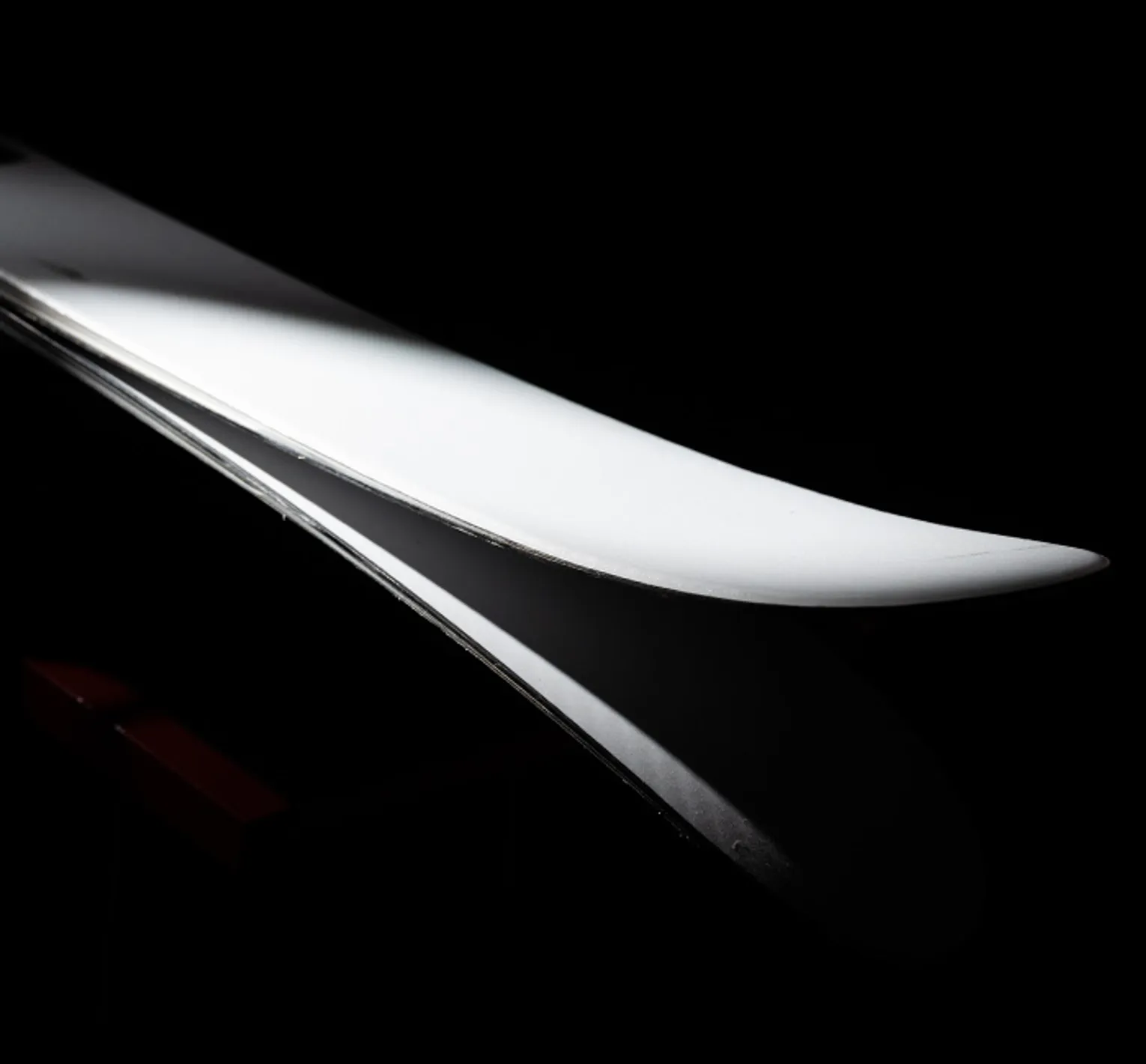
All skis use Candide’s Triple-Radius Sidecut, creating tighter turn arcs in the tips and tails with a straighter cut in the central portion of the ski. If you think about how Candide skis (when his skis are remotely close to the ground), there’s a lot of tail-pushing style of carving mixed with total straight lines. This fits in very well with this Triple Radius theory, allowing for supreme stability when it comes to direct fall-line attacks as well as smooth and buttery carves, especially out of the tails. While the exact numbers are yet to be stated online, we can generally assume that it’s close to Mana numbers, as the measurements are quite close. This results in about a 20-meter overall arc in the 101, with those numbers getting slightly longer as the widths increase.
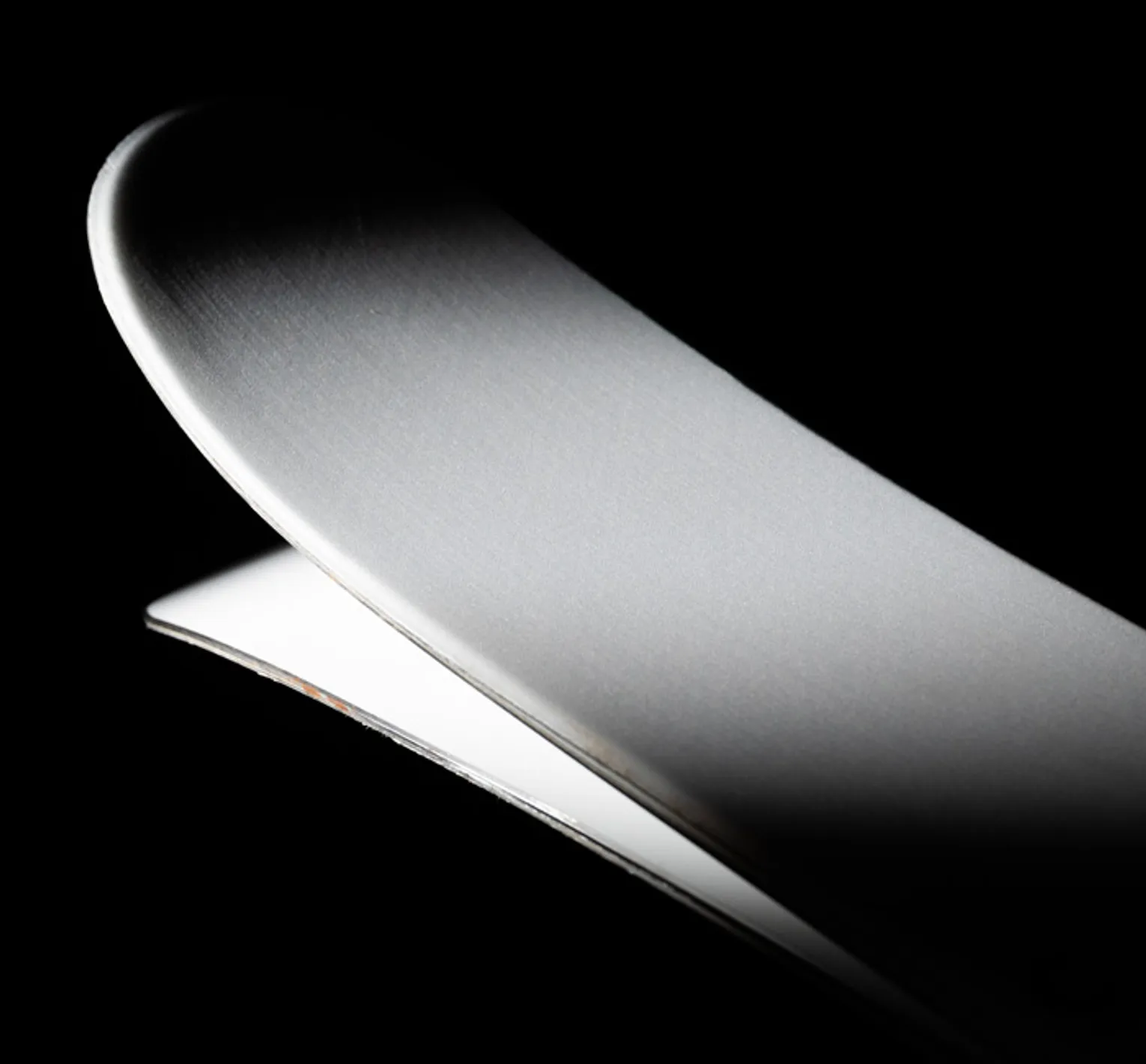
Candide states that all skis are built with a proprietary blend of poplar and paulownia wood wrapped in a fiberglass and carbon laminate. We get the impression that it’s a full wrap, with carbon stringers interwoven into the glass. This adds to the stiffness and reactivity of the ski while the wood core, especially the poplar, give the ski a smoother and quieter feel. The sidewall tapers to cap at the ends of the ski, increasing mobility, agility, playfulness, and flotation. Bases are fast P-Tex 4000, putting the quality of the skis on a very high level. The topsheet material is noticeable as well, with corund minimizing the scratching, chipping, and snow-holding potential.
2024 Candide Resort 101 Skis

| AVAILABLE SIZES | SIDECUT | WEIGHT | ROCKER LENGTH | CAMBER HEIGHT |
|---|---|---|---|---|
| 167, 173, 179, 184 cm | 129 / 101 / 125 mm | 1,800 g @ 184 cm | 440 mm Tip / 440 mm Tail | 2 mm Underfoot |
Bob’s Impression:
The Resort 101 is a fun-loving yet relatively aggressive twin tip that has a mix of personalities. The initial impression is that it’s surprisingly light for how fast it’s supposed to be skied. You do have to stay in the middle of the ski while you’re at those higher velocities, as the Triple Radius does make sense here. When I think of how Candide pushes his tails through the turn, the back end of the ski also aligns with that theory. It’s not everyone’s style, especially naturally. Those that do fit into this paradigm will gravitate to this shape quite readily, while those who don’t may find more success elsewhere in the vast 101 mm twin tip world. On the groomers, this ski makes very round turns, especially if you do the tail push. The impressive part is that if you’re going straight and fast, and then decide to make a turn, it’s very reactive and instantaneous, leading to fantastic mobility and agility. You can picture Candide doing human slalom in France and being able to turn his skis on a dime to avoid a person or object, and that’s just what happens. The second you put any emphasis on the edges, the ski reacts in a sharp and distinct manner. While some skiers may enjoy this style in bumps and trees, it doesn’t quite fit the way that I personally like to do it, but that’s just fine. The symmetry of the rocker and the sidecut means that the ski should be skied in the center to access the intended performance. For more directional and traditional skiers like me, this is more of an adjustment rather than a natural transition.
Jeff’s Impression:
It was impossible for me to ignore the park potential of the Resort 101. Sure, it’s a bit wide by traditional metrics for a park ski, but certainly not too wide, and these days, you see more and more skiers on park skis of this width. It’s light, it’s so easy to flick around, it feels quick and agile on rails and doing little jibby things, but there’s a decent amount of stability on landings too. I love the long rocker profile for a park ski as it just adds a nice amount of forgiveness regardless of ability level. It is, similar to how I felt about the new Elan Playmaker 101, one of my all-time favorite park skis in this width. It just checks all the boxes. Outside of the park, I certainly appreciate its quickness and agility, although I found fewer situations where I could fully benefit from that rather than when in the park. That said, for a skier with a park/freestyle mentality, it’s a great all-mountain ski. It’s not, on the other hand, going to be particularly good for skiers who prefer responsiveness or any significant feedback out of their skis. It goes exactly where you want it to, but does it with a relatively loose feel. Snappy flex pattern, yes, but lots of rocker, so you don’t get a ton of reactivity from the tips and tails when thinking about it in terms of torsional stiffness. You do, however, get a lot of responsiveness and agility out of the flex pattern, which makes ollies super easy and rewarding. As is true with all of these new Candide skis, it just loves being in the air.
2024 Candide BC 111 Skis

| AVAILABLE SIZES | SIDECUT | WEIGHT | ROCKER LENGTH | CAMBER HEIGHT |
|---|---|---|---|---|
| 175, 181, 186 cm | 138 / 111 / 134 mm | 1,900 g @ 186 cm | 505 mm Tip / 485 mm Tail | 1 mm Underfoot |
Bob’s Impression:
Given the width and overall surface area, this one fit what I thought it would be more naturally. The BC 111 is crisp and manageable in the best way possible. In soft spring snow, the ski had a healthy mix of flotation and power, blasting through choppy and heavy snow with ease while holding an edge and carving clean turns on the firm ice underneath. I could vacillate between drifty and smeary turns when the snow asked, and then put it on edge and run it through a longer arc with total confidence. For many skiers, this will be a very versatile soft snow ski, and while the name may imply that this is more of a backcountry model, there’s no denying that it’s also going to be a fantastic resort powder ski for a lot of skiers regardless of location. While Candide states that there’s 1 mm of camber height underfoot, it feels pretty darn flat, and that’s a good thing with a ski like this. There’s a ton of rocker to go along with the flatter base, making it about as playful and fun-loving as it gets. There’s still not a ton of taper drop from tip to tail—about 4mm—and this keeps that tail-pushing emphasis firmly in place when the ski is on edge—more so when the angles are higher. To be certain, this BC 111 allowed me to access my inner creativity and unleash it on the hill (at least as much as my skills and physical capabilities afforded).
Jeff’s Impression:
The BC 111 is the ski that made me feel like I was Candide more than the 101 or 121. Thinking of classic Candide edits, we’re used to seeing him just charging and straight-lining through choppy snow conditions. The moment I got on the 111, that’s exactly what I wanted to do. letting it run through various snow conditions is super rewarding, and it does it with a level of confidence and ease that’s lose on most skis. The long rocker profile combined with a supportive flex pattern gives you an insane amount of control. Straight-line all you want, and if you get nervous, regardless of your speed or the conditions, you can throw it sideways and dump speed with ease. I found it a bit more rewarding at a high edge angle compared to the 101 too. None of these skis are tremendously good at carving, but letting the 111 make big, wide, sweeping turns through choppy snow was awesome. You still get a lot of playfulness too. High speed butters, slashes, and other modern freeride maneuvers are all in play, and many of those things are easier to do on the BC 111 than just about any other ski in this category that even comes close to achieving the same longitudinal, down-the-fall-line stability. As was true with the 101, however, if you prefer more responsiveness out of the extrmeties of your ski, you may not like it. There’s a TON of rocker in these skis, and they perform accordingly.
2024 Candide AK 121 Skis

| AVAILABLE SIZES | SIDECUT | WEIGHT | ROCKER LENGTH | CAMBER HEIGHT |
|---|---|---|---|---|
| 179, 184, 190 cm | 149 / 121 / 141 mm | 2,000 g @ 184 cm | 515 mm Tip / 485 mm Tail | 0 mm Underfoot |
Bob’s Impression:
If the BC 111 allowed me to access my creative side, the AK 121 made me exploit it. The flat profile and egregiously long rocker lines on this ski are dead set on being used in deep and untouched snow in the most playful format imaginable. This ski spins like a top, especially given the more central mount point and saucer-like profile. I absolutely loved the ski’s ability to go sideways as easily as forwards, even making me want to ski backwards a bit because there’s no fear of edge catching in transitions. Obviously, this ski is designed for bottomless snow, and while we haven’t yet experienced that specific condition, it’s pretty darn clear that this is intentionally designed for creative and playful powder skiing, including big drops, pillows, and big technical zones.
Jeff’s Impression:
This might be the surfiest feeling ski I’ve ever been on. It’s wild how easy it is to release the tail edge thanks to abundant rocker, but it’s quite stiff too. If you imagine Candide skipping through a mogul field, imagine him doing it on the 121. We often see Candide on skis that are much wider than you or I would choose, leaving it hard to believe he’s doing what he’s doing, but skiing the 121 makes it make sense. If you’re relatively lightweight like Candide (or even as light as me at around 160 lbs) you can let it run through whatever, although not quite as confidently as the 111, and I can completely understand how and why Candide would choose this ski for not just powder skiing, but also his high-speed-mogul-skipping. That said, I do think powder is the best application here, and I can’t wait to grab a pair of these on our first significant powder day here in Stowe. Honestly, it might not even be enough snow, and it’s one of those situations where we rarely get enough snow to justify a ski like this, but I’m going to do it anyways.