

TOP FIVE FRIDAYS: APRIL 17, 2020
#1: Behind the Scenes of Skiing's Doomsday - March 14th, 2020:
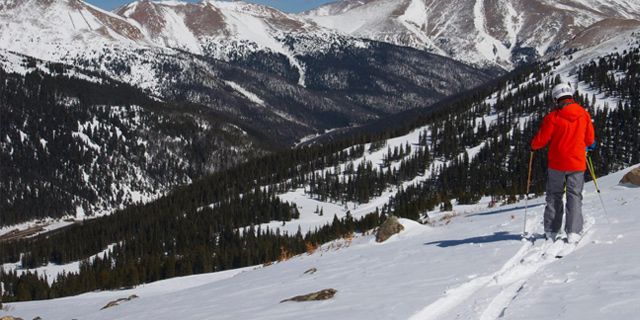
An uphill skier at Loveland Resort, CO takes a moment to reflect on a season that was abruptly cancelled on the night of March 14th. Image: Loveland Ski Area on Facebook
Right off the bat this week we have some good news, and some bad news. The bad news is that we still have to talk about the Coronavirus as it relates to the ski world. But, the good news is that things are slowly starting to get less weird. Well, to be honest, they’re still super weird, but this week’s ski news was only about 80% Coronavirus related, whereas last week it was approximately 110% Corona-coverage. While that means headlines are still being dominated by Covid-19, we’re at least starting to see more traditional ski news make the headlines, and to be perfectly honest, it feels pretty darn good. Anyhow, let’s get back to the task at hand.
At the top of this week’s news cycle is a piece from the Colorado Sun that peels the curtain back and shines a light on what went down behind the scenes over the weekend of March 14th & 15th, when nearly all North American ski resorts were shut down quite literally overnight. As it turns out, the story starts in an unsurprising way: Colorado Governor Jared Polis was studying infection data in Colorado when he noticed that infection rates in ski towns were about 20-30 times higher than those on Colorado’s front range. This statistic immediately caused the governor to take action, calling Colorado Ski Country President Melanie Mills to discuss the situation several times throughout the day. Throughout those conversations, Governor Polis wrestled with the reality of the situation while Mills pleaded with him to give the resorts at least another day to ease into the closures, citing that weekend as the busiest of the year for guest arrivals. As we all know by now, Mills’s pitch was ultimately not enough to overcome the devastating impact of the virus, and the governor made the extremely difficult decision to shut down all Colorado resorts on the evening of March 14th. As it would turn out, that was just the first step in a Rube Goldberg-esque sequence of events.
While the Colorado Sun’s article doesn’t explicitly state that Governor Polis had conversations with Vail CEO Rob Katz on that day as well, it’s hard to imagine that that’s not the case. Regardless of whether or not Katz had first hand conversations with Governor Polis regarding the situation, or was simply informed once the call had been made, the Colorado closures almost instantly gave way to the closure of all of Vail’s resorts worldwide. As soon as that decision made, a vast majority of the ski industry followed suit, with Alterra making the same decision for its Ikon Pass resorts, while countless other independent ski areas also decided in unison to shut it down for the season. While the story itself is something that most of us are aware of, the behind the scenes look and interviews shared in the Colorado Sun piece bring to life the difficult and tense decisions that faced industry leaders on that fateful day. As is always the case with the Colorado Sun, the piece is well worth your full attention.
#2: What’s Happening With International Employees Stranded at Ski Resorts?
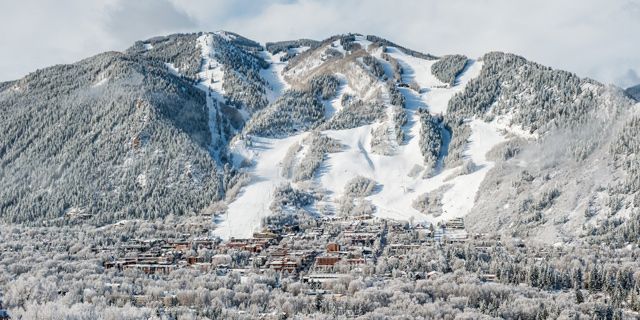
A look at the town and mountain of Aspen, CO, where approximately 47 international employees have been left stranded as a result of travel restrictions. Image: Visit Aspen on Facebook
Next up this week is a second dose of Coronavirus coverage, this time regarding the status of international employee stranded at U.S. ski resorts. As you either knew already or just learned from our first highlight this week, nearly all North American ski resorts closed on the evening of March 14th. For international, seasonal workers, this meant they had a job and secure living arrangements on the morning of March 14th, but neither when they awoke on March 15th. This week, we learned more about this dynamic as stories began making the rounds that took a closer look at what life’s like for those who’ve found themselves suddenly stranded.
First, the good news: despite the sudden closure of both ski resorts and borders, a vast majority of international, seasonal employees have been able to make it home. The bad news of course, is the flip side of that statement: there’s still a number of people stuck living at deserted ski resorts, constantly watching the status of travel restrictions to see if they can leave for home. That situation has resulted in a web of intricate dilemmas for those who’ve found themselves stranded and now have to navigate the complexities of expiring work visas, travel restrictions, and, if they’re lucky, pricey flights home. But, they’re not alone in their attempt to return home. In addition to their own efforts, corporate level ski resort employees are finding themselves joining the cause, with Vail Resorts having helped over 1,900 international employees return home over the course of the last three weeks. Additionally, organizations like California’s CCUSA, a group that acts as a liaison of sorts for international individuals looking for seasonal work in America, have also found themselves working as intermediaries between the U.S. government, international governments, airlines, and ski resorts who’re suddenly providing shelter for former employees. Yet again, it’s a complex story that’s resulted from this unprecedented crisis, and yet again the Colorado Sun has done a tremendous job diving into the details. We highly recommend giving their coverage a read if you’d like to learn more.
#3: Serbia Ready to Press the "Go" Button on the World's Longest Gondola:
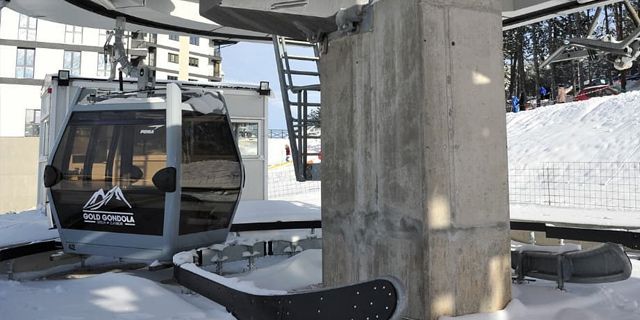
A vacant gondola cab belonging to the world's longest gondola patiently awaits its opening day. Image: Gold Gondola Zlatibor on Facebook
Congratulations, you’ve done it! You’ve survived the Coronavirus coverage for the week! Now, let’s move onto something that’s more in line with what we normally find ourselves discussing this time of year: exciting new chairlifts. This week, we learned that the world’s longest gondola is expected to open as soon as Coronavirus travel restrictions are eased. Located in Serbia, the new “Zlatibor Gold Gondola” is 9km (5.5 miles) long, and connects the local mountain town of Zlatibor to the nearby slopes of Tornik Ski Resort. Riders who board the gondola will enjoy a 25 minute ride in an oversized, 10 person cabin that features panoramic views. For riders who can’t imagine being contained for that long in a cube dozens of feet in the air with up to 9 strangers, a midway station will offer some reprieve at Lake Ribničko, where a 200 acre resort is being developed. For the resort of Tornik, this new gondola is an exceptionally exciting addition, as the mountain previously offered just one 6 person chairlift, two T-bars, and two conveyor lifts. With the addition of the world’s longest gondola now providing access, it’s inarguable that Tornik has taken a major step forward towards its future as a ski destination, providing a significant boost for the region’s economy. If all goes to plan on that front, developers of the project estimate that the gondola will help generate approximately 10 million overnight stays each year, allowing the project to paid off in just 10 years. For more on this, check out the writeup from Snow-Forecast.com.
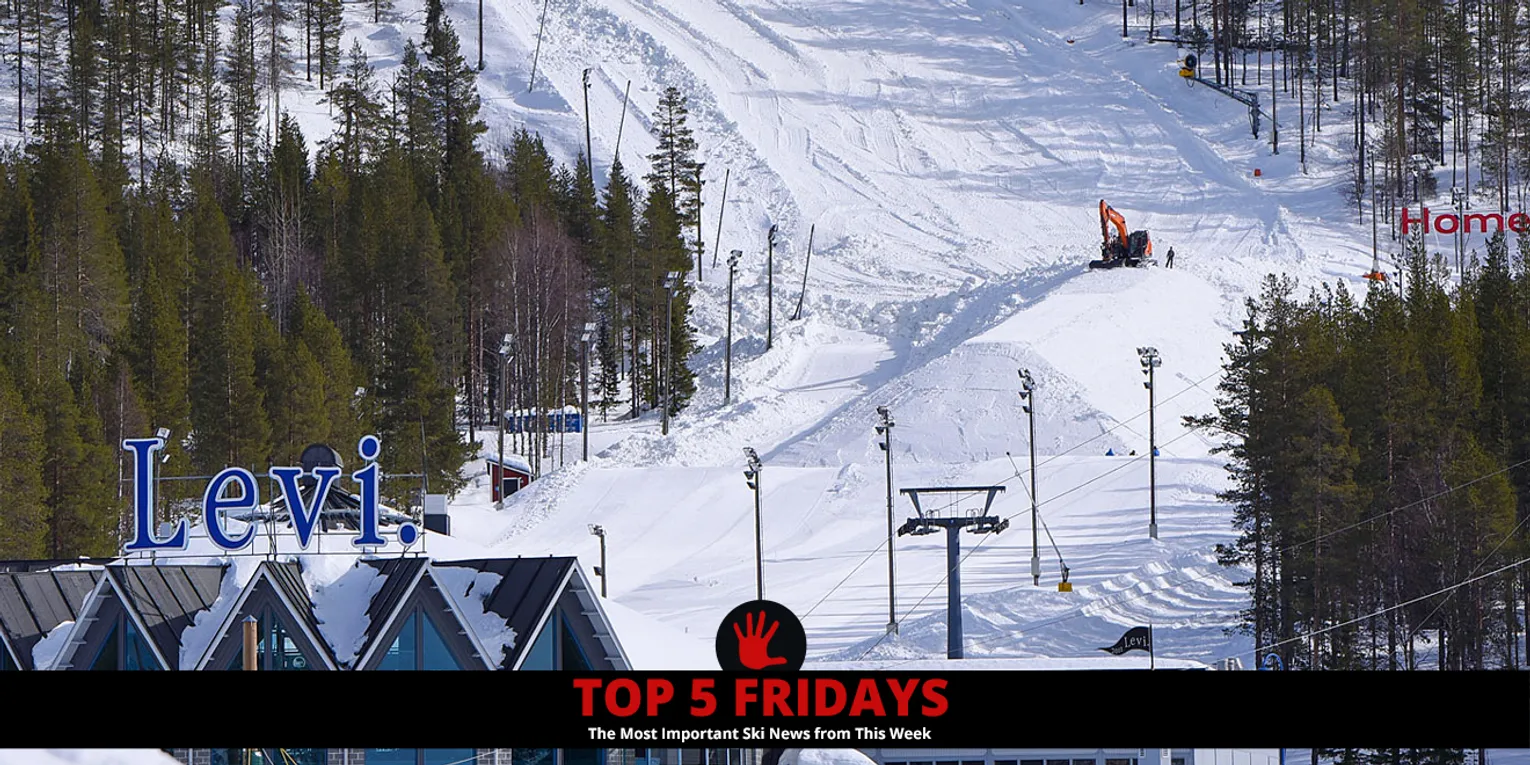
#4: Earlier Then Expected Start to Snow Harvesting at Finland’s Levi Ski Area Should Result in an All-Time Start Next Season. Could Others Follow Suit?:
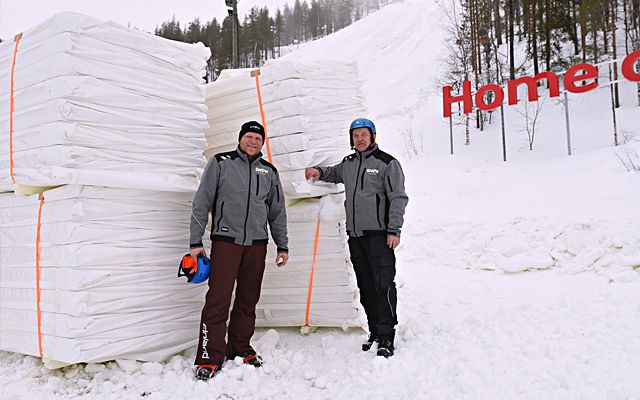
Snow farmers in Levi, Finland pose to have their picture taken in front of stacks of Finnfoam which they'll use to cover their harvested snow. Image: Levi Ski Resort on Facebook
Finally, let’s end this week with a story that we find incredible interesting, and one that’ll allow us to partake in some heavy speculation (one of our favorite pastimes). First, the news: at Levi Ski Resort in Finland, the early closure of their resort due to the Coronavirus has allowed the mountain ops team to begin their snow farming efforts exceptionally early this year. For those new to the term, snow farming is a technique in which workers collect as much unmelted snow as they can into centralized piles, covering them in some form of insulation. These coverings range in form and effectiveness, but the end goal is always to block the sun’s powerful rays throughout summer, creating a small, reusable glacier that resorts can rely on to start the next season off on the right foot. It’s a technique that’s been used on a small number of glaciers in Europe for decades, but has become more popular in recent years as climate change has made the snow conditions increasingly less dependable. While this technique is admittedly pretty niche, Levi Ski Resort is one of the few areas that’s been partaking in the practice for years now.
This week’s news provides an interesting silver lining to the covid closures. While most seasons typically drag well into the warmer months, robbing the resort of the opportunity to harvest snow while it’s still plentiful, this year’s sudden closures means there’s an exceptional (unprecedented even) amount of snow available for collection. As a result, the team at Levi is taking advantage of the opportunity and creating numerous, massive piles of snow. In addition to the sheer increase in volume of harvestable snow, Levi is also using a new, state of the art insulation material called Finnfoam, that limits the amount of rain, wind, and sunlight that hit the snow during the summer months. Ultimately, this new material is expected to increase conservation efforts by approximately 5-10%. The use of Finnfoam, combined with the fact that the resort expects to be able to harvest an insane 150,000 cubic meters of snow, should allow the resort to open earlier and stronger than ever before in the coming season. It’s the hope of Levi Ski Resort officials that next Fall’s exceptionally early opening could offset the impact of this Spring’s early closures, which they expect to result in a loss of approximately 25% of their annual revenue.
Ultimately this story gets our speculative juices flowing for multiple reasons. First of all, is the economic impact of the snow harvesting. While it’s unlikely that next year’s early opening will enable Levi to recoup the full 25% of lost revenue, it should at the very least reduce that percentage. This is an important note to make as it provides financial incentive for other resorts to follow suit, and as we all know, money is an exceptionally powerful motivator. Second, it’s no secret that the disruption caused by the global pandemic has, and will continue to lead to renewed consideration regarding climate change. While this story doesn’t concern itself with the causes for climate change, it does position snow farming as a technique which could be utilized by ski areas who are finding themselves forced to push their opening date later into the fall with each passing year. Finally, the third concept that catches our attention with this story, is that snow farming was already seeing renewed interest, as we’ve shared in recent years. That suggests that a sudden uptick in practical application certainly isn’t out of the question. So, what we are ultimately getting at here? Well, put this down as some classic editorial speculation, but we wouldn’t be at all surprised to see snow farming becoming a more widespread topic of discussion in the years to come, especially if Levi produces eye-popping results come Fall. We’ll be sure to check back in on this story when Levi reopens next season and we’re better able to evaluate their level of success. For now, learn more about their current efforts in this report from The Barent Observer.
#4.5: Bonus Highlight: April is Rossignol Month in SkiEssentials.com's 2020 Stay Home Happy Contest!
