

Top Five Fridays: April 18, 2025
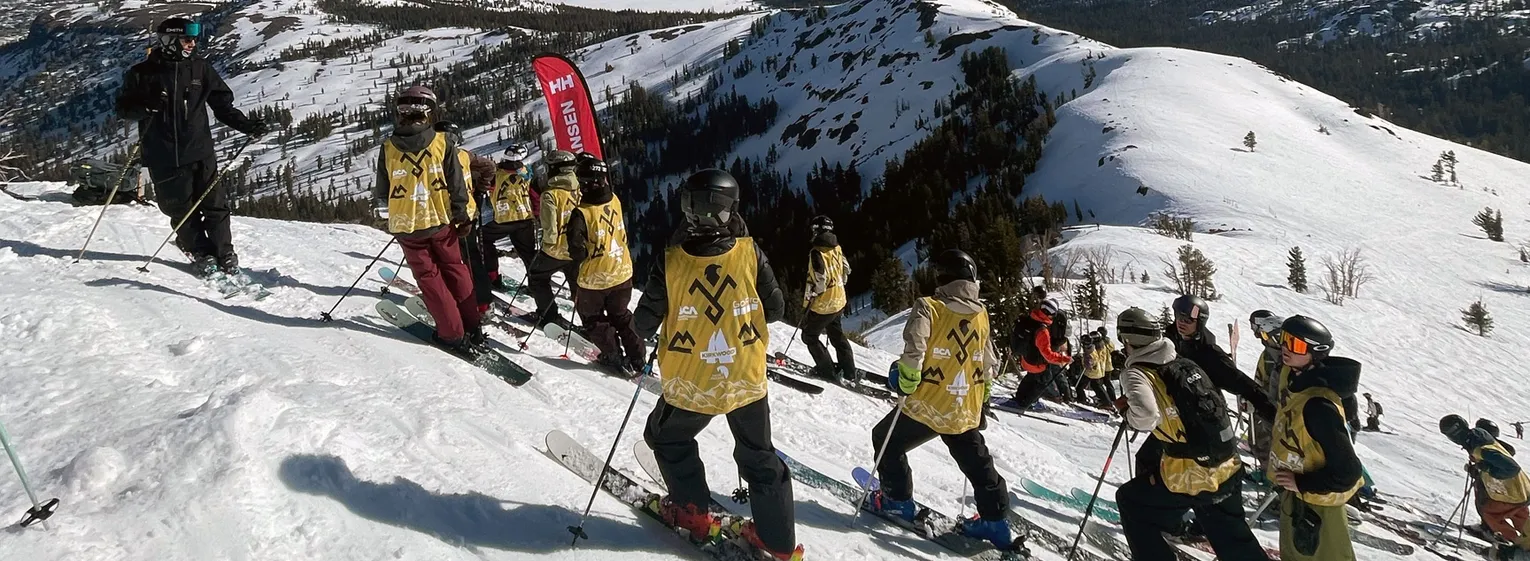
Junior freeride athletes gather at the top of the qualifiers venue ahead of their visual inspection.
#1:The 2025 IFSA Junior Freeride Championships are Done and Dusted. Thanks Kirkwood!
Hello, and welcome to Top Five Fridays, the April 18, 2025 edition! If you tagged along last week, then you already know that Bob did an excellent job with the written recap while I was away at one of my favorite events of the year: the IFSA Junior Freeride Championships (JFC). This, as it happens, is our first topic this week.
Long time readers of Chairlift Chat are probably getting accustomed to this annual report, as each year for the past three years I’ve traveled with the Mad River Glen Freeski team to the championship event that gathers the best junior freeskiers in North and South America in what is the final chance for these athletes to punch their tickets to next season’s Junior Worlds event in Austria.
To say the level of talent at this event is “high” would be an understatement. Before we jump into a quick recap of this year’s event, consider this anecdote: last year, athlete Kelly Hilleke competed in his final JFC event. This year, Kelly competed on the adult circuit, qualified for Challengers, and will move on to the Freeride World Tour next year (more on that shortly). In other words, the kids competing at JFC’s are as little as one year removed from the Tour itself. It’s a junior competition, but make no mistake about it: the level of skiing at this event is on par with the adults.
This time around, JFC’s was hosted by Kirkwood, California. If you’ve never been to this resort, located just south of South Lake Tahoe, just know this: it’s big, it’s bold, and it’s steep. For this year’s events, all age categories from U12 - U19 competed on The Cirque, a permanently closed piece of terrain that’s only truly opened for competitions such as this one. Chock full of steep lines, massive cliff drops, wind lips, and hidden gaps, the Cirque offers a true playground for athletes of all specialties.
While now would be an excellent time for us to go in depth regarding highlights, the fact of the matter is that there are simply too many to cover. From insane cork 3’s off what’s been dubbed the “Ross Tester air”, to massive 360 attempts off of what we’d guess is a roughly 30’ cliff, to tight couloirs and more cliff drops than we can count, to cork 7’s and nose butter 3’s off ridgelines, hundreds of athletes dropped jaws as they put down their runs. Again, because we have a few long winded highlights this week, we have to skip a full breakdown of results from JFCs, but you can check out final scores here. Really though, we highly encourage you to watch the replay attached to this highlight as there are several names in there that we’re sure you’ll be seeing more in years to come.
Before wrapping this highlight up, I do want to give a quick shout out to Mad River Glen athlete Seamus O’Neill, who played the event very strategically and walked away winning the award for 1st place overall on the season (based on points accrued across four events), as well as an invite to next year’s Worlds event. Huge shout out to Seamus, and every other athlete who pushed themselves last week in Kirkwood. Whether or not you completed your run, you all crushed it and showed just how bright the future of freeskiing is. Lastly, as an East Coaster, I also want to congratulate the coaches and athletes not only from Mad River Glen, but also Smuggler’s Notch, Jay Peak, and Holderness. Collectively, we all showed up and let the Americas know that the East Coast knows how to ski. To see full results, click here.
#2: The IFSA Challengers Series Comes to a Close, and it Looks Like We’ll Be Seeing Some New Faces on the Tour Next Year:
The second Arapahoe Basin Challengers stop, and one the one that determined who made the cut for next year's FWT.
Staying on the topic of the future of freeskiing, we want to quickly touch on the results from last week’s Challengers events in A-Basin. Just to reiterate, the Challenger series is a quick 3 stop event that takes place at the end of each season to determine which athletes from North and South America will make the Tour next year. Athletes in the Challenger series either qualified by competing in Adult events over the course of the season, were given a wild card entry, or found themselves there after not making the FWT Finals cut line. In other words, these are the best of the best of those who aren’t “the best”. It’s the G-League of freeskiing.
This past week, Arapahoe Basin hosted two Challenger stops as a result of stop #1 in Whitefish being cancelled. As such, a lot was on the line for athletes who needed the points to make the Tour. Coming into the event, names like Joey Leonardo and Townsend Reed were leading the way on the Men’s side after finding success in Kirkwood earlier this month. At Arapahoe Basin though, the venue’s personality offered new challenges, as the resort’s East Wall featured a number of tight, technical drop ins. As such, athletes were required to show a high degree of technical skill as well as the ability to find creative airs and opportunities for tricks. The result was a shake up in the standings.
On day one of the event, Aspen’s Kelly Hilleke took top honors after throwing a myriad of tricks that can only be described as “text book.” Backflips, front flips, 360’s, massive airs - Kelly’s run truly had it all, and each hit was put down flawlessly. For his efforts, Kelly was awarded first place, immediately putting him back in FWT contention. On the women’s side, we saw a similar story at the first A Basin stop, as Wynter McBride took home a first place finish after taking 6th in Kirkwood. While McBride didn’t need the first place points quite as badly as Hilleke, the finish did put her in a tie for first place in the series.
A day later, the athletes were back on the East Wall, with plenty on the line. At the third stop of Challengers, a best two out of three series, invites to the World Tour were truly up for anyone to claim. On the men’s side, athletes like Joey Leonardo and Townsend Reed, who took first and second at Kirkwood, found themselves desperately needing strong finishes in order to negate the result from the prior day. Hilleke, on the other hand, needed a similar performance as his result from Kirkwood would need to be overcome. On the women’s side, former FWT athletes Delilia Quinn and Britta Winans hovered around the cut line while Wynter McBride also needed a second strong showing at A Basin to beat the cut line. In both divisions, the heat was on.
Ultimately, day two played out in similar fashion, with both Kelly Hilleke and Wynter McBride winning the day and punching tickets to the World Tour. Joining Kelly on the men’s side were Joey Leonardo who managed to bounce back with a 4th place finish, earning him the second spot overall, as well as Canada’s Lochlan Harvey and Jack Kolesch - all of whom finished safely above the cut line The real drama from this event came on the women’s side though, as Britta Winans unfortunately DNF’d, resulting in her second Arapahoe Basin score being dropped. On the other hand, Argentina’s Agostina Vietti took home a second place finish, catapulting her up the rankings, and giving her a total score of 3,650, just 50 points more than Britta. For Agostina and Argentina, it’s a huge victory and an opportunity for Vietti to represent her country on the world stage. For Britta, it’s a heartbreaking result as it means she’ll have to compete in adult events in order to re-qualify for Challengers next season if she wants to get back on Tour the following year. Such are the highs and lows of freeride skiing.
And with that, the IFSA and FWT coverage comes to a close for the 2024-2025 season. While we might touch on some coverage from South America this summer, those events will have implications for next year’s rankings. For those of you who aren’t ready to be done with freeride though, we do have one piece of good news: our next highlight keeps the vibe alive with coverage of an exciting new event.
#3: The First Ever Natural Selection Tour Ski Event Did Not Disappoint, At All:
Next up this week is a highlight we’ve been anticipating ever since the event was first announced back in late October. That competition, of course, is the first ever Natural Selection Tour Ski event. For those uninitiated, we recommend giving our October coverage a read as it breaks down the history of the event. The long and short of it though, is that the NST is a snowboard event that started in 2021 that’s similar to the Freeride World Tour, but with a more trick-forward focus and a unique format. Without getting too into it, just know this: the NST has produced some stunning events in its short lifespan, and as a result, the ski world has been incredibly excited to watch this event go down. So with that, let’s get right into it.
First things first, before talking about the theatrics, let’s set the scene. The venue for this event was somewhere deep in the Alaskan backcountry. Set on a beautiful, spine packed ridgeline, athletes set up camp on the valley floor a full week ahead of the event, building their community, exploring terrain while they waited for the perfect conditions for the event. That scene alone sets this event apart from the Freeride World Tour, but other details further separate the two. While both events ask skiers to put down their best runs on steep backcountry faces, the judging criteria is almost completely different. Instead of the FWT’s “Line, Control, Technique, Fluidity, and Style & Energy” categories, the NST judging “credo” consists of “Creativity, Risk, Execution, Difficulty, and Overall”. While it may seem obvious, the distinction in judging does quite a bit in terms of setting the different tones of the competitions. Whereas the FWT rewards strong, technical skiing, the NST asks athletes to get creative and fun with their runs.
Finally, the third major difference in the events, and the one that’s most immediately noticeable, is the format. In the FWT, athletes are given one chance to put down their best run. In the NST, athletes are initially broken into 4 person heats, with the highest score being immediately promoted to the semi finals for Men, and finals for Women. The remaining 3 athletes once again compete amongst themselves, with the winner of that round also making semi finals (or finals), but moving into the opposite bracket (so as to face a new opponent). From there, in both semi finals and finals, the venue shifted to a slightly new zone while the format became a best of two run, head to head format. While it might sound initially confusing, the format became easy to follow and resulted in some pretty thrilling matchups.
As for the event itself? Well, we’ll be honest, we were feeling pretty skeptical after the first round as the sun-baked crust layer led to several athletes struggling through conditions, while the softer snow on the shadier side of the ridges seemed to continuously give out, becoming significant fields of slough. As a result, the first rounds were rough. There were still some highlights in these early rounds though. Right out of the gate, Vermont’s own Parker White was the first of the day to drop and stepped up to the challenge, opening things up with a massive cliff drop, followed up by a large front flip. Unfortunately though, Sam Kuch was also in his heat, and he put down a flawless run that saw massive airs paired with a beautiful 360 entry off the top ridge. Across the rest of the initial and secondary rounds, we were treated to a mixed bag of action as some athletes succumbed to the crust while others managed to pull off some pretty impressive tricks. When all was said and done, the men’s semi finals rounds consisted of face offs between Sam Kuch and Markus Eder, and Craig Murray and Colby Stevenson. On the women’s side, the finalists were Michelle Parker and Manon Loschi.
If the qualification rounds were slightly underwhelming at times, the semi finals and final rounds were anything but. In these rounds, we witnessed the type of antics we were hoping for as our jaws were dropped time and time again. Without getting too deeply into details here, we’ll just share the fact that the announcing crew used the phrase “video game runs” multiple times. Whether or not any given athlete fell on their run, we witnessed them throwing absolutely massive airs, gaps, and transfers - many of which were spun. We saw maybe the biggest 360’s ever done in competition, as well as insane double flips, tomahawks, and straight airs that reached triple digit distances. If we were feeling at all skeptical about the first ever NST Ski living up to the hype after the initial rounds, those feelings were completely gone after finals as we couldn’t help but react audibly multiple times. Because we really think you should watch this event, we’re not going to tell you who won here. Instead, we recommend checking out the full replay accompanying this highlight. If you insist on learning more though, you can head on over to the NST website. And with that, we’ll wrap things up by simply saying, “thank you Travis Rice, for including us in your event. We already can’t wait for next year.”
#4: A Tale as Old as Time: South Lake Tahoe and Heavenly Resort Butt Heads Over Parking & Taxes:
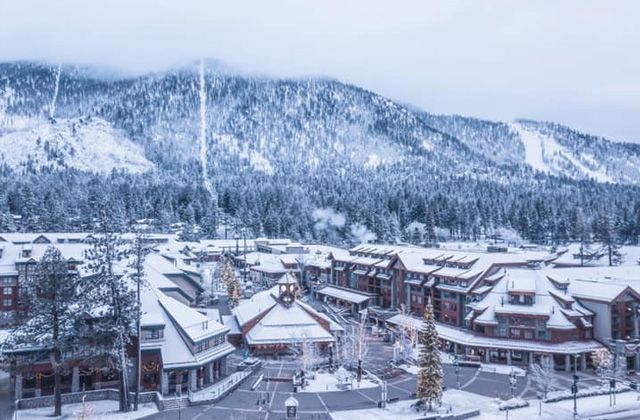
A look at the Heavenly base area, which blends seamlessly into the city of South Lake Tahoe. Image: Heavenly Mountain on Facebook
Finally, for our last highlight this week, we’re going in a decidedly different direction as we once again share a story that focuses on the delicate dynamics that exist between ski towns and their resorts. This time around, we’re taking a look at maybe one of the most integrated ski towns and resorts there is: South Lake Tahoe and Heavenly.
Having just visited South Lake Tahoe for the first time just over a week ago, I was surprised to see just how integrated the town and the resort are. When we drove through town, we needed a place to park. We ended up finding that place about a half a block from the gondola, and walked directly through the base area on our way into town - not at all intending to. In other words, imagine the nearest downtown to you. Now imagine there’s a gondola in the center of it that runs to a ski resort. That’s more or less the relationship between South Lake Tahoe and Heavenly.
As you can imagine, that type of dynamic has benefits for both parties. For the resort, it means there’s a buzzing apres scene for guests to enjoy and plenty of lodging options within walking distance. For the city, it means there’s a world class ski resort bringing a constant influx of tourism dollars, stimulating the economy. It also, unfortunately, brings a host of problems.
Taking front and center in this week’s story is the issue regarding parking and taxes at Heavenly. For years, the resort and the city had an agreement where Heavenly paid $20,000 to allow guests to park on city streets. Then, on January 2, 2023, a massive storm rolled into town and skiers flocked to the resort. The result was pandemonium on the city streets, and a sudden realization that Heavenly’s access to municipal parking wasn’t worth the $20,000 check. This realization, in turn led to additional realizations, primarily the fact that the resort’s unique situation, in which it’s not actually a part of the South Lake Tahoe municipality, was leading to significant issues. Despite offering services that help guests access the resort - such as plowing and parking - Heavenly was not paying any municipal taxes, and South Lake has been unable to create a lift ticket tax as towns like Breckenridge and Vail have done. In other words, Heavenly has been a bit of a freeloader.
All of this has been coming to a head in recent years as South Lake Tahoe has been making a push towards annexing the resort into their municipality. For obvious financial reasons, Heavenly has been fighting their annexation, with resort VP and GM Shaydar Edelmann saying, “The City has not identified any benefits to the resort, the community, or our guests from annexation.” To be fair, it’s a valid point from Edelmann’s perspective, as the resort is very clearly on the winning side of the deal right now. Still, the South Lake Tahoe City Council isn’t willing to just roll over, and is instead fighting back - starting with the resort’s access to parking. This year, the city banned the resort’s guests from parking on city streets, cranking up the pressure on the resort.
At the moment, this story is far from resolved, and there really isn’t a nice, clean takeaway here. Instead, we felt it was important to share as it adds yet another story to the growing conversation between ski towns and ski resorts, especially through the lens of Vail’s ownership and multipass guests. To learn much, much more about this situation. Check out the report from SFGate.com.