

Top Five Fridays: April 19, 2024
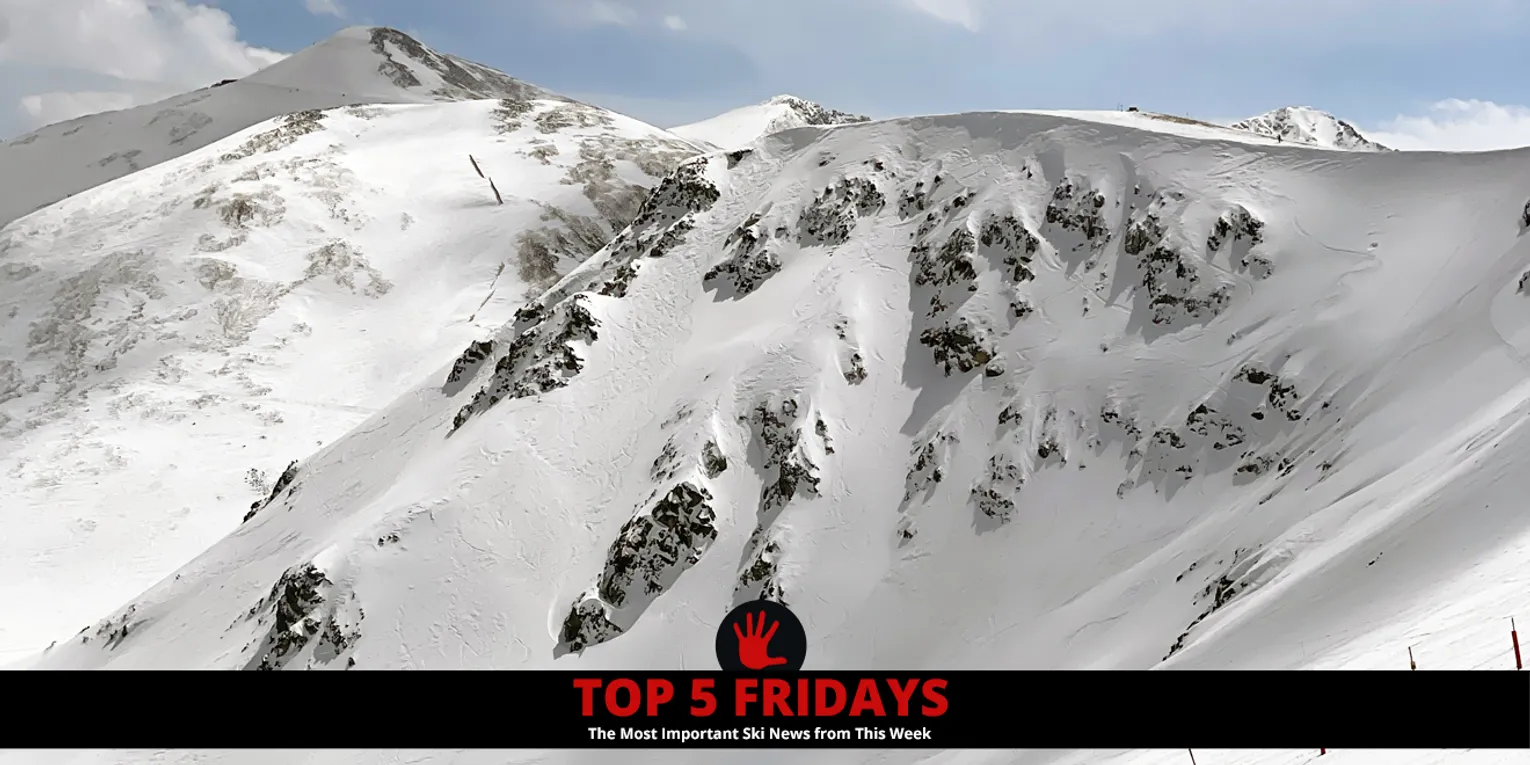
Lead Image: A look at the finals venue for this year's Junior Freeride Championships in Breckenridge. Plenty more on that below!
#1: The 2024 IFSA Junior Freeride Championships Went Off in Breckenridge Last Week + a Lengthy Round of Praise For Mad River Athletes:
The official replay of the 2024 JFC Finals.
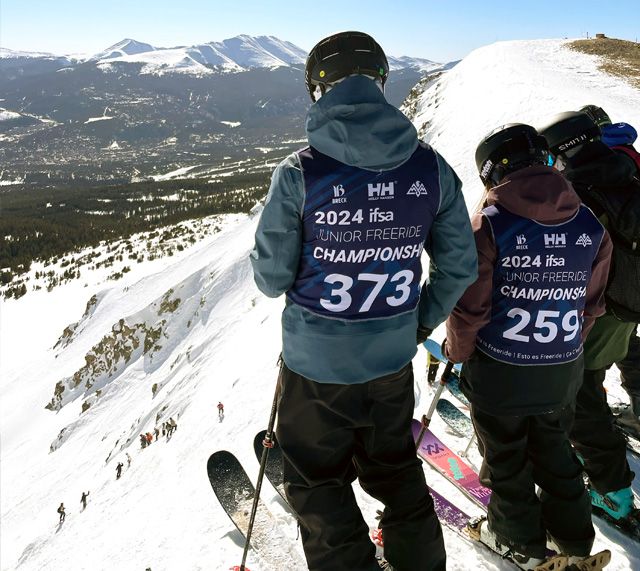
Mad River athletes Seamus O'Neill and Lynsey Nagle taking a look at the venue from above before dropping in for inspection. In the background, you can see just how steep the finals venue was.
Hello, and welcome to Top Five Fridays, the April 19, 2024 edition! This week represents a very special week for me personally, as I get the privilege to boast at length about how proud I am of the Mad River Glen Freeski team, who just competed at the Junior Freeride Championships last week. If you’re an avid reader of Top 5 Fridays, you’ve probably noticed that our coverage of the Freeride World Tour has grown significantly in recent years. A big reason for that is my involvement at the junior level of the sport. Each year for the past three seasons, I’ve coached athletes at Mad River Glen who compete in the IFSA Freeride series. All season long, these athletes have earned points by competing at regional and national events, hoping to earn enough to be invited to the annual Junior Freeride Championship (JFC) . With roughly 1.25 times the amount of points available at the JFCs, this annual event presents immense opportunity and pressure for athletes hoping to qualify for the Freeride Junior World Championships (FJWC), which takes place in Austria each winter and offers athletes the chance to compete against global competition. For a bit of added perspective here, Marcus Goguen won the FJWC last year, in 2023. This year, Goguen won 2nd in the Freeride World Tour. In other words, athletes who compete at JFC’s are knocking on the front door of the highest levels of the sport.
This year, the Junior Freeride Championships were held at Breckenridge, Colorado, on the resort’s impressive Six Senses bowl, located off of Peak Six. This hike-to zone is labeled as “extreme” terrain on the resort’s map, and as someone who both stood on the ridge as athletes dropped in and inspected the venue beforehand, I can confirm - this terrain is in fact extreme. Featuring countless drops, doubles, no fall zones, chutes, and more, the Six Senses bowl is a daunting venue that shocks the nervous system for everyone that enters it - regardless of ability. This nerve factor, mixed with the importance of this event and the culmination of a season’s worth of effort, makes the feats performed by these junior athletes absolutely jaw dropping. In finals, everyone in attendance bore witness to a total of 87 athletes dropping into this anxiety-inducing venue. While the Six Sense terrain begs skiers to approach with caution, these athletes took it on with full confidence, often sending the largest airs possible and skiing some of the most high consequence lines of their lives, all without hesitation.
Much like our Freeride World Tour coverage, I could go on at length about each athlete’s individual efforts and impressive performances, but it would take far too long. For that, I’d encourage you to check out the full event replay, which I’ll embed here. From here, this highlight takes a self-serving turn as I can’t help but call out some individual performances from Mad River athletes (my pride is simply too strong). If you’ve heard enough, feel free to skip ahead. If you’d like to hear me gloat about Mad River athletes, by all means, press on.
Mad River Recap:
In the qualifiers, all of our athletes put down clean runs, with the exception of Charles Lamonia who gets a pass as he nearly pulled off what was one of the largest airs of the entire day. Despite not riding away, his air was one of the boldest attempts of the division. On the women’s side, Lynsey Nagle, her sister Tara, and Ava Killian all put down the type of strong, smooth, technical runs that you’d expect from Mad River skiers. Sadie Haskell, Addison Brooks, and Adeline Lazorchak also mixed strong technique with airs, ultimately earning high line scores and impressing the judges enough to make finals. On the boys’ side, Evers Gladchun, Ben Killian, Ryan Lacey, Jack Lacey, and Wyatt Babic all put down strong runs, with the Lacey brothers and Wyatt qualifying for finals. For Wyatt’s part, he showed off the type of reflexes required to ski Mad River, as his final double ended up being both off track and larger than anticipated, but his ability to react in an instant resulted in a show stopping run that saw him qualify for finals in 8th place in a field of the top 58 skiers in North and South America. In finals, all of the athletes who qualified took the same strategy and brought it to the big stage. Technical runs, with strategic airs resulted in a strong showing from all of the aforementioned athletes. At the end of the day, MRG cashed in on some big results. In the U15 women’s division, we had two athletes finish in the top 10: Adeline Lazorchak in 8th, and Addison Brooks in 10th. For U15 males, we landed three in the top 16: Ryan Lacey in 16th, Jack Lacey in 10th, and a team best Wyatt Babic in 6th place. In the U19 women’s division, Sadie Haskell skied an incredible run, ultimately finishing in 11th.
Finally, I have to admit to being particularly proud of how the U19 males that I work with performed both at JFC’s and all season long. Perhaps I’m being presumptuous, but I recommend remembering these three names: Luke Miele, Jack Guy, and Seamus O’Neill. All three of these athletes are top of their class, and have the potential to find themselves on the tour someday. Last year, Luke Miele got the FJWC invite and finished 5th at the event. This year, after catching some of the unlucky breaks that this sport is known for, Luke finished 15th at JFC’s, 14th overall, and won the “Mayor of Freeride” award, which goes to the singular athlete who best exemplifies the passion and camaraderie that our sport is known for. It’s also worth noting that Luke hit three homeruns, immediately jumped on a plane, and landed in Breckenridge about 36 hours before his qualifying run. That man sports.
Jack Guy also had a strong year, finishing the “regular season” in 3rd place overall. After qualifying for finals at JFC’s, Jack was putting together a heater of a run, featuring bold skiing above some serious exposure at the top of his run before opening up a never-been-done line which would’ve undoubtedly scored amongst the best runs of the day. Unfortunately, Jack kicked a shoe on the landing of the second drop in his double line, and ultimately tumbled down the venue, once again reminding us of the fine line between success and luck in the sport. Still, with the points earned throughout the season and in qualifiers, Jack has a shot at being invited to Worlds.
Lastly, the name and antics that everyone is sure to remember from this year’s JFC’s, belong to Seamus O’Neill. While most Mad River skiers lean on their technique to achieve high line scores, Seamus takes a different route: he goes huge. In qualifiers, Seamus stomped not only one of the largest airs, but the largest 360 of the day, taking one of the largest features cross court in a strategic move that highlighted his ability to find the optimal transition. While three other athletes attempted the same air, two had difficulty landing and the third front punched on a 360, immediately front flipping. Seamus, on the other hand, played the transition differently and absolutely bolted his effort. The crowd lost it, and Seamus qualified in 6th. Unfortunately for Seamus, luck dealt him a difficult hand in finals as the venue itself heated up throughout the day, ultimately revealing a rocky entrance to the highlight feature of his run. While the plan was to once again 360 what would’ve been the biggest air of the day, the surprise terrain trap led to a leap of survival as Seamus did all that he could to clear the rock band below him and land on his feet. Unfortunately the run ended in disappointment. Much like Jack though, Seamus had also attempted a never-been-done line, for which the ski patroller in the announcer booth promised he’d give Seamus the naming rights.
All in all, it was a wildly successful showing from Mad River Glen, the East Coast ski resort that most Westerners have either never heard of, or have an immense amount of respect for. Regardless of opinions or awareness before JFCs, our team once again showed up and left a lasting impression. While we may not have the same level of familiarity with big mountain terrain as our competitors, we have two things that make our team seriously competitive: fearlessness and technique.
Before rounding out this highlight, I need to give two final shout outs. First, huge shout out to Lynsey Nagle, who faced insane and potentially unrealistic expectations this year after qualifying for Worlds last year in her first season as a U19 athlete. This year, Lynsey backed that performance up by finishing 3rd overall in the “regular season”, and in 5th overall after JFCs. For an athlete to be able to not only handle that level of pressure at her age, but to continue to prove herself at the highest level is nothing short of amazing. Secondly, I want to give an additional shout out to the team from Smugglers Notch, who also showed up in a big way for the East Coast. In addition to their U15 males Hazen Abbott, Matthew Allaire, and Levi Freidman (two of which made finals, and all of which made the East Coast proud), their U12 athlete Ben Wilson won his division. Again, for the East Coast to show up at a West Coast venue and make its presence known is huge, no matter the age of competition. Huge shout out to the coaches and athletes from Smuggs who helped us represent the strength of the East Coast.
Lastly, if you’re still reading this highlight, huge shout out to you as well!
#2: Alterra CEO Jared Smith Recognizes Prohibitive Nature of Daily Lift Ticket Prices and Offers Solutions:
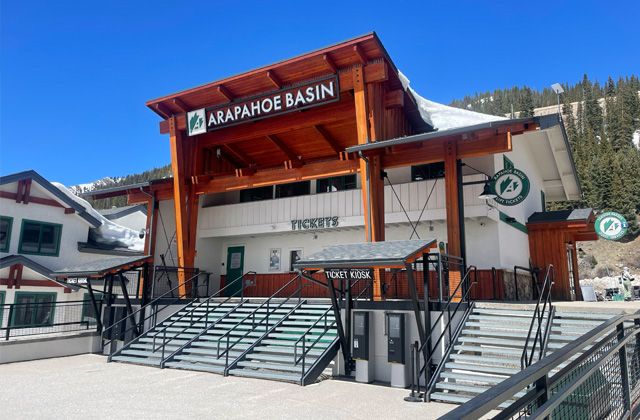
When the Alterra acquisition of Arapahoe Basin is completed, it'll be a moment of truth for Alterra, who hopes to prove that they thrive on the individual personalities of each of their resorts.
In less self-satisfying news this week, we caught a pretty interesting highlight from Travel Weekly of all places, that shares some really appealing insights from Alterra CEO Jared Smith. In that article, Travel Weekly distills a number of interesting comments made by Smith at the Mountain Travel Symposium this past week. Amongst the comments shared, two topics stand out: Alterra’s recognition of the financial barrier to entry for our sport, and how Alterra hopes to differentiate itself from Vail. Let’s dive into both of those topics a little deeper.
Of these two topics, the one that really caught our attention is Smith’s acknowledgement of how expensive it is for first time skiers and boarders to try the sport. As it stands, for a first timer looking to learn the sport at an Alterra resort, the price tag could easily stretch well beyond a thousand dollars. With a daily lift ticket generally costing between $150 - $300 a day, plus equipment rentals, lessons, lodging, and travel expenses, it’s easy to see how the cost of learning to ski could swell into a ludicrous amount. Even if you’re conservative with your estimates, $300 a day would be about the bare minimum for someone learning to ski or snowboard. $600 a weekend. Now, imagine how badly you’d have to want to do something to agree to spend $600 on it, just to see if you’d even like it? That’s really where the term “prohibitive” really starts to make sense here.
Keeping that in mind, it’s worth pointing out that fixing the issue isn’t as simple as just lowering daily lift ticket prices. As you know, Ikon and Epic passes have both moved towards a business model that emphasizes pre-selling season passes as it’s a bit of a win-win for both pass holders and resorts. For pass holders, they’re able to offer ridiculous discounts on the cost of daily access. Rather than paying $150-$300 a day, season pass holders pay closer to $1,000 a year. For a skier who goes 25 days a year, that drops the price to just $40 a day. The upside for resorts of course, is that they’re able to secure roughly 25-35% of their revenue before the lifts even begin spinning. Without getting too nerdy about it, just know that that’s really helpful for businesses - to have that much operating revenue heading into the season. This dynamic puts Alterra in a bit of a pickle though when it comes to balancing ticket pricing. On one hand, the current cost of a daily lift ticket makes the season pass option particularly appealing, helping secure that 25-35% up front. On the other hand, it makes it difficult to entice new customers to try the sport. So, what is Alterra to do? Well, according to Smith, the solution lies in any number of promotions aimed at dropping the price for first timers, ranging from free lift tickets with the purchase of a lesson, to all inclusive packages offered at a steep discount. While specific details have yet to be announced in regards to this, it is reassuring to know that Smith is aware of the issue, and looking to address it.
The other big topic of discussion at the Mountain Travel Symposium was the dichotomy between Alterra and Vail. Keeping in mind that these words only represent one half of the story, Smith eagerly made the argument that the difference between the two conglomerates lies in their management style. Vail operates in a top-down fashion, with their corporate office in Broomfield, CO making company-wide decisions that impact all of their resorts, while Alterra allows its resorts to operate more independently, with the ability to tailor their operations to their particular customer base. While this difference may seem minor, it’s about to be put to the ultimate stress test next season when Arapahoe Basin is set to join the Alterra family. As someone who just skied at Arapahoe Basin for the first time, I can personally attest to its independent, freewheeling nature, and can easily see why locals accepted the news of the acquisition with trepidation. For Alterra, the Arapahoe Basin acquisition represents a pivotal moment. When that particular mountain joins the fold, Alterra will have the chance to either cement itself as the corporation that enables each mountain to be itself, or they’ll prove that despite their philosophies, Alterra and Vail aren’t so different after all. Regardless of the outcome, the topic will certainly make news again in the fall. For now, we’ll turn you over to Travel Weekly to read more about Jared Smith’s most recent comments.
#3: In Wake of World Cup Race Cancellations, Zermatt Disallows Elite Ski Training on its Glacier This Summer:
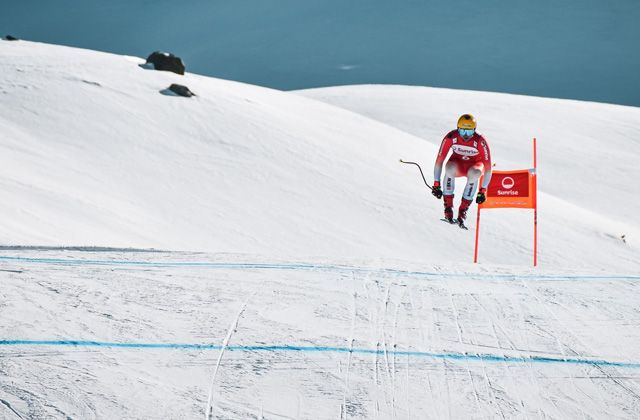
This summer, likely due to the cancellation of the Zermatt-Cervinia race, the Zermatt glacier will not be hosting any “elite” athlete training. Image: Zermatt Matterhorn on Facebook
In other ski news, we’ve got another update in regards to summer training opportunities. As you might recall, a few weeks ago we shared the news that Whistler’s Horstman Glacier would be closed to summer ski camps this season due to a lack of snow. This week, we caught another update from another part of the world that features similar news: the Zermatt Glacier will be off limits to “elite ski training” this summer. Unlike the decision in Whistler though, the Zermatt decision doesn’t seem to be related to snow conditions - at least directly anyways.
This week, Franz Julen, the man in the unique position of being both the chairman of the Zermatt mountain railways that provide access to the Zermatt glacier, and the head of the organizing committee for World Cup races, announced the decision that the Zermatt glacier wouldn’t allow elite athletes to train there this summer. In his announcement, Julen stated, “We were ready to provide training conditions and conduct races for the top athletes. This offer was not accepted.” Now, the article we’re citing here has been translated from German, and the quote itself is brief, but what we’re taking this to mean is that Julen set a price to allow elite athlete access on the glacier, and that price wasn’t accepted. We don’t exactly know who the offer was made to, and who declined it, but reading between the lines, our guess is that this year's “offer” was far more expensive than previous years. The reason for that assumption is this: it’s widely being believed that this decision is a retaliation for the FIS deciding to pull the Zermatt/Cervinia race from the calendar next year. While Julen denies that this is the case, his quote addressing the matter comes off with such sass that it’s hard to imagine otherwise: “We now have the right, just like the FIS and the other associations, to take stock of the situation and to analyze and reassess the matter in order to then find a solution.”
Regardless of the reasons behind the decision, the result is that two premier summer-ski destinations are either offering no training access, or limited training access. In all of our years of covering ski news here, we can’t recall a time in which this has ever been the case, setting us up for an interesting off season. While there are for sure other glaciers in Europe that could absorb some of the athletes looking for a summer training venue, we can’t help but wonder if this will mean additional training camps in the southern hemisphere. The U.S. Ski Team already holds a camp in South America, but it will be interesting to see if any other teams join them there, or if it results in some teams traveling to the snowfields of New Zealand. Time will tell, but for now, one thing’s for certain: early signs are pointing to a dramatic off season in the world of skiing. To learn more about this story, check out the report from srf.ch.
#4: In its 16th Season, Swatch Nines Shows No Signs of Slowing Down:
Finally, we round out the week with coverage of an event we previewed a few weeks back: the Swatch Nines event. Despite multiple name changes over the years, if you’re tapped into ski social media, you’re probably familiar with this iconic event as its uniquely shaped park features always result in a deluge of clips this time of year. This year was no different. Back for its 16th season, the Swatch Nines event once again brought together a slew of the top athletes in the sport, including names like Alex Hall, Alex Hackel, Hunter Hess, Jesper Tjäder, Kelly Sildaru, Kim Gusber, Max Moffatt, and tons more. Throughout the weeklong event, these athletes took advantage of some beautiful weather days to put down creative tricks on a mountain playground that all but demanded unconventional approaches. With a course chock full of side transitions, volcanoes, bowls, and more, the Swatch Nines event proved to once again be a creative outlet for skiers and snowboarders who’d spent much of the season in serious competition.
While the event itself is full of highlights, and we’ll almost definitely be blessed with multiple edits in the coming weeks and months, the highlight of the event was inarguably the massive hip which seemed custom built to break world records. While “The Perfect Hip” was never specifically intended to create record breaking opportunities, it was certainly built in suggestive fashion. For Kim Gusber and snowboarders Valentino Guseli and Brooke D’Hondt, the implication is all it took to set new records. In Gusber’s case, that meant boosting an insane 47.9 feet (14.6 meters) to beat David Wise’s record of 46.6 feet, set back in 2016. A few hours later, Valentino Guseli set the new snowboarding high mark of 37.7 feet, while Brooke D’Hondt set the first ever recorded high mark for women’s snowboarding: 23.9 feet. Now, at least in Gusber’s case, there’s a slight asterisk as David Wise’s previous record was set on a quarterpipe while the Nines feature was set up as a hip. According to event organizer Nico Zacek, the decision to build a hip instead of a quarterpipe was safety based, citing Kevin Rolland’s 2019 quarterpipe that resulted in a fractured pelvis. While purists may disagree, we’re all in on the decision to prioritize safety, and don’t feel as though the feature itself changes the record. At the end of the day, Gusber shot himself nearly 50 feet into the air, which is categorically insane, regardless of the configuration of the jump and landing. All in all, it was yet another successful Swatch Nines event, and we’re as excited as ever to watch the footage as it comes out. For now, we’ll send you over to the Swatch Nines website for more coverage, as well as this recap from Newschoolers, complete with quotes directly from Nico Zacek.