

Top Five Fridays: April 25, 2025
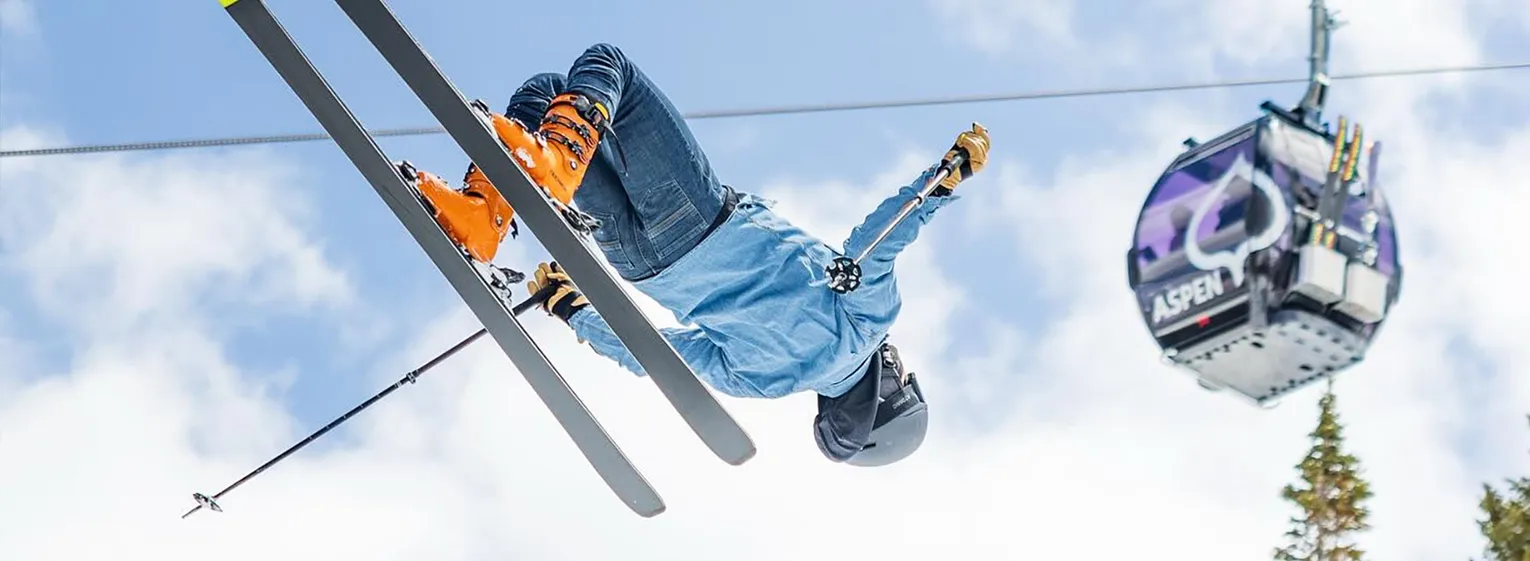
Aspen locals are flipping out over $80 million in newly announced upgrades this summer. More on that below! Image: Aspen Snowmass on Facebook
#1: FIS President Johan Eliasch Loses Bid to Become IOC President, But Establishes Himself as the Spokesperson for the Winter Games:
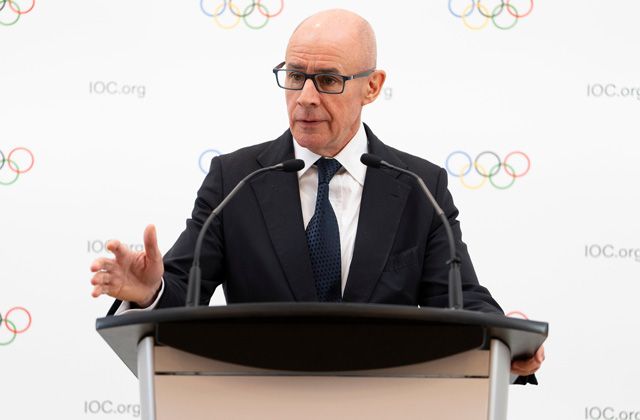
FIS President Johan Eliasch makes his case for the Presidency at last month’s IOC meeting. Image: IOC Media on Flickr
Hello, and welcome to Top Five Fridays, the April 25, 2025 edition! This week, for the first time in 2025, things are starting to feel a bit more summery around the TFF office. Yes, we know that several ski resorts remain open, including our home mountain Stowe which graciously extended the season by a week. Still, in the world of ski news, things have taken a thematic turn and we find ourselves faced with offseason subject matter, including resort development plans, Olympic Committee elections, financial reports, and more. Still, despite not being on-snow subjects, this week’s ski news round up could have big implications for the ski industry, so we recommend reading on.
First up in our list of off-season coverage this week is a story from SkiRacing.com that brings us up to date in regards to FIS President Johan Eliasch’s recent attempt to become the International Olympic Committee’s (IOC) new President. To be clear, this portion of the headline isn’t new news, as the elections themselves were held back in March, during the week of the 18th-21st. Rather, this week’s news is coverage of how Eliasch has handled that outcome, as well as what the attempt really meant to him. Allow us to explain.
First things first, let’s touch on the winner of that election, and the person who is now the IOC’s President: Kirsty Coventry. A native of Zimbabwe, Coventry is a 7 time Olympic swimming medalist, across 5 different appearances. Coventry has also been a member of the IOC since 2013 and is the former chair of the IOC Athletes Commission. In becoming elected, Coventry will be the first woman and the first African to lead the IOC. Comparatively, Johan Eliasch has never been a professional athlete, has no Olympic appearances, and has been a member of the IOC for just one year. As a result, his odds of winning the IOC Presidency were slim from the outset. So, that being the case, why did he run?
In Eliasch’s words, the goal of running for the position wasn’t just about winning, but also “to contribute to the movement and grow with the sport.” It’s unclear to us whether “the sport” refers to the Olympics on the whole, or to the winter side of the games, but it should be noted that Eliasch was the only IOC representative coming from a winter sports background. In other words, he’s taken it upon himself to be the spokesperson for the winter games at the IOC level. Ultimately, that’s where this story becomes interesting.
As the advocate for winter sports, Eliasch plays an important role for us at the Olympic level, whether or not he’s the organization’s president. For starters, his position as the President of the FIS means that our sports have a powerful spokesperson when it comes to elevating their appearance at the games. For popular sports like alpine racing and freestyle skiing and snowboarding, that means continuing to amplify their presence and making sure that they remain staples of the Winter Olympics. It also, though, means advocating for the inclusion of new sports, such as Ski Mountaineering and Freeride.
Perhaps most importantly though, Eliasch sees his role as the unofficial winter sports advocate as a way to bring climate change to the forefront of the conversation. While Summer Games certainly notice the effects of climate change, it’s winter sports where the impact is most immediately and noticeably felt - a fact that Eliasch hopes to leverage as a means to bring more attention to the dire situation.
Ultimately, for us, that’s what this story is really all about. When Johan ran for IOC President this year, it’s likely that he knew how long his odds were. Rather than let that deter him though, he decided to take the opportunity to shine a light on winter sports and position himself as the de facto spokesperson for the Winter Games. As skiers, it should be reassuring to know that we have such a powerful advocate at the highest levels of the Olympics. For more on this, check out the report from SkiRacing.com.
#2: Vail’s Ski Season Metrics Show Increases, Decreases, and Ultimately, Stability:
Despite seeing a slight decrease in skier visits, Vail Resorts, owner of the Epic Pass, saw a slight increase in lift ticket revenue, indicating that they currently have a stable business model. Image: Vail on Facebook
Next up in ski news this week is a headline coming to us by way of Vail that shares some of their metrics from this past season. Now, before we dive into this one, we want to be clear about what this report is. It’s not an earnings report, and it’s also not an industry wide report on overall skier visits. We’ll share both of those reports in the coming month or so as they become available. Rather, this is a report from Vail that compares their skier volume through April 21st, as compared to the year prior. In other words, it’s not a comprehensive financial report, but it is an indicator of the company’s key metrics this year. Keeping that in mind, let’s take a look at some of what was revealed this week.
Amongst the handful of stats shared by Vail, perhaps the most eye opening one is the fact that overall skier visits were down 3.1% as compared to the same period last year. An eyebrow raising statistic, it turns out that it’s only half the story. The other half of the story is this: despite a decrease in skier visits, Vail’s overall lift ticket revenue was up 3.4%. In other words, despite welcoming less skiers and riders to their slopes, Vail was able to increase revenue. So, what does this data mean? Well, there are all types of hypothesises that we could follow up on based off this data - inquiries regarding daily lift tickets, considerations regarding how often a season pass was used; the list of questions could get lengthy. Instead of going down any number of rabbit holes regarding what this data could mean, let’s just take it at face value: Vail has found a way to maintain or increase lift ticket revenue while decreasing skier traffic. Again, we could surmise what this means in terms of their business practices, but let’s instead focus on one of the key points here: Vail saw a decrease in skier traffic.
Keeping in mind that Vail’s bottom line remains healthy, this tidbit could turn out to be good news for the broader ski industry. For one thing, one of the biggest criticisms of multi passes has always been the overcrowding that’s come about as a result of consolidating passes. While 3.1% may not seem like a significant decrease, it does represent less ski traffic at resorts that have had overcrowding issues in recent years. The second implication of this statistic might suggest a redistribution of skier traffic, and therefore an increase in visitations at non-Vail resorts. At the moment, it’s too soon to say whether or not that’s the case, but when the NSAA’s annual skier visitation data comes out, we might be able to draw better conclusions. Afterall, if overall skier visits remain up this year, while Vail’s have decreased, it stands to suggest that Vail skiers have begun to move onto other options. If that is in fact the case, it could indicate an even healthier ski industry as Vail’s bottom line remains consistent while other resorts also see an uptick in visits. It’s too soon to say with certainty that that’s the case, but as soon as the annual skier visitation report is released we’ll be sure to circle back with more information. For now, check out the press release from Vail.
#3: Aspen Snowmass Announces $80 Million in Offseason Developments:
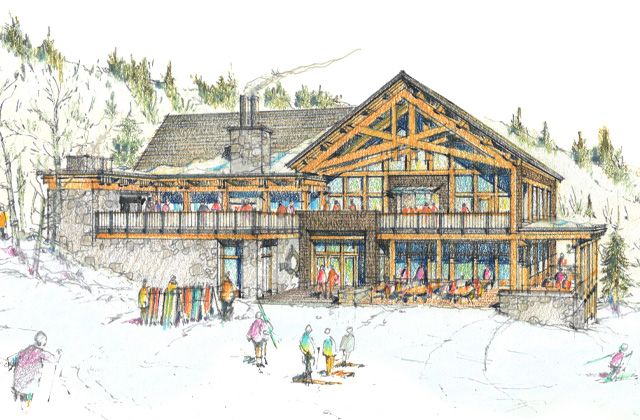
A rendering of the new Ullrhof lodge, which will look to incorporate the building’s historic charm into a more modern design. Image courtesy of Aspen Snowmass
Moving on to other news, our next topic reads like a pretty classic offseason headline: Aspen Snowmass has announced plans to spend roughly $80 million in on-mountain upgrades this summer. While this type of investment into infrastructure isn’t entirely unexpected from a resort like Aspen, this round of upgrades comes with the stated purpose, “to more rapidly upgrade on-mountain infrastructure in the coming years to remain North America's premier mountain resort destination.” In other words, Aspen’s $80 million offseason upgrades aren’t coming by way of functional necessity, but by way of competitive necessity. So, what are these new upgrades, exactly?
The highlight of this new project are likely the two new lifts being installed. The first of those, the Elk Camp 6 Pack lift which is set to replace a quad chair, will not only increase the uphill capacity of skiers and snowboarders to the Elk Camp area, but will also significantly increase summertime capacity when the lift is used to service the Snowmass Bike Park. That, as it turns out, was actually one of the main drivers for the upgrade, and serves as a not so subtle reminder that ski resorts are evolving into four season destinations. The other lift that’s being replaced is The Cirque’s platter lift, which will be replaced with a T-Bar. Serving the mountain’s highest and most extreme terrain, the upgrade to a T-Bar will effectively double the area’s capacity.
In other, off hill developments, Aspen Snowmass is also planning on spending significant money to upgrade the dining experience at two of its establishments: the classic Ullrhof mid mountain lodge and the Elk Camp restaurant. At Elk Camp, the renovations will be somewhat modest, with a simple expansion of the restaurant to expand its outdoor footprint and add 120 seats. The Ullrhof, though, is seeing far more significant changes, as the existing 56 year old building is set to be knocked down entirely and replaced with a state of the art, all electric, “mountain modern” building capable of seating 500. That project, being much more substantial, is set to take two years to complete, slated for completion ahead of the 2026/2027 season.
That’s it for now from the world of offseason development news, but as spring turns to summer, you can be sure we’ll have plenty more stories like this in the coming months.
#4: The Freeride World Tour Trades Kicking Horse Stop for a Return to Haines, Alaska:
Get a glimpse of what lies ahead in Haines, with this replay of 2017's winning run.
Finally, for our last highlight this week, we’re bringing you a bit of a two parter from the world of Freeride. First up on that mini list is the announcement that the Freeride World Tour will not be returning to Kicking Horse, British Columbia next season. After being the North American staple of the Tour for the past 8 seasons, next year will be the first season without the iconic stop since 2017. During that span, Kicking Horse has hosted an FWT stop at either their Terminator 1 South venue, or their iconic Ozone venue. For those of you who’ve followed along in recent years, Ozone is the venue where Max Hitzig stomped the massive backflip off the pyramid drop back in 2023 in what was one of the most memorable runs in recent years. For both athletes and spectators, Kicking Horse had become one of the most anticipated venues each season. Keeping that in mind, you might be wondering what happened. Why did the Tour opt out of Kicking Horse? Enter part two of our update.
While we don’t know for sure whether or not these two headlines are directly related, we do know that Haines, Alaska has just been announced as a stop on the 2026 Freeride World Tour. Having been absent from the schedule since 2017, tour organizers and athletes alike are incredibly excited to get back to the venue which was commonly known as “The Dream Stop” during the three year stretch in which it was part of the circuit. Looking back at footage from those events, we can see that the Haines venue offers a solid mix of steep pitches alongside well spaced cliff features. We can also see what freeriding looked like 8 years ago, and not to take away from athletes who were competing at that time, it feels safe to say that the sport has advanced significantly. As such, we anticipate next year’s stop to be full of never been done lines and tricks as a new era of freestyle oriented freeriders take on the Haines venue for the first time.
Before rounding out our coverage of FWT schedule announcements ahead of next year, we also want to quickly remind you that the first ever FIS Freeride World Championships are also scheduled for next season, taking place in Andorra from February 1-6th. As such, in addition to the 6 scheduled Freeride World Tour events, we’ll also be treated to a seventh event next year, with the standalone World Championship event which will mark the FIS’s first attempt to host a Freeride event that utilizes an Olympic style qualification system. To learn more about that, click here.