

Top Five Fridays: April 4, 2025
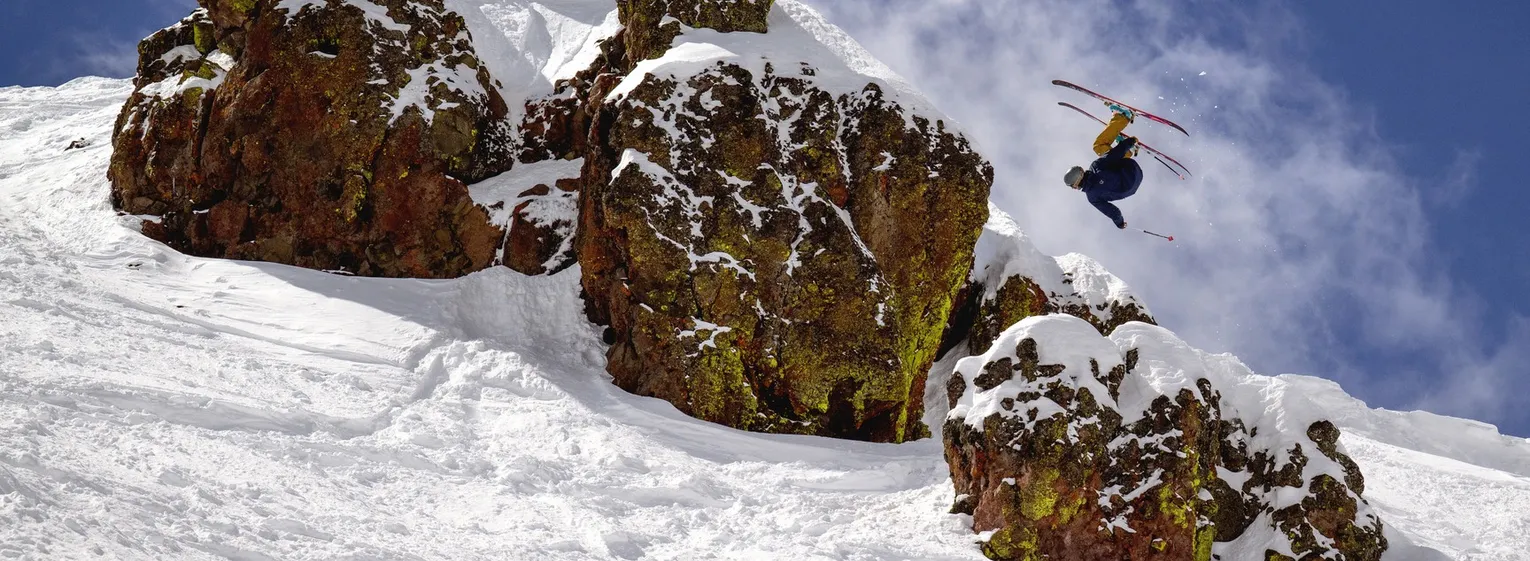
An undisclosed athlete floats what appears to be either a flat 3 or a wackflip off a feature on the Silverbelt Classic venue at Sugar Bowl resort. More on that in highlight #4! Image: Sugar Bowl Resort on Facebook
#1: Nearly 10 Years After Being Rocked by Scandal, Vermont’s Burke Mountain Expected to Be Sold to a Group of Local Investors:
At Burke Mountain, it’s anticipated that the sale of the ski area to a group of local investors will happen soon, ensuring that the community remains at the forefront of the resort’s experience for years to come. Image: Burke Mountain on Facebook
Hello, and welcome to Top Five Fridays, the April 4, 2025 edition! While we know we typically tend to use the second sentence of our weekly reports to hype up what you’re about to read, we really mean it this week when we say that this is one of the most interesting Top 5’s we’ve had in a while! From personal beef between myself and a certain ski area owner in Central New York, to an incredibly interesting story regarding the business acumen of Indy Pass owner Erik Mogensen, and a triple header highlight consisting of coverage from three different freeski competitions - this week is packed with drama and intrigue that you won’t want to miss. All of that, and we haven’t even mentioned the top headline for this week: Vermont’s Burke Mountain is expected to be sold to a group of local investors in the coming weeks.
For those of you who’ve been following the Burke story closely, you likely already know that last month, for the third time, court-appointed receiver Michael Goldberg announced that the sale of Burke Mountain was imminent. The first two times he made this statement, the deal fell through, ultimately frustrating locals who have been growing tired of the nearly decade-long receivership. This week though, last month’s promise was back with another update that’s given locals plenty of hope: the ski area is expected to be sold to a local investment group called Bear Den Partners LLC that has a community-centric vision for the mountain moving forward.
While we don’t necessarily know everyone that’s involved in this partnership, the report from VT Digger does give us a handful of names, and all of them are encouraging. On that list are members of the Graham family, who’ve invested heavily in both the mountain, as well as Burke Mountain Academy - one of the more storied race academies in the United States, and the one that’s credited with training Mikaela Shiffrin throughout her junior years. Also on the list of investors is Jon Schafer, owner of Berkshire East Mountain Resort in Massachusetts and the man who would oversee operations at Burke if the deal goes through.
Perhaps most encouraging to locals though, are the comments made by Ken Graham regarding the group’s vision for the resort. In an ideal world, the new owners of the Burke would make upgrades where necessary while continuing to focus on maintaining the ski area’s community and decidedly non-corporate vibe. As it turns out, that’s perfectly in line with Graham’s vision. In his own words, “We’re not trying to change the culture and the ethos and everything that makes Burke special… The mountain is separate from the whole corporate ski experience that’s growing all over the country. It’s sort of back to the roots of why people love skiing in the first place, and that’s what we want to protect and build.”
Prior to this week’s announcement, locals had been growing restless as their resort had been in limbo ever since the EB-5 scandal occurred that rocked both Jay Peak and Burke Mountain back in 2016. Those frustrations grew even stronger about a month ago when Seven Days VT released a report that suggested Michael Goldberg had turned down an offer from two Vermont men worth $10 million. For locals who just want to see their mountain sold to a permanent owner, it was a frustrating update. Now, however, it’s come to light that not only did the two men who offered $10 million attempt to lowball Goldberg at the last minute, but he’d also received a higher offer from the Bear Den Partners, whom he deemed to be better fit for the mountain’s longterm goals. As a result, many of those same locals who’d been frustrated are now ecstatic with recent developments.
While the deal isn’t complete yet, all signs point towards it happening soon. From here, Goldberg and the Bear Den Partners will need to sign a final contract, which will then be passed along to the federal judge that’s overseeing the receivership. Should they approve the contract, it will conclude Goldberg’s two part mission to rescue both Jay Peak and Burke Mountain from their previous owners, and Burke will find itself in the hands of investors who are highly motivated to ensure its success well into the future. For more on this, check out the report from VT Digger.
#2: In Central New York, Shady Ski Area Owner Peter Harris Found Guilty of Violating Antitrust Laws:
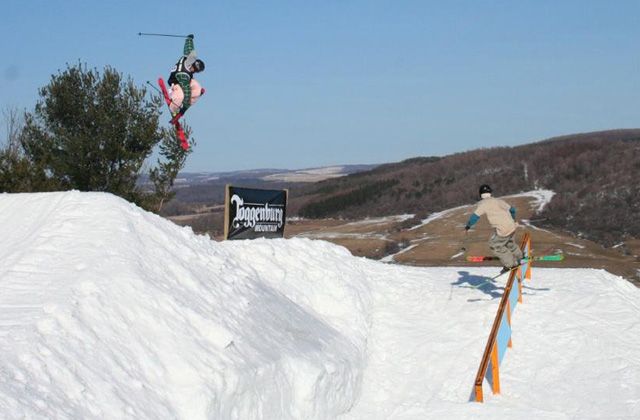
Friends of mine, Nick Mir (Left) and Erik Van Ingen (Right) showcasing their talents at a park shoot at Toggenburg back in 2008. Losing the resort in 2021 was a significant detriment to the community. Image: SnowRidgeParks on Newschoolers.com
Our second highlight this week is a big one for those of you are believers in karma, or the idea that justice is ultimately unavoidable. It’s also a big one for me, personally, as it involves the ski area I learned to ski at, the ski area that made me fall in love with the sport, and a man that I’ve had personal beef with since I was just 14 years old. To help set the scene for this highlight, allow me to describe the ski scene in Central New York.
My hometown is a little place called Tully, smack dab in the middle of New York, just about 20 minutes south of Syracuse. In Tully, there’s a ski area called Song Mountain, where I learned to ski and where you could find me 5 days a week throughout middle school. A couple of towns to the west, there’s a ski area called Labrador, and a couple more towns over, there was another ski area called Toggenburg. In other words, when I was growing up, there were three ski resorts within about 30 minutes of Syracuse, as well as within a 30 minute range of each other.
At that time, the three ski resorts were all owned by different people, with Song Mountain being owned by Peter Harris. Growing up as a kid in the early 2000’s, all my friends and I really wanted at Song was a terrain park. From what we could tell though, all Peter Harris wanted was promise us in October that he would build one, and then become extremely upset with us in January when we asked why there wasn’t one. As such, a personal beef was born, resulting in my friends and I relocating to Toggenburg, where we found an incredible community and our love of skiing turned into a love of ski culture.
From there, we need to fast forward about a decade, to 2014, when Peter Harris purchased Labrador Mountain, giving him ownership of two of the three ski hills in the area. From there, we’ll need to skip ahead again to 2015, when the Meier family purchased Toggenburg. At that time, the Meiers owned another ski area, called Greek Peak, which is about a half hour south of the CNY trifecta, and an hour south of Syracuse. Their goal at that time was to draw customers from Syracuse down to Greek Peak, utilizing Toggenburg as a marketing technique. Unfortunately, that effort didn’t quite pay off for the Meiers, and in 2021 they sold Toggenburg to Peter Harris, giving him ownership of all three ski areas. That would’ve been all well and good, had he not shut Toggenburg down as soon as he bought it.
When he did that, there was immediate outcry from the community, accusing him of creating an illegal monopoly. Harris, on the other hand, denied this, saying that the regional ski market wasn’t big enough to support three resorts, so he shut down Toggenburg in order to consolidate the market to his two other resorts. Locals remained angry however, and in 2022, New York’s Attorney General, Letitia James, sued Peter Harris’s company, claiming that it had violated antitrust laws.
This week, we finally learned the ruling of that case: Peter Harris is in fact guilty of violating the law. We also learned quite a bit about the backstory, as the case itself resulted in quite a bit of disclosure that led to a revealing of the full story. As it turns out, Harris had been attempting to purchase Toggenburg for more than 6 years, making direct appeals to the owners prior to the Meiers, as well as using a third party to make a covert offer in order to test the hypothesis that the resort’s original owners simply didn’t want to sell it to him. In other words, even early on, it was an open secret that Harris badly wanted to purchase and close Toggenburg.
Through a mix of persistence, patience, and circumstances, Harris eventually got his wish. By June of 2020, during the height of the pandemic, the Meiers finally came to terms with the fact that their idea to use Toggenburg to drive business to Greek Peak wasn’t going to plan. Knowing that Harris was willing to overpay for the ski area, the Meiers saw an exit plan that would allow them to break even on their business venture. Finally, by March of 2021, the Meiers and Harris had signed a letter of intent, saying that Harris would pay a total of $2.25 million for the property and the equipment; a number that would allow the Meies to exit their failing business plan without a loss.
Fortunately for those angered by this outcome, Harris left quite a few breadcrumbs via Email during those negotiations that indicated his sole interest in buying the resort was to shut it down. Those breadcrumbs, as well as financial disclosures that showed a significant increase in market share at his other two resorts, were ultimately the evidence that NY Supreme Court Judge Robert Antonacci cited when he ruled last week that Harris had in fact broken the law. For skiers in the region who’ve been upset with his actions for years now, the ruling was confirmation of their beliefs regarding the situation. While there is certainly a feeling that justice has been served in this story, there is a bit of a catch: as of this moment, Peter Harris is not facing any penalties. While Antonacci ruled that Harris had broken the law, he was not ready to hand down the financial punishments recommended by AG Letitia James, as he wanted to make sure the numbers appropriately reflected the damages. As such, more hearings are on the horizon to determine the size of the financial penalties that Harris will face.
All told, it’s a pretty wild story, and one that hits particularly close to home for me personally as these are the ski areas I grew up skiing at, while Peter Harris has been a lifelong nemesis. To learn far more details about how this shady transaction went down, give this report from Syracuse.com a read.
#3: Indy Pass and Black Mountain Owner Erik Moogensen Has Turned the Ski Area into a Test Lab for His Technology Company:
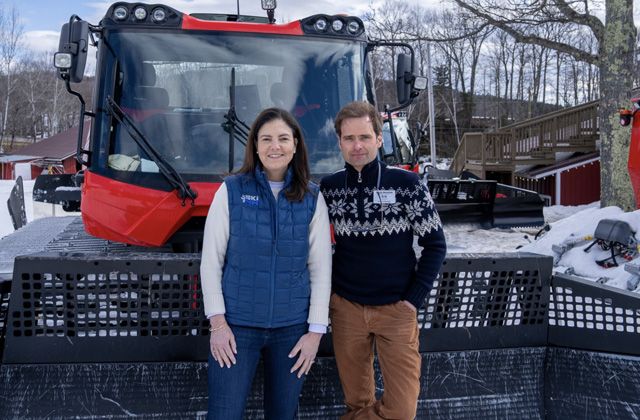
Black Mountain GM, Indy Pass Owner, and Entabeni Systems Owner Erik Mogensen poses for a photo op with New Hampshire Governor Kelly Ayotte, who stopped by to show her support for what’s happening there. Image: Black Mountain on Facebook
Now that we’ve shared an extensive story about the owner of a ski area doing wrong by his community, it only feels right that we should follow up with a story that’s the exact opposite: a ski area owner doing right by his community.
If you’re a regular reader of ours, then you might recall a story we shared back in February, when the owner of Black Mountain, NH didn’t let a little wind shut down his mountain, and instead offered free cat rides to guests. In that story, we briefly recapped the recent history of the ski area, which saw it nearly close ahead of last season, only to be rescued by Indy Pass owner Erik Mogensen. While Mogensen currently owns the resort, his plan is to sell it to new owners once a co-op can be formed to complete it. One thing that we didn’t touch on in that highlight though was how Mogensen came to own the Indy Pass as it wasn’t exactly relevant at the time. This week though, it is.
Prior to owning the Indy Pass, Erik Mogensen was, and still is, the owner of Entabeni Systems. In their words, Entabeni Systems provides, “world class software and hardware engineering in true ski bum style.” In our words, they essentially offer ticket scanners and point of sale technology that allows independent ski areas to collect data in order to better understand their customers’ habits. If you’ve skied at an Epic or Ikon resort in recent years, you’re familiar with this type of technology: it’s the pass scanners you encounter at chairlifts. Many smaller ski resorts though, rely on Entabeni Systems to help them achieve similar levels of data mining in order to understand how their pass and lift ticket holders use the mountain. For example, resorts using Entabeni Systems might be able to figure out what percentage of their season pass holders show up on a typical Saturday, which chairlifts tend to be most popular, or even which menu items are selling best in the cafeteria and at what time. Having numerical data can help them run the resort more efficiently in an effort to keep up with bigger resorts who might have more cashflow at their disposal.
While none of this is exactly new news, the revelation that we did learn this week is that, while Mogensen’s goal remains to transition Black Mountain into a co-op model, he’s also been taking the opportunity as owner of the mountain to turn it into a bit of a test lab for Entabeni. In other words, not only has he upgraded their pass systems to work with his technology, but now he’s also put himself in the role of his customer, potentially enabling a whole new world of understanding for how his technology company can best support ski areas. While Mogensen obviously understands the value of his technology at a high level, this year’s experience of working with it as a resort operator has opened his eyes to new ways in which it can be used. While this is an entirely hypothetical example, say a question came up in the rental department regarding how many size 25.5 boots they should order for next year. As the leader of a tech company, Mogensen might not have considered this specific use case. As the owner of a ski area though, it’s more likely that he’ll encounter niche questions like this, which he can then implement new features for within the Entabeni Systems interface.
All in all, we just thought this was a really cool story about someone who is arguably one of the most clever people in the ski business right now. From his role in growing the Indy Pass in recent years, to his rescuing of Black Mountain with the intention of converting it into a co-op, his willingness to use groomers to keep a windy ski day alive, and now his use of Black Mountain as a test lab to better improve his tech company for other independent ski areas, it’s safe to say that Erik Mogensen is leaving his mark as one of the most positive players in the ski industry. To learn more about this story, check out the writeup from the Associated Press.
#4: Triple Freeski Highlight: the FWT Turns its Attention to the Olympics, While Alternative Comp Season Kicks into Gear with the Silver Belt Classic and Swatch Nines:
To fully appreciate the Silver Belt Classic, check out this video that tells the story of the event’s past and present.
Finally, we’re wrapping things up this week with a triple highlight. While each of these topics would typically get its own highlight, we felt the previous three highlights were all interesting enough to also warrant full coverage, leaving us with far more news that we can handle this week. As a result, we’re bringing you a rare triple pack of headlines for our final highlight. With so much to cover here, it’s best if we stop wasting time and just get right to it.
First up in this three pack is an article from the Financial Times that dives deeply into the world of the Freeride World Tour and its quest to become an Olympic sport. As you’ve likely noticed, we’ve increased our coverage of this sport in recent years, in part because I personally coach athletes at the junior level, but also in part because promises of Olympic inclusion have been occurring more regularly ever since the FWT was purchased by FIS. As a result, we’ve wanted to do our part to grow the sports exposure so that when it is in the Olympics, there’s an audience for it that understands what they’re seeing.
As for the status of those Olympic dreams? Well, if you’re to believe the Financial Times piece, it’s expected that the International Olympic Committee will vote to include the sport in the Olympic games in their September meeting. If they do, it will likely make its debut in 2030, at the French Alps games. Of course, it would also mean significant changes to the sport itself - some of which we’ve already seen come to fruition at the junior level as a result of the FIS’s purchase of the organization back in 2022. Amongst all of those changes though, the most significant would likely be the ability for athletes to attract more lucrative sponsors as well as gain the support of government funded national teams to help support their training and travel. All told, the Financial Times article does an excellent job of breaking down both the history and intricacies of the sport, as well as what it would mean for it to become a part of the Olympic games. If we’ve managed to successfully instill the Freeride bug in you this season, we highly recommend giving the article a read.*
In other freeski news, we also want to let you know about two other competitions happening either currently or this week, in what we’ve come to refer to as “alternative comp season.” In recent seasons, this time of year has come to mark a celebration of sorts amongst athletes, as a number of one-off competitions occur that offer unique premises. One of those competitions is the Silver Belt Classic at Sugar Bowl, Ca. Named after a wild off-piste giant slalom event that the resort used to hold way back in the 1940’s (we can only imagine how rowdy that must have been), Sugar Bowl brought back the Silver Belt Classic last year, transforming it into a freeride event that combines natural features with jumps that are built by the athletes themselves. While that combination alone makes the event worth watching, the level of competition also adds to the intrigue, with pro level athletes like former Freeride World Tour competitor Xander Guldman competing against local talent that’s eager to prove themselves. The result is an incredibly entertaining competition that ultimately highlights a lot of upcoming talent. To learn more about this year’s event, which is currently underway, check out Sugar Bowl’s website or Instagram.
Finally, rounding out this triple header, we want to quickly mention that the 2025 edition of the Swatch Nines is also just about underway. This competition, which is potentially the most freeform format of them all, simply asks an invited roster of skiers and snowboarders to throw down on what is consistently the most unique park build of the year. At the end of the weeklong event, riders vote on a “winner,” although truthfully, that always feels like a bit of an afterthought. Ultimately, the desired outcome of this event is a slew of Instagram worthy highlights, featuring athletes performing mind bending stunts on features that could easily be considered works of art. To learn more about this year’s feature set, check in with DownDays.Eu.
*Quick editor’s note: the Financial Times piece is behind a paywall, but for some reason we were able to access it after a few tries. Best of luck!