

Top Five Fridays: August 4, 2023
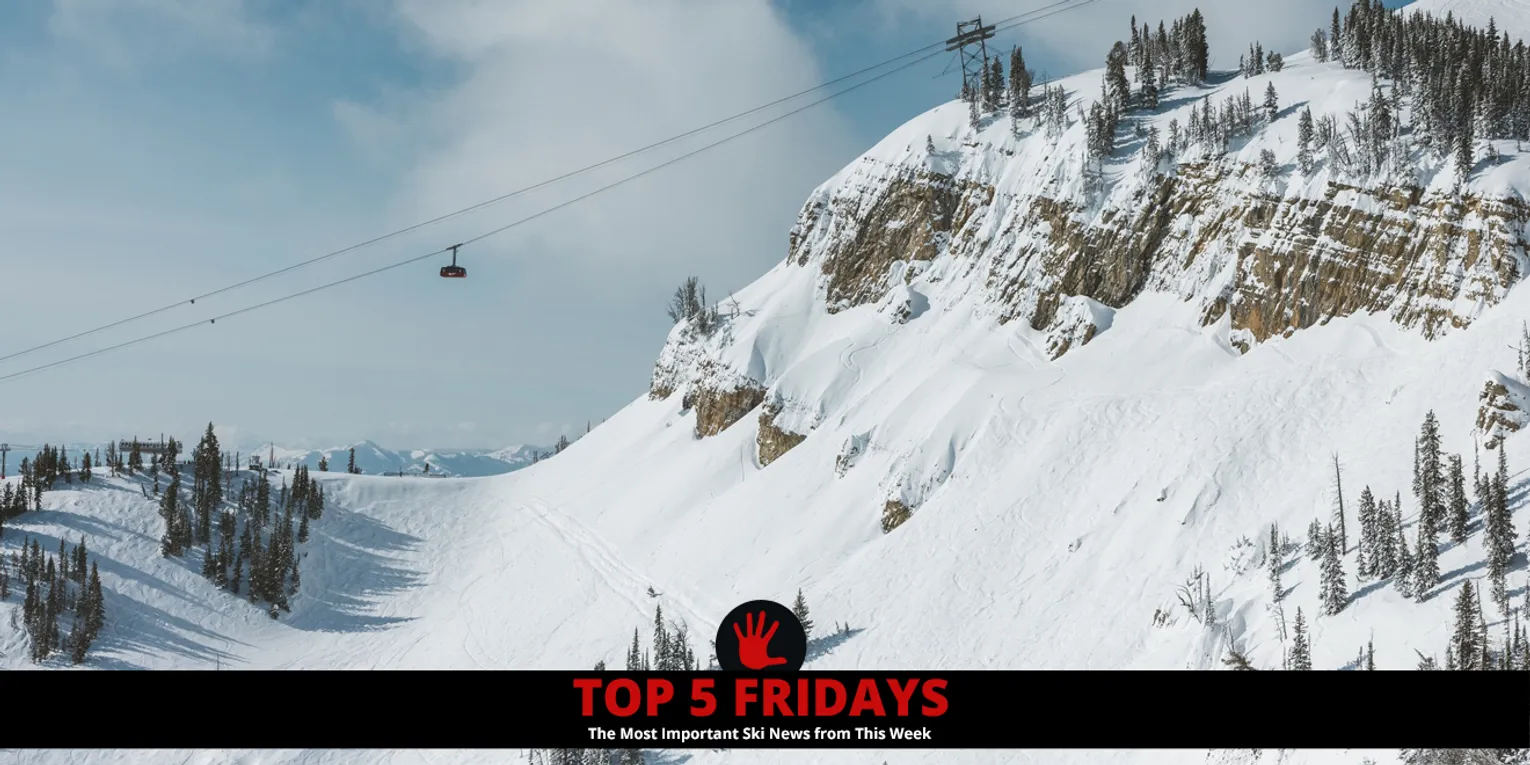
Lead Image: A look at Jackson Hole’s iconic tram, implemented under the leadership of the Kemmerer family. This week, they announced that they will be selling the resort. More on that in highlight #1! Image shot by Stephen Shelesky for Jackson Hole Mountain Resort
#1: Breaking News: Jackson Hole Mountain Resort to Be Sold by the End of the Year:
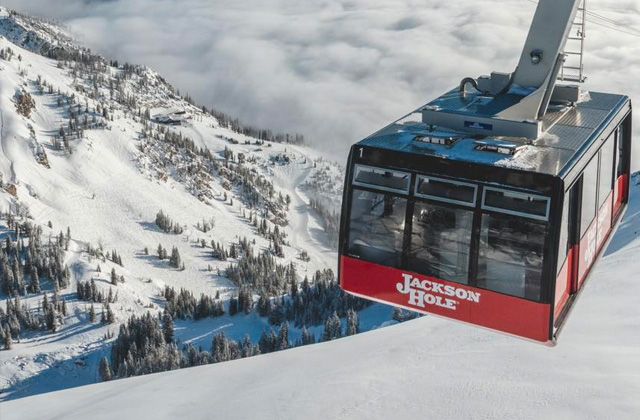
Another look at the iconic Jackson Hole Tram. Image: Jackson Hole Mountain Resort on Facebook
Hello, and welcome to Top Five Fridays, the August 4th, 2023 edition! As luck would have it, three out of four of this week’s highlights fall under the theme of “ski resort news.” Don’t worry though, we’re not just talking about chairlifts and lodge renovations. This week’s highlights are much more interesting than that. Case in point, highlight number 1: Jackson Hole is set to be sold by the end of the year.
Just yesterday, news broke directly from Jackson Hole itself that after 31 years of owning and operating the resort Jay, Connie, and Betty Kemmerer announced that plans to sell the resort are well underway. Being such a massive name in the ski resort world, and having existing ties to the Ikon Pass, you might be inclined to think that this news would mean that Jackson Hole had sold to Alterra for a mind boggling amount of money. As it turns out though, that’s not at all the case. Instead, the Kemmerer family has stuck with their goal of keeping the resort independently family owned and will be selling it to the families of Jackson Hole board members Eric Macy, Mike Corbat, and a small group of local investors. In doing so, the hope is that Macy and Corbat will be able to continue running Jackson Hole without significant changes, while Jay Kemmerer plans to stay on in an advisory role for the foreseeable future, helping to ensure a smooth transition. While it would’ve been easy for the Kemmerer family to have sold to Vail or Alterra for a massive amount of money, their decision to keep the resort independent is certainly laudable.
In rounding out this highlight, we want to take a quick second to acknowledge some of the incredibly impressive feats accomplished by the Kemmerer family during their 31 years of leadership. Since purchasing the resort back in 1992, Jackson Hole has replaced every single lift on the mountain. Additionally, they built two new gondolas: the Bridger Gondola in 1997/1998, as well as the Sweetwater Gondola in 2017. Most iconically however, they also oversaw the development of the aerial tram in 2008, during the thick of the financial crisis. In addition to these lift improvements, as well as a number of housing and land development projects, the Kemmerer’s also pursued green initiatives, with Jackson Hole ultimately becoming powered 100% by green energy in 2019. All told, it was an impressive run for the family, and it appears as though they’ve also wisely decided to step away while the resort is thriving, making a smooth transition possible. On that note, we’ll say kudos to the Kemmerer’s and good luck to the new owners! To learn more about this story, check out the full report directly on Jackson Hole’s website.
#2: There’s Trouble Brewing in Indy Land as the Indy Pass Demands Partner Resorts Pick a Side: Them, or Ski Cooper:

Image: Indy Pass Partner Resort Swain Mountain's Website.
Next up in ski resort news this week is a juicy story from the world of multipasses. As you probably know already, there’s more or less two tiers of multipasses in the ski industry: the two that offer access to multiple large ski resorts (aka Epic and Icon), and then passes like the Indy Pass, the Power Pass in the Southwest, the Powder Alliance pass, the Freedom Pass, or even Ski Cooper’s season pass that offer access to small and mid-size ski resorts. In this second tier of passes, the marketing message is more or less the same: help these ski areas stay independent by opting out of one of the two mega passes. It’s a feel good message that’s been extremely effective in generating business for these ski resorts as they aim to avoid consolidation. This week though, the feel good vibes were put to the test as the Indy Pass, under new ownership, made what could be considered a combative move against one of its peers: Ski Cooper.
Before we dive into the conflict here, a bit of background is required. Last July, we posted a highlight in which we shared the story of Ski Cooper: a midsize ski area in Colorado that has quietly blurred the line between offering reciprocal season pass deals, and becoming a full fledged multipass. At Ski Cooper, the resort currently offers an adult season pass for the price of $479 that includes three days of skiing access to what is now 62 ski ski areas across the world (it was 73 prior to this story, but we’ll get to that). In other words, a Ski Cooper season pass is effectively a multipass masquerading as a season pass to a single independent ski resort. Within the (formerly) 73 partner resorts, there were 39 ski areas that were also members of the Indy Pass. In effect, this makes a Ski Cooper pass a direct competitor to the Indy Pass, and not just another independent ski area. From here, you can already start to see where the conflict arises.
Over the course of the last few weeks, the Indy Pass contacted the 14 partner resorts that they shared with Ski Cooper that aren’t also members of either the Powder Alliance or Freedom Pass (it gets complicated, stick with us) and demanded that they pick a side. Of those 14 resorts, 11 chose to leave Ski Cooper, 1 left the Indy Pass, and 2 decided to leave Ski Cooper but join the Freedom Pass which means their guests can still ski at Ski Cooper. Now, if you’re like us, your first thought was probably, “Why did 11 of the 14 resorts give into the Indy Pass’s demands so easily?” Good question. The answer, of course, is in the money. When a resort is a part of the Indy Pass, it means that they get a payment whenever an Indy Pass holder visits their resort. That means, on average, partner resorts receive about $80,000 a year from the Indy Pass. The Ski Cooper pass, on the other hand, has no such payout. Instead, the agreement is simply in place to drive skier traffic to these resorts in hopes that they’ll spend money in other areas of the resort. In other words, financially speaking, the Indy Pass is a far better deal.
While the story itself is incredibly interesting if you’re someone who loves following the liquid nature of business dynamics and relationships, the implications of this development are equally as fascinating. Take, for example, what this means for Ski Cooper. While the ski resort showcased world class creativity in building their season pass into a formidable multipass offering, which undoubtedly resulted in significantly more season pass sales, it’s now been shown that their agreements with partner resorts are shaky at best. In order to maintain this multipass offering, it seems inevitable that Ski Cooper will have to sweeten the pot financially for its partners or risk having them be absorbed by their competition. For the Indy Pass on the other hand, it’ll be interesting to see what this does to their brand reputation. As the biggest player in the independent ski resort multipass game, they’ve leaned heavily on the concept of being there to support independent resorts. Now, under new ownership, this move immediately calls that stance into question as it eliminates full autonomy amongst its partner resorts. It brings up the question, “are Indy Pass resorts truly independent if they have to answer to the demands of the Indy Pass’s ownership?” It’ll be interesting to see how this all plays out, and if it results in a fracturing of this portion of the ski resort industry. For now, you can learn more from this excellent writeup from StormSkiing.com.
#3: Mont Tremblant Announces New Dry Slope Terrain, Opening August 18th:

A look at the new dry slope beginner trail at Mont Tremblant, opening to the public on August 18th. Image: Mont Tremblant
Whew, ok, let’s take a bit of a breather. That last highlight was a lot. In other, other, ski resort news this week, we caught a cool highlight coming out of Mont Tremblant, in Quebec, Canada. There, the ski resort announced that they’re officially offering summer skiing via a new dry slope trail! Now to be fair, the operation is quite modest, existing on Upper and Lower Equilibre, the resort’s most beginner terrain. At the moment, it appears that Tremblant is using this new dry slope offering as a way for those who are curious about learning how to ski or snowboard to start learning the basics during the off season so that they’re prepared for winter when it arrives. It’s a smart move, as covering a small beginner’s area in dry slope is cost effective, while also creating a potential return on investment once the winter hits.
While we have no idea what Tremblant’s long term plans or goals for this program are, we can’t help but to hope that this is a simple test run to see if interest exists in summer skiing and boarding in the region. Officially opening to the public on August 18th, this announcement certainly has the feel of resort management wanting to quickly test an idea before winter hits so that they can make an informed decision about investing more heavily into it next summer. It would be a sensible thing to do. Afterall, while we hate acknowledging it, it’s no secret that climate change has resulted in far less predictability in regards to winter weather, so getting ahead of the game by introducing dry slope terrain in order to offer year round skiing and riding would be a pretty savvy business move. Again though, this is all pure speculation. At the moment, all we know for sure is that Tremblant will be offering dry slope access every day from 8/18 - 9/4, and on weekends from 9/5-10/15, with tickets available for $37 CAD for those over 13 years old. So, if you’re jonesing to get those skis back under you, regardless of the terrain you’re on, consider heading up to Tremblant! You can learn more about this development here.
#4: The Farmers’ Almanac Winter Forecast Brings Hope for a White Winter to Much of the U.S.:
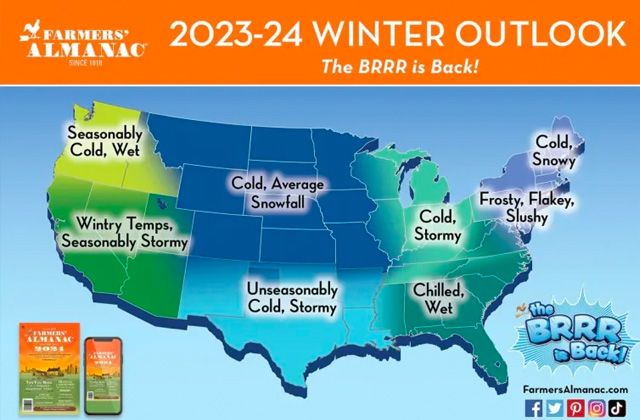
The Farmers' Almanac Official Winter 2023-2023 Weather Prediction Graphic. Image: Farmers' Almanac
Finally, we round out this week’s news with another winter forecast, this time from the Farmers’ Almanac. As you might recall, a couple of weeks ago we shared NOAA’s long range winter forecast, which more or less suggested that there’s a slightly better chance than not that much of the Northern U.S. will experience slightly warmer and dryer weather, while the midsection was more of a tossup. In other words, their prediction was a pretty soft “it might be a bit warm and dry up north, but who knows.” The reason for this largely stems from the fact that this winter will see a shift from La Niña to El Niño, a weather system in which much of the outcome of winter depends on where the polar jet stream enters the United States, as well as whether or not it locks in or varies in position.
It’s with all of this in mind that we’re pleased to share the Farmers’ Almanac winter 2024 prediction, which looks much more encouraging! According to this publication, most of the United States is in for a colder winter, with all ski regions receiving either average or above average precipitation. In general this means most of us will see significant snow if this forecast goes to plan, although in reading the report, there’s plenty of rain and sleet events mixed in for us here in New England. Our hope is that these storms would manifest as wet weather along the coast, while inland mountains would receive snowfall. But, you never know with New England weather.
As for how the Farmers’ Almanac comes to these conclusions, and why they’re different from NOAA’s? In short, it’s because they combine meteorological data, such as the fact that it will likely be an El Niño year, with astronomical data- something that NOAA doesn’t do. While the specific formula is a proprietary secret, the Almanac does admit that they use factors such as sunspots, tidal action of the moon, and position of the planets to help determine their forecast. Now, not to be a debbie downer here, but before we round out this highlight, we do want to add a dash of realism to it. While the Farmers’ Almanac generally has a pretty good track record, we have to admit, they were painfully wrong last year as they predicted a dry winter for much of California, Utah, and Colorado, while also predicting a snowy one for the northeast. In other words, they were exactly wrong. Still, this year’s predictions should give at least a little optimism heading into the season ahead as there’s a chance we could all be winners. To see the prediction in full, click here!