

Top Five Fridays: August 9, 2024
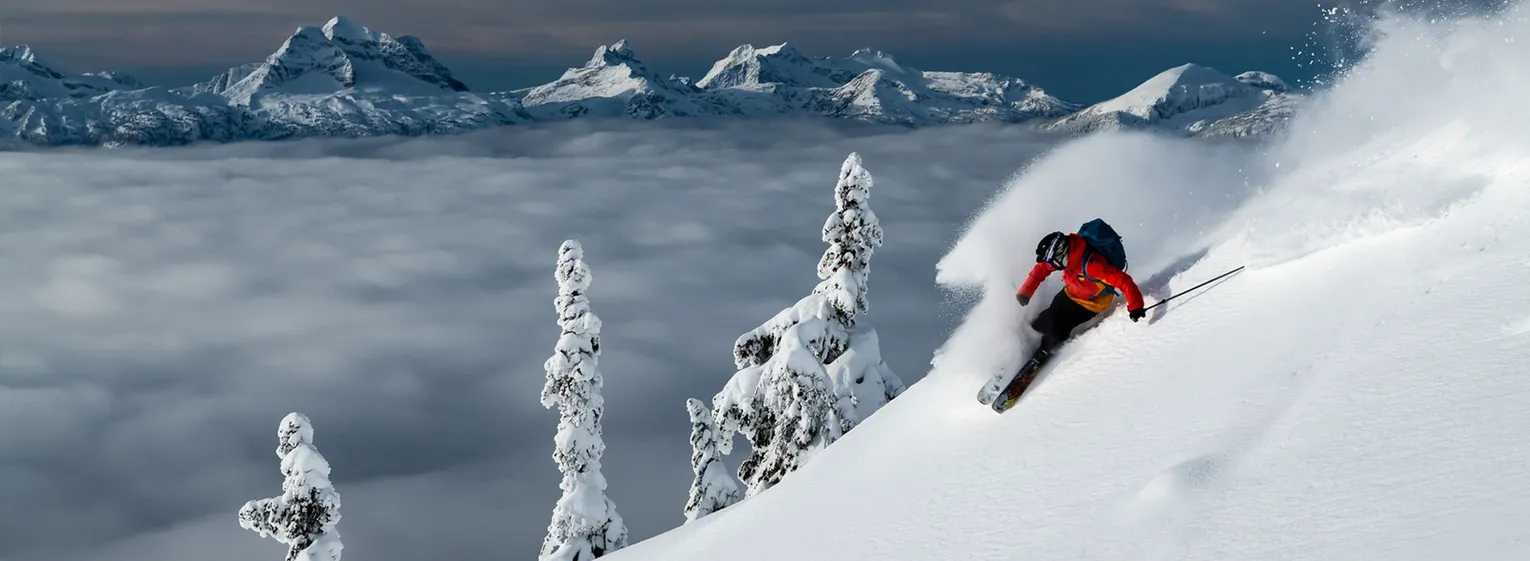
After an early career in which Chris Rubens sought extreme terrain by way of snowmobiles and helicopters, he’s had a change of heart and now chases peaks under his own power. This fall, he’ll be releasing a film highlighting his endeavors and the opportunities presented by human powered skiing. More on that below! Image: Chris Rubens on Facebook
#1: Atomic Employee Who Stole 1,900 Pairs of Skis Now Facing Up to 3 Years in Jail:
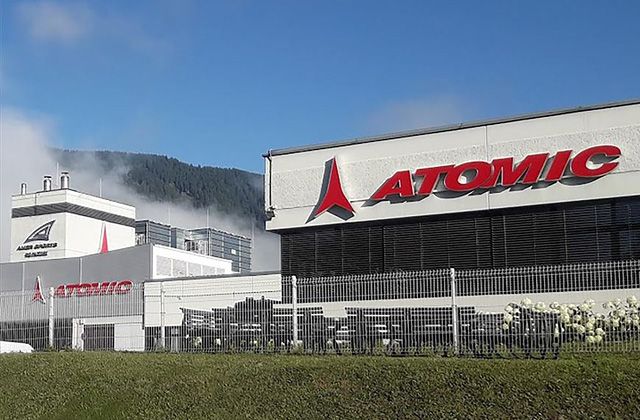
The Austrian Atomic factory, where the “Heist of the Year” took place. Image: Altenmarkt-Zauchensee Tourism Website
Hello, and welcome to Top Five Fridays, the August 9, 2024 edition! The theme for this week? Finances, as three of our four highlights tie into the economic system that we all know and love, called capitalism. Fear not though, while our first three articles all represent links between money and skiing, they’re also all very different. Case in point? Our first highlight is a multi-year theft perpetrated by a 57 year old man living in Austria. Here’s the story:
This week, Austrian publication Salzburger Nachrichten discovered the news that a man is currently facing legal prosecution for allegedly stealing 1,900 pairs of skis from Atomic. Now, this wasn’t some sort of meticulously planned, one time heist where someone pulled up with a box truck and threw nearly 2,000 pairs of skis in the back. No, this theft was of the slowburn variety, where the thief allegedly stole just a few pairs at a time. How, might you ask? Well, the crime was perpetrated by an employee at the Atomic factory who was working in the warranty department and was tasked with discarding skis that were deemed defective. Rather than accomplish the assigned mission though, the employee simply stashed them away and took them home at the end of the day. From here, he and an accomplice sold each pair for about €50 a piece, or about $54.61 at the time of this writing. Eventually, someone at the Atomic factory must have caught on as the employee’s house was raided and about 300 pairs of skis were discovered, ultimately providing evidence in the charges he’s facing.
Now that we have most of the information regarding the story, let’s have some fun analyzing this man’s decision making skills. In addition to the information we just provided you, it’s also important to know that the string of thefts lasted from about August 2021 to November 2023. For the sake of math, let’s call it two years. We also know that police discovered 300 of the missing 1,900 pairs of skis at the man’s home, suggesting that he likely sold about 1,600 skis, for $54 each, over the course of two years. If we’re okay with those assumptions, it means the culprit netted $86,400 over the course of his crime spree. Not bad, right? Well, let’s dive in a little deeper.
The article mentions that the man worked with an accomplice. Without knowing their agreement, let’s say they split the deal 50/50. Now the culprit is down to $43,200 in earnings. Over the course of two years, that’s about $21,600 a year. Still, not awful - until you factor in the punishment of course. As a result of his crimes, the man’s looking at a maximum of 3 years in jail. Looked at another way, this would be the equivalent of being paid $14,400 a year to go to jail for three years - and that’s assuming he’s not tasked with paying damages to Atomic on top of it, which he most certainly will be. Suddenly, it just doesn’t seem worth it.
Now, before we make our next point, we want to be absolutely clear: we are not advocating for a life of crime. But, that said, it also occurs to us that this guy was selling the skis way too cheap. $54 for a pair of skis? Without knowing the circumstances of the defects, it feels safe to say that this guy could’ve gotten at least $100 per pair. Now had he done that, all of the aforementioned numbers double and he at least looks a little less dumb. But, that’s the thing with petty criminals: most of the time, they just aren’t that smart. To learn more about what we’re calling the “Heist of the Year,” check out the writeup from Snowbrains.com.
#2: FIS Approves New Ski Helmet Sponsorship Opportunities:

Prior to last season, Red Bull athletes bent the FIS rules on helmet sponsorships by mimicking the color blocking on a Red Bull can, effectively making their entire helmet an advertisement. This summer, the FIS passed new rules that allow more brand partnership opportunities, while eliminating the ability to make a helmet resemble a sponsor’s product. Image: Marco Odermatt on Facebook
Moving right along to our next financial topic this week, we caught an update from the FIS that hopes to put money in the pockets of athletes at all levels new rules surrounding the placement of additional sponsorship decals on an athlete’s helmet. Interestingly enough, this positive update came about as the result of some rule bending back in the early 2020 seasons, courtesy of Red Bull team athletes. Prior to last season, Red Bull athletes had been using the allowed 50 cm2 area on the front of their helmets for the official Red Bull logo, while colorizing the rest of their helmets in the iconic blue and silver checkerboard pattern that Red Bull uses for their can designs. In effect, while the logo was limited to the allowed space, the entire helmet became an advertisement as it resembled the company’s primary product. This, as you might guess, upset the powers that be at the FIS.
Fast forward to this season, and the rules have been updated as a result of the debate. Now, the FIS has allowed athletes to add an additional 50 cm2 of advertising space on their helmets, as long as the brand logos fall within specified areas of the helmet. With the new rules, athletes can now have up to two commercial sponsors on their helmet, in up to three locations. The primary location remains the same, with the front of the helmet allowing for one 50 cm2 logo, while the sides of the helmet each have an additional location. Within the arrangement, athletes can choose to either put the same sponsor on both sides of the helmet with 25 cm2 sizing, or add a second 50 cm2 logo to one side of the helmet, or on the front above the other logo. In addition to the new logo placements, there is one other rule: helmets can no longer resemble a brand’s products. In other words, no more blue and silver Red Bull checkerboards.
Ok cool, so athletes are allowed to have an additional sponsorship on their helmet, why does it matter? Well, at the highest level of the sport, it supports the FIS’s ongoing mission to earn more money for athletes, thereby making skiing a more legitimate career choice. While the top athletes in the sport are making millions annually, the sport itself is still far behind any number of other professional sports. Ultimately, that leads to talented young athletes having to choose between pursuing a career in skiing or another sport, with the financial prospects of a different sport ultimately winning out. In other words, this move isn’t just about helping today’s FIS athletes, but also about showing younger athletes that there’s a career opportunity in ski racing.
Building on that claim is a second reason why this update is good news: it helps younger athletes afford the sport. In this article from SkiRacing.com, athlete Alex Fiva is quoted as saying, “As a young athlete, it is easier to find two smaller sponsors than one large one. This change is an opportunity.” In a sport that’s known to be cost-prohibitive, finding new ways to help athletes earn the funding they need to compete seems like an undeniably good thing. To learn more about this update, check out the full report from SkiRacing.com.
#3: The Battle Between Short Term Rentals, Second Home Owners, Affordable Housing, and Legislative Bureaucracy Rages on in Colorado:
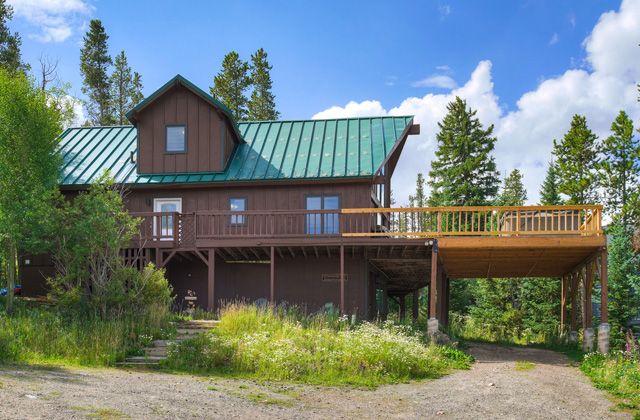
The home available to rent at 1107 American Way in Breckenridge, CO - one of 68 properties managed by Breckenridge Resort Managers. That company’s CEO, Toby Babich, says that rentals like this one are a crucial part of creating a healthy tourism based economy. Image: 1107 American Way on Breckenridge Resort Managers Official Website
For our third financial highlight this week, we’ve come to a much denser discussion that some of you will love, and others will likely hate. Now when we say dense, we mean dense, as this article is riddled with bureaucracy, legal minutiae, percentages involving decimal points, and all sorts of details that are known to make eyes glaze over. Honestly, if tax codes, real estate, and legislative matters aren’t your cups of tea, feel free to jump ahead to our fourth highlight this week, which is way more fun. If you’re like us though and are absolutely here for understanding mountain town economies and housing issues at a granular level, we highly recommend reading on.
This week in the Colorado Sun, we learned about a new agenda being pushed by the Colorado Association of Ski Towns in hopes that it will become easier for mountain towns in the state to implement their own vacancy taxes and real estate transfer fees. Now, before diving into the details of this story, let’s make sure we understand the issues that are at the heart of the matter: short term rentals and second-home ownership, and how they result in limited housing for locals. It’s a story we’re likely all familiar with at this point, so rather than dive into all of the pandemic-fueled details, we’ll just share this one simple stat that highlights the issue: within the 28 mountain towns that make up CAST, up to 40% of homes are unoccupied by full time residents. For areas that are known for their local housing issues, that’s a startling number.
With that dynamic as the foundation, CAST is hoping to rally support amongst its members to push Colorado’s lawmakers to enact laws that would allow these local communities to take matters into their own hands, making it easier for them to increase taxes on short term rentals and transfer fees on real estate sales. Ultimately that’s what this story is about on a high level: CAST is hoping to push for change at a state level that will allow mountain communities to regulate real estate more easily at a local level. Beneath that high level assessment though, are a dizzying amount of details that emphasize just how complex this issue is, while also highlighting the way bureaucracy can make enacting change a painfully slow process. For the deepest of those details, we’ll suggest giving the article a read in full, but for our part, we want to highlight just two dynamics.
First, is the article’s dissection of the differences between “taxes” and “fees.” In this case, CAST is pushing for Colorado’s legislature to allow mountain towns to enact a real estate transfer fee when a property is sold. The use of that word, and not the word “tax”, is crucial, as a real estate transfer tax would have to be voted on and approved by residents, while a fee could be implemented by elected officials. That distinction dates back to a law passed back in 1992 called the Taxpayer’s Bill of Rights, or TABOR. In other words, while in essence a “tax” and a “fee” on the transfer of real estate amount to the same outcome, the specific word being used changes the level of approval required to implement it. Now, we’re not exactly politicians over here at SkiEssentials, but if you ask us, the ability to use a different word in order to avoid the relevance of a law seems… silly. It also exemplifies the type of legal detail required in cases like this that ultimately cause delays and additional discussion, resulting in painfully slow change.
The other dynamic we found interesting, and one that most certainly plays into our first point, is that much to our surprise, not every town wants these additional taxes and fees. In 2021, Crested Butte residents voted down a proposal for a $2,500 a year tax on homes that are vacant for more than half of the year. (Note the word “tax” in this matter, rather than “fee”, ultimately resulting in the need for a vote and the policy being rejected). While the article doesn’t share insights in that specific matter, it does share the counter argument made by the Summit Alliance of Vacation Rental Managers’s board president, Toby Babich, who also runs a property management in Breckenridge. In Summit County, CO, there are 4,000 licensed short term rental properties that would be affected by these taxes and fees. In Babich’s mind, these properties are being unfairly targeted as the problem. While acknowledging the need for more housing in the county, Babich also points out that the 4,000 properties are crucial for the area’s tourism economy, which is vital to the county’s businesses. If the availability of these properties decreases, so too will the volume of tourism as well as the area’s economy. As someone who personally stayed in a short term rental property in Breckenridge last winter, I have to say, I get it.
Ultimately, as we made clear from the start, the issue of housing in mountain communities is very complex, with countless considerations being made at every level. For us, this highlight isn’t about sharing a story with a clear problem and solution. Instead, it’s meant to give some insight into the current pulse of one of the most important and complex socioeconomic factors at play in the North American ski industry. To learn more (and yes, there is much, much more to learn with this story), we’ll turn you over to the Colorado Sun.
#4: Enjoy the Story of Chris Rubens - the Professional Skier Who’s Had an Environmental Awakening:
The film that changed everything for Rubens: Salomon TV’s 2016 production, “Guilt Trip”.
For all of you brave souls who stuck with us through that last highlight, here’s your reward: a fun story from SkiMag.com that shares the career arc of a veteran professional skier who’s evolved from a young thrill seeker to an environmentally conscious, to human powered skier and organic farmer pushing 40. That man is none other than Chris Rubens.
As you know, this time of year, we love to share personal stories and highlights, and that’s exactly what we have here. In the piece from Ski Mag, we learn the story of how Rubens first burst onto the scene in Matchstick Productions 2006 film, Push. In that movie, we saw a young Rubens sending tricks off massive backcountry cliffs and accompanying the film crew on a heli-trip. Over the subsequent years, he continued showing up in countless ski films, all while spending a majority of his winters chasing backcountry lines via snowmobile. In the Ski Mag piece, Rubens is quoted as saying, “It seemed like the prerequisite to being a pro freerider was you had to have a sled… It was either that or heli-skiing.”
Interestingly enough though, Rubens was also an early proponent of human powered trips, although not necessarily as a result of being intentionally environmentally conscious. In his words, his take on environmental issues for the first decade or so of his career was, “it was such a big problem I was like, ‘How am I going to do anything about it?” Still, despite that perspective, Rubens is cited as being one of the first athletes to encourage Matchstick to start filming trips to ski-touring lodges in lieu of heli-trips. As we know, that formula has since become one of the go-to storylines in filmmaking, as plenty of films nowadays highlight athletes embarking on missions to remote mountain destinations under their own willpower. Building on that notion, Rubens also played a significant role in the memorable film ALL.I.CAN from Sherpa cinemas, which pointed out the give and take relationship between backcountry skiing and climate change. At this point in his career, Rubens was helping develop an unexplored niche within skiing: using human power to access steep, dynamic terrain, with the intention of skiing it aggressively. At that time, ski equipment hadn’t quite caught up with the athletes, and so Rubens became instrumental in helping develop the Salomon Shift binding. Much more recently, Rubens also helped redesign the Atomic Backland 109 - another product that aims to combine uphill access with the needs of hard charging descents.
While he’d always had an awareness and appreciation for environmental stewardship, the turning point in his career came in 2016, when he was on tour showing the short film Guilt Trip alongside Salomon TV. In that movie, Rubens and other skiers helped climate scientists collect core samples from glaciers in Greenland. To Rubens, it felt like he was playing a significant role in the fight for climate change, but audiences didn’t quite see it the same way. Instead, they expected more, asking Rubens what other measures he was taking. Quickly realizing that he didn’t have any additional answers, Rubens decided to change his way of life.
Since that pivotal moment, Rubens has made two significant changes: all of Rubens films are now centered around human-powered skiing as a way to access terrain, and he now runs an organic farm alongside his wife Jesse. The ultimate goals of these two initiatives are to lower his own carbon footprint, while also encouraging others to do the same by showing that incredible skiing can be accessible on foot, without the use of emission heavy snowmobiles and helicopters. That mission will be at the forefront of a new film being self-released by Rubens this fall. To learn more about Rubens’s career or his upcoming movie, check out the report from SkiMag.com.