

Top Five Fridays: December 26, 2025
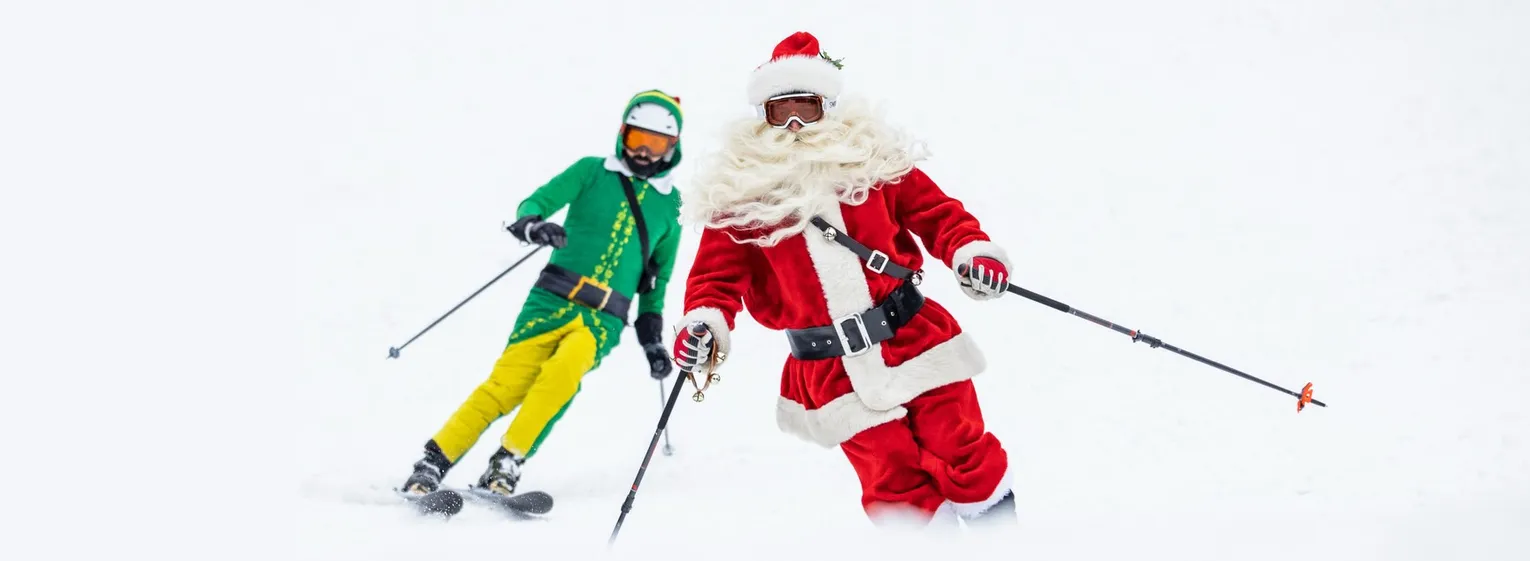
Santa and his elves sure were busy this week, bringing tremendous snowfall to a number of West Coast locations. Here, he’s seen taking some laps at Alta as he prepares to bless them with nearly 3 feet of snow this weekend. Image: Alta Ski Area on Facebook
#1: FIS Results - Lindsey Vonn is in the Midst of Authoring a Storybook Ending to Her Career:
Despite missing a podium last weekend, River Radamus’s two runs show us his potential.
Hello, and welcome to Top Five Fridays, the December 26, 2025 edition! This week, we’ve got a classic grab bag of topics, ranging from World Cup racing results, to free skiing in the Alps, ski patrol protests, and weather updates from out West. Safe to say, regardless of who you are or where you are in the world, this edition of TFF promises to have something for everyone. Let’s get started!
As per usual, our coverage this week begins with a recap of the latest action from the FIS World Cup alpine racing circuit. Over the course of the last couple of weeks, we’ve had a ton of results to cover as both the men’s and women’s divisions are in full swing. This week, with the holiday, things settled down just a little bit, with the women competing in just two races, and the men competing in three.
On the women’s side of things, the circuit found itself in Val d'Isere, France for two speed races: a Downhill and a Super G. So far, the story of the season has been Lindsey Vonn’s stunning second season out of retirement. That storyline continued to develop in France this week, as Vonn took home the bronze in back to back races. Going back to the final event of last season - the Super G final in Sun Valley - Vonn has now podiumed in all but one of her last six races, with the one exception being a fourth place finish in the Super G at St. Moritz.
With last weekend’s results, Vonn now sits atop the Downhill seasons standings, and is in third in Super G. Perhaps most impressively though, is the fact that Vonn is ranked fifth overall. In recent years, we’ve had an eye on the tandem of Mikaela Shiffrin and Paula Moltzan to lead the Women’s team in the overall cup standings, but with the resurgence of Vonn, the team now has three athletes in the top seven: Shiffrin in first, Vonn in fifth, and Moltzan in seventh.
As exciting as last weekend’s results were, we’ve somehow still managed to bury the real lede here: Lindsey Vonn has officially qualified for her 5th Olympic Games at the age of 41 in what she’s already declared to be her final season. While qualifying for these games was always the primary reason for Vonn’s unretirement, her early season success has surprised even herself, saying, “Having the World Cup lead in downhill … I definitely hoped to be skiing well, but I had by no means planned that.” At this point, the question should no longer be, “does Vonn still have it?” Instead, we should be asking, “just how great can Vonn’s season become?” Only time will tell, but between this storyline, Shiffrin’s dominance in the slalom, and Paula Moltzan consistently threatening the podium, this season has the potential to become an all time classic for the U.S. Women’s team.
Of course this week wasn’t all about Vonn. Joining her in the results in the Downhill race were five additional U.S. athletes, with Breezy Johnson finishing 7th, Jacqueline Wiles in 15th, Allison Mollin in 22nd, Haley Cutler in 27th, and Keely Cashman in 28th. A day later in the Super G race, Keely Cashman finished tied for 11th and Tricia Mangan finished tied for 24th. All in all, it was a very successful weekend of racing for the women’s circuit. Looking ahead, it’s another light week of races, with just a Giant Slalom and a Slalom race scheduled to take place this weekend in Semmering, Austria.
On the men’s side of things, our coverage starts with the conclusion of events in Val Gardena-Groeden, Italy, where last Saturday the men competed in a Downhill race. There, Kyle Negomir continued to blaze the way for the men’s team, capping off a strong weekend of results with a 16th place finish. Following him in the results were Sam Morse in 24th and Bryce Bennett in 26th.
From Val Gardena, the men’s circuit moved to Alta Badia, Italy for a Giant Slalom race on Sunday and a Slalom race on Monday. There, the race of the weekend was undeniably the Giant Slalom, where River Radamus had us on the edge of our seat as he entered his second run sitting in second place. With his coach reminding him that the snow quality was excellent, Radamus put it all on the line in an effort to secure his first podium of the season. Unfortunately, his run highlighted just how narrow the margin for error is in this sport, as one quick slip of the edge resulted in Radamus dropping from second to seventh. While he’s likely frustrated by that result, Radamus showed us what he’s capable of and gave us plenty of reason to keep an eye on men’s Giant Slalom races all season long. A day later, in the Slalom, just one U.S. athlete snuck into the points: Jett Seymour with a 29th place finish. Looking ahead, it’s a light week for the men’s circuit as well, with just one race planned: a Super G in Livigno, Italy. You can preview that race here.
#2: Telluride’s Owner Closes the Mountain as Ski Patrol Plans to Begin Strike on December 27th:
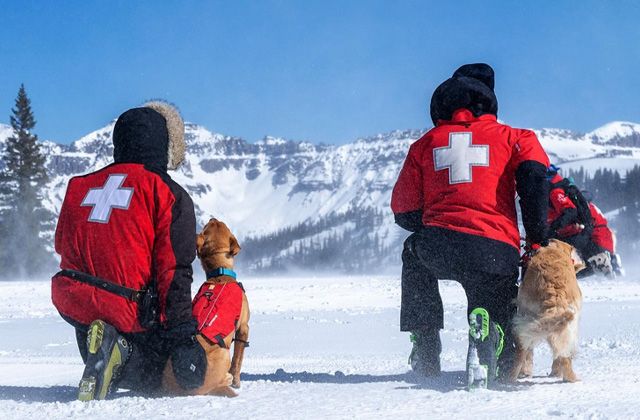
In Telluride, the ski patrol union is prepared to go on strike tomorrow. As a result, the mountain’s owner has closed the resort in what could prove to be a long, contentious standoff. Image: Telluride Ski Resort on Facebook
Moving on from competitive news, our next topic this week is a pretty big one: after struggling to come to an agreement regarding their contract, the Telluride Ski Patrol has announced that it plans to strike, starting tomorrow, December 27th. As a result, the resort’s owner, Chuck Horning, has announced that he will be closing the ski resort for the foreseeable future, until a contract agreement can be made and patrol agrees to return to work.
Now, the bones of this story are about what you’d expect, largely hinging on the ski patrol seeking higher wages that reflect the high skill requirement of their work. Currently, the Telluride Ski Patrol Union is seeking an $8 median pay increase, while the resort’s most recent offer earlier this month came in at a $4 median increase. Interestingly, the difference in those pay rates equates to just about $115,000 over the course of the three year contract, or just under $40,000 a year. Truthfully, it’s not an incredibly significant amount of money.
There are two factors though that make this story a bit more complex than other ski patrol strikes, like the one that occurred at Park City last year: Telluride’s owner, and the location of the ski area on what equates to a dead end road this time of year. Starting with the resort’s owner, Chuck Horning has a reputation around town as being a bit erratic and temperamental. While we don’t know the depth of details that locals would (if that’s you, please feel free to enlighten us in the comments), this coverage from the Colorado Sun published back in March references Horning’s contentious relationship with the town, and “Crazy is Still Better than Corporate” stickers can be seen plastered around town, providing concise insight into the local perspective. In other words, while Park City felt pressure to end the strike due to the mountain’s partial closure becoming a public relations nightmare for its owner, Vail Resorts, Telluride’s owner may very well care less. In fact, rather than continuing to negotiate with patrol, Horning has simply closed the mountain and blamed patrol, hoping to turn the town against the strikers.
This of course brings us to our next point: Telluride’s location.
While the mountain of Telluride is remote enough, the town of Telluride itself is located on what’s essentially a dead end road this time of year, with the only way to pass through it being via seasonal roads. As such, the main reason to visit Telluride in the winter is the mountain. If the mountain isn’t open, well, you can imagine what that means for tourism to the area, and therefore business and the local economy. As such, while Park City’s Ski Patrol strike certainly had an impact on the region, the closure of Telluride will most certainly have a significantly stronger impact on the local economy. Circling back to the numbers we have regarding wages, it’s hard not to think that the local economy stands to lose more than $115,000 should this strike last for any prolonged amount of time.
At the moment, that’s where we’re at with this story. Telluride’s Ski Patrol is striking and the mountain’s owner shows no signs of giving in to their requests. In the meantime, the mountain is closed and the local economy is destined to feel the impact. We’ll keep you updated as this story unfolds. Until then, check out the coverage from ColoradoSun.com
#3: In France, a Municipally Owned Ski Area Has Decided to Cut Costs by Offering Free Skiing:
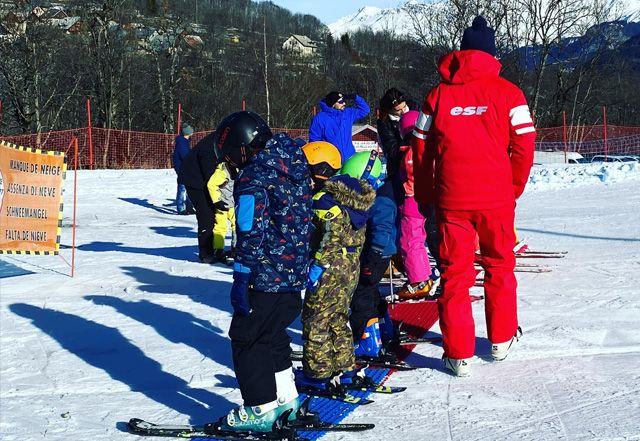
Want to learn to ski in Europe for free this winter? Head on over to Saint Colomban des Villards, France. The municipality would love to have you! Image: Saint Colomban des Villards on Facebook
Next up, we bring you a story that displays a vastly different relationship between a ski area and its town. While this story also isn’t overly positive, at the very least it’s much less divisive than the previous one. That story is this: at a small French ski area called Saint Colomban des Villards, the town has just decided to offer free skiing this winter. Unfortunately though, this story isn’t as exciting as it sounds.
In the small French village, the municipally owned ski area has been operating at a loss of €400,000 - €600,000 annually, for nearly 25 years. Last year, largely as a result of climate change and a lack of natural snow, the ski area’s deficit ran all the way up to €1 million. Being operated by the village, that meant it was up to them to cover the losses using its €2.7 million annual budget. In other words, about 37% of the town’s budget was being spent on supporting a ski resort that was hemorrhaging money. This year, town officials decided that that was unsustainable and something had to be done.
Noting how devastating it would be for the town to completely close the ski area, they decided to pivot. This year, the ski area will operate, but in a much more limited capacity, with just two surface lifts and a conveyor belt for kids. In other words, it will turn into a mostly beginner ski area. But, there’s a massive silver lining here: it will also be entirely free. In researching a solution for the deficit, the town realized that it was actually losing money by charging for lift tickets. By not needing to pay for the employees or systems required to sell tickets, the town estimates that it can save between €36,000 - €41,000 while projected ticket sales from the scaled down, beginner only operations were projected to only hit €18,000. In other words, they stood to lose money by selling tickets, making free skiing the smarter financial move. That, combined with the scaling back of operations, means that the resort expects to operate at an estimated €150,000 - €200,000 deficit this season. Still a deficit, but one that can be safely managed by the town’s budget.
Ultimately, this story represents an interesting experiment for the town, where they hope that by shifting their business model away from a traditional, paid ski area to a free, beginner friendly ski area, they will be able to draw more beginner skiers and snowboarders to their community. In doing so, the local economy will continue to be supported through tourism. To learn more about this, check out the report from EuroNews.com.
#4: After a Dry Start to the Season, Winter Has Returned in a Major Way to Much of the West:
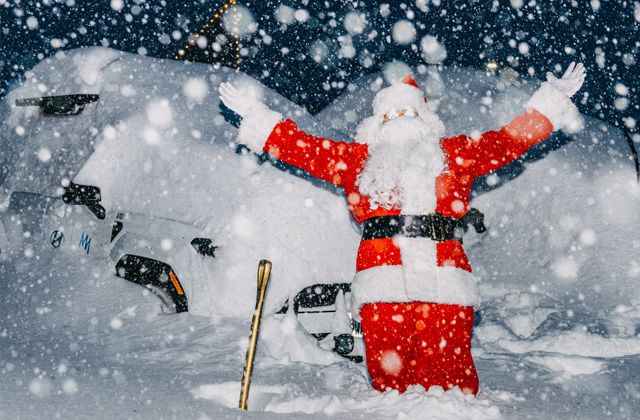
Christmas came a day early to Mammoth Mountain, California, with nearly 50” falling between Christmas Eve and Christmas Day. Currently, it continues to snow. Image: Mammoth Mountain on Facebook
Finally, rounding things out this week is a weather update from around North America, as much of the west is finally starting to break out of its early winter snow drought. As we reported a couple of weeks ago, most of the West Coast was experiencing tough early season conditions, particularly in Oregon and Washington, where not only was there no snow, but an incredible amount of rain was falling. Fortunately, things have started to turn around there as rain has changed to snow in recent weeks - sometimes in glorious fashion. Mt. Baker is currently leading the way on that front, with approximately 69” of snow falling between December 16th and December 22nd. Since then, another two feet have fallen this week, with more on the way.
The other big winner this week was California, where the natural snowguns finally turned on, blessing nearly the entire Sierra range with snow. In Mammoth, nearly 50” of snow fell on Christmas Eve through Christmas Day, with an additional 2’+ forecasted for today through tomorrow. To the north, resorts in the Tahoe region are reporting similar accumulations, with Kirkwood celebrating 63” of snow since Monday plus another 17” through today, and Northstar reporting 80” through yesterday with another 5” today. In other words, things are really starting to turn around on the Western front.
As for those of you who are just a touch more inland, living in Utah and Colorado, your continued patience is appreciated. While fresh snow is still hard to come by out there, you won’t have to wait much longer. In Utah, forecasts for much of the state are calling for between 12” - 36” over the next two days, with Alta and Snowbird looking to be the biggest beneficiaries. Just to the East, in Colorado, while storm totals aren’t predicted to be quite as large, many areas are still expecting to receive around a foot of snow this weekend. So, while it’s been a slow start for many parts of North America, it looks like things are finally starting to get underway in most regions. To learn more about recent snowfall amounts, we recommend heading over to OnTheSnow.com.