

Top Five Fridays: December 5, 2025
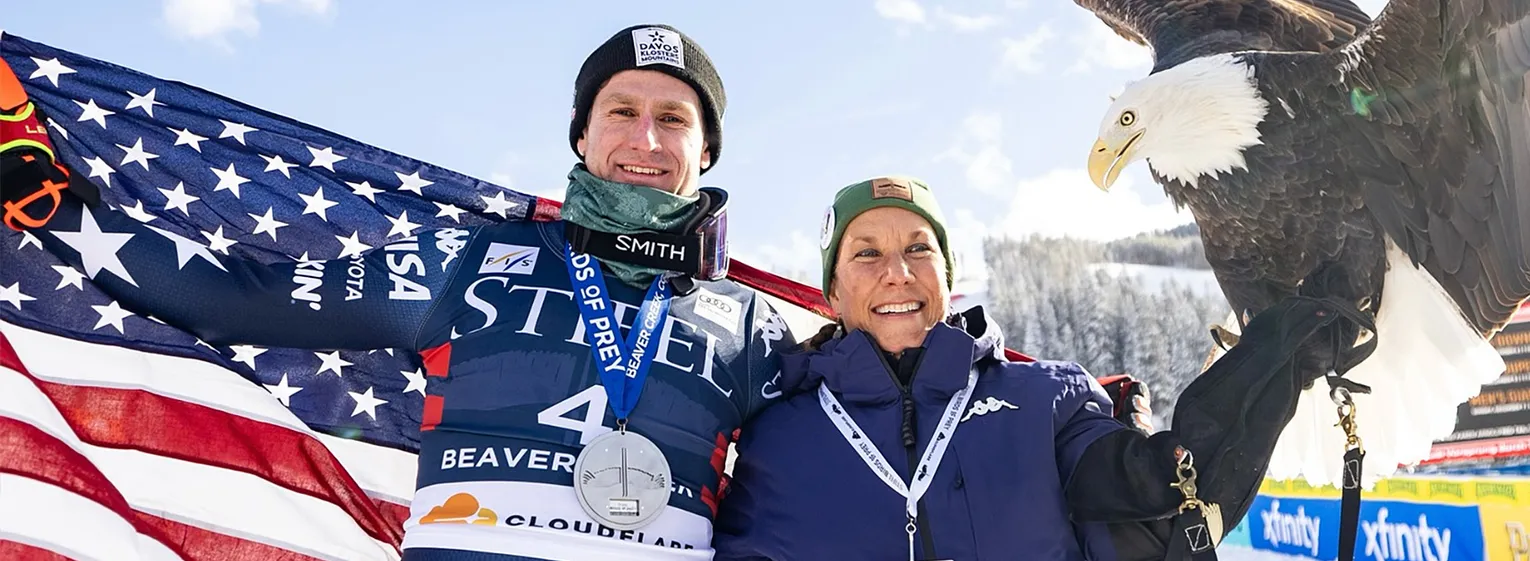
After waiting patiently for weeks, the U.S. Men’s team finally had a chance to compete in a Downhill race. The result? Good things. Learn all about it in our first highlight! Image: U.S. Ski and Snowboard Team on Facebook
#1: FIS Results - Ryan Cochran-Siegle Gets One for the Men, While Shiffrin Continues Her Hot Streak:
Hello, and welcome to Top 5 Fridays, the December 5, 2025 edition! We’ve got a busy one for you this week, with four World Cup alpine races to recap, a triple header from the world of freestyle skiing, some worrisome news coming from the Northern United States, and a semi-viral story from our own backyard. Apologies for the vagueness - this week’s ski news might turn into a bit of a speedrun as we have a lot to cover. Let’s get started.
First things first, let’s get you caught up on the latest from World Cup Alpine Racing, where we have three races from last weekend’s events at Copper Mountain to discuss, as well as early action from Beaver Creek. When we left off last week, the men had just competed in the Super G at Copper, leaving just a Giant Slalom on their schedule. Unfortunately, that race was a little less fruitful for the U.S. Team, with only River Radamus earning points with his 15th place finish. If you’re starting to feel down on the men’s team, don’t worry, we have news that will lift your spirits in just a minute. Before we get to that though, let’s cover the women’s results from Copper.
On Saturday of last weekend, the women’s circuit suited up to compete in a Giant Slalom, the first of two races last weekend. That race was arguably the least successful of the season for the team as a whole, although Nina O’Brien earned her second solid result of the season in the discipline, adding an 11th place finish to her 6th place finish in Soelden. Three spots behind her in 14th place was Mikaela Shiffrin. Paula Moltzan, unfortunately, earned her first DNF of the season. Interestingly, despite the middle of the pack results for Shiffrin and O’Brien, as well as the disappointing result for Moltzan, the trio is still looming large in the overall GS standings after the second race of the year. While the season is still incredibly young, Moltzan currently sits in 4th place, followed by Shiffrin in 6th, and O’Brien in 7th. While it’s early yet and anything can happen, it’s still amazing to see three women in the top 7 of the overall standings at any point in time.
Of course as we know, for Shiffrin the focus this season is heavily skewed in favor of slalom races, and her early dominance has shown that focus to be a wise move. In the first two races of the season, Shiffrin has not only won, but beat her closest competition by over a second - an impressive stat for the discipline. With that in mind, we were anxious to watch last Sunday’s race to see if she could keep the pace. As it turns out, she could.
In the women’s Slalom at Copper Mountain, Shiffrin once again dusted the competition, this time finishing 1.57 seconds ahead of Germany’s Lena Duerr. For the third week in a row, we’ll play the differential game to put that in perspective: finishing 1.57 seconds behind second place Duerr would’ve given you a 12th place finish. To put it plainly, Shiffrin is skiing at an entirely different level to start this season.
While it was Shiffrin’s race and everyone else was just skiing in it, that doesn’t mean there weren’t additional results worth noting on the women’s side. Following Shiffrin’s lead, Paula Moltzan notched her 19th straight “Top 10 or DNF” result with an 8th place finish, while Nina O’Brien earned some points of her own with a 26th place finish. Overall, it was another successful weekend for the women’s team.
Immediately following last weekend’s action, the men’s circuit moved onto nearby Beaver Creek, CO for the annual Birds of Prey speed races. After two days of training runs, the first Downhill race of the year was finally held, and as a result, we finally have the type of news we’ve been eager to share: an American finished on the podium. In yesterday’s race, Ryan Cochran-Siegle finished just .3 seconds behind Switzerland’s Marco Odermatt, giving him a second place result and the first men’s podium of the season. So far this season, we’ve spent plenty of words reminding ourselves that speed is the specialty of the men’s team, and with this result, that claim is confirmed. While RCS was the highlight of the race, it’s also worth noting that Bryce Bennett finished in the points as well, coming in 28th.
From here, the men still have Super G and Giant Slalom races this weekend in Beaver Creek before heading back to Europe ahead of next weekend. On the women’s side, their circuit is in Tremblant, Canada for a pair of Giant Slalom races. You can see the FIS calendar in its entirety, right here.
#2: Freestyle Skiing Triple Roundup: The World Cup Season is Officially Underway, the First Snow League Ski Event is This Weekend, and the X-Games Has Announced This Year’s Roster of Athletes:
Next up this week, is a trio of highlights we want to share from the world of freestyle skiing. Because we have three topics to pack in here, we’re going to be doing a lot more deferring to other sources than we usually do, but we thought it would be helpful to at least put these three stories on your radar so you can learn more about them if you’re interested. First up on that list, is the first FIS Freestyle skiing event of the season.
This past weekend, both the men’s and women’s freestyle circuits were in Secret Garden, China to compete in a Big Air event. After the cancellation of the Slopestyle events in Stubai due to weather, this Big Air event became the first of the season for the freestyle circuit. Leading into the event, one of the big storylines was the return of Henrik Harlaut who was sidelined last season due to injury. Unfortunately he fell in qualifiers and wasn’t able to make finals, but still, it was good to see him back in skis to start this Olympic season. Beyond that, we don’t want to say too much in case you want to watch the highlights yourself. Looking ahead, the FIS field of athletes is currently in Beijing for another Big Air event, happening this weekend. You can see the results from qualifiers here.
Moving right along, we also want to mention that the first ever Snow League ski event is happening this weekend - also in Beijing. As a quick reminder, The Snow League is Sean White’s halfpipe only competition series, which we expect will end up being a direct rival to the X Games League. This weekend marks the first time skiers will be included in the League, after a snowboard only test event last Spring in Aspen seemingly went well. Like the XGL and FIS, Snow League athletes will earn points based on results throughout the season, ultimately resulting in a championship event at the end of the season. Setup in a head to head format, the League hopes to create an exciting new competition format for halfpipe athletes. We’ll look to bring you a recap next week, but for now, you can learn more by heading over to the Snow League website.
Finally, the last rapid highlight for you this week is that the X Games has released their full athlete rosters for this year’s games. While there are a ton of names and storylines to look out for, one of the most intriguing ones is the return of fivetime medalist Gus Kenworthy. After taking the last four years off from the Games, Kenworthy will be making his return to competition in the Superpipe event. Additionally, while not a skiing update, it’s interesting and exciting to see that snowmobiling will once again be at the X Games in the form of Freestyle, and Speed & Style competition formats. Scheduled for January 23-25th, the X Games are just over a month and a half away, leaving plenty of time for more storylines to develop. We’ll certainly have more as the date draws closer, but for now, check out the latest news report from the X Games itself.
#3: Northern U.S. Ski Resorts Expecting a Drop in Canadian Guests This Season:
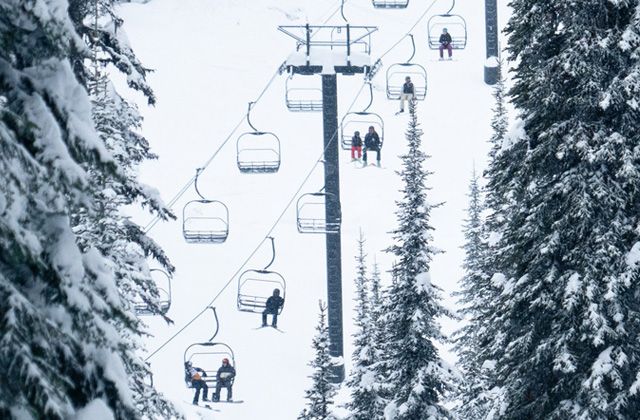
Skiers ride the lift at Montana’s Whitefish Mountain Resort, located just 60 miles away from the Canadian border. With the current political landscape, resort officials are worried that they may see a decrease in business from their neighbors to the north. Image: Whitefish Mountain Resort on Facebook
For our third highlight this week, we bring you a story from nearby the U.S. / Canada border, where NPR is reporting that the current U.S. political situation has some ski resort operators nervous about business this season. In their story from Monday, NPR focuses specifically on the case of Whitefish Mountain Resort, a ski area in Montana that’s located about 60 miles from the Canadian border. Each year, it’s estimated that about 25% of the resort’s business comes from Canadian visitors. This year, however, there are concerns that that number could be drastically lower.
Without getting too into the politics of this story, we do have some hard data that shows why this concern might be warranted. According to Montana state tourism officials, the state on the whole has seen about a 25% decrease in Canadian visitors since President Trump added tariffs to Canadian products in early 2025. As a result of the decrease in visitation, Whitefish itself has also noted a 12% decrease in credit card spending across its boutiques, hotels, and restaurants. The very real, tangible impact of these decreases has already been felt across a variety of other tourism destinations that neighbor the border, resulting in special discounts for Canadian guests. In Kalispell, Montana, a city just 25 minutes south of Whitefish, Canadian visitors can sign up for a “Welcome Back Canada” pass> which gives them discounts at a variety of participating businesses. In other words, the concerns of Whitefish Mountain Resort aren’t unfounded - they’re very real, and a reflection of what’s already happening in their region.
Extrapolating this story further from what NPR has provided, there’s a legitimate concern that the economic impact from a decrease in Canadian tourism could be far-reaching. While it’s difficult to get an exact number for how many ski areas are within the same 60 mile distance from the Canadian border, Google’s AI results suggest that there are “dozens”, while ChatGPT suggested between 50-100. Here in Stowe, VT, we’re located about 45 miles from the border, while to our north, Jay Peak is just six miles from the border. In other words, while the story shared with us from NPR focuses on Whitefish, the reality of the situation is that this particular trend could have a large impact on countless ski areas across the Northern United States this season. To learn more, check out the report from NPR.
#4: Stowe Mountain at the Center of a “Dangerous TikTok Trend” That Has Mainstream Media in a Tizzy:
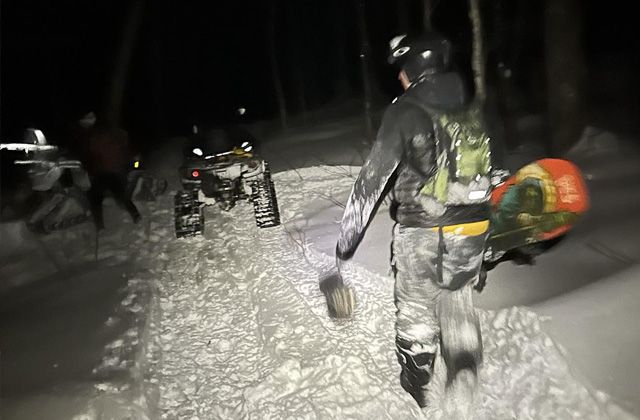
A TikTok inspired snowboarder makes the walk of shame, out of the flat terrain South of Stowe’s Toll Road. Image: Stowe Mountain Rescue on Facebook
Finally, we round things out this week with another story that hits close to home for us here in Stowe, VT, as a post made by our local mountain rescue crew has gone semi-viral. On Monday of this week, Stowe Mountain Rescue made a post on their Facebook and Instagram pages letting the public know that they’ve been called in for several rescues already this season, ultimately reminding the public not to blindly follow tracks that lead off into unknown terrain. It’s the type of post you’d expect to see from most mountain rescue teams, and the story that inspired it was relatively simple: several groups of skiers and riders have followed tracks into the sidecountry, only to find themself in tight, flat terrain. While they weren’t in significant terrain danger, they were lost, in the cold, at night. So, they called Stowe Mountain Rescue to escort them out. Again, a somewhat normal situation, and certainly a good opportunity for the rescue team to put out a general reminder to the public.
Interestingly, this story seems to have gone from normal to somewhat viral due to one specific word: TikTok. In SMR’s retelling of the story, one of the groups shared that TikTok was their “inspiration” for making the choices that they made. From there, mainstream media took the story and ran with it, referring to the incident as a “dangerous TikTok trend”, putting it right there on the same list as things like the Tide Pod, Milk Crate, and Dragon’s Breath Challenges. In our minds, equating sidecountry skiing to swallowing Tide Pods is amusing, to say the least
Still, the post did strike up plenty of debate regarding the use of social media to highlight conditions at a time of year when snow coverage isn’t entirely in. While no specific “TikTok stars” were named in the post, one man whose Stowe-based backcountry videos might be considered inspirational is local legend John Stafford, also known as @_J_Staff on Instagram. A longtime local of the mountain, Stafford is intimately familiar with Mt. Mansfield’s terrain and often posts backcountry content at times of the year when many would be afraid to even venture into the woods. While not called out by name in the SMR post, Stafford left a comment that concisely presented the counter argument to claims of backcountry posts on social media being dangerous. In his words, Stafford said, “Or just be prepared to walk yourself out. Suffering is part of the game. Y’all have maps on your phone to tell you where you are. I just don’t get it.”
In general, the comment section seems to agree. While mainstream media wants to point the finger at guys like Stafford who enjoy filming and sharing their runs on social media as being “dangerous” influencers, the counterargument is quite simple and is really a foundational skill for any kind of wilderness based activity: be prepared, and know what you’re getting yourself into. Take responsibility for your own decisions.
As we start to see more snowfall both here in Vermont as well as across North America, it’s a good reminder for everyone, and one that we think mountain rescue teams across the board will agree with. If you’re interested in venturing into the backcountry or sidecounty, make sure you’re prepared for what you’re getting into. Don’t just blindly follow tracks. Look at maps. Learn how to read topography. If the adventure is one that will take you further from population, be sure to have supplies like food, water, and first aid kits just in case something unexpected happens.
Ultimately, for us, the lesson of this story isn’t about the dangers of social media posts - it’s about the dangers of not thinking about consequences and making strong decisions for yourself. To learn more about this, check out the original post here, coverage from Vermont Public here, or CBS News, here.