

Top Five Fridays: February 16, 2024
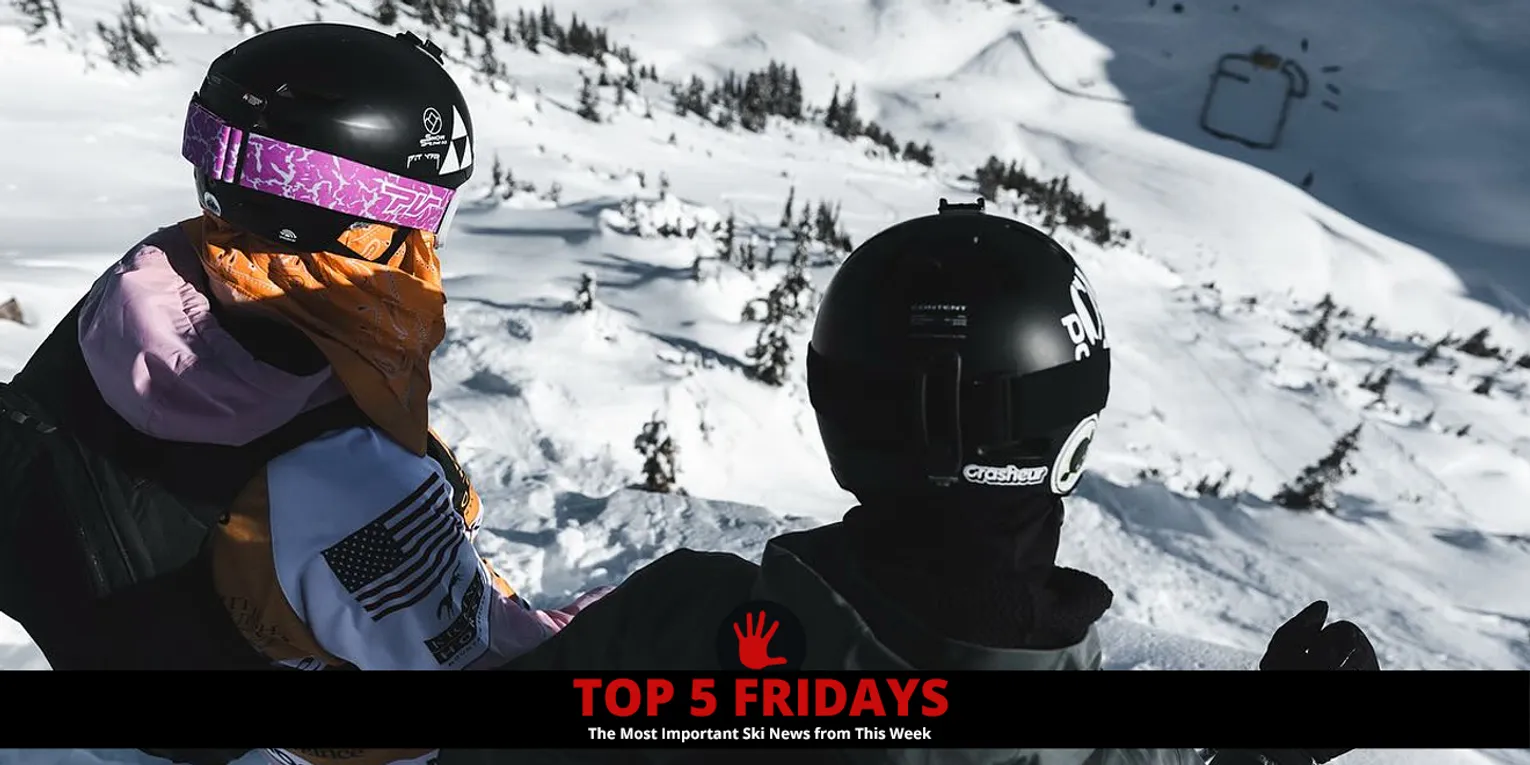
Lead Image: Freeride World Tour athletes staring down the venue at this week’s Kicking Horse stop. As always, it was a rowdy and wildly entertaining event. More on that below! Image: Freeride World Tour on Facebook
#1: FIS World Cup Alpine Update - TU.S. Women Score Back to Back Bronze Medals, While We (Sort of) Get an Injury Update from Mikaela:
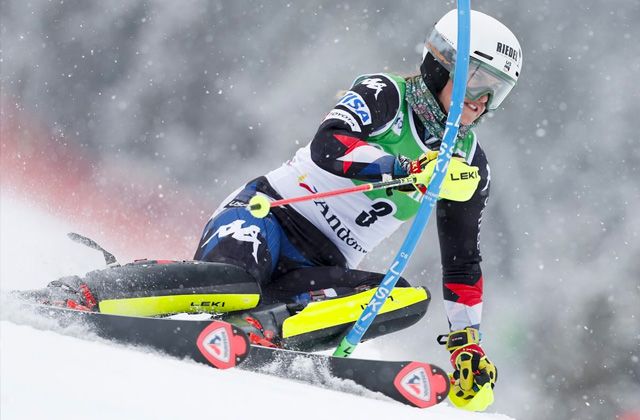
Moltzan showing off her competition face during this week’s slalom race in Soldeu, Andorra, where she took home the bronze. Image: Paula Moltzan on Facebook
Hello, and welcome to Top Five Fridays, the February 16, 2024 edition! This week we’ve got two expected rounds of competitive ski news, one unexpected one, and an update from the ski patrollers of Whitefish and Solitude mixed in for good measure. We’ve got a lot to cover between these four highlights, so let’s jump right into the latest action from the FIS World Cup Alpine Racing Circuit!
After a slow stretch two weeks ago, this past week was more action packed as we saw four races successfully held. On the men’s side, the event calendar took the circuit to Bansko, Bulgaria for a giant slalom and a slalom race. Unfortunately the slalom race was canceled, but the good news is that the giant slalom went off without a hitch. In that race, River Radamus took 12th, while Tommy Ford took 26th, and George Steffey grabbed 28th. While there weren’t any podium finishes, it was yet another race with a number of solid results - a trend that has become something of a trademark for the men’s team this season. It’s a theme that we aren’t alone in noticing either, as Ski Magazine actually published an article about it just this week, focusing on the reasons for this year’s consistent results. As the article points out, while the U.S. Men’s team isn’t a consistent podium threat at the moment, the consistency we’re seeing is a key step towards making that leap. If you’re interested, we’d definitely recommend giving that article a read in full to get some insights into adjustments being made behind the scenes on the men’s team. As for what lies ahead, the men are currently in Kvitfjell, Norway for a Downhill and Super G race. You can preview that schedule of events here.
On the women’s side, we have much more drama to discuss. First, let’s start with the results themselves as the women’s team has hardly lost a step following Shiffrin’s injury. Point in case: the giant slalom and slalom races in Soldeu, Andorra this week. In the first of those two races, the giant slalom, AJ Hurt claimed the bronze, earning her second career podium, and second podium this season. Those results, mixed in with season long consistency, highlight the fact that Hurt is not just having the best season of her young career, but is also becoming one to watch well into the future. Also earning points in that same giant slalom race was Paula Moltzan with an 11th place finish. Then, a day later, it was Moltzan’s turn to take over as she put in a 3rd place performance in the slalom race at Soldeu, proving that the U.S. Women’s team is made up of more podium contenders than just Mikaela. From there, the women’s circuit has moved on to Crans Montana, Switzerland, for two downhill races and a super-g. In the first of those two downhills, which was held earlier today, Jacqueline Wiles took 13th, while Lauren Macuga took home 20th. Looking ahead, the women will compete twice more in Crans Montana this weekend, before heading to Val di Fassa, Italy next weekend. You can preview the Crans Montana races here.
Finally, before rounding things out this week, we want to quickly check in and share a Mikaela Shiffrin injury update. The long and short of it is, we don’t exactly know when to expect her back as different reports have painted different pictures. According to Ski Mag, Shiffrin isn’t in a rush to return to competition, citing the importance of the next two seasons with the World Championships scheduled for 2025 and the Winter Olympics in 2026. SkiRacing.com however has the races in Åre, Sweden, scheduled for March 9th - 10th, circled as Shiffrin’s possible return dates. Unfortunately, even if Shiffrin were to return for Åre, it would likely be too late to take home the overall title this season, as Lara Gut-Behrami has officially passed her in the standings this week. With three more weekends of racing between now and Åre, it’s likely that Gut-Behrami’s lead would grow enough that Shiffrin simply couldn’t make up the difference between the races in Åre and the season finale in Saalbach, Austria. The silver lining here of course is that before she was sidelined, Shiffrin was putting on yet another masterful season. With the injury not being particularly serious, the hope and expectation is that she should be able to return to dominance starting again next season. For more on this, check out the reports from Ski Mag and SkiRacing.com.
#2: Freeride World Tour Update - Dreams Were Made and Broken in Kicking Horse This Week, Along With Some “Interesting” Judging:
Relive the action from the 2024 Freeride World Tour Kicking Horse stop. To watch specific runs, head to the FWT website.
Next up this week is coverage from the second stop of this season’s Freeride World Tour, which wrapped up just yesterday in Kicking Horse, British Columbia. The tour itself has gotten off to a bit of a tough start this season, as the first stop in Baqueira Beret, Spain was hastily relocated to Verbier, Switzerland, while the second planned stop in Ordino was canceled outright. As you’ll recall, conditions were seemingly excellent at that first stop in Verbier, yet a number of athletes still crashed for a variety of reasons, adding extra pressure to the Kicking Horse stop. Unfortunately, yesterday’s event featured a handful of inches of soft snow on top of a crust layer, meaning there was a significant amount of chance involved in each competitor's run. For some, things went smoothly. For others, punching through the crust layer resulted in tomahawks, accidental front flips off of cliffs, and other general catastrophes. Still, at the end of the day, the event was successfully held, meaning we have results and rankings to discuss.
On the women’s side of the event, different approaches led to different results, hinting at a possible shift in focus for the judges. Within the women’s field, tour veteran Hedvig Wessel took by far the biggest air of the day, dropping directly off a cliff at the top of the venue, into a high speed, high risk landing. From there, she whipped her way through the course, finding small hits along the way. At the completion of her run, she stood atop the podium. Immediately following Wessel’s run though was Astrid Cheylus, who scattered a number of small to medium airs throughout her run before capping things off with a large backflip off a windlip at the bottom. For her efforts, she was given a score of 86.67, a full 6 points higher than Wessel. A few runs later, dropping 8th, was Cheylus’s countrymate Manon Loschi, who ultimately took second place with a run that featured a good sized drop up top, a large 360 in the upper venue which she back slapped but kept together, and a backflip off the bottom windlip. While all three of these runs were podium worthy, the specific order and point discrepancy is sure to cause some debate as we find ourselves wondering if the judging priorities are shifting. Of the three, Wessel went the biggest and had the least amount of control issues. But, she didn’t include any tricks. The other two riders, Cheylus and Loschi, both had control issues, but included one or more tricks and were able to stack their runs with a number of small to medium size hits. At face value, the results from the women’s division tell us that the judges are looking for more tricks and less big airs. Making matters even more confusing however, were the results of the Men’s division.
As we alluded to before, the men’s field was once again littered with near misses, bad luck, and questions of what could have been. To be honest, it feels like the Freeride World Tour has seen a shift within the last couple of years, where the bar has been set so high that athletes are almost required to go into the event with a “make or break” mindset. In other words, in order to land on the podium, they need to put together a run that involves a high amount of risk. While the merits of this new era could be debated from a safety standpoint, the entertainment value has undeniably shot through the roof. Keeping that in mind, let’s talk about the top runs from the men’s field, as well as the judging aspect.
First things first, Max Hitzig is your winner from the second stop of the 2024 Freeride World Tour. In his run, Hitzig did what Hitzig does: stomp massive airs and make tricks look easy. Right off the bat, Hitzig took a spicy, technical entrance into the venue, after which he proceeded to throw a large, perfect 360, took one more air, and then straight lined it out of the venue. It was highspeed, technical, and absolutely stomped. At the conclusion of his run, he clearly deserved the top spot. Then, three athletes later, Marcus Goguen put down an absolute heater of a run. In his take on the course, Goguen opted out of the fall line (a choice we’ll revisit shortly here), and instead put together a run that started out with a left 360 on a right side hip-like feature, after which he quickly redirected across the mountain, into another 360 almost immediately, followed by another massive 360. For reference, each of these hits happened within the span of about 13 seconds. From there, Goguen kept pushing skiers left into a zone that only one other athlete entered all day - Stan Rey, whose massive air off a treeloaded cliff band resulted in a tomahawk for the ages. Goguen, however, took a slightly different line and absolutely stomped a massive air out of the zone. At the end of his run, the commentators were losing it, and expectations were that he’d claim the top spot on the podium. And then, he scored a 91.33 compared to Hitzig’s 94.00, an “interesting score,” according to one of the commentators. From there, two runs later, Oscar Mandin dropped in and followed a line very similar to Hitzig’s. In his run, Mandin took a larger but less technical entrance, before boosting a backflip that was larger than Hitzig’s off of the same cliff before ultimately following Hitzig’s line off the venue. For his efforts, Mandin took second, with a score of 92.67.
While the event itself was incredible to watch, it’s sure to leave a bit of confusion in regards to what the judges are looking for. On the women’s side, it seems as though tricks took the priority over large airs as the top two finishers weren’t as risky with their line choice, but included one or more tricks compared to Wessel’s none. On the men’s side, technicality and fall line skiing seemed to be the priority with tricks taking somewhat of a backseat. Comparing the top three runs, Goguen’s run was the one that, while high speed, wasn’t very fall line at all, which would seemingly be the reason for putting it in third. In this case, the amount of tricks weren’t enough to overcome his line score. One thing we did confidently learn from the men’s side of the event though, is this: technical skiing will be rewarded over big airs. Because Hitzig and Mandin took such similar lines, it’s easy to pull apart the differences, noting which one scored better. On the entrance, Mandin took a larger air in, while Hitzig took a slightly spicier, more technical entrance. Winner: Hitzig. Then, on the cliff that both athletes hit, Hitzig put down a 360 while Mandin boosted a larger backflip. Between the two tricks, 360’s are more technical, so while he didn’t go as large, Hitzig once again got the upper hand. Ultimately these two differences are what put Hitzig in 1st, and Mandin in 2nd.
All in all, it was yet another wild, entertaining, and drama-filled FWT event. From here, the athletes have about 2 weeks before they reconvene in Georgia for the final stop of the qualification portion of the season. With finals on the line, you can bet that athletes will be going all out in a last ditch effort to make the cut. With a weather window March 1st - 7th, you can expect a follow up from us on March 8th. Until then, we highly recommend giving this week’s stop a watch. To learn more about this year’s tour, check out the Freeride World Tour’s official website.
#3: Whitefish, Solitude Patrollers Join Growing Trend of Unionization:
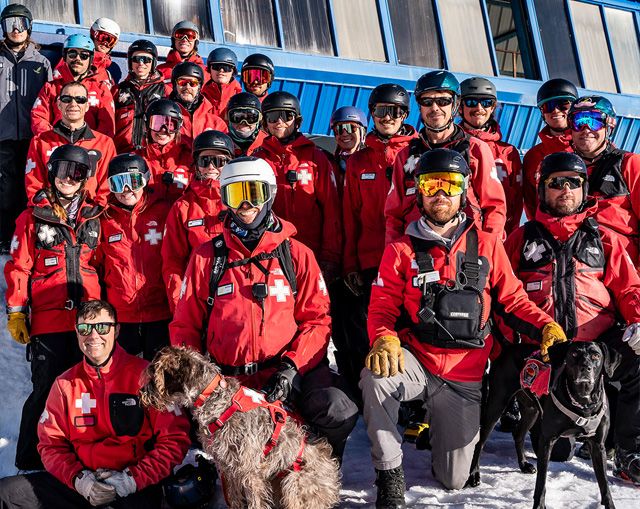
This week, the Solitude ski patrollers officially began the unionization process, joining ski patrollers at several other mountains who’ve taken the same step in recent years. Image: Solitude Resort on Facebook
For our third highlight this week, we’ll take a brief break from competitive ski coverage and check in on a trending story that we haven’t revisited since last season: the growing movement towards the unionization of ski patrols everywhere. As you might remember, this topic really started heating up just about two years ago, when Park City’s ski patrol threatened to go on strike if Vail failed to meet their demands while negotiating a new contract. While Park City’s patrol was already unionized at that point, the story made headlines for months, and with patrol ultimately winning the battle, the result has been an uptick in unionization amongst ski patrol outfits across America.
Joining that movement this week are the Whitefish, Montana ski patrollers, and the Solitude, Utah ski patrollers. While there are subtle differences between the statements put out by Whitefish patrollers and Solitude Patrollers, their demands echo the same overarching message: being a full time ski patroller is a high-skill, demanding job, and those who take it on should be compensated in ways that reflect that. While specific list of demands and goals of unionization differ, the common themes seem to be: higher wages that reflect the value of the work, access to affordable health care, stipends for equipment that’s required to do the job (ie. skis), and access to training opportunities. Ultimately the goal with this movement is to shift ski patrolling from a seasonal job for “ski bums”, to a career choice supporting those with medical expertise, and in many cases, avalanche mitigation knowledge. Noting the important role ski patrol plays in keeping the slopes safe and rescuing skiers and snowboarders who find themselves in trouble, the trend towards unionization is one in which we fully support. To learn more about Solitude’s move to unionize, click here. To learn more about Whitefish’s efforts, click here.
#4: Skier Skis for 76 Straight Hours in This Year’s “Last Skier Standing” Endurance Contest:
Finally, we’re rounding things out this week with coverage of a unique event that just wrapped up its fifth iteration earlier this week. That event is the “Last Skier Standing”, which as you might have guessed, is an endurance challenge in which the last skier skiing is crowned the winner. Sounds easy, right? Well, just wait until you hear the details.
Taking place at Black Mountain in Rumford, ME, Last Skier Standing challenges contestants to skin up their resort and then descend, completing a lap in under an hour. And then, contestants do it again. And again. And again, until finally there’s only one skier left. This year, Justin Lagassey won the competition and set a record for the event, completing 76 consecutive laps. Or, in other words, Lagassey ascended and descended the mountain once an hour for 76 straight hours, ultimately beating out 149 other entrants.
Still sound easy? We’re guessing probably not, and we’re also guessing that your mind has immediately started racing with the same questions we had: do contestants sleep at all? What about bathroom breaks? When do they eat? The answer is ultimately just as simple as the rules themselves: they can use their extra time each lap however they see fit. Make it down in 45 minutes? Cool, you can take a 10 minute nap, as long as you’re back on skis within the hour. Need to use the bathroom, tend to blisters, or eat some food? You can do whatever you need to do, as long as you’re starting your next ascent at the start of the next hour. While this event certainly isn’t for everyone, it obviously does have an appeal to the type 2.5 fun crowd, which allows the rest of us to simply marvel at what the human body and mind are capable of. It’s also worth noting that events like this are exactly the kind of things that build ground level interest in and support of the skimo scene, which is set to make its Olympic debut in 2026. For more about the Last Skier Standing, check out this report from News Center Maine.