


Top Five Fridays: February 27, 2026
The depth of the U.S. Halfpipe team was on full display last weekend, as three athletes placed in the top 5. Image: U.S. Ski and Snowboard Team on Facebook
Hello, and welcome to Top Five Fridays, the February 27, 2026 edition! After back to back weeks of heavy amounts of competition news, our highlight reel this week takes on a less competitive tone as we spend the bulk of it covering three unique, highly debatable topics. Of course it’s not as if we won’t talk about any competitive news - we do still have some Olympic coverage and event previews to share after all. As a matter of fact, let’s get right into some of those topics.
#1: U.S. Secures Two More Olympic Golds in Skiing Events in Final Weekend of Events. Plus, Looking Ahead:
While we certainly have a lighter load of competition highlights this week, there were two Olympic ski events that produced gold medals last weekend which are begging for coverage. We’ll cover those, and then go on to share a handful of upcoming events that we figure ought to be mentioned. Let’s start with our Olympic wrap up.
When we left off last week, the number of ski-based events was quickly dwindling. For our purposes, the remaining highlight events were men’s and women’s Halfpipe, as well as the Mixed Team Aerials event. Unfortunately for the U.S. Team, the results of the women’s Halfpipe event were pretty underwhelming. The good news though, is that results from both the men’s Halfpipe and the Mixed Team Aerials events were both exceptionally whelming. On the halfpipe side of life, Alex Ferreira (aka Hotdog Hans) took home the gold medal on his third and final run. Nearly joining him on the podium was fellow American Nick Goepper, who was sitting in 3rd on his final run, but decided to go for it all. On the last hit, of his last run, Goepper went for a switch double misty - a trick that he’d only landed a handful of times before and had never been done in competition. Unfortunately, he didn’t pop quite hard enough out of the pipe, resulting in catching the deck with his body. It was a nasty looking fall, but Goepper was miraculously able to get up and ski away. Ultimately, he would settle for 4th place. All told, it was an excellent display of pipe skiing, and exactly the type of event you want to watch as the games wound down.
As we mentioned before, there was one other properly whelming result for Team America in the final weekend of the Olympics: the Mixed Team Aerials. Before diving into the results of this one, let us set the stage, as this event is pretty unique in its structure. In this competition, 7 nations formed 3 person teams, featuring at least one male and one female athlete. For the 4 teams that make it through to finals, each athlete gets one run and the scores are added. In other words, one fall would doom a team’s score. In 2022, the U.S. Team won the event. And in 2026? Same outcome. In this year’s Olympic games, the U.S. Team consisting of Kaila Kuhn, Connor Curran, and Chris Lillis took home the gold, having won by a whopping 28.44 points. Looking at the score breakdowns, it’s interesting to see how the U.S. Team opted to take on tricks that weren’t necessarily the most difficult, but that they knew they could perform almost perfectly in order to max out the score. To check those results for yourself, click here.
… And with that, the Olympics are officially a wrap! Now, let’s see what lies ahead.
As it turns out, we’re wasting no time getting back into our regularly scheduled competition programming, with both the men & women FIS Alpine World Cup circuits resuming this weekend. On the women’s side of things, the group is already in Soldeu, Andorra for a Downhill and two Super G races happening over the course of this weekend. While the races will resume without the U.S.’s undisputed leader Lindsey Vonn, if the Olympics taught us anything, it’s that the U.S. speed team remains a force to be reckoned with, as Breezy Johnson took home Gold in the Olympic Downhill and Jacqueline Wiles took home 4th. On the men’s side of things, the circuit is in Garmisch Partenkirchen, Germany, also for a Downhill and Super G. Again, like the women’s team, the Olympics have given us podium dreams once again, as Ryan Cochran-Siegle took home a silver in the Super-G at the games. You can preview those upcoming races here.
Finally, one last quick note to share before we wrap this up: at this time last week, we heard that the Freeride World Tour’s Georgia stop had been cancelled. While they said they hoped to reschedule it to the Fieberbrunn competition window, our expectations were low. And then, it happened. Not just the rescheduling, but the event itself. In the early hours of this morning, so early that we haven’t had a chance to watch the replay, an FWT event was held in Kuhtai-Innsbruck, Austria. Given the time between that event and the writing of this report, we’ll have to save our recap for next week, but we encourage you to go find it on YouTube in the meantime.
#2: After Buying a Small Parcel of Land, a Utah Non-Profit is Suing Park City Over the Use of Lifts on its Property:
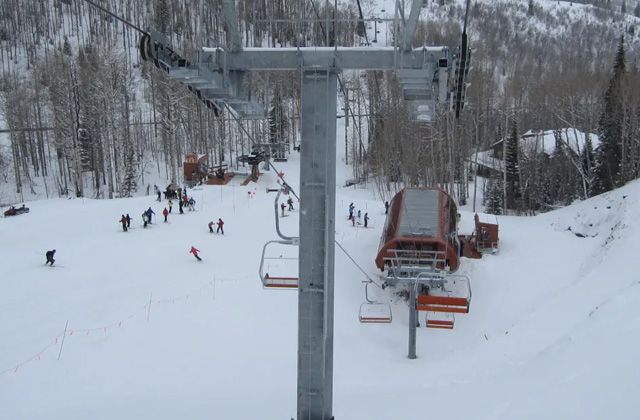
Looking down the Iron Mountain Express lift at Park City. The base area shown, including the Timberline lift in the background, is at the center of a newly filed lawsuit. Image: Liftblog.com
Alright, with the Olympics officially done and dusted, let’s move into some interesting sideplots from within the world of skiing! First up on that list: a newly filed lawsuit that brings the legality of two of Park City’s chairlifts into question. This is a bit of a wild and complicated story, so buckle up, this might be a wild ride.
First things first, let’s start with this week’s news: a Provo, Utah based non-profit called UI Charitable Advisors has filed a lawsuit against Park City, alleging that they’re operating illegally on a parcel of land that they own. That parcel of land, which is referred to as “Parcel B”, is an awkwardly shaped plot of land that essentially consists of the base of Park City’s Timberline and Iron Mountain Express lifts, as well as an access road and small sections of ski runs that converge at the base of these lifts. While it’s not a particularly large piece of land, it’s an important one for the mountain due to the convergence of lifts and trails that are on it.
Back in December 2024, UI Charitable Advisors purchased this parcel of land, inheriting the easement rights that had been granted to it back in 2003. In other words, in ‘03, an agreement was written up that allowed Park City to operate its ski resort on the property. Now, the details of that agreement are being called into question.
In this new lawsuit, UI Charitable Advisors is alleging that the easement agreement, as it stands, does not allow Park City to operate its chairlifts on Parcel B. Specifically, UI Charitable Advisors is saying that a second agreement, which took place after 2003, “redefined and limited those rights to exclude ski lift operations.” Furthermore, the group also alleges that while a previous easement agreement allowed the installation of ski trails on the land, that agreement wasn’t transferred to Vail when it bought the resort from POWDR Corp in 2014.
In summation, what this all amounts to is this: in 2024, UI Charitable Advisors purchased a small parcel of land on Park City. Now, just over a year later, they’re suing the resort, saying that they don’t have permission to operate their lifts or the ski runs on the property.
As for UI’s angle? Well, that’s not exactly clear. What we do know is that prior to this lawsuit, the non-profit contacted Vail in an effort to resolve the issue, but to no avail. We also know that the lawsuit points out that Vail has received “substantial economic benefits” by using the land, while “UI has received no value or consideration for these benefits.” In the lawsuit, the organization is asking a judge to rule that Vail cannot operate the lifts on this land, while also questioning if the Cascade trail can continue to exist where it is.
While we could be off base here, it’s hard not to think that this is a bit of a shakedown. When UI bought the property, the lifts and trails were already in place and in use. It’s not as if they were caught off guard by their existence. In fact, besides the ski trails and chairlifts, there’s nothing else even on the land. Additionally, while they don’t ask for compensation, they do ask a judge to rule that Vail can’t operate the lifts on the land under the current easement agreement. That’s what we call “leverage” in the business. Should a judge rule in UI’s favor, UI could then sell rights to operate the lifts on their parcel back to Vail. Now, is this what’s happening? We don’t know for sure, but it’s a heck of a story regardless. You can read all about it here.
#3: Riding an Olympic High, New York’s Olympic Regional Development Authority Commits $15.9 Million in Funding to Trio of NY Ski Resorts:
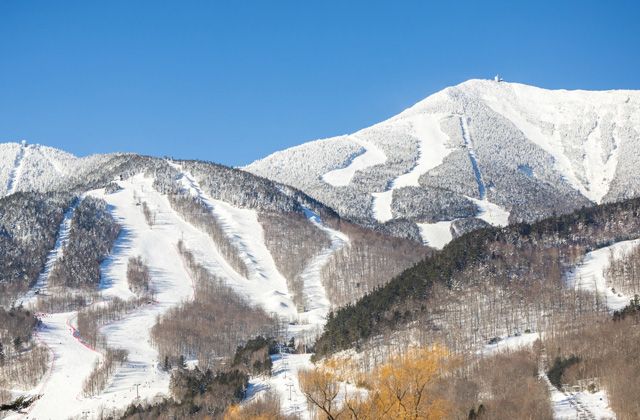
A view of Whiteface Mountain, one of three downhill ski areas benefitting from recent funding commitments made by ORDA. Image: Whiteface Mountain on Facebook
Did we say Olympic news was done? Well, technically it is, but this next highlight is inextricably linked to the games. In a well timed announcement this week, New York State’s Olympic Regional Development Authority shared a number of newly signed resolutions that promise to provide funding to three state owned ski areas. Now, just to make sure we’re all on the same page here, it’s worth knowing that ORDA is an organization that was formed by the state of New York in order to manage the facilities used in the 1980 Lake Placid games. Since then, the organization has grown to include additional ski areas, with a roster that now consists of Whiteface, Gore, Belleayre, Mt. Van Hoevenberg, as well as a handful of other facilities. While ORDA was originally founded to support the continued use of Olympic facilities, it now exists as an arm of New York’s government, existing to promote economic development in otherwise rural regions.
This week, it was announced that ORDA’s board of directors has approved a total of $15.9 million in funding for infrastructure upgrades across its three main ski areas: Gore, Whiteface, and Belleayre. Slightly more specifically, this money is earmarked for snowmaking, trail, and electrical improvements. Additionally, $1.6 million has also been budgeted for conveyor lift upgrades at Gore and Belleayre as well, bringing the total financial package to $17.5 million. All of this comes on the heels of a $91.7 million influx in spending committed to the three resorts just four years ago, back in 2022.
All in all, this is generally good news. It’s a beneficial development for the three ski resorts, as well as the communities supported by them. But, there is another side to the story as well, which we covered back in 2022. At that time, when the state committed nearly $100 million to supporting its resorts, a number of the other ski areas in the state decried it as an unfair use of taxpayer money and an economic conflict. Perhaps no one put it better at the time than a friend of mine, Nick Mir, who owns New York’s Snow Ridge Ski Area. In his words, “It seems the ski industry in New York State is in a pretty unique situation where the state is directly competing against about 50 privately owned, tax-paying companies.” So, with that in mind, is this latest round of subsidization really good news? Well, that depends on who you ask. Regardless, you can learn more by checking out this report from Ski Area Management.
#4: A Telluride Ski Patroller Was Injured While Conducting Avalanche Control Work This Week, Underscoring the Intense Risk & Knowledge Required for the Job:
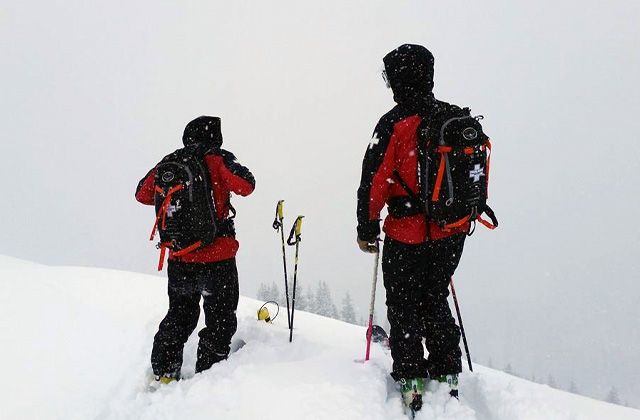
Two major stories have happened in the past two months regarding Telluride’s Ski Patrol: they lost the fight for the wage increase they wanted, and one of their members suffered a horrible leg injury during the course of avalanche mitigation work. Image: Telluride Ski Patrol on Facebook
Finally, for our last highlight this week, we want to share a story coming out of Telluride that highlights the extreme risk and knowledge required to be a ski patroller at big mountain resorts. As you undoubtedly remember, Telluride was ground zero for the latest ski patrol strike this past December, as the patrol union attempted to sign a new contract with better health insurance and higher wages. In support of their argument, the patrollers cited things like the degree of specialized knowledge and skills that they’re required to have, including but not limited to: first aid, avalanche awareness and response, technical skiing, and the ability to use specialized rescue equipment. Additionally, they undertake a considerable amount of risk while doing their job. Unfortunately however, the owner of Telluride disagreed with their valuation and ultimately closed the resort while refusing to give in to the union’s request. That situation finally came to a close when the union succumbed to public pressure to make a deal, as local businesses were getting hit hard by the decrease in tourism resulting from the resort’s closure. Consider all of this information the backdrop to this week’s news.
On Tuesday of this week, we learned that a Telluride Ski Patroller suffered a “Lindsey Vonn type injury” after getting caught in an avalanche while conducting control work last Saturday. While the name of this patroller hasn’t been released, we know that he was a 30 year member of the team and had intimate knowledge of the ski area. It’s likely for that reason that he was selected to head out to an area called “Gold Hills”, which is a “known trouble spot” amongst patrollers. In the incident, this patroller set out to Gold Hills with explosives in order to conduct control work. On his way out to the area, a slide was triggered above him, resulting in a cascade of snow taking him out from behind. Fortunately, the patroller was only partially buried. Still, he suffered a severely broken leg and the use of specialized rescue equipment was required to extract him from the area. Now, the patroller is at St. Mary’s Hospital in Grand Junction, CO, where he’s awaiting his second surgery.
It goes without saying that this is the type of news we never want to share. But, it does perfectly highlight the risk undertaken by patrollers at big mountain resorts and gives merit to the arguments they voiced during their strike. While ski patrol units at smaller ski areas across the East Coast and Midwest don’t have the same exposure to risk, there are numerous ski areas with big mountain terrain that lean heavily upon the expertise and bravery of ski patrol units. If you’re ever at one of these resorts, be sure to keep this in mind and thank a patroller when you see them. To learn more about this story, check out the recap from TellurideNews.com.
#5: And Now, Your Edits of the Week: Noah Gaffney’s Latest Fingers Run is a Thing of Beauty. Be Sure to Catch the Alternate Angle Below as Well:
Alternate Angle, Plus 3 Minutes of Additional Finger Runs