

Top Five Fridays: February 7, 2025
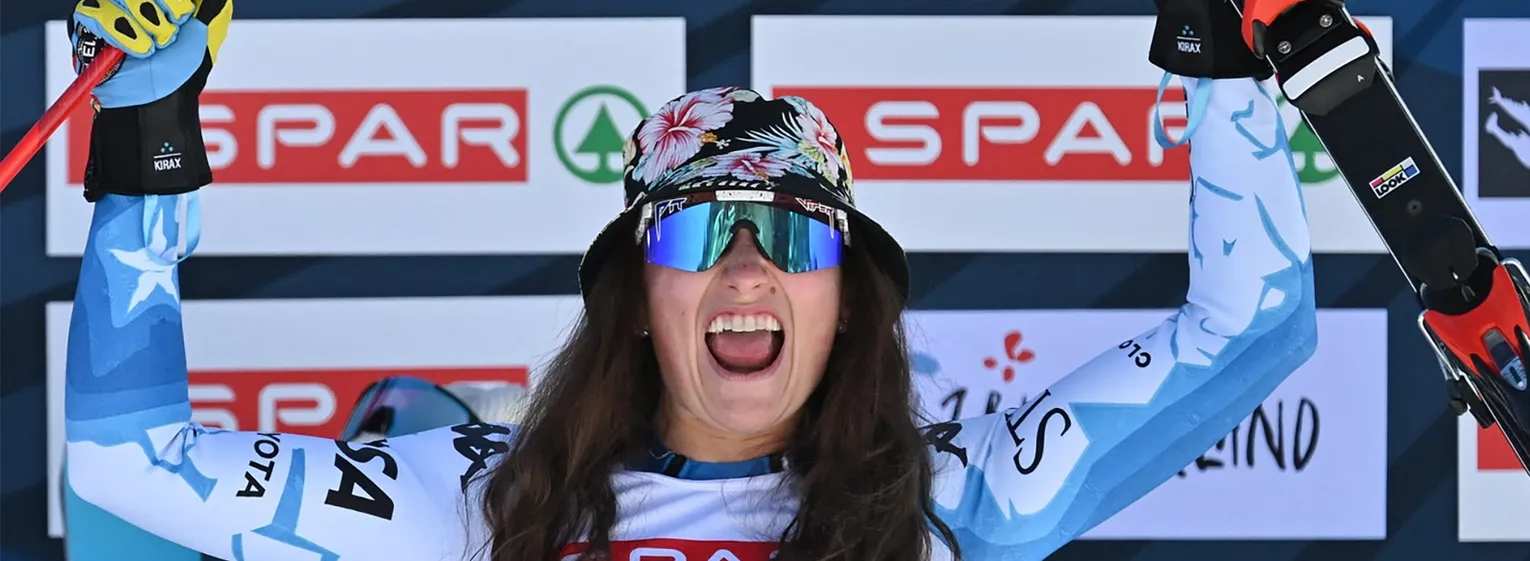
Lauren Macuga’s dream season continued this week, with a thrilling result at the World Championships in Saalbach, Austria. Image: U.S. Ski and Snowboard Team on Facebook
#1:FIS Alpine Recap: It Was Another Big Week for Lauren Macuga as the 2025 World Championships Got Underway:
How about the jump on this Super G course? Insane.
Hello, and welcome to Top Five Fridays, the February 7, 2025 edition! This time around, we offer respite for those of you who may have grown tired of constant competition recaps. This week, we’ll start with our classic FIS World Cup alpine coverage, before bringing you a very in depth story regarding the implications of skier liability lawsuits, as well as a highlight of one independent Colorado ski resort that’s bucked common trends by focusing entirely on making the sport fun and accessible. From there, we’ll give a quick preview of a couple exciting competitions scheduled for the week ahead, before sharing our favorite edits from this week. With all that in mind, let’s jump right in!
As we alluded to at this time last week, it was a slow week on the World Cup circuit this week. In fact, technically speaking, there were no World Cup races as both circuits instead convened in Saalbach, Austria for 12 total days of World Championship action. This week, much of that action was relegated to training runs, with just two actual events taking place: the Team Parallel event, and a Women’s Super G race. Starting with the Team Parallel, the U.S. fielded a team that consisted of Paula Moltzan and Nina O’Brien on the women’s side, and River Radamus and Isaiah Nelson representing the men. While we don’t exactly know why top U.S. slalom athletes Ben Ritchie and Luke Winters were left off the roster, it sounds like Radamus and Nelson performed admirably. Ultimately, the team took home fourth place, narrowly losing the bronze medal to Sweden.
Moving on from the Team Parallel, the other race that was held this week was the Women’s Super G. That race featured a mixed bag of results for team USA, as Lindsey Vonn earned her first DNF after coming out of retirement, while Lauren Macuga continued her torrid pace with yet another podium result - this time a third place finish. For Macuga, it’s truly been a storybook season. Also worthy of mentioning for Team USA are Breezy Johnson who finished 19th, while Keely Cashman came in 24th. All told, despite Vonn’s disappointing result, it was a successful start to the 2025 FIS World Championships for the team.
Looking ahead, this next week is action packed with a total of seven races between now and our report next Friday. You can preview those events here, and as always, expect to check back next week for a full recap of results!
#2: Want to Know the True Cost of Skier Liability Lawsuits? Look No Further Than Vermont’s Own History:
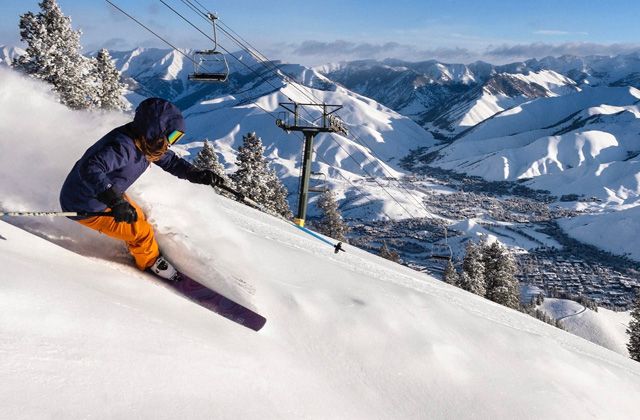
A shot from scenic Sun Valley, where the resort is just the latest in a long line of lawsuits testing the onus of liability. Image: Sun Valley Resort on Facebook
In other news this week, we caught an incredibly in depth article from the Idaho Capital Sun that covers an ongoing court case that could have significant ramifications for the state’s ski areas. The case in question is that of Milus v. Sun Valley, a case that once again tries to identify just where the line between skier and resort liability should be drawn. It’s a theme we’ve heard before, to be sure, but this week’s article does an excellent job of laying out the ramifications of ruling in the plaintiff’s favor by using a historical example dating back to 1978, right here in our home state of Vermont. We’ll dive into that and connect some dots shortly, but for now, let’s take a look at the case currently underway in Idaho.
This particular court case stems from an incident that took place in late November of 2019, when Dr. Stewart Milus lost control while skiing at Sun Valley, crashing head first into a snowmaking gun, and ultimately succumbing to his injuries. This part of the story is entirely undebatable: it was a tragic situation. The legal debate, however, started almost immediately after. In the wake of Milus’s death, his widow sued Sun Valley for damages. Initially, a lower court ruled in favor of Sun Valley, citing Idaho’s 1979 Ski Area Liability Act. While we won’t get into the details of that piece of legislation, the long and short of it is that it’s essentially what gives credence to the skier liability waivers that are signed whenever a lift ticket is purchased. Their purpose is to shield the resort from injuries incurred skiers and snowboarders due to their own decision making. In other words, they recognize that participating in skiing and snowboarding comes with an inherent amount of risk, and ski resorts cannot be held liable for every incident that occurs on the mountain.
While we could dive more deeply into this particular case, or share examples of other recent, similar suits, we instead want to take today’s conversation in a slightly different direction as this piece from the Idaho Capital Sun educated us on an aspect of the story that we hadn’t been completely aware of: the impact of ruling in the plaintiff’s favor, as it happened in Vermont, circa 1978.
As skiers, we often bemoan the lack of community ski hills and the rise of the corporately owned ski experience. We miss the good old days, when families ran things and small ski areas were commonplace in regions like New England. So, what happened? Well, small ski areas became very difficult to successfully operate. As it turns out, here in Vermont, the cost of insurance played a significant role in that.
As we learned from the Idaho Capital Sun piece this week, much of the financial difficulties facing our small ski areas started back in 1978, when a skier got his tip caught in some brush on the side of the trail, fell into a rock, and became quadriplegic. As a result of that accident, the skier sued Stratton resort, and the Vermont Supreme Court found the ski area 100% responsible. That led to the cost of liability insurance skyrocketing, putting significant financial pressure on ski areas. One example cited in the article is that of Hogback Mountain, which closed in 1986 after its liability insurance was quoted at $100,000 while the resort only grossed $70,000 the year before. In other words, operating the ski area became financially unfeasible. The story of Hogback was ultimately repeated dozens of times, and now Vermont, where there were once 51 operating ski areas, there are only 25.
That impact is ultimately what has the Idaho ski resort community concerned. While it’s undeniably tragic that Dr. Milus lost his life while skiing, many are concerned that the pending lawsuit could have a widespread, devastating impact on the state’s ski industry. At the moment, it’s still too soon to enter full panic mode, but there’s plenty of reason to be concerned about the outcome of the case, which is currently being reviewed by the state’s Supreme Court. To learn more about this story, check out this very in depth piece from the Idaho Capital Sun.
#3: Independent Ski Area Case Study: The Story of Wolf Creek:
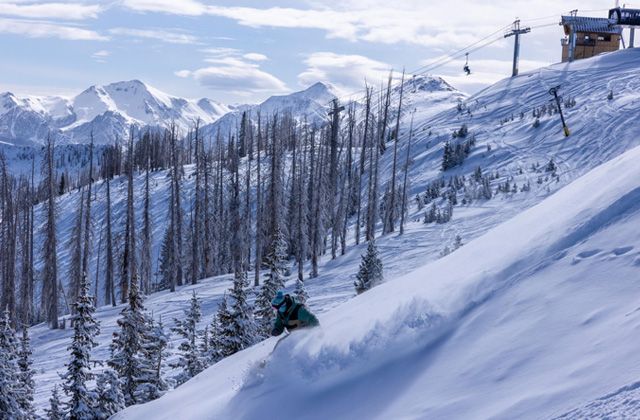
A shot from scenic Sun Valley, where the resort is just the latest in a long line of lawsuits testing the onus of liability. Image: Wolf Creek Ski Area on Facebook
While we’re on the subject of community oriented ski areas, we want to follow our previous highlight with a piece coming to us by way of the Colorado Sun that tells the story of Colorado’s Wolf Creek Ski Area. Despite not being owned by either Alterra or Vail, or even being a part of a multi-pass, the name “Wolf Creek” probably rings a bell for many of you for one simple reason: the Southern Colorado ski area is often one of the very first to open every season. Blessed with incredible natural snowfall and a location far away from the hustle and bustle of the I-70 corridor, Wolf Creek is something of a hidden gem for many who prefer a more laidback ski experience. While we’ve always recognized the ski area as one that fits into this “independent” category, this week’s piece from the Colorado Sun sheds more light on the resort, giving us a newfound appreciation for its ownership, community, and guiding principles.
Immediately setting the tone for this story is a quick anecdote from author Jason Blevins that instantly tells us that the resort’s CEO, Davey Pitcher, is one of us. Operating a 1990’s snowcat, Pitcher carefully navigates a harrowing ridgeline that’s so narrow that the tracks of the snowcat reportedly hang off either side. Once conquering the challenge, Pitcher hops out of the cat, pops on his teleskis, and descends into a pristine portion of glades. The story is short, simple, and effective at conveying its main goal: the owner of Wolf Creek is skier’s skier. He isn’t in the business to get rich, he’s in the business to have fun. And as it turns out, “fun” is ultimately at the center of everything Pitcher hopes to do with the resort. Whether that manifests as his dream to expand the resort by roughly 750 acres to tap into new expert-only terrain, or by simply charging reasonable rates for lift tickets so that the community can afford to ski there. At the end of the day, Pitcher’s goal isn’t to get rich. It’s to have fun, and to create opportunities for others to have fun. Shockingly enough, it’s a strategy that’s worked amazingly well for him as Wolf Creek is currently thriving and experiencing more business than ever.
Ultimately, that’s what we like about this story. While it’s not exactly “news” per se, it’s a bit of a refreshing story to hear that despite what our current perception of the ski resort industry might be, the fact is that independently owned ski resorts can be successful in this day and age. Not only that, but considering Killington’s recent ownership change as well as the community effort to buy Mt. Bachelor, there’s certainly a bit of a feeling that independent resort ownership may be back on the rise. To learn more about the story of Wolf Creek, click here.
#4: Double Freeride Preview: The Freeride World Tour Stops in Kicking Horse, While the Weather Window for Jackson Hole’s “Kings and Queens of Corbet’s” Begins Tomorrow:
Finally, rounding out our coverage this week is a quick double preview of two events coming up this weekend that we want to put on your radar. Chronologically speaking, the first of those two events is stop #3 of the Freeride World Tour, which is scheduled to take place today at 11 AM EST. This time around, the tour is right here in North America, where athletes are set to compete on Kicking Horse’s Ozone face. Generally speaking, what this venue lacks in pure pitch, it makes up for in a wide variety of drops, transfers, and airs that should allow each athlete to find the perfect line for themselves. Also unlike the other venues so far this year, the Kicking Horse face is one persistent pitch - there’s no flat spot in the middle for skiers to traverse through. The result should be a fast running competition, with competitors quickly working their way through just a handful of hits before exiting the venue and making their way to the corral. As for what we might expect, well, as always, it’s anyone’s guess, but it’s worth noting that Max Hitzig has won the stop the past two years. Last year the venue was on a different portion of the mountain, but two years ago Hitzig made a huge splash in his rookie year by sending arguably one of the largest backflips in FWT history. Of course Hitzig will have more competition than ever this year as the sport continues to progress at a breakneck pace, leading us to suspect plenty of jawdropping moments lay in store for us. If you’re interested in following along, you can watch the action live, right here.
In other freeride competition news, we’re also excited to let you know that the Kings and Queens of Corbet’s event is set to return this week after a one year hiatus! For those of you who aren’t familiar, the event is pretty unique in that it consists of a roster of hand picked athletes (there’s no qualifying process here) who compete on one of the most daunting public trails in America: Jackson Hole’s Corbet’s Couloir. Here’s the kicker though: these athletes aren’t just casually skiing the face. Instead, the resort and athletes typically build a take off into the couloir allowing for massive entries, as well as a variety of jumps below, typically ending with a bonafide park style table top at the finish. Historically, this formula has led to an incredible number of eye-popping antics, from double backflip entry attempts, to rocky wall rides.
Last year, the event was unfortunately cancelled due to snow conditions. This year though, the event is not only back, but it’s bigger than ever, with a full $50,000 on the line, split across 4 categories. While previous iterations have featured an outright male and female winner regardless of ski or snowboard divisions, this year’s version will feature a full podium for all four categories. Despite the change in award format though, one key component for the competition remains: it’s entirely rider judged. All told, it should be another exciting saga in this series, and we’re excited to see what goes down. With a weather window that runs from this Saturday to next Saturday, our hope is that we’ll be able to give you a full recap next week! Until then, head over to the Jackson Hole website to get the full preview.