

Top Five Fridays: January 10, 2025
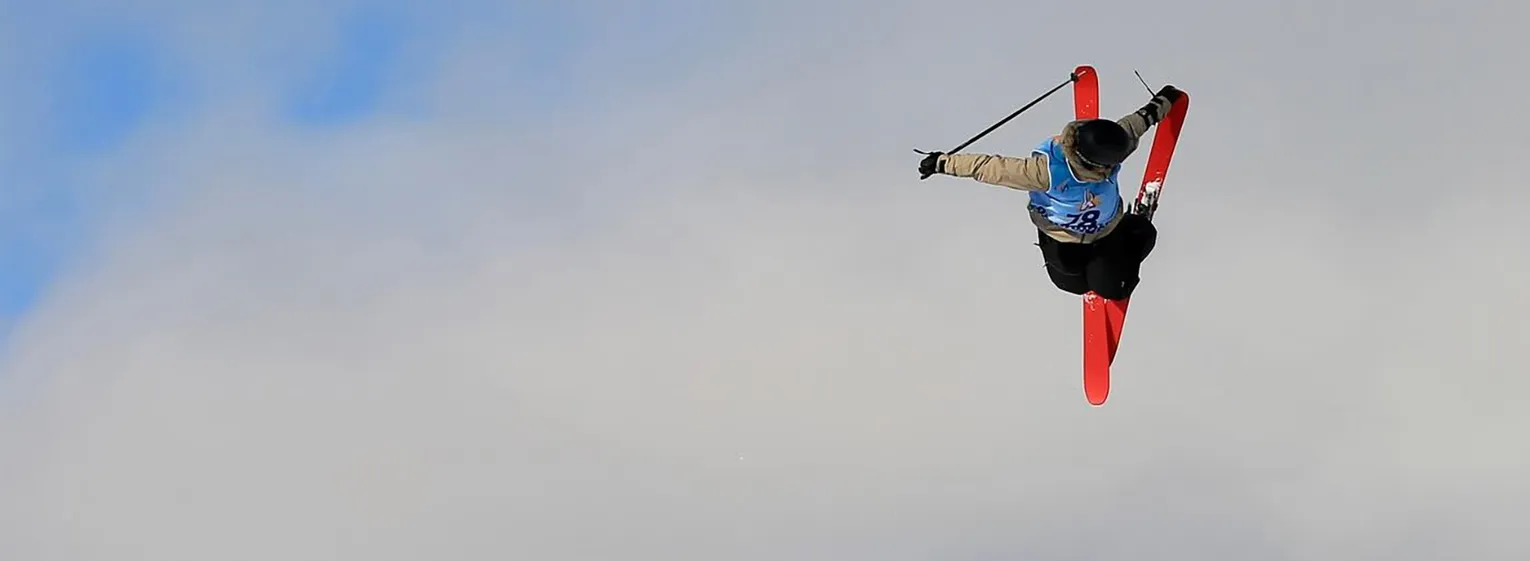
After competing on yet another scaffolding jump last weekend, the World Cup Big Air circuit has moved back to real snow for this weekend's event in Klagenfurt, Austria. Image: FIS Snowbarding on Facebook
#1:FIS Alpine Recap: Ben Ritchie & Katie Hensien Earn Career Bests in Slalom:
Watch as Alber Popov becomes the first Bulgarian in 45 years to win a World Cup, and only the second ever to do it.
Hello, and welcome to Top Five Fridays, the January 10, 2025 edition! This week, our highlight reel feels very update-oriented, as our first three pieces are either FIS news or Park City Ski Patrol news, while our fourth topic also features a story from the Park City ski patrol, although one featuring an angle that probably hasn’t crossed your mind yet. We’ll get into those details shortly, but first, let’s check in with the FIS Alpine Ski Racing World Cup.
This past week, things were a bit more quiet than usual on the World Cup Tour, with a total of just three races between the men’s and women’s circuits. Still, despite the limited number of opportunities, both the U.S. Men and Women gave us plenty to talk about this week. On the women’s side of things, the circuit found itself in Kranjska Gora, Slovakia last weekend for a Giant Slalom on Saturday, followed by a Slalom event on Sunday. In the Giant Slalom, the U.S. Women earned two top 12 finishes, with AJ Hurt earning a 10th place result and Nina O’Brien finishing right behind her in 11th. Further back in the pack, but still earning points in that race, was Katie Hensien, who took home 27th. While that result is certainly honorable when competing amongst the world’s best, it’s not exactly the type of result that Hensien would typically write home about. No, that result would come a day later, when Hensien led the way for Team USA in the Slalom race, finishing in 12th place and earning her career best result in Slalom at the World Cup level. Joining her in the points in that race was Paula Moltzan, who finished 20th. Looking ahead to this weekend, the women are currently in St. Anton, Austria for a Downhill and a Super G race, after which they’ll travel to Flachau, Austria for a Slalom race on Tuesday.
On the men’s side of things, this week’s schedule offered just one point earning opportunity: a Slalom race in Madonna di Campiglio, Italy. Still, despite the limited opportunities and stiff competition, one U.S. man made the most of it: Ben Ritchie. In the race on Wednesday, Ritchie put up the best performance of his career thus far, earning himself an 8th place finish and finishing less than a second off of first. Again, acknowledging that we sound like a broken record here, but it’s important to remember just how competitive Men’s Slalom skiing is right now, making Ritchie’s result all that more impressive. Looking ahead, the men’s circuit is currently in Adelboden, Switzerland this weekend for another Slalom race, followed by a Giant Slalom. From there, they’ll head to Wengen on Tuesday for three days of Downhill training, followed by a triple race weekend starting a week from now. You can check out that schedule here.
#2: FIS Big Air Update: Two New Athletes Stand Atop the Podium:
Luca Harrington’s second run featured the smoothest bring back we may have ever seen.
Next up in FIS news this week, we have continued freeskiing coverage as both the men’s and women’s circuits found themselves in Klagenfurt, Austria for another round of Big Air. Unfortunately, the field for last weekend’s event as well as this weekend’s Big Air in Kreischberg, Austria feature limited U.S. athletes for reasons that we are not acutely aware of. That said, action is action, and Big Air is known to bring plenty of it.
This past weekend, on the same scaffolding jump that was used at the Big Air Chur event, the FIS welcomed two first time World Cup winners to the top of the podium. On the men’s side, New Zealander Luca Harrington earned his first ever World Cup gold medal in his 6th year of competing. To get there, it only took Luca two runs, as a switch right triple cork 1620 esco with a perfect and long lasting grab earned him the highest score of the weekend with a 94.80, followed by a right double cork 1080 bringback to 900 japan in his second run. Again, an expertly held grab led to a high level score of 87.60 and a two run total score of 182.60. By the time Luca’s third run came around, he’d already earned the gold, and so he decided to celebrate with a classic double backy. As for the other competitors - there were plenty of doubles, triples, butters, and bringbacks that, while impressive, were never quite as clean as Luca’s efforts. Ultimately, Tim Sivignon did enough to earn a second place finish, while Matej Svancer finished in third. You can see a full list of results here.
On the women’s side of things, the field lucked out by the notable absence of Eileen Gu, meaning the top spot on the podium was more available than it had been all year. With a tremendous points earning opportunity, it was anyone’s guess as to who would win. Ultimately, that top spot went to another first-time World Cup gold medalist in China’s Mengting Liu. In this particular event, there were plenty of left spun double cork 1080 and 1260 safety grabs, and ultimately the contest became a challenge of balancing risk and consistency. In the first run, both Italy’s Flora Tabanelli and Mathilde Gremaud put down the 1260 version of the trick, earning scores of 91.00 and 89.40 respectively - the highest scores of the day. Mengting however, opted for a perfectly executed 1080 version, which earned her the respectable score of 85.20. Sitting within striking distance, the second run of the day proved pivotal for both Mengting and the field as a whole. For her part, Mengting opted for the same trick, although rotated to the right. Again, executed expertly, she earned a similar score of 85.40. Then, Mathilde uncharacteristically fell on a switch left double cork 1080 on both her second and third runs, while Flora Tabanelli’s switch bio 900 mute grab attempts in her second and third runs maxed out at a score of 79.20. As such, at the end of the day, it was Mengting’s consistent scoring that led her to the top spot, while Flora Tabanelli took home second, and Muriel Mohr snuck into third. All in all, it was an exciting event to watch for both genders, and a showing they’ll look to follow up later today when they retake the drop-in in Kreischberg, Austria for another round of Big Air. For more in depth reporting from last weekend’s event, we recommend checking in with DownDays.eu for their excellent coverage.
#3: The Park City Ski Patrol Strike is Finally Over, But the Effects Will Be Long Lasting for Vail:
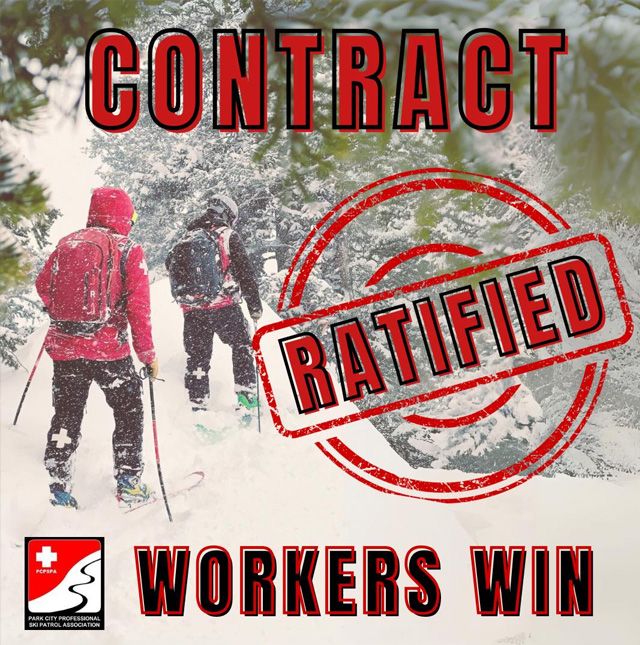
After 10 months of stalled negotiations and 12 days of striking, the PCPSPA is claiming victory in their battle for fair wages. Image: Park City Professional Ski Patrol Association on Facebook
In other non-competitive news this week, we bring you yet another update from Park City, Utah, where the Park City Professional Ski Patrol Association and Vail Resorts have finally come to an agreement, ending ski patrol’s strike. At this point you should be pretty familiar with the story as it became so big in recent weeks that it outgrew ski media and made its way into national headlines. In case you somehow missed it though, the TLDR version is simply: Vail wouldn’t agree to a $2 raise in starting wages, or make concessions in regards to a health insurance stipend. As a result, Park City’s unionized ski patrol went on strike, and the mountain erupted in chaos.
This week though, we learned that a new contract has been agreed upon between the PCPSPA and Vail Resorts, thus ending the strike with the ski patrol union claiming victory. Amongst the concessions that Vail made, was not only a $2 increase in starting wages, but also wage parity, meaning that Park City’s patrol unit’s wages will increase whenever another resort’s wages increase. Additionally, they also earned wage increases for all patrollers, with experience being compensated at a higher value. For some of the most tenured patrollers, this means wages are up $7.75/hr or more, while the average increase is roughly $4/hr. Finally, we also know that the PCPSPA earned improved benefits packages, including access to parental leave. All in all, the result of the strike seems to be weighing heavily in favor of the patrollers.
So, the strike’s over, which means this story is over too, right? Well, not exactly. While the patrollers themselves can happily return to the job they love, in a lot of ways this is just the beginning for Vail. On the patrol front, a new precedent has been set. Now, thanks to the PCPSPA’s efforts, there’s a new expectation regarding ski patrol wages. Looking across Vail’s portfolio, it’s easy to see how patrol units at other mountains could follow the PCPSPA’s lead and decide to unionize if they haven’t already, or suddenly recognize the amount of leverage they have when it comes to negotiations. As fate would have it, the ripple effect of PCPSPA’s actions won’t take long to witness as the Keystone Ski Patrol Union is currently in the midst of their own contract negotiations with Vail. Now, Vail has a choice to make, and they’ll have to do it quickly. Do they agree to the Keystone Unions’s terms and get a contract signed ASAP, possibly further conceding power to patrol unions? Or, do they hold out and risk another strike and more bad publicity? We think we know the answer, but only time will tell.
Meanwhile, there’s more bad news for Vail as fallout from the strike continues. As we mentioned earlier, the PCPSPA strike wasn’t just ski news. For a moment there, it became national news as casual skiers across the country had their holiday vacations greatly impacted by the resort’s limited operations. Last week we shared a clip from a financial program where one co-host berated the resort, and now this week we have an even bigger story to share: Vail is being hit by a class action lawsuit, brought forth by vacationers who say that the company failed to disclose the patrol’s strike or its impact on operations. Brought forth by Illinois resident Christopher Bisaillon, the lawsuit stems from the idea that vacationers paid thousands of dollars for a ski vacation, only to have limited access to skiing as a result of the strike. In Bisaillon’s case, he claims that he spent $15,000 for the family vacation, and was only able to take 10 runs over the course of the week. Again, while we’ll have to wait to see how this plays out, one thing is for absolutely certain: Vail customers are not happy with their handling of the strike. For more on this developing story, click here.
#4: Caught in the Cross Fire: How Park City’s Avalanche Dogs Navigated the Strike:
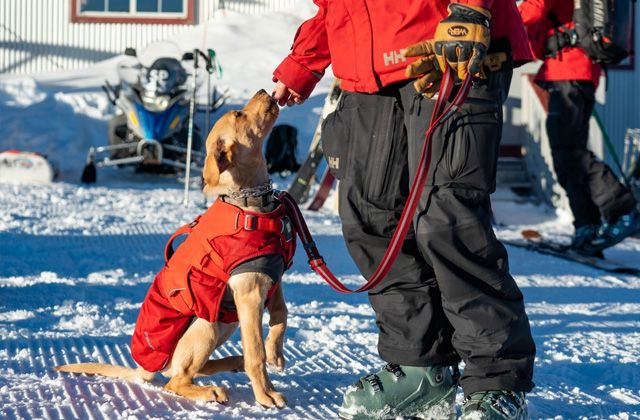
Think the Park City Ski Patrol strike was only about humans? Think again. Amongst the contract negotiations were plenty of line items put in place for arguably the most adorable employees on the mountain. Image: Park City Mountain on Facebook
Finally, we’re closing out this week with further coverage of the Park City ski patrol story, but this time with a bit of an unexpected focus: Park City’s avalanche dogs. In a story coming to us by way of TownLift.com, we learned this week about an aspect of the strike that we truthfully hadn’t even considered. Somewhere between whimsical, heartwarming, and serious, this article gives us all of the answers to questions we didn’t even know we had in regards to how Park City’s patrol dogs navigated the strike, as well as what rights they earned. While it’s a lighthearted read with plenty of serious sounding quotes that are likely to make you laugh, it’s also packed with a lot of interesting information in regards to the importance of these dogs. With that, let’s jump right in.
First things first, one of the highlights of this piece is the acknowledgement that all throughout the strike, ski patrol had, “a tentative agreement on the dog article.” In other words, this means two things. First, the important role of the avalanche dogs is taken seriously, and they are treated as members of the team. In the words of 14 year patroller and dog handler Julia McCarrier Edwards, “Our negotiators were really intentional and careful to make sure the four-legged members of our team were getting fair representation and that their handlers were getting the necessary support to raise, train, and maintain these incredible search tools.” Second, it sounds as though one of the things that Vail absolutely got right in this debacle was agreeing early on to the line items regarding the avalanche dogs. Still because the patrol union is a team and they don’t like scabs, the canine unit remained loyal, with 9 dogs joining the patrollers on their strike, including their newest puppy Renny.
While it may be a foregone conclusion that the dogs would join the strike, it’s important to know that it wasn’t perfectly smooth sailing for them. As trained workers, the avalanche dogs seemed to be a bit restless and confused at times, as they were amongst friends, but in a strange environment. Rather than working alongside them in the snowy mountains, they found themselves standing in the city’s streets, making noise and garnering support. For dogs that are trained to track human scents buried deep within an avalanche, this was unfamiliar territory. To help support them in the strike, the patrol’s dog trainers organized their own search drills and obedience training sessions, with Edwards saying that it, “gives the dogs a training outlet and a sense of community with their fellow avalanche dogs.”
As for the rights that the dogs won in the strike? Most of it comes back to ensuring their well being. Amongst the line items are stipends for handlers to afford food, trips to the vet, and educational opportunities for the dog patrollers. Interestingly enough, these line items are more or less what their human counterparts were seeking as well. Perhaps life would be easier if only we all had a little more fur. Anyways, that’s all for this highlight - we encourage you to give the story a read in full if you’re the type whose heart is easily warmed by adorable content!