

TOP FIVE FRIDAYS: JULY 1, 2022
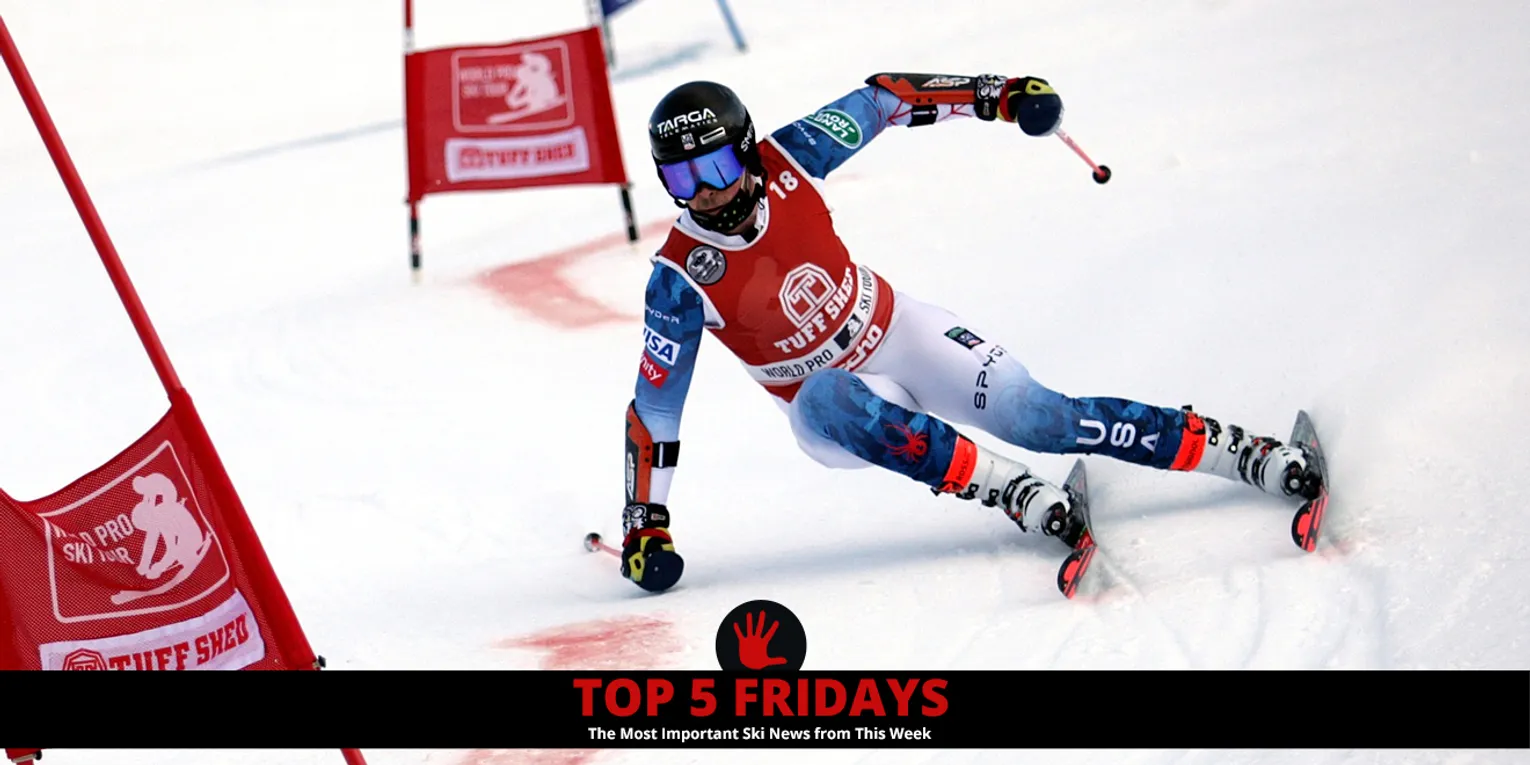
Lead Image: Who’s that on course? It’s U.S. Olympic athlete River Radamus, taking the World Pro Ski Tour up on their proposition of creating real financial opportunities for professional ski racers. More on this in highlight #4. Image: World Pro Ski Tour on Facebook
#1: “Inside the Skiing Pipeline - Part 6” - An Exploration of Nordic Culture:
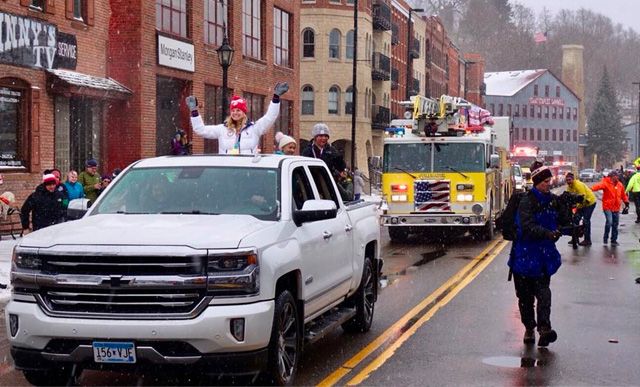
Why do parades matter? In the case of Olympic medal winners, it’s because it makes their achievements more relatable to local communities, raising interest in Olympic sports and inspiring younger generations. Image: Jesse Diggins on Facebook
Hello, and welcome to Top Five Fridays, the July 1, 2022 edition! This week we’ve got a suite of lighter topics as the summer months allow us to explore some of the bigger picture trends in the world of ski resorts and ski racing. To kick things off, we’ll start by sharing the sixth installment of the Vail Daily’s “Inside the Skiing Pipeline” series. Just a quick recap for those who haven’t checked in in a while, this series is a set of eight articles published over the course of just over a week back in late May. Due to the tremendous amount of information within each piece, we’ve broken our coverage out into eight consecutive Top Five Friday reports, with this being the sixth installment.
In this week’s “Inside the Skiing Pipeline” article, we look to the nordic nations that are traditionally powerhouses within the sport of skiing to see what they have going for them that we don’t. As it turns out, the answer is shockingly simple: in nations such as Norway, Austria, and Switzerland, ski culture is ubiquitous. Throughout this week’s piece we get numerous examples that really drive home just how omnipresent and important the sport of skiing is to these nations, and Norway in particular. There, we learn that skiers who are training will regularly be on snow 7 days a week and exceeding 180 days on snow in a given year isn’t at all unheard of. In these nations, due to a mixture of factors ranging from stories of heroic explorers in the 19th century who relied on skis for transport, to access to snow and a cultural concurrence on the importance of skiing, the sport itself is something that residents are passionate about, day in and day out.
As author Ryan Sederquist explores the sports integration into daily nordic life, he also refers back to the American half of the story. One way he does this is by sharing the anecdote of Warroad, Minnesota, a small town of just 1,800 residents that has produced an astonishing, “seven Olympic, five NHL, and over 80 NCAA DI hockey players.” While these statistics seem unfathomably disproportionate, the town of Warroad has something in common with Norwegian culture: nearly every resident lives and breathes one specific sport. Due to this shared passion, those in the community are almost constantly practicing the sport in a way that’s less about the stress and pressure of success, and more about the enjoyment of it.
The other tie-in that Sederquist makes is the simple fact that the U.S. needs more first hand exposure to the sport of skiing. To make this point, he shares the story of the time in which an eleven year old version of him held former Olympian Dave Christian’s Gold Medal, highlighting the immense impact it had on him. Another anecdote he shares is the story of the multiple times in which Jesse Diggins, currently the world’s best female cross country skier, has held events here in America so that kids can see her medals. In those instances, Diggins had a clear impact on the kids, connecting and inspiring them. As a result of these stories, Sederquists makes a simple yet crucial recommendation: in order to inspire younger generations, the U.S. needs to find ways to bring these sports closer to home rather than continuously competing internationally. Fortunately for all of here in the U.S., recent news has suggested that that’s exactly what’s happening. Between the news that the U.S. will host races at a total of four venues next season, thanks to the addition of Aspen and Palisades Tahoe stops to the FIS calendar, as well as the recent push to bring the Olympics back to Salt Lake City by 2034 at the latest, it’s clear that there’s a real interest in bringing competitive skiing closer to an American audience. To learn more about this aspect of skiing’s talent pipeline, check out the full writeup from the Vail Daily.
#2: As Alterra CEO Rusty Gregory Heads Towards the Exit, the Colorado Sun Grabs One Last Interview:
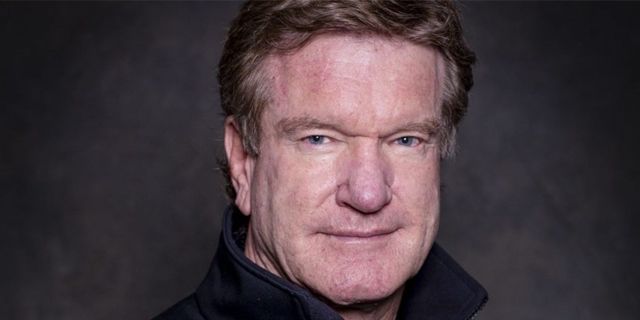
Alterra Mountain Company CEO Rusty Gregory.
Next up in ski news this week is an interview between Rusty Gregory (the outgoing CEO of Alterra), and one of our favorite ski reporters, Jason Blevins of the Colorado Sun. Now, before we dive into this interview, we want to quickly share some news that came out about a month ago, but never quite made it into our Top Five Fridays coverage: Rusty Gregory, the CEO of Alterra since its creation, has announced his upcoming resignation. After a 40 year career of working at ski resorts, starting as a lift operator at Mammoth and working his way up the ladder, Gregory will turn his post over to current Alterra President Jared Smith, effective August 1, 2022. Smith, who has been with Alterra for just about a year now, has prior experience working in the ticketed event space as the former President and Global Chairman of Ticketmaster. As such, Smith brings with him significant insights into both marketing experiences, as well as technology.
This week, Blevins, published an interview with Rusty Gregory in which they not only talk about his decision to transition out of his leadership role, but also a wide range of topics, including how he sees the role of technology playing into the future of skiing, how the pandemic forced ski resorts to rapidly modernize, and even some of the core differences between Alterra and Vail. While Gregory does a good job of keeping the discussion polite, it’s still interesting to hear him specifically cite a few ways in which the two leaders of the ski resort industry differ, particularly in terms of their ideologies regarding the centralization of their workforces. This is another one of those times when the interview itself is really the highlight here, so we don’t want to give too much away. Instead, we’ll turn you over to the Colorado Sun to read it in full!
#3: Colorado’s Ski Cooper Has Sneakily Created a Sizeable Multipass of its Own, Offering Access to 58 Additional Independent Ski Areas:
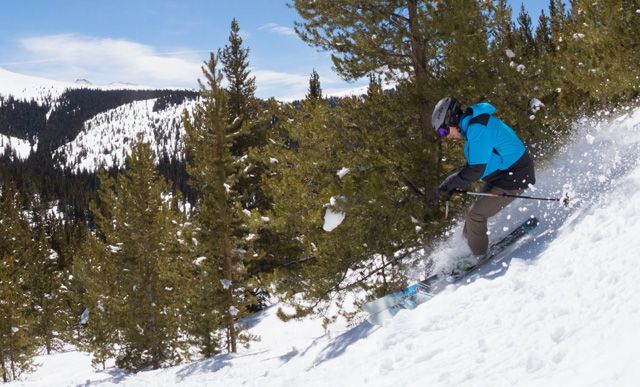
From what we can tell, Ski Cooper seems like a great place to spend a season. That said if you buy a season pass there and find yourself bored, you’ll also have 3 free days of skiing at each one of their 58 partner resorts. With passes currently on sale for just $329, a Ski Cooper season pass feels like a low risk, high reward type of opportunity. Image: Ski Cooper on Facebook
While we’re on the topic of multipass resorts, we caught another article this week sharing a story we hadn’t heard before. In recent months, we’ve been talking a lot about how ski resorts are naturally beginning to diversify their ideal customer base. In other words, just like how skis have evolved to offer a best option for each skier’s style of skiing, so too are resorts diversifying to accommodate skiers’ preferences. In discussing the topic, we’ve touched on obvious options such as the Epic and Ikon Passes, as well as more niche options like Bluebird Backcountry or community ski areas like Howelsen Hill. We’ve even covered the rise of the Indy Pass multiple times, which is the independent resorts’ counter-offer to the Ikon and Epic megapasses. That’s why we were surprised to come across an article this week that put a pass offering on our radar for the first time, despite the fact that it includes access to nearly 60 resorts.
Let’s start with this week’s headline: Colorado’s Ski Cooper has just begun selling its $329 season pass, effective as of today. Included with this year’s pass is access to 58 partner resorts, 13 of which are new this year, joining the existing 45 partner resorts that were included with the pass last year. Similar to how the Indy Pass functions, Ski Cooper pass holders will receive three free days of skiing at these additional 58 resorts. What makes the pass different from the Indy Pass though, is that those who buy in are buying a full season pass to Ski Cooper. In other words, while the Indy Pass provides two days of skiing at 100 different resorts, it doesn’t include unlimited access to any of them. With the Ski Cooper season pass, pass holders will have unlimited access to the resort, as well as two days at the 58 partner resorts.
In addition to this subtle yet significant detail, the Ski Cooper deal also interests us as it’s come about as an individual effort, meaning that it’s the resort’s marketing team that’s pieced this offering together and not the result of a third party business. As a result, while Ski Copper pass holders have access to 58 other resorts, it doesn’t necessarily mean pass holders at those resorts have reciprocal access to Ski Copper. Herein lies the intrigue. At a time when the ski resort industry continues to shift and reconfigure itself in reaction to the pre-pandemic consolidation trends, there’s always been lingering questions about whether or not smaller ski areas will be able to compete with the big dogs. We’ve come to learn that the outlook for these independent ski resorts is reasonably safe as they’ve found creative ways to secure their own customer bases. To us, this program from Ski Cooper is a perfect example of this. Not only does it highlight the creativity and scrappiness of independent resorts, but it feels like a model that’s potentially just beginning. If one ski area is able to get another 58 ski areas to agree to allow their guests to ski for free for up to three days, then whatever the package is that Ski Cooper is pitching to other resorts must have some real value. Assuming that’s true, it’s not a massive leap of faith to guess that other independent resorts will also embrace this model and we could soon see a new network of resorts emerge, similar to the Indy Pass, in which season pass holders have unlimited access to their home mountain, and are able to ski for a few days at partner resorts for free. For us, that’s an exciting idea. Not just because we’re massive ski nerds, but because it would be another step in the evolution of the ski resort industry, and one which would provide yet another way for skiers to align with the ski pass that’s best for them. For more on this, check out the coverage from the Vail Daily.
#4: Want to Be a Professional Ski Racer? The World Pro Ski Tour Might Just Be Your Golden Ticket:
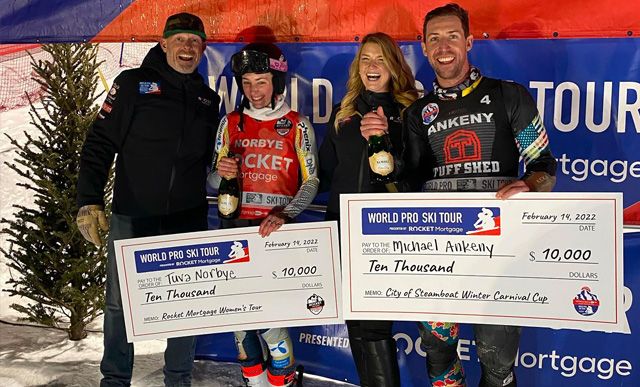
In their own words, the World Pro Ski Tour exists for a simple reason: “to provide significant income-producing opportunities for alpine ski racers”. The result is an exciting head-to-head ski race league where anyone can enter and potentially walk away with a ten thousand dollar check. Image: World Pro Ski Tour on Facebook
Finally, we’re going out this week the same way we came in: on the topic of ski racing. For our fourth highlight, we share with you an interesting story from SkiRacing.com that brings focus to a type of ski racing that we’ve admittedly overlooked quite a bit here on Chairlift Chat. Week in and week out we find ourselves discussing World Cup ski racing as if it’s the only way to make a living racing on skis. While it’s true that the FIS is inarguably the pinnacle of professional ski racing, it’s certainly not the only form of it. In an article from SkiRacing.com this week, we were reminded that not only are there other leagues out there, but that some of them are actually both very accessible and moderately lucrative. Case in point: the World Pro Ski Tour.
Started back in 2017, the World Pro Ski Tour (WPST) is the counter to the FIS’s intense formality. In the WPST, there are no world rankings, global point systems, or membership requirements. Instead, anyone can pay a fee to enter any race, and if they perform well enough, they can potentially win thousands of dollars. The format of the races themselves is refreshing too. In recent years, FIS athletes have grown more and more concerned with the parallel slalom event, citing the many various factors that can make one side of the course better or worse than the other. In the world of the FIS, where points are everything and each race has more meaning for an athlete’s overall career, these concerns are valid. For the more laid back WPST however, it’s all just a part of the event. Utilizing a head to head format where athletes race in a tournament style bracket, the World Pro Ski Tour offers a more classic, casual type of excitement. Perhaps what’s most interesting about it though, is that it can be reasonably lucrative for athletes.
In last year’s championship weekend, prominent U.S. Ski Team athlete and FIS competitor Paula Moltzan entered both the Giant Slalom and Super Slalom events. In those events, she finished in second and first place respectively. With those results, Moltzan earned herself between $26,300 - $51,300*. For comparison’s sake, her winnings from FIS races last year totalled $20,977.37. Regardless of her actual take home value, the moral of this story seems pretty clear: the World Pro Ski Tour has a low barrier to entry and gives anyone with enough talent the opportunity to make as much money in one weekend as some world cup skiers do in an entire season. Really, that’s the point of our final highlight this week. To let our readers know that with the right mixture of confidence and ability, you too could technically become a professional skier next season. To learn more about the WPST, check out this story from SkiRacing.com, or their official website.
*There seems to be some discrepancies on the winnings reports listed on the World Pro Ski Tour website. Brackets show Moltzan winning $20,000 for her first place finish, and $6,300 for her second place finish. When total earnings are listed though, Moltzan is shown as earning $51,300. We’re not exactly sure why this is, but Paula, if you’re out there reading this, please leave a comment and let us know how much you won. We’re all dying to know.