

Top Five Fridays: July 12, 2024
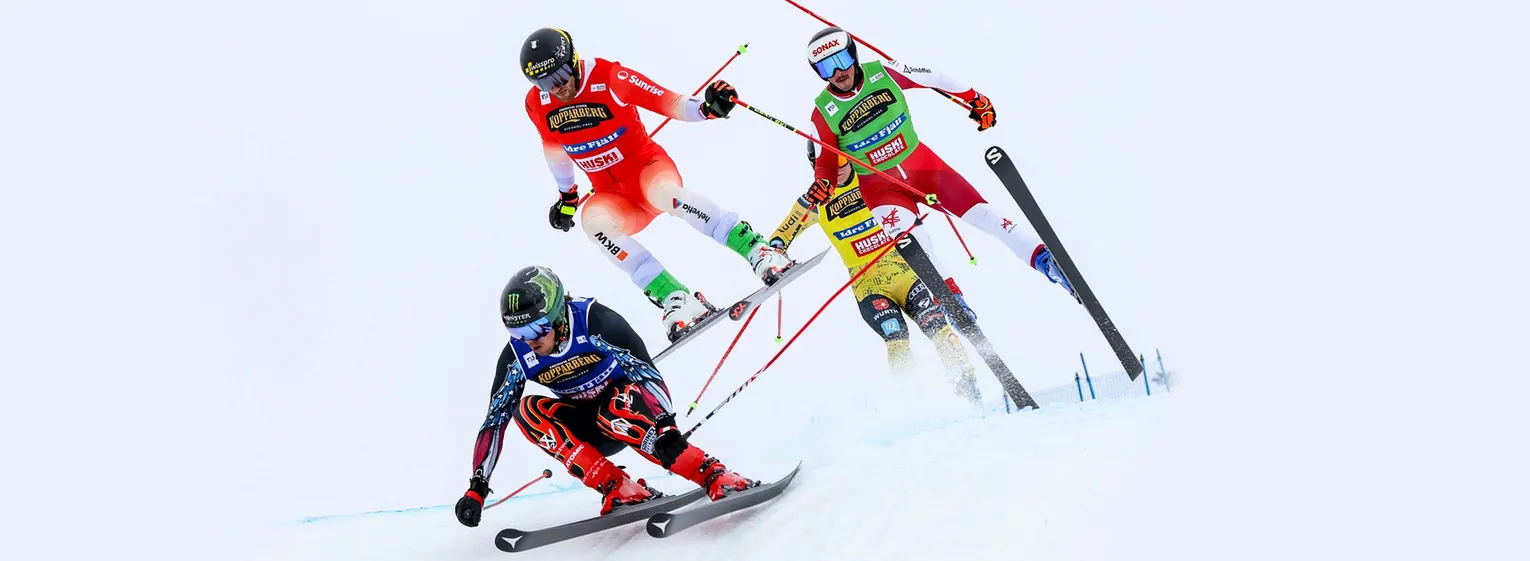
Lead Image: In its first year, FIS TV proved to be successful, with steadily increasing viewership. In year two, the organization hopes to continue building on its success. More on that below! Image: FIS on Facebook
#0.5: Quick Reminder! Next Weekend is Our Second Annual Warehouse Sale:

Our Warehouse Sale is just a week away! If you’re in need of new equipment and can make it to Stowe, we highly recommend coming!
Hello, and welcome to Top Five Fridays, the July 12, 2024 edition! This week we’re starting off with a bonus half-highlight as we want to remind everyone about our upcoming Warehouse Sale, happening next weekend in Stowe, VT! Taking place from July 20 - 21st, our Warehouse Sale is arguably one of the largest ski sales in the entire country, as our entire inventory is on sale, with prices up to 80% off. Now, to be clear, I (Matt) don’t have the inside knowledge of just how low our pricing team is pricing things, but what I do know is that some pretty insane deals have already been leaked, which should give you a decent idea of what to expect. Take this one for instance: a 2024 Atomic Bent 110 for $449.95. Or how about the 2023 Armada Reliance 82Ti for $299.99? Or the 2024 Armada ARV 94 for $349.00. Go ahead, do some Googling. From what I can tell, our warehouse sale is going to have the best prices available for a ton of brand new equipment.
Here’s the thing though: these prices are only made possible by offering them in-person and avoiding the costs associated with processing, picking, packing, and shipping your order. That means in order to take advantage, you’ll have to get yourself here, to 192 Thomas Lane in Stowe, VT on July 20th or 21st. We recommend coming on the earlier side of our sale to make sure we still have what you’re looking for. To learn more, check out our event on Facebook.
#1: Federal Receiver Announces Intentions to Sell Burke Mountain by the End of the Year:
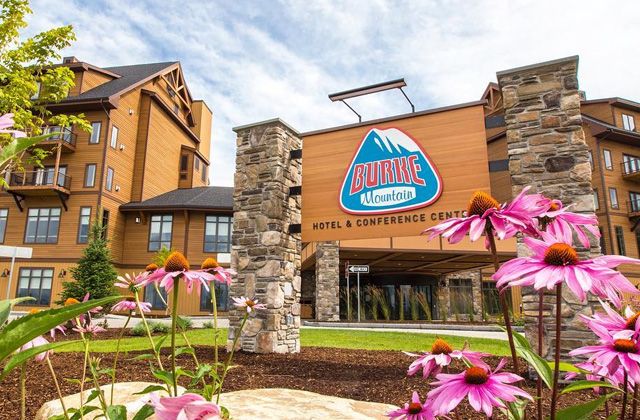
Finally, after nearly a decade under federal receivership, Burke Mountain is expected to hit the auction block in the coming months. Image: Burke Mountain on Facebook
In other Vermont ski news this week, we learned that Burke Mountain’s federal receiver, Michael Goldberg, expects to sell the resort by the end of the year. Since this story has been nearly a decade in the making, and has been out of the news for the last couple of years, we’ll give you an ultra quick recap. Back in the mid-2010’s, Jay Peak and Burke Mountain were both owned by Ariel Quiros and managed by Bill Stenger. At that time, both resorts were also undergoing significant developments, funded by investments through the EB-5 program. Then, it was discovered that Quiros was misappropriating funds and both resorts were seized by the U.S. government. From there, they were turned over to Michael Goldberg, who was tasked with stabilizing the businesses before ultimately selling them for as much as possible in an effort to repay the investors who’d been scammed. Back in 2022, Jay Peak was purchased by Pacific Group Resorts for $76 million, meaning the final step to concluding this saga is the sale of Burke Mountain.
This week, it was announced that Goldberg expects that process to happen prior to the end of the year. In an article from VT Digger, we learned that Goldberg has a “stalking horse bidder” lined up, with the goal of using them to kick off an auction. For those unfamiliar with this concept, it’s the same approach that Goldberg used when selling Jay Peak. Essentially, an initial interested party is found that is willing to buy the resort for a certain price. Once that “bid” is known, Goldberg puts together the required paperwork to set up an auction using the initial bid as the minimum price. From there, on a specified date, other interested parties will be able to submit their bids up until a predetermined ending date. Upon that date, the auction ends, the highest bidder is vetted, and should all go to plan, the resort will officially be sold. According to the latest report, the hope is that this process will be completed by the end of the year.
As for who the dark horse bidder is, we don’t know. When Jay Peak was up for grabs back in 2022, we know that both Vail and Alterra placed bids, but ultimately walked away before the auction hit its $76 million final offer. Could either of these companies be back in the mix, eager to tap into a resort that calls itself home to one of the best ski academies in the northeast? Or, could the interested buyer be Pacific Group Resorts again, looking to add a second mountain to its portfolio in the area, continuing the strategy held by Quiros and Stenger? Or, is the dark horse buyer someone totally different? While it seems unlikely that it would be a first time resort buyer, there are plenty of other small-scale ski conglomerates who might be interested in buying a resort that’s recently had quite a bit of development work done to it. For the moment, we don’t know who the interested party, or parties, are, but we do know that in all likelihood, we’ll have answers by the end of the year. For now, we’ll turn you over to VT Digger to learn more.
#2: Two Years into His Tenure, FIS President Johan Eliasch is Making Good on Promises to Increase the Organization’s Digital Media Footprint:
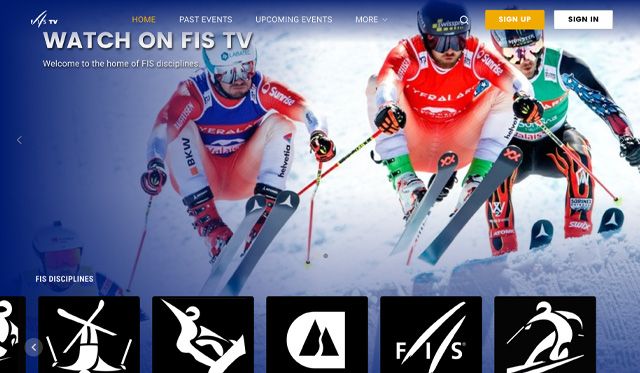
Have you checked out FIS TV yet? If not, it’s worth a browse! Screenshot from the FIS TV Website
Next up in ski news this week is a triple header highlight from SportsVideo.org, who recently published three separate articles covering different aspects of the FIS’s push into digital media. If you’ll recall a couple of summers ago, when Johan Eliasch took over as the president of the FIS, one of his biggest goals was aligning international media rights and creating more watchable content. From events themselves to behind the scenes footage with athletes, Eliasch has been actively pushing to emulate the success of global leagues like FIFA and Formula 1. Between the trio of articles from SportsVideo.org, we learn more about the specific ways in which Eliasch has made progress towards his goals.
At the top of the FIS’s content strategy is the creation of FIS TV, which was introduced at the start of last season, launching with coverage of the Park and Pipe Junior World Championships in Cardrona, New Zealand. Since then, the service has provided coverage for countless events across all of its disciplines, including alpine, cross country, nordic combined, freestyle / freeskiing, snowboard, ski jumping, freeride, telemark, and para. Now when you go to the FIS TV website or app, you can instantly access content from nearly every event that took place this past season - something that never would’ve happened before last season. While there is still work to be done as far as hosting full replays of previous events and providing livestreams of each event as they happen, FIS TV is off to a strong start in its initial season.
A bit further down the FIS’s content strategy is a portion of their media plan that we find particularly interesting: recruiting athletes to be content creators. Again, going back to utilizing the F1 as inspiration, Eliasch has cited their “Drive to Survive” series as a model for using behind the scenes content to generate interest in the sport by building connections between fans and athletes. While we aren’t lucky enough to have a “Free to Ski” series portraying the behind the scenes lives of FIS skiers, the FIS is putting an emphasis on encouraging and enabling athletes to get involved with sharing their stories via FIS channels. Whether through account takeovers on social media platforms like TikTok or Instagram, or by posting more longform content featuring “athlete driven narratives”, the organization is looking to connect with younger fans with shorter form content, hoping to capture their interest enough to engage them in competitions when they air.
While there's plenty to talk about in regards to this initiative, perhaps one of the most interesting revelations is that the FIS is building an internal system that uses AI to quickly intake athlete generated media, and package it up for distribution extremely quickly, so that professional looking media can be released almost immediately after its been shot. While we don’t know the full extent of this system’s capabilities, or the long term goals for it, one example we’re given is that it has the ability to automatically crop videos in both 16:9 and 9:16 aspect ratios depending on what content is shot and where it’s being distributed. While this may seem like a minor detail, it’s a great example of how the FIS is creating a foolproof system for athletes to tap into that will enable them to shoot video without much technical knowledge, and have it look professional in the end. All in all, it’s yet another sign of the FIS’s commitment to expanding their coverage of both athlete driven content, as well as full event broadcasts. To learn more about their latest push into the world of digital media, check out the report from SportsVideo.org.
#3: Want to Make it as a Professional Skier? Consider Creating a YouTube Account:
Speaking of media in the world of skiing, our next highlight this week is an interesting read coming to us by way of Powder Magazine that tells the story of how YouTube is enabling skiers to create careers by self-producing content. Now, to be clear, neither us nor the article are trying to play off the concept of content creation as a mind blowingly new industry. Rather, the article calls to attention a few of the post prominent skiers making a living via YouTube, highlighting how different the world of ski media is today than it was even just a handful of years ago.
Take for instance, the story of Alex Hackel. As a youth, Hackel was a competitive skier through and through. By the time he was 17, he’d earned a spot on the U.S. Ski Team thanks to a season of strong slopestyle results. Then, he blew his knee. Between that injury and a burning desire to film a street part, Hackel ultimately linked up with the HG Skis crew and filmed his first full segment for their classic film, “Eat the Guts.” At this point Hackel’s “career” was one part competition and one part segment-filming, mirroring the path that countless other freeskiers were following at the time. That formula, as you might guess, makes it difficult to stand out, and even more difficult to turn into a full fledged career. Enter: YouTube.
After spending years filming parts for independent films, Hackel made the leap this year to becoming a full fledged content creator on YouTube. Since the beginning of last season, Hackel has posted 37 videos, with many receiving tens of thousands of views. Thanks to this, he’s not only monetizing YouTube through ad revenue, but has also increased his exposure to a point where brand partnerships are becoming a real possibility. As for his most viewed video? A collaboration with fellow ski YouTuber Nikolai Schirmer that has 134k views. If you’re a regular reader of Top Five Friday’s, Schirmer is another name you’ll recognize as we’ve posted numerous edits showcasing his hair raising ascents and descents down terrifying lines all across Europe. Much like Cody Townsend’s style of storytelling, Schirmer’s videos often showcase an arc consisting of the planning, grueling ascent, and then incredible descent down remote mountain peaks.
As it turns out, that word, “storytelling,” is at the center of what makes each of these YouTube ski careers so much fun for the creators and viewers alike. In the old model, skiers would pair up with film crews, accumulate as many clips as they could, and then put their trust into the project’s editors to do their skiing justice. Now, in the democratized era of YouTube, skiers like Alex Hackel and Nikolai Schirmer are in full control of not just their skiing, but the storytelling as well. From creating compelling plotlines for their edits, to the way their content is filmed and edited, YouTube has created a platform where skiers can take full control of their careers - deciding what to shoot, how to shoot it, and how to share their story with their audiences. While none of this is brand new to any of us, the article from Powder Magazine is an interesting read that highlights the shifting tides in the world of ski media. If you’re looking for some fun summer reading, we recommend checking it out.
#4: Developed by a Pair of Racecar Drivers, the ShredShox is Here to Revolutionize Ski Bindings Forever:
Finally, we’re ending this week with coverage of an invention that we’re sure will get you all talking in the comments. As we were reviewing this week’s ski news yesterday, we caught an article from the Vail Daily that we knew we had to cover. In Vail, an unlikely trio are attempting to change ski equipment as we know it with their new suspension system, “ShredShox.” Invented by a pair of former racecar drivers and inspired by automotive suspension, the ShredShox is essentially an elevated platform upon which a traditional ski binding is mounted, and is suspended on either end by a pair of mountain bike shocks. The goal is simple: give skiers a more comfortable ride by dampening the vibrations that occur while skiing.
At the moment, the product is still very young, despite being in development since 2017. This past season, the current working prototype (the sixth iteration) was tested by a handful of skiers and riders at Vail and Palisades Tahoe. According to the report from the Vail Daily, they were well received, with brand partner Jarrod Krisilof reporting that, “It kind of just soaked it up and you could keep it under control. I didn’t get bucked in any way,” when he took them for a run down a choppy bowl. As for the feeling and benefits of the system, the ShredShox is claimed to offer, “improved cornering and stability, as added static pressure keeps the ski in constant contact with the snow,” as well as, “a smoother ride and softer landings.”
Now, we’ve obviously never tested this technology, but as people who spend a considerable amount of time on skis and know the ins and outs of modern day ski-tech quite well, let’s just say we have some questions. For example, does essentially hovering over the camber of your skis have an effect with your ability to control them? What is the additional risk for equipment breaking, now that there are two additional shocks and multiple connection points? Does the suspension actually have an impact on the ski chattering at high speeds, as was the initial reason for the invention? Is there enough travel on mountain bike shocks to prevent you from bottoming out? Is there a dead spot under your foot, as can be the case with some system bindings? Do the brakes reach the snow? Again, while we’re not going to pass officially judgment on this innovation without trying it, it’s safe to say that we have a ton of questions we’d love to have answered. So, ShredShox, if you’re reading this, feel free to send us a pair for testing! For everyone else who’s reading along, you learn more about this new company via either the report from Vail Daily, or the official ShredShox website.