


Top Five Fridays: July 14, 2023
Lead Image: At Bluebird Backcountry, the human powered ski area was in the midst of building a loyal following of skiers and riders who preferred the no frills resort and didn’t mind earning their turns. Unfortunately, time and money have both run out for the operation. Details below. Image: Bluebird Backcountry on Facebook
#1: It’s a Been a Long Time Coming, But it’s Official: Mikaela Shiffrin Can Add “ESPY Winner” to Her LinkedIn::

You could almost see a hint of disbelief on Mikaela’s face as she gave her ESPY’s award speech on Wednesday. Huge congratulations to Mikaela on a well deserved honor! Image: Mikaela Shiffrin on Instagram
Hello, and welcome to Top Five Fridays, the July 14, 2023 edition! This week we’ve got an interesting roundup of summer ski news, starting with a really exciting headline out of the Mikaela Shiffrin camp. Earlier this week on her Instagram, Shiffin posted a video in which she shared the news that she’d be heading to ESPN’s ESPY awards on Wednesday, having been nominated in both the “Best Record-Breaking Performance,” and “Best Athlete, Women’s Sports” categories. Over the course of her career, Shiffrin has been nominated multiple times for ESPY awards, and was also nominated for a coveted Laureus Sports Award earlier this year. Unfortunately, despite several nominations, she’s never won any of these awards. It’s a fact that Shiffrin reflects on this Instagram video, in a perfectly Mikaela way, saying that while she never expects to win, she’s always honored by being nominated and sharing a room with so many amazing athletes. Still, each time she’s nominated, she finds herself stressing about what she would say if she somehow found herself on stage, needing to give a speech. By the end of this particular video, Shiffrin concludes that she’s going to handle this year’s ESPY’s differently. Rather than stressing about what she might say if she finds herself unexpectedly at the front of the room, her plan for this year was to simply accept that she won’t win, not worry about the speech, and truly enjoy the whole experience for what it is. Ironically, this submission to fate coincided with winning her first ever ESPY award.
On Wednesday night, at the Dolby Theatre in Los Angeles, California, in a room packed with today’s global superstars, Mikaela heard her name called for the most prestigious award at the event: Best Athlete, Women’s Sports. Noting Shifrin’s strategy of not worrying about having to give a speech, she’d be forgiven if she stammered her way through a couple of awkward minutes on stage. Instead, she gave an incredible speech that not only paid her obligatory gratitude to friends, family, and event organizers, but also went on to inspire. If you follow Shiffrin, you know that in some ways she’s an unlikely superstar. Her competitive drive has never seemed to come from chasing fame or accolades, but rather from something within. In her speech, Shiffrin shined a light on that, saying, “This season was incredible and there was a lot of talk about records... but I was thinking, why is a record actually important? I just feel like it's not important to break records or reset records, it's important to set the tone for the next generation and to inspire them.”
So there we have it. For Mikaela, her incredible career has become about something much more than herself. For Mikaela, her drive, her feats, and her continued pursuit of success all return to the importance of inspiring the next generation to achieve the seemingly impossible, so that we can all make progress. Whether or not you put a lot of weight into awards ceremonies like this, it remains an incredible honor for Shiffrin, while also being a huge win for the sport of ski racing on the whole; taking the top honors amongst the best athletes in the world is no small feat. So with that, a huge congratulations goes out to Mikaela, as well as a thank you for being such an amazing ambassador for our sport. To read more on this, check out the recap from the U.S. Ski Team.
#2: Somehow, Despite Heavy Opposition, the Utah Department of Transportation Has Approved the Gondola Plan:
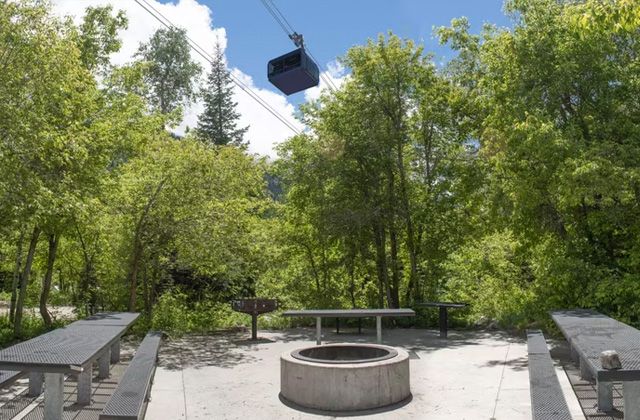
A conceptual rendering of what the proposed gondola in Little Cottonwood Canyon would look like as it passes over Tanners Flat Campground. Image via Salt Lake Tribune, provided by the Utah Department of Transportation.
In other ski news this week, we have yet another update from the Little Cottonwood Canyon (LCC) Gondola project. The last time we checked in with the topic, the Wasatch Front Regional Council (WFRC) had approved a Regional Transportation Plan (RTP) that included the LCC gondola, effectively giving the concept their endorsement. In a contentious meeting, the WFRC told the public that they essentially had no choice but to approve the plan as their superiors had already backed it. This week, the train keeps rolling as the Utah Department of Transportation (UDOT) announced its final record of decision on Wednesday, in which they approved the gondola plan. Now, it means the department can take actionable steps to turn the gondola from a conceptual plan, to a reality.
Alongside this record of decision also comes some additional details regarding the project. For starters, we have an official phase plan which starts to rough in an expected budget and timeline for this project. Phase 1, which is set to begin this year, will see an expansion of bus services in the canyon, as well as the addition of tolls and a new mobility hub to help encourage public transportation. This is expected to come at a cost of about $150 million. Phase 2, which doesn’t have a timeline or budget yet, will see the widening of Wasatch Boulevard, expansion of trailhead parking, and the construction of snow sheds along the canyon road in an effort to mitigate avalanche related closures. Finally, phase 3 will see the construction of both the gondola and its accompanying base area.
While the third phase of the project has always been the most contentious, this week’s development adds two more elements of friction to the plan. First, the cost on the project has gone up yet again. While different parties have had different calculations throughout the planning process, it’d been expected that the gondola project would cost roughly $550 million. This week’s update has brought that figure up to $728 million. In addition to budgetary concerns, it was also revealed this week that when phase three is put into effect, UDOT plans to reduce bussing up the canyon road, and instead relocate those services to Big Cottonwood Canyon. While there’s certainly some benefit to that plan, it leaves two glaring issues. First, it all but forces people to pay to use the gondola, even if they’re in opposition to it. Second, with the timeline of the gondola project, increased bus services may not come to Big Cottonwood Canyon until 2043, according to the most optimistic of estimates.
At the end of the day, this project is objectively becoming a mess. What started out as a fun idea that would make sense to discuss the merits of amongst buddies in the bar, has proven to be riddled with logistical issues, little public support, and potentially problematic governmental practices. As the project progresses, it’s becoming clear that UDOT plans to do anything it can to push the concept through, almost exclusively to the benefit of Alta and Solitude ski resorts. Of course, for those in opposition to the gondola who are holding out hope, at least some comfort should be taken in the fact that mammoth projects such as this one face an incredible amount of hurdles. If this project ever comes to fruition, it’ll be truly amazing. For now, you can learn the latest by checking in with the Salt Lake Tribune.
#3: North America’s Only Exclusively Backcountry Ski Resort, Bluebird Backcountry, Has Announced its Closure:
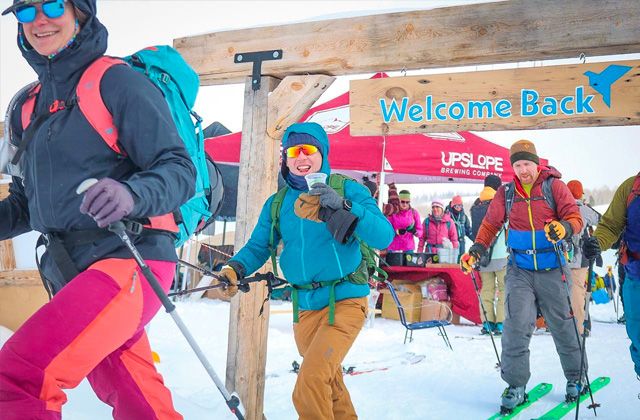
Despite not making it to profitability, Bluebird Backcountry was an incredibly popular resort amongst its target market, cultivating a community of fun loving uphill enthusiasts. Image: Bluebird Backcountry on Facebook
Next up this week is a headline that we’re sad to have to share with you. In recent years, you may have read Top Five coverage regarding Bluebird Backcountry: an exclusively backcountry uphill only ski resort deep in the mountains of Colorado. With minimal amenities and no chairlifts, Bluebird Backcountry was truly a one of a kind resort, offering skiers the rare opportunity to explore a mountain without immense crowds or a base village of any kind. Unfortunately, we learned this week that the four year experiment that was Bluebird Backcountry has come to an end. The reason is simple: despite proving to be a desirable concept and making progress towards profitability, the company ultimately ran out of funding as well as interested investors.
Initially launched on the heels of a successful Kickstarter campaign, Bluebird Backcountry briefly tested the concept during the winter of 2019-2020 in an area just outside of Kremmling, CO, known as Rabbit Ears. After seeing enough interest to prove its potential, the team moved the location of Bluebird to Bear Mountain the following year, providing guests with more property and more diverse terrain. Over the course of the three subsequent seasons, the team continued growing their customer base, ultimately hosting a total of over 19,000 guests. Amongst those who traveled to the resort were everyone from first time backcountry enthusiasts who utilized Bluebird’s rental and guide services, to those more familiar with sport and were glad to buy a $50 lift ticket to access the over 1,200 acres of avalanche controlled terrain. Ultimately though, despite the success and encouraging trajectory, the resort never made it to profitability and was continuingly reliant on investor funding. This summer, the team was unable to secure more funding as the current economic conditions have resulted in more cautious investments being made on the whole. Additionally, Bluebird’s remote location made it hard for guests to find lodging in the area, limiting their growth potential. Ultimately, these two factors proved to be insurmountable and the team behind Bluebird has decided to call it quits.
While this week may mark the official end of Bluebird Backcountry, we’re inclined to think that the resort may ultimately prove to have a legacy in the sport of skiing. Sure, the resort was unable to navigate to profitability over the course of four years, but that’s far from unheard of in the world of business. What it did do though, is show that the business concept has promise. Attracting 19,000 guests to a ski resort that’s a full three hour drive from the closest city, and one that doesn’t have chairlifts or any significant infrastructure, remains an impressive feat. While we’re currently unaware of any specific plans for a resort that’s looking to replicate the Bluebird model, we have to think that at some point someone will come along, use Bluebird as a case study, and launch what will ultimately become a successful backcountry specific ski resort. Who knows, maybe it’ll even be a second attempt from the team who started Bluebird in the first place? Time will tell, but for now, head on over to the Colorado Sun to check out the latest from this story.
#4: It’s Been a Brutal Week in Vermont, as Up to Nine Inches of Rainfall Floods Mountain Towns Along the Green Mountains:
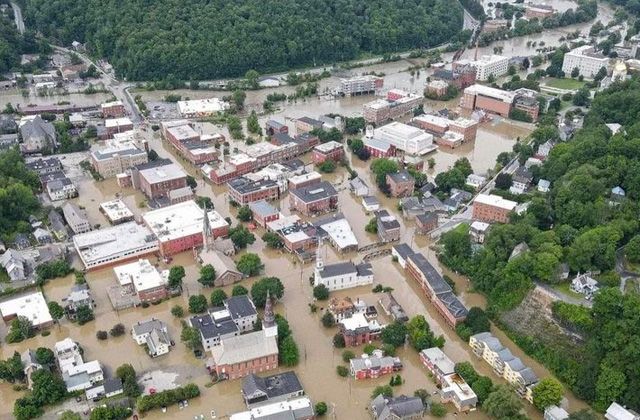
A shot from the Montpelier Farmers Market showing the extent of flooding in our state capital. This scene played out in numerous towns across our state this week. Image: Montpelier Farmers Market on Instagram
Finally, we round out this week with a pretty heavy topic. As you might’ve already heard, we've suffered significant flooding this week across a significant portion of our great state. Here in Vermont, our geography is such that a number of our towns are nestled in river valleys that run along the spine of the Green Mountains. That includes us, here in Stowe, as well as towns like Waterbury and Montpelier just south and southeast of us, Woodstock just outside of Killington, Ludlow, which is home to Okemo, and so many others. By and large, these settings make for idyllic scenes no matter what season it is. Unfortunately though, as the result of several inches of rain from Sunday night into the early hours of Tuesday, a number of the rivers in these towns flowed well beyond their banks, completely flooding the towns.
It’s been a tough week here in Vermont. Here in Stowe, we experienced flooding, but not at the same catastrophic level as our neighboring towns. In Waterbury, the crossroads of skiing here in Northern Vermont, the Winooski river overflowed its banks, completely flooding the town yet again - the second time in just 12 years. Just East of Waterbury, Montpelier, our state capital, was also completely flooded, causing damage to countless homes and businesses. The story is the same or worse in Ludlow, where again, the entire downtown was flooded by multiple feet of water. In addition to the property damage caused in these towns, another casualty of the flooding has been countless farms across the region who are still waiting for waters to subside enough to know whether or not any of their crops have survived. Even in Burlington, a city that avoided the brunt of the storm, an important parcel of land known as the Intervale, which is home to numerous small farming operations, was completely flooded- likely eradicating the crop.
From here, we’re still not quite ready to say that sunny skies are ahead. Over the course of the next few days, more rain is expected. While totals aren’t being calculated in multiple inches, significant rainfall amounts are expected, which at the very least will continue to delay cleanup efforts. Make no mistake about it, things are bad here in Vermont, and while we’re through the worst of it, we’re not out of the woods quite yet. From here, it’s going to take a lot of communal effort to clean our communities, support our local farms and businesses who’ve incurred significant losses, rebuild the roadways that’ve been washed away, and ultimately reclaim the lifestyle that makes Vermont such an amazing place to live. The good news though, is that we’re a resilient bunch, and we’ve done this before. That said, it takes a team. Whether you’re local to us here in Vermont or simply feel compelled to help our great state rebuild itself, there are a number of ways you can help. To donate your time, head over to this page from Vermont.gov and signup to volunteer. To donate your money, visit the Vermont Community Fund to explore your options. Finally, if you’re looking for more specific options, this Seven Days VT article has a number of resources linked throughout it that you can look through to find a solution that feels best for you. Thank you in advance for your support, and our thoughts are with everyone who’s been impacted by this event.