

TOP FIVE FRIDAYS: JULY 15, 2022
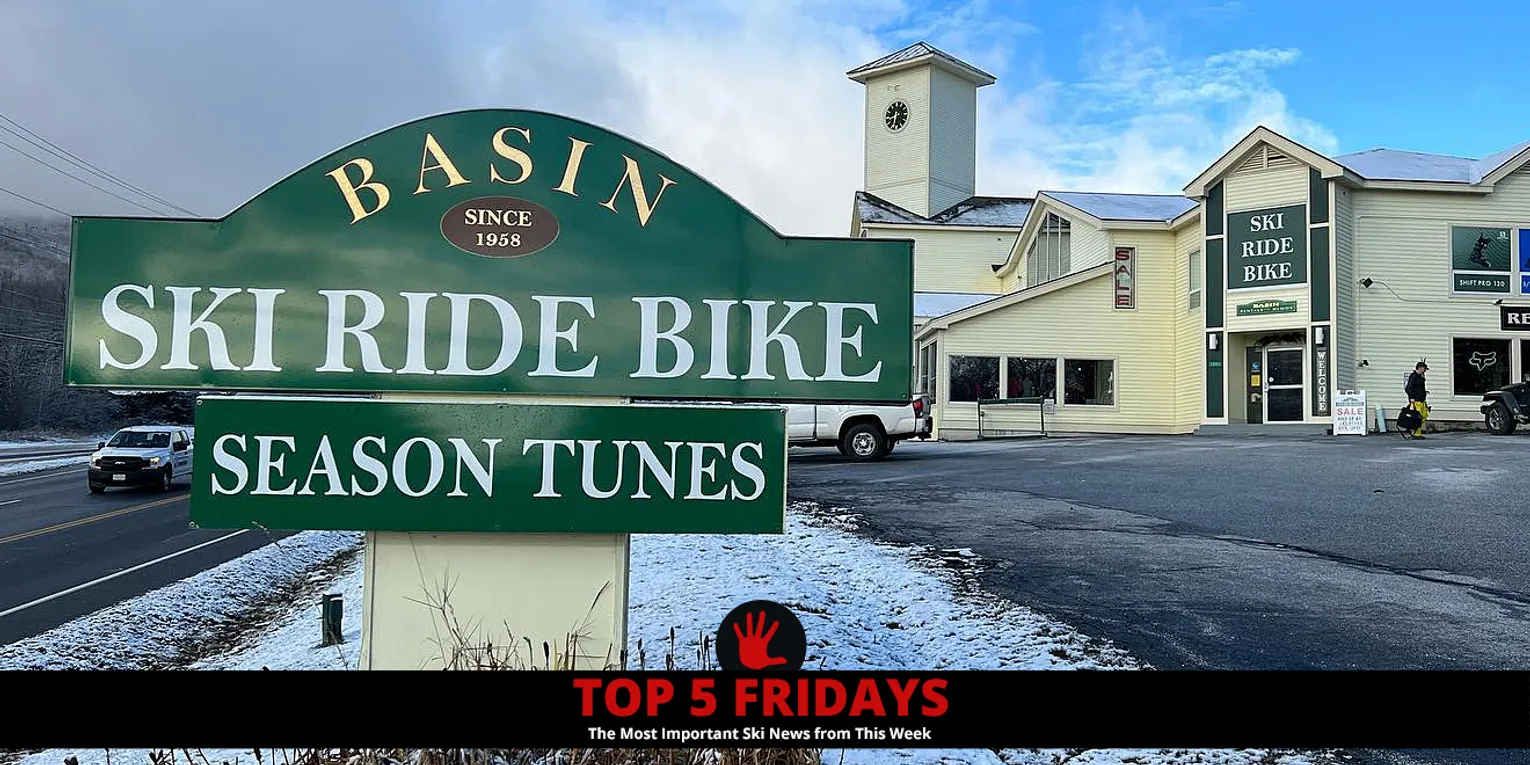
Lead Image: Killington's Basin Ski Ride & Bike is set to join the SkiEssentials.com and Pinnacle Sports family. More on this exciting announcement below! Image: Basin Ski Ride & Bike on Facebook
#1: Killington’s Basin Sports to Join the SkiEssentials.com and Pinnacle Sports Family::
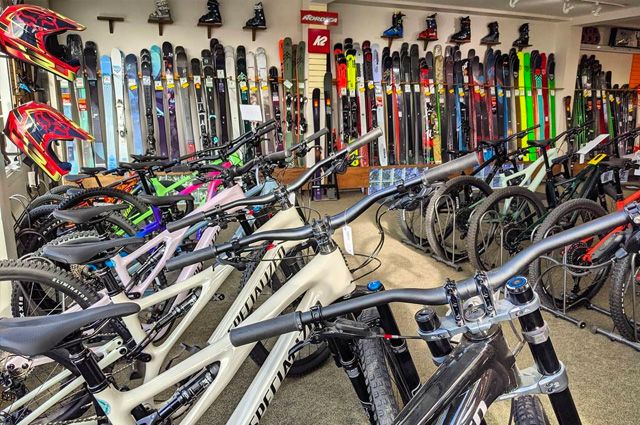
It's a big week for us here at SkiEssentials, as we can finally announce that Basin Sports will be joining the SkiEssentials.com and Pinnacle Sports Family! Along with their excellent location and expert staff, we'll also be joining forces with their family or brands to offer more products to SkiEssentials customers. Image: Basin Sports on Instagram
Hello, and welcome to Top Five Fridays, the July 15, 2022 edition! This week is a BIG week for us here at SkiEssentials.com, as we’re extremely excited to announce that Killington’s Basin Ski Ride & Bike will be joining the SkiEssentials and Pinnacle Sports family! We gave this announcement the full article treatment yesterday, complete with historical information and a quote from our spectacular CEO Josh Wolfgang, and we’d highly recommend giving that a read in full. If you don’t want to fully pull yourself away from Top Five Fridays to do so though, here’s the gist: Basin Sports will be merging with our online outfit (SkiEssentials), and our retail store here in Stowe (Pinnacle Ski and Sports). While it's been a ton of work getting to this point, we are thrilled about the announcement and look forward to the future with a new brick and mortar location. Basin Sports has long been the premier outdoor retail and e-commerce shop in Central Vermont. Likewise, SkiEssentials has been steadily growing in size here in Northern Vermont. In joining forces, we’re not just doing the nerdy business stuff like expanding our buying power to offer our customers even better deals, but we’re also teaming up with an incredibly knowledgeable staff, helping us all to better satisfy a growing number of customers.
As a result of this merger, we’re excited to bring you, the SkiEssentials customer, an even better experience. For our regional customers, this means you’ll have a touch point with our staff in Killington now, meaning the SkiEssentials inventory, sales, and expertise will be available closer to home. Live in Massachusetts and heading to Killington for a weekend? Purchase the gear you need here on SkiEssentials.com and pick it up at Basin Sports in Killington. That’s the type of change you can expect to see as a result of this news. Furthermore, we’re excited to expand our family of brands as our merging with Basin comes with their industry contacts. While it’s too soon to make any hard promises, our goal is to leverage these relationships to make a wider variety of brands and products available to you through our website. While the new partnership is still young and there’s surely much left to discover in terms of all the benefits resulting from it, the bottom line is that we’re extremely excited for Basin Sports to join our team, ultimately offering you the premier outdoor shopping experience in New England. To learn more, check out our press release!
#2: Inside the Skiing Pipeline Pt. 8 - To Find the Answers, Consult the Cross Country Team:
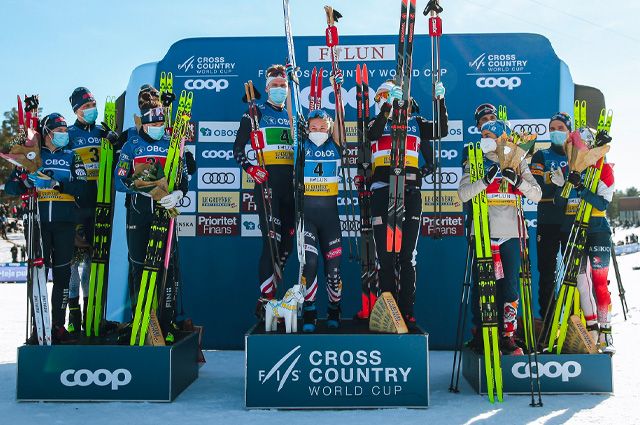
This past season, the U.S. Cross Country ski team took home first place in the mixed team 4x5km relay- one of the ultimate signs of both teamwork and all around team talent. Image: USST on Facebook
As it turns out, it’s a big week here on Top Five Fridays for another reason as well: this week marks the conclusion of our coverage of the Vail Daily’s “Inside the Skiing Pipeline” series. This excellent 8 part series has taken us through just about every aspect and angle of the issues plaguing the U.S. Alpine Ski Team’s talent pipeline in recent years, highlighting the hurdles, missteps, and advantages that exist within the U.S. system. This week, our coverage concludes with the eighth and final article in the series which does an excellent job of making the path forward as clear as day. To this point, we’ve discussed a number of ways that the U.S. Alpine team could broaden its pipeline, from focusing more on the athletes’ needs, to creating a more unified approach across youth leagues, focusing on money less, and embracing a team-first mentality. To this point, while the U.S. Cross Country ski team has been cited anecdotally, their recent success on the World Cup stage hasn’t been directly addressed.
For the eighth and final installment of the series, author Ryan Sederquist does exactly that, and it quickly becomes clear why he left this discussion for the very end. For nearly every suggestion that’s been made in regards to how the U.S. Alpine team could improve its pipeline, the U.S. Cross Country ski team is already doing it, and with great success. One of the most impactful passages from this article is the concept that the XC team doesn’t see their rising talent as following a “pipeline”, but rather a “pathway.” This seemingly simple distinction has major implications as it really underscores the guiding principles of the team. Rather than having to follow one specific pipeline to go from unknown to prominent member of the U.S. team, XC skiers are encouraged to follow any number of paths to achieve their goals of making the team. This is right in line with some of the concepts we’ve been learning about, such as the need for more cohesion amongst the various ski racing leagues and the increased focus on what works best for each individual athlete. Another major part of the puzzle for the XC ski team, and something that it has in common with the 1982 Women’s Alpine team that won the Nation’s Cup, is a strong sense of being a team. In this week’s piece, there are multiple anecdotes of times when members of the XC team emphatically cheered on their teammates as they made their push for podium finishes. As a result of this team camaraderie, the talent level of the U.S. XC ski teams has been rising in recent years, not because of criteria put out by the team at the organizational level, but because teammates are both competing against each other while also being inspired by each other’s results. It’s a real life example of the old idiom, “a rising tide lifts all boats.”
All told, the eighth and final installment in this series did exactly what we hoped it would do: show us a way forward for the U.S. Alpine team. It also did something we didn’t expect: it showed us just how achievable this goal is by providing an example of a U.S. team that’s seemingly doing all of the right things and having great success. As we’ve learned throughout this series, the U.S. Alpine team is starting to come around and enact some of these suggestions, so we know that the leadership team is focused on improvement. Knowing that the XC team is already acting on these principles and finding success leaves us hopeful that with a bit of open conversation, the Alpine team will be back on the right track in no time. To learn more about all of the things that the Cross Country team is doing right, check out the eighth and final installment of Vail Daily’s “Inside the Skiing Pipeline.”
#3: “Comfortable Carrying Capacity” - The Secret Formula That Guides Ski Resort Developments:
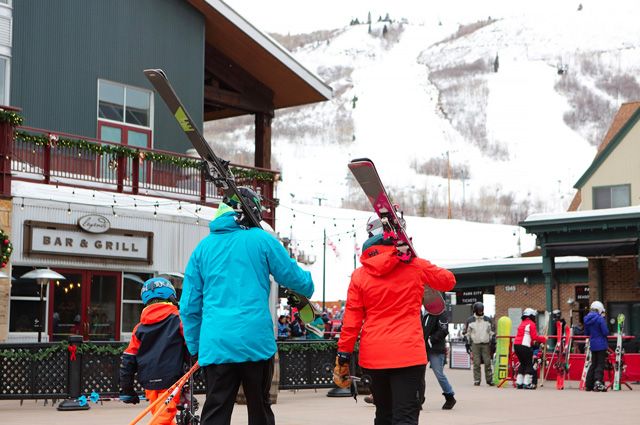
In theory calculating Comfortable Carrying Capacity should be easy, but in a place like Park City, where there's a whole village worth of activities to distract you from skiing, it's anything but. Image: Park City Mountain Resort on Facebook
Next up in ski news this week is a surprisingly detailed article published by the Salt Lake Tribune that takes us even deeper into the controversy regarding Park City’s planned chairlift upgrades. As you might recall, we first covered this story about a month ago when four Park City residents filed an appeal with the Park City Planning Commission to put a stop to the chairlift upgrades at the resort. In citing a clause in Park City Mountain Resort’s (PCMR) operating contract that limits the resort’s Comfortable Carrying Capacity, the group of four convinced the planning commission to temporarily put the chairlift developments on hold. At that time, we highlighted this story as an example of town residents saying, “enough is enough,” and pushing back on the resort to ensure that their decisions aren’t having an adverse effect on local roadways and infrastructure. This week, the Salt Lake Tribune shared a side of the story that highlights a little known yet incredibly impactful concept within the ski industry. The knowledge we gained from this article was both unexpected and fascinating.
In the article, author Julie Jag focuses on the crucial and complicated role that “Comfortable Carrying Capacity” plays in both this particular case, as well as at ski resorts across North America. To be honest, when we first heard the term, we didn’t think much of it. Comfortable Carrying Capacity is just the ski resort’s way of saying “maximum occupancy,” right? Well, as it turns out, sort of, but it’s much more complex than that. In this week’s article, we learn that the formula to determine the Comfortable Carrying Capacity of a resort is so complex and nuanced that multiple companies exist to help resorts calculate the number. At its most basic, the formula is simply the number of skiers that can be transported uphill each day, divided by the number of runs an average skier would want to take per day. If you can imagine a ski hill with one lift, one run, and no lodges, it would be easy to calculate this number. In reality though, determining the number of runs the average skier would want to take each day is impacted by countless factors, such as run length, run difficulty, mid-stations, the allure of the lodges, and any number of other inputs that could shorten or extend a ski day. In other words, determining the Comfortable Carrying Capacity is a bit of an art. Not only that, but it’s also fluid and can change depending on developments at the resort such as lodge updates or in the case of PCMR, new chairlifts.
As it turns out, the four Park City Residents who filed the appeal to put PCMR’s chairlift upgrades on hold didn’t make their move out of spite or to specifically attack the resort’s operations. Instead, they made their move in an attempt to find transparency regarding the Comfortable Carrying Capacity calculations. As we mentioned, there are multiple companies offering these calculations, and each one has their own formula. Because of this, not only is the Carrying Capacity at a resort fluid, but it can also vary based on which company performed the calculations. While this may feel like a minute detail, the reality is that it has a direct impact on mountain towns as variations in this number enable resorts to develop in a way that exceeds what the area’s infrastructure can handle. In other words, while PCMR is contractually obligated to develop their resort in a way that won’t cause visitation to exceed their Comfortable Carrying Capacity, the fact that that number can be adjusted, and without any transparency or accountability, is what caused these four Park City residents to file their appeal. When we extend the scope of this issue and think about the North American ski resort landscape on the whole, the outcome of this case could have implications well beyond the Park City region as this concept of Comfortable Carrying Capacity could result in far more scrutiny when ski resorts file for development approvals. All told, this article ended up being far more interesting than we initially expected, and we’d highly recommend giving it a read in full.
#4: Vermont’s “Suicide Six” Ski Resort Changes Name to “Saskadena Six” to Honor Indigenous People and Eschew Mental Health Connotations:
For our last highlight this week, we want to share with you a story that once again exemplifies ski culture being on the forefront of progressive ideas. You may have seen the headlines a few weeks ago in which it was announced that the first ski resort with uphill capacity in the United States, Suicide Six, intended to change its name. While nobody necessarily asked the resort to do it, management there came to the realization that in a day and age when mental health is a growing concern, using the word “suicide” in their business name was insensitive to those who battle these thoughts or have been impacted by the action. As such, they announced that they would be changing their name.
This week, that new name was announced: Suicide Six is now known as “Saskadena Six.” Pronounced “SAHS-KAH-DEENA”, the word is the Abenaki word for “Standing Mountain.” For those unaware of New England’s history, the Abenaki people are the indigenous group for much of our area, reaching from Vermont, through New Hampshire, and into Maine and Quebec. In recognizing the need to change the name of the historic resort, the team behind the decision not only made an honorable decision to support those struggling with mental health, but they proceeded to honor the people whose land their resort is built upon. While it may seem like a simple, obvious decision, we feel compelled to point out that the adjustment required more than simply erasing one word and writing a new one. Along with the name change comes an entirely new website and branding, efforts which are never simple and take a tremendous amount of time and energy to pull off successfully. Looked at comprehensively, that’s the most impressive part of this story: the team behind Saskadena Six self-recognized their problematic name and took the necessary steps to correct the issue, despite the fact that it required an incredible amount of effort to achieve. Nobody demanded that they do it, they simply did it because it was the right thing to do. Our hats go off to the team at Saskadena Six for their incredible work and leadership. You can read more about their new name here.