

Top Five Fridays: July 19, 2024
Lead Image: In its first year, FIS TV proved to be successful, with steadily increasing viewership. In year two, the organization hopes to continue building on its success. More on that below! Image: FIS on Facebook
#1: Ski Trains Are Huge in Europe, So Why Aren’t They More Popular in America?
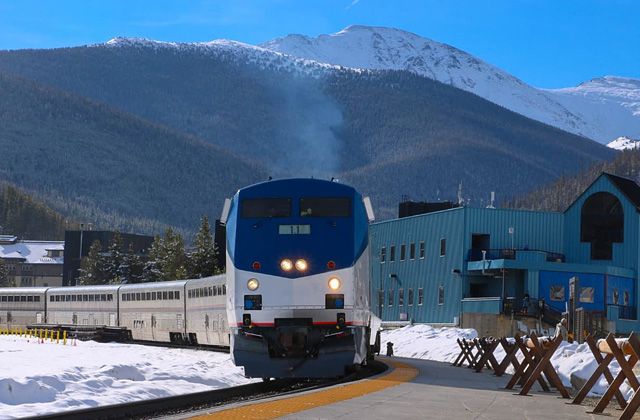
A shot of the Winter Park Express, one of the only true ski trains in existence in America. Image: Winter Park Express on Instagram
Hello, and welcome to Top Five Fridays, the July 19, 2024 edition! This week’s round of ski news is a classic summer report, with topics delving into some of the more niche corners of the ski industry. Case in point? Our first highlight is all about ski trains.
This week, Powder Magazine shared an article that investigated the question, “Why Doesn’t America Have Ski Trains?” It’s a good question, as America’s traffic congestion problems are obvious in ski towns across the country. In Colorado, the I-70 corridor is notorious for delays on most weekend days during the height of winter. In Utah, we’re all well aware of the controversial plan to put a gondola up Little Cottonwood Canyon to alleviate traffic. Even locally, our home mountain of Stowe is known to have traffic and parking issues on powder days. Regardless of where you are, if you’ve ever attempted to ski a popular resort in the U.S., you’ve likely experienced either traffic congestion or parking problems. Europe, on the other hand, largely lacks these issues. One of the primary reasons? The prevalent use of trains and the downplaying of automobiles across the continent.
Within the article from Powder, perhaps one of the most intriguing points made is that trains actually played a significant role in the development of the American ski industry as early railway operators looked to tap into a wealthy clientele. Take for example the story of Sun Valley Resort in Idaho, which was developed by the Union Pacific Railroad’s Chairman of the Board, Averell Harriman. In 1936, he opened the resort in an attempt to entice wealthy passengers to ride the train to a luxurious ski vacation. Here on the East Coast, Boston and Maine also featured ski trains that whisked guests to ski hubs in Vermont, New Hampshire, and Maine. Ultimately though, the dichotomy between ski train culture in Europe and America grew to reflect the societal impact of the automobile in each region. In Europe, due in large part to denser populations, public opinion never fully embraced the ubiquity of cars. Instead, trains continue to be a key method of transportation. Here in America though, the vastness of our nation and the space between population centers drove demand for personal transportation. Afterall, sending a train dozens, if not hundreds, of miles to a destination with minimal passengers simply doesn’t make good economic sense. As a result, the country naturally trended towards automobiles and away from trains. The infrastructure of the nation followed suit, and before you knew it, we’ve found ourselves here, in 2024, with a rail system that pales in comparison to our roadways.
While this story quickly makes sense and may not feel particularly noteworthy to some, the history buffs amongst us will find this article from Powder Magazine to make for some excellent summer reading. We very much gave the spark notes version here, but in the article itself, Powder writer Ian Greenwood dives into all sorts of historical details, as well as an overview of where the railroad industry in the U.S. stands today. If this sounds like your cup of tea, we recommend giving the article a read.
#2: Colorado’s Newest Private Ski Resort, Stagecoach Mountain Ranch, Hosts Contentious Town Meeting:
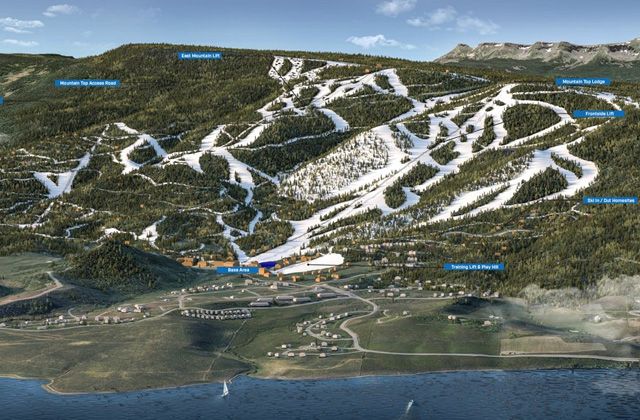
A look at the conceptually planned trail network that would be built, should Stagecoach Mountain Ranch come to fruition. Image: Mountainworks
In other ski news this week, we want to share some coverage of a contentious situation playing out just south of Steamboat Springs, Colorado, where yet another new private ski area is being proposed. This time, the name of the resort is “Stagecoach Mountain Ranch,” and it’s being proposed by Discovery Land Company - the company that owns Montana’s Yellowstone Club, as well as several other luxury experiences across the world.
Before we dive into this story, a bit of background is necessary in order to fully appreciate the dynamics at play. Located about a half an hour south of Steamboat Springs, Stagecoach, CO was once home to a promising new ski resort back in the early 1970s. Unfortunately, that project was short lived as financial problems hit the resort’s developer and the ski area closed in 1974 after just its second year of operations. Since then, for the past 50 years, the resort has sat unused despite locals hoping that someday it would operate once again. Those hopes ultimately peaked in 2017, when rumors began spreading that the resort had been purchased with hopes of re-opening that winter. Ultimately that never came to fruition, leaving the future of the resort uncertain. Then, about a year ago, word got out that developers had submitted plans to turn the area into a private ski resort and golf course, with hundreds of new homes being developed. Over the course of the past year, public skepticism grew while the development team behind the project continued building out their vision. Finally, just over a week ago on July 8th, representatives from the Discovery Land Company held a town hall meeting at Stagecoach’s fire station in order to share their vision with the public.
As you might expect, the meeting drew quite the crowd, with so many in attendance that the windows had to be opened in order for those who couldn’t fit inside the building to be able to hear what was being said. After about an hour long presentation, in which the audience listened attentively, the meeting transitioned to a Q&A session which grew more heated as it went on. To be totally honest, the Yampa Valley Bugle did an excellent job of conveying the emotion of the scene, sharing specific questions and quotes, so we’ll defer to them for that aspect of this story. For us, we want to break down the arguments coming from both sides as they highlight a dynamic we see in mountain towns across the United States.
To accomplish that task, let’s start with the general perspective shared by those living in Stagecoach: a massive development company has just announced plans to privatize the local mountain that they all hoped would someday reopen for them to use. Additionally, their plan also includes intentions to build about 700 homes worth between $2 - $20 million a piece. To give the size of that development some perspective, we can’t even determine the current size of the Stagecoach community as it doesn’t appear to be incorporated as a town or municipality. Rather, it truly is a community in the sense that a small number of people live in the area, which is anchored by a reservoir and state park. With that in mind, it seems painfully obvious why this group of people would object to an outside developer coming into their “town”, building hundreds of multi-million dollar homes, and privatizing the long shuttered ski resort that they all dreamed would reopen one day. It’s a truly classic case of small town residents vs. rich developers.
To be fair though, there is a second half to this story. From the Discovery Land Company’s perspective, the small local population means that the only way for Stagecoach Ski Area to operate again is under this ultra-exclusive model. Because there are so few people in the area, and it’s so remote, it simply cannot operate as a standalone ski resort. That’s already been proven. Likewise, Ed Divita, the Discovery Land Partner tasked with leading the meeting, also pointed out that both Alterra and Vail had passed on the opportunity to develop the area into a public resort. In other words, while locals dreamed of the mountain reopening for public use, its solitude makes it an unrealistic hope. As such, the only way the ski area will ever be operable again is if Discovery is able to develop it under its private, luxury centric model. Here’s the upside though: despite the resistance, if the resort is successful, it’s projected to bring in significant amounts of money to the local economy. In one figure that was shared in the meeting, it was estimated that the resort would generate roughly $33 million in annual property tax revenue. For comparison, Routt County currently receives $28.7 million a year. In other words, tax revenue for the area would more than double. Not only that, but an untold number of new jobs would be created and money spent, both further stimulating the local economy.
At the end of the day, that’s what makes this story, and this town meeting in particular, so interesting to us. Yes, it’s another story of locals not wanting their local ski area to go private, but it’s also a situation in which both sides have very clear, and very strong arguments behind their points. As is always the case with stories like this, we’ll withhold our opinions while sharing the news, but we encourage you to share your thoughts in the comments below. To learn more about this, check out this week’s article from the Yampa Valley Bugle.
#3: Talk About a Win-Win: Schweitzer Mountain Acquires Selkirk Powder’s Sidecountry Operation, While Selkirk Powder Relocates Operations for 2025:
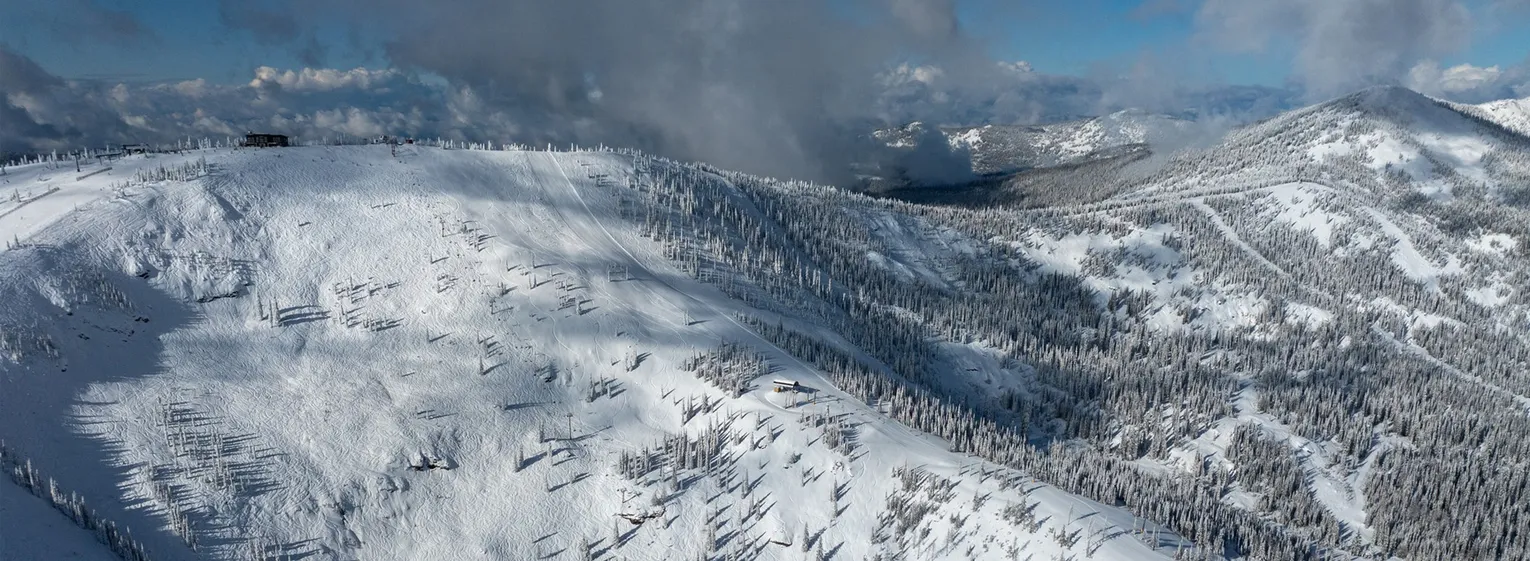
We can’t lie, the new terrain coming to Selkirk Powder looks pretttty dreamy.
Next up this week is another story regarding ski resorts and acquisitions, but this time it’s one with a more positive aura. On Monday of this week, it was announced that Schweitzer Mountain had purchased Selkirk Powder’s snowcat and snowmobile sidecountry operation. Now, to be totally honest, when we first came across this headline, our lack of familiarity with the area almost caused us to breeze right past it. After reading a bit more about the situation though, the story became quite interesting as the news seems to be wildly beneficial to both parties. Allow us to explain.
For the past 21 years, Selkirk Powder has operated backcountry snowcat and snowmobile tours on the backside of Schweitzer. In a unique operating agreement, Selkirk had a Idaho Department of Lands (IDL) permit to access roughly 4,350 acres of backcountry located on the backside of Schweitzer, as well as a concession agreement with Schweitzer Mountain which they utilized to offer tours from the peak of the mountain. In other words, guests would ride a Schweitzer lift to meet up with Selkirk Powder for their backcountry snowmobile and snowcat access. This week, it was announced that Schweitzer has bought the operation, with plans to incorporate Selkirk’s previous access into their core operations. Along with the purchase comes Selkirk’s coveted IDL land lease, as well as Selkirk’s access roads and “trail” map that they’ve curated over the past 21 years. Looked at holistically, Schweitzer more or less just bought a turnkey backcountry skiing operation that accesses their back bowls - a pretty unique product offering for a ski resort.
As for Selkirk Powder? Well, again, upon first reading the headlines, we assumed this was a clean-cut acquisition, likely resulting in Selkirk’s owners finding something else to do with their time. Upon reading further though, we learned that the operation also has an exciting future. Starting next year, Selkirk will be operating autonomously in a brand new region known as Atlasta–Casey. This region is said to be more diverse, steeper, and at a higher altitude than their previous operations at Schweitzer. In its inaugural year of access, Selkirk is looking to provide access to about 40 new backcountry runs, before having access to a full 6,500 acres in 2025. Again, looked at holistically, Selkirk Powder just sold their previous operation to a resort, while also being able to relocate to a bigger, steeper, higher, and arguably better location in the same area. For Selkirk Powder, this transaction also seems to be a huge win. It’s not often in the world of skiing something happens where both sides of the deal come out on top, but from what we can tell, that’s exactly what happened here. For more on this, check out Schweitzer’s side of the story here, and Selkirk Powder’s side here.
#4: Currently Working Towards Climate Change or the Empowerment of Women in the Outdoors? Submit an Application to the Hilaree Nelson Fund’s Grant Program!
Unfamiliar with Hilaree Nelson? This tribute video from her induction into the Colorado Snowsports Hall of Fame helps to put her impact into perspective.
Finally, we’re ending this week’s ski news on a happy note, as we’re excited to share that Blizzard Tecnica is currently accepting applications for grants from the Hilaree Nelson Fund. If you’ve been a regular reader of ours since at least September 30, 2022, you might recall when we had the heartbreaking responsibility of sharing the news that ski mountaineer Hilaree Nelson had passed away while descending Himalayan Peak “Manasalu”. In one of the most difficult news recaps we’ve had to write, we honored Hilaree’s life and the incredible accomplishments throughout her career. Despite her lengthy list of achievements as an athlete, Nelson’s biggest impact likely came away from the mountains as she’s cited as being a trailblazer for what it means to be a mother who continues to pursue high altitude passions.
In the wake of her passing, Blizzard quickly created the Hilaree Nelson Fund, which awards grants to people and non-profits who create change in the spirit of Hilaree. Last Fall, Blizzard began selling both limited edition Sheeva 10’s, as well as a children’s book called “Leader of the Pack.” Proceeds from both of these items were put into the Hilaree Nelson Fund, with the plan to award grants to those who will continue to honor her legacy with their efforts. Now, having raised $60,000 for the fun, Blizzard is seeking submissions from people and non-profits who are dedicated to either climate change or “empowering women in the outdoors”. If you’re someone who’s interested in applying for a portion of this grant money, we highly recommend submitting an application. Unfortunately, the grant page is down at the moment, but we’ve reached out to Blizzard in hopes of getting a new link to share with you. For now we’ll simply turn you over to Powder Magazine to learn more.