

Top Five Fridays: July 25, 2025
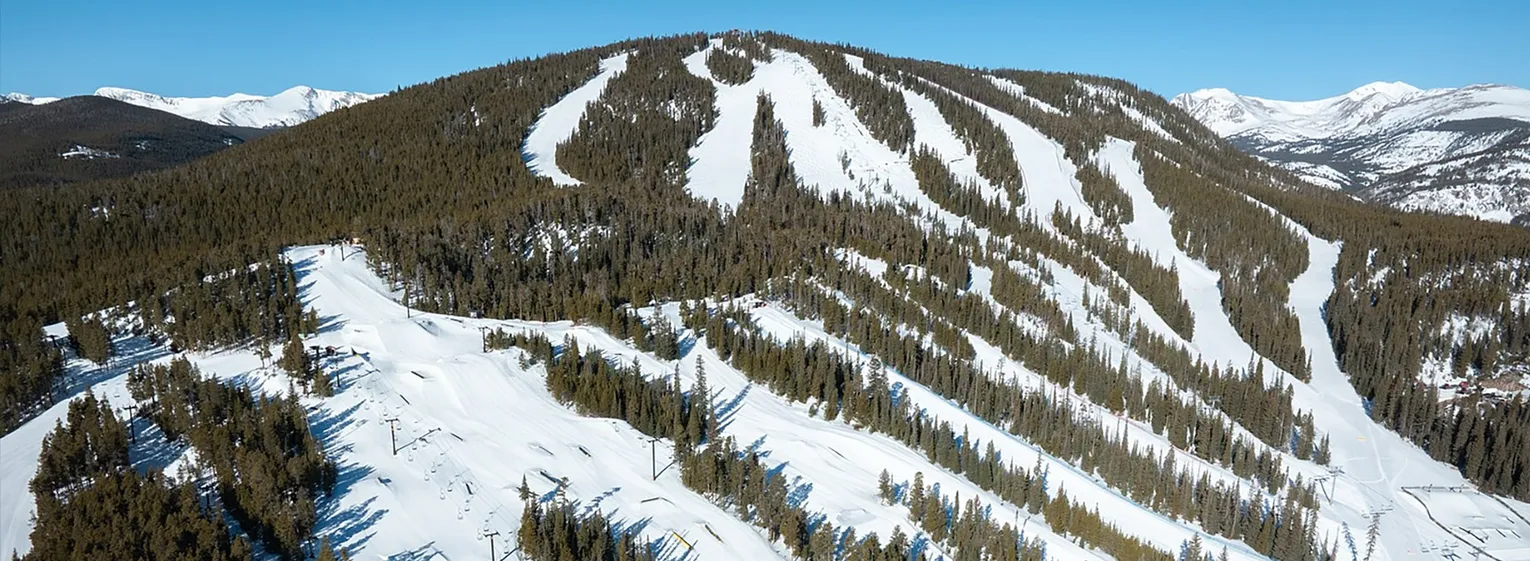
Looking out across Eldora Mountain. If all goes to plan, it won’t be just another community ski hill next winter - it’ll be a transformative force, providing financial security for the town of Nederland. More on that in highlight #2! Image: Eldora on Facebook
#1: Trouble at Powder Mountain as EB-5 Investors Sue Reed Hastings, While Previous Owners Countersue Investors:

Legal disputes aside, one thing that’s widely agreed upon is that Powder Mountain has some of the best terrain and snow along with lowest crowds in the area. Image: Powder Mountain on Facebook
Hello, and welcome to Top Five Fridays, the July 25, 2025 edition! This week, we’re laser focused on the industry of ski resorts as we bring you not one, not two, not three, but four articles this week that touch on all aspects of ski resort ownership. From legal issues at Reed Hasting’s Powder Mountain, renewable energy aspirations at Burke, crazy lift ticket prices at Alterra resorts, and details regarding Nederland’s unheard of new business model, this week’s ski news explores several interesting resort based stories. So, without further ado, let’s dive right in!
First up in the news this week is a shocking headline coming to us by way of the Salt Lake Tribune, who is reporting that former Netflix CEO and current Powder Mountain majority shareholder, Reed Hastings, is facing a $76 million lawsuit regarding the use of EB-5 funds at the resort. Now, if the combination of the words “lawsuit”, “EB-5”, and “ski resort” trigger some amount of anxiety deep within you, it’s likely because you know the story of what happened here in Vermont in the mid 2010’s, when the previous owners of Burke Mountain and Jay Peak misappropriated EB-5 funds given to them by foreign investors. If you don’t know the story, just know this: the EB-5 program is a federal program that allows foreign investors to contribute to significant American projects. In addition to having their loans repaid, they’re also promised a green card, granting them citizenship. Unfortunately, it also seems as though misuse of these funds is relatively common within this program. Enter, this week’s news.
This week, we learned that a group of EB-5 investors are suing Reed Hastings for $76 million, which reflects the amount that they claim the resort owes them, plus interest. Now, as exciting as a headline that reads “Former Netflix CEO Being Sued for EB-5 Fraud,” might be, it turns out that that’s not really what’s happening here. Instead, the story is much more complex and goes back way before Hastings got on board.
If you turn back the hands of time, all the way to 2013, you’d find yourself at time when the mountain was sold by its original owners to a company called the Summit Mountain Holdings Group. A few years later, this group began securing significant funding to further develop the mountain, most of which came by way of Chinese EB-5 investors. When all was said and done, the group had (allegedly, we’ll get back to this) borrowed approximately $120 million to transform the resort. In the years following 2016, the future looked bright for Powder Mountain. And then, in 2021, reality hit: to that point, Summit Mountain Holdings had only repaid investors about one third of what they were owed. Two years later, fully aware of the financial trouble facing the group, Reed Hastings entered the picture, adding $100 million in funds and becoming the majority owner. Now, two more years later, the time to pay the piper has come again, and this time the pipers are EB-5 investors who are asking Hastings for a $76 million check.
In other words, Hastings bought into Powder Mountain at a time when it owed its investors roughly $76 million. Now that he’s the majority owner of the resort, the investors have turned their attention towards him to seek repayment.
There is a catch though.
This past March, the team behind Summit Mountain Holdings countersued the EB-5 investors, claiming that of the $120 million the investors were supposed to have raised, the mountain’s owners received less than 20%, with the remainder being diverted to other projects. As such, they’re asking the investors for $82 million in damages and legal fees. This counter-suit greatly complicates the matter as it not only draws into question the validity of the lawsuit aimed at Reed Hastings, but also what debts Hastings was aware of when he bought into the resort back in 2023. To put it all into layman’s terms, “the whole thing is a mess.”
As for what this all means for Powder Mountain and its audacious effort to transform itself into a semi-private mountain? Well, realistically, probably not much. As it stands, the battling lawsuits will have to navigate our notoriously complex legal system, meaning it could take years for anything to come of them. In the meantime, it’s business as usual at the resort as plans to install another new lift ahead of the 2025/2026 season remain on track. Furthermore, it’s also worth noting that even a worst-case outcome from the EB-5 lawsuit wouldn’t have a devastating impact on the resort. Afterall, Hastings is worth an estimated $6.6 billion, making a $76 million lawsuit equivalent to just 1.15% of his wealth.
Of course we’ll remain tuned into this story for the foreseeable future, popcorn in hand. As it develops, we’ll be sure to update you. Until then, you can know what we know by checking out the full report from the Salt Lake Tribune.
#2: Nederland’s Effort to Purchase Eldora is About More Than Just a Community Reclaiming its Ski Area - it’s About an Economic Transformation:
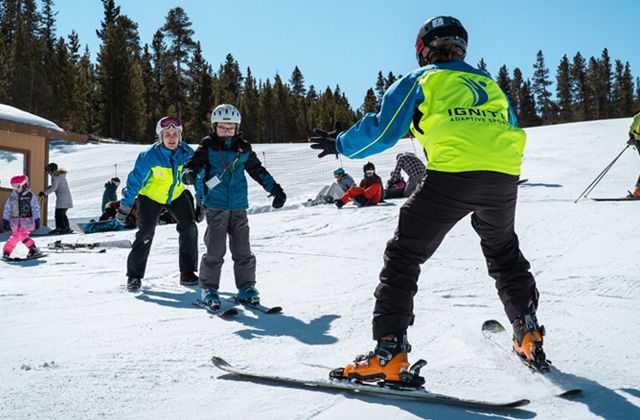
A small ski area? Yes. An integral part of the community? Yes. A unique business model that has the potential to completely transform the financial outlook for the small town of Nederland, CO? Also yes. Image: Eldora on Facebook
Next up in ski resort news this week is an update coming to us from Nederland, CO, where the small town of just 1,500 people is currently in the process of buying its hometown ski area, Eldora. We first shared this story two weeks ago in our July 11th coverage as the news had broken earlier that week. In that edition of Top 5 Fridays, we covered the high level points, mainly focusing on Eldora’s plan to fund the $100 million - $200 million purchase through the use of municipal bonds, as well as their plans to team up with a group of industry veterans working under the name “Ski 303.” This week though, one of the best journalists in the game, The Colorado Sun’s Jason Blevins, shared an even deeper dive behind the scenes of this story, giving us a more nuanced and localized perspective.
Prior to this week’s article, we knew the raw fact that Nederland hoped to fund their purchase of Eldora through the sale of municipal bonds. This week however, we learned a bit more about Nederland’s recent history, adding further intrigue and context to the story. To set the scene, let’s go back just three years ago, to 2022, when trouble hit the town’s police department. At that time, the department saw a series of resignations, followed by a vote from taxpayers to increase the budget. Unfortunately, that effort was short lived as just a year later the town shut down its department despite the increased taxes. Ultimately, Nederland decided to contract with the Boulder County Sheriff’s Department for its needs. With the closure of its police department, the town's workforce became even smaller. Today, Nederland, CO employs roughly 25 municipal workers. In other words, Nederland really is a small place - not the type of municipality that would typically have $200 million on hand to buy a ski resort.
And thus is the genius of the municipal bond move. If all goes to plan for Nederland, the purchase of Eldora will be transformative for the town in the truest sense of the word. On the financial side of things, the $200 million in bonds will come with a promised interest rate of between 6-8% - more than enough to entice the casual investor who loves a feel good story. To repay these bonds, the town expects to generate revenue directly from the ski area, with the goal of being able to not only repay the bonds in 10 years, but also begin putting up to $10 million aside in its rainy day fund. While calculations show that the resort will make a modest amount of additional profit during these first 10 years, the real payoff is expected to come once the bonds are paid down, at which point the town expects to cashflow between $2 million and $5 million annually. That money, the town says, can be funneled back into its infrastructure, using it to improve streets, sidewalks, and water systems.
Of course to pull this feat off, the town will need to transition from being a simple 25 employee municipality, to a full blown business owner. In order to operate the ski area, Nederland plans to hire a deputy manager to run the operation, as well as over 700 seasonal employees at the height of the winter season.
In other words, a town with ~25 employees, an annual budget of $3.2 million, and the inability to fund a police department just two years ago, could soon balloon to over 700 employees and a budget of $5.2 million to $8.2 million a year. In the case of Nederland, purchasing Eldora wouldn’t be just a move to retain control over their local ski area, it could be completely transformative for the entire town.
Of course with stories such as this, there are always two sides. In addition to those excitedly in support of the move, there are also a fair amount of locals with good reason to be skeptical. In the interest of saving time and space here on Top Five Fridays, we won’t delve too deeply into the counterarguments, but just know that some locals expect this whole plan to go bankrupt rather than being a cash cow. To read more about this story and their perspectives, head over to the Colorado Sun.
#3: New Burke Mountain Owners Exploring Renewable Energy as a Means to Cut Cost:
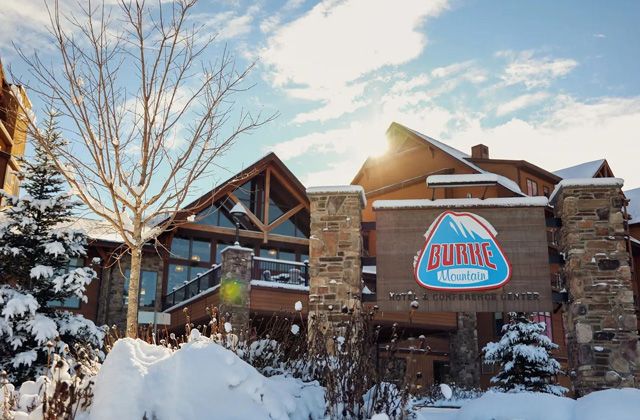
The lodge at Burke Mountain, where new owners are turning to renewable energy in an effort to decrease their substantial electrical bill. Image: Burke Mountain on Facebook
Third up in ski resort news this week? A report from nearby Burke Mountain, where new owners have already begun efforts to modernize the resort in the name of efficiency. According to WCAX news, Bear Den Partners, the group that purchased the resort, has started working with students at Vermont Law and Graduate School’s Institute for Energy and the Environment to help explore ways that the resort can optimize their energy usage. In addition to climate friendly motivations for the exploration, Bear Den Partners also have an extremely practical reason for wanting to incorporate renewable energy: their annual electric bill is one of their biggest costs, coming in at roughly $1 million a year. For Bear Den Partner Jon Schaefer, that cost is unsustainable. As a result, they’re working with students at the college to explore renewable energy options.
At present, the process is in the early stages, with everything from level 2 EV chargers, to a solar powered pump station, battery powered snow guns, and even a “pumped up hydropower station” being considered as solutions. In the words of Schaefer, “Our goal with this group is to work through that low-hanging fruit and into the medium-term stuff and just see what we can do to make the resort more sustainable.” In other words, while you might not see a massive overhaul of the resort’s power grid ahead of winter, it’s likely that small installations will begin happening sooner rather than later, with an initial goal of trimming electricity costs by 10% to start.
Perhaps the most interesting aspect of this story though isn’t the fact that Burke’s new owners are turning to renewable energy to reduce their costs, but the fact that along with their internal goals, they’re also collecting their findings as they go with the ultimate goal of creating a case study that other resorts can follow. In other words, because Burke is at the forefront of researching ways to make their mountain more energy efficient, they’re in a position to provide documentation on the potential solutions they explore. For example, would solar powered snowguns work? Who knows! But if that’s a concept they explore, they can document and share their findings with other resorts who are asking similar questions, helping them understand the pros, cons, and overall viability of such a system. Ultimately the result here is that not only will Burke mountain find new methods to reduce their costs and environmental footprint, but so too will any other resort facing the same challenges. All in all, we just thought this was a refreshing and encouraging story that shows the type of progress that can be made at mid sized, independently owned ski areas. For more on this, check out the report from WCAX.
#4: Deer Valley, Steamboat Join the 300 Club 2025/2026 Daily Lift Tickets Expected to Hit $309 - $329:
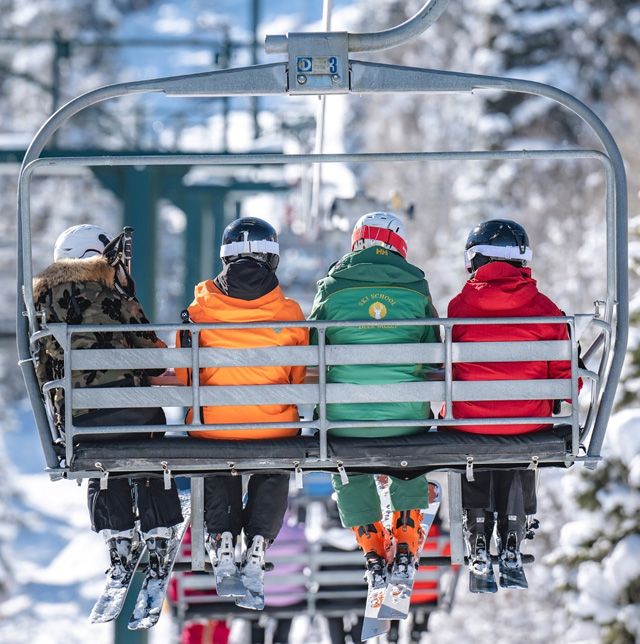
Want to ride the lift at Deer Valley next season? No problem! You might want to plan ahead though, as tickets from the ticket window are expected to hit $329 per day. Image: Deer Valley on Facebook
Finally, we’re rounding things out this week with a fourth ski resort highlight that’s arguably more of a lowlight, and one that’s less “new news” and belongs more in the “trendwatch” category. That’s because this week, a handful of Alterra and Boyne owned resorts shared their “anticipated peak walk up lift ticket prices” for the coming season, and on that list were some pretty eye-popping numbers. Of the five resorts listed, two featured price increases that would put them past the $300/day mark: Steamboat at $309, and Deer Valley at $329. For these resorts, that marks a 3% and 10% increase respectively over last year’s highmark of $299 at each resort. For both ski areas, it also marks the first Alterra resorts to surpass the $300 lift ticket mark, joining Vail in “accomplishing” the “feat” last season.
Of course, as we mentioned, this isn’t exactly “new news”, as the trend of astronomical daily lift ticket prices has been going on for years now. Still, this news not only feels different as Alterra has officially joined the $300+ club, but it also pushes us closer to what must be the limit of just how high lift tickets can get. Noting that the strategy from multipass companies like Alterra and Vail is to presell as many season tickets as possible, it’s interesting to compare the price of these tickets to the price of a full on Ikon Pass. For Deer Valley, access is only included in the full Ikon Pass, and only 7 total days at that. Still, at a current price of $1,429, it would take just 5 days at the resort at the $329 rate to pay for the pass, making every other day spent skiing at an Ikon resort “free” in a sense. For Steamboat, the ratio is even more extreme, as its inclusion on the $1,009.00 Base Pass means the pass would be nearly paid off after just 3 days, and would more than pay itself off in 4 days. For the right customer, this makes getting an Ikon Pass a no-brainer. Still, it’s hard to ignore the nagging feeling that this concept isn’t great for the industry’s longterm health.
From the outside looking in, skiing can already come off as a bit elitist - unaffordable to the average family. As such, based on optics alone, there’s an argument to be made that articles headlining $329 lift tickets are hurting the industry. For those who might be curious about the sport but are either unaware of the value of season passes or aren’t willing to commit to that many days on the hill, these astronomical daily lift tickets would surely discourage them.
On the other hand, multipasses are an incredible value, particularly considering that season passes to large resorts used to cost over $1,000 without providing any additional access. Now, at least along with that price tag comes significantly more access. Plus, there are plenty of options for new skiers to explore the sport at somewhere besides Deer Valley - one of the largest and most exclusive resorts in the United States.
At the end of the day, both sides of this argument could be made at length. Rather than go down the rabbit hole ourselves, we figured we’d simply share this week’s news and then let you all have at it in the comments section. So with that, we’ll link you to this StormSkiing.com article that does a great job of covering the story before turning the page to this week’s edits.