

TOP FIVE FRIDAYS: JULY 8, 2022
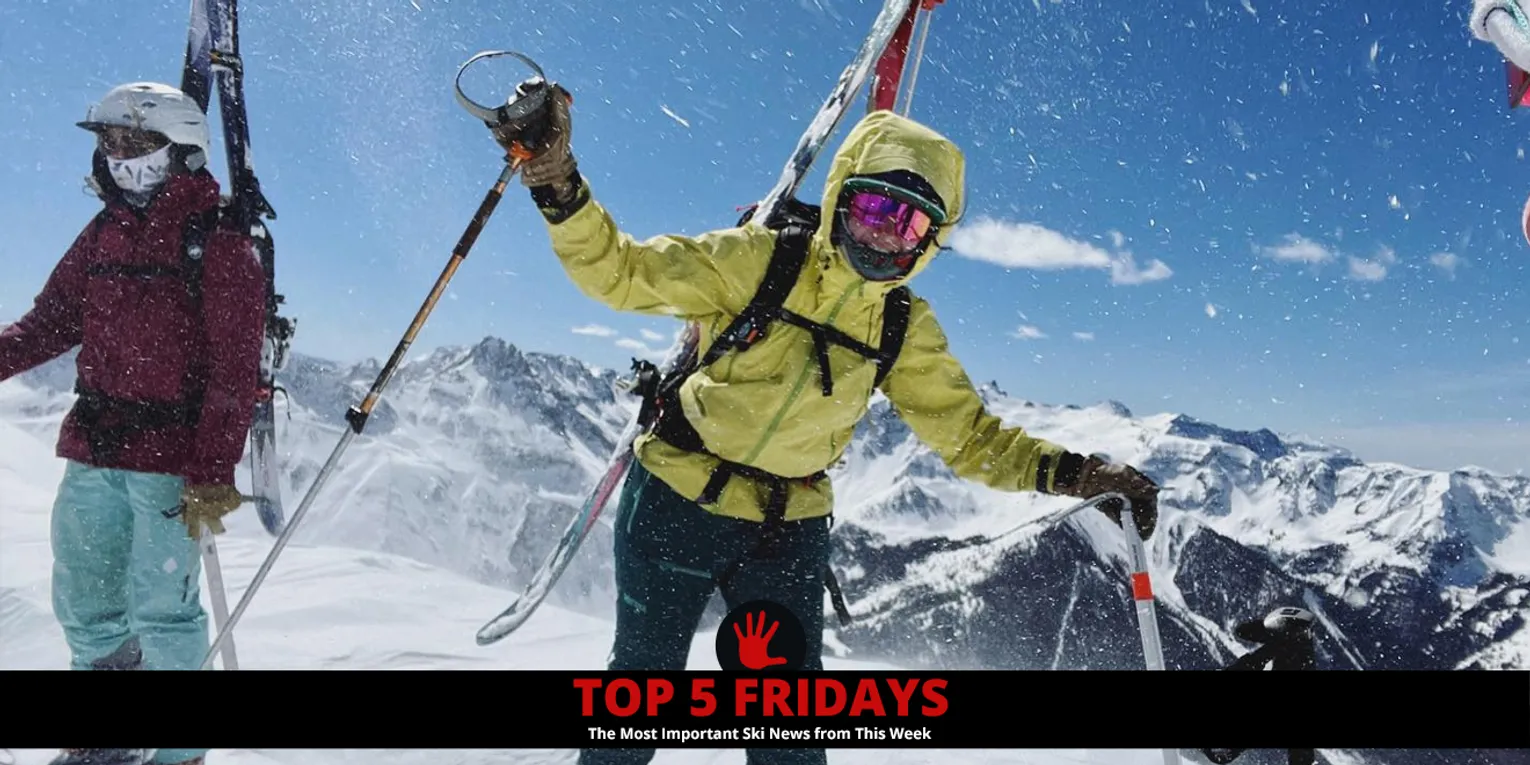
Lead Image: Curious about Skimo? Now, there’s no better place to learn the art of summiting high peaks on skis than Alaska’s Denali. More on this below. Image: Mountain Trip on Facebook
#1: A Rollercoaster Week for the FIS: New Commitments to Increased Prize Money While Serious Ethics Issues Are Raised:
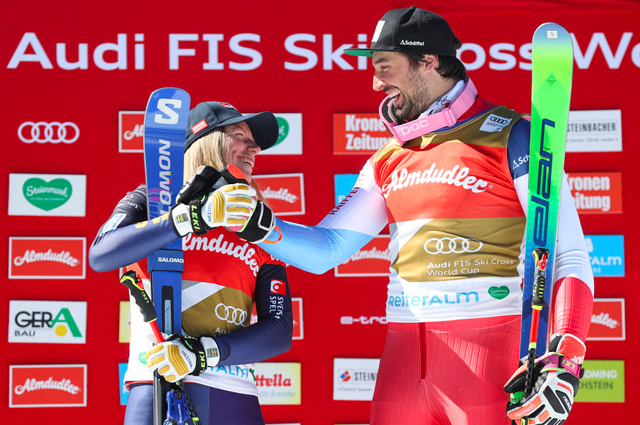
The Wu-Tang Clan once said, “Cash rules everything around me. C.R.E.A.M.”. While we don’t necessarily live and die by the saying, we can appreciate it, and with the recent talk of cash prizes in the world of competitive skiing, it sure feels like a widely embraced concept. Image: FIS Freestyle on Facebook
Hello, and welcome to Top Five Fridays, the July 8, 2022 edition! We’ve got a good one for you this week as we kick things off with back to back ski racing highlights, followed by a really interesting update from Mt. Denali and a cool piece that takes a philosophical look at the status of ski bumming in America. To get the ball rolling, let’s dive into an update from the FIS, where we caught two stories that you’ll want to know about.
First, a bit of news that pairs well with our highlight last week regarding the World Pro Ski Tour: the FIS has extended a commitment that it initially made during Covid to increase prize money for all World Cup sports. In the current arrangement, the FIS contributes approximately 20% of an event’s prize money, with 10% being in addition to the prize amount, and 10% being a subsidy to the initial prize amount. In other words, in the example given by SkiRacing.com, if a venue promised $100,000 to the first place finisher, the FIS would subsidize 10% of that, meaning the venue would pay $90,000 and the FIS would pay $10,000. Then, on top of that, the FIS would also add an additional 10% to the prize value, meaning an additional $10,000 for a total prize of $110,000. This commitment to increasing prize payouts is something that was approved by the FIS Council at a meeting this week in Zurich, and is also one of the many campaigns led by Johan Eliasch in his push to make FIS sports more widely recognized on a global level.
While the first piece of FIS news this week was free from controversy, the second update most certainly is not. In another article from SkiRacing.com this week, we’ve learned that there is an incredible amount of trouble brewing beneath the surface that can be traced back to a combination of Eliasch’s uncontested election and his push to centralize international media rights within the FIS. What we know on this subject is coming directly from a passage in the meeting minutes from this week’s council dubiously titled, “Legal Updates.” Within this section, there are four separate claims being made that consist of unethical behavior amongst council members. While each of these claims consist of their own unique storylines, the sum of the parts is essentially this: four of the most prominent FIS nations, Switzerland, Germany, Austria, and Croatia, strongly dislike Eliasch’s push to centralize international media rights. For these nations, the current arrangement with Infront Sports and Media (ISM) has worked out to their benefit and evening the playing field would be disadvantageous for them. As a result, these nations, in tandem with ISM, are pushing back in just about any way they can, including lawsuits in protest of Eliasch’s election, or in the case of Infront Sports and Media, withholding payments. In addition to this, it’s alleged that FIS Council member Franz Steinle of Germany leaked confidential FIS documents to the media in regards to the media rights debate. To make matters more complex, Steinle is the former President of the Supreme Court of Appeals in the German city of Stuttgart. This is significant because, as you can imagine, there are a number of lawsuits being filed in both directions. In other words, to put this story as simply as possible, Eliasch’s push to bring international media rights within the FIS, leveling the playing field for all of its members, has seriously ruffled the feathers of some of the organization's strongest nations. Now there’s serious drama at hand. To learn more about this breaking story, check out the report from SkiRacing.com which contains the minutes from this week’s meeting.
#2: Inside the Skiing Pipeline Pt. 7 - Discovering America’s Unique Advantages:
Here in the U.S., there’s no shortage of youth ski racers, passionate coaches, or programs. What there is a shortage of though, is communication and integration. That weakness could quickly become a strength. Image: Killington Mountain School on Facebook
Next up in ski racing news this week is the seventh, and second to last highlight of the Vail Daily’s “Inside the Skiing Pipeline” series. At this point you’re likely aware of the series that we’ve been covering on a weekly basis, but if you’ve somehow missed it, it’s an excellent eight part series published by the Vail Daily that covers the problems facing the U.S. Ski Team’s development pipeline, as well as possible solutions. This week, we cover the seventh article in the series, which focuses on how America might be able to solve its talent shortage. What’s interesting about this piece to us is that it focuses on one of our favorite concepts: diversity.
We talk a lot about diversity here on SkiEssentials, whether you realize it or not. While the term itself has come to feel a bit political, we find ourselves embracing the theme in decidedly non-political ways. We love the diversity of skis that are available these days, as well as the growing diversity of ski resort options, for example. This week, we love how the theme plays into the concept of using the U.S.’s diverse skiing landscape as a means for strengthening our talent pipeline. Let us explain.
This week’s piece from the Vail Daily begins by making one point crystal clear: the U.S. cannot expect to get ahead of the competition by copying them. For starters, if we’re following the leaders, we’ll never lead. Secondly, given our geographical and cultural differences, it simply wouldn’t make sense. To use an old adage, it would be like sticking a square peg in a round hole. It just doesn’t fit. What the U.S. does have though, is diversity. While many would cite the diverse geography of our nation or refer to our diverse system of competitive ski racing as “splintered,” the fact of the matter is that this diversity could be leveraged into a uniquely American advantage. One excellent example given in this article is that of a skier who grows up racing on the technical, icy East Coast hills, and then heads west for college where they have access to steeper, more open terrain. That combination of experiences has the potential to create some of the most well rounded skiers in the world, enabling them to be highly adaptable to the various courses and conditions encountered throughout an FIS season.
Another example of diversity within the U.S.’s ski racing system that’s untapped is in amateur level competitive circuits. We’ve touched base on this topic a few times already throughout this series, but the long and short of it is that there are countless race leagues within the U.S., from youth leagues like Buddy Werner, to official high school leagues, and everything in between. That variety of entrance points means that it’s possible for kids to discover ski racing through a number of avenues. The problem, unfortunately, is that a lack of unity and fluidity between the leagues means that prospective talent may be getting lost in the pipeline. As it stands, there’s essentially the U.S. Ski Team, and then everyone else. While it’s currently a weakness, there’s immense opportunity to correct this error if leagues are able to find ways of better communicating and sharing talent, ensuring that top athletes find their way to a path that gives them the best chance of fulfilling their potential. All in all, this week’s article is another fascinating read and one that we’d recommend checking out in full, right here.
#3: For the First Time Ever, Mt. Denali is Open for Guided Tours, Creating an Opportunity for a Ski Mountaineering Pipeline in America:
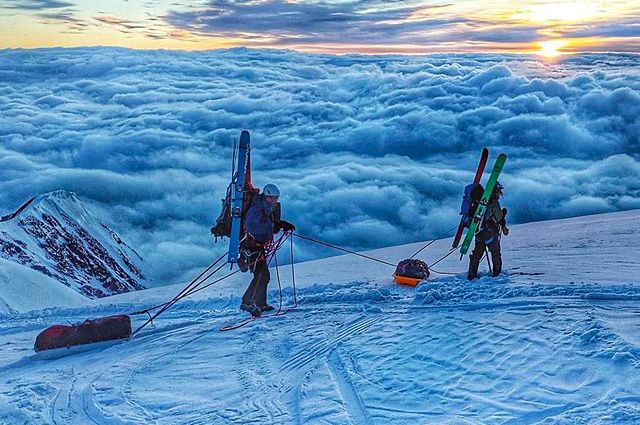
Want to know what high altitude ski mountaineering is really all about? Thanks to new regulations, Alaska’s Denali might be the perfect mountain to learn the ropes. Image: Mountain Trip on Instagram
In non-ski racing news this week, we’re excited to share a cool story coming out of America’s northern frontier. This week, the Colorado Sun published an article highlighting the fact that Denali National Park, home of North America’s highest mountain peak, has finally begun allowing guided ski descents. As a result, Telluride based Mountain Trip was able to host the first ever guided ski tour on Denali in May. Prior to this, skiing was allowed on Mt. Denali, but not as part of a guided tour. Specifically, the issue at hand was the fact that regulations which were made decades ago required guides to remain attached to a rope for the entire ascent and descent of the mountain. While that requirement would’ve been manageable on the uphill, skiing downhill while attached to a rope was a deal breaker for obvious reasons. As such, mountaineer guides such as Bill Allen, who co-owns Mountain Trip, and Chris Davenport have been lobbying for the regulations to loosen, ultimately enabling what could become North America’s premier ski mountaineering venue. Finally, after a nearly 25 year effort, Bill Allen and Chris Davenport’s dreams came true.
What makes this story particularly appealing to us isn’t the history of it though, it’s the future. Now that guided ski mountaineering is allowed on Denali, it opens up a whole world of possibilities, not just for the guides themselves, but ultimately for the growth of the sport in North America. With this announcement, Denali is poised to become something of a mecca for ski mountaineering, not only for advanced athletes with their sights set on the peak, but also for those looking to learn the ropes of ski mountaineering (pardon the pun). In addition to being the continent's tallest mountain at 20,310’, its terrain itself is equal parts friendly and challenging. While the full ascent offers 50 degree pitches, elevations between 6,000’ and 20,000’ offer ample opportunity to learn what it’s like to set up base camp on a high peak, or traverse a glacier with crampons while carrying skis on your back. In other words, to borrow a term from Vail Daily’s ongoing series, guided ski mountaineering on Denali creates a pipeline for skimo athletes to develop. Prior to this change in regulations, would-be ski mountaineers would have had to go at it alone if they desired to take on America’s highest peak. Now, there’s a pipeline that enables these athletes to learn what it takes to conquer a 20,000’ peak in a safer environment. As the sport of skimo gains traction, even becoming an Olympic sport in 2026, opening up access to America’s tallest asset feels like exactly what had to happen in order for Team U.S.A. to remain competitive on a global scale. While that’s likely not a focus for most involved in this story, it’s certainly one of the many positive outcomes. To learn more details, we highly recommend giving the full report from the Colorado Sun a read.
#4: Are Ski Bums Artists? Columnist Jay Wisniewski Would Argue So:
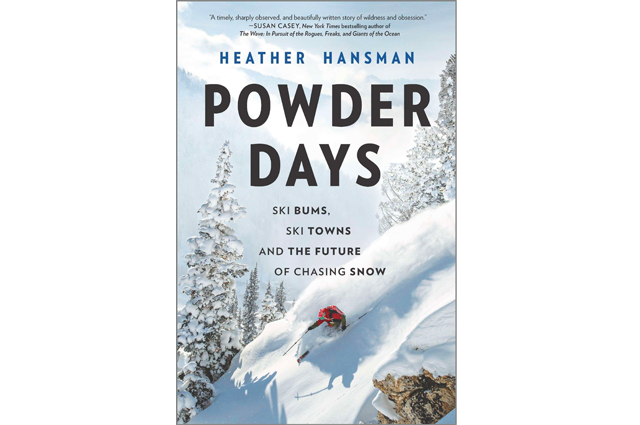
Want to read more on this topic? Check out “Powder Days” by Heather Hansman, an excellent book on the modern state of ski bumming. Image: World Pro Ski Tour on Facebook
Finally, we end our week with a highlight that’s not exactly news, although it’s a piece of writing that we suspect you might enjoy. Over on the TownLift.com, a Park City based news and entertainment website, Aspen Daily News editor and columnist Jay Wisniewski has published a piece that wistfully reflects upon the role of ski bums in society while simultaneously mourning their disappearance. Formerly a self proclaimed ski bum himself, Wisniewski draws comparisons between ski bums and artists to make his point regarding their overlooked and underappreciated position in society. Like the artist, the ski bum has a canvas: the mountains themselves. Ski bums also tend to live on the fringes of society, without significant income or capitalistic goals, grant money, health insurance, or sponsorship. Sure, some have these things, but typically only the most successful ones. There are artists so proficient in their craft that it’s possible that the outside world could someday know their name. Despite lacking these comforts, ski bums do have something that those caught up in the whirlwind of corporate life may be lacking: freedom. With their decision to turn down the offerings of a straightforward career path comes the opportunity for the ski bum to live freely. In lieu of watching the snowfall from an office window, ski bums take advantage of every inch of snow that falls. To them, there is not truer meaning to life than chasing the thrill of careening downhill, one perfectly controlled turn at a time. Unfortunately, as Wisniewski points out, this lifestyle is slowly dying out. Due to a mix of factors within the industry, it’s becoming increasingly difficult to survive as a ski bum, no matter how many modern conveniences are foregone. As such, the piece reads as something of a swan song; a beautiful tribute to a dying breed.
Here on Top 5 Fridays, almost every piece of content we share is factual. It deals with trends, statistics, business decisions, and results. While that is and will forever be our goal here, to share with you the latest in ski news, sometimes it’s nice to read a piece like this that zooms out, away from the facts, and looks at skiing through a more philosophical lens. While we realize that a large part of our readership likely works out of an office (ourselves included), we also know that for most of us, at least at some point in our lives, the idea of becoming a ski bum had incredible allure. For that reason, we felt compelled to share this piece. If this resonates with you, we’d recommend also checking out “Powder Days: Ski Bums, Ski Towns and the Future of Chasing Snow,” by Heather Hansman. It’s an excellent long-form read on this very subject.