

TOP FIVE FRIDAYS: JUNE 17, 2022
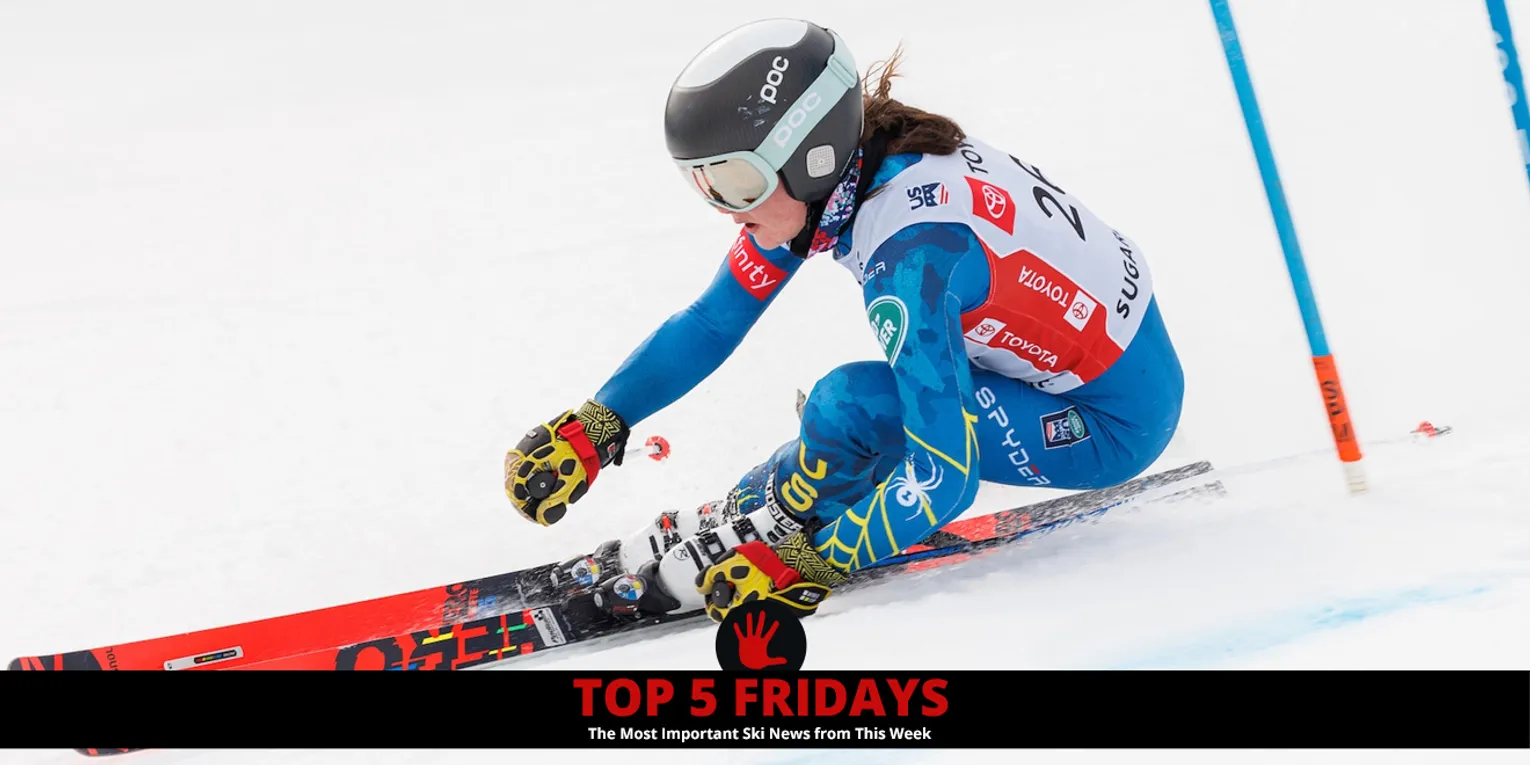
Lead Image: Meet Elisabeth Bocock, the youngest, and arguably rawest talented rookie on the U.S. Ski and Snowboard Women's Alpine Team. Image shot by for the U.S. Ski Team. Sourced via: SkiRacing.com
#1: Vail Daily’s “Inside the Skiing Pipeline Pt 4” Asks, “What Happened?”:
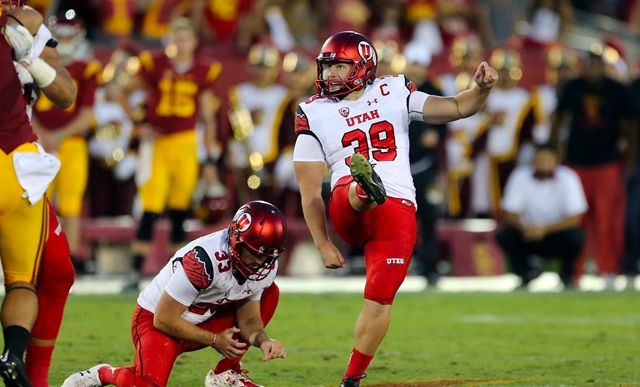
Why are we featuring a football kicker here on Top Five Fridays? Great question. In an alternate timeline, Andy Phillips could’ve been an Olympic Medalist for the U.S. Ski Team, that’s why. Image: Utah Utes
Hello, and welcome to Top Five Fridays, the June 17, 2022 edition! This week we have another split sample of ski news, with two highlights falling into the ski racing category, and another two falling under the umbrella of ski resort development news. To get things started, we’re going to take a closer look at the fourth installment of the Vail Daily’s seven part series, “Inside the Skiing Pipeline.” In the fourth installment, series author Ryan Sederquist tells the story of “what happened,” as in, how did the U.S. Ski Team that featured the world’s best Alpine Women’s team 40 years ago digress to the point of ultimately coming up empty handed in these past Olympic games? The answer really is two fold: financial barriers and a team mentality.
In regards to the financial barriers of the sport, it’s an argument we’ve heard time and time again: higher costs at the junior level results in less participation and a narrower pipeline. While this writeup does discuss similar themes, it also puts the problem into a more digestible light as it discusses not just the financial cost of participation in skiing, but also the opportunity cost. In other words, when young ski racers in the 60’s, 70’s, and 80’s were able to join a race league for about $100 and could find their way to free equipment with relative ease, there wasn’t much of a barrier to entry. As a result, talented athletes would readily join ski clubs, even if only to become the best skier on the mountain. Then, according to John McMurtry, a U.S. Ski Hall of Fame Member and the coach of that famous 1984 Women’s Team, everything started to change when the U.S. Center of Excellence training center was built in Park City. That marked the first time the U.S. Team spent money on a brick and mortar structure instead of athletes. That, combined with reduced funding, led to a trend that resulted in U.S. Ski Team members having to pay membership fees to join the team. One eye opening example of this is Bode Miller, who had to pay $10,000 to join the team his first year. In his words, had that cost been much higher, he likely would’ve opted out and went to college instead. Another example of this which we learned from this article is the story of Andy Phillips. Once the second highest ranked junior slalom skier in the world at the young age of 17, Phillips’s dream of competing in the Olympics for the U.S. Team was shattered when he learned that he would have to pay his own way to Sochi. Instead, Phillips opted to enroll at the University of Utah, walked onto their football team, and eventually became drafted as a kicker for the Chicago Bears. In other words, when we talk about how the cost of ski racing has resulted in a smaller pipeline, not only does it mean less kids get to experience and enjoy the sport of ski racing, but it also has very real consequences in terms of losing out on world class talent. In the case of Phillips, the U.S. Team missed out on an athlete that had the potential to one day be a Hall of Fame athlete. Instead of paying to participate, Phillips went to college and eventually earned an NFL salary. For him, the opportunity cost as well as the financial cost to continue ski racing simply didn’t make sense.
The second factor in play that helps answer this question is much simpler: the team mentality has gone missing. Again, going back to that magical 1984 season, by all accounts the team felt like a team. It was still an individual sport of course, but athletes still felt as though they were competing primarily for the benefit of their team, and not simply themselves. While the mentality of today’s athletes is certainly up for discussion, and likely varies amongst each individual athlete, the point of the Vail Daily piece is that within today’s ski team, there isn’t a unified coaching effort. Instead, some athletes have their own coaches, training regiments, and even training courses. As a result, not only does the team lack camaraderie, but it also lacks the benefit of learning from the team’s leaders. One obvious example from today’s team is Mikaela Shiffrin. On one hand, having her on the team is amazing for the other athletes as they’re able to follow her example, see how she trains, and find themselves competing against her more regularly. That said, Shiffrin also trains privately at times, with her own programs and coaches. In other words, the U.S. Ski Team doesn’t operate like a typical sports team, where one group of coaches coach all of the athletes. Instead, there is an added layer of individualism in which athletes often work with their own coaches and on their own programs within the team. The argument against this is that by not having every athlete at every level of the team training directly alongside Mikaela, there’s a missed opportunity to inspire greatness at all levels. All in all, both aspects of this argument are fascinating to examine, and we’d recommend heading over to the Vail Daily to learn all there is to know about them.
#2: Park City’s Previously Approved Lift Upgrades Blocked by City Planners:

It feels safe to say that Park City officials were not at all pleased with the planning commission's last minute injunction. You can view this tweet, as well as the following two, right here.
Next up this week is a headline from Park City, where city planners caused quite a stir when they granted an appeal of two lift projects already underway at Park City. The lifts in question, which had been approved back in September 2021, were set to replace the resort’s three person Eagle Lift and six person Silverlode Express with a six person detachable grip, and North America’s first eight person lift. From Park City’s perspective, the purpose of these new lifts is to increase uphill capacity and decrease lift lines- one of Vail’s most visible problems last season. In fact, these two lifts were two of the highlights of Vail’s “Epic Lift Upgrade” campaign, which promised to bring a total of 21 new chairlifts to its North American resorts, at a price tag of approximately $320 million. In the messaging for that campaign, Vail says the goal of this project is to increase uphill capacity and improve the guest experience. Unfortunately for them, the Park City Planning Commission has concerns that extend past Vail’s current guest list.
This week’s update comes as a result of four Park City residents who filed an appeal, citing a decades old agreement between Park City Mountain Resort (PCMR) and its former owner, Powdr. Within that agreement, there was a clause putting a cap on the Comfortable Carrying Capacity, or in other words, maximum capacity of the resort. Despite PCMR’s argument that the new lifts wouldn’t increase carrying capacity at the resort, and only the uphill capacity, the addition of new lifts to the ski area was enough for the planning commission to file an injunction to halt the project. Their concern is that despite what PCMR suggests, upgrading lifts to offer higher capacity will likely attract new skiers to the resort, putting further pressure on the city’s already stressed traffic infrastructure. From here, it’s unclear what happens next. While Park City hasn’t begun the process of removing either the Eagle or Silverlode lifts, it has already ordered production of the two new lifts and also begun preliminary work to prepare for the new lifts. While it’s unclear what legal steps might be next, the project is currently dead in the water.
From our vantage point, one of the interesting parts of this story is that it’s an example of a planning commission stepping in and considering how the resort’s actions will affect the quality of life for its residents. We’ve highlighted at length the relationship between ski resorts and mountain towns here on Chairlift Chat, and the simplified takeaway is that a delicate, mutually beneficial relationship exists between the two. Resorts bring in tourism and boost the economy, while mountain towns add to the appeal of visitors deciding to travel to a given resort. Sometimes though, and especially in recent years, resorts can overwhelm mountain towns, causing any number of issues, ranging from traffic congestion to housing shortages. Traditionally, mountain towns have simply learned to cope, accepting that these are the tradeoffs for a bustling economy. With this week’s news however, we’re seeing at least one instance in which a “mountain town” (if you want to call Park City that) has decided to push back, saying, “enough is enough.” While it may prove to be a one off instance, it’s also easy to imagine a world in which this move sets a precedent and mountain towns become harder negotiators when ski resorts seek to develop in ways which could add more stress to the towns themselves. For now, you can learn more about this from the coverage over on LiftBlog.com.
#3: The Story of How Covid Helped Killington:

A conceptual rendering of the proposed Six Peaks village at Killington. Image: Killington
In other ski resort development type news, we also have an interesting story from Forbes this week that shares the story of how the pandemic has become a potential economic catalyst for the town of Killington. Now, before we dive into this story, we just want to be extra clear that we’re of the opinion that the spread of Covid-19 was an undeniably terrible thing that caused significant pain for countless people. We understand that. But, like they say, through darkness comes light, and so despite the wretchedness of the pandemic, we’re excited to share the light that’s beginning to shine through in Killington.
In the highlight from Forbes, we learn about how the pandemic has resulted in progress in regards to long-stalled development projects in the area. Prior to Covid, the mountain, developers, and planners in the area had a shared dream of updating the infrastructure around the mountain, as well as creating a housing development at the base of the resort to create more lodging. As is often the case, proposals for these projects went back and forth, through rounds of revisions, appeals, and the like. And then, the pandemic hit, driving demand through real estate through the roof, ultimately resulting in higher home values and lower availability. In addition to the influx in home buying in the area, the resort itself also became an even more popular destination due to the overall trend in increased interest in outdoor activities like skiing and mountain biking. As a result of this surge in popularity at both the resort and the surrounding area, there’s been renewed interest in moving forward with the aforementioned real estate and infrastructure developments which had been stalled for years.
Enter: “Killington Forward”, a multi-point plan that addresses these issues and more as Killington looks to leverage its growth to create an even more prosperous future. Within that plan are infrastructure upgrades to the town’s water systems, a reconstructed road to ease traffic issues, an increase in affordable housing, and a 1,500 residence village known as Six Peaks. To put that last figure into perspective, Killington currently has approximately 1,400 year round residents. While this development likely won’t house year-round residents as its main purpose is for short term ski in / ski out lodging, its capacity could, in theory, more than double the size of the town when full. Of course, all of this said, “Killington Forward” still isn’t a sure bet. Despite the influx of support, there are still a number of question marks and hurdles to overcome in the weeks and months ahead, ranging from tax incentive approvals, to investment commitments, and of course, a public vote. Should the plan pass all of these steps, construction efforts could begin next Spring. To learn more about the proposed plan, where it stands, and what it could mean for the future of Killington, check out this writeup from Forbes, as well as this article from MountainTimes.info that gives more information regarding details of the plan, as well as the path forward.
#4: Meet the U.S. Ski and Snowboard Women’s Alpine Ski Team’s Newest Members:
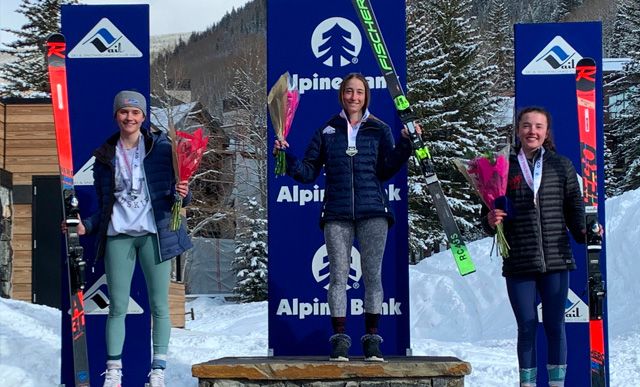
Meet the three newest members to the U.S. Ski and Snowboard’s Women’s Alpine Team. From right to left, they are: Kaitlin Keane, Kjersti Moritz, and Elisabeth Bocock. Image shot by John Keane, sourced via SkiRacing.com.
Finally, we round out the week with an article that pairs quite well with our first topic of discussion, as SkiRacing.com has just published an overview of the three rookie athletes who were introduced to the U.S. Women’s Ski team this week. Joining the 2022-2023 U.S. Alpine Skiing D-Team are Kjersti Moritz, Kaitlin Keane, and Elisabeth Bocock. We’ll let SkiRacing.com do most of the heavy lifting on this one, but before we turn you over, we’ll give you a brief overview of each athlete here.
First up on the list is Kjersti Moritz, a 17 year old Slalom and Giant Slalom specialist hailing from Vail and representing Fischer Skis. Moritz’s resume includes a number of podium finishes, but is highlighted by her sweep at this year’s National Junior Championships, where she finished first in Giant Slalom, second in Slalom, and third in the Super G. Next up is Kaitlin Keane, also a 17 year old Vail athlete, representing HEAD skis. Like Moritz, Keane specializes in Slalom and Giant Slalom, although towards the end of last season began showing serious potential in the Super G as well. Also like Moritz, Keane’s resume highlight came at this year’s National Junior Championships, where she finished first in the Super G, second in the Giant Slalom, and fourth in Slalom. Finally, the last athlete to be introduced to the U.S. Women’s Alpine Development Team was Elisabeth Bocock. At just 16 years old, hailing from Salt Lake City, UT, and representing Rossignol/Look, Bocock is the youngest, and perhaps most raw talent on the team. Dating back to the middle of January this past season, every one of Bocock’s results has either been a top ten finish or a DNF, with the exception of one event. In other words, at 16 years old, Bocock shows incredible promise and will likely become a regular face on podiums if she’s able to complete each race. At the moment, the highlight of her career is a first place finish in a slalom race at Palisades Tahoe at the end of the season. Also worth noting is the fact that Bocock took home third place in this year’s Junior National Championship Super G. In case you haven’t been paying close attention to the results we’ve listed in that particular race, allow us to clarify something: Moritz, Keane, and Bacock swept the podium in that race, taking first through third, in that order. Between the three of these athletes, it’s safe to say that the future of the sport is in good hands, despite what concerns over the pipeline might currently indicate. To learn much more about each of these young athletes, take a look at the recap over on SkiRacing.com.