

Top Five Fridays: June 20, 2025
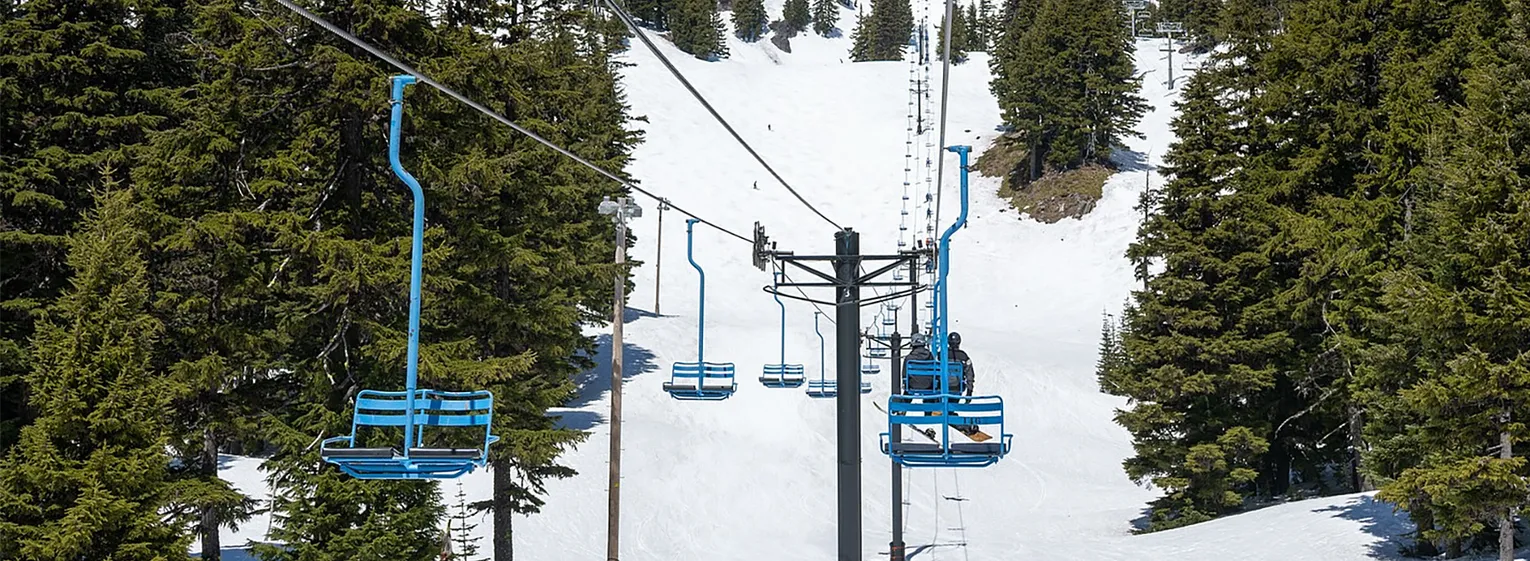
Riders taking the iconic blue double chair at Mt. Hood Meadows, OR. Unfortunately, the ski area’s insurer pulled out of the state this week, leaving them with just one option next season if the state’s Senate doesn’t pass a certain law in the next 9 days. More on that in highlight #2. Image: Mt. Hood Meadows on Facebook
#1: New Legal Provision Could Require Western States to Sell Federally Owned Land, Potentially Impacting Ski Resort Operations and Outdoor Access:
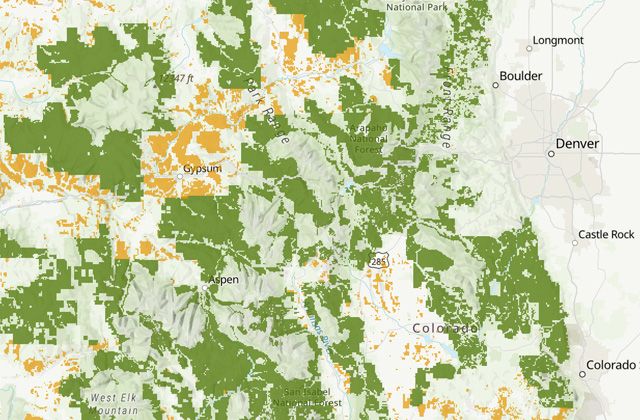
In this screenshot taken of a map created by the Outdoor Alliance, the dark green and orange areas highlight the public land that could potentially be sold by the federal government if this provision goes through. It’s easy to see how this could concern skiers and snowboarders. To explore the full map, click here.
Hello, and welcome to Top Five Fridays, the June 20, 2025 edition! This week, ski news brings us into the world of legalities as highlights one, two, and three all deal with overlaps between ski resorts and their relationship to the legal world around them. From insurance and safety to land access, this week’s highlights might be a bit dense in subject matter, but they’re packed full of information we’re sure you’ll want to know. If that sounds daunting, don’t worry - we make sure to cap things off with a fun update from Marcel Hirscher followed by a number of great ski and bike edits to take you into the weekend. With that all in mind, let’s get started!
This week, the biggest topic of discussion in the ski world was a provision regarding the sale of public land that was recently added to President Trump’s, “Big Beautiful Bill.” Now, we’re going to do our best here to keep this story apolitical - not because we don’t think politics matter - but because we know you don’t come to us for political points of view. Quite the opposite, we suspect you come here to escape all of that, even if only briefly. So while this topic is political in nature, we’ll do our best to stick strictly to the facts as they pertain to us as skiers and outdoor enthusiasts.
In case you somehow missed it this week, the aforementioned provision is one in which all Western states (besides Montana) will be required to sell between .5% - .75% of their Forest Service and Bureau of Land Management land over the course of the next 5 years. There are some exceptions and exclusions which we’ll get to in just a minute, but before we do, it’s important to know that the stated purpose of this provision is to allow for more affordable housing to be built. To sum up that side of the argument, we recommend watching this short YouTube video from Utah Senator Mike Lee, who explains that the goal is to take underused federal land, sell it to private investors, and let them build affordable housing on it. The argument is pretty straightforward: the federal government owns a ton of vacant land that would be better utilized if it was privately owned. In selling the land, it’s estimated that the government would raise between $5 billion to $10 billion while also creating thousands of jobs for those involved in the development of the land. At face value, there likely wouldn’t be too much pushback on the concept of building more affordable housing on unused land in rural areas that could really use it.
For everyone from skiers and snowboarders to mountain bikers, hikers, and fly fishers though, the fear is that the resulting reality from this plan won’t match what’s being pitched. In its pitched form, the idea is to only sell underutilized land. The concerning part though, is that all USFS and BLM land could become eligible for sale by the end of this 5 year program. Currently, the methodology for the land sale is for each of these agencies to nominate new tracts of land every 60 days until their quotas for each state are met. That sales quota, ultimately, is one of the primary concerns here as it immediately taps into the basic economic principle of supply and demand. Putting ourselves in the shoes of a land developer for just a minute, why would we want to purchase a desolate plot of land when we know the USFS and BLM have sales quotas to hit? With that in mind, it stands to reason that if developers don’t buy the undesirable land, then these agencies will legally have no choice but to begin nominating more desirable, more valuable land for sale. Land, such as parcels that neighbor ski resort access rights or that’s at the entry point to vast acreage of public land. While the goal of the provision is to create housing, it’s our understanding that that’s not a requirement, suggesting that this could turn into a scenario where wealthy developers buy highly desirable plots of public land and turn them into private resorts. Noting the capitalistic side of this equation, it’s easy to see how this plan could quickly spiral into unintended consequences.
Another one of those unintended and particularly concerning consequences for us as skiers, is the potential sale of land currently being used by ski resorts. As it stands, the provision excludes land with “valid existing rights”. While that designation almost certainly covers land being used for activities such as mining and oil extraction, ski areas operate in a gray area as their Ski Area Special Use permits don’t include land rights. As such, it’s conceivable that over the course of the 5 year project, ski resorts such as Mammoth, Aspen, Vail, Breckenridge, and many, many others could have land sold out from under them. At this point, that reality is purely speculative, but the fact remains: there’s a path to a reality where that outcome is possible, and it’s very concerning.
In addition to concerns over ski area land, there’s also worry regarding the future of land being used for countless other recreational activities. According to a report from the Outdoor Alliance, “nearly 100,000 miles of trails, more than 45,000 climbing routes and boulder problems, and 3,405 river miles across the West,” could be impacted by the sale of this land.
As you can imagine, it would be quite easy to get carried away with all of the details of this story. Thankfully though, there’s been a number of good reports published that do the job already, so we’ll simply turn you over to them. To learn more about how this piece of legislation could impact lands in Colorado, click here. For Utah, click here. For coverage as it pertains to skiing, check out this report from Powder.com.
#2: Oregon’s Ski Area Insurance Woes Continue as Only One Willing Insurer Remains:
Next up this week is another dense legal topic, but one that we also feel is worthy of discussing. That topic is the state of ski area insurance in Oregon. If you’re a regular here then you should already be familiar with the basis of this storyline as it’s something we’ve discussed somewhat frequently over the last few years. In short, the debate that’s been growing in volume across several U.S. states is the delicate balance between the legal strength of liability waivers, and the ski resort’s ability to afford insurance. This week, the pressure on that debate ratcheted up another notch as one of Oregon’s last remaining insurers pulled out of the state.
On Wednesday of this week, we learned that Safehold Special Risk, the insurer for a number of Oregonian ski areas, has left the state. Their reasoning is exactly what you might guess it would be: the way the state enforces liability waivers leaves ski resort operators exceptionally exposed to risk, particularly when compared to other states. In the words of Safehold Special Risk claim manager Eric Mogen, Oregon is an, “an extreme outlier”, accounting for, “for 20% of its nationwide losses up to $1 million and 50% of its losses between $1 million and $10 million.” Those numbers are despite Oregon being just one out of 37 states in which the company insures a ski resort. In other words, the cost of insuring ski areas in Oregon is incredibly disproportionate to its clients in other states, making it simply bad business for them to continue. The result is their decision this week to exit the state.
Now, things in Oregon are in dire shape as resorts like Mt. Hood Meadows and Timberline Lodge have lost their insurer. With the exit of Safehold, the state now has just one company offering insurance to ski resorts: MountainGuard. For the time being, that company does intend to remain in Oregon, although their senior vice president, Tim Hendrickson acknowledged that they too could leave, saying, “If we end up with very large verdicts or nuclear verdicts, it’s going to force our hand.” Should that happen, there’s a very real chance that ski resorts in Oregon will be unable to operate.
So what happens next? Currently, as we speak, there is a bill precariously making its way through the state legislative process that could offer some relief. That bill, which aims to alleviate similar pressures being felt not only by ski resorts but by any number of other businesses that ask customers to sign a liability waiver, finally made it out of the Senate committee late Wednesday. While that’s a positive sign for proponents of the bill, the problem is that it leaves very little time for it to be approved ahead of the conclusion of this year’s legislative session on the 29th. If the bill is unable to become law in just 9 days, things in Oregon could get pretty interesting, pretty quickly. For more on this, check out the full report from OregonLive.
#3: After a Spate of Tragic Accidents in Recent Years, Stakeholders in Colorado Are Urging Cultural Change Surrounding Chairlifts:
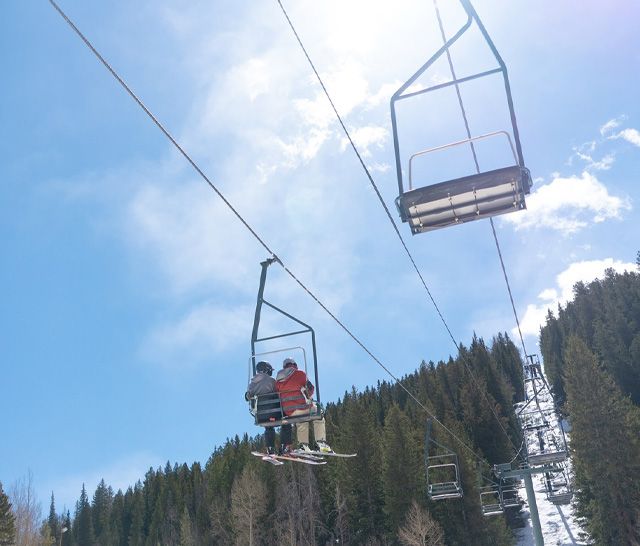
Riders at Keystone, where it’s normal to ride with the safety bar up - an unheard of activity here in Vermont. Image: Keystone Resort on Facebook
Our third story this week is one that perfectly complements our last highlight as it dabbles in discussion surrounding ski resort liability and safety. This story is that of chairlift accidents in the Western United States, specifically Colorado, and what’s being done to prevent them. Now, before we dive into this one, we want to acknowledge that the conversation comes about as a result of several tragic stories. Again, here on Top Five Fridays, our goal is to be a bit of an escape for you rather than a continuation of real world stressors, and so we’re going to skip over the backstories shared in this week’s report, although you can read all about them here. Instead, we’re going to fast forward through the article and focus on the aspect of this Colorado Sun piece that really caught our attention: the idea of chairlift culture.
Here in Vermont, the use of a safety bar isn’t just normalized - it’s a legal requirement. If you’ve ever been to a ski area in this state and forgotten to put your safety bar down, it’s almost guaranteed that you’ve been asked by a lift attendant or ski patroller to put your bar down, citing that it’s state law. In Vermont, the use of safety bars are second nature. You sit down, glance down the chair, and say something like, “ready for the bar?” every single time you ride the lift. Out West though, that’s not at all the case. Instead, “are you ready for the bar,” becomes, “do you mind if we put the bar down?” Culturally, it’s very different, to the point that many of the older and more rugged lifts out West don’t even have safety bars to put down.
Now, in the wake of several tragic stories, lawsuits, and insurance issues, there’s a growing movement to change the culture out West, encouraging the use of safety bars. One way in which this is being done is at the manufacturing level, as Leitner Poma of North America, based out of Grand Junction, CO, is now making chairlifts with automatic or locking safety bars that overrule the rider’s personal preferences. While not particularly prevalent here in the East, this type of lift is reportedly popular in Europe. Another way in which change is being pushed is through messaging and the promotion of safety bar use. Interestingly, research has shown that current safety bar use largely mirrors the geographical helmet use across America from about a decade ago. That is, while East Coast skiers were quicker to adapt the use of helmets a decade ago, it took longer for them to catch on in the West. Still, they have, and now industry experts are hoping to mirror the educational campaigns that helped grow the use of ski helmets as a way of promoting the use of safety bars.
Our takeaway with all of this? Honestly, this one’s just interesting as safety bars aren’t something we think much about here in Vermont. That said, we recognize that there is something unique and freeing about riding a western lift where you know the bar is optional, or where one doesn’t exist at all, like Alta’s Wildcat lift. Still, skiing sans-helmet is also freeing, but an activity that’s simply not worth the risk. Chairlifts, on the other hand, are historically 5 times safer than riding in an elevator, suggesting that it’s reasonable to argue that user awareness matters more than safety bar requirements. All told, we don’t have an answer for this one and genuinely enjoy the debate. Knowing that our readership is global, we thought it might be a fun conversation to hash out in the comments. To learn more about this story, check out the report from the Colorado Sun.
#4: Marcel Hirscher Cleared to Return to Full Activity, Eyes His Second Comeback:
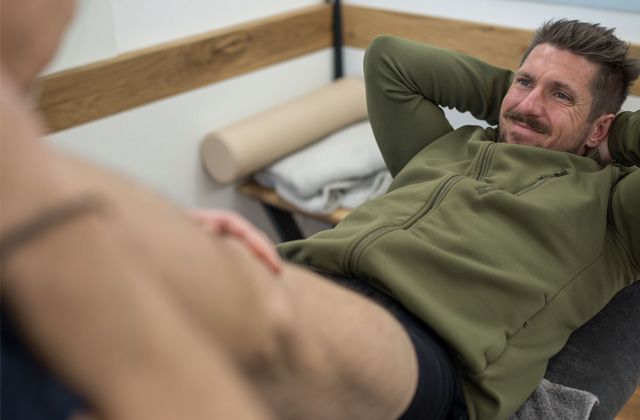
After spending over a thousand hours rehabbing in 197 days, Hirscher has been cleared to return to full activity. Now, he sets his sights on returning once again to FIS World Cup level racing. Image: Marcel Hirscher on Facebook
Finally, we want to round out this week’s ski news with a bit of a feel good story after all of those heavy legal discussions. That story is that of Marcel Hirscher, who has just been cleared to return to racing 6 months after undergoing surgery for his torn cruciate ligament - an injury he incurred while training last winter. It’s the latest update in what’s been a wild year for Hirscher, who announced plans to return from retirement last season. That announcement resulted in the FIS hastily changing its World Cup eligibility requirements, ultimately creating a wild card program that would allow legendary athletes to return to competition without needing to requalify. While the rule was initially intended for Hirscher, Lindsey Vonn also took advantage of it last season, ultimately becoming the oldest woman to ever earn an FIS alpine podium. Hirscher, on the other hand, suffered his injury after just three FIS starts, putting his comeback story on hold.
This week though, we learned that Hirscher will give unretirement another go, with plans to return to the FIS circuit this season. While he’s been cleared for skiing activities, his current plan is to continue strength training and transitioning to “athlete mode” this summer before returning to snow in September. At that point, he’ll get back on skis and get a read on where he’s at in terms of being able to return to FIS racing. In his words, “From today’s perspective, I can’t say for sure when I’ll finally be back in a race… but if it’s up to me, then sooner rather than later.” As for his eligibility upon return? Well, this story actually gave us a bit of new information regarding the wild card rule, as it’s reported that the FIS awarded Hirscher 17 wild cards after being cleared from rehab. While we’re not exactly sure what this means or how these cards are redeemed, it’s interesting to note that the FIS system doesn’t operate on a “one wild card = one season” model, but instead appears tied more directly to specific races or appearances. Regardless of the details, one thing was made very obvious in this story: Marcel Hirscher can’t wait to race again, and we can’t wait to see him back out there. For more on this, check out the writeup from SkiRacing.com.
#4.5: A Peak Skis Update from the Colorado Sun:
Before wrapping up this week, we want to very quickly share an update from one of last week’s highlights in which we reported the rumor that Peak Skis was closing up shop. When we shared that story last week, the only actual “proof” that Peak Skis had gone under was their lack of a website and a post on SkiTalk.com. This week though, we finally got official confirmation and further information by way of the Colorado Sun. To find out more of the details surrounding that story, click here.