

Top Five Fridays: March 21, 2025
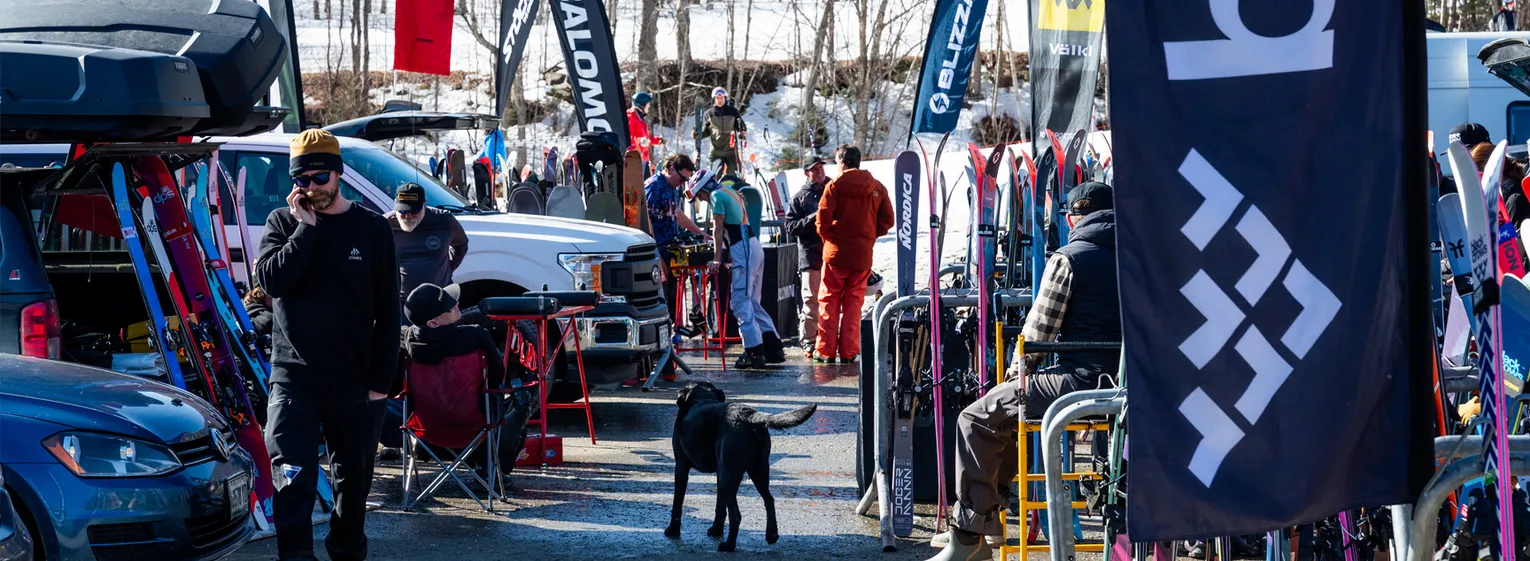
A view of the action from our Ski Test earlier this week. Shot by our super talented in house photographer, Chris McClelland
#1:We’ve Done it Again! The 2026 SkiEssentials Ski Test is in the Books, With More Data Points Than Ever:
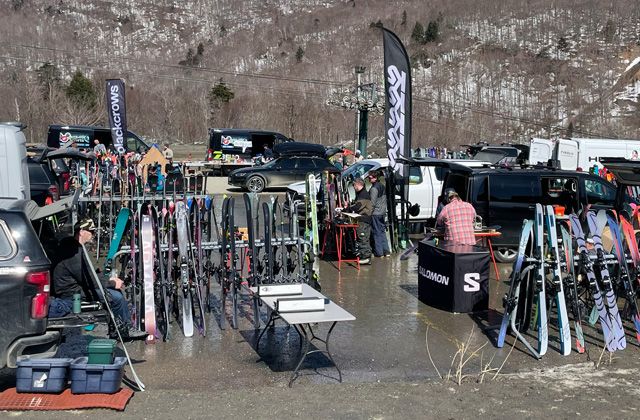
Hello, and welcome to Top Five Fridays, the March 21, 2025 edition! This week was a big one here at SkiEssentials, as we just hosted our 9th annual Ski Test! We’ll start this week off recapping what went down over the course of the last three days, before moving onto our weekly FIS Alpine coverage. From there, it’s on to some disappointing news from Whistler, followed by an interesting article that takes us behind the scenes of course preparations for the imminent World Cup Alpine Finals in Sun Valley. With plenty of fun stuff to talk about this week, let’s jump right in!
If you’re a fan of SkiEssentials, and we assume you are if you’re reading this, then you’re likely well aware of our annual Ski Test. For those uninitiated though, here’s the gist: every year since 2017 (when we tested 2018 skis), we’ve invited each and every brand that we carry to come on out to Stowe to let our fleet of testers demo next year’s goods. For every ski or board they demo, our testers record notes regarding the skis performance across a number of categories such as stability and playfulness, as well as their comments such as their overall impressions and which type of skier would like the ski the most. Unlike most ski tests, our goal isn’t to present awards or rank the skis. Rather, we embrace the mindset that, just like every ski is different, so too is every tester. As a result, what one expert level skier might love, another might hate as they take different approaches to the mountain. For us, that’s the value in a test like this: finding a skier or two that you relate to based on their style of skiing, and following along with which skis they liked and disliked. The outcome is a much more specific take on ski testing, where one ski isn’t awarded “Best in Show,” but rather, Skier A might like Ski B from Brand X, because, “the carbon stringers provide it with a certain liveliness that they prefer over a damper, more sturdy ski.” In our minds, this is a better way to help skiers find the perfect ski for them.
As for the test itself? Well, we got pretty lucky again this year, as the weather gods prevailed and we were blessed with three straight days of spring-like conditions. On Tuesday and Thursday of this week, the first couple of hours of the day provided frozen granular that allowed our testers to dig into the narrower skis while the snow was still firm enough to hold a high edge angle. On each of the three days though, things got pretty slushy out there as warm weather and bright sunshine loosened the mountain up quite a bit. Believe it or not, that actually created fun conditions for some of the wider skis as mountain slush does a decent enough job of mimicking powder to at least get an idea of which skis can handle softer, choppier conditions. All in all, we had 148 testers try out over 400 skis and boards from a combined 28 brands. In the months ahead, we’ll be hard at work accumulating the roughly 27,500 data points from 1,500 tester cards, and packaging it up into our 2026 Ski Test. We expect to release that sometime in September. Stay tuned this summer for our official release date, and in the meantime, feel free to ask questions in the comments about any skis you might be interested in!
#2: FIS Alpine World Cup Recap: The World Cup Regular Season is a Wrap! Next Stop: Sun Valley, Idaho:
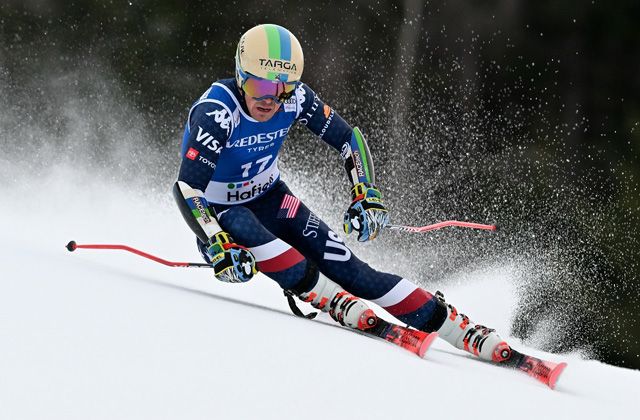
River Radamus laying some edge on his way to a 7th place finish in the final GS race of the regular season. Image: U.S. Ski and Snowboard Team on Facebook
Now that we’ve got you all excited for next year’s Ski Test, let’s get back to our regular programming here. This week, we’ve got results from the final regular season FIS World Cup races, meaning we know exactly where athletes stand in the overall races heading into the World Cup finals in Sun Valley this week. We’ll talk cup standings in just a minute, but first, let’s go over this week’s results.
This past week, the women’s circuit found themselves in La Thuile, Italy for what was supposed to be two Super G races and a Downhill. Unfortunately, the Downhill race was cancelled, and since we were able to cover the first of the La Thuile Super G races last week, that leaves just the final race of the Women’s regular season to cover. In that race, a Super G that occurred last Friday, Lindsey Vonn logged the best U.S. result, with a 13th place finish. Behind her were Lauren Macuga in 19th, and Jacqueline Wiles in 30th. With the final race of the season wrapped up, the women are currently in Sun Valley. We’ll circle back to those in just a moment.
On the men’s side of things, there were two races held in Hafjell, Norway last week: a Giant Slalom on Saturday, and a Slalom on Sunday. In the GS race, River Radamus was the only U.S. athlete earning points, although he did so by finishing in a very respectable 7th place. A day later, in the Slalom, Ben Ritchie led the way for Team America with a 14th place finish, while Jett Seymour took 27th. Now, like their female counterparts, the men also find themselves in Sun Valley for finals week.
Speaking of which, let’s take a quick look at what lies ahead for the U.S.’s 14 qualified athletes.
On the women’s side of things, a pretty impressive nine athletes qualified for finals, having finished in the top 25 of one or more categories. Amongst those nine athletes are several impressive storylines, such as Lauren Macuga’s career year leading to qualifying for both the Downhill and Super G, Lindsey Vonn who also qualified for both Downhill and Super G in her first year back on the World Cup circuit, and Shiffrin’s ability to qualify for the Slalom finals despite missing a majority of the season.
Unfortunately though, the number of qualified athletes is likely to remain the storyline through this year’s finals as chances are slim that any U.S. Women will find themselves on an overall podium this season. While there is of course a chance they can podium in any individual race, the only athlete who’s mathematically eligible for an overall podium is Mikaela Shiffrin, who could potentially move from 6th to 2nd if all of the results fall perfectly in her favor. While it’s unlikely, it remains possible. Outside of that, Macuga could finish as high as 4th in both the Downhill and Super G, while Paula Moltzan has the same potential in the Giant Slalom. So, while overall podiums might be unlikely for the women’s team this year, multiple 4th place finishes are, and the fact remains that an impressive nine athletes qualified for finals. No matter what happens this week in Sun Valley, this season will go down as a resounding success for the women’s team.
On the men’s side of things, five athletes qualified for finals, headed by Ryan Cochran-Siegle’s qualifications in both Downhill and Super G, as well as Ben Ritchie’s debut appearance in the Slalom finals. Unfortunately though, there aren’t any U.S. men in contention for an overall podium spot, as the best possible finishes would be either Ryan Cochran-Siegle moving all the way up to 5th in the Downhill, or River Radamus moving to 5th in the Giant Slalom. While both results are unlikely, they remain mathematically possible. Regardless, we wish the men the best of luck, and congratulate them on an honorable season packed with many notable results. To preview next week’s races, click here. To see a list of the current women’s overall standings you can click here, or here for the men.
#3: Whistler Blackcomb Announces Indefinite End to Summer Camps on the Horstman Glacier:
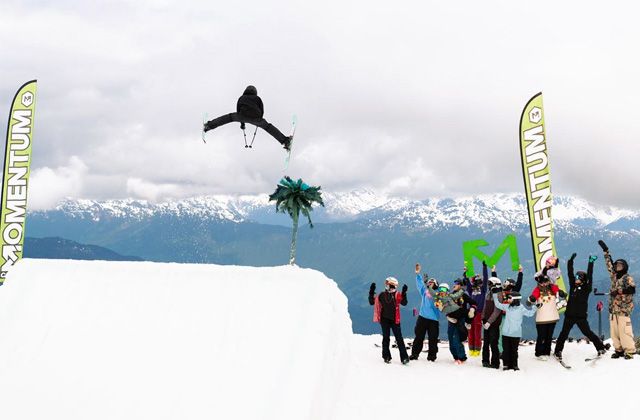
Despite the setbacks to summer programming for a second straight year, the party is set to continue at Momentum, with two camps scheduled for the beginning of May. Image: Momentum Camps on Facebook
Unfortunately, our next highlight contains some disappointing news as we learned this week that Whistler Blackcomb has informed Momentum Ski camps that they will be unable to host their summer camps on the Horstman Glacier for the indefinite future. Because of this announcement, Momentum has cancelled their summer programming.
As you’ll recall, similar news struck at about this time last year, when Momentum announced that the glacier would be closed for summer camps during the 2024 season. When that news hit, it sounded like it was hopefully an isolated instance, and that adjustments to the T-Bar and snowmaking efforts would allow the glacier to resume summer camps for Summer 2025. Unfortunately though, this week’s update has dashed those hopes.
Still, despite the significant setback, Momentum is continuing its operations. This season, instead of offering summer camps, they’re offering two camps in May, with an all ages camp running from 5/4 - 5/10, and an adult camp running from 5/10 - 5/18. Looking ahead, Momentum also reasserted the notion that glacier summer camps could potentially return if snowmaking is amplified and the T-Bar is adjusted for future seasons. They remain committed to those efforts with an eye towards the future.
While we’re learning of this news by way of Momentum, it’s likely that this announcement impacts other camps on the glacier as well. If we hear any additional updates to this story, we’ll be sure to let you know. Otherwise, check out the blog post from Momentum to learn more.
#4: 7,000 Cubic Feet of Dirt, 480 Rolls of Netting, and 19” of Powder. The Behind the Scenes Story of Everything That’s Gone into Preparing the Sun Valley World Cup Finals Course:
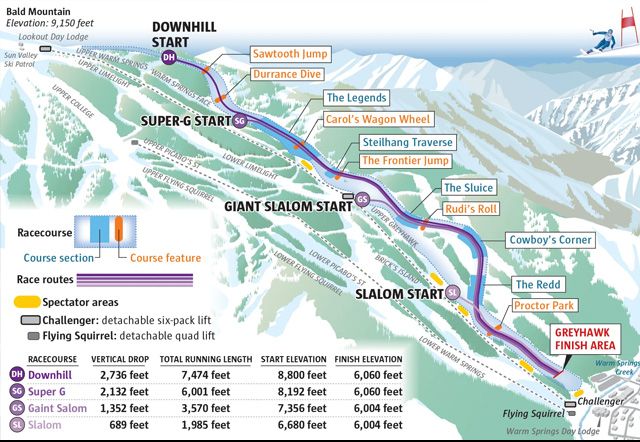
An overview of the course breakdown at the upcoming World Cup finals, hosted by Sun Valley. Click here for a full size version.
Finally, we round things out this week with a cool story from the Seattle Times that takes us behind the scenes of the effort required to host the upcoming World Cup finals at Sun Valley. As you can probably guess, hosting 8 races in just a week (across 4 courses), requires an incredible amount of time and energy to accomplish at even a typical World Cup venue. At Sun Valley though, where a World Cup race hadn’t been held since 1977, the amount of effort required to pull off this week’s World Cup Finals surpassed the normal amount of effort, graduating into “herculean task” territory. Allow us to explain.
First things first, it’s worth keeping in mind that the World Cup Finals are typically held at a European resort where World Cup races have been held recently. This season though, Sun Valley, Idaho was awarded hosting duties as a part of the FIS’s push to integrate more North American venues into the calendar. While this is an amazing opportunity for both the resort and North America on the whole, it also meant an incredible amount of work was involved to prepare the mountain’s Challenger Course for World Cup level racing. Work that, believe it or not, began way back on July 1st, when alterations to the trail itself began.
At the World Cup level, high speeds require incredibly well designed courses to ensure the safety of the athletes. In the case of Sun Valley, accommodating that level of speed meant the removal of trees at the beginning of the course, as well as moving approximately 7,000 cubic meters of dirt in order to flatten out the landings of jumps as well as the finish line area. Of course terrain alterations were just the start of the preparations. Additionally, the Sun Valley team was required to implement 72 towers along the course to support A-Net to prevent racers from flying off the course, as well as an additional 480 rolls of B-Net to act as a secondary level of safety. If you’ve ever been (un)lucky enough to roll or unroll just one roll of netting, you’re probably feeling a slight sense of panic from even just imagining the concept of setting up 480 rolls of it.
Beyond safety measures, the team also had to update the course technologically, installing 97 timing wires along the course, bringing the total from 3 to 100. Additionally, they dug 11 trenches to bury fiber optic cable in, allowing the venue to support live tv broadcasting. All of that, before the snow even fell.
On March 6, 2025, on-snow preparations finally began with the closure of the Challenger Course, as well as the deployment of safety fencing. From there, crews began watering down the course using the taps that had previously been used to blow snow on the course. Things were going smoothly for the team, until March 13th, when nature’s own snow guns turned out. Since that date, locals have enjoyed 19” of fresh snow, with one night bringing a full foot of powder. For the average skier, it provided dreamlike conditions. For the crew tasked with preparing the course though, it provided a nightmare.
As a result of the snow, the trail preparation crew that normally consisted of 30 people swelled to over 90. That crew was given a myriad of daunting tasks, including rolling up the snowfencing they’d already placed, hand shoveling the course, and sidestepping it in, in order to pack down the new snow and bring the moisture rich snow below it back to the surface. Joining their efforts of course were groomers who meticulously re-laid fresh corduroy so that the hoses could once again add more moisture to the course and create a snowpack that verged on being considered ice.
The result of all this effort appears to be paying off though, as we find ourselves just one day away from the start of the 2025 World Cup Finals. Over the course of the next week, we’ll be treated to 8 races that will determine the outcome of the season for athletes in several categories. More importantly though, the return of the World Cup Finals to North America could pay dividends for both the U.S. and Canadian teams for years to come. To learn more about preparations for this year’s events, check out the report from the Seattle Times.