

Top Five Fridays: March 29, 2024
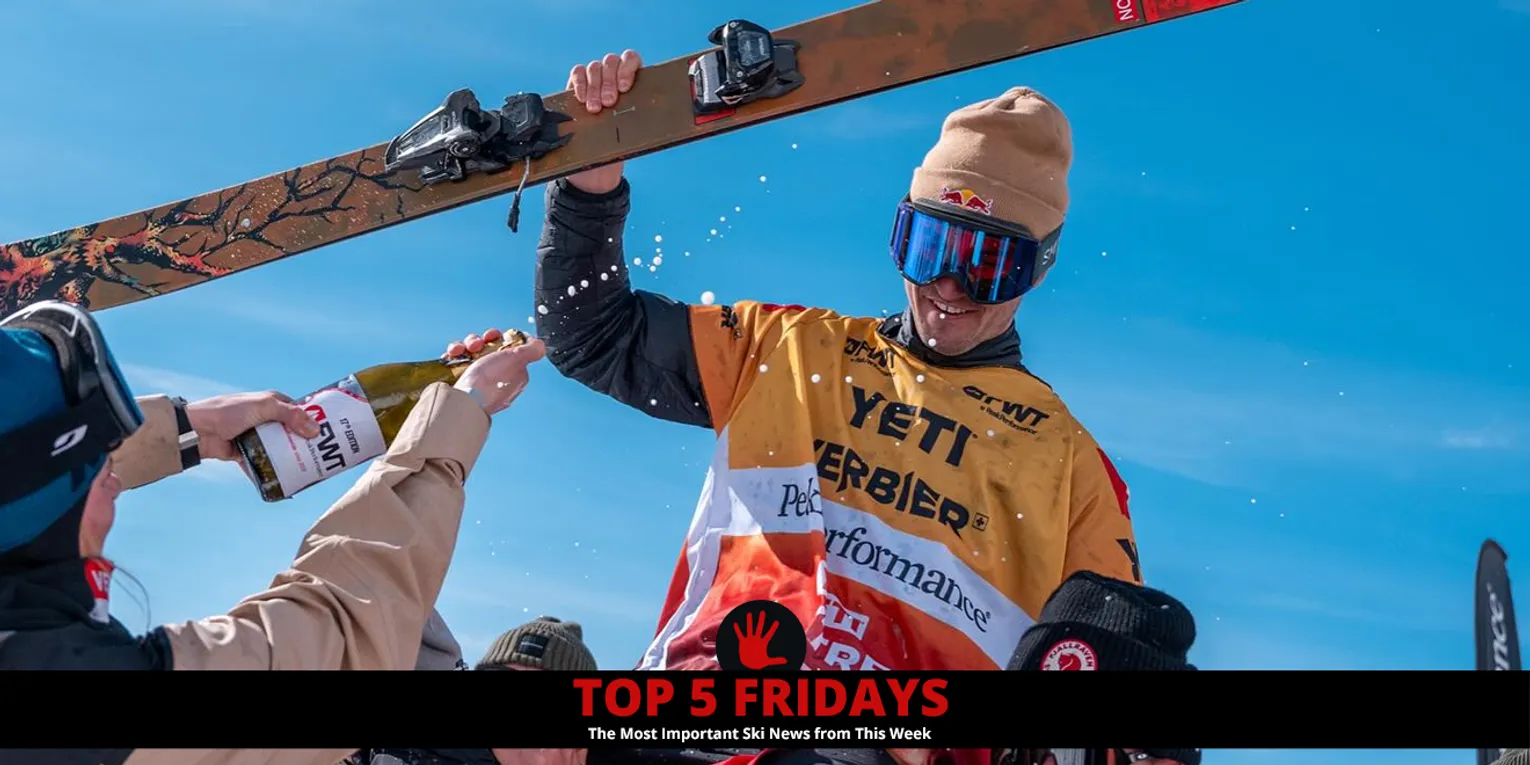
Lead Image: Here he is, your 2024 Freeride World Tour Champion: Max Hitzig. Image: Freeride World Tour on Facebook
#1: FIS World Cup - The 2024 Season Has Officially Come to an End:
Hello, and welcome to Top Five Fridays, the March 29, 2024 edition! This week we’ve got a couple of FIS alpine racing highlights to cover before shifting gears to recap the latest from the Freeride World Tour before ultimately ending with an update from the outdoor retail industry. With a full slate of highlights, let’s jump right in!
When we left off last week, there were just two more races apiece for the men’s and women’s fields: a super g and downhill race. On the women’s side, with Shiffrin planning to opt out of the final stretch, it left just Lauren Macuga and Jacqueline Wiles to represent Team America in the super g and downhill races, respectively. For her part, Macuga took home 14th, while Wiles secured 13th in the downhill to close out the season. On the men’s side, the final downhill race of the season was canceled, meaning only the final super g was held. In that race, Jared Goldberg secured 11th, while Ryan Cochran-Siegle took home 20th.
Ultimately, it was an unceremonious end for the U.S. Team after what was a year packed with promising performances. For Shiffrin, a midseason injury derailed what could’ve been yet another historic season as she was well on her way to winning her sixth overall crystal globe. Instead, she had to “settle” for winning her eighth slalom crystal globe, tying the record for most discipline specific globes, alongside Lindsey Vonn and Ingemar Stenmark. As for the other members of the U.S. Team, while the final stretch of events wasn’t highlighted by any monstrous successes, the season itself was largely successful for a number of both male and female athletes. From Paula Moltzan, AJ Hurt, and Jacqueline Wiles on the women’s side, to Ryan Cochran-Siegle, Tommy Ford, River Radamus, and Jared Goldberg on the men’s side - the U.S. Ski Team put in consistent results all season long. While this year wasn’t the year that either team dominated the field as a whole, it was a big confidence building season as they turn their attention to offseason training in hopes of making next year the year. In the coming months we’ll be sure to bring you plenty of offseason coverage as we attempt to keep our expectations in check for the year ahead. Until then, we want to congratulate all of the U.S. Ski Team competitors for a job well done, and for achieving several personal accomplishments.
#2: Changes Are a Brewing for FIS World Cup Schedule as Historic Matterhorn Race is Off the Schedule and the Norwegian Ski Federation Calls for Change:
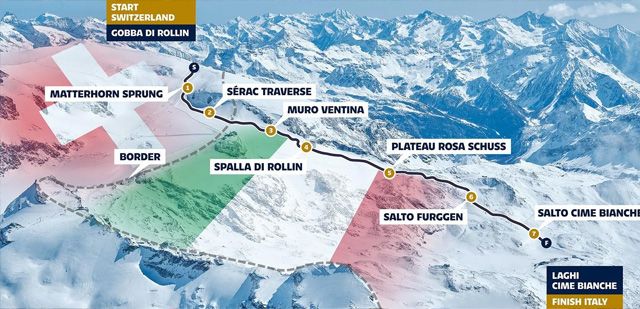
The planned course for the race that never was. Image: FIS Official Website
In other FIS alpine ski racing news, we have a duo of headlines that lead us to believe it might be a spicy offseason for the organization. First, let’s start with the more attention grabbing headline: the highly anticipated Zermatt-Cervinia race has been removed from the initial draft of next year’s schedule. As you might recall, this historic race was initially planned to debut in the fall of 2022 as the first ever cross border World Cup alpine race, with a starting gate in Switzerland and finish line in Italy. Unfortunately, that debut was delayed as weather conditions made it impossible to run the event in its first year. This past year, that race was moved one week later in the season, with hopes that a slightly later date would provide the snow conditions required to hold the race. As it turned out though, that was not the case, and rather than a successful race, the FIS faced worldwide backlash as images were leaked of groomers and construction equipment seemingly tearing apart a glacier in order to get the course ready in time. Ultimately, despite their efforts, the race was unable to be held this season either. Now, after two unsuccessful attempts, the race has been removed from the proposed schedule for the upcoming season, following discussions with, “athletes, teams, and stakeholders involved in the event.” It’s an unfortunate outcome for the event, which held so much promise and excitement upon its announcement. Now, rather than being the first ever cross border event, we’re all left wondering about what could’ve been. While there’s always a chance that the concept is revisited in future years, it appears to be a thing of the past for the time being. To learn more, check out the coverage from SkiRacing.com.
In related news this week, we also caught wind that the Norwegian Ski Federation has wasted no time in submitting a report to the FIS, full of suggestions for creating a more climate friendly world cup schedule. Their hope is that by submitting this report as soon as the season ended, there might be time for it to be considered ahead of solidifying next season’s schedule. While the report itself is comprised of 11 specific measures, the two largest concepts at play are the reduction of greenhouse gasses and an adjustment to the schedule to account for the changing climate. One of the ways the report hopes to address these concerns is to create “geographic clusters” of events, allowing athletes to minimize travel between events. In combination with this concept, the report pushes for the World Cup schedule to start with a North American cluster of events in November. In other words, the report is asking the FIS to consider hosting all North American races - likely meaning the Killington, Tremblant, Aspen, Tahoe, and Beaver Creek events, all in the first part of the season. Once the North American cluster is complete, the tour would move on to its next geographic location. In addition to condensing the amount of travel required, and therefore emissions produced, the goal would also be to host races in areas that are ready for it. As you’ll recall, this season started off with a slew of cancellations as European resorts simply couldn’t produce the snow required to host the scheduled events. The hope with this new format would be to align the schedule with regions that can guarantee snow during each portion of the year. We’ll have to wait and see whether or not this appeal from the Norwegian Ski Federation is successful, but we’re at least encouraged to see that the dialogue is being pushed and inevitable adjustments to the calendar may not be so far away. For now, you can learn more about this story by checking in with SkiRacing.com.
#3: The 2024 Freeride World Tour is a Wrap! Here’s What Went Down at the Xtreme Verbier:
Moving into some more exciting competitive news this week, we have the Freeride World Tour, Xtreme Verbier coverage that we promised you last week! Now that we’ve had a chance to watch a full replay of the action, let’s break down what happened, starting with the venue itself. If you watched this stop, then you likely realized pretty quickly why this stop is called “Xtreme”. While all of the venues on the Freeride World Tour feature steep backcountry faces, none come close to featuring the same degree of exposure or slope angle as the infamous Bec des Rosses (that’s “Beck-Day-Ross” for us English folk). As such, the skiing on display reflected the severity of the terrain. In previous stops, we saw winning lines that almost resembled the jump portion of a slopestyle run, with multiple spins and flips packed into one run. In Verbier, that wasn’t the case. Instead, what we saw were athletes taking high consequence lines, featuring technical skiing over exposed terrain. That’s not to say there weren’t any tricks - there absolutely were - but in terms of the freestyle / freeride spectrum, the Xtreme Verbier stop skewed heavily towards freeride. Now, with the stage set, let’s jump into the women’s side of the event.
By the time the women took to the starting gate in Verbier, their field had dwindled to just 5 competitors as a result of the cut line, followed by an unexpected injury to Lily Bradley. As such, the final event paired veteran athletes like Zuzanna Witych, Hedvig Wessel, and Sybille Blanjean against the younger, more freeski oriented athletes Astrid Cheylus and Manon Loschi. Despite there only being 5 athletes in the category (which, can we work on that Freeride World Tour?), a show was still put on. In addition to strong skiing from every athlete, pairing numerous drops each with high speed turns, we also got to bear witness to the first ever double backflip attempt in the women’s division, as Manon Loschi put it all on the line towards the bottom of her run after skiing a podium worthy top section. While it didn’t work out, it was still an amazing feat that will surely push the sport forward even further next year.
Ultimately, the story of the day belonged to Hedvig Wessel though, whose strategic approaches to each venue throughout the season culminated in not only a first place finish at Xtreme Verbier, but also with a first place finish overall as she won her first ever Freeride World Tour. If you’ve been following along with our FWT coverage this season, then you know we’ve been praising Wessel’s strategy all season long. Rather than taking the “all or nothing” approach to each event, Wessel simply put down run after run that she knew would earn her enough points to make finals and keep her in contention for winning the entire season. Aided in part by her younger competitors’ laudable ambitions, Wessel was able to consistently stack points throughout the season while her challengers crashed, resulting in either low point or no point results. Ultimately, that made this season was something of a master class from Wessel, who showed that this sport isn’t always about who can go the biggest on any given day. Rather, it’s really about who has the best strategy throughout the season, and can put down the most consistent results at the highest level. For her veteran approach, Wessel was named the 2024 Freeride World Tour champion in what was her fifth, and likely final season on the tour. Huge congratulations go out to Wessel, and we wish her the best of luck in her future endeavors.
After five impressive performances, it was time for the mens’ division to take the course, in what promised to be the show of a lifetime. As we mentioned before, the Bec des Rosses demands its riders to take a more skillful, technical approach to it rather than hitting with an all out blitz of tricks. Still, with names like Marcus Goguen, Max Hitzig, Maxime Chabloz, and Finn Bilous on the roster, it was inevitable that we’d see trickery of some sort. As always seems to be the case with our FWT recaps, we’re not going to have time to give each rider’s run our full attention, so instead we’ll just call out a couple of highlights. First on that list is Finn Bilous, who is one of the more freestyle inclined riders on the tour, and who put down the first ever 360 over the Hollywood cliff - a massive air that requires immense skill to even get into, let alone to successfully land. The other mandatory shoutout we have to give is to Marcus Goguen. As you might remember, Goguen blew minds at the third stop of this year’s tour, as his action packed run in Georgia featured a dizzying array of tricks, including a 720 that blurred the lines between cork and d-spin. With that in mind, you might suspect that he’d look to bring that successful formula to Verbier, right? Well, not exactly. Other than following up Bilous’s first ever 360 over the Hollywood cliff with his own 360 over the Hollywood cliff, Goguen’s run didn’t feature any additional trickery. Instead, he skied a series of alternate routes throughout his run, highlighted by an absolutely insane, never been done, double at the bottom. It was a true lily pad maneuver, where Goguen’s skis only briefly touched the landing of the first hit before he was required to pop off the second hit. Amazingly, he pulled off the feat perfectly. As a result, Goguen was awarded his second first place finish of this year’s tour, and his fourth consecutive podium. While you might assume this stretch of results would be enough to award him the gold medal on the season, such was not the case. Instead, it was Max Hitzig, who finished second at Verbier and edged Goguen out to become the 2024 FWT champion. After an amazing season-long battle between these two athletes and several others, we’re more excited than ever to watch what next year brings us.
Ultimately, the fifth stop of this year’s tour, the Xtremer Verbier, proved yet again that this venue is the ultimate freeride venue. After allowing athletes to showcase their own unique styles, tricks, and approaches all season long, the Bec des Rosses seemingly says, “ok, now let’s see you do it on a real mountain.” The result is an event in which riders scale back their book of tricks, while dialing up their risk and fear factors as they look to conquer what is by far the steepest face of the tour. By capping the season off on a venue like this, the Tour is able to challenge riders to put together a season that features both immense trickery as well as technical skill on big mountain faces. While there are a lot of questions about the future of the sport in regards to the involvement of the FIS and its inclusion in the Olympics, we can safely say that this year was by far the best year yet. Our hope is that as it continues to grow, that trend will continue, and next year will prove to be even better. To check out coverage of the Xtreme Verbier stop, click here. To learn more about the Freeride World Tour itself, click here. Finally, if you think this sport is something you want to get involved with, head over to the IFSA website, where you can learn more about how to compete at the junior or adult levels, as well as how to navigate your way from the qualifiter’s league, to the tour itself.
#4: Confluence of Factors Led to Downturn in Outdoor Gear Sales in 2023:

Boxes on boxes of skis, all packaged up and ready to ship out of the SkiEssentials warehouse! Image: SkiEssentials on Facebook
Finally, we end this week on a bit of a down note, as we cover a story that hits pretty close to home for us in multiple ways. That story is an article from the Colorado Sun that shares the news that outdoor retail sales are down overall in 2023. Now, clearly there’s an elephant in the room with us at the moment that we want to acknowledge before we dive into the meat of this story. As an outdoor retailer ourselves, yes, we will admit that we’ve felt the same pressure as our peers this winter. That said, there’s absolutely no need for concern - SkiEssentials is still very healthy and we’re not going anywhere. Without getting too into the weeds, we’ll simply assure you that after being in business for 40 years, we know the ebbs and flows of the outdoor industry quite well and have intentionally built our business in a way to be able to survive even if growth slows temporarily. Hopefully that puts your mind at ease as our goal isn’t to make this story about us, but rather to share a story about our industry that brought some unexpected concepts to light. Allow us to explain.
In the story shared by the Colorado Sun, there’s one primary cause that’s cited for the downturn in sales. Any guesses? Yep: the pandemic. More specifically, the pandemic resulted in two trends whose ripple effects are still being felt in the outdoor industry. The first of those trends is one that we’ve talked about endlessly already, but will continue to discuss for as long as it’s relevant: the real estate boom in mountain towns. In this article by the Colorado Sun, we learn first hand about a very specific effect that that’s had on small outdoor retailers. As we know, the influx of second home buyers has made it more difficult than ever for locals to find housing in mountain towns. In the article, we learn very specifically about the impact this had on an outdoor shop in Breckenridge called, “Mountain Outfitters,” which shut down last fall after being in business for decades. According to shop owner Doug Bittinger, the problem started with the housing crisis, and was three fold. First, he considered his shop to be a “locals shop,” where his core customers were the locals, those who live and breathe the mountain lifestyle. As such, when these locals were forced out of town, his core customer base evaporated, leading to a downturn in sales. Second, with locals moving away, Bittinger found it harder to find employees. The employees that he could find, he was forced to pay higher wages to, so that they could afford to live in the area - saying that he was paying them 75% more than he would have in 2019. Third, with the rising property values, the property taxes on the building Bittinger owned and operated out of also skyrocketed. In other words, his customer base was dwindling, his expenses were up, and his staffing was down. Regardless of what business you’re in, this is a recipe for disaster.
As if all of this wasn’t enough, there is a second factor linked to the pandemic that also caused this year’s industry wide downturn in sales: a mix of buying fatigue and product life cycles. Think back to the peak of the pandemic - remember how everyone was eager to recreate in the great outdoors as that was one of the only things we could do safely? Well that eagerness resulted in a surge of spending, with 2020 being one of the best years on record for countless outdoor retailers - Bittinger’s business included. Now that we’re 3 winters past that surge though, spending on outdoor gear has cooled off a bit. The return to normal is largely due to the fact that most outdoor enthusiasts purchased new equipment in the last couple of years. With fresh skis, boots, bikes, kayaks, etc., there simply isn’t a need to buy more just two years later. As a result, that spending boom has been followed by a bit of a lull. In other words, take into consideration all of the factors listed in the previous paragraph, and then compound it with a decrease in sales. With all of that in mind, it’s not hard to imagine how outdoor retailers could be struggling to survive a season like this.
So, where does this all leave us? Well, we can only really speak for ourselves here, but that said, SkiEssentials is just fine. Despite the industry wide downturn, our diversified customer base and strong relationships with manufacturers have allowed us to make it through a challenging year in good health, but it’s also left us with a ton of excellent gear in our warehouse. What that ultimately means for you, the consumer, is that you can expect a ton of great deals coming your way in the months ahead. While it’s too soon to make any specific promises there, we encourage you to keep an eye on our site over the summer and into the fall as you won’t want to miss any upcoming deals. Until then, check out the full report from the Colorado Sun.