

Top Five Fridays: May 15, 2026
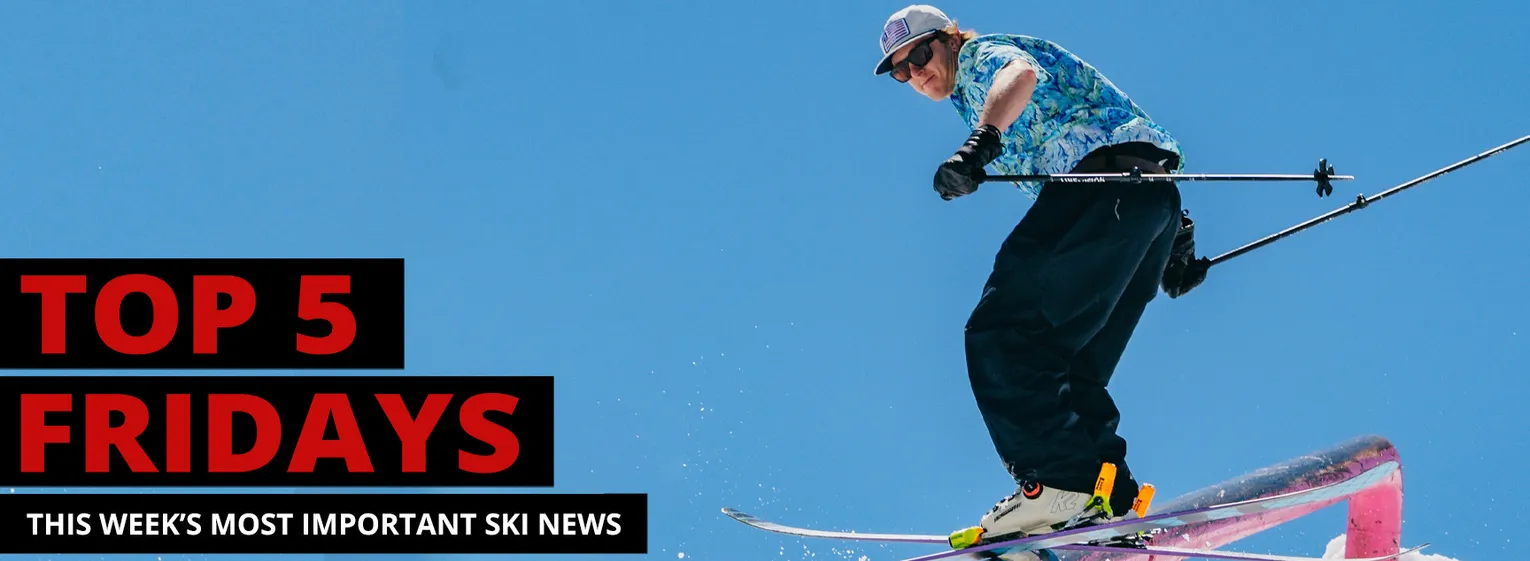
Pink rails and blue skies, nothing beats summer skiing at Mammoth Mountain. Learn more about their closing plans, as well as those of 10 other North American ski areas in highlight #4! Image: Mammoth Mountain on Facebook.
Hello, and welcome to Top Five Fridays, the May 15, 2026 edition! We’ve got another surprisingly interesting one coming to you this week, with two stories regarding significant changes happening at both the U.S. Ski Team and Palisades Tahoe. After those highlights, we’ll bring you up to speed on the latest from yet another legal situation facing Vail, before finally rounding things out with a ski season countdown of sorts as we recap the last mountains standing. Before we get into all of that though, we have one potentially very exciting announcement for someone with a certain skillset.
#.5: SkiEssentials is Seeking a Shopify Hydrogen Developer:
As you could probably guess, here at SkiEssentials we’re constantly working behind the scenes in an effort to make the website better each and every year. From improving the layouts of product pages to fine tuning the user experience across the entire site, we’re constantly striving to make the website better every day. This summer we have a ton of great ideas that we’re looking to implement ahead of next winter, but we have a small problem: our ideas team is outpacing our development team. That’s where you (potentially) come in.
We’re currently seeking an experienced web developer with knowledge of Shopify’s Hydrogen 2 headless ecommerce system to help us bring our dreams to reality. In short, your job would be to contract with the SkiEssentials team to help implement designs and ideas that we produce in house. The role would generally account for about 20 hours a week, although could escalate to 30+ hours at times. To take a look at our full stack, learn more details about the job, and to hopefully join our team, check out the job listing over on LinkedIn!
Official Job Listing: https://www.linkedin.com/jobs/view/4414685558/
#1: The U.S. Ski Team Has Just Hired Hall of Fame Coach Phil McNichol to Lead its Men’s Team:
Alright, for those of you who aren’t web developers and are only here for the ski news, let’s get back on track. Our first highlight this week could prove to be a big one, as the U.S. Men’s Ski Team has just announced that they’ve hired a new coach, effective immediately.
Now, when we first saw the news that the men’s team had hired a new coach, we didn’t think much of it. Then, we realized who they hired: Hall of Fame coach Phil McNichol. If you’re not familiar with that name, we don’t blame you, but you’re about to be educated.
While the U.S. Men’s Ski Team has a long and storied history, with success spanning decades, it’s arguably the stretch from 2002-2008 that was the best in its history. During that time, the team was coached by Phil McNichol and headlined by athletes like Bode Miller, Daron Rahlves, and Ted Ligety, with a number of other athletes filling out a strong supporting cast. During that seven year period, the men’s team was reminiscent of what the current women’s team is like today. A large statement, we know, but consider this: during that time, 7 different athletes secured a total of 98 FIS World Cup podiums, along with a combined 9 Olympic and World Championship podiums as well. A bit more subtle but perhaps even more impressive, is the fact that the men’s team finished second in the Nation’s Cup race twice, a testament to the overall strength of the team under McNichol. All told, no matter how you look at it, the most recent successful period of the men’s team was under McNichol’s guidance. Now, the U.S. Ski Team has brought him back in hopes that he can instill some magic in the team once again.
While the hire is certainly incredibly exciting, it’s impossible to ignore the 18 year gap between his previous stint and the start of his upcoming one. That time away from the team began with an 11 year coaching hiatus before he joined Alpine Canada (the U.S. Ski Team equivalent) as the director of both the men’s and women’s teams, a role which he held from 2019-2023. Also during that time, McNichol was inducted into the U.S. Ski and Snowboard Hall of Fame in 2022, largely due to his achievements with the 2002-2008 U.S. Team. In his writeup, it’s noted that one of his strengths as a coach was in networking and building business relationships. That meant not only building an excellent staff of coaches to support the entire team, but also connecting with businesses and ski resorts to ensure that his athletes were well supported. At this point, as a 63 year old, it feels safe to say that McNichol’s value won’t come from keeping up with the Ryan Cochran-Siegles of the world, but rather from the wisdom he’s gained over the years and knowing how best to support elite level athletes. Of course we’ll have to see how this all plays out, but with plenty of seemingly unfulfilled potential on the team and a coach with a legendary resume, our hopes are high for next season. To learn more, check out the writeups from SkiRacing.com and the U.S. Ski and Snowboard Team.
#2: After 15 Years and Countless Legal Processes, the Palisades Tahoe Base Expansion Has Finally Been Given the Stamp of Approval:
In other “big change” news, we have what seems to be a sneakily massive announcement coming to us out of Palisades Tahoe. Now, to get a full grasp on this story, you’ll have to rewind your memory all the way back to 2011, when massive developments for the Olympic Valley region were first proposed.
Back then, a group called KSL (the owners of which would go on to co-form Alterra) had just purchased Palisades Tahoe (which was then known as Squaw Valley). A year into their ownership, the company submitted plans to the Placer County Board of Supervisors for a massive development at the base in the area known as Olympic Valley. Immediately, there was backlash from local groups who demanded that the untouched wilderness remain exactly that.
In the 15 years that have followed, there have been countless lawsuits and appeals pushing back on these development plans. There have also been approvals - two prior in fact. One in 2016, and then another 2024. Despite these approvals from the county board however, the final greenlighting of the project has always been just out of reach as legal action from conservation groups successfully put the project on hold. By all accounts though, all of that has finally changed.
This week, the Placer County Board of Supervisors voted for a third time to approve development plans for the Olympic Valley. While you might be quick to assume that this approval, like the others, will be met with countersuits, this round seems to have a feeling of acceptance surrounding it. Here’s why: after the 2024 approval, the same conservation groups that had been delaying the project once again filed a lawsuit to impede its progress. This time, Alterra finally realized that they weren’t going to be able to just ram this one through the legal system, and as a result they settled the suit by dramatically reducing the scale of the project. That plan became the plan that was approved by the county this week. In other words, because the plan was already accepted as a settlement from the conservation groups, it’s extremely unlikely that they’ll be able to successfully challenge its approval. As a result, it looks like big changes are finally coming to Olympic Valley.
So, now that the smoke has cleared, what can we expect from this development? Well, the first thing to note is that it’s still pretty large. In the approved plan, there will be the creation of 896 bedrooms (a 40% decrease from the original plan), a 72,000 square foot indoor recreation center, and plenty of retail space. In other words, while it’s much smaller than the original plan, it’s still set to be a full blown base village. At the moment, a full timeline for the project remains unclear, but based on what we know, it appears as though this 15 year battle has finally come to an end and a new base village will be built. To learn more, check out the recap from SFGate.com.
#3: Park City’s Ski Patrol Union Has Just Filed for Arbitration With Vail Resorts:
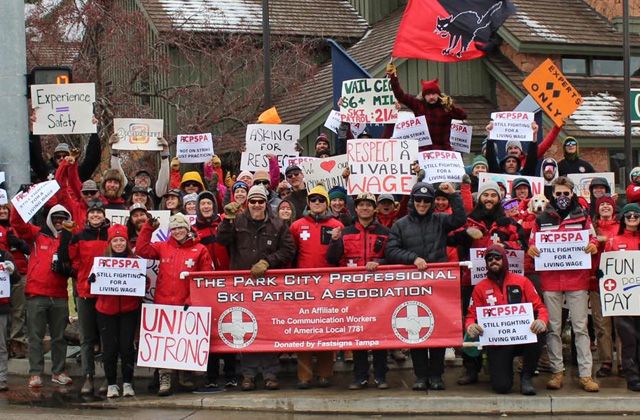
Moving right along, our third story this week is one that continues on with two themes that just won’t seem to quit: legal troubles for Vail and ski patrol unions. This week, the news takes us back to Park City, Utah, where things have been somewhat quiet for the patrollers ever since they signed their most recent labor agreement back in January 2025, ending a historic 13 day strike. Unfortunately, that silence has ended.
Earlier this week, we learned that the Park City Professional Ski Patrol Association has filed for arbitration with Vail Resorts after several unsuccessful meetings with management. At the heart of the issue are claims that Vail has granted benefits to non-unionized ski patrollers that it hasn’t extended to its unionized patrollers. More specifically, Park City patrollers became aware of a “Recovery Time Off” benefit that was being given to patrollers in Colorado, which offers paid time off to patrollers for mental health, vacation, and physical rehabilitation. In the eyes of the Park City patrollers, because this benefit was offered to non-union patrollers, it should be offered to them as well. Potentially supporting their claim is a parity clause in their contract that says that if Vail offers certain benefits to patrollers in Colorado and Utah, then it must offer those benefits to the unionized Park City patrollers as well.
On the Vail side of the story, representatives said by way of a statement that in order to offer this Recovery Time Off (RTO) benefit to the union, they would have to reopen the Collective Bargaining Agreement (CBA) in order to amend it. Vail stated that they offered to reopen the contract and add the benefit, in exchange for a 3 year contract extension. That contract extension, as it turns out, is a non-starter for the patrol union as it would lock them into terms for a longer period, disenabling them from being able to renegotiate as frequently as they would like.
As a result of this standoff, the two sides will be entering arbitration. While it’s not a full blown lawsuit, arbitration is still a legal process in which a third party hears both sides of an argument and then determines a legally binding path forward. As such, there’s bound to be some precedent set as a result of this process. Either Vail will be forced to offer the same benefits to all of its patrol groups in at least Colorado and Utah, or the arbitrator will determine that a CBA is essentially etched in stone and benefits can only be added if the entire contract is reopened for negotiation. While it’s a pretty niche story, it could result in significant decisions and precedents being made in inevitably upcoming ski patrol union contract negotiations. To learn more, check out the writeup from Utah’s Deseret News.
#4: Several Ski Areas Look to Break Seasonal Records With This Weekend’s Openings. Here’s A Full List of Where You Can Still Ski in North America:
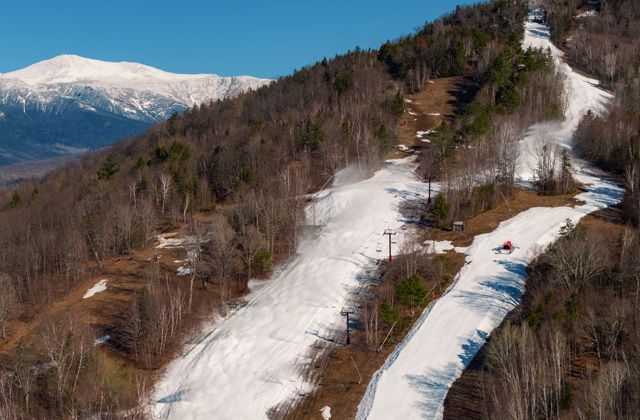
As you can see, it wasn't easy for Black Mountain, NH to stay open this late in the year - but they're doing it. Image: Black Mountain on Facebook
Finally, for our last highlight this week, we want to quickly do a heat check on the status of skiing across North America. At this point, most of us have shifted into a summer mindset, with skis and boots being swapped out for running shoes and bikes. Still, not all of us have called it a season, and you might be surprised to learn that there are 11 ski areas operating this weekend in several regions across the continent.
Here on the East Coast, the resort that’s the most excited to be open still has to be Black Mountain, New Hampshire. We’ve touched on this unique ski area a few times here as it’s owned and operated by Indy Pass CEO Erik Mogensen, who’s done quite a bit to rescue the resort from near closure. While his efforts have been constant, perhaps one of the coolest stories coming from the ski area is that they began making snow again in April in an effort to remain open until Memorial Day. Unfortunately, they’ll come up a week short on that goal as it’s been announced that this weekend is their final one of the season. Still, it’s a massive success as it beats their previous closing day record by a full two weeks, ultimately showing that the ski area is in good hands.
Also in operation on the East Coast this weekend is Jay Peak, who also fired up their snowguns recently in an effort to prolong the season. There, like Black Mountain, the final day of the season will be celebrated this weekend. For those looking to keep skiing in Vermont though, Killington remains open indefinitely, with a closing date to be determined based on when the snow is completely gone.
Moving just a touch west, we have yet another remarkable late season story as Michigan’s Boyne Mountain continues to operate. While they’re down to just one slope that’s surrounded by green, the ski area hopes to stay open through Memorial Day weekend. If they do, it will be a record setting season for them as well.
From there, we head even further West, where the usual late season players are still going strong. In Colorado, Arapahoe Basin remains open this weekend, although it’s expected to be their last one. In California, Palisades Tahoe is expected to operate through Memorial Day weekend, while Mammoth Mountain has no closing date in sight, with a ridiculous 8 lifts and 79 trails still open. Finally, rounding out the U.S., we have Timberline in Oregon, who will likely stay open well into the summer thanks to the underlying glacier.
For our Canadian readers, don’t worry, we’ve got you covered too. Sticking with the West Coast, both Whistler and Banff Sunshine remain open. At Whistler, this is the last weekend of skiing and riding, with the bike park opening today, creating the opportunity for a dual sport day. At Banff however, things are expected to go well into the Summer, with an average base depth of 7 feet allowing the resort to operate 100 trails and 11 of its 12 lifts. There, operations are expected to last until July 5th. Finally, closing out this highlight, we have one more ski area on the East Coast that remains open: Quebec’s Sommet Saint Sauveur, which is set to run one final weekend.
And there you have it! If you still haven’t put away the skis in hopes of getting at least one more day in, those are your North American options. To read a bit more, check out the recap from Ski Area Management.