

Top Five Fridays: May 3, 2024
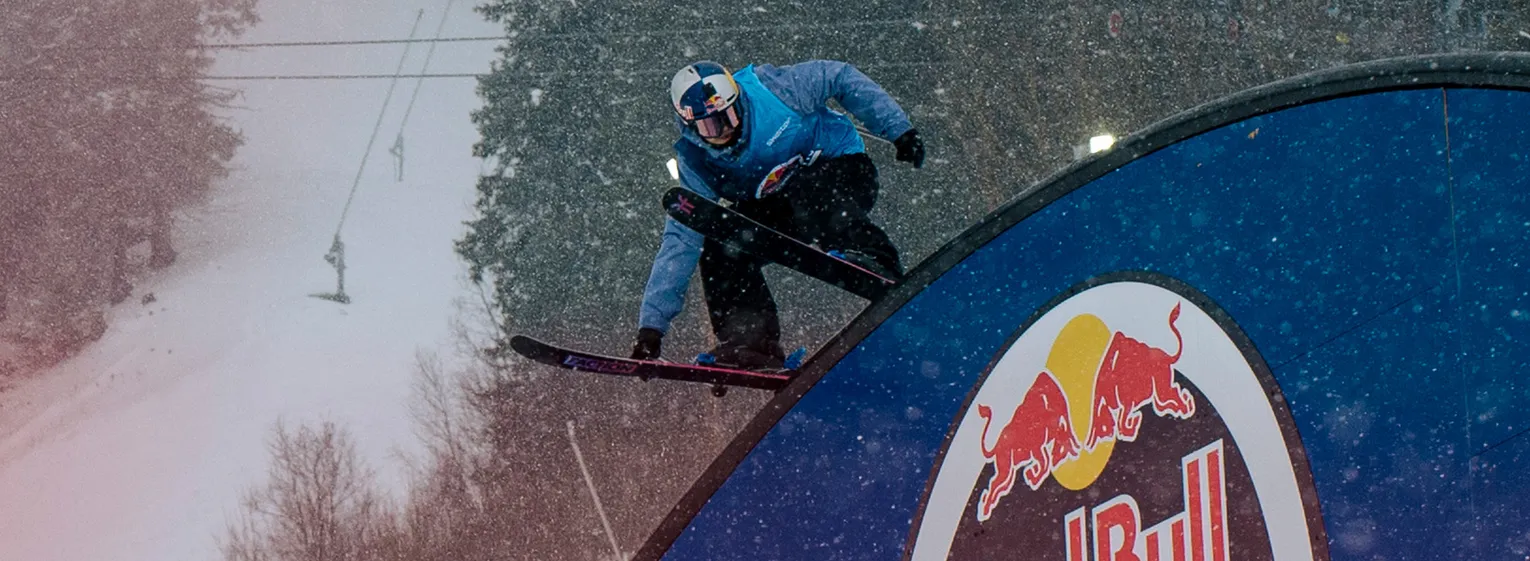
Lead Image: Back for its second year, the massive rainbow rail at Unrailistic stole the show many, many times. Image shot by Adam Klingeteg for Red Bull Media Pool
#1: Last Week’s Red Bull “Unrailistic” Event Did Not Disappoint, At All:
Hello, and welcome to Top Five Fridays, the May 3, 2024 edition! We’ve got a pretty fun round up for you this week, as we’ve got coverage from this year’s unbelievable Unrailistic event, a potentially lucrative business opportunity in California, insights into Tahoe’s annual Ski Golf Tournament, and an article that we think will inspire some hope in anyone going into the offseason with a knee injury. We’ll dive in deep to each of these topics in due time, but first, we absolutely have to start with coverage of last week’s Unrailistic event.
If you read last week’s Top Five article, you’ll recall that we included a somewhat rare #4.5 bonus highlight, sharing the news that Unrailistic finals were currently underway. That’s not something we do very often, so when we do, you know that bonus highlight is worth paying attention to. If you did, and if you tuned in, then you also already know that this year’s event was yet another impressive iteration of this unique contest.
Before we get into winning athletes and their bags of tricks, we want to step back and quickly review the format of this competition because it’s pretty unique. While last Friday was the big day, where riders were tasked with putting down their best run on a series of 6 rail features, the competition actually started last Thursday with the best trick contest. In that portion of the event, riders competed on one of four pre-selected features in an effort to land, you guessed it, the best trick. Putting extra emphasis on this portion of the contest was the fact that the top 5 athletes earned points that carried over to Friday’s event, giving them a leg up in finals. This year, it was Matěj Švancer who won best trick, with a switch 270 on, transfer, blind 270 out of the lengthy, curvy “Tjäder Twist” rail. For his efforts, he was awarded with 10 points to add to Friday’s score.
Speaking of Friday’s event and unique formats, we should probably also touch on how judging worked on the day of the big event. Typically in the world of skiing, if a rider falls on the course, it’s game over. The score is going to be too low to recover from. At Unrailistic though, noting how challenging every single feature is, riders are granted a bit of leeway. In this event, there were 6 features for each rider to hit in any given run. Rather than being judged on all 6 though, riders were judged on their top 4 features. In other words, even if a rider fell or didn’t complete one or two of the features, there was still incentive to give the next hit their all as 2 of the 6 scores wouldn’t count. While that adjustment is almost certainly due to the difficulty of the course, it also seemed to alleviate some of the pressure facing the athletes as they were able to ski more freely on some really challenging features. While every competitor, male and female, put down a number of insane runs, it was ultimately the OG, Andreas Håtveit who won the event for the second straight year. While his run featured a number of technical tricks and plenty of spinning, the highlight hit was arguably his massive 270 nosegrab onto the rainbow rail, in which he continued holding the tip of the ski while sliding the rail. It was insane to watch, and the concept of committing to the tip grab throughout the entirety of the feature is simply mind blowing.
All in all, that’s kind of the best way to describe this event: mind blowing. While we’re used to seeing athletes stringing together tricks in slopestyle events, we’re absolutely not used to seeing them string together tricks on features that would take mere mortals days to complete, let alone flawlessly trick upon. As is the case with many events this time of year (Swatch Nines, Kimbo Sessions, etc), Red Bull’s Unrailistic event is yet another example of how alternative competition season is sneakily becoming one of the most progressive trends in freestyle skiing. To read a full recap of last Friday’s antics, click here. To get the full scoop on the Unrailistic Best Trick contest, click here.
#2: Want to Make Millions of Dollars? Here’s How We’d Do it: By Buying Mt. Waterman Ski Lifts, the Closest Ski Area to Los Angeles:
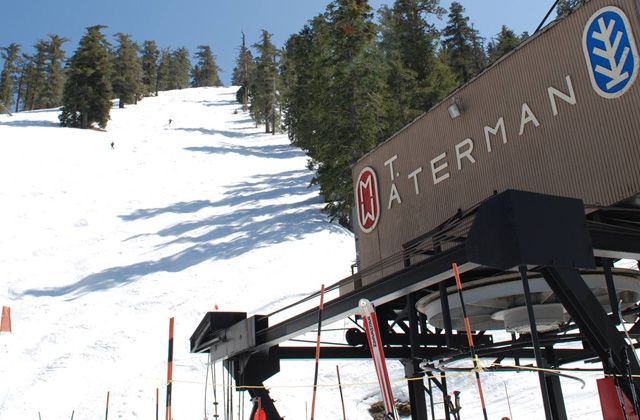
A quick glimpse of what you could own if you purchased Mt. Waterman Ski Lifts. Image:Mt. Waterman on Facebook
For our second highlight this week, we’d like to present the opportunity for one or more members of our readership to get rich. More specifically, we’d like to share news of a ski resort that’s on the market that represents a pretty significant opportunity for whoever should rise to the challenge. That mountain is none other than California's Mt. Waterman Ski Lifts, which is currently on the market for $2.275 million. Now, we know what you’re thinking. “Small ski areas go on sale all the time, how is this one different? And not only that, but aren’t small ski areas struggling to survive these days? This seems like a dumb idea.” Well, here’s the thing: not only is Mt. Waterman the closest ski area to Los Angeles, it’s also been woefully under operated for years. That combination suggests that with even modest effort, Mt. Waterman could be revived. When that happens, it would likely become a sought after property for the likes of Vail, who is constantly on the hunt for feeder hills outside of heavily populated metropolitan areas.
So here’s the business plan, for any of our readers with about $2.3 million lying around. First, you buy the resort. Then, you simply operate it. The purchase comes with three insured chairlifts, 3 groomers, 5 snowmobiles, and all of the necessary permits to operate. It’s essentially turnkey. Plus, if you look at the Facebook comments on the resort’s page, it’s pretty easy to see that their customer base has been pretty displeased with the resort’s lack of operations. In other words, the demand for the mountain is clearly there, as are the snow conditions, it simply needs an owner who is intent on operating the business. Once you’ve got the mountain back up and running with a sound customer base, it’s time for your next move.
If Vail hasn’t contacted you yet, simply upgrade the facilities or expand the skiable terrain. In its current state, Mt. Waterman has a very basic warming hut that houses their main cafeteria and bar, two mobile home style dwellings, and a few other basic structures that serve as storage, ski patrol, and general use out buildings. In other words, it wouldn’t take much to update the amenities. As far as terrain enhancements themselves, the ski area has also just obtained access to an additional 150 acres of land which has yet to be developed for skiing. Additionally, the resort has a professional level 18-hole disc golf course, as well as a few mountain biking trails which could be expanded into a full network.
In other words, Mt. Waterman isn’t just another small ski area hitting the market. It’s one that’s uniquely positioned to tap the massive Los Angeles market in a big way, while also offering immense opportunity for revitalization. With the right amount of effort and funding, a new owner could take this ski area from its current reputation of rarely opening, to a full four seasons resort, offering an outdoor getaway for Los Angeles residents. If you don’t think that’s the kind of ski area Vail would gladly fork over millions of dollars for, well, then you haven’t been reading enough Top Five Fridays. To learn more about this property, check out the listing on LoopNet.com./p>
#3: Golf.com Covers the Not-at-All Serious “Snow Golf Tournament” at Tahoe:
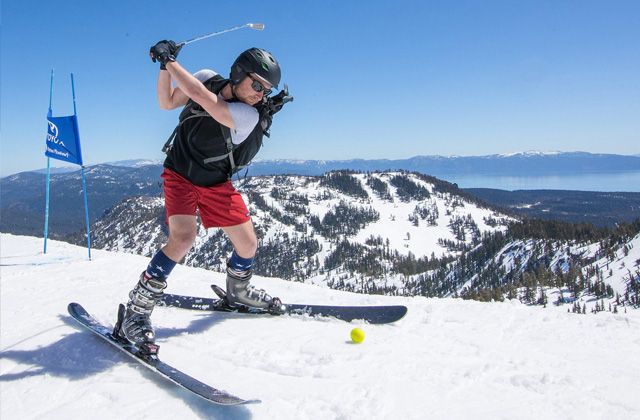
Contrary to what the collective conscious might believe, spring and summer are actually two of the best times to be a skier. Case in point: Palisade's annual Ski Golf Tournament. Image: Palisades Tahoe
Moving right along, our next highlight this week is just pure, unadulterated fun. Coming to us by way of Golf.com, we were treated to a pleasure of a story this week as that generally serious publication has decided to cover the antics of the annual Snow Golf Tournament at Tahoe. We’ve been vaguely aware of this event for years now, but never quite knew the full story of how it came to be or what it’s really all about. Thankfully, this year is the year we have the answers we’ve been looking for as writer Josh Sens has pulled the curtain back in this piece for Golf.com.
First and foremost, let’s give the quick rundown of what the Snow Golf Tournament is and isn’t. What it is, is a day in which skiers can play a round of “golf” at Palisades Tahoe, where the mountain has set up a series of “par 3” holes, as indicated by a traditional golf flag and a painted hula hoop size circle to indicate the hole. It’s also free to enter, played with a tennis ball, and apparently a very popular event. What it isn’t, is very serious. The outcome of this formula of course, is the type of springtime fun skiers are known for: wild costumes, hilarious antics, some really bad attempts at “golfing”, and of course, more than several adult beverages in the mix. What makes all of this buffoonery even more entertaining to us are two things. First, the event has become wildly popular in the 38 years since its initial inception, back in 1986 when a groomer on staff decided to make a “course” just for fun. What was initially in that first year just a round of mountain “golf” between some mountain ops friends has since snowballed into an event in which skiers waited for up to two hours for their tee times. To us, it’s pretty humorous that something so dumb could be so popular. It really speaks to ski culture in a way, as it reminds us that this sport really just isn’t that serious.
Second, on the note of seriousness, the course itself isn’t exactly set up on simple green circle runs. Instead, it takes place in Tahoe’s “Alpine Bowl”, meaning that these skiers and boarders who participate, looking like complete fools the entire time, are actually very competent skiers. They have to be, in order to ski the course. All in all, we just got a kick out of this story, and wanted to give it a share as it’s a nice reminder that at the end of the day, ski culture is still alive and well. To read more, head over to Golf.com.
#4: While Returning from a Knee Injury Seem Daunting, This Story Reminds Us of How Easy it Can Be:
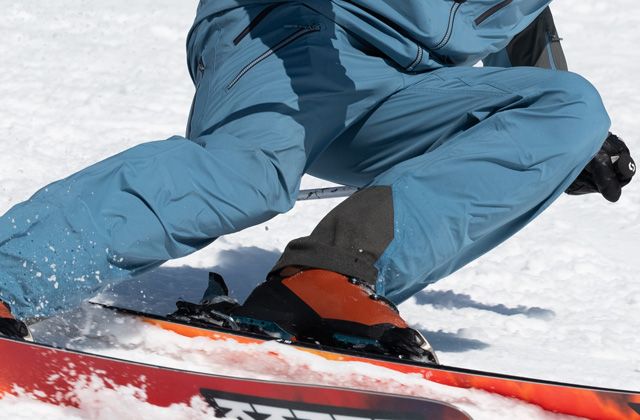
Finally, we’re rounding out the week with a story that focuses on a subject we rarely discuss here as it’s a theme we’d rather simply not acknowledge. That theme, of course, is knee injuries. Seeing as it’s the end of the ski season though, we felt like it was a good time to share an article from Ski Mag that tells the story of an average skier’s return from an ACL injury. If you or someone you know incurred a leg injury this season, well, this highlight’s for you.
As we all know, the dreaded ACL tear is one of the most common, yet frustrating injuries in skiing. Because of the amount of lateral force put on our knees while making glorious carves, the ligaments in the knee find themselves in a bit of a precarious spot. While they’re not entirely to blame, they at least share a bulk of the responsibility for the entire DIN system and concept of releasable bindings. Not only are knee ligaments one of the more common ski injuries, but they also often require surgery, rehab, and a lengthy recovery period before the injured person can return to skis. In other words, they kind of suck. And because tearing a knee ligament sucks so much, it can lead to a certain amount of trepidation when it comes time to finally return to snow.
This week’s Ski Mag story covers just that, as writer Pam Leblanc shares her return story after tearing and repairing her ACL. Now, to be fair, their story isn’t particularly uncommon, but there are two aspects that stand out and we think are worth sharing with any of our readers who might be in the process of recovering from an ACL injury this off season. First, you’ll notice that Leblanc’s confidence didn’t take long to return. In fact, it only took the short time from their initial click-in to the chairlift itself for Leblanc to feel, “instant relief.” While that’s not to say they went straight from that moment back to black diamonds, it’s a nice reminder that a huge part of the recovery is purely mental. If you can get past the mental barriers, you’ll likely find that your skills come rushing back.
Which, as it turns out, ties in perfectly with the second lesson we learn here: there are ski instructors out there who specialize in this kind of thing. In Leblanc’s story, they traveled specifically to Telluride, CO to spend a day with their special team of body-biomechanic ski instructors. In other words, these are ski instructors who not only have the ability to teach skiing, but also know how the body works and are able to teach you how to ski in ways that are more natural for the body itself. While this type of expertise would certainly benefit just about all skiers, it seems like a particularly useful type of guidance for anyone recovering from an injury who’s looking for some reassurance that they’re returning to the sport in a way that’s safe and avoidant of any possible reinjuries. While the article itself only mentions the team in Telluride, we have to imagine this type of instruction exists elsewhere. Regardless of whether or not it does, the bottom line here is simply this: if you or someone you know experienced an injury with a lengthy rehabilitation period this season, remember these two things. First, one of the biggest challenges to returning to snow is the mental game. Once you have the proper clearances from your medical team, that last step is up to you to make. If you can get over that mental barrier though, you’ll be just fine. Second, for those feeling particularly concerned about their return, it might be worth finding a ski instructor who specializes in biomechanics. To learn more about the team from Telluride or to read Leblanc’s story in full, head over to SkiMag.com.