

Top Five Fridays: November 1, 2024
This patroller’s resort is ranked #1 in the west. Which one is it? Read highlight #4 to find out! Image: #1 Resort in the West's Facebook Page
#1: FIS World Cup Alpine Racing Recap: The U.S. Men and Women Start Off Strong in Solden:
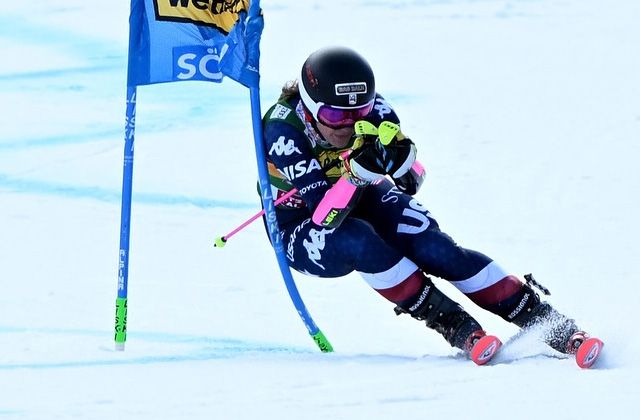
n her first competitive action since 2022, Nina O’Brien proved to herself and the world that she hasn’t lost a step - notching an 11th place finish in last week’s giant slalom. Image: U.S. Ski and Snowboard Team on Facebook
Hello, and welcome to Top Five Fridays, the November 1, 2024 edition! Early signs of winter continue to show up this week as more ski resorts across North America have announced either opening days or significant snowfalls. Here on the East Coast, Sunday River announced a surprise one-day-only opening yesterday to celebrate Halloween while out West, Colorado’s Keystone and Arapahoe Basin and Nevada’s Lee Canyon have all announced opening days of tomorrow, November 2nd. To their north, in British Columbia, Whistler shared the news that roughly 80cm (or just over 30”) of snow fell over a 72 hour period earlier this week. While all of that is exciting and well worth a share, it didn’t quite rise to the level of full highlight treatment this week. No, this week, with the FIS World Cup season officially underway, we have plenty of ski racing topics to talk about. So, without further ado, let’s jump right into last weekend’s results from the first giant slalom races of the season in Solden.
When we previewed the women’s side of this event last week, we noted that Mikaela Shiffrin is just three wins away from becoming the first athlete to hit the 100 win mark, and that Solden provided an excellent opportunity to gain ground on that goal. That storyline looked promising at the conclusion of everyone’s first run, as Shiffrin sat in first place with a time of 1:05.82. Somewhat unfortunately, the Shiffrin story ultimately gave way to another one: in run 2, the course conditions deteriorated significantly. By the time the second runs began, the temperature had turned slightly warmer as a light rain began to fall and winds increased. As you know, the starting order for run 2 begins with the athlete in sitting last place and finishes with the athlete in sitting in first. In other words, since Mikaela was in first place after run 1, she raced last for her second run, giving conditions plenty of time to worsen. As a result, Shiffrin was treated to the slowest, sloppiest snow of the day, ultimately also earning the slowest time of the day. When all was said and done, Shiffrin finished the event in 5th.
That’s the disappointing news from the weekend. Fortunately though, there is also a ton of good news coming out of Solden for both the American men and women's teams. Sticking with the women’s side of things, the biggest headline is the fact that U.S. athlete Katie Hensien, who finished her first run in the middle of the pack, took advantage of the second run conditions and catapulted herself all the way up into a 4th place position - her best result ever. Additionally, we shared with you the story of Nina O’Brien last week, who’d been skiing at her highest level before badly injuring her leg in the 2022 Olympics. This past weekend marked her return to competition, and brought with it many questions regarding whether or not she’d return to competition at the same level. This weekend answered that question in a big way. In her first return to racing, O’Brien finished in 7th overall. Finally, rounding out what was an amazing day for the women’s team, Paula Moltzan earned herself an 11th place finish, making it the first time since March 17, 1985 that four U.S. women finished in the top 11 of a race. While it goes without saying that the season is still young, the early results are promising and our hopes are high for an incredible year.
On the men’s side, the storyline we shared last week was that of a team that was defined by consistent strong results last year. After the first race of the season, we can confirm that at the bare minimum, that should be the expectation again this year. In the first giant slalom race for the men, River Radamus placed 11th while Tommy Ford earned himself a 21st place finish. While we’d of course like to see those results be a little bit higher, there’s one very important thing to keep in mind here: giant slalom is not the speciality of the men’s team. In general, the top U.S. men’s athletes are speed athletes, meaning their best performances will likely come in downhill races, followed by super g, then giant slalom, and finally slalom (although it should be noted that there are some up and coming slalom specialists such as Ben Ritchie). Keeping that in mind, the fact that River Radamus and Tommy Ford put down strong performances in a discipline that’s decidedly not their strength is a good indication that this season might be even better than the last. We’ll start to have a better idea of whether that’s the case when action resumes in mid-November. Until then, you can preview the full FIS calendar here.
#2: As Mikaela Shiffrin Gains Ground on Last Remaining Records, She Turns Her Attention to Much Loftier Goals:
This isn't meant to be a form of solicitation on our part - just a quick way to show you what Share Winter is all about!
Next up this week is more Mikaela Shiffrin news, although this time of a slightly different variety. While our focus on Shiffrin these last two weeks has centered around her quest for 100, she also made news last week for her actions off the slopes. In an Instagram post that went up just over a week ago, on October 22nd, Shiffrin shared the news that she has become an official ambassador for Share Winter, an organization that aims to make the sports of skiing and snowboarding more accessible to those who’ve historically felt barred from entry.
Whether it’s due to economic or societal reasons, there’s really no getting around it: skiing and snowboarding are historically sports whose participation numbers are dominated by rich white people. It’s an uncomfortable truth that we deal with as it isn’t as though the exclusive nature of our sport has been intentional. What is also true though, is that until recently, our sport also hasn’t been intentionally inclusive either. Thankfully, in recent years, more and more organizations have popped up that promote inclusion, with Share Winter being one of the most impactful. In her announcement, Shiffrin shares the story of her journey through skiing, recounting how she’s leaned on guidance from countless individuals to help her on the path she’s on. Now, she’s looking to return the favor by partnering with Share Winter to encourage people who might feel as though they don’t belong in skiing to give it a try, with the ultimate goal of making the ski community more inviting and inclusive for all walks of life.
We decided to share this news this week because in addition to the announcement itself, Ski Magazine also published a piece that ties together the talk of Shiffrin’s record seeking and her more altruistic goals. In the piece, she’s quoted as saying, “I’m seeing [the record conversation] as an opportunity … to bring more eyes and ideally, more passion to the sport.” In other words, Shiffrin has shifted. While that genuine personality has always been a part of who she is, in what she’s referring to as “the last few seasons of my career," Shiffrin has matured, recognizing that her accomplishments can be more than just personal achievements. Rather, breaking records gives her a platform that she can use to bring awareness to issues like inclusion, and to inspire those who may have felt like outsiders to join our community and experience the thrill that is skiing. At this point in her career, Mikaela is racing for far more than just herself. Each new milestone now represents a growing platform from which she can share her message. To learn more about this shift and to see what goals remain within reach, check out the writeup from SkiMag.com. To learn more about Share Winter, click here.
#3: The First Year of the Fluorocarbon Wax Ban Was a Resounding Success. Now, the FIS is Looking to Bring Testing Equipment to Even More Races:
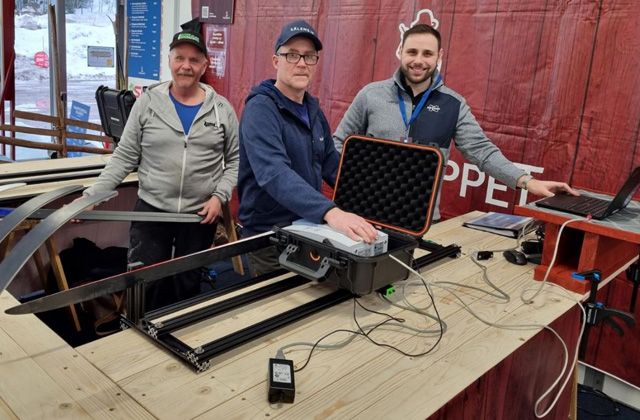
A look at a typical flourocarbon testing setup, with technicians operating a Bruker Alpha II infrared spectrometer. Interested in the science behind it? Check out their website!
Third up in our FIS ski racing triple header is an update from the world of fluorocarbon ski waxes, which have been banned from racing since the start of last season. At this point we suspect that most of you are aware of the fluorocarbon wax issue, but just in case you’re not, here’s a very quick recap: in the late 2010’s, it was discovered that the chemicals being used in high end waxes were causing both environmental and health issues. While the “fluoro” aspect of the fluorocarbon waxes were harmful on their own, they’d also evolved to contain per- and poly-fluoroalkyl substances, also known as “PFA’s”, a substance found in non-stick pans. Those chemicals made these waxes particularly harmful for both the technicians that were applying them to skis, as well as to the environment as the chemicals would rub off on the snow and find their way to local waterways. As a result, these waxes, which are the most high performance waxes we have, were banned from FIS competition ahead of the 2023 season.
While there were no complaints regarding the ban ahead of last year, there was plenty of skepticism regarding how effectively it could be implemented. In this week’s article, we learn plenty about what went right and what went wrong last year, as well as the plan for this year. First, let’s talk about the problems. In the very first event of last season, Norwegian skier Ragnhild Mowinckel was disqualified after finishing in 6th place in her first run when fluoro testers detected the substance on her skis. This completely caught Mowinckel, the Norwegian Ski Federation, and her sponsor HEAD Skis off guard as they all insisted that the skis had tested negative for fluorocarbons just two days prior. After further investigation, it was revealed that Mowinckel’s ski techs had accidentally used a waxing tool that was contaminated with the substance, resulting in the positive test. While that was an extremely tough break for Mowinckel, it was also an extremely valuable experience for the FIS ski racing community on the whole as they immediately learned two things: fluoro testing is reliable, and that they need to be very careful about not using contaminated tools. The result is that skepticism regarding the ban quickly became an eager acceptance of it as athletes knew it could be trusted to detect the substance, preventing its use as a competitive advantage.
By and large, the rest of last season went well, with only 9 cases of fluorocarbon being present across 60,000 tests. Not only did that give confidence to the fact that competitors aren’t using the substance, but also that the testing works incredibly well. Now, this year, the team of 8 fluoro testers has become 12, and they’ll look to expand their footprint into even more FIS races. While we don’t specifically know which races the team will be at, we do know that the goal is to eventually cover every single FIS ski race - both alpine and cross country - at every level, including juniors. All in all, it’s an interesting story to follow, and one that should make you feel good about the FIS’s efforts to play their role in combating climate change. To learn more, check out the extensive coverage over at the FIS website.
#4: Ski Magazine Shares Their List of the Top Ski Resorts in Both the West and the East:
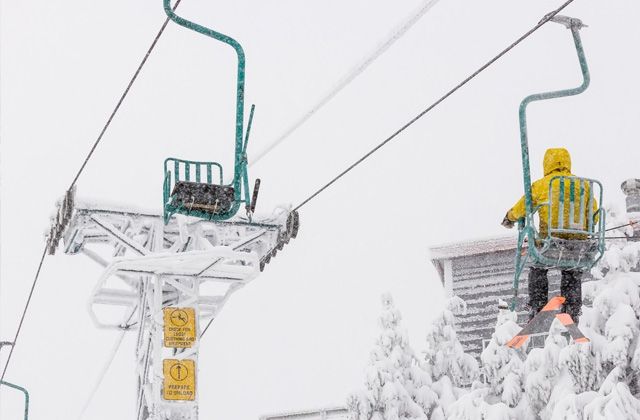
Fact: Mad River Glen was rated the #1 ski resort in the East by skiers like you. Also fact: Mad River Glen’s main chairlift is a single chair. What does this say about what skiers really want? We’ll let you decide. Image: Mad River Glen on Facebook
Finally, we’re rounding things out this week with a fun, or possibly contentious highlight, coming to us by way of Ski Mag, who has just released their lists for the Top 30 Ski Resorts in the West, and Top 20 Ski Resorts in the East. Prefacing each of these lists are paragraphs regarding the subjective nature of such rankings. Still, the magazine does its best to get it right, by sending out surveys to its readers each spring that asks them to rank resorts based on 18 different criteria such as lifts, grooming, family friendliness, nightlife, etc. That data is then compiled by the team at Ski Mag, ultimately producing the lists we’re sharing today. So, how did things shake out?
Starting with the West Coast, there’s a new number one this season, as Snow Basin, Utah managed to move up one spot from its second place finish last year. The biggest reasons for its top spot? “The resort combines easy access, a fast lift network, and reliable snow coverage.” In other words, the resort makes it easy for skiers and snowboarders to access high quality conditions without crowds. That combination, as it turns out, is a bit of a theme for both coasts and really emphasizes the fact that what matters most to skiers is still the skiing itself. On the West Coast, the concepts of crowds and conditions were present in each of the top three resorts, with second place Aspen’s four mountains being credited for spacing out the crowds, and third place Banff Sunshine’s solitude also presents smaller crowds with high quality snow conditions. Rounding out the top 5 were two resorts whose incredible technical terrain stood out in a big way, as Taos, New Mexico earned 4th and Alta, Utah took home the 5th place position.
Here on the East Coast, the top spot went to the same resort for the second consecutive season: Mad River Glen. Like the top spots on the west, Mad River Glen was given the crown for the two things that matter most to skiers: small crowds and challenging terrain. Between the uncharacteristically modest parking lot size and its iconic single chair, Mad River Glen can’t help but create an experience where moments of solitude are unavoidable, resulting in trails like “Paradise” quite literally feeling like paradise. Much like their West Coast counterparts, the other two resorts rounding out the east’s top three are also credited for their incredible terrain, conditions, and lack of crowds. Coming in third place was Jay Peak, where the beloved “Jay Cloud” is known to set up and produce accumulations of snow that are more or less isolated to the resort. Add in its remote location in Northern Vermont, and you’ve got a recipe for excellent, uncrowded skiing. In second place is an exciting addition to the list: Saddleback in Maine. After a stint of being closed in the late 2010’s, Saddleback re-opened during the tricky 2020 season and has made infrastructure improvements every year since, thanks to significant new investment. The result? Yet another resort whose wild natural terrain, snow conditions, and remote location make for the type of experience that real skiers’ skiers dream about.
Of course there are tons of other resorts on both of these lists, and a quick read through will make one realize that in addition to a ranking of resorts, these articles are also excellent trip guides as the breakdown of each one provides plenty of helpful information. Whether you’re looking for a place to take your family on your next ski vacation, are looking for the most technical terrain, a ski resort with an incredible nightlife, or even just want to know if your home mountain made the list, we highly recommend giving these two articles a read. You can check out the Top 30 Ski Resorts in the West here, and the Top 20 Ski Resorts in the East here.